Saint Spyridon Serbian Orthodox Church in Trieste, Italy: What to See and Know Before You Go
Trieste, Italy, keeps one of the most striking Orthodox buildings in the country tucked into the lanes of its Città Vecchia, and most visitors walk within a few metres of it without ever looking up.
Short answer
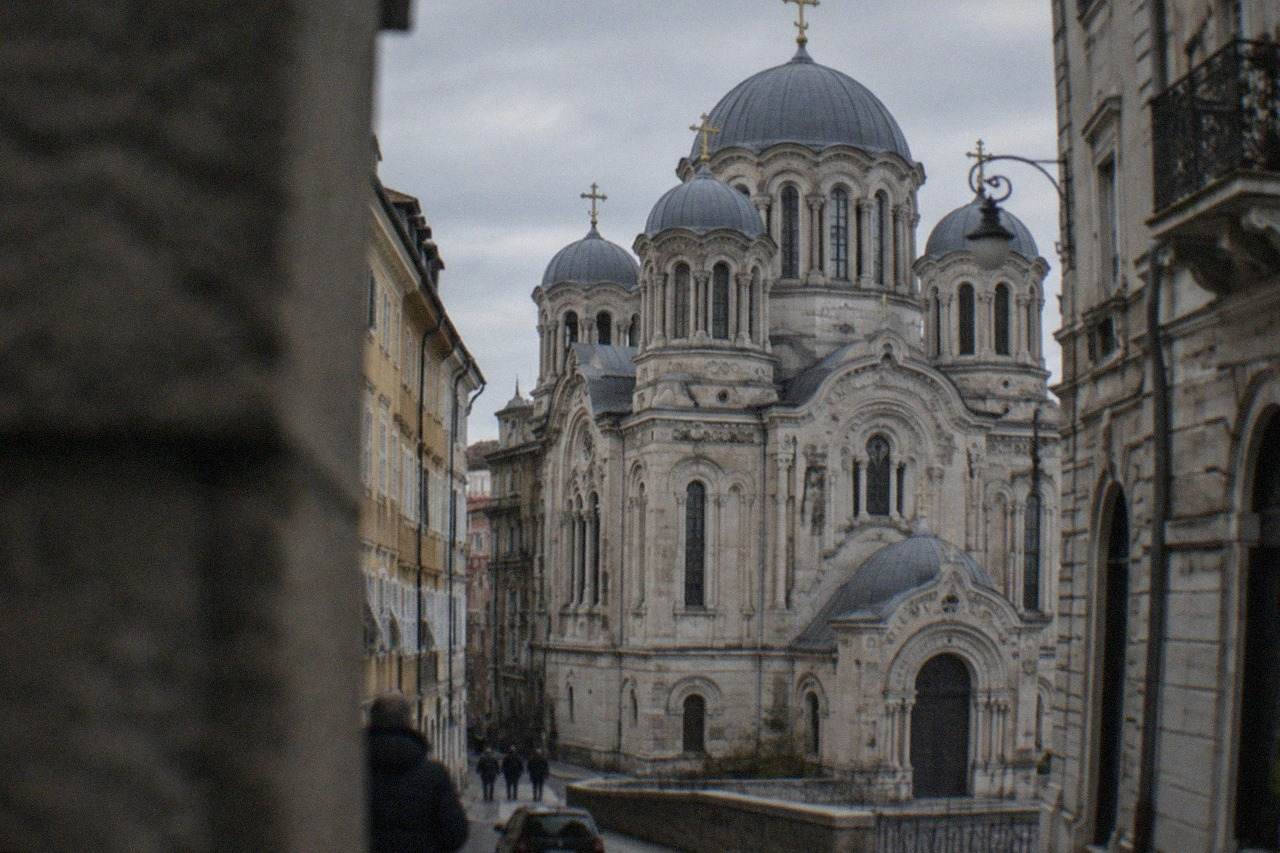
The Saint Spyridon Serbian Orthodox Church is a Serbian Orthodox church in the Città Vecchia of Trieste, Italy, close to the Roman Theatre and the Cathedral of San Giusto. It is the spiritual home of the city's historic Serbian Orthodox community and one of the clearest architectural signs that Trieste was never only an Italian, Catholic city.
Trieste, Italy, is one of the few Italian cities where the skyline of a single neighbourhood holds a Catholic cathedral, a Roman theatre, a Serbian Orthodox church and a Greek Orthodox presence within a few minutes' walk of one another. The Saint Spyridon Serbian Orthodox Church is the loudest statement in that cluster: a richly decorated building dedicated to Saint Spyridon, the fourth-century bishop of Trimythous who is the patron of the Serbian Orthodox community that has called this port city home for centuries. This guide covers what the church is, where it stands, what you can see, what a visit realistically involves, and how it fits into a day spent on Trieste's churches and old-town lanes.
Trieste earned its churches the honest way: as the Empire's great Adriatic port it pulled in merchants, sailors and communities from across the Mediterranean and the Balkans, and each community brought its own faith. The result today is a compact sacred geography that no other mid-sized Italian city quite matches, and the Saint Spyridon church sits at the centre of it. If you are planning a visit around the theme of Trieste's churches, this building should be second on your list after the cathedral itself.
What Is the Saint Spyridon Serbian Orthodox Church in Trieste, Italy?
The Saint Spyridon Serbian Orthodox Church is the principal place of worship of Trieste's Serbian Orthodox community, a functioning Orthodox church in the Città Vecchia dedicated to Saint Spyridon, a fourth-century Cypriot bishop revered across the Orthodox world. It is not a museum or a chapel-in-name-only: it serves a living parish, and it stands as one of the most important Serbian Orthodox buildings anywhere in Italy, a direct architectural trace of the Serbian merchant families who settled in this Habsburg port.
That last point is the one worth holding onto, because it explains the building's whole character. Trieste's free-port status under the Habsburgs made it a magnet for Orthodox merchants from the Balkans, and the Serbian community became one of the city's established commercial presences, alongside Greeks, Armenians and Jews. A community of that weight did not build a modest chapel. It built a church that announced itself, and the Saint Spyridon church still does exactly that from its position in the old-town street grid.
The dedication itself carries meaning. Saint Spyridon, bishop of Trimythous on Cyprus, took part in the First Council of Nicaea and is counted among the great fathers of the early Church in both Orthodox and Catholic tradition. Serbian communities across the former Habsburg lands placed themselves under his protection, and the Trieste church belongs to that family of dedications. For a reader interested in why Trieste is famous as a crossroads city rather than a standard Italian art city, this building is the single best piece of evidence you can walk through, and the city's literary and cosmopolitan past, covered in our guide to James Joyce's Trieste, is part of the same story.
It is also worth being clear about what this page is and is not. Nobody writing for this site has stood inside the building, so everything here is desk reporting from the sources that publish about the church and the city, plus the verified site facts this guide carries for Trieste as a whole. Where something is not published in a source available to us, we say so rather than guessing, and where a practical detail such as an opening hour changes often, we point you at the live source instead of printing a number that may be stale by the time you travel.
Where Is the Church and How Do You Reach It in Trieste?
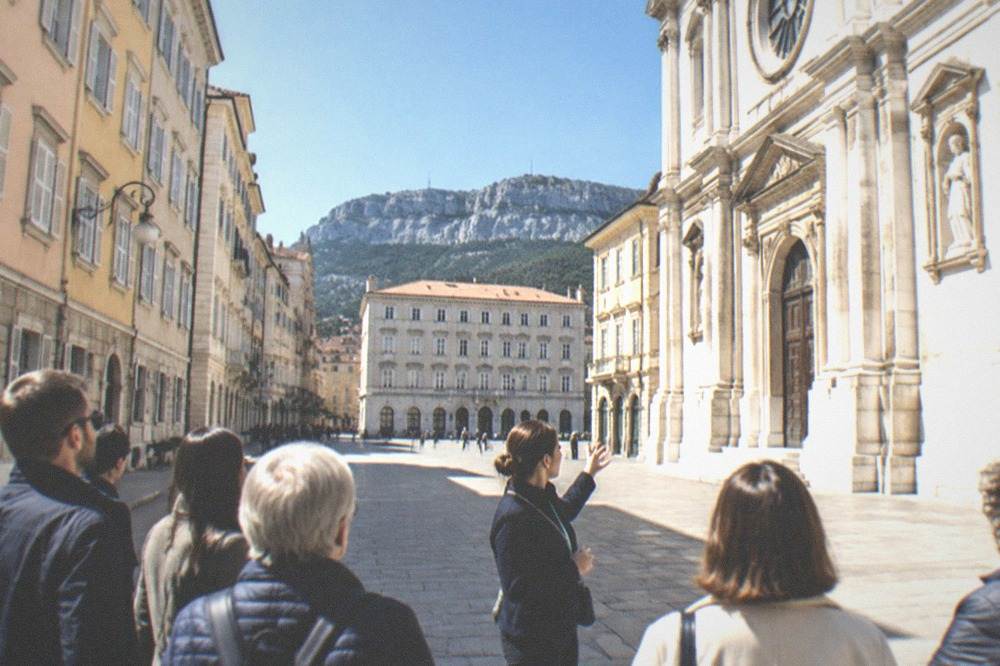
The church stands in the Città Vecchia, Trieste's old town, on the hillside below the Cathedral of San Giusto and a short walk from the Roman Theatre, which means you can reach it entirely on foot from Piazza Unità d'Italia without transport of any kind. Its position on the slope of the San Giusto hill makes it a natural stop on the standard route that runs from the main square through the old lanes up to the castle and cathedral at the top.
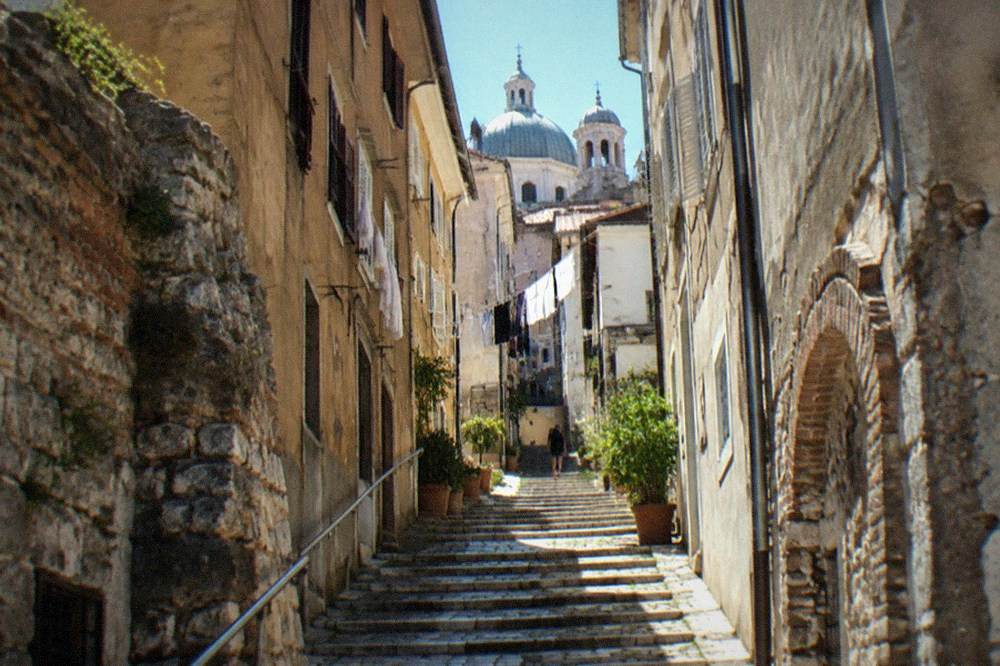
The walk itself is the point. The Città Vecchia is a dense grid of narrow lanes, and the church's facade rises directly out of the streetscape rather than sitting on a ceremonial piazza the way Italian Catholic churches usually do. That street-level setting is typical of Orthodox and other minority-faith buildings in Habsburg port cities: they were woven into the commercial fabric, not set apart from it. Coming up from the waterfront, you pass through the lanes of the old town, and the church appears partway up the climb toward San Giusto hill.
For orientation, the landmarks around it are all on this site in detail. The Roman Theatre sits at the foot of the hill, and the ministry's own page for the monument describes it as something you look down into from the street rather than a venue you enter, so treat it as a view on the way, not a stop with a ticket. The Arco di Riccardo is another old-town Roman survivor close by, and the cathedral complex at the top closes the loop. A realistic morning is: Piazza Unità d'Italia, the old-town lanes and the Saint Spyridon church, then up to the cathedral, castle and the view from the bastions.
Public transport is barely relevant here, which is one of the pleasures of Trieste: the old town is compact and steep rather than spread out. The city's urban network, including the Opicina tram, is useful for the outer districts rather than for this walk. If you are arriving from the cruise terminal or the station, both put you at the edge of the centre, and the walk in is part of the visit.
One honest practical note: this site does not publish a verified, current opening schedule for the church, and Orthodox parish churches everywhere keep hours that follow the liturgical calendar rather than a tourist timetable. The reliable pattern for a working Orthodox church is that it is open around services and by arrangement, not all day every day. Check the parish's own published information or ask at the Trieste tourist office before building your day around interior access, and plan the exterior, the facade and the old-town setting as the guaranteed part of the visit.
What Can You See at the Saint Spyridon Church in Trieste?
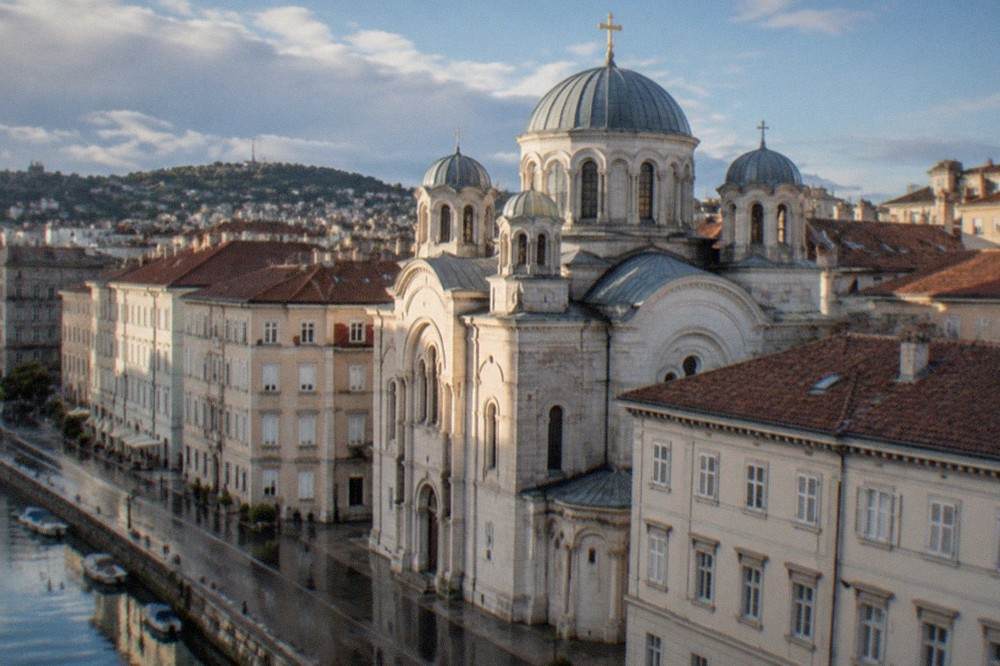
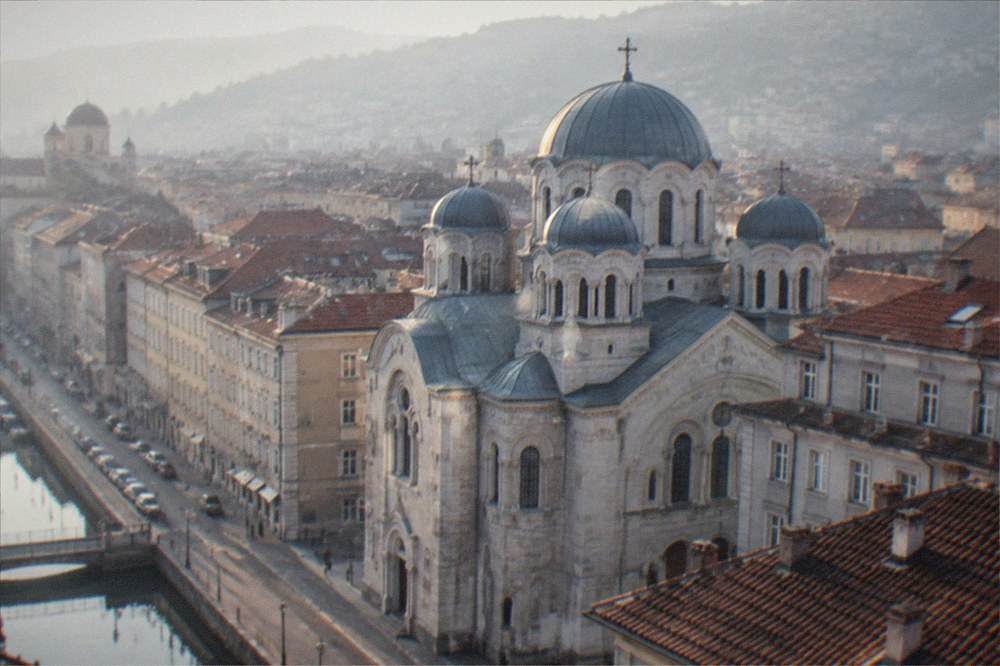
The visitor experience divides into two parts: the exterior, which you can see any time from the street, with its decorated facade, Orthodox crosses and domes rising over the old-town roofline, and the interior, which is where the church's real treasure lies, an iconostasis and painted decoration in the Orthodox tradition that ranks among the most complete Orthodox interiors in northern Italy. The exterior is a five-minute stop on any old-town walk; the interior, when open, is worth scheduling your morning around.
The facade is the part everyone gets. It is rich by the standards of the lanes around it, and it was built to be: a community church of this importance was designed to be legible from the street as an Orthodox building. Look for the crosses, the vertical emphasis and the way the building handles the steep slope, then step back into the lane opposite to see the domes against the sky. Photographers will find the best material in the morning, when the light comes up the hillside from the sea.
The interior is the part to plan for. Orthodox church interiors are organised around the iconostasis, the screen of icons and doors that separates the nave from the sanctuary, and the Saint Spyridon church's iconostasis and wall paintings are the reason people who care about sacred art make the trip. Everything in an Orthodox interior is positioned for a reason: the arrangement of icons, the placement of the royal doors, the cycle of frescoes or paintings telling the story of salvation and honouring the saints of the community's own tradition, Spyridon among them. If you have only ever visited Catholic churches in Italy, the difference is immediate and it is the whole point of coming.
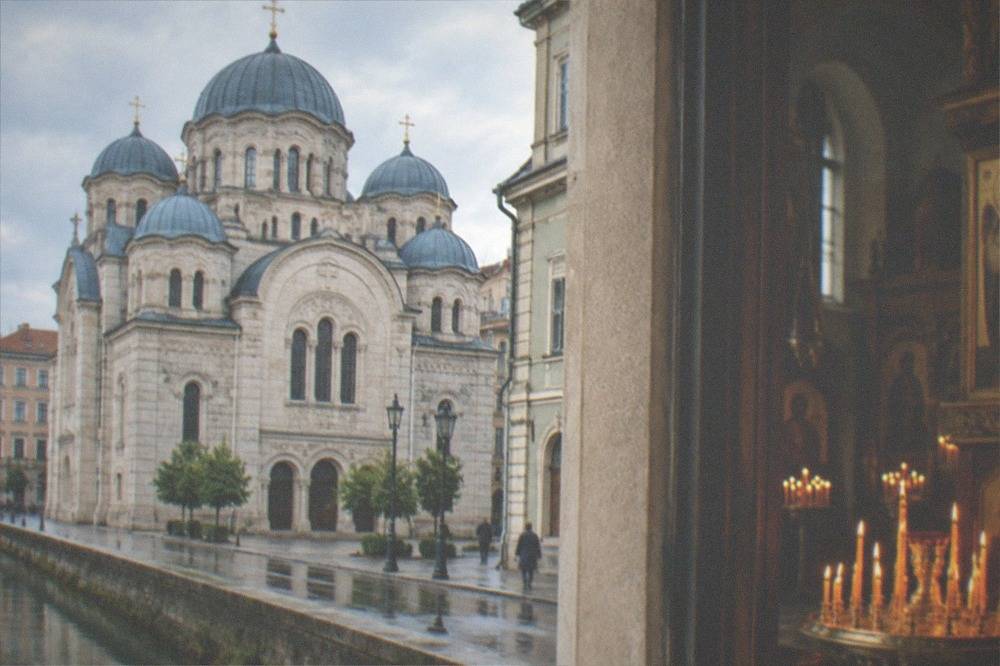
Etiquette matters more here than at a ticketed monument, because this is a working parish church rather than an attraction. The norms are the same as in any Orthodox church: dress modestly, keep your voice down, ask before photographing and never photograph during a service, and be aware that on Sundays and feast days the building belongs entirely to the parish. The Catholic cathedral's parish makes a comparable request, asking that guides not bring visitors during services, and the same courtesy applies here with more force, since the community is small and the church is its home.
If you want the history explained rather than simply seen, a private guide is the efficient route. The private guided tour of Trieste, run by a local guide, covers the city centre and its layered history, and a guide who knows the old town can put the Serbian community's story into the Habsburg-port context that makes it make sense. The listing prices it per person with a duration of about two and a half hours, and the operator's live listing carries the current details.
How Does the Church Fit Trieste's Multi-Faith History?
Trieste's religious landscape is unusually layered for a city of its size: alongside the Catholic majority the port sustained Serbian Orthodox, Greek Orthodox, Jewish, Lutheran and Evangelical communities, each with its own places of worship, and the Saint Spyridon church is the most visible surviving monument of that Serbian Orthodox presence. The city's history as the Habsburg Empire's main Adriatic port, opened to free trade and to the merchants who came with it, is the direct cause of every one of those buildings.
The mechanism is worth understanding because it recurs all over the old town. When Trieste was declared a free port in the eighteenth century, the Empire needed merchants, and merchants came from everywhere with sea access to the Adriatic and the Balkans: Serbs, Greeks, Armenians, Jews, and traders from the German and Slavic lands inland. Each community settled, prospered, and built. The Serbian community's commercial weight translated into a church of real ambition, and the same logic produced the Greek Orthodox church, the synagogue and the Lutheran church, several of which still stand within walking distance of one another.
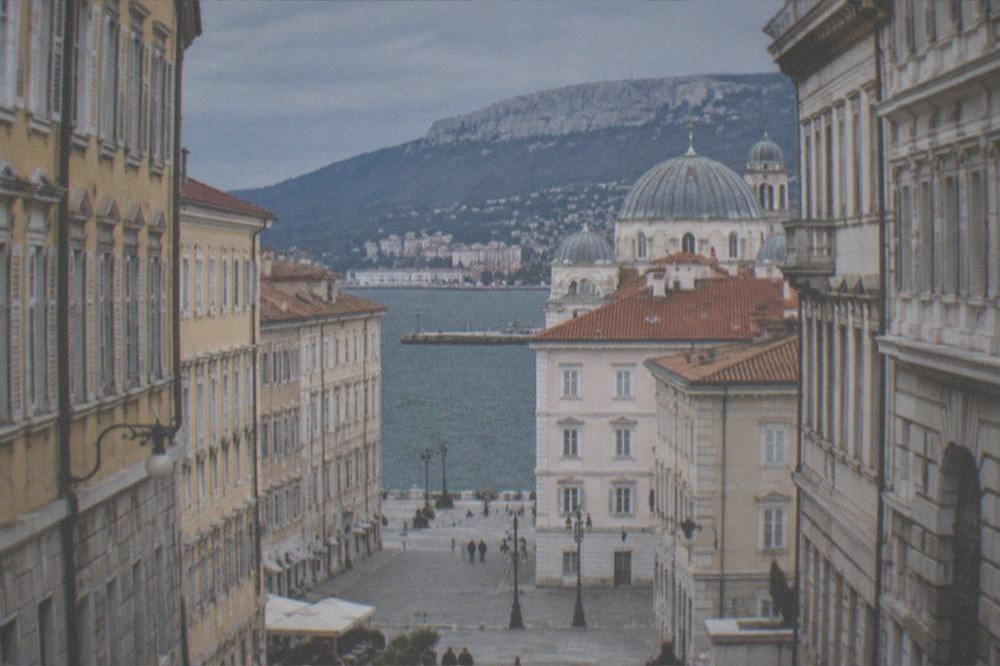
You can read this history in the streets today. Walk from Piazza Unità d'Italia up through the Città Vecchia and you pass, in the space of a few hundred metres of lanes, the layered remains of Roman Tergeste, the Catholic cathedral complex on the hill, and the Orthodox presence in the middle of the slope. The old-town district pages on this site cover the neighbourhood as a whole; the short version is that this part of the city is the physical archive of every community that ever mattered to the port, and the Saint Spyridon church is one of its strongest single entries.
The Serbian community's story in Trieste is also part of the wider regional story of language and identity on the Slovenian border, which this site covers alongside its guides to the borderland. Trieste sits at the point where Italian, Slovene and South Slavic worlds meet, and the border has moved around the people here more than once in the last century. A Serbian Orthodox church in an Italian city an hour's drive from Slovenia is not a curiosity; it is the region working exactly as the region works. That context is what a good guide adds to the facade, and it is why the church rewards a little reading before you go.
When Is the Best Time to Visit Trieste's Churches?
The most comfortable months for a churches-and-old-town itinerary in Trieste are April, May, June and September, when ARPA FVG's station tables for the molo Fratelli Bandiera show mean highs of 16.8 to 25.8 C with almost no days over 30 C.
July and August are the warmest at 28.2 and 28.1 C with 7 to 8 days over 30 C each, and July is one of the driest months at 53.8 mm of rain, so summer is far rainier in reputation than in the actual record. Everything else covered here is indexed on Trieste Travel Guide.
That climate data comes from the regional agency's own normals for the Trieste waterfront station, series 1995 to 2024, and it overturns a couple of assumptions people arrive with. The first is that an Adriatic city is rainy in summer: the tables say the opposite, with July the second driest month of the year. The second is that the bora makes winter impossible: winter is windier, with February averaging 2.9 days of gusts over 90 km/h, but the same tables show the calmest month for wind is June and that strong gusts can occur in any month.
For a church-centred visit specifically, the season matters less than the day of the week. Sacred buildings in Trieste keep their own calendars: the Catholic cathedral is open daily around Mass times, the parish asks that visits avoid services, and museums attached to religious sites have their own schedules. Sunday morning is the worst time to tour any working church in the city, and Monday is the day several civic sites close, including the Museo Revoltella, which is shut Tuesdays, and San Giusto castle, which is closed Mondays from 12 October. Midweek mornings are the sweet spot: churches are quiet, the light in the old town is good, and the climb up the hill is not a heat problem outside high summer.
| Month | Mean high C | Rain mm | Wet days | Days over 30 C | Verdict for a churches walk |
|---|---|---|---|---|---|
| April | 16.8 | 60.7 | 8 | 0 | Excellent: cool, green, light crowds |
| May | 21.7 | 75 | 8.5 | 0.1 | Excellent: warm without heat |
| June | 25.8 | 62.5 | 6.1 | 2.5 | Very good: calmest wind month |
| July | 28.2 | 53.8 | 5.4 | 7.2 | Good but hot on the hill climb |
| August | 28.1 | 71.7 | 6.6 | 8.5 | Hot; start early in the morning |
| September | 23.9 | 102.3 | 7.4 | 0.5 | Warm sea, second-wettest month |
One seasonal event worth planning around, or away from, is the Barcolana regatta weekend in October: Barcolana 58 runs 2 to 11 October 2026, with the main race on Sunday 11 October. The city is full, hotels are tight, and the waterfront belongs to the sailing fleet. The old town's churches are unaffected, but if you want quiet lanes, pick another week; if you want the city at its loudest and most festive, that is the one to choose.
What Other Churches and Sacred Sites Should You See in Trieste?
The essential companions to Saint Spyridon are the Cattedrale di San Giusto Martire, whose entry is free, and the Castello di San Giusto complex on the same hill, whose ticket is €7 full and €5 reduced. Beyond those, the Roman Theatre viewed from the street, the free Risiera di San Sabba national monument and the Museo Revoltella at €8 complete a one- or two-day sacred-and-historic circuit, with Miramare Castle up the coast as the grand finale at €17 for the castle or free for its park.
The pairing of Saint Spyridon and San Giusto is natural because they share a hill. The Cathedral of San Giusto is free to enter, open 8:00 to 18:30 on weekdays and 9:00 to 19:30 on Sundays and holidays, and the parish publishes no price for the bell tower, so this site prints none. The castle above it charges €7 full and €5 reduced, covering the walls, the Civico Museo del Castello, the Lapidario Tergestino and temporary exhibitions, and it is open daily 10:00 to 19:00 through 11 October, then Tuesday to Sunday 10:00 to 17:00 from 12 October.
| Site | Entry cost | Key hours | Notes |
|---|---|---|---|
| Saint Spyridon Serbian Orthodox Church | Not published on a verified source | Around services; check parish info | Working Orthodox parish in Città Vecchia |
| Cattedrale di San Giusto Martire | Free | Weekdays 8:00-18:30; Sun 9:00-19:30 | Bell tower price not published by the parish |
| Castello di San Giusto | €7 full, €5 reduced | Apr 1-Oct 11 daily 10:00-19:00; then Tue-Sun 10:00-17:00 | Free first Sundays and 3 November |
| Roman Theatre | Free, viewed from the street | Open on request for groups | Ministry page: not routinely enterable |
| Risiera di San Sabba | Free | Mar 1-Oct 11 daily 9:00-19:00 | National monument; groups book Mar-May |
| Museo Revoltella | €8 full, €6 reduced | Daily 10:00-19:00, closed Tuesdays | Free first Sundays and 3 November |
Two of those entries deserve their own note. The Risiera di San Sabba is not a church, but it belongs in any itinerary that takes Trieste's layered history seriously: it is the city's national monument to the deportation era, entry is free, and it is a sobering counterweight to the splendour of the port churches. And the free-first-Sunday scheme is worth knowing about: the ministry's Domenica al Museo runs on the first Sunday of each month at participating state sites, Miramare among them, but the rules have changed more than once, so check the venue's own page for the specific month rather than assuming.
Beyond the city, the churches theme extends naturally into the region. The karst plateau behind Trieste carries its own sacred and monastic traditions, and the Carso pages on this site cover the landscape and its villages. If your trip runs long enough for a cross-border day, the great cave basilicas of Slovenia are the region's other underground wonder, and the Postojna Cave and Predjama Castle tour from Trieste covers both in a half day, with the operator's live listing carrying the current price and dates. Remember that Italy is running temporary border checks on the Slovenia land border through 18 December 2026, so carry a passport or national ID card.
What Does a Visit to Trieste's Sacred Sites Cost?
A full day of Trieste's sacred and historic sites costs very little at the core: the cathedral and the Roman Theatre view are free, the San Giusto castle is €7, and the Saint Spyridon church itself has no published ticket, so a realistic core day runs about €7 per adult, rising to €24 with the Museo Revoltella at €8 and Miramare Castle at €17, and the urban day ticket for buses and the tram is €3.35 from the operator's 2026 tariff sheet.
The transport figure comes straight from Trieste Trasporti's published 2026 urban tariff table: a single ticket is €1.50 for 60 minutes or €1.85 for 75 minutes, a day ticket is €3.35, and a 10-ride carnet is €13.50. Contactless bank cards can be tapped on board and the system applies the cheapest applicable fare, which removes most of the ticket-buying friction. For the old-town walk itself you will not need any of it, but the day ticket is the right buy if you are adding Miramare or the outer districts.
| Item | Cost | Source |
|---|---|---|
| Urban single, 60 minutes | €1.50 | Trieste Trasporti 2026 tariff sheet |
| Urban single, 75 minutes | €1.85 | Trieste Trasporti 2026 tariff sheet |
| Urban day ticket | €3.35 | Trieste Trasporti 2026 tariff sheet |
| 10-ride carnet | €13.50 | Trieste Trasporti 2026 tariff sheet |
| San Giusto castle, full | €7.00 | Venue site |
| Museo Revoltella, full | €8.00 | Venue site |
| Miramare Castle, full | €17.00 | Ministry of Culture venue site |
| Miramare park | Free | Ministry of Culture venue site |
The Miramare line is the one that surprises people, in both directions. The castle ticket is €17 for adults, which includes the temporary exhibition, with a €7 reduced rate for EU citizens aged 18 to 25, and the park is free all year with hours that vary by month, 8:00 to 19:00 from April to September. The castle is open every day 9:00 to 19:00 with last admission at 18:30. If the ticket price is more than you want to spend, the free park is genuinely one of the best free hours on the whole Adriatic coast, and this site's Miramare guide covers it in detail.
If you would rather have the ticket and the exhibition handled for you, the Miramare Castle and Park entry ticket with the Sphinx exhibition is listed from EUR 20.50 per person, rated 4.4 from 146 reviews on the operator's live listing. Check availability for your dates.
Accommodation carries one cost that is easy to miss because it is added at checkout: the city's tourist tax, published by the Comune in its 2026 rate table, runs from €1.50 per person per night at campsites up to €3.80 at five-star hotels, is charged for a maximum of five consecutive nights, and exempts everyone under 18. Budget it and it will not surprise you.
| Accommodation category | Tourist tax per person, per night |
|---|---|
| 5-star hotel | €3.80 |
| 4-star hotel or 4-star self-catering | €3.30 |
| 3-star hotel or 3-star self-catering | €3.00 |
| 2-star hotel, B&B Superior, affittacamere | €2.30 |
| Hostels, agriturismi, short-let properties | €2.30 |
| B&B Comfort | €2.00 |
| 1-star hotel or B&B Standard | €1.80 |
| Campsites and motorhome areas | €1.50 |
Common Questions About the Saint Spyridon Serbian Orthodox Church in Trieste
Is the Saint Spyridon church in Trieste, Italy, open to visitors?
This site does not publish a verified opening schedule for the church. As a working Serbian Orthodox parish it keeps hours around services and by arrangement rather than a tourist timetable, so check the parish's own published information or ask at the tourist office before planning an interior visit, and treat the facade and setting as the guaranteed part of the stop.
What is the Saint Spyridon Serbian Orthodox Church in Trieste?
It is the principal church of Trieste's Serbian Orthodox community, dedicated to Saint Spyridon, a fourth-century bishop of Trimythous on Cyprus venerated across the Orthodox world. It stands in the Città Vecchia and is one of the most important Serbian Orthodox buildings in Italy.
Where is the Saint Spyridon church located in Trieste?
It stands in the Città Vecchia, the old town, on the slope of the San Giusto hill, within a short walk of the Roman Theatre, the Arco di Riccardo and the Cathedral of San Giusto, and reachable on foot from Piazza Unità d'Italia.
Is there an entrance fee for the Saint Spyridon church in Trieste?
No ticket price is published on any source this site has verified. Orthodox parish churches generally do not charge entry, but donations are customary, and access depends on the church being open rather than on a ticket.
What other churches should I see in Trieste?
The Cattedrale di San Giusto Martire, which is free to enter, is the essential companion on the same hill, and the city's other historic faith buildings round out the picture of the Habsburg port. The San Giusto castle complex, the Roman Theatre viewed from the street and the Risiera di San Sabba national monument complete a full day.
Can I photograph inside the Saint Spyridon church?
Ask before photographing and never photograph during a service. This is a working parish church serving a small community, not a ticketed monument, and the courtesy norms of any Orthodox church apply with full force here.
How to Plan the Walk Around Saint Spyridon
The strongest single itinerary is a morning loop that starts at Piazza Unità d'Italia, climbs through the Città Vecchia lanes to the Saint Spyridon church, continues past the Roman Theatre and the Arco di Riccardo to the Cathedral of San Giusto and the castle, and descends by a different lane to the waterfront, taking about half a day at a comfortable pace and costing nothing in transport.
Add the Revoltella in the afternoon and Miramare the next morning and you have the complete sacred-and-historic Trieste without ever needing a car.
Start early, for the light as much as the quiet. The old-town lanes run up the hill roughly east to west, and morning sun off the sea lights the facades as you climb. Piazza Unità d'Italia first, because it sets the scale of the Habsburg city you are about to see the underside of, then the lanes. The Saint Spyridon church sits partway up, and the correct way to arrive is slowly, from below, so the facade has room to surprise you. Give the exterior ten minutes even if the interior is shut: the crosses, the vertical push of the facade and the domes over the roofline are the building's public argument, and it is a good one.
From the church, continue up to the cathedral and castle. The Molo Audace pages on this site cover the waterfront end of the descent, where the walk flattens out and the city turns from Habsburg port back into seaside promenade. If your legs are willing, the view from the castle bastions over the whole route you have just walked is the natural payoff, and the €7 ticket buys the walls, the museum and the lapidarium in one.
For a second day, the coast takes over. Barcola and the seafront walk toward Miramare are the classic Trieste weekend itinerary, and the castle and its free park sit at the far end of it. Pair the morning at Miramare with an afternoon at the Grotta Gigante if the karst is calling: the cave is guided-only with compulsory booking, costs €15 for adults, and from September to February it is closed on Mondays, so the day of the week matters more than the season.
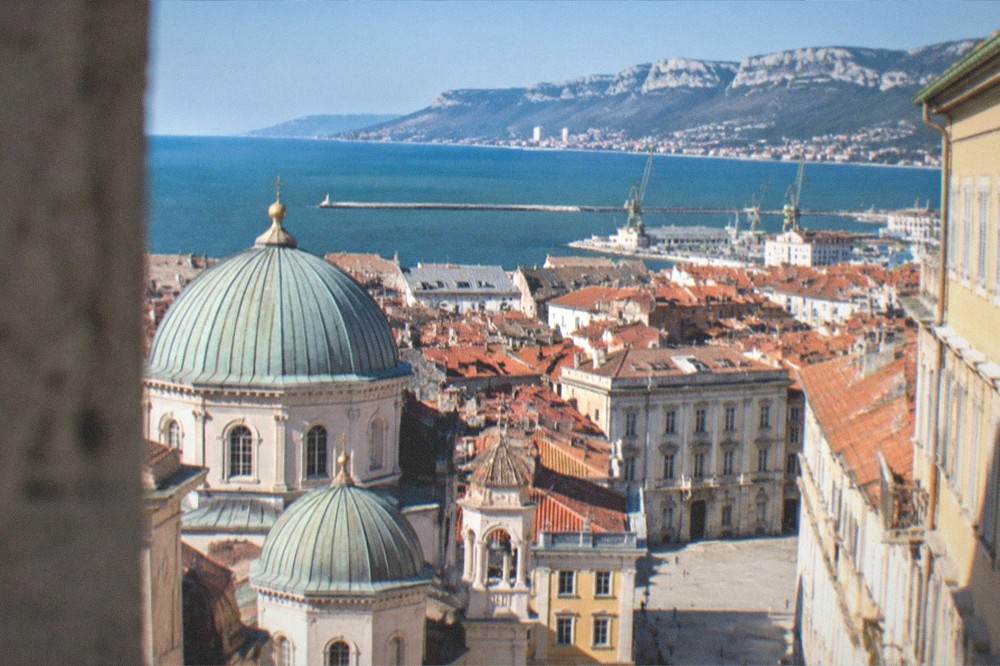
The last word belongs to the walk itself. Cities this layered are usually visited in fragments, one monument at a time, but Trieste's old town is small enough that a single morning can carry you from the Roman city through the Habsburg port to a living Serbian Orthodox parish and up to a Catholic cathedral, all on foot, all in the order the city actually grew. The Saint Spyridon church is the stop that makes the sequence legible: stand in front of its facade, look up at the crosses over an Italian lane, and the whole point of Trieste, the port that gathered the world's faiths onto one hillside, is standing right in front of you.