James Joyce's Trieste, Italy: The City Where Ulysses Was Written
James Joyce spent more than a decade of his writing life in Trieste, the Adriatic port city in northeast Italy, and the city he called home shaped Ulysses more than Dublin guidebooks ever admit.
Short answer
James Joyce lived in Trieste, Italy, for over a decade in the early twentieth century, writing much of Dubliners, A Portrait of the Artist as a Young Man and Ulysses there. His Trieste survives in Piazza Unità d'Italia, the Canal Grande, the historic caffè and the streets of Città Vecchia, all walkable in a day.
James Joyce lived, taught, argued, borrowed money and wrote in Trieste, Italy, the Habsburg-built Adriatic port in Friuli Venezia Giulia, for more than a decade at the start of the twentieth century. This is the city where a large share of Ulysses was actually written, far from the Dublin it describes, and where Joyce arrived as an unknown language teacher and left as one of the most consequential writers in the English language. Trieste rewarded him with sea light, Central European café culture and a bilingual, border-town restlessness that seeps into every page of the work he produced here. The city has not forgotten him: a bronze statue of Joyce stands on a bridge over the Canal Grande, one of the few monuments anywhere to the man rather than to the books.
Who Was James Joyce in Trieste, Italy?
James Joyce was an Irish writer who moved to Trieste, Italy, in the early twentieth century and spent more than a decade here teaching English, raising a family and writing the books that made his name. A Portrait of the Artist as a Young Man was finished in this city, most of Dubliners was published while he lived here, and Ulysses was substantially written in Trieste apartments and cafés before the First World War forced his departure.
He came to a city that was then the fourth-largest port of Austria-Hungary, a place of insurance offices, shipping companies, Greek merchants, Slovene workers, Jewish traders and Italian nationalists, all packed into a grid of Habsburg streets running down to the sea. Joyce taught English at the Berlitz school and privately, moved his family through a series of flats around the city centre, and drank and argued in the caffè that still line the streets off Piazza Unità d'Italia. The Trieste he inhabited was multilingual and commercially busy, a world port with a small-town gossip network, and that combination gave him both the isolation and the stimulation his writing needed.
The city's influence on his work is not decorative. Trieste's own identity questions, Italian-speaking but Habsburg-governed, on a Slovene-speaking borderland, sit behind the questions of language, nationhood and belonging that run through his books. When you walk Piazza Unità d'Italia today you are standing in a square Joyce crossed daily, and when you read the sea-soaked openings of his prose written here you are reading the Gulf of Trieste.
Where Did James Joyce Live in Trieste?
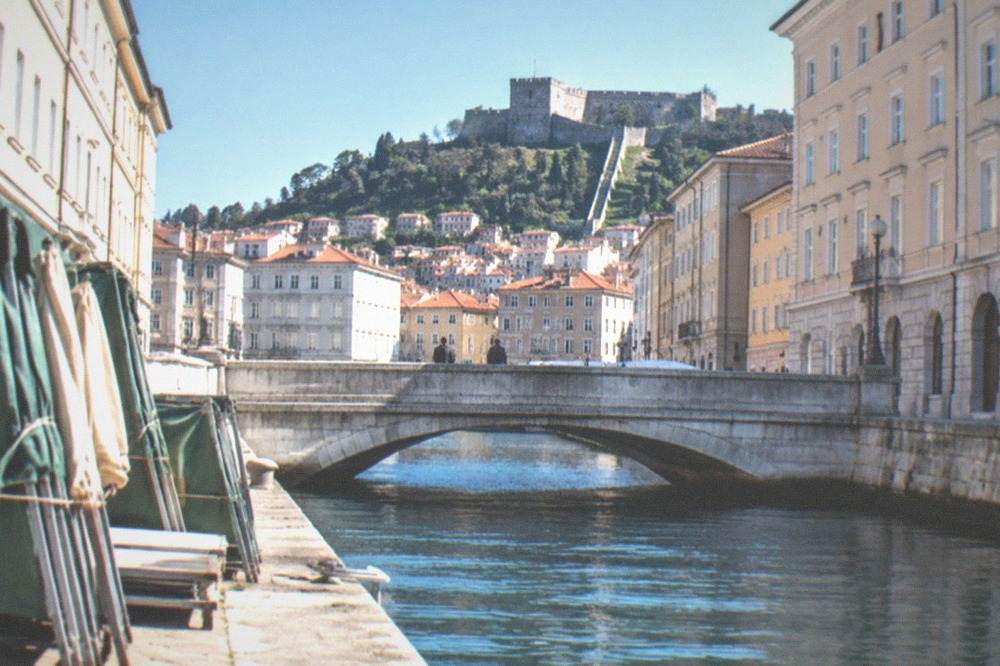
Joyce's Trieste addresses cluster around the city centre, from the streets off Piazza Unità d'Italia to the grid of the Borgo Teresiano and up into Città Vecchia, the old town below San Giusto hill. None of the flats he rented is a museum, but the buildings, stairways and canals survive, and the whole circuit is compact enough to walk in an afternoon. The James Joyce statue on the bridge over the Canal Grande marks the natural centre of the route.
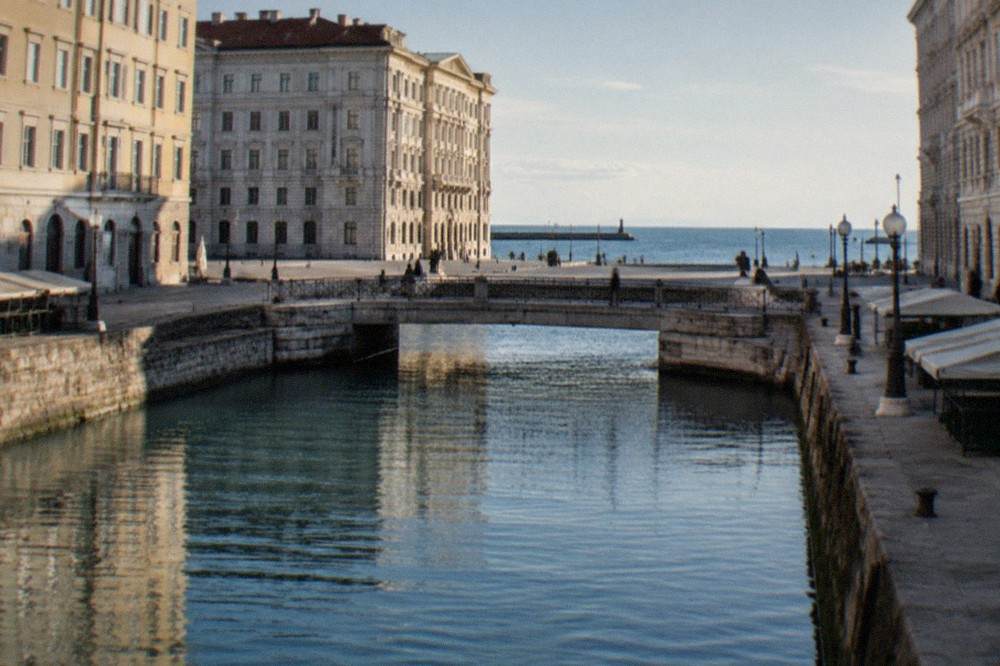
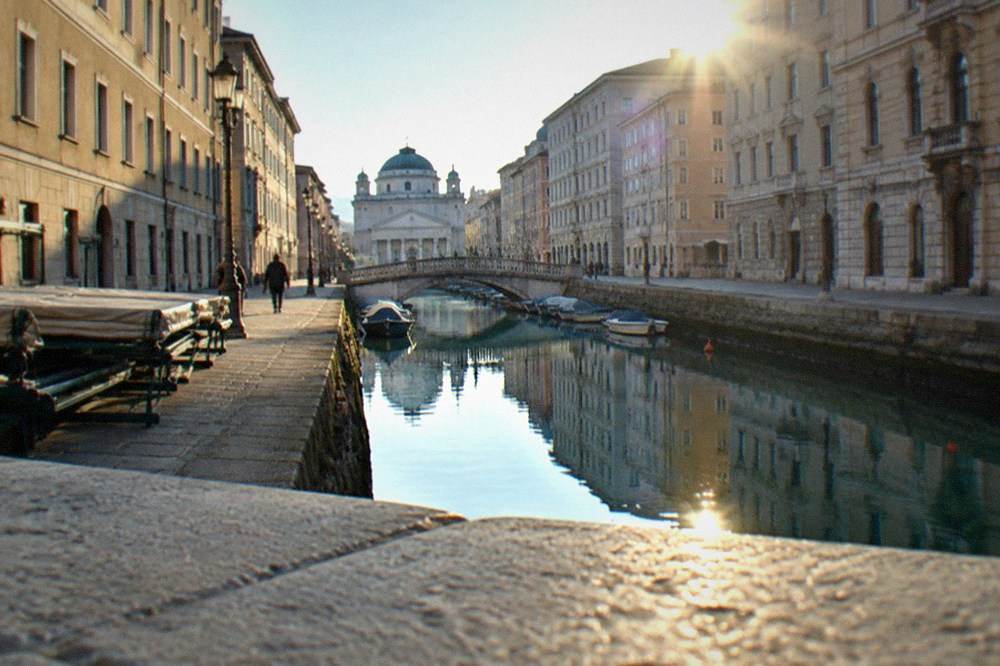
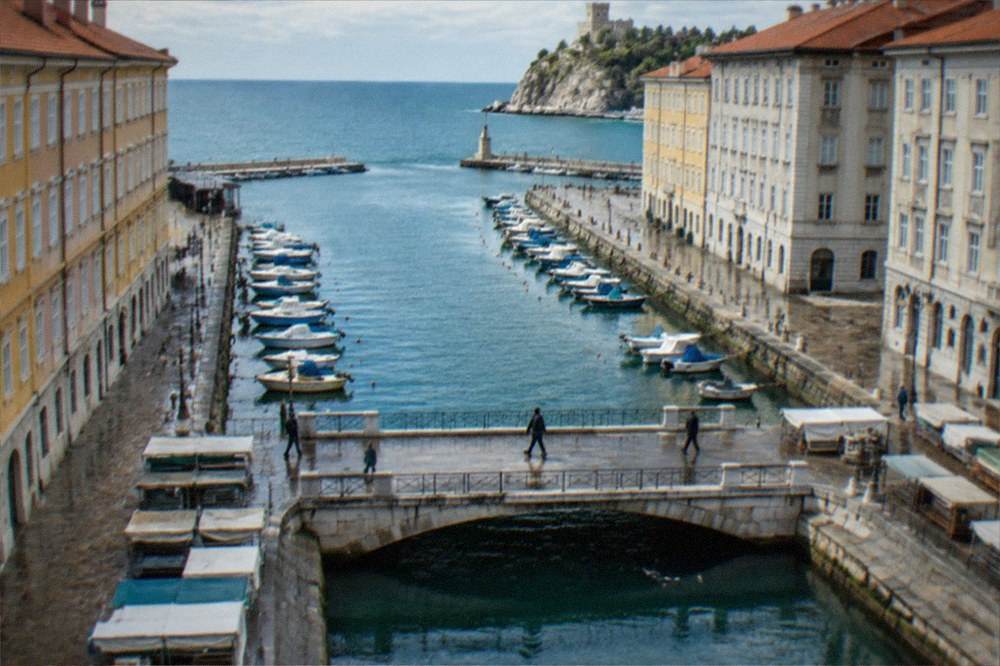
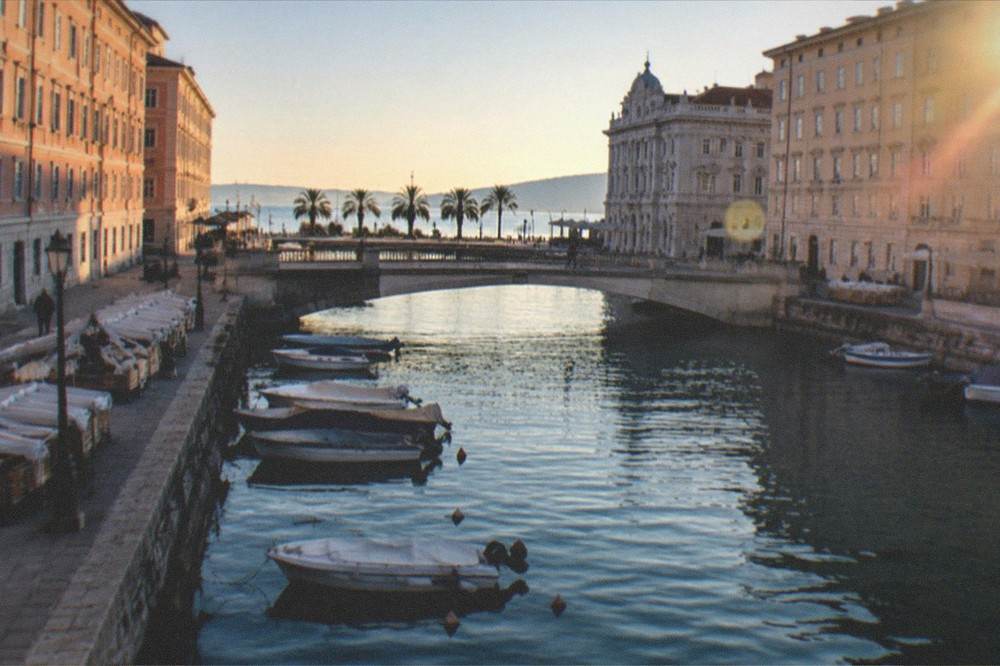
The Canal Grande, a short arm of water cutting inland from the sea through the Borgo Teresiano, is the best single landmark for a Joyce walk. Joyce lived at various times in streets near it, and the canal's bridges, church of Sant'Antonio Taumaturgo and café-lined banks are the surviving fabric of his daily geography. A full guide to the waterway and its bridges is on the Canal Grande of Trieste page.
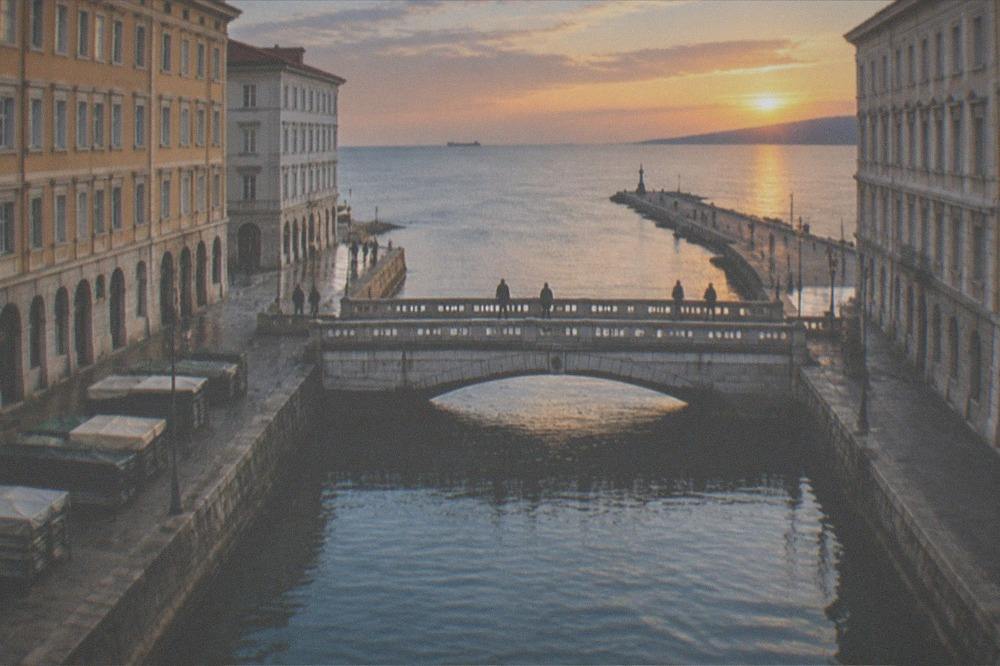
From the canal, the route runs to the seafront and the Molo Audace, the stone pier where Triestines walk out over the water at sunset, then back through the grid toward Piazza della Borsa, the commercial square of Joyce's insurance-office years. The Piazza della Borsa page covers that quarter. Above it all rises the hill of San Giusto, crowned by the cathedral and castle, with Città Vecchia, the cramped medieval lanes below, where Joyce also lived at one point. The San Giusto Castle and Hill page maps the upper end of the walk.
A practical way to anchor the route, especially on a first visit, is with a guided walk. The city's best-rated walking options are compared below.
The trio above covers three different angles on the city: a small-group kayak outing along the cliffs and castles up the coast, a full-day coach trip down the Slovenian shore, and a guided city walk that ends with a coffee in a historic bar, the closest thing on the market to a Joyce-themed introduction. For a literature-focused day, that last one is the natural fit; the kayak trip suits the day you give to the coastline.
Which Trieste Cafés and Squares Did James Joyce Know?
Joyce's Trieste ran on its caffè, and the historic coffee houses he would have known still operate around Piazza Unità d'Italia, Piazza della Borsa and the streets between them. Trieste's coffee culture is not a tourist invention: the city is a historic coffee port and roasting centre, home to a major international roaster, and its residents treat the caffè as public living rooms. Several of the grandest survive from Joyce's own years in the city.
Trieste's café culture is the single most obvious Joyce-era institution still intact. The historic caffè of the centre, with their velvet seats, newspaper racks and waiter service, descend directly from the Habsburg coffee houses where Joyce read, wrote and talked. The city's coffee identity is real and deep, though the oft-repeated claim that Triestines drink some multiple of the Italian average has no verifiable primary source behind it, so treat any such number you see elsewhere with suspicion. What is verifiable is the culture itself, and the waiters still bring the water alongside the cup.
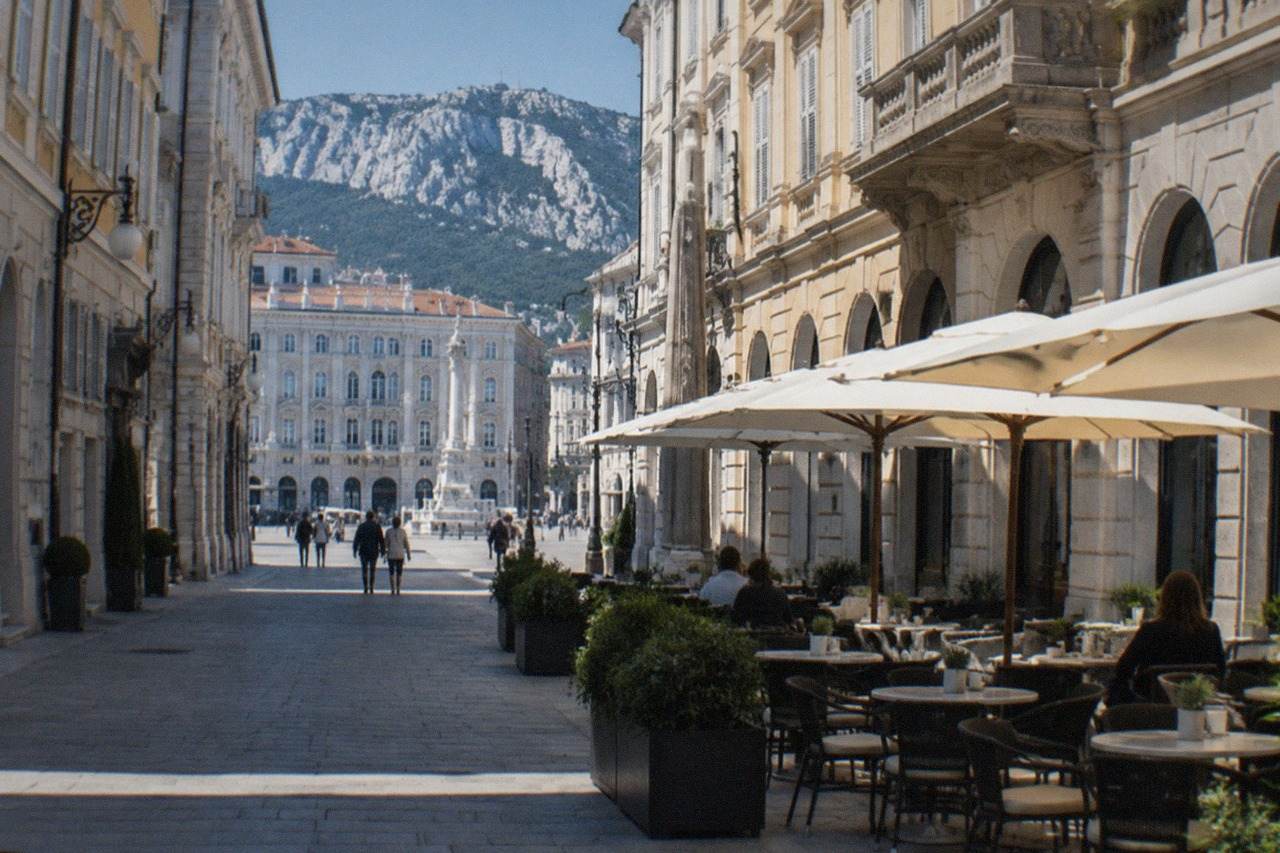
The squares tell the other half of the story. Piazza Unità d'Italia, the vast sea-facing square that opens straight onto the Gulf, is the city's stage, and Joyce crossed it constantly between flats, schools and cafés. The Molo Audace pier at its flank is where his sea-facing city touches open water. Further along the waterfront, the Rive and the seafront at Barcola stretch the walk out along the gulf that fills so much of the prose written here.
For a structured introduction to the café quarter before you set off on your own, a guided option helps. The historic-café walk below is the closest thing to a Joyce-themed tour the city offers commercially.
The box above links to the kayak tour's live listing, which carries free-cancellation terms; if the coast appeals more than the cafés, it is the better spend. Otherwise, put your money into the guided walk with the historic-bar coffee stop and spend the afternoon retracing the squares on foot.
The walk above is the one to book if Joyce is the reason you came: it works the same centre he worked, and it ends inside one of the historic bars he would have known.
What Joyce-Era Trieste Sites Can You Visit Today?
The buildings Joyce knew best are free to walk past, and several of the monuments of his era charge verified admission: Castello di San Giusto costs EUR 7.00, Museo Revoltella EUR 8.00, Castello di Miramare EUR 17.00, while the Cathedral of San Giusto, the Risiera di San Sabba and the Roman theatre are all free to see. Grotta Gigante, out on the Karst above the city, costs EUR 15.00 with guided visits only.
Joyce's Trieste was a Habsburg imperial city, and its monuments were the backdrop of his daily life. The table below gives the admission prices for the sites within reach of the city centre and the Karst behind it, taken from each venue's own published rates.
| Site | Adult admission | Reduced | Notes |
|---|---|---|---|
| Castello di San Giusto | EUR 7.00 | EUR 5.00 | Covers walls, museum and Lapidario Tergestino |
| Cattedrale di San Giusto | Free | Free | Bell tower price not published by the parish |
| Museo Revoltella | EUR 8.00 | EUR 6.00 | Modern art gallery, closed Tuesdays |
| Castello di Miramare | EUR 17.00 | EUR 7.00 (EU 18-25) | Park free all year |
| Risiera di San Sabba | Free | Free | National monument, closed 25 Dec and 1 Jan |
| Teatro Romano | Free from the street | Free | Looked down into from the street, not routinely enterable |
| Grotta Gigante | EUR 15.00 | EUR 12.00 | Guided visits only, booking compulsory |
Opening hours matter as much as prices, because several of these sites close one day a week and the closing day is not always the day you would guess. Museo Revoltella shuts on Tuesdays; San Giusto Castle closes on Mondays from 12 October; Grotta Gigante runs Tuesday to Sunday from September to February and daily from March to August.
| Site | Hours | Weekly closure |
|---|---|---|
| Castello di San Giusto (1 Apr-11 Oct) | Daily 10:00-19:00, last entry 18:30 | None |
| Castello di San Giusto (from 12 Oct) | Tue-Sun 10:00-17:00, last entry 16:30 | Monday |
| Cattedrale di San Giusto | Weekdays 8:00-18:30, Sun 9:00-19:30 | None |
| Museo Revoltella | Daily 10:00-19:00, last entry 18:00 | Tuesday |
| Risiera di San Sabba (1 Mar-11 Oct) | Daily 9:00-19:00, last entry 18:30 | None |
| Grotta Gigante | Tours at 9:00, 10:00, 11:00, 12:00, 14:00, 15:00, 16:00 | Mon Sep-Feb |
The castle on the hill above Joyce's old-town flats is the natural first stop: the Trieste Cathedral San Giusto page covers the church beside it, and the Roman theatre sits at the foot of the same hill, visible from the street. The Revoltella, a museum founded in the merchant Trieste of the nineteenth century, is covered on the Revoltella Museum page. For the darker history of the same city, the Risiera di San Sabba page explains the national monument at the city's edge.
How Does Trieste Remember James Joyce Now?
Trieste commemorates Joyce with a bronze statue on the Ponte Rosso over the Canal Grande, a permanent museum presence in the city, and an academic tradition that treats the city as a co-author of his major works. The statue, showing Joyce in hat and waistcoat with crossed legs, is the most-visited Joyce landmark and the standard meeting point for literary walks through the centre.
The statue is the obvious pilgrimage site, but the deeper memorial is the city itself. Trieste's universities and literary institutions have kept Joyce scholarship alive here for a century, and the city's own tourist framing leans on him harder than almost any other Italian city leans on a foreign writer, because Joyce is the most famous witness to the specific thing Trieste was: a Central European port that happened to speak Italian. When you have finished with the statue, the honest way to follow Joyce is not to hunt plaques but to do what he did, which was walk: from the Canal Grande down to the seafront, up through Città Vecchia to the cathedral, and out along the water.
The seafront walk deserves its own morning. The victory lighthouse Faro della Vittoria stands at the end of the long Rive, and the Barcola seafront beyond it is where the city swims. Joyce's prose written here keeps returning to water and light, and the reason is visible any clear evening from the Molo Audace.
What Can You Do Beyond the Joyce Sites in Trieste?
The best complements to a Joyce day are the coastline Joyce saw from the city, the Karst plateau behind it, and the cross-border coast a short drive away: Duino Castle and the Rilke Trail up the coast, Grotta Gigante on the Karst, and Piran over the border in Slovenia. The kayak tour along the Duino coast is the most direct way to see the shoreline from the water, at USD 76.81 per person for three hours.
Joyce wrote with the gulf in front of him, and the gulf is best experienced rather than described. The three-hour kayak adventure paddles beneath the Duino castles up the coast from the city, rated 4.89 from 11 reviews on the operator's live listing, and it can be booked at Check availability. On land, the Duino Castle and Rilke Trail pages cover the clifftop walk north of the city, a path named for the poet who, like Joyce, was a writer drawn to this coast.
Inland, the Karst plateau rises behind the city, its giant cave at Sgonico reachable by the tram line that climbs from piazza Dalmazia to the village of Opicina. Across the border, the Slovenian coast is a short drive away, and the six-hour Piran and Slovenia coast tour is the most popular way to see it, at USD 114.64 per person and rated 4.57 from 136 reviews on the operator's live listing. Note that Italy is running temporary checks on the Slovenia land border through 18 December 2026, so carry a passport or national ID card even though both countries are in Schengen and use the euro.
| Tour | Duration | From (USD) | Rating | Reviews |
|---|---|---|---|---|
| Trieste Kayak Adventure: Duino Coast and Castles | 3 hours | 76.81 | 4.89 | 11 |
| From Trieste: Piran and Slovenia Coast Tour | 6 hours | 114.64 | 4.57 | 136 |
| Trieste: City that will definitely surprise you | 2h 30m | 68.79 | 4.97 | 106 |
| Trieste: Guided Foodie Walking Tour | 3 hours | 71.08 | 4.91 | 264 |
| Trieste Historic Cafés Experience | 3 hours | 74.52 | 4.91 | 19 |
The food walk and the historic-café experience in the table above are the two tours that overlap most with Joyce's own haunts, since both work the café quarter around Piazza Unità d'Italia and Piazza della Borsa.
The kayak trip above is the related pick for this page because it is the one product that puts you inside the seascape rather than beside it, and the Duino castles it passes are the same coastline the Rilke Trail walks above.
When Is the Best Time to Follow Joyce's Trieste?
The best months to walk Joyce's Trieste are April to June and September to October, when the city averages 16.8 to 23.9 degrees Celsius in the afternoon, rain stays moderate and the seafront is pleasant all day. July and August are the warmest at around 28 degrees and among the driest, while November is the wettest month at 109.8 mm, so an autumn visit should plan indoor days around the museums and caffè.
The climate table below is drawn from ARPA-OSMER's own station normals for Trieste molo Fratelli Bandiera, the waterfront station, series 1995-2024. It is the right data for the city itself, not for the plateau behind it.
| Month | Mean high C | Rain mm | Wet days | Sea C |
|---|---|---|---|---|
| April | 16.8 | 60.7 | 8.0 | 14.0 |
| May | 21.7 | 75.0 | 8.5 | 17.9 |
| June | 25.8 | 62.5 | 6.1 | 23.1 |
| July | 28.2 | 53.8 | 5.4 | 25.9 |
| August | 28.1 | 71.7 | 6.6 | 25.9 |
| September | 23.9 | 102.3 | 7.4 | 23.9 |
| October | 19.6 | 88.6 | 7.6 | 20.3 |
| November | 14.7 | 109.8 | 9.5 | 16.8 |
Two practical notes follow from the table. First, the bora, the cold north-easterly wind the city is famous for, blows hardest in the cool season, with February the windiest month in the station record; summer visits are calmer, and June is the calmest month of all. Second, September is warmer in the sea than June despite the cooler air, because the gulf holds its summer heat, so the swimming season runs later than the air temperatures suggest.
How Do You Get Around Joyce's Trieste?
Joyce's Trieste is walkable end to end, and the parts that are not, the tram line up the Karst and the buses along the seafront, cost EUR 1.50 for a 60-minute urban ticket or EUR 3.35 for a day ticket under the 2026 tariff sheet, with contactless bank cards accepted on board. The Opicina tram runs from piazza Dalmazia, not piazza Oberdan, on a timetable dated 20 July 2026.
The city centre Joyce knew is compact: the distance from the Canal Grande to Piazza Unità d'Italia is a couple of minutes on foot, and the whole flat grid of the Borgo Teresiano between them is a stroll. For the hills, the castle above Città Vecchia and the Karst above the city, the urban network takes over. The current fares, from Trieste Trasporti's own tariff sheet, are below.
| Ticket | Price | Validity |
|---|---|---|
| Urban single, 60 minutes | EUR 1.50 | 60 min, 240 min on Sundays and holidays |
| Urban single, 75 minutes | EUR 1.85 | 75 min, 240 min on Sundays and holidays |
| Day ticket | EUR 3.35 | 24 hours |
| 10 rides | EUR 13.50 | Carnet |
| 20 rides | EUR 16.65 | Carnet |
One correction to nearly every printed guide: the Opicina tram, the funicular line that has climbed from the city to the Karst village of Opicina since the Habsburg era, is running. It was reactivated on 1 February 2025 after a long stop, and its current city terminus is piazza Dalmazia. Check the operator's site for live status before you plan a ride, since short maintenance suspensions do occur. For everything else the city offers beyond this literary trail, the Trieste Travel Guide homepage is the hub.
The Piran tour above is the pick for the day you give to the other side of the gulf, and it pairs well with the kayak morning: one day on the water at home, one day down the Slovenian shore.
Common Questions About James Joyce's Trieste
Did James Joyce write Ulysses in Trieste?
A substantial part of Ulysses was written in Trieste, Italy, during the years Joyce lived here at the start of the twentieth century. He continued the book in Zurich and finished it in Paris after the First World War forced him to leave, but the city's cafés, streets and sea light were where much of the drafting happened.
Where is the James Joyce statue in Trieste?
The James Joyce statue stands on the Ponte Rosso, the bridge over the Canal Grande in the Borgo Teresiano quarter, a short walk from Piazza Unità d'Italia and the church of Sant'Antonio Taumaturgo. It shows Joyce seated with crossed legs in hat and waistcoat and is the standard meeting point for literary walks.
How long did James Joyce live in Trieste?
Joyce lived in Trieste for more than a decade in total across the early twentieth century, interrupted by a period in Rome and a wartime departure to Zurich. He taught English in the city, raised his family there and published his first books while living on its streets.
Can you visit the cafés James Joyce went to in Trieste?
Yes. Several historic caffè around Piazza Unità d'Italia, Piazza della Borsa and the streets between them survive from the Habsburg era Joyce knew and still operate as working coffee houses with waiter service. A guided historic-café walking tour is also available through the operator's live listing.
Is Trieste worth visiting for Joyce fans?
Yes, and not only for Joyce fans. The Joyce sites, the statue, the Canal Grande, the café quarter and the seafront, sit inside a walkable Habsburg port city with a castle, a cathedral, free national monuments and a coastline a short bus or tram ride away, so a literary pilgrimage doubles as a full city break.
What else should I see in Trieste besides the Joyce sites?
Castello di San Giusto at EUR 7.00, Castello di Miramare up the coast at EUR 17.00 with its free park, the free Risiera di San Sabba national monument, the Grotta Gigante cave on the Karst at EUR 15.00, and the seafront at Barcola are the standard complements, and all are reachable by urban transport on a single EUR 3.35 day ticket.