Canal Grande of Trieste, Italy: What to See on the City's Historic Waterway
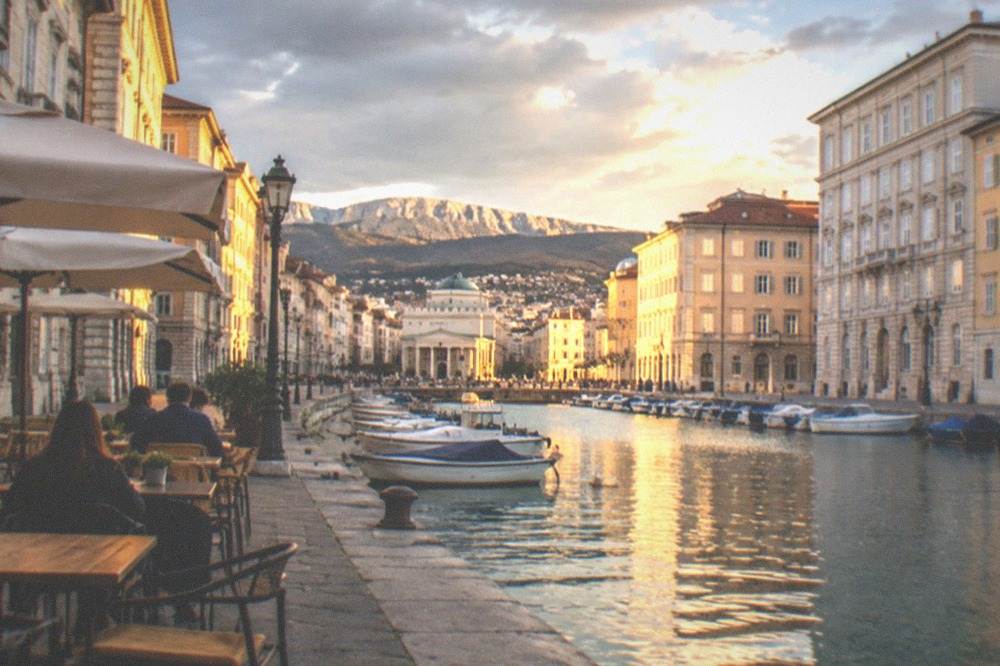
The Canal Grande of Trieste, Italy, is a short navigable canal cut into the heart of the Borgo Teresiano district, ending at the church of Sant'Antonio Taumaturgo a few steps from Piazza Unità d'Italia.
Short answer
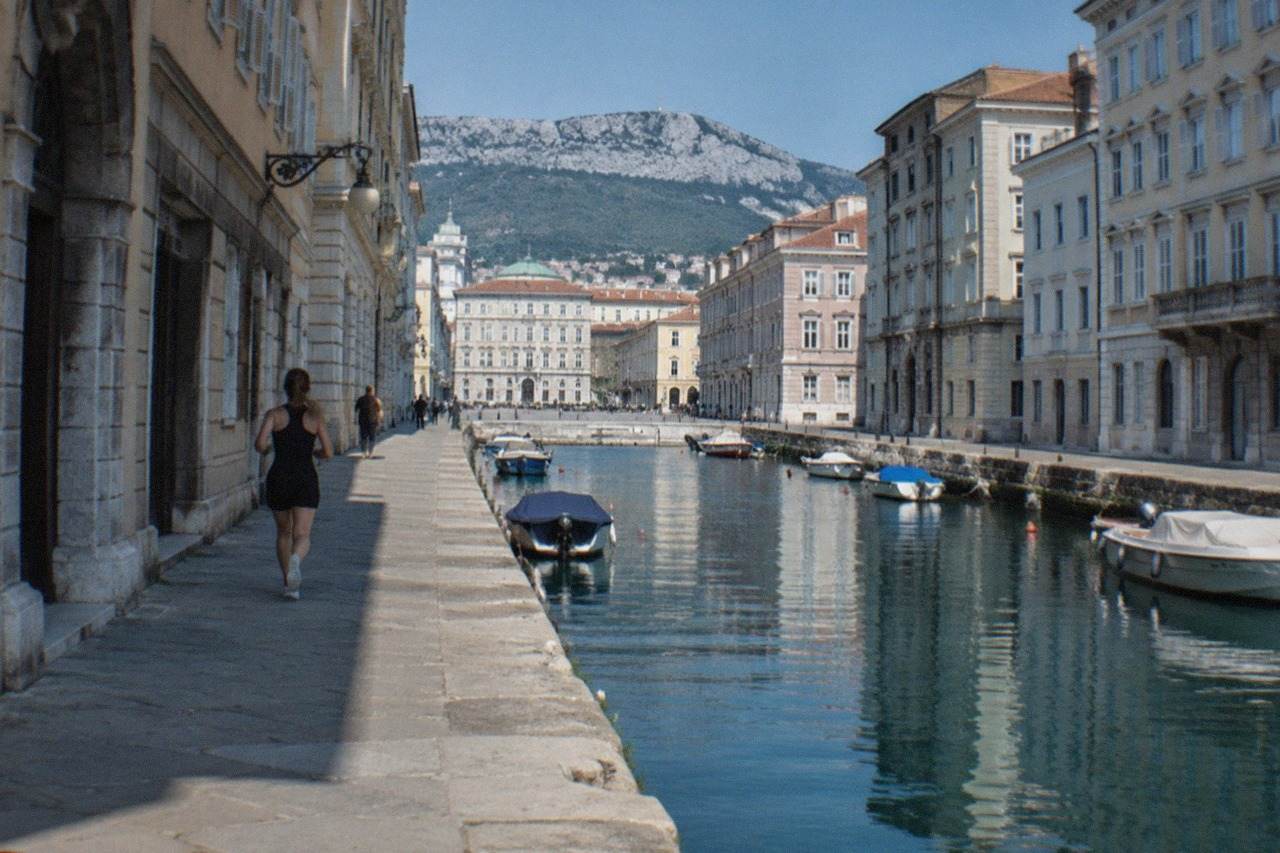
The Canal Grande of Trieste, Italy, is a narrow waterway dug so sailing ships could unload at warehouse doors in the city centre. Today it runs from the church of Sant'Antonio Taumaturgo down to the sea near Piazza Unità d'Italia, lined with cafès, historic buildings and moored boats, and it costs nothing to walk.
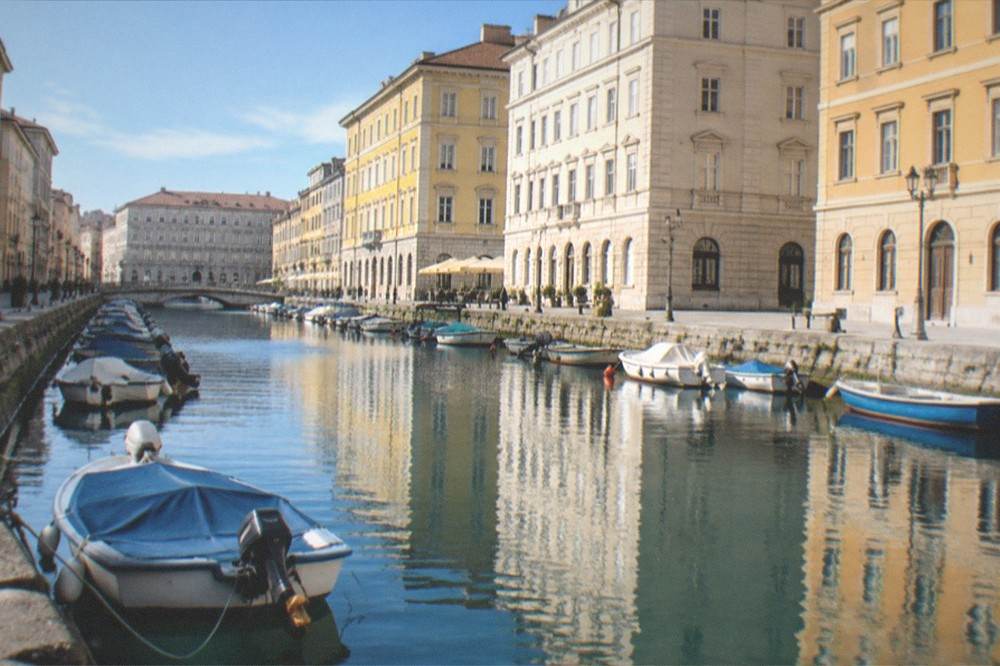
Trieste, the Adriatic port city in the Friuli Venezia Giulia region of northern Italy, is one of the very few Italian cities where you can stand in the middle of a busy commercial street and watch a canal run through it. The Canal Grande of Trieste, Italy, is exactly that: a straight, narrow arm of the sea cut into the grid of the Borgo Teresiano district, ending at the neoclassical church of Sant'Antonio Taumaturgo. It was dug for the least romantic reason possible, so that sailing ships could tie up in the middle of the new city and unload cargo at warehouse doors, and it survives today as the most photographed stretch of water in the city. The banks are lined with cafès, offices and apartment buildings, small boats moor along the quays, and the whole thing is a five-minute stroll from the open sea at Piazza Unità d'Italia, which our Piazza Unità d'Italia guide covers in detail.
What Is the Canal Grande of Trieste, Italy?
The Canal Grande of Trieste, Italy, is a short, straight navigable canal cut into the city centre so that merchant ships could unload directly at warehouse doors in the new Borgo Teresiano district. It runs inland from the sea and ends at the church of Sant'Antonio Taumaturgo, and today it functions as a scenic waterway lined with historic buildings, outdoor cafès and moored small boats rather than as a working port.
It is easy to arrive with the wrong picture. The name invites a comparison with Venice, and the comparison is misleading in both directions. Venice's Canal Grande is a wide, sweeping natural channel that the city grew around; Trieste's canal is a man-made notch, narrow enough that the buildings on opposite banks feel close, and straight enough that you can see its whole length from the church steps at its head. What the two share is the basic idea of a city built around water at the door of the sea.
The canal belongs to the era when Trieste was the main seaport of the Habsburg Empire. The district around it, the Borgo Teresiano, is a planned grid of straight streets named for the empress under whom the expansion happened, and the canal was its cargo spine. Ships came in, tied up, and goods moved a few dozen metres from hold to warehouse. When the port moved to bigger, deeper facilities, the canal stayed, and the warehouses turned into the cafès and offices you see now.
The practical upshot for a visitor is simple. This is a walk, not an attraction with a gate, a queue or a ticket. You walk its length, you sit at one of the cafès on its banks, you photograph the church at the head and the open sea at the mouth, and you move on. It costs nothing, it takes as long as you want it to take, and it sits directly on the route between the two things most visitors come to Trieste to see: the grand square on the sea and the older city on the hill.
Where Is the Canal Grande and How Do You Reach It in Trieste?
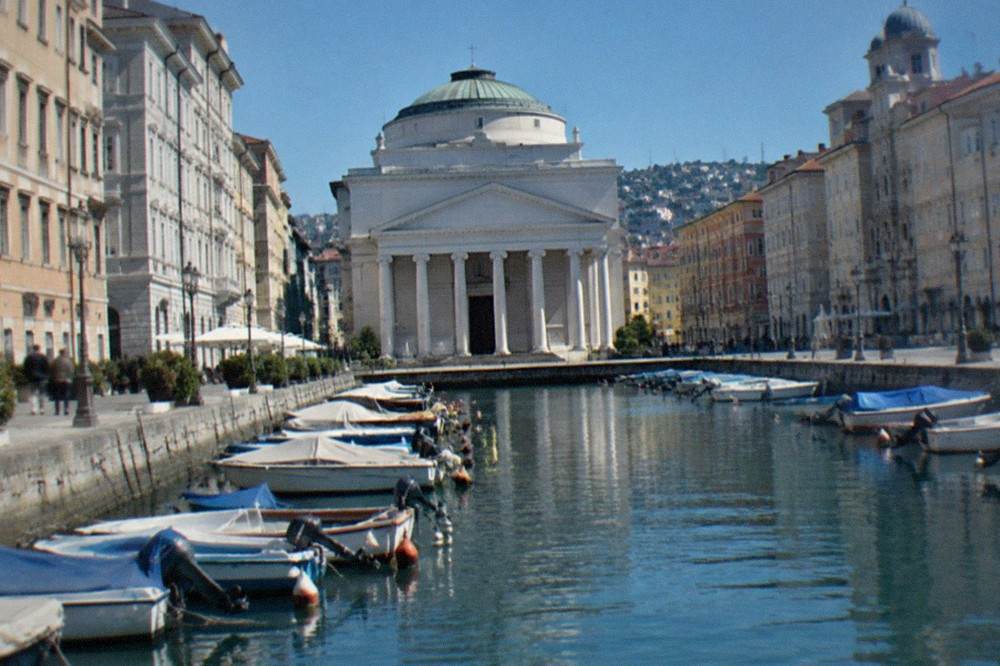
The Canal Grande sits in the Borgo Teresiano district of Trieste, Italy, a short level walk inland from Piazza Unità d'Italia and the Molo Audace pier, with the church of Sant'Antonio Taumaturgo at its inland head. It is on the flat part of the city, so no hills or stairs are involved, and Trieste's urban buses and the Opicina tram network both serve the surrounding streets, with a standard urban ticket costing €1.50 for 60 minutes.
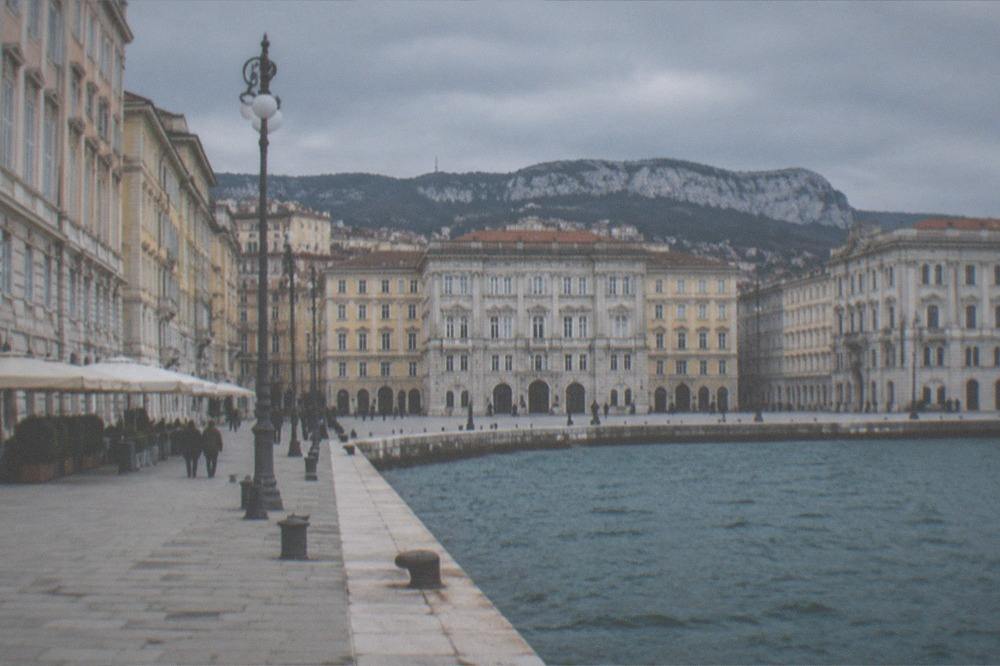
The geography is easy to hold in your head. The canal is one straight line. One end is the sea, effectively: walk out of the canal mouth and you are at the waterfront promenade, with Piazza Unità d'Italia and the Molo Audace, the pier our Molo Audace guide describes, a short distance apart. The other end is the church, and the church is the landmark you aim for when you are trying to find the canal from anywhere in the grid.
Getting there is a non-event, which is part of the charm. From the railway station the route is flat and signposted by the city itself: you simply walk toward the sea and the canal crosses your path. From a cruise berth the walk is along the waterfront. If you are using public transport, Trieste Trasporti's 2026 tariff sheet prices the 60-minute urban single at €1.50, the 75-minute single at €1.85, the day ticket at €3.35, and the 10-ride carnet at €13.50, and you can tap a contactless bank card on board instead of buying a paper ticket.
| Ticket (Trieste Trasporti 2026 urban fares) | Validity | Price |
|---|---|---|
| Single U01 | 60 minutes | €1.50 |
| Single U02 | 75 minutes | €1.85 |
| Day ticket U24 | one day | €3.35 |
| 10 rides U10 | 10 journeys | €13.50 |
| 20 rides U20 | 20 journeys | €16.65 |
One thing worth doing while you are in the neighbourhood is riding the Opicina tram, the funicular-tram hybrid that climbs from the city up to the Karst village of Villa Opicina. It runs today as urban line 2 from piazza Dalmazia, its city terminus, and it is covered by the same ordinary tickets, a detail our Opicina tram and obelisk guide goes into. Check the operator's own site for live status before you plan a ride around it, because maintenance windows are announced there first.
If you would rather have someone else hold the map, a guided walk solves the orientation problem in a single morning, and the canal is on the route of every city-centre walking tour in the roster.
What Can You See Along the Banks of the Canal Grande?
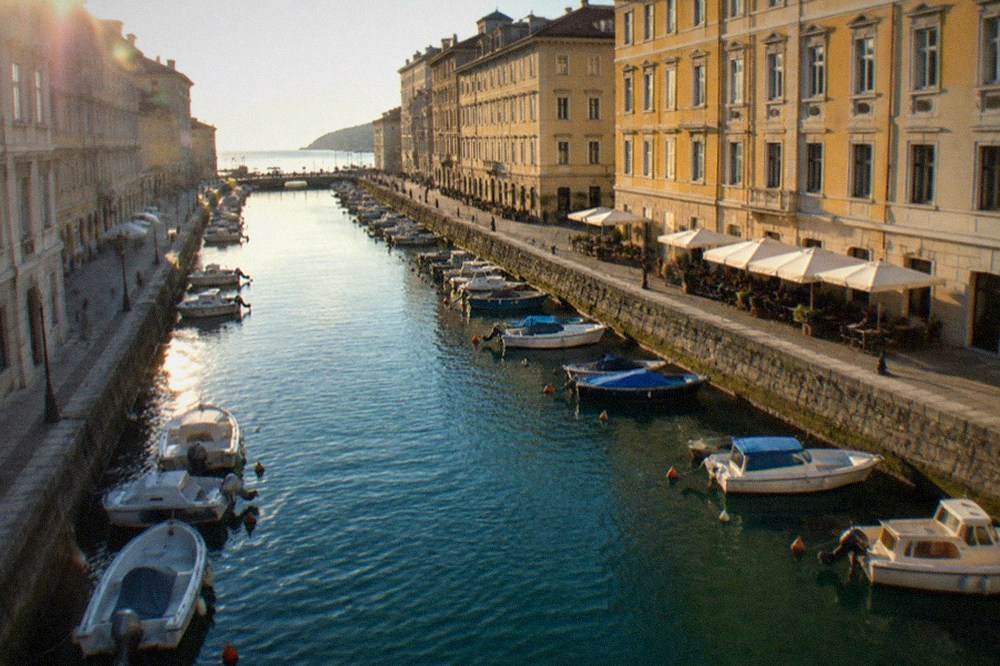
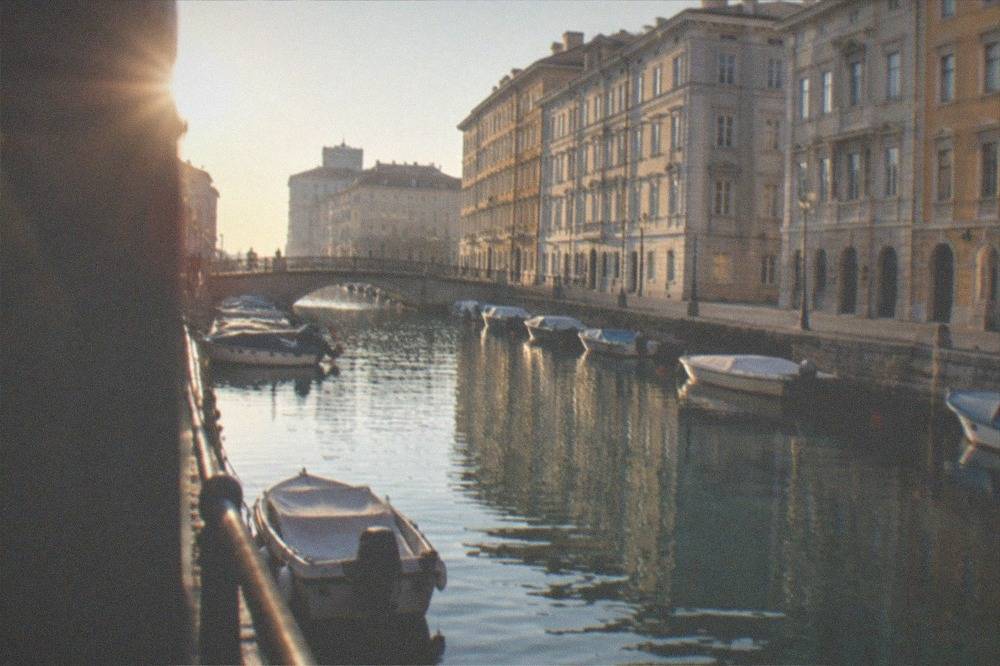
Along the Canal Grande of Trieste you can see the church of Sant'Antonio Taumaturgo closing the view at the inland head, the bridges that cross the water, small boats moored along the quays, and the cafès and 19th-century facades of the Borgo Teresiano on both banks, with the open sea and Piazza Unità d'Italia a short walk from the canal mouth. Every one of these sights is free to look at.
Start at the church. Sant'Antonio Taumaturgo, with its tall Corinthian portico and its green dome, is the single most photographed view of the canal: you stand near the water, the canal runs away from you, and the church fills the end of the frame. Our companion page on the Grand Canal and Sant'Antonio Taumaturgo is devoted to that pairing if you want the fuller treatment.
Then walk the banks. The buildings are the point: this is the most coherent piece of 19th-century city planning in the region, straight streets, disciplined facades, and the water running through the middle of it. The cafès on the banks are part of the scene rather than a reason to come, but sitting at one with a caffè is the most Triestine way to spend half an hour, and the city's coffee culture, which is historic and real and entirely number-free, has its own page in our coverage. Boats moor along the quay, and the water is sea water, tidal, and alive.
From the canal mouth the rest of the centre opens up. Piazza Unità d'Italia is the largest seafront square in Italy and the obvious next stop. The Revoltella Museum, the city's modern-art gallery, is in the same district, open daily 10:00-19:00 except Tuesdays, with adult entry at €8 and reduced at €6. The Roman theatre and the Arco di Riccardo are across the canal grid in the older city, and the Cathedral of San Giusto on its hill above, free to enter, is visible from parts of the waterfront.
| Sight within walking of the Canal Grande | Entry cost | Notes from the official pages |
|---|---|---|
| Piazza Unità d'Italia | free | open seafront square, always accessible |
| Molo Audace | free | walkable pier on the open sea |
| Revoltella Museum | €8 adult, €6 reduced | daily 10:00-19:00, closed Tuesdays, last entry 18:00 |
| Cathedral of San Giusto | free entry | weekdays 8:00-18:30, Sundays 9:00-19:30 |
| Roman theatre | free, viewed from the street | not routinely enterable by individuals |
| Sant'Antonio Taumaturgo | free | open church at the canal head |
One literary footnote belongs to the canal's neighbourhood. James Joyce lived in Trieste for years, and the city he described in his work is substantially this one, the cafès, the waterfront and the streets around the canal. Our James Joyce's Trieste guide traces those addresses, several of which are minutes from the water.
Which Tours and Experiences Start Near the Canal Grande?
The best tours around the Canal Grande of Trieste are the city-centre guided walks: Experience Trieste, a leisurely 2 hour 30 minute private-style walk rated 5.0 from 113 reviews, from $198.52 per group; the Best of Trieste private walking tour, rated 4.94 from 31 reviews at $217.82 per group of up to 10; and the food-focused Guided Foodie Walking Tour, rated 4.91 from 264 reviews at $71.08 per person. All of them pass through or beside the canal district.
The reason is geography: the canal is between the station, the square and the old city, so any walking tour of the centre crosses it. That makes the choice less about route and more about what kind of walk you want.
Experience Trieste is the one we put first for this page because its pace matches the canal's: it is billed as a leisurely walk through the city with a local guide, two and a half hours, and the listing carries a perfect 5.0 rating from 113 reviews. The price is quoted per group, not per person, which changes the arithmetic for families. You can Check availability on the operator's live listing, and the tour has its own review page on this site at Experience Trieste.
If food is the reason you travel, the guided foodie walk is the strongest performer in the roster by review volume: 264 reviews at 4.91, three hours, $71.08 per person, and it works the same streets the canal runs through. Trieste's food identity is its own thing, a mix of Mediterranean and Central European influences, jota and goulash rather than the dishes most people expect of an Italian city.
For a cheaper, slower option, the self-guided scavenger hunt turns the whole centre into a puzzle for $4.67 per person, rated 4.6 from 28 reviews, with no guides and no schedule. And if you are travelling without a group budget at all, the GuruWalk free walking tour, Discover Trieste on a walking tour, is pay-what-you-want and tip-based, rated 4.86 from 50 reviews: it is not one of this site's tours, it is run by a local guru on the GuruWalk platform, and the tip is the whole price.
| Tour from the roster | Duration | From price | Rating |
|---|---|---|---|
| Experience Trieste | 2h 30m | $198.52 per group | 5.0 from 113 reviews |
| Best of Trieste private walking tour | 2 hours | $217.82 per group up to 10 | 4.94 from 31 reviews |
| Trieste: City Hidden Gems private walking tour | 2h 30m | from $143.30 per person | 4.96 from 62 reviews |
| Trieste: Guided Foodie Walking Tour | 3 hours | $71.08 per person | 4.91 from 264 reviews |
| Trieste Historic Cafés Experience | 3 hours | $74.52 per person | 4.91 from 19 reviews |
| Scavenger hunt self-guided walk | 2 hours | $4.67 per person | 4.6 from 28 reviews |
| GuruWalk free city walk (Discover Trieste) | flexible | free, tip based | 4.86 from 50 reviews |
The Historic Cafés Experience deserves a special mention for this page specifically, because the canal's banks are part of Trieste's caffè geography and that tour, $74.52 per person and rated 4.91 from 19 reviews, is built around exactly that culture. It is one of the strongest pairings of subject and place in the whole roster, and the operator's live listing carries the current dates and availability.
What Does a Visit to the Canal Grande and Trieste Cost?
Walking the Canal Grande itself costs nothing, and so do the seafront square, the pier, the cathedral and the Roman theatre viewed from the street. Around it, the paid sights in the pack are Miramare Castle at €17 for an adult, San Giusto Castle at €7, the Revoltella Museum at €8, and Grotta Gigante at €15, so a day of sightseeing in Trieste can run from entirely free to the sum of whichever interiors you choose to enter.
The canal is the free spine of a visit, and Trieste is unusually generous with free things. The park at Miramare, the seafront, the Rive, the churches that are open, the whole of the Borgo Teresiano grid: none of it has a gate. What you pay for is interiors.
| Sight in Trieste | Adult entry | Reduced | Free days |
|---|---|---|---|
| Canal Grande walk | free | free | always |
| Miramare Castle | €17 | €7 (EU 18-25) | first Sunday of the month |
| Miramare park | free | free | always |
| San Giusto Castle | €7 | €5 | first Sunday and 3 November |
| Museo Revoltella | €8 | €6 | first Sunday of the month |
| Grotta Gigante | €15 | €12 | no free day listed |
| Risiera di San Sabba | free | free | always |
Two of those deserve their caveats. Grotta Gigante, the giant cave up on the Karst above the city, is guided-access only with compulsory booking, closed on Mondays from September to February, and its tours depart on the hour from 9:00 to 16:00 as listed on the venue's own schedule page; our Grotta Gigante guide has the detail. The free first Sundays at the state sites are part of the ministry's scheme, which has changed format more than once in recent years, so check the venue's own page for the month you are there rather than assuming.
Miramare is the one paid sight that competes with the canal for photographs. The white castle on the sea up the coast at Grignano, €17 for an adult including the temporary exhibition, open every day 9:00-19:00 with last admission at 18:30, and its park is free all year with seasonal hours. Our Miramare Castle guide covers it fully, and the castle can also be visited on a combined panoramic city tour from the roster, from $129.94 per person and rated 4.97 from 21 reviews.
For the full hill-and-castle picture, San Giusto Castle and its museum are €7, the cathedral next to it is free, and the two sit above the old town described in our San Giusto Castle and hill guide. The Risiera di San Sabba, the national monument at the city's edge, is free and open daily, and it is the one site in the city where the mood is sombre rather than scenic.
When Is the Best Time to Walk the Canal Grande?
The best months to walk the Canal Grande of Trieste are May, June and September, when ARPA's station tables for the city waterfront show mean temperatures of 18.8, 23.1 and 21.2 degrees, rainfall of 75, 62.5 and 102.3 mm, and sea temperatures of 17.9, 23.1 and 23.9 degrees. July and August are the warmest at 25.2 degrees mean but the busiest, and November is the wettest month of the year at 109.8 mm.
The numbers come from ARPA FVG's own climate normals for the Trieste molo Fratelli Bandiera station, the waterfront gauge a short distance from the canal mouth, and they overturn one expectation: Trieste is not a rainy-summer city. July is the second driest month of the year at 53.8 mm. The wet period is autumn, with November the wettest month at 109.8 mm and September second at 102.3 mm.
| Month | Mean temp C | Rain mm | Sea temp C | Notes for the canal walk |
|---|---|---|---|---|
| April | 14.0 | 60.7 | 14.0 | mild, quiet |
| May | 18.8 | 75.0 | 17.9 | warm days, cool sea |
| June | 23.1 | 62.5 | 23.1 | swimmable, long days |
| July | 25.2 | 53.8 | 25.9 | warmest, driest ranking second |
| August | 25.2 | 71.7 | 25.9 | peak sea warmth |
| September | 21.2 | 102.3 | 23.9 | warm sea, autumn rain arriving |
| October | 17.1 | 88.6 | 20.3 | Barcolana month |
| November | 12.5 | 109.8 | 16.8 | wettest month |
The other factor is the bora, the east-north-east wind that defines this coast. ARPA's tables count 17.6 days a year on average with a gust over 90 km/h at the molo station, and the monthly record gust exceeds 110 km/h in every single month, so a windy day is possible at any time of year, with the cool season the windiest and June the calmest month. There is no published wind threshold at which anything in the city closes, so the practical advice is simply to check the forecast and dress for it.
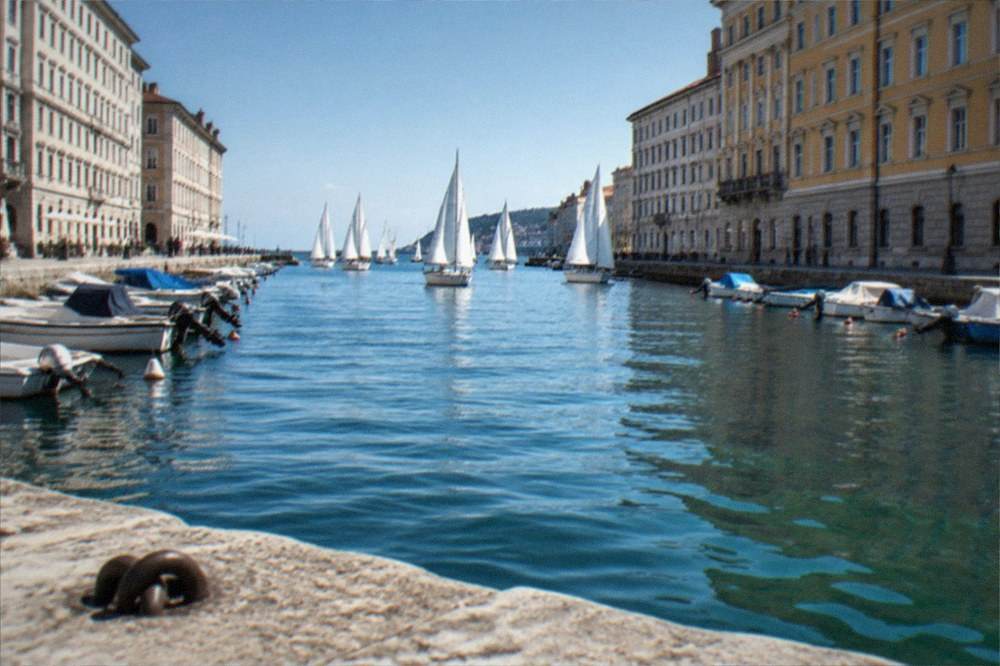
October has a special draw. The Barcolana, the world's largest sailing race by entry, runs its 58th edition from 2 to 11 October 2026 with the main regatta on Sunday 11 October, and the canal and waterfront sit at the centre of the shore-side spectacle. The record entry stands at 2,689 boats, set in 2018. If you want the city at its most crowded and most festive, that is the weekend.
How Does the Canal Grande Fit Into a Day in Trieste?
The Canal Grande works best as the hinge of a single walking day in Trieste, Italy: start at the station or your hotel, walk the canal from the church at its head to its mouth, continue along the seafront to Piazza Unità d'Italia and the Molo Audace, then climb to the Cathedral of San Giusto and San Giusto Castle for the view, and finish back down at a caffè on the canal banks. The whole loop is on this page's flat centre and hill.
The order matters less than the spine. The canal gives you a north-south line through the Borgo Teresiano; the seafront gives you an east-west one; the hill is the only climb and it rewards you with the castle, the cathedral and the best panorama of the red roofs and the gulf. Our one day in Trieste itinerary breaks the same loop into hours, and the self-guided Trieste walking tour version does it without a guide. For a half-day version, or for a day when the weather turns, the canal is also the anchor of the indoor options: the Revoltella Museum two streets over, the historic cafès on and near its banks, and the covered shopping streets of the Borgo Teresiano. Our rainy day in Trieste page was written for exactly that plan B.
If one day is all you have and you want to go further afield, the border is the point of Trieste. Slovenia is immediately next door, and the roster's strongest day trip by review count is the combined Ljubljana and Lake Bled tour from Trieste, from $137.57 per person, rated 4.51 from 277 reviews, seven hours with round-trip transport and a guided tour in Italian and English. Croatia's coast is equally close, and since 1 January 2023 both Croatia and Slovenia have been in the euro and in Schengen, so there is no currency change on any of these trips. The one live caveat: Italy is running temporary border checks on the Slovenia land border through 18 December 2026, so carry a passport or national ID card.
The Bled and Ljubljana day trip pairs neatly with a canal-morning: the coach tours depart from the city, the canal is the landmark meeting district, and you are back on the banks for a late caffè. The operator's live listing carries the current dates and departure points for the season, and booking ahead is the sensible move in the Barcolana week of early October, when the city fills up.
Common Questions About the Canal Grande of Trieste
Is the Canal Grande of Trieste the Same as the One in Venice?
No. Venice's Canal Grande is a wide natural channel the city grew around; Trieste's is a short, straight, man-made cargo canal cut into a planned 18th-century district so ships could unload at warehouse doors. The Trieste canal is narrow, ends at the church of Sant'Antonio Taumaturgo, and is walked rather than travelled by boat. The shared name is about function, not scale.
Can You Take a Boat Ride on the Canal Grande of Trieste?
The canal is a mooring and scenery waterway today, not a scheduled passenger route, and the pack lists no canal boat service. Small boats are tied along its quays and the water is open to the sea at its mouth. If being on the water is the goal, the roster's kayak tour of the Duino coast, from $76.81 per person and rated 4.89 from 11 reviews, is the sea option, and the ferry routes from Trieste, which our ferries page covers, serve the cross-border destinations.
Is the Canal Grande of Trieste Free to Visit?
Yes, entirely. The canal is a public waterway through a city district: there is no gate, no ticket and no fee to walk its banks, photograph the church at its head, or sit at the cafès along it. The paid sights in the surrounding centre, Miramare Castle at €17, San Giusto Castle at €7 and the Revoltella Museum at €8, are separate and optional.
How Far Is the Canal Grande from Piazza Unità d'Italia?
The canal mouth opens onto the waterfront a short level walk from Piazza Unità d'Italia, the seafront square, and the same stretch reaches the Molo Audace pier. The pack gives no exact figure for that specific walk, so the honest answer is: it is the closest landmark pair in the city centre, flat, and on any walking route between the station, the square and the old town.
What Is the Best Time of Day to Photograph the Canal Grande?
The canal runs roughly inland from the sea, so the light changes along its length through the day: morning sun catches the facades on one bank, late afternoon the other, and dusk brings the lit church at the head into the frame with reflections on still water. ARPA's tables show June as the calmest month for wind, which matters for reflection shots, and October as the month when the Barcolana fleet fills the gulf beyond the canal mouth.
Are There Cafès on the Canal Grande Like Trieste's Historic Coffee Houses?
Yes, the banks carry outdoor seating and the canal sits inside the district where Trieste's caffè culture lives, the same culture the Historic Cafés Experience tour, $74.52 per person and rated 4.91 from 19 reviews, is built around. Trieste is a historic coffee port and roasting centre, and the caffè on the canal bank is the standard way to spend time here. No per-capita coffee figure has a primary source, so this site does not print one. For everything else the city offers, Trieste Travel Guide covers the canal and every street around it.
The Canal Grande of Trieste, Italy, is a short walk with a long shadow: a working cargo channel that became the most pleasant street in a city that runs on caffè, sea air and the view of white sails in the gulf. Walk it once in the morning, sit down once in the afternoon, and you will have done it the way the city intends.