Trieste to Koper: A Day Trip Across the Border from Trieste, Italy to Slovenia's Coast
Koper is the closest Slovenian port to Trieste, Italy, and it sits far enough off the standard tourist trail that a day trip there feels like a genuinely local outing. This guide covers the border, the practicalities and what the town itself offers.
Short answer
Koper lies just across the Slovenian border from Trieste, Italy, on the same Adriatic coast. Italy, Slovenia and Croatia all use the euro, but Italy is running temporary border checks on its land border with Slovenia until 18 December 2026, so carry a passport or national ID card. Cross-border coaches run from Trieste; check the operator's current timetable rather than trusting a printed one.
Koper is Slovenia's largest coastal town and it sits directly across the land border from Trieste, Italy, the Adriatic port city in Friuli Venezia Giulia that this site covers. That proximity is the whole appeal: from Piazza Unità d'Italia the Slovenian border is a short hop inland, and Koper is the first sizeable town on the other side of it. Day-trippers from Trieste mostly push past Koper on their way to Piran or Ljubljana, which means the town's Venetian-era old core stays noticeably quieter than its better-known neighbours.
This guide walks through what a Trieste to Koper day trip actually involves: the border formalities, which almost every generalist guide gets wrong, the transport options you can rely on, what the old town gives you once you arrive, and where a guided tour fits if you would rather not plan the crossing yourself. Everything factual here comes from verified sources, and where a figure could not be confirmed, you will be told to check the operator instead of being handed an invented number.
How Do You Get from Trieste to Koper?
Koper is reached from Trieste by road, crossing the land border between Italy and Slovenia a short distance after leaving the city. Regional coach operators including Flixbus and the regional TPL FVG network serve cross-border routes from Trieste towards the Slovenian coast, but their frequencies, departure points and fares are not published in a form this site could verify, so check the operator's own timetable before you travel. Driving is the most flexible option.
The honest answer on transport is that the specific numbers change faster than any article can track. Coach operators adjust cross-border schedules seasonally, and the departure points in Trieste have shifted between the city's coach stations over the years. What is stable is the choice: a direct coach from Trieste, a self-drive crossing, or a guided day tour that picks you up in the city and handles the border, the parking and the route in one booking.
If you are staying in Trieste and using the city's own buses before you leave, the urban fares are fixed and published. Trieste Trasporti's 2026 tariff sheet, dated 29 December 2025, lists the urban single at €1.50 for 60 minutes and €1.85 for 75 minutes, with a day ticket at €3.35 and 10 rides at €13.50. Singles are valid for 240 minutes on Sundays and public holidays, and contactless bank cards can be tapped on board, where the system applies the cheapest applicable fare. Those fares cover the urban network inside Trieste, not the cross-border leg, but they matter for getting from your hotel to the coach departure point.
| Code | Trieste urban ticket | Price |
|---|---|---|
| U01 | single, 60 minutes | €1.50 |
| U02 | single, 75 minutes | €1.85 |
| U24 | day ticket | €3.35 |
| U10 | 10 rides | €13.50 |
| U20 | 20 rides | €16.65 |
For travellers who prefer the sea route, there is a separate option worth knowing about: seasonal ferry services connect Trieste with the Slovenian coast, and this site covers them in detail on the Trieste to Piran and Portorož by ferry page. Those services are weather dependent, and the bora can stop them, so treat a ferry booking as a fair-weather plan with a coach backup rather than a guaranteed crossing.
Do You Need a Passport for a Day Trip from Trieste to Koper?
Yes, carry a passport or a national ID card, even though Slovenia is in the Schengen area and the euro zone. Italy is running temporary internal border checks on its land borders with Slovenia from 19 June 2026 to 18 December 2026, per the European Commission's own register of reintroduced controls, so the border you cross on this trip is one where checks can genuinely happen. Slovenia has been in Schengen since December 2007 and in the euro area since 1 January 2007.
This is the single most-confused point on Trieste's cross-border routes, and two facts sort it out completely.
First, the currency question. Croatia adopted the euro and joined the Schengen area on the same day, 1 January 2023. Guides still circulating claim Croatia has one but not the other; both happened, and both happened on that date. Italy, Slovenia and Croatia all use the euro, so nobody crossing from Trieste into Slovenia needs to change money, and nobody heading further down the Istrian coast into Croatia does either. There is no currency exchange anywhere on this route that you actually need.
Second, the Schengen question. Schengen membership means no routine border controls, but member states can reintroduce checks temporarily, and Italy has done exactly that on the Slovenian border. The Commission's register lists the Italian measures as running from 19 June 2026 to 18 December 2026 on the land borders with Slovenia. That is a dated, temporary measure, not a permanent rule, and it may be extended or lifted, so check the current status before you travel rather than trusting any article, including this one.
| Country | Currency | Schengen status | Border check on a Trieste day trip |
|---|---|---|---|
| Italy | euro | Schengen member | departure point |
| Slovenia | euro | member since December 2007 | temporary Italian checks until 18 December 2026 |
| Croatia | euro | member since 1 January 2023 | none on the Slovenian-Croatian border |
A passport or ID card is a small thing to carry and the only document that resolves every version of this question. EU citizens can use a national ID card; travellers from outside the EU should carry the passport they entered Italy on.
What Is There to Do in Koper on a Day Trip?
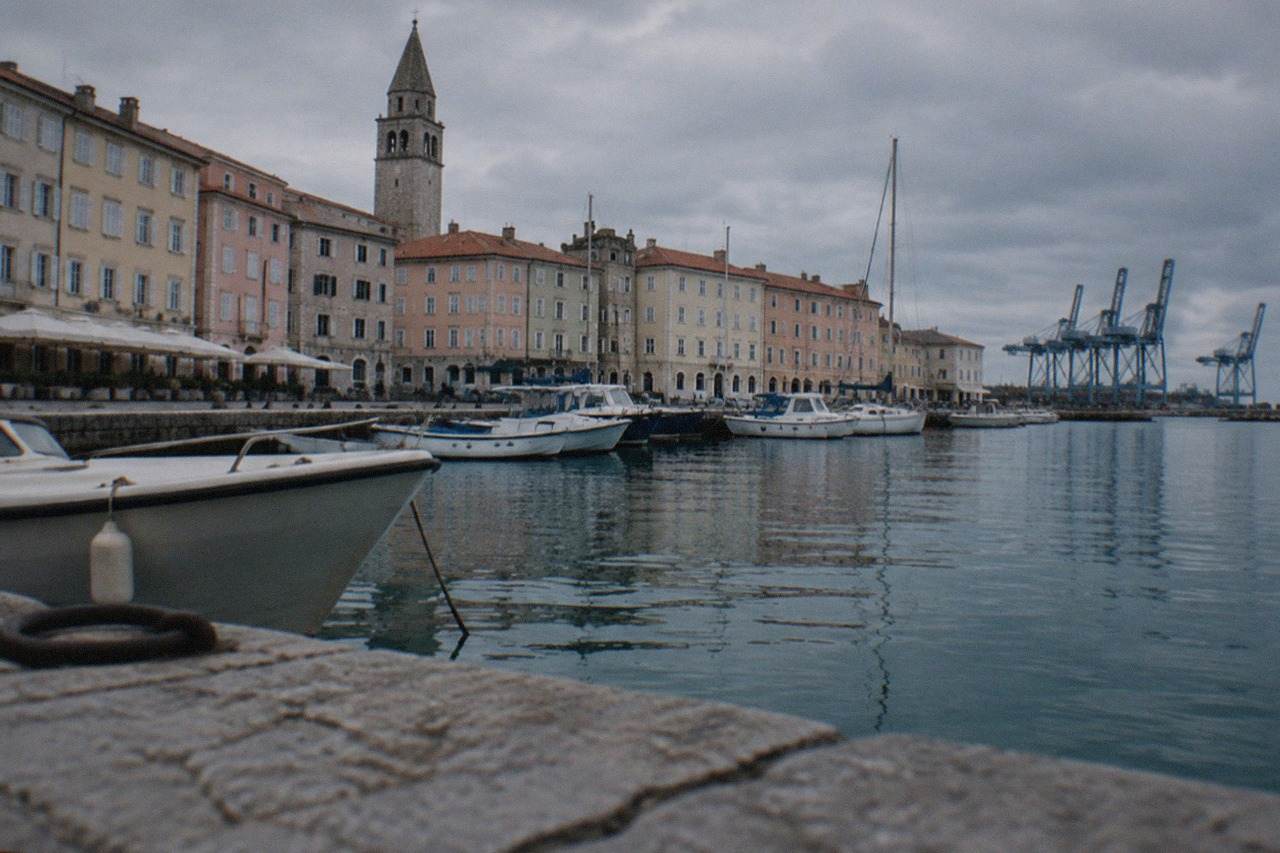
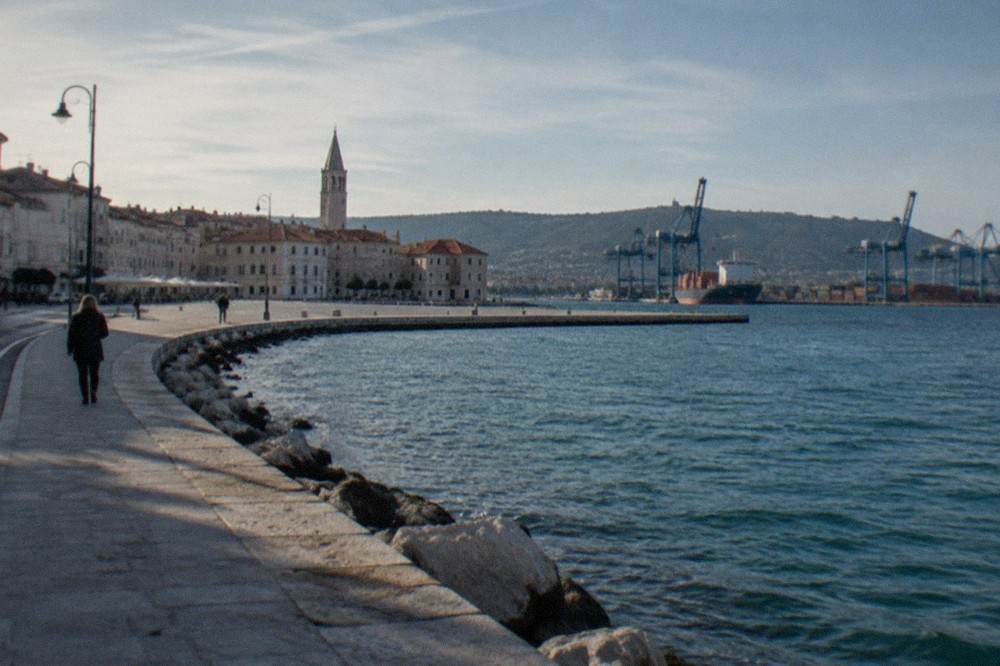
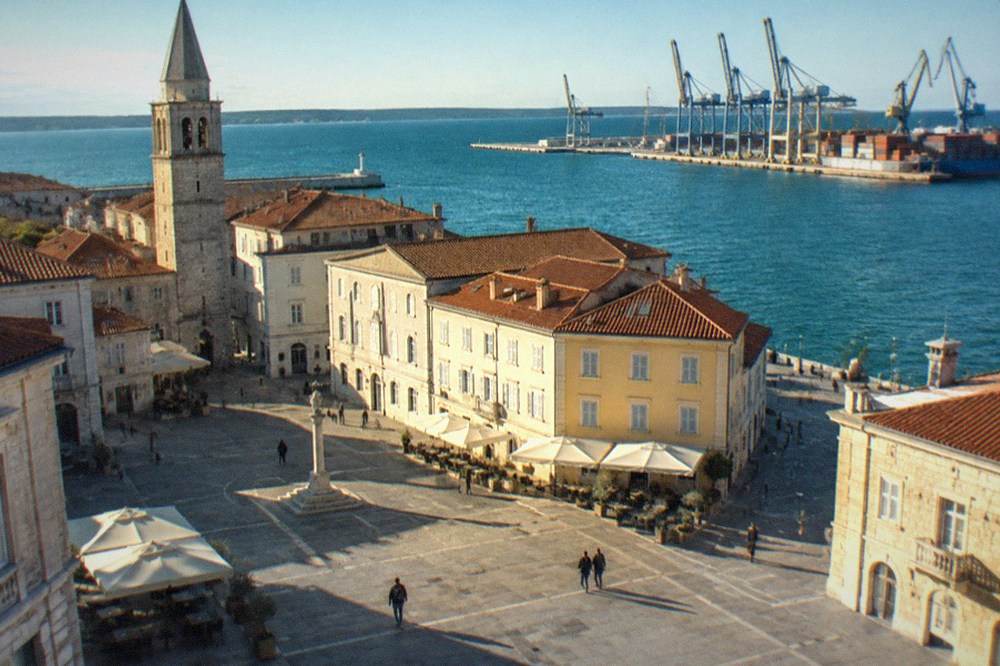
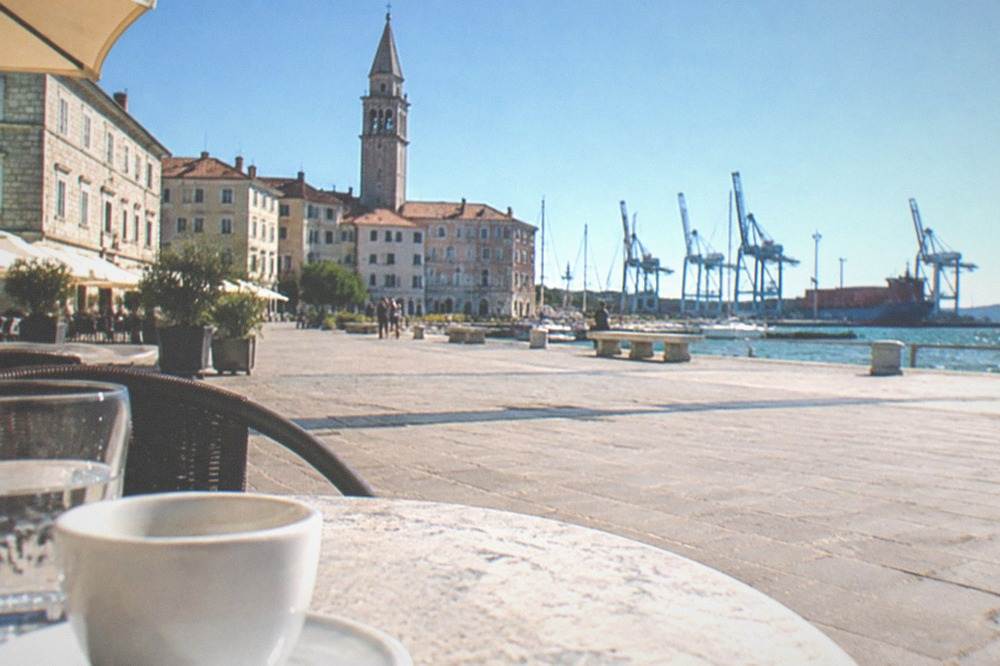
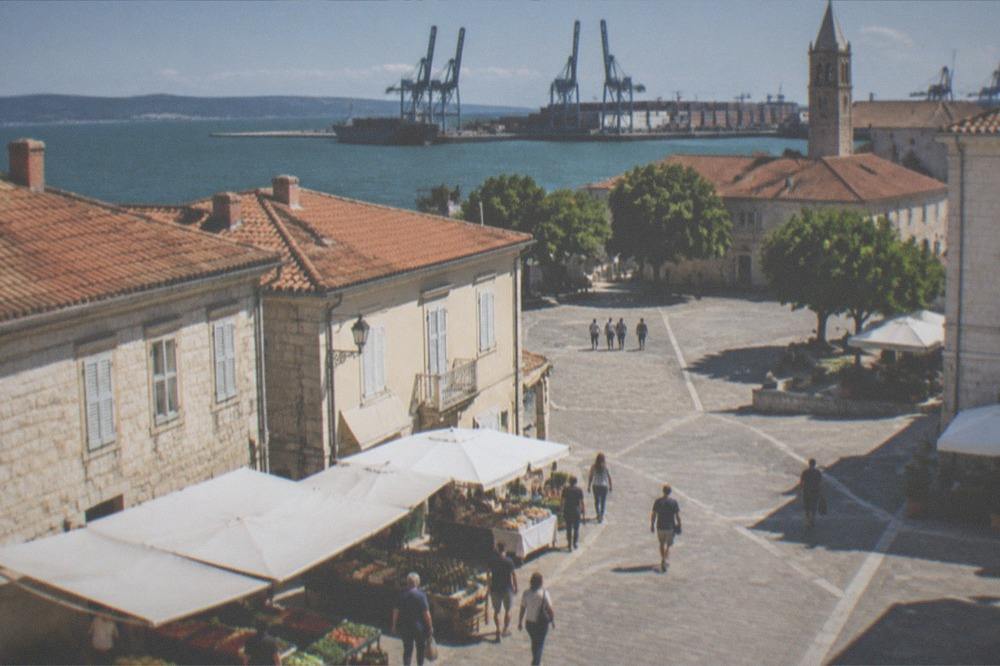
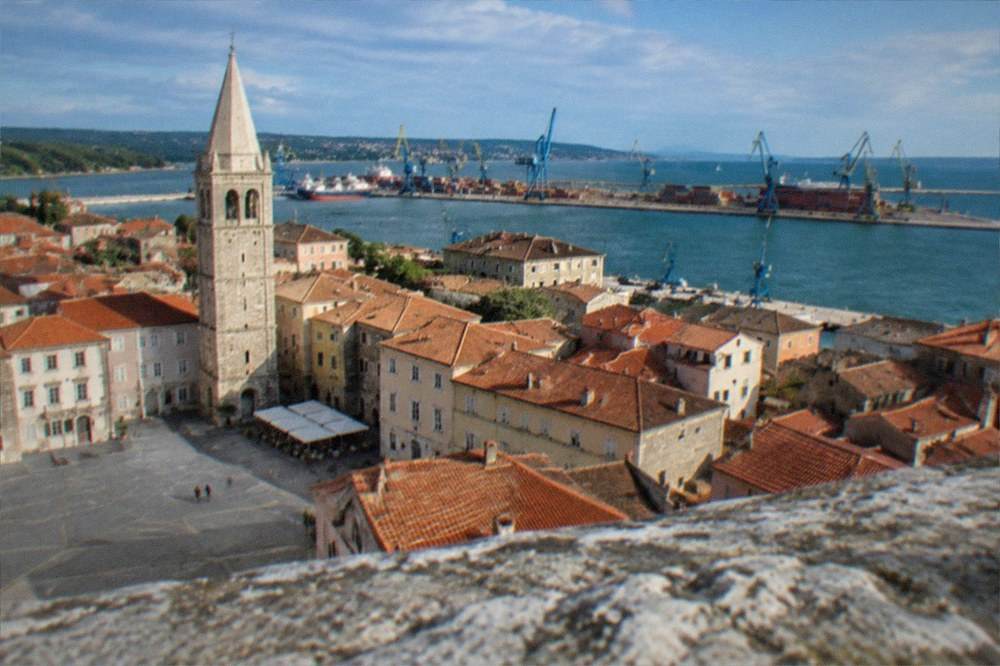
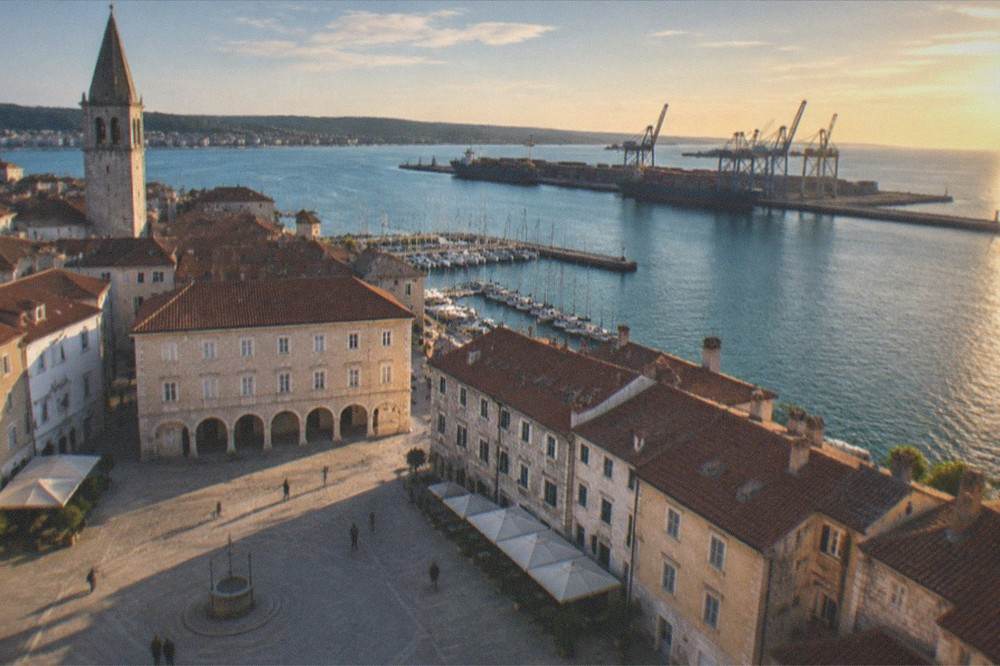
Koper's core attraction is its compact old town, built on what was once an island and laid out under centuries of Venetian rule, with a cathedral bell tower, arcaded squares and the port working around it. The town is walkable in a day without any transport at all once you arrive, and unlike Piran it has not been reshaped around tourism, so the streets you walk are the ones Slovenians actually live in.
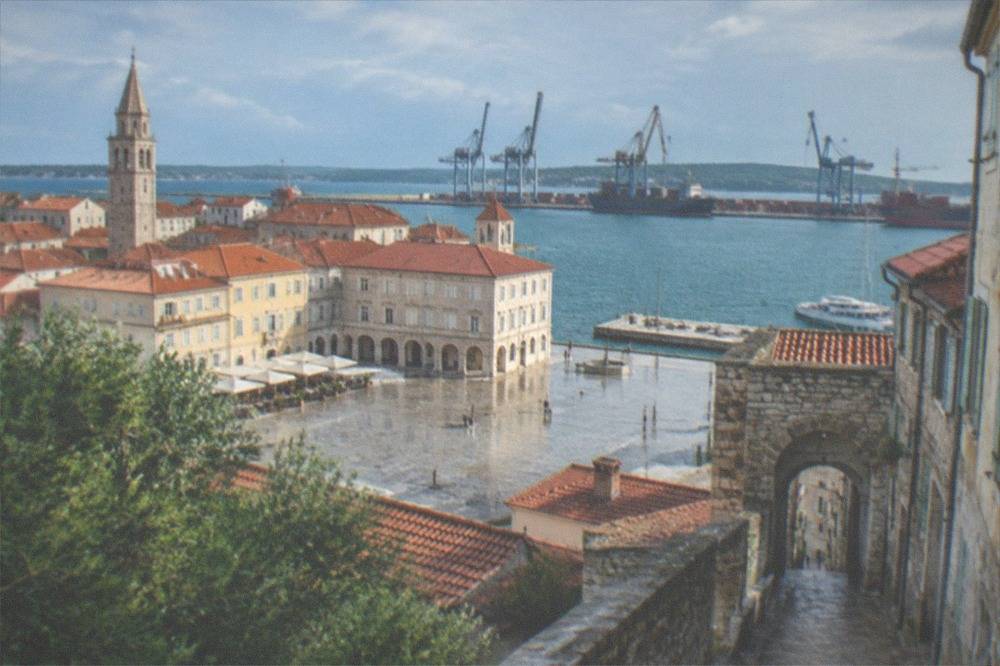
Koper's history runs parallel to Trieste's for most of the last thousand years, and the comparison is what makes it interesting. Both towns were Adriatic ports under Venetian influence; both passed to the Habsburgs; both ended up on different sides of a border drawn after the Second World War. Where Trieste stayed Italian, Koper became Yugoslav and then Slovenian, and its Italian-speaking community gave the town a bilingual character it still has. Street names appear in Slovene and Italian, and the old centre retains the layout of the Venetian town while the modern port facilities sprawl around it.
The practical shape of a visit is simple. You arrive at the edge of the old town, you walk in, and you spend the day on foot. The main square, the cathedral with its tower, the loggia and the network of small streets around them form a cluster compact enough that you will not need a map after the first hour. The working port sits alongside it, which keeps the town honest: alongside the café tables there are cranes, cargo and a genuine maritime economy rather than a stage set.
For lunch, the town's position between the Adriatic and Slovenia's wine regions shapes the menu. Seafood from the gulf, and inland dishes drawing on the Slovenian and Istrian kitchens, appear together, and the region's own olive oil is a local staple. Specific restaurant recommendations age badly in any article, so the better advice is structural: eat inside the old walls where the kitchens turn over local trade rather than day traffic, and treat any dish involving pršut, olive oil and Teran as the regional signature rather than an accident of the menu.
When Is the Best Time of Year for a Trieste to Koper Trip?
The warmest, most settled weather on this coast runs from June through September, when ARPA FVG's station tables for Trieste molo Fratelli Bandiera show sea temperatures of 23.9 C to 25.9 C and mean daily air temperatures above 21 C. Autumn is wetter: November is the wettest month at 109.8 mm and September is second at 102.3 mm, while July, at 53.8 mm, is the second driest month of the year.
Those figures are measured at the Trieste waterfront station, the closest long-term series to the border, and they describe the same gulf Koper sits on, but they are Trieste's numbers, not Koper's own, so treat them as the regional picture rather than a town-specific forecast. The pattern they describe holds for the whole northern Adriatic coast: hot, relatively dry midsummers, a warm sea that peaks in August, and an autumn that turns wet from September onwards.
| Month (Trieste station) | Mean high C | Rain mm | Sea C |
|---|---|---|---|
| June | 25.8 | 62.5 | 23.1 |
| July | 28.2 | 53.8 | 25.9 |
| August | 28.1 | 71.7 | 25.9 |
| September | 23.9 | 102.3 | 23.9 |
| October | 19.6 | 88.6 | 20.3 |
| November | 14.7 | 109.8 | 16.8 |
The bora deserves a mention in any planning section for this coast. The station tables show 17.6 days a year on average with a gust over 90 km/h at the Trieste molo, and the monthly record gust exceeds 110 km/h in every month of the year, which means a strong bora is possible even in summer. The bora blows from the east-north-east, it is a cold, dry wind rather than a wet one, and there is no published official threshold at which ferries stop or roads close, so do not trust any article that quotes one. If a bora episode coincides with your trip, the old towns are actually pleasant to walk in, being sheltered from an easterly; it is the open seafronts and any ferry plans that suffer.
Spring is the compromise season. The sea is too cold for swimming by most standards, the ARPA tables showing 14 C in April and 17.9 C in May, but the walking weather is good, mean highs running from 16.8 C in April to 21.7 C in May, and the towns are quiet before the summer traffic builds. For a Koper trip, which is mostly a walking-and-eating trip rather than a beach trip, that trade-off is often worth making.
If you are building a wider border itinerary, the region offers more than one coastline town: the Trieste to Piran route covers the peninsula town most visitors prefer, while the Trieste to Rovinj route pushes down into Croatian Istria, a longer day out on the same coast.
Should You Take a Guided Tour to Koper or Travel Independently?
Independent travel to Koper suits confident drivers and anyone comfortable with a coach booking, because the town needs no guide once you arrive. A guided tour suits travellers who want the border, the driving and the timing handled in one purchase, and the Slovenian-coast tours from Trieste cover Koper as part of a coastal circuit that also takes in Piran, from $114.64 per person on the listing reviewed by this site, rated 4.57 from 136 reviews.
That guided option, the Piran and Slovenia Coast tour, runs six hours and is the closest thing in the verified roster to a Koper-inclusive coastal day. There is also a premium Slovenian coast tour with food and wine tasting, from $137.57 per person, rated 4.98 from 50 reviews over five and a half hours, which adds the region's table to the itinerary. For a smaller group, the Piran and Panoramic Slovenian Coast tour runs five hours from $125.13 per person, rated 4.9 from 82 reviews. None of these is a Koper-only product; Koper appears on this site's radar as part of the coastal circuit, which is honest to the way the tour market actually covers it. The rest of the planning pages sit on Trieste Travel Guide.
| Tour from the verified roster | Duration | From (per person) | Rating |
|---|---|---|---|
| Piran and Slovenia Coast Tour | 6 hours | $114.64 | 4.57, 136 reviews |
| Slovenian Coast with Food and Wine | 5h 30m | $137.57 | 4.98, 50 reviews |
| Piran and Panoramic Coast, small group | 5 hours | $125.13 | 4.9, 82 reviews |
| Ljubljana and Lake Bled | 9 hours | $108.91 | 4.69, 544 reviews |
| Postojna Cave and Predjama Castle | 6 hours | $137.57 | 4.76, 543 reviews |
The trade-off is control. A tour fixes your time in each town and removes the option to linger in a square you like, but it removes the border question, the parking question and the timetable question in the same stroke. Independent travel gives you the day entirely, at the cost of doing your own homework on the coach schedule and carrying the documents the border situation currently rewards.
If the coast is not your priority and you would rather see Slovenia's inland capital, the Trieste to Ljubljana route is the bigger day out, and the flagship guided product for it is the one this page is paired with. The Ljubljana and Lake Bled tour runs nine hours from $108.91 per person, rated 4.69 from 544 reviews, with round-trip transport from Trieste and a guided tour in Italian and English. You can check availability on the operator's live listing for your own dates, and read about it on this site's day trips from Trieste overview.
How Much Does a Trieste to Koper Day Trip Cost?
The verified costs you can plan around are the Trieste urban fares, €1.50 for a 60-minute single and €3.35 for a day ticket, plus the day-tour prices on the operator's listings, which start around $114.64 per person for a coastal circuit. Cross-border coach fares from Trieste to Koper could not be verified, so no figure is printed here; the tourist tax does not apply, because Koper is a day trip and the tax applies only to overnight stays in Trieste.
The tourist tax point is worth a sentence, because it confuses people planning day trips out of Trieste. The 2026 rates published by the Comune, from €1.50 per night at campsites up to €3.80 at five-star hotels, are charged per person per night for a maximum of five consecutive nights in the same property, and they attach to where you sleep, not where you walk. A day trip to Koper incurs nothing of the kind in either direction.
What you actually spend in Koper is food, coffee and whatever the old town's small shops tempt you with. The town sits inside the euro zone like Trieste does, so card payments and cash work identically on both sides of the border, and the pricing culture is closer to Trieste's than to the heavily touristed towns further down the Istrian coast. Anyone telling you a specific price for lunch in Koper is guessing; this site prints only figures it could verify, and no menu prices for Koper could be.
Is Koper Worth It Compared with Piran or Ljubljana?
Koper is worth it for travellers who have already seen the headline towns or who want a working port town with a Venetian core and far fewer tourists, while Piran is the more photogenic choice for a first visit and Ljubljana is the bigger cultural day out. If you have only one day in Slovenia from Trieste and no prior visits, the honest recommendation is Piran; if you have already been, or you live locally, Koper's relative quiet is its own attraction.
The comparison table writes itself, because the three towns do genuinely different jobs.
| Destination from Trieste | Character | Best for | Covered on this site |
|---|---|---|---|
| Koper | working port, Venetian old core, quiet | a second Slovenia trip, local pace | this page |
| Piran | peninsula old town, most photographed | a first coastal day trip | Trieste to Piran route |
| Ljubljana | capital city, river, castle hill | culture and a bigger day | Trieste to Ljubljana route |
| Postojna and Predjama | cave and castle system | weather-proof inland day | Trieste to Postojna route |
There is a quieter argument for Koper that has nothing to do with comparison shopping. The town is the administrative capital of Slovenia's coast, which means it has the offices, the shops and the everyday life that tourism bypasses in Piran. If your interest in the region is how it actually works rather than how it photographs, a day in Koper alongside a coffee in a working square tells you more about the Slovenian littoral than a week of postcard towns.
What Should You Know Before You Cross the Border Back Into Italy?
Carry the same ID back into Italy that you carried out, because the temporary checks apply in both directions on the land border until 18 December 2026, and keep your return timing flexible, since a border check on a busy Sunday evening can add waiting time that no published timetable accounts for. Nothing else changes: the currency, the plugs, the phone networks and the language overlap all continue across the line, and there is no customs formalities to declare on either side.
Practically, the return trip rewards a margin. Cross-border coaches run to their schedules most of the time, but a control point operating on a summer Sunday can slow a convoy, and if your last connection in Trieste is an urban bus, remember the 2026 tariff's 60 and 75-minute validity windows and the 240-minute Sunday extension. The contactless tapping on Trieste's buses means you never need to find a ticket machine on the way home.
Slovene is the official language on the Koper side and Italian is official in Trieste, but the border region is thoroughly bilingual, and English is widely understood in the tourist-facing parts of both towns. A few words of Slovene are appreciated in Koper's non-tourist shops; a few words of Italian get you the same courtesy in Trieste's. Neither is required for the trip to work.
Common Questions About a Trieste to Koper Day Trip
How do you get from Trieste to Koper?
By road, crossing the land border between Italy and Slovenia shortly after leaving the city. Cross-border coaches including Flixbus and regional TPL FVG services serve routes from Trieste towards the Slovenian coast, but their timetables, departure points and fares are not published in a form this site could verify, so check the operator's own timetable before travelling. Driving is the most flexible option.
Do you need a passport to go from Trieste to Koper?
Yes, carry a passport or a national ID card. Slovenia is in the Schengen area, but Italy is running temporary internal border checks on its land borders with Slovenia from 19 June 2026 to 18 December 2026 per the European Commission's register, so checks can happen on this specific border while the measures last.
Do you need to change money for Slovenia or Croatia from Trieste?
No. Italy, Slovenia and Croatia all use the euro. Slovenia has been in the euro area since 1 January 2007, and Croatia adopted the euro and joined Schengen on the same day, 1 January 2023. There is no currency exchange needed anywhere on this route.
Is Koper worth visiting compared with Piran?
Koper is a working port town with a Venetian-era old core and far fewer tourists, while Piran is the more photogenic peninsula town and the usual first choice. If you have already seen Piran, or you prefer a town lived in rather than staged for visitors, Koper rewards the trip.
When is the best time of year for a Trieste to Koper trip?
June through September offers the warmest, most settled weather on this coast; ARPA FVG's Trieste station tables show mean highs of 25.8 C to 28.2 C over those months and sea temperatures peaking at 25.9 C. Autumn turns wetter from September, with November the wettest month at 109.8 mm and July the second driest at 53.8 mm.
Can you swim in Koper on a day trip from Trieste?
The sea in the Gulf of Trieste is comfortably warm in high summer: the ARPA tables show 23.1 C in June, 25.9 C in July and 25.9 C in August, measured at Trieste's waterfront station on the same gulf. Those are regional figures for the northern Adriatic, not Koper-specific readings, so treat them as the coastal picture rather than a beach forecast.
The Trieste to Koper run is the quietest border crossing on this coast: the same euro in your pocket on both sides, a Venetian old town at the end of it, and a temporary border measure that is the only real formality between you and a slow lunch. Plan the documents, check the operator's live timetable rather than any printed one, and the rest of the day takes care of itself.