Trieste to Portorož and Piran by Ferry: A Cross-Border Day Trip from Italy
Trieste, Italy sits at the top of a narrow gulf whose far shore belongs to Slovenia, and the string of coastal towns running from the border down to Piran is the easiest foreign day trip the city offers. This page covers the Trieste ferry question honestly, the alternatives that run whether or not a boat does, and everything the crossing involves.
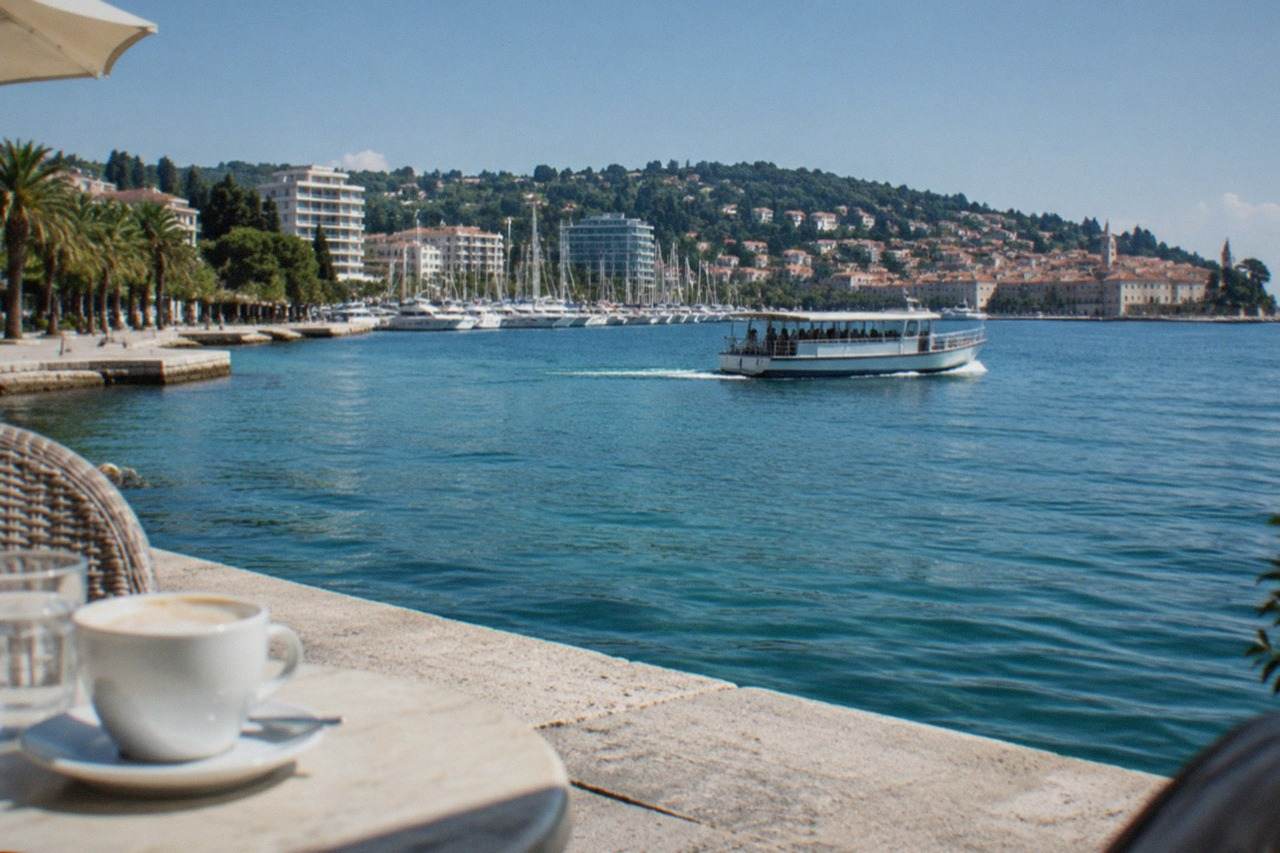
Short answer
There is no year-round scheduled passenger ferry from Trieste to Portorož or Piran; seasonal and charter services have appeared in some summers, but the reliable way to do this day trip is the coastal bus or a small-group tour. Slovenia is in the euro and in Schengen, though Italy is running temporary border checks on the land crossing until 18 December 2026, so carry ID.
Trieste, the Adriatic port city in Friuli Venezia Giulia in Italy's northeast corner, looks across a narrow gulf at a coastline that changes country within sight of the harbour cranes. Slovenia holds the far shore, and its string of small seaside towns, Portorož and Piran above all, is the closest thing Trieste has to a backyard abroad. The idea of a Trieste ferry linking the two is an appealing one, and it is the kind of thing that sounds too neat not to be true. This page gives you the verified picture: what the ferry situation actually is, what runs in its place, what the border involves in 2026, and how to plan the day so the crossing, by whatever means, is the easy part.
Is There a Ferry from Trieste to Portorož and Piran?
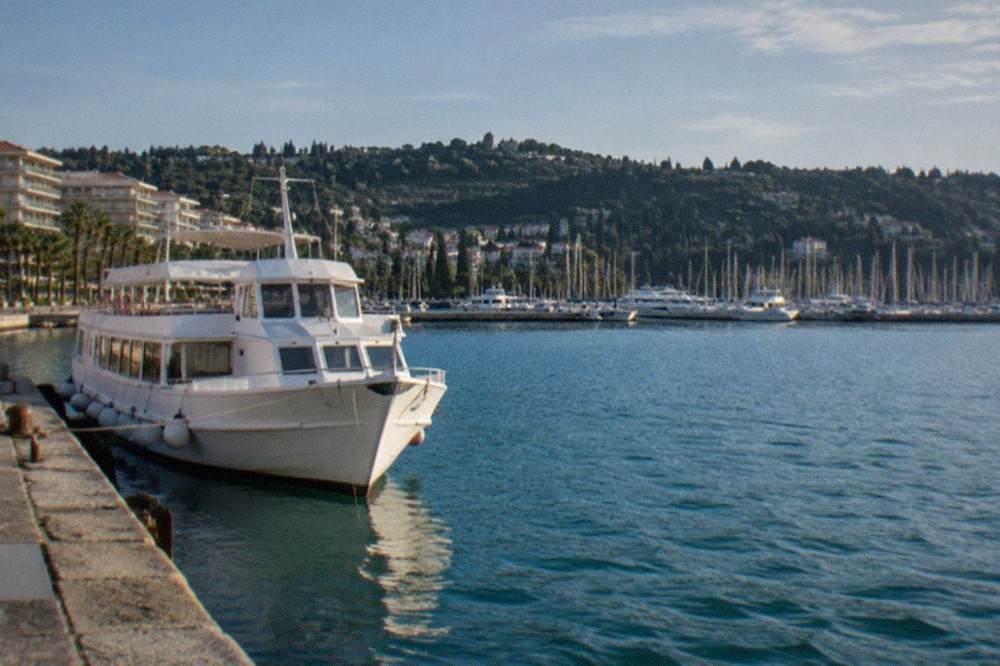
There is no year-round scheduled passenger ferry from Trieste to Portorož or Piran. Seasonal services and private charters have operated on this stretch of coast in some summers, but nothing runs often enough, or reliably enough, to plan a day trip around, and no operator currently publishes a timetable this site could verify. The dependable route is the coastal bus or a small-group tour, both of which cross the border at Škofije and reach Piran the same morning.
That is the honest version, and it matters because plenty of pages will tell you otherwise. The Trieste ferry question is a real search, and the reason it persists is that the geography begs for a boat: the Slovenian coast is close, the water is calm in summer, and Trieste's own maritime history makes a crossing feel natural. Trieste Trasporti's urban network does run a seasonal boat line, but its destination is Muggia, the last Italian town before the border, not Slovenia. For the Slovenian coast itself, no scheduled year-round service exists that this site could confirm on an operator's own pages.
The practical takeaway is not a disappointment, it is a simplification. You do not need to build a day around a departure board. The crossing, when it exists, is a pleasure; the plan, always, is the road. Our guide to ferries from Trieste covers every route that does run from this coast, including the ferry connections between Trieste and Croatia, which are a different and longer question. If your heart is set on a boat, the Muggia line is the one you can actually count on, and it pairs neatly with a walk in the last Italian fishing town on the gulf.
How Do You Get to Piran from Trieste Without the Ferry?
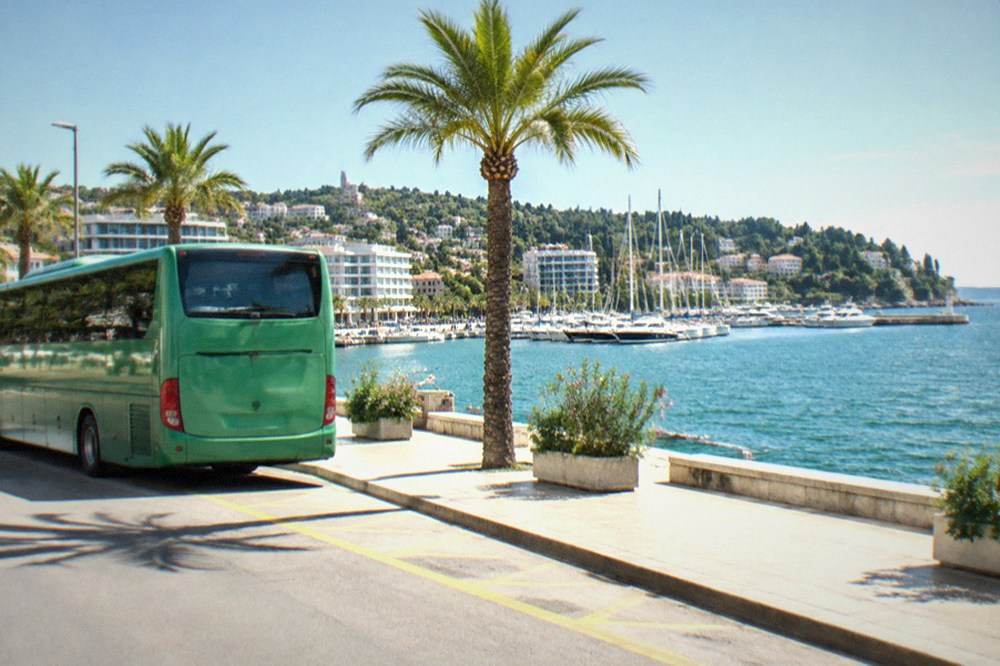
The dependable route from Trieste to Piran is the cross-border coach: regional operators run from Trieste's bus station down the coast, crossing at Škofije and continuing through Koper to Portorož and Piran, with the whole journey measured in a morning rather than a day. Flixbus also lists Trieste to Piran and Portorož among its routes. Frequencies and fares change by season and were not verifiable here, so check the operator's live listing before you commit to a time.
The bus station in Trieste is a short walk from the railway station, and the coastal road south is the same one the tours use. The advantage of the coach is flexibility: you can ride to Piran, spend the day, and come back on a later departure, or split the day between Portorož's long seafront and Piran's walled old town. The disadvantage is that you own the timetable research, and cross-border schedules on this coast are seasonal, thinning outside the summer months.
The alternative that removes the timetable entirely is a guided day trip. The Piran and Slovenia coast tour from Trieste runs as a small-group excursion, and the roster's own coast options include a six-hour panoramic tour from $114.64 per person, rated 4.57 from 136 reviews, and a small-group half-day version from $125.13 per person, rated 4.9 from 82 reviews. A relaxed Slovenian coast tour with food and wine tasting runs from $137.57 per person, rated 4.98 from 50 reviews over five and a half hours. All of them handle the border and the driving; you handle the camera.
For the independent traveller, the comparison that matters is between the coach and the tour, and it comes down to what your day is for:
| Option | From (per person) | Duration | Rating | Reviews | Best for |
|---|---|---|---|---|---|
| Piran and Slovenia coast tour | $114.64 | 6 hours | 4.57 | 136 | Set itinerary, panoramic coast |
| Piran and panoramic Slovenian coast, small group | $125.13 | 5 hours | 4.9 | 82 | Small groups, half day |
| Slovenian coast tour with food and wine | $137.57 | 5h 30m | 4.98 | 50 | Tastings along the way |
| Cross-border coach | on the operator's listing | varies by season | not applicable | not applicable | Independent timing |
Whichever you choose, book the day around the morning. Piran's old town is compact and best before the midday heat, and the return leg is the part you want locked down before you are standing at a stop with a suitcase of gelato.
Do You Need a Passport to Cross from Trieste to Slovenia?
Yes, carry a passport or a national ID card for this day trip, even though Slovenia has been in the Schengen area since December 2007 and in the euro since 1 January 2007. Italy is running temporary internal border checks on its land borders with Slovenia from 19 June 2026 to 18 December 2026, per the European Commission's own register, so a document check at Škofije is a real possibility on this specific crossing right now. Write that in your plan as a dated, temporary measure, not a permanent rule.
This is the border fact that most general guides miss, and it is live at the exact crossing this day trip uses. The Schengen framework means no routine passport control, and on most days the coach rolls through Škofije without stopping. But the Commission's register of reintroduced internal controls currently lists Italy, land borders with Slovenia, 19 June to 18 December 2026, and temporary checks can appear on the road even when they are not at every crossing every day. The cheap insurance is the document in your pocket.
The currency half of the question has a clean answer: no money changing, anywhere on this route. Italy, Slovenia and Croatia all use the euro. And on the subject of Croatia, a fact an earlier generation of guides got backwards: Croatia adopted the euro and joined the Schengen area on the same day, 1 January 2023. Both happened, on that date, which is why a longer coast run to Rovinj or Pula needs no currency planning either. If you are weighing the Croatian option too, see whether there is a ferry from Trieste to Croatia.
| Border fact | Status | Since | Note |
|---|---|---|---|
| Slovenia in Schengen | Yes | December 2007 | No routine controls |
| Slovenia in the euro | Yes | 1 January 2007 | No money change |
| Croatia in Schengen | Yes | 1 January 2023 | Same day as the euro |
| Croatia in the euro | Yes | 1 January 2023 | Same day as Schengen |
| Italy checks on the Slovenia land border | Temporary | 19 June to 18 December 2026 | Carry a passport or ID card |
One more border-adjacent point that saves confusion: the checks are on the land border, and they are the reason a boat sounds attractive. A ferry would not remove the requirement, it would just move it to the dock. The document advice is identical either way.
What Does a Day in Piran and Portorož Cost?
A day in Piran and Portorož is inexpensive by Italian seaside standards: the guided coast tours run from $114.64 to $137.57 per person depending on length and inclusions, the independent coach fare is listed on the operator's page, and on the ground a coffee-and-pastry stop or a plate of fresh fish in Piran's old town costs euro amounts comparable with Trieste's own, because both countries use the same currency and sit at the same price latitude.
The big line items are transport and lunch, and both are flexible. If you take the tour, the transport is fixed and the food is either included or clearly not: the food-and-wine version at $137.57 is the one that builds tastings into the day. If you go independently, the coach fare is the only number you cannot set yourself, and it is a seasonal figure the operator publishes, not one to guess at.
The costs you can plan from this site's verified numbers are the ones inside Trieste itself, before you ever leave. Trieste's 2026 urban fares, from the operator's own tariff sheet, are:
| Ticket | Code | Price |
|---|---|---|
| Urban single, 60 minutes | U01 | €1.50 |
| Urban single, 75 minutes | U02 | €1.85 |
| Day ticket | U24 | €3.35 |
| 10 rides | U10 | €13.50 |
| 20 rides | U20 | €16.65 |
And if you stay a night on either side of the border, the tourist tax is a published, capped cost. Trieste's own 2026 rates, per person per night, capped at five consecutive nights:
| Accommodation | Rate per night |
|---|---|
| 5-star hotel | €3.80 |
| 4-star hotel or self-catering | €3.30 |
| 3-star hotel or self-catering | €3.00 |
| 2-star, B&B Superior, hostels, short lets | €2.30 |
| B&B Comfort | €2.00 |
| 1-star, B&B Standard | €1.80 |
| Campsites and motorhome areas | €1.50 |
Everyone under 18 is exempt, among other categories, so a family day-and-night trip pays less than the headline rates suggest. The five-night cap also means a week-long stay is not taxed for the whole stay.
When Is the Best Month for the Trieste Ferry and the Coast?
The best months for this coast trip are June and September, when the sea is warm, the wind is at its calmest and the summer crowds thin. ARPA FVG's station tables for Trieste molo Fratelli Bandiera show June as the calmest month of the year, averaging just 0.3 days with a gust over 90 km/h, while the sea peaks at 25.9 C in July and August and still holds 23.9 C in September.
The numbers come from the weather agency's own series, 1995 to 2024, and they overturn the lazy assumption that this coast is a washout in summer. The rain here is an autumn phenomenon: November is the wettest month at 109.8 mm and September is second at 102.3 mm, while July's 53.8 mm sits behind only January and March, both at 52.8 mm. A July or August crossing day is statistically one of the driest days you can pick, and the sea temperature table makes the swimming case:
| Month | Mean high C | Sea C | Rain mm | Days gust over 90 km/h |
|---|---|---|---|---|
| May | 21.7 | 17.9 | 75 | 0.7 |
| June | 25.8 | 23.1 | 62.5 | 0.3 |
| July | 28.2 | 25.9 | 53.8 | 0.9 |
| August | 28.1 | 25.9 | 71.7 | 0.9 |
| September | 23.9 | 23.9 | 102.3 | 1.1 |
| October | 19.6 | 20.3 | 88.6 | 1.4 |
Read the last column before you read the sun column. The bora, the region's northeast gusting wind, can reach the coast in any month: the monthly record gust exceeds 110 km/h in every single month of the year, and the all-time peak in the series is 168.1 km/h in February 2012. June is the quietest, October is the windiest of the shoulder months, and no official wind threshold exists at which boats stop running on this gulf, because none has ever been published. The way to plan is not a cutoff number, it is the forecast on the morning itself. The wider set of guides lives on Trieste Travel Guide.
September deserves its reputation despite the rainfall figure. The sea is at its heat-holding best, the schools are back, and the 102.3 mm falls across 7.4 wet days on average, which still leaves the overwhelming majority of September dry. Our month-by-month breakdown in the best time to visit Trieste extends this table across the year.
What Is There to Do in Piran and Portorož?
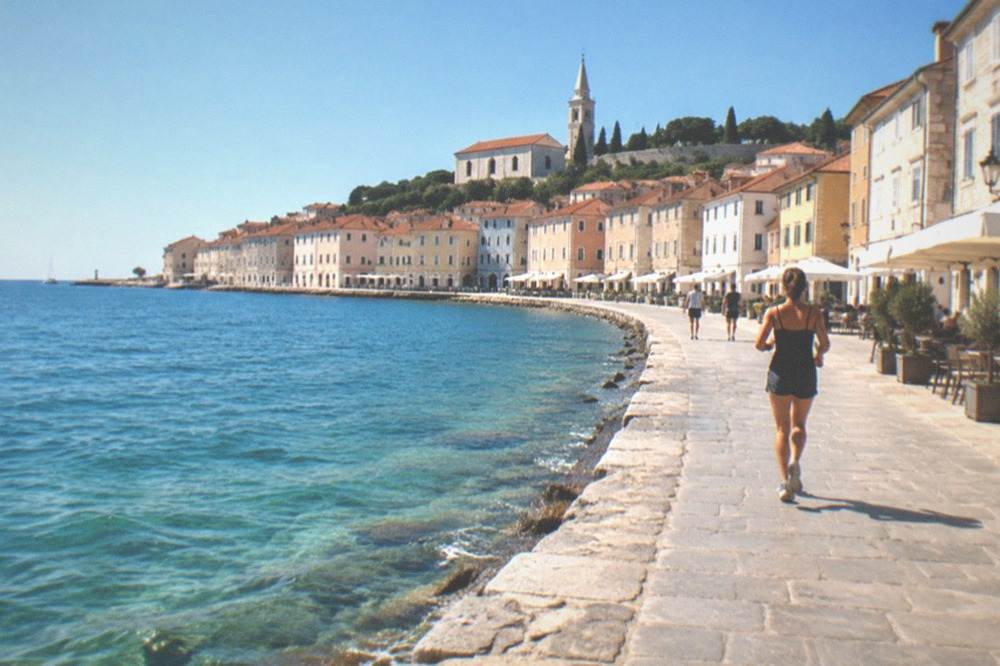
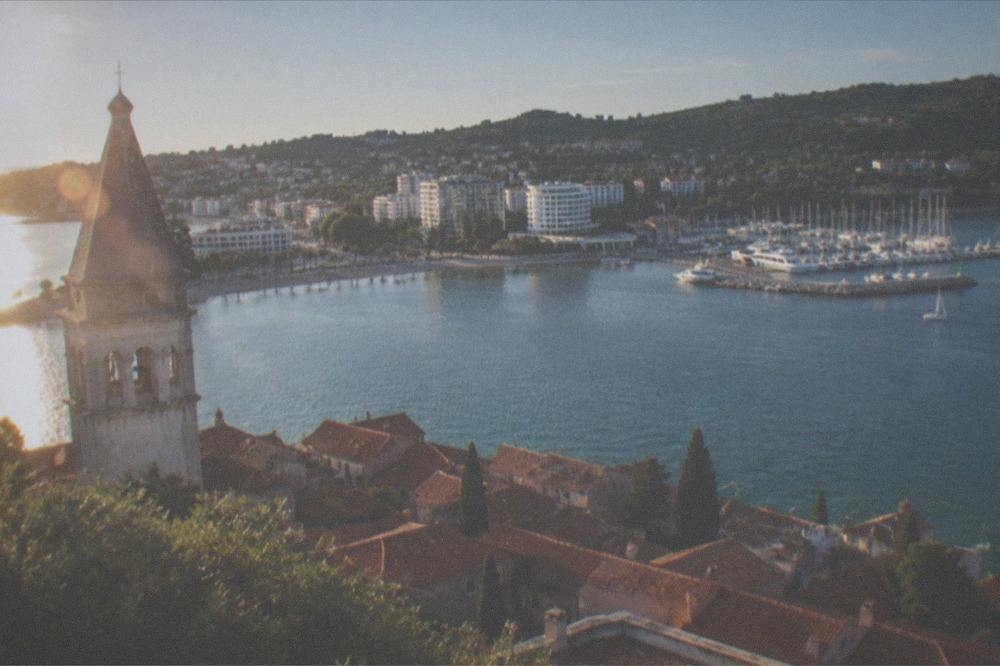
Piran is a walled Venetian-era old town on a narrow peninsula, with a tartini-shaped main square, a hilltop church you can climb for the classic view over the red roofs, and a seafront where the swimming is from rocks and platforms; Portorož, a short ride south, is the resort counterpart, with a long modern seafront promenade, beach clubs and spa hotels. Together they make a natural pair: one for the picture, one for the afternoon.
Piran's compactness is its gift to a day tripper. The old town is walkable end to end in less than an hour at a stroll, the walls and the church of Saint George above it give the panorama every postcard uses, and the seafood restaurants along the water serve the same Adriatic catch that Trieste's kitchens do, an hour up the same coast. The town's history is Venetian, and it shows in the architecture, which is part of why the place photographs so well.
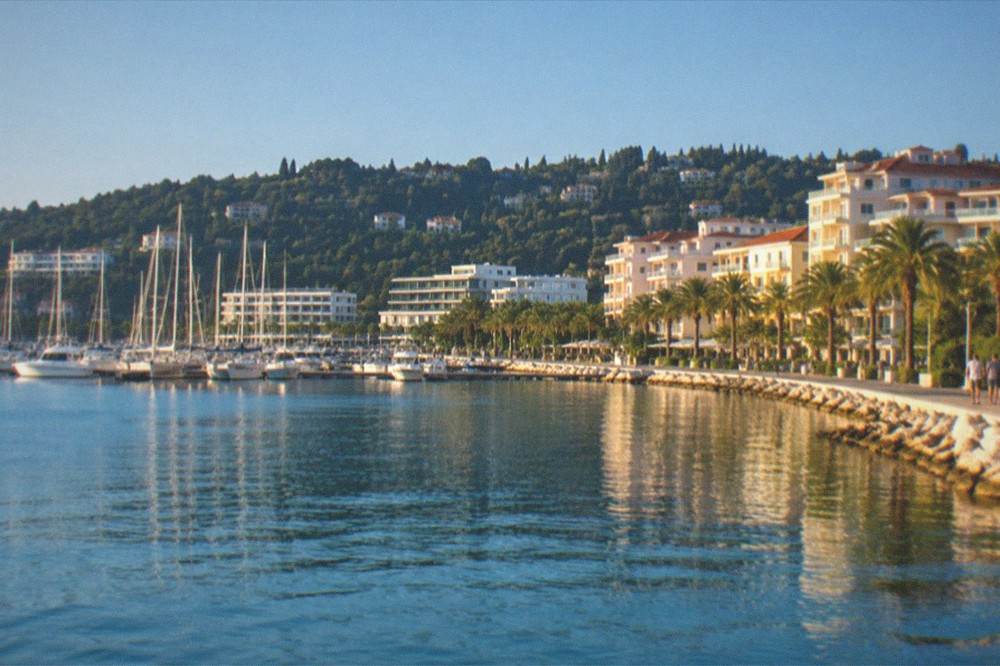
Portorož, whose name means "port of roses", is the deliberate contrast: wide, sunny and built for leisure rather than atmosphere. If your day includes children or a preference for sand over stone, this is the half that earns its time. The two towns are connected by a shore road and local buses, and a tour that strings them together with photo stops along the way is the shape the six-hour panoramic option takes.
For structure, here is how the pieces of a full day fit together:
| Part of the day | Place | What it offers | Time to allow |
|---|---|---|---|
| Morning | Piran old town | Walls, viewpoints, Tartini square | 2-3 hours |
| Midday | Piran seafront | Lunch, swimming from the rocks | 1-2 hours |
| Afternoon | Coastal road | Photo stops between the towns | 30-60 minutes |
| Late afternoon | Portorož | Promenade, beach clubs, gelato | 1-2 hours |
If the Slovenian coast leaves you wanting more of the country, the same border crossing leads inland: the Ljubljana and Lake Bled day trip from Trieste is the big-ticket extension, and the roster's version runs from $108.91 per person, rated 4.69 from 544 reviews over nine hours, with round-trip transport and a guided tour in Italian and English. Check availability if the coast is only half of your Slovenia ambition.
What If the Bora Is Blowing on Your Crossing Day?
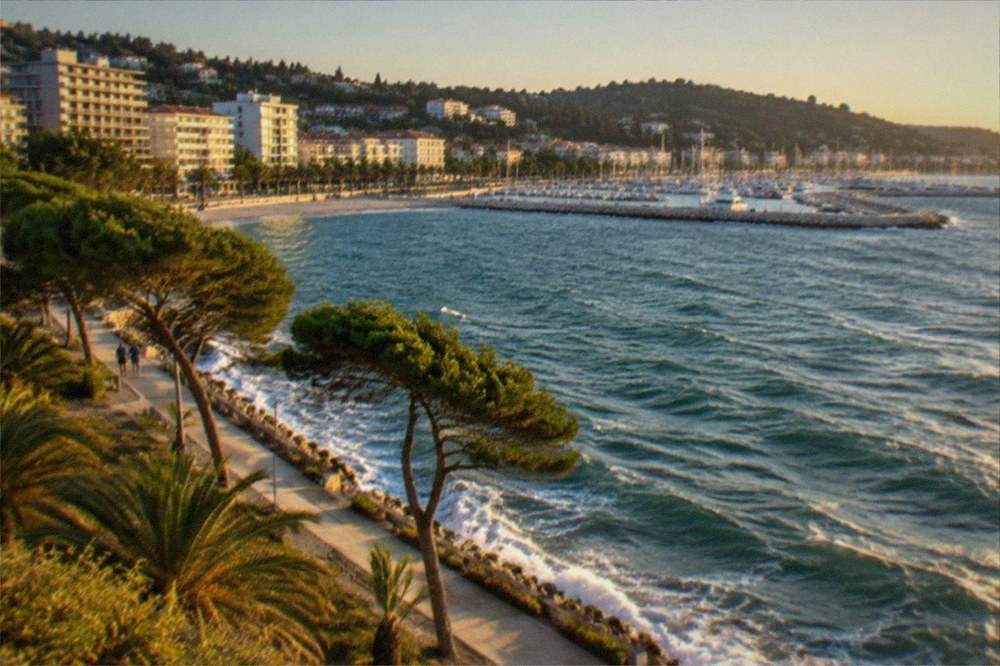
If the bora is blowing, the sea crossing is the first thing to reconsider and the coast towns are still very much open: the wind is a gusting east-northeast flow that averages 17.6 days a year over 90 km/h at the Trieste molo station, it is strongest in the cool season and calmest in June, and there is no published wind threshold at which ferries on this gulf stop, so the decision is made by each operator on the morning itself. Check the forecast, not a rulebook.
The bora is the region's signature weather, and this coast is where it is most at home. ARPA's regional wind sheet describes it as blowing from the east-northeast, with gusts that largely exceed 100 km/h in strong episodes and values above 140 km/h recorded in the Trieste coastal zone in the last twenty years. The station series puts the average at 49.0 days a year with a gust over 72 km/h and 17.6 days over 90 km/h. In summer it is rare: June averages 0.3 days over the 90 km/h mark, and July's 0.9 days actually exceed April's and May's 0.7.
What the wind means for a day trip is mostly a wardrobe question. In a strong episode the seafront of Piran is a place where you hold your hat, not a place you abandon; the old town's lanes shelter, the restaurants stay open, and the light after a bora is famously clear. The one thing not to do is anchor your plan to a boat that may not sail, which loops back to the advice this page opened with: the road is the plan, the water is the bonus. Our full guide to the bora wind covers the phenomenon in depth.
What Are the Alternatives If the Coast Day Does Not Fit?
If the Piran day does not fit your Trieste itinerary, the strongest alternatives are the other cross-border runs from the same border: Postojna Cave and Predjama Castle from $146 per person, the Lipica stud farm and Škocjan Caves from $129.93, and the full-day Ljubljana and Lake Bled circuit from $108.91, all crossing the same temporary-check border and all bookable with free cancellation. Inside Italy, the Muggia boat line and the Duino coast give you the sea without the frontier.
The Slovenian interior is the surprise package of this region, and it shares the coast day's logistics. Postojna Cave, paired with the cliff-built Predjama Castle, is a five-hour half-day from Trieste, from $146 per person and rated 4.7 from 139 reviews; the fuller six-hour version runs from $137.57 and carries 4.76 from 543 reviews. The Lipica white horses with the UNESCO-listed Škocjan Caves run from $129.93, rated 4.86 from 23 reviews. Each is a day trip from Trieste with the same border advice attached.
Closer to home, the Italian options keep the water in the plan. Muggia, reachable on Trieste's own seasonal boat line, is the last Italian town on the gulf and a gentle half day; the Duino coast and the Rilke trail turn the same sea into cliffs and castles on the northwest shore. And if your trip is anchored the other way around, Venice as a day trip from Trieste answers the question this page's readers ask second most often.
A two-hour private walking tour of Trieste, from $206.36 per group of up to 10 and rated 4.9 from 98 reviews, is the bookend that works on the evening you return: the border day ends in your own city, and the old Habsburg core around Piazza Unità d'Italia is where a day that began with a passport check deserves to finish.
Common Questions About the Trieste to Portorož and Piran Ferry
Is there a ferry from Trieste to Portorož and Piran?
There is no year-round scheduled passenger ferry on this route. Seasonal services and charters have run in some summers, but the dependable way to make the day trip is the cross-border coach or a small-group tour, both crossing the land border at Škofije.
Do I need a passport to go from Trieste to Slovenia?
Carry a passport or national ID card. Slovenia has been in Schengen since December 2007, but Italy is running temporary border checks on its land borders with Slovenia from 19 June to 18 December 2026, so a document check is possible on this crossing during that window.
Do I need to change money for Slovenia or Croatia?
No. Italy, Slovenia and Croatia all use the euro. Slovenia adopted it in 2007, and Croatia adopted the euro and joined Schengen on the same day, 1 January 2023.
What is the best month for the trip?
June and September balance warm sea, light winds and thinner crowds. June is the calmest month on this gulf, averaging 0.3 days a year with a gust over 90 km/h, and the sea reaches 25.9 C in July and August.
How much does the day trip cost?
Guided coast tours run from $114.64 to $137.57 per person depending on length and inclusions. Going independently, the coach fare is published by the operator seasonally, and spending on the ground is in euros at price levels comparable with Trieste's own.
Is the bora a problem for this trip?
Rarely in summer and never a reason to cancel outright. The wind averages 17.6 days a year over 90 km/h at the Trieste molo station and is calmest in June, and no official wind threshold exists at which boats stop running, so the call is made by each operator on the day.
The Trieste ferry to Portorož and Piran is a nice idea that the timetable does not currently support, and the trip itself does not need it to be wonderful: a morning coach or a guided tour over the Škofije border, a walled peninsula full of red roofs and seafood, a passport in your pocket until 18 December 2026, and a coast that is warm, euro-priced and barely an hour from Piazza Unità d'Italia.