Is It Worth Staying in Trieste?
Is it worth staying in Trieste, Italy? An honest answer built on verified prices, opening hours, tourist tax rates and what the city actually offers overnight visitors.
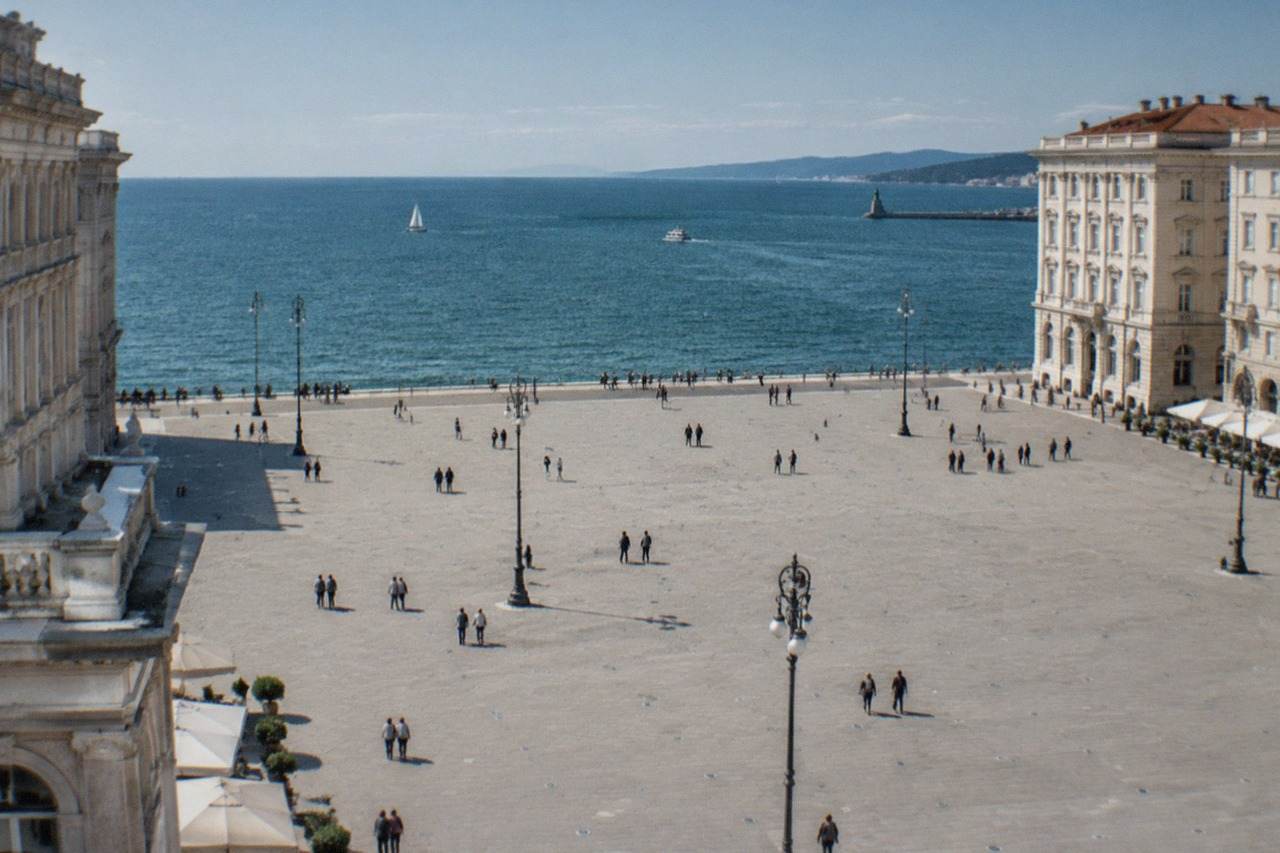
Trieste, the Adriatic port city in Friuli Venezia Giulia in the far northeast of Italy, is one of those places travellers argue about: some pass through on the way to Slovenia or Croatia, others swear the city only makes sense once you have slept in it. The honest answer is that staying overnight in Trieste is worth it for most visitors, and the reasons are practical as much as atmospheric: the city's headline sights are cheap or free, its transport is inexpensive, and the evening version of the city, the lit squares, the caffès, the empty Rive, is a different animal from the daytime one. This page lays out the case with verified figures, so you can decide for your own dates and budget rather than on vibes.
Is It Worth Staying in Trieste?
Yes, for most travellers an overnight stay in Trieste, Italy pays for itself. The city's core sights are unusually cheap: cathedral entry is free, the Risiera di San Sabba national monument is free, Miramare's park is free all year, and a full day of urban transport costs EUR 3.35 on the 2026 tariff. What you are really buying with a hotel night is the evening city, the seafront and the caffè culture, which day-trippers never see.
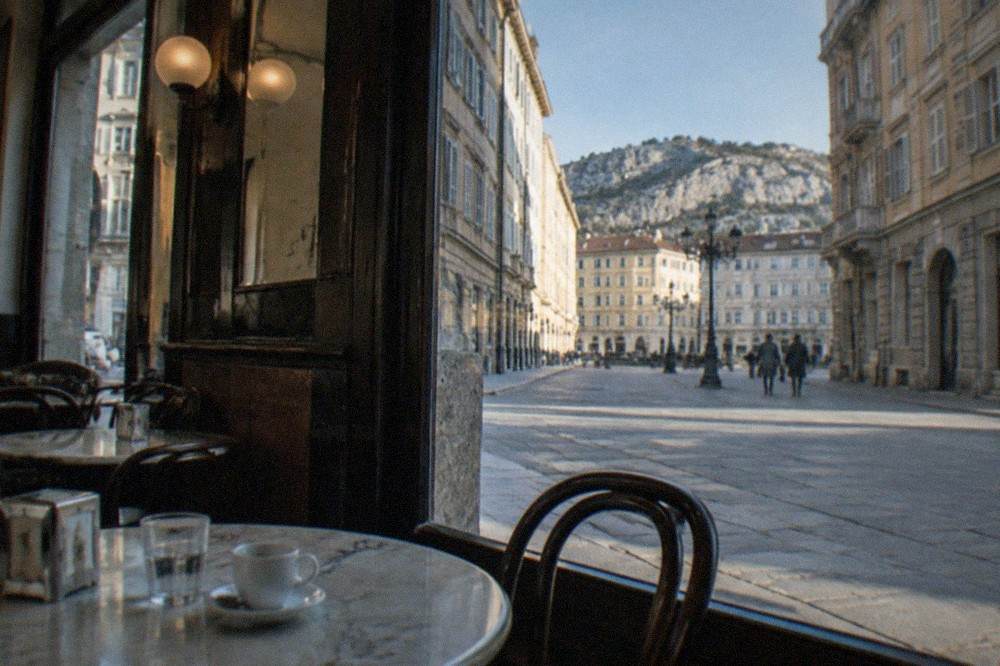
The strongest argument for staying is that Trieste's character is concentrated in the hours after the coaches leave. Piazza Unità d'Italia, the great sea-facing square, is at its best in the early evening, and the Molo Audace promenade is an evening walk, not a checkbox. The caffè culture the city is known for, the historic coffee houses around Piazza dell'Unità and the Borgo Teresiano, is a sit-down affair: it takes an unhurried morning, which is exactly what a day-trip schedule removes. The city's coffee heritage is real and deep, a historic roasting centre and port of entry for green coffee, though you should ignore the repeated per-capita consumption figures floating around guidebooks, as no primary source backs them.
The second argument is positional. Trieste sits on the border with Slovenia, within reach of the Carso plateau, Miramare, Duino and the Slovenian coast, and it is a far cheaper and calmer base for that region than Venice or Ljubljana. If your trip involves the Karst caves, the osmize farm outlets or the Barcolana regatta in October, staying in the city is not a luxury, it is the only sane logistics.
What Does Staying in Trieste Actually Cost?
The fixed costs of a Trieste stay are low and capped. The 2026 tourist tax runs EUR 1.50 to EUR 3.80 per person per night depending on the property class, and it is charged for a maximum of five consecutive nights in the same property, so a week's stay pays at most five nights of it. Everyone under 18 is exempt. Urban transport costs EUR 1.50 for a 60-minute single or EUR 3.35 for a day ticket.
Room rates themselves move with the season and this site does not quote them, but the fixed, published costs are all modest and verifiable. Here is what the 2026 tables actually say.
| Cost | 2026 figure | Notes |
|---|---|---|
| Tourist tax, 5-star hotel | EUR 3.80 per person per night | Capped at 5 consecutive nights |
| Tourist tax, 4-star or self-catering | EUR 3.30 per person per night | Case vacanza included |
| Tourist tax, 3-star | EUR 3.00 per person per night | Capped at 5 nights |
| Tourist tax, 2-star, B&B Superior, hostel | EUR 2.30 per person per night | Short-let properties under art. 4 of d.l. 50/2017 |
| Tourist tax, B&B Comfort | EUR 2.00 per person per night | Capped at 5 nights |
| Tourist tax, 1-star, B&B Standard | EUR 1.80 per person per night | Capped at 5 nights |
| Tourist tax, campsite or motorhome area | EUR 1.50 per person per night | Under-18s exempt at every class |
The attraction side of the ledger is just as friendly. Cathedral entry is free, the Risiera di San Sabba is free, Miramare's park is free all year, the Roman theatre is viewed from the street at no cost, and the state museums join the ministry's first-Sunday free-entry scheme. The paid headline sights, Castello di San Giusto at EUR 7, Museo Revoltella at EUR 8 and Miramare castle at EUR 17, are still below the big-city Italian norm. Add it up and two people can run a full sightseeing day in Trieste for less than the tourist tax alone in Florence or Venice.
Transport is the same story. A day ticket at EUR 3.35 covers the whole urban network including the Opicina tram, the historic funicular-tram line reactivated on 1 February 2025 that runs from piazza Dalmazia up to the Carso village of Opicina, and contactless bank cards can be tapped on board. A stay in Trieste does not need a car in the centre, which removes a whole cost category.
What Do You Get from a Night in Trieste That a Day Trip Does Not Give You?
You get the evening city and the morning city, which are the two best versions of it. The seafront Rive and Piazza Unità d'Italia empty of day visitors after late afternoon, the historic caffès become unhurried, and the San Giusto hill and Città Vecchia are quiet before the coaches arrive. You also get realistic access to the Carso, the osmize and Miramare at opening time, and the option of an evening walk to Molo Audace, which day-trip schedules never allow.
The pattern is common to mid-sized Italian cities but sharper here because Trieste's appeal is atmospheric rather than tick-box. There is no Uffizi forcing a timed entry; instead there is a waterfront, a Habsburg old town, a canal lined with churches and caffès, and a food culture built on buffets, jota and Friuli wine that is best understood across a slow dinner rather than a lunch stop. The signature dishes and the buffet tradition are covered in what Trieste is famous for, but the practical point is this: the city's pleasures are time-consuming in the best way.
A second night unlocks the surroundings. Miramare Castle and its free park sit up the coast at Grignano, the Carso plateau with its caves and osmize farm-wine outlets rises directly behind the city, and the Slovenian border is close enough that Piran and Ljubljana are organised day tours from Trieste rather than the reverse. If your plan includes any of that, the question stops being "is it worth staying in Trieste?" and becomes "how many days in Trieste is enough?", which has its own answer on this site. The wider set of guides lives on Trieste Travel Guide.
When Is Staying in Trieste NOT Worth It?
Staying in Trieste is not worth it if you only want a generic Italian city break of piazzas and gelato, or if your trip is entirely built around Venice: the two are close enough that Venice day trips work, and a reader whose whole itinerary is Venetian should sleep in Venice. It is also a weaker choice in deep winter, when November is the wettest month at 109.8 mm and the bora season is at its peak, unless you specifically want the wind and the Christmas market.
Honesty cuts both ways. Trieste is not a beach resort in the high-summer sense, its swimming spots are local and concrete-edged rather than sandy, and its museum roster is good rather than world-class. Readers chasing Renaissance art or a classic Tuscan landscape will find the Habsburg, Central European flavour of the city unfamiliar rather than charming. The comparison with Venice, which plenty of travellers actually face, is laid out in is it worth going to Trieste, and the two-city verdict is not the same for everyone.
The weather is the other honest caveat. Trieste is windier than almost any Italian city, with 49 days a year averaging a gust over 72 km/h at the waterfront station and a February record of 168.1 km/h, and the wettest stretch is September through November. Summer is the opposite of the city's rainy reputation: July is the second driest month at 53.8 mm and the sea reaches its warmest in August. Timing matters more here than in most Italian destinations, and the month-by-month detail is in the site's best time to visit Trieste guide.
How Many Nights Should You Stay in Trieste?
Two nights is the sweet spot for most travellers: one full day for the city centre, Piazza Unità d'Italia, San Giusto, Città Vecchia and the caffès, and one for Miramare or the Carso. Three nights is better if you want a Slovenian coast or Ljubljana day trip, and one night is enough only if your real destination is elsewhere and Trieste is a deliberate stopover.
The arithmetic is driven by geography. The city centre is compact and walkable, so the core costs a single unhurried day, but the best material around it, Miramare, Duino, the Grotta Gigante cave and the osmize, sits on the plateau and the coast and each wants half a day at minimum. The cave is guided-only with compulsory booking and closed on Mondays from September to February, which is exactly the kind of detail that punishes a rushed one-night plan. The fuller reasoning, with a day-by-day breakdown, is in how many days do you need in Trieste.
| Stay length | What it comfortably covers | Verdict |
|---|---|---|
| 1 night | City centre, Piazza Unità d'Italia, San Giusto, one caffè morning | A stopover, not a visit |
| 2 nights | Full city day plus Miramare or the Carso and Grotta Gigante | Best value for most travellers |
| 3 nights | City plus a Slovenia coast or Ljubljana day trip | Worth it if borders interest you |
| 4+ nights | City, Carso, coast and a Venice or Croatian Istria excursion | For slow travellers only |
If you do stay, put at least one structured element in the first evening: the city's layered Habsburg, Roman and Slovenian-border history does not explain itself, and a guide turns a pretty square into a story. The Habsburg history private walking tour is the site's pick for that, a private 2.5-hour walk rated highly by past guests; Check availability for your dates on the operator's live listing.
Common Questions About Staying in Trieste
Is it worth staying in Trieste?
Yes for most travellers. The fixed costs are low, the tourist tax is capped at five nights and runs EUR 1.50 to EUR 3.80 per person per night, headline sights are cheap or free, and the evening city, its caffès and seafront, is the part day-trippers miss entirely.
Is Trieste worth staying in compared to just day-tripping from Venice?
If Venice is your main destination, day-tripping to Trieste works. But if your interests are the Carso, Miramare, the osmize or the Slovenian coast, sleeping in Trieste is the better plan: it is the natural hub for all of them and its own centre needs an evening to show itself.
How many days in Trieste is enough?
Two nights suits most visitors, covering the city centre and one excursion. Three allows a Slovenia day trip. The details are on this site's page on how many days you need in Trieste.
Is Trieste expensive to stay in?
The published costs are modest: tourist tax of EUR 1.50 to EUR 3.80 per person per night by property class, a EUR 3.35 transport day ticket, and museum entries of EUR 7 to EUR 17 at the top end, with the cathedral, the Risiera di San Sabba and Miramare's park free. Room rates vary by season and are best checked live.
Do I need ID for a day trip to Slovenia from a Trieste stay?
Yes, carry a passport or national ID card. Italy is running temporary border checks on its land border with Slovenia from 19 June 2026 to 18 December 2026, even though both countries are in Schengen and use the euro.
What is the best time of year to stay in Trieste?
Summer is drier than the city's reputation suggests, with July the second driest month at 53.8 mm and the sea warmest in August. Avoid November, the wettest month at 109.8 mm, unless you specifically want the Barcolana build-up in October or the Christmas market.
The verdict, in plain terms: Trieste, Italy is one of the few Italian cities where the overnight stay is the product rather than the overhead, and two nights is enough to prove it to yourself.