Is Trieste a Good Day Trip from Ljubljana?
Trieste, Italy sits close enough to Ljubljana for a comfortable day trip. What to see, what a day costs, the border rules, and when to go.
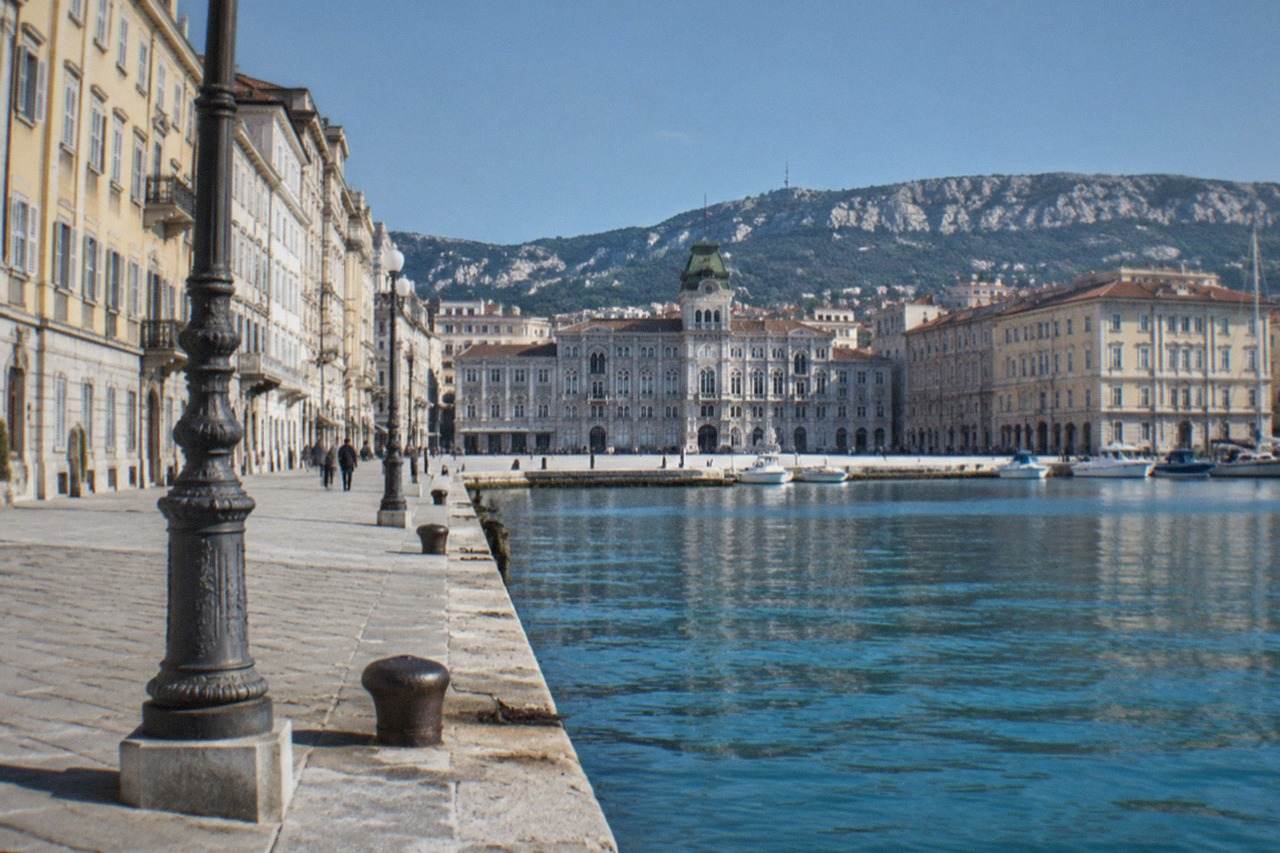
Trieste, Italy, the Adriatic port city in Friuli Venezia Giulia, is one of the few Italian destinations that genuinely works as a day trip from a Slovenian base. Ljubljana sits inland on the other side of the Karst plateau, and the road and rail routes between the two cross a single EU border where, right now, there is one dated exception to the usual no-checks rule that matters to your packing. The city itself is small, walkable and cheap by Italian standards, with a seafront square that faces open water and a coffee culture that has nothing to prove with numbers, because there are none with a primary source behind them. This page answers the question from the ground up: what you can see in a day, what the day costs, what documents to carry, and which season gives you the best odds.
Is Trieste a Good Day Trip from Ljubljana?
Yes, Trieste in Italy is a good day trip from Ljubljana, provided you want a sea-and-coffee city rather than a museum marathon. It is compact enough that one full day covers the seafront, Piazza Unità d'Italia, the hill of San Giusto and the Città Vecchia, entry to the main sights is free or a few euro, and every source agrees on the practical headline: carry a passport or ID card, because Italy is running temporary checks on the Slovenia land border until 18 December 2026.
The honest framing is that Trieste is a city to walk through rather than a list of blockbuster sights. The centre is the sight. The Grand Canal, the Roman theatre you look down into from the street, the Serbian Orthodox church of Saint Spyridon, and the long Rive seafront all sit within a stroll of each other, and the whole thing is stitched together by caffè culture that arrived with the Habsburg port and never left.
What the day does not give you is Venice-style density. Trieste is quieter, greyer in its stone, and more Central European in its manners than almost anywhere else in Italy. If your mental image of "Italy" is terracotta and gelato crowds, Trieste will read as foreign in an interesting way. That is exactly why a day out of Ljubljana works: the two cities are close, cheap to move between, and different enough from each other that the contrast is the point.
For planning the shape of the day itself, the one day in Trieste itinerary walks the route in order, and the Trieste versus Ljubljana comparison is useful if you are deciding which city deserves the overnight.
What Can You Actually See in Trieste in One Day?
In one day you can cover Piazza Unità d'Italia, the Grand Canal and the Città Vecchia, the hill of Castello di San Giusto with its cathedral, the seafront Molo Audace, and one of the free-entry heavyweights: either the Risiera di San Sabba national monument or the free park at Miramare. Entry to the Cathedral of San Giusto is free, San Giusto Castle costs 7 euro, and Museo Revoltella costs 8 euro and closes on Tuesdays, so the day you choose decides more than the clock does.
That is a full but not frantic list. The square and the seafront cost nothing and take as long as you give them. The hill of San Giusto stacks a castle, a cathedral and a Roman lapidary museum onto one short climb, and the parish's own page states cathedral entry is free, open weekdays 8:00-18:30 and Sundays 9:00-19:30.
The one sight that needs pre-planning is outside the city: Grotta Gigante, the giant cave at Sgonico on the Karst. The venue's own price list and schedule pages state adult entry is 15 euro, visits are guided-only with compulsory booking, departures run at 9:00, 10:00, 11:00, 12:00, 14:00, 15:00 and 16:00, and from September to February it closes on Mondays while from March to August it opens every day. If your day trip falls on a Monday between September and February, cross it off and stay in town.
Here is what the main sights cost and when they keep their doors, from the venues' own published pages:
| Sight in Trieste | Entry cost | Hours as published | Closed |
|---|---|---|---|
| Cathedral of San Giusto | Free | Weekdays 8:00-18:30, Sundays 9:00-19:30 | Never stated |
| Castello di San Giusto | 7 euro full, 5 reduced | 10:00-19:00 to 11 Oct, then 10:00-17:00 Tue-Sun | Mondays from 12 Oct |
| Museo Revoltella | 8 euro full, 6 reduced | 10:00-19:00 daily, last entry 18:00 | Tuesdays |
| Risiera di San Sabba | Free | 9:00-19:00 to 11 Oct, then 9:00-17:00 daily | 25 Dec, 1 Jan |
| Castello di Miramare castle | 17 euro, includes exhibition | 9:00-19:00 daily, last entry 18:30 | None stated |
| Miramare park | Free year-round | Varies by month, April-September 8:00-19:00 | Never |
| Grotta Gigante, Sgonico | 15 euro adult, guided only | Tours 9:00-16:00 as listed | Mondays Sep-Feb |
Two closures matter more than they look. Museo Revoltella shutting on Tuesdays is the classic day-trip trap, because a Tuesday arrival kills the city's modern-art gallery. And San Giusto Castle closing Mondays from 12 October means an autumn Monday gives you the free cathedral and the free square, which is still a good day, just a different one. The ministry's first-Sunday-of-the-month free-entry scheme also applies at the participating state sites, and Miramare takes part; check the venue's own event page for the specific month rather than trusting a standing rule, because the scheme has changed more than once.
A useful confidence move for the first hour in town is a guided walk. There is a free, tip-based city walk on GuruWalk, "Discover Trieste on a walking tour", run by a local guru, which is free and tip-based and a genuinely low-risk way to get the map of the city into your head before you set off on your own.
Do You Need a Passport to Day Trip Between Ljubljana and Trieste?
You need a passport or a national ID card, not because of the currency or any Schengen formality, but because Italy is running temporary internal border checks on its land borders with Slovenia, dated 19 June 2026 to 18 December 2026 in the European Commission's own register. Slovenia, Italy and Croatia all use the euro and all three are in Schengen, so there is no money to change and no routine document regime, but on this specific border the checks are live and dated, so carry the document anyway.
The three-country detail is worth spelling out because so many guides get it backwards. Croatia adopted the euro and joined the Schengen area on the same day, 1 January 2023. Slovenia has been in the euro area since 1 January 2007 and in Schengen since December 2007. The practical consequence for a Ljubljana-to-Trieste day is simple: one currency the whole way, no currency exchange anywhere on the route, and a passport in the bag because the temporary Italian checks can appear at the crossing.
How to write the day around it: check the register or your own government's travel page before you travel, since the measure is explicitly temporary and has an end date of 18 December 2026. If your trip falls after that date, the default Schengen rule, no routine checks, is what applies again, but verifying costs nothing.
How Much Does a Day in Trieste Cost?
A day in Trieste is inexpensive by Italian city standards: cathedral entry is free, the Risiera di San Sabba is free, San Giusto Castle is 7 euro, Revoltella is 8 euro and an urban bus ticket is 1.50 euro for 60 minutes, so a full sightseeing day of entries and local transport sits around 20 euro per person before food and coffee. The 2026 urban tariff sheet lists those ticket prices exactly, and contactless bank cards can be tapped on board.
Coffee and food are where the day trip budget flexes. Trieste's coffee-house tradition is the real thing, historic caffè included in guided walking tours of the centre, and the buffet tradition of jota, goulash and simple plates runs straight through the city's eating culture. The signature dish of Trieste question is answered by the city's own buffet counters, and the honest planning advice is that a sit-down caffè stop and a buffet lunch together cost less than a single lunch in Venice.
One cost that does not apply: the tourist tax. The Comune's 2026 table charges imposta di soggiorno per night of accommodation, from 1.50 euro at campsites up to 3.80 euro at five-star hotels, capped at five consecutive nights, and a day tripper staying in Ljubljana never touches it. More of these guides are collected on Trieste Travel Guide.
If the day is running long, the Opicina tram is the odd excursion. Trieste Trasporti's own line-2 page shows the tram running today, reactivated on 1 February 2025 after its long post-2016 stop, departing from piazza Dalmazia, not piazza Oberdan, on a timetable dated 20 July 2026. A standard urban ticket is valid on it.
When Is the Best Season for a Ljubljana-To-Trieste Day Trip?
The best months for the trip are June through September, when the ARPA station tables for the Trieste waterfront show mean highs from 23.9 to 28.2 degrees, sea temperatures peaking at 25.9 degrees in July and August, and July the second driest month of the year at 53.8 mm of rain. November is the wettest month at 109.8 mm, so the shoulder trade-off is real: October brings Barcolana and a lively seafront, but autumn is when the rain and the bora arrive.
Wind is the detail that separates Trieste from most Italian city breaks. The bora blows from the east-north-east, and ARPA's own tables average 17.6 days a year with a gust over 90 km/h at the molo Fratelli Bandiera station, with the all-time series peak at 168.1 km/h in February 2012. There is no published official threshold at which the seafront closes or ferries stop, so do not plan around a number nobody has published; just know that a winter day can be brilliant, blowy and shorter than you expected.
The monthly picture from ARPA's normals, station series 1995-2024:
| Month | Mean high C | Rain mm | Wet days | Sea C |
|---|---|---|---|---|
| April | 16.8 | 60.7 | 8.0 | 14.0 |
| May | 21.7 | 75.0 | 8.5 | 17.9 |
| June | 25.8 | 62.5 | 6.1 | 23.1 |
| July | 28.2 | 53.8 | 5.4 | 25.9 |
| August | 28.1 | 71.7 | 6.6 | 25.9 |
| September | 23.9 | 102.3 | 7.4 | 23.9 |
| October | 19.6 | 88.6 | 7.6 | 20.3 |
| November | 14.7 | 109.8 | 9.5 | 16.8 |
The table's quiet point: September's sea, at 23.9 degrees, is barely cooler than June's, and the sea holds its heat later in the year than the air suggests. If you want to swim off the Trieste seafront or at Barcola, late summer is the sweet spot, and the swimming in Trieste guide covers where people actually get in.
Running the Route the Other Way
The mirror-image trip works just as well: Trieste is also a good base for a day into Slovenia, with the same single border, the same euro currency and the same dated ID requirement until 18 December 2026. The most-booked option in that direction is a nine-hour guided day trip from Trieste to Ljubljana and Lake Bled with round-trip transport and commentary in Italian and English, listed from $108.91 per person and rated 4.69 from 544 reviews.
If you end up based in Trieste and want to spend a day on the Slovenian side, the Trieste to Ljubljana day-trip guide covers the route from the Italian end, and the same border rule applies in both directions: one currency, Schengen, but carry the ID because of the dated checks.
You can Check availability on the operator's live listing if that direction suits you better; the same listing has its own page here with the full details.
For the two other most-run days out of Trieste toward Slovenia, the comparison is straightforward, and all three figures come from the operators' live listings:
| Day trip from Trieste | Duration | From price | Rating |
|---|---|---|---|
| Ljubljana and Lake Bled, guided, round-trip transport | 9 hours | $108.91 per person | 4.69 from 544 reviews |
| Postojna Cave and Predjama Castle | 6 hours | $137.57 per person | 4.76 from 543 reviews |
| Lake Bled and Ljubljana tour | 7 hours | $137.57 per person | 4.51 from 277 reviews |
The best day trip from Trieste question is answered differently depending on whether you want a cave, a lake or a capital city, and the train time from Trieste to Ljubljana page handles the rail specifics, which this page deliberately does not guess at.
Common Questions About a Trieste Day Trip from Ljubljana
Is Trieste A Good Day Trip From Ljubljana?
Yes. Trieste, Italy is compact, walkable and inexpensive for a day: cathedral entry is free, San Giusto Castle is 7 euro, the seafront and Piazza Unità d'Italia cost nothing, and the whole centre sits within a comfortable stroll. Carry a passport or ID card, because Italy is running temporary checks on the Slovenia land border until 18 December 2026.
How much does a day in Trieste cost?
Around 20 euro per person in entries and local transport: the cathedral and the Risiera di San Sabba are free, San Giusto Castle is 7 euro, Museo Revoltella is 8 euro, and urban tickets are 1.50 euro for 60 minutes or 3.35 euro for a day per the 2026 tariff sheet. Coffee and a buffet lunch sit on top of that.
Do I need a passport to go from Ljubljana to Trieste?
Yes, carry one, or a national ID card. Slovenia and Italy are both in Schengen and both use the euro, but the European Commission's register lists Italy running temporary checks on its land borders with Slovenia from 19 June 2026 to 18 December 2026, so documents can be checked on this specific crossing.
What is the one thing not to miss in Trieste?
Piazza Unità d'Italia on the water, then the short climb to the hill of San Giusto for the free cathedral and the castle walls. If you have longer, the free park at Miramare and the free Risiera di San Sabba national monument are the two heavyweights, on opposite ends of the mood spectrum.
When is the worst time to do this day trip?
November, which is Trieste's wettest month at 109.8 mm of rain across 9.5 wet days in ARPA's station tables, and any Monday from September to February if Grotta Gigante was on your list, because the cave closes on Mondays in those months. Museo Revoltella also closes every Tuesday.
Is Trieste worth it compared with just staying in Slovenia?
It is a different country in an afternoon, and that is the argument for going. Trieste's Habsburg seafront, its caffè culture and its free national-monument history do not exist anywhere on the Slovenian side, and the two cities are close enough that the contrast itself is the experience.
The short verdict stands: Trieste is a good day trip from Ljubljana, it is one of the easier international day trips in Europe as long as the ID card is in your bag for the dated border checks, and the day costs less than most people expect.