Is Trieste a Walkable City?
Is Trieste a walkable city? A direct answer for Trieste, Italy: how compact the centre is, where the hills start, when you need a bus, and what the bora does to a walking day.
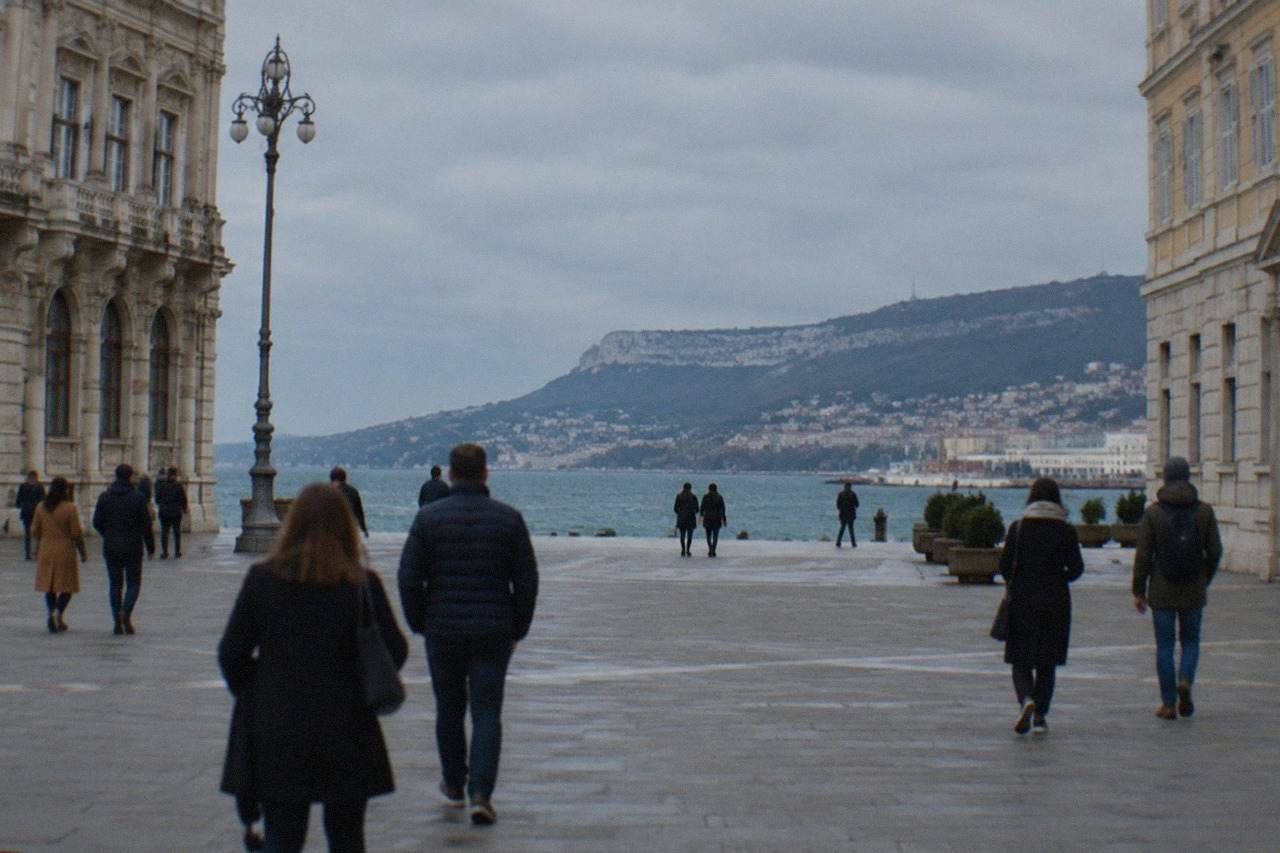
Trieste, Italy, was built to be walked. The city sits on a narrow coastal strip in Friuli Venezia Giulia, squeezed between the Adriatic Gulf and the limestone wall of the Carso, and its Habsburg rulers laid out a centre of squares, waterfront promenades and grid-planned streets that still functions as a single pedestrian-scaled district. The question "Is Trieste a walkable city?" has a short answer, and this page gives it with the details that matter: where the flat walking ends, where the steep lanes begin, and when the famous bora wind changes the plan.
Is Trieste a Walkable City?
Yes: Trieste, Italy, is one of the most walkable cities on the Adriatic. Its Habsburg-era centre packs the seafront Piazza Unità d'Italia, the Città Vecchia old town, the Canal Grande, the Roman theatre and the San Giusto hill into a compact strip between the port and the Carso escarpment, so a visitor in ordinary shoes covers the core sights on foot in a single day. The only interruptions are steep lanes, the seafront bora wind, and sights such as Miramare Castle that sit outside the centre altogether.
The layout explains the answer better than any opinion could. Trieste's centre is a sequence of linked squares running from the sea inland: Piazza Unità d'Italia opens directly onto the water, the Molo Audace pier stretches out in front of it, and from there the streets climb gently through the Borgo Teresiano grid toward the Città Vecchia and the hill of San Giusto. Nothing in that sequence requires transport. The city's own tourism material presents it as a city of promenades and caffè, and the historic cafés, the canal and the old town sit within the same walking circuit.
The seafront itself is a walk. The Rive promenade runs along the waterfront, the Molo Audace is a short pier out into the gulf, and the whole stretch is public, free and open at all hours. For orientation before arrival, the page on what to do in Trieste in one day lays out the same core as a single walking route, which is the practical proof of the answer: if one day on foot covers the essentials, the city is walkable by any reasonable standard.
One caveat belongs in the first breath, not the last. Trieste is walkable in its centre, but the city does not end at its centre. Miramare Castle sits up the coast at Grignano, the Karst plateau rises behind the town, and Opicina sits at the top of the escarpment reached by a tram line. Those are trips, not walks, and the sections below separate the two clearly.
How Compact Is Central Trieste on Foot?
Central Trieste is compact enough that the main sights form one continuous walking circuit: Piazza Unità d'Italia, the Molo Audace, the Canal Grande with the Sant'Antonio Taumaturgo church, Piazza della Borsa, the Città Vecchia and the Cathedral of San Giusto are all connected by pedestrian-scaled streets, and every one of them is reachable from the seafront without crossing a motorway, an industrial zone or a modern suburb. The centre is a strip, not a sprawl.
The geography does the work. The Gulf of Trieste bounds the city on one side and the Carso escarpment on the other, so the historic centre could only grow along the shore. That produced a linear city where the seafront, the commercial grid of the Borgo Teresiano and the old town sit in sequence rather than scattered. A walker moves from one to the next without ever leaving streets built at pedestrian scale.
The sights themselves confirm it. The Roman theatre, the Arco di Riccardo and the Cathedral of San Giusto all sit on or below the same hill, reached from the seafront through the Città Vecchia. The Piazza della Borsa and the historic cafés sit on the flat between the old town and the canal. The table below shows what the core circuit contains and what each stop costs or requires.
| Stop on the core walking circuit | Entry cost | Official hours |
|---|---|---|
| Piazza Unità d'Italia and the Molo Audace | Free | Open public space |
| Cattedrale di San Giusto Martire | Free | Weekdays 8:00-18:30, Sundays and holidays 9:00-19:30 |
| Castello di San Giusto (castle, museum, walls) | €7 full, €5 reduced | 1 April-11 October daily 10:00-19:00; from 12 October Tuesday-Sunday 10:00-17:00 |
| Teatro Romano | Free, viewed from the street | Visible from outside; not routinely enterable |
| Museo Revoltella | €8 full, €6 reduced | Daily 10:00-19:00, closed Tuesdays |
| Canal Grande and Sant'Antonio Taumaturgo | Free | Open public space |
The hours in that table matter for planning a walking day, because two of the indoor stops close midweek: Museo Revoltella closes on Tuesdays, and Castello di San Giusto closes on Mondays from 12 October. A walker planning a single day around the circuit should check those against the how many days do you need in Trieste question, since the answer changes with the day of the week.
Which Parts of Trieste Are Easy Walking, and Which Are Steep?
The flat walking is on the waterfront and in the Borgo Teresiano grid, where Piazza Unità d'Italia, the Rive promenade, the Canal Grande and the commercial streets sit on level ground. The steep walking starts at the Città Vecchia and continues up the San Giusto hill to the cathedral and castle, where lanes climb the slope in flights of steps. Beyond the centre, Barcola stretches along the shore, while Miramare Castle at Grignano and the village of Opicina on the escarpment are trips, not walks.
The distinction is honest and useful. A visitor with mobility limits, a stroller or simply tired legs can spend an entire rewarding day on the flat: the seafront, the grand square, the canal, the cafès of the Borgo Teresiano and the museums on the level. The hill of San Giusto is the one place the centre demands a real climb, and its lanes are stepped and cobbled in parts. The reward at the top is the cathedral, the castle and the view over the whole gulf. Other pages covering the same trip are gathered on Trieste Travel Guide.
Two sights outside the centre are worth separating out, because they are where "walkable" stops being the right word. Miramare Castle sits up the coast at Grignano on its own headland; the castle charges €17 for an adult ticket including the temporary exhibition and opens every day 9:00-19:00, while its park is free all year. Opicina sits at the top of the escarpment and is reached by the historic tram, which was reactivated on 1 February 2025 and runs from piazza Dalmazia, not piazza Oberdan, as part of the ordinary urban network. Both are easy half-outings; neither is a stroll from Piazza Unità d'Italia.
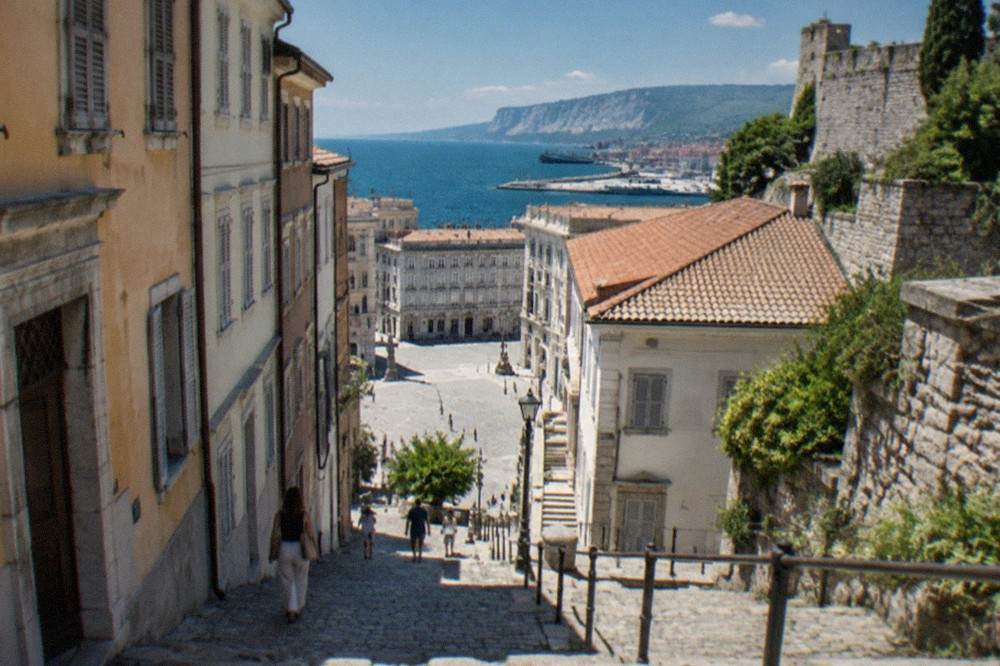
For walkers who want the steep parts explained rather than just discovered, a private guide changes the climb: the Best of Trieste private walking tour with a local guide runs about two hours through the modern and ancient landmarks, priced per group of up to 10, with availability on the operator's live listing: Check availability. There is also a free, tip-based option: the GuruWalk pay-what-you-want city walk, run by a local guru, covers the same centre at no fixed price.
Do You Need Buses or the Tram in Trieste?
Inside the centre, no: the walking circuit covers the seafront, the old town and the museums without any transport. Buses earn their fare for the hills behind the centre, the districts along the shore, and the airport connection, and a standard urban ticket is cheap: the 2026 tariff sheet lists a 60-minute single at €1.50, a 75-minute single at €1.85 and a day ticket at €3.35, with contactless cards accepted on board. The Opicina tram takes the same ordinary ticket.
That fare structure tells its own story. A city where a day of unlimited urban transport costs €3.35 is a city where transport is a backup, not a necessity, for the visitor staying central. The tariff sheet also lists a 10-ride carnet at €13.50 and a 20-ride option at €16.65, and single tickets are valid 60 or 75 minutes, extended to 240 minutes on Sundays and public holidays.
| Trieste urban ticket (2026 tariff sheet) | Price | Validity |
|---|---|---|
| Single, 60 minutes | €1.50 | 60 minutes |
| Single, 75 minutes | €1.85 | 75 minutes |
| Day ticket | €3.35 | One day |
| 10 rides | €13.50 | Ten journeys |
| 20 rides | €16.65 | Twenty journeys |
The tram deserves its own sentence because most guides get it wrong. The tram de Opicina, urban line 2, was suspended after an August 2016 collision and reactivated on 1 February 2025; Trieste Trasporti's line-2 page carries a current timetable dated 20 July 2026, running the roughly 5.175 km route between piazza Dalmazia and the Opicina trenovia station. It is not a heritage toy but an ordinary service line a normal ticket covers, and its live status is on the operator's own homepage, which is the place to check on the day.
The one border question worth flagging for walkers with bigger ambitions: Slovenia is a short hop away, and all three of Italy, Slovenia and Croatia use the euro and sit in Schengen, but Italy is running temporary checks on its land border with Slovenia through 18 December 2026, so a passport or national ID card belongs in the pocket even for a walk across the line. For the port-side version of this page's question, is Trieste walkable from the cruise port covers the terminal-to-centre walk in detail.
Does the Bora Change a Walking Day in Trieste?
Yes, sometimes sharply: the bora, the cold north-easterly wind off the Carso, blows hardest in the cool season, and ARPA's station tables for Trieste molo Fratelli Bandiera average 17.6 days a year with a gust over 90 km/h and 49 days over 72 km/h, with February the windiest month and June the calmest. On a strong bora day the exposed seafront becomes hard going while the sheltered grid streets stay walkable, so the wind rearranges the route rather than cancelling it.
The numbers come from the regional agency's own 1995-2024 series, and they carry a nuance most summaries miss: the monthly record gust exceeds 110 km/h in every single month of the year, including July, so the bora is not purely a winter story, but the strong-wind days cluster from November through March. A summer visitor walks the Rive in near-calm conditions on most days; a February visitor should expect the seafront to bite.
The practical response is built into the city. On a bora day the walker trades the exposed promenade for the streets of the Borgo Teresiano, where the grid and the facades give shelter, and saves the Molo Audace for a calmer morning. No official wind threshold exists at which the Rive close or ferries stop; the authorities scale their response to conditions in real time, so the honest advice is to check the regional forecast rather than a number.
Common Questions About Walking in Trieste
Is Trieste a walkable city?
Yes. The centre of Trieste, Italy, is a compact strip of seafront squares, the Città Vecchia and the San Giusto hill, all connected at pedestrian scale, and the core sights are covered on foot in a day. Only the outlying sights like Miramare Castle and Opicina require transport.
Is Trieste hilly?
Partly. The waterfront, Piazza Unità d'Italia, the Canal Grande and the Borgo Teresiano grid are flat; the Città Vecchia and the hill up to the cathedral and Castello di San Giusto are steep, with stepped and cobbled lanes.
Can you walk everywhere in Trieste without a car?
For the historic centre, yes. For Miramare Castle at Grignano, Opicina on the escarpment or the airport, use the urban network: a day ticket costs €3.35 per the 2026 tariff sheet, and the Opicina tram takes a standard ticket.
Is Trieste walkable from the cruise port?
The cruise terminal sits on the same waterfront as the centre, and the walk into town is along the sea rather than around it. The dedicated page on walking from the cruise port gives the details.
When is the best time of year for walking in Trieste?
Summer is drier and calmer than the city's reputation: July averages just 53.8 mm of rain and June is the calmest month for wind in ARPA's tables, while November is the wettest at 109.8 mm and the strong bora days cluster from November to March.
Trieste rewards exactly the kind of visitor who asks this question: someone who wants to read a city at three kilometres an hour, from Piazza Unità d'Italia to the top of the San Giusto hill, with a caffè at the halfway point and the bora as the only thing that can hurry the route. Whether the budget runs to a private guide, a free GuruWalk tip-based stroll or nothing but shoe leather, as covered in is Trieste cheap or expensive, the answer to the walking question stays the same: yes, and the hills are the best part.