Is Venice or Trieste Better?
Is Venice or Trieste better? An honest comparison of the two Italian cities on price, crowds, atmosphere and day-trip logistics, from a Trieste-focused travel guide.
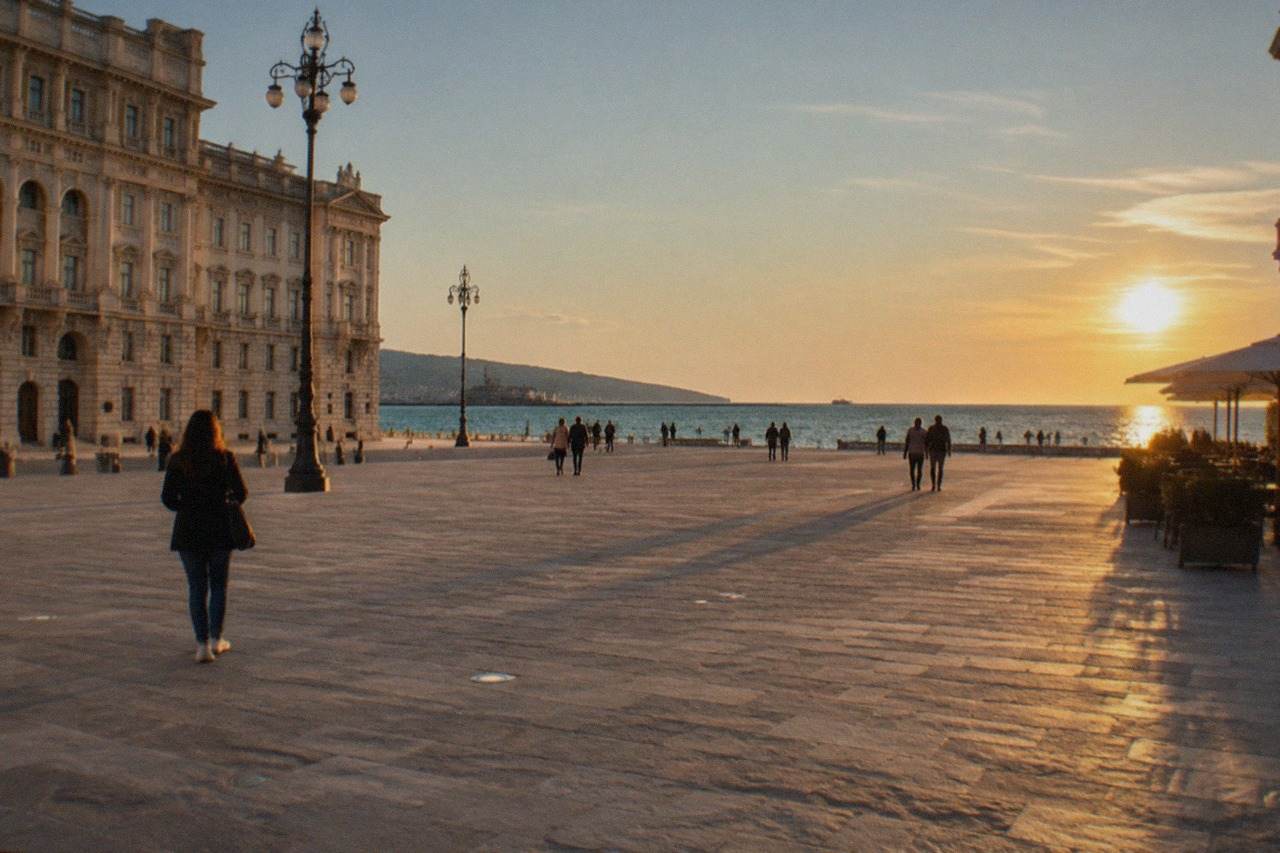
Trieste, the Adriatic port city in Friuli Venezia Giulia in the far north-east of Italy, gets compared to Venice more often than you might expect, because the two cities sit on the same corner of the Adriatic and a rail line ties them together. The comparison is fair but the answer depends entirely on what you want from a trip: Venice is a destination built for spectacle, Trieste is a working city that happens to be beautiful. This page lays out where each one wins, using verified prices, opening hours and climate data rather than impressions, and links out to the transfer and day-trip pages that cover the practical question of seeing both.
Is Venice or Trieste Better?
Trieste is better if you want an unhurried, affordable, lived-in Italian city with sea, coffee culture and Habsburg architecture, and Venice is better if your priority is seeing one of the most famous urban landscapes on earth. Trieste's headline sights cost a few euros each, its streets are not shaped by mass tourism, and its food and wine scene is local rather than visitor-facing. Venice delivers an intensity of beauty Trieste cannot match, at a higher price and inside far denser crowds.
That is the honest short version, and everything below expands on it. The two cities are not really rivals: they are different products. Venice is a monument you walk through, Trieste is a city you settle into. If you have never seen Venice, nothing on this page should talk you out of it. What Trieste offers is the city you can actually live in for three days, and the one that many travellers arrive in by accident, via a cruise call or a Venice flight, and end up preferring.
The other framing worth naming early: cost. Trieste's civic attractions are cheap by any Italian standard, and the city's tourist tax runs from €1.50 per person per night at campsites up to €3.80 at five-star hotels, charged for a maximum of five consecutive nights. Venice prices are a different universe, and this site's job is to tell you what Trieste actually costs, so the tables below stick to verified Trieste figures rather than guessing at Venetian ones.
How Much Cheaper Is Trieste Than Venice for Sightseeing?
Trieste's paid attractions cost between nothing and €17 per adult, and several of its headline sights are free: cathedral entry is free, the Risiera di San Sabba national monument is free, Miramare's park is free all year, and the Roman theatre is viewed from the street at no charge. The castle at Miramare is €17, San Giusto Castle is €7, the Museo Revoltella is €8, and a guided tour of Grotta Gigante is €15. A full day of Trieste sightseeing can easily cost less than one major Venice museum ticket.
Those figures come from the venues' own published price lists, and the free tier is the part most comparison articles miss. The park at Miramare, one of the most beautiful seaside parks in Italy, is free every day of the year; only the castle interiors carry the €17 ticket. San Giusto's €7 covers the walls and bastions, the castle museum and the Lapidario Tergestino together. The state museums also run a first-Sunday-of-the-month free-entry scheme through 2026, and Miramare takes part, so check the venue's own page for the date you are there.
| Trieste sight | Adult entry | Notes |
|---|---|---|
| Miramare Castle | €17.00 | Includes the temporary exhibition; the park is free all year |
| Castello di San Giusto | €7.00 | Covers walls, bastions, castle museum and Lapidario Tergestino |
| Museo Revoltella | €8.00 | Closed Tuesdays; free first Sunday of the month |
| Grotta Gigante | €15.00 | Guided tours only, booking compulsory; children 6-18 €8 |
| Cattedrale di San Giusto | Free | Bell tower hours seasonal; no verified tower price exists |
| Risiera di San Sabba | Free | Daily 9:00-19:00 to 11 October, then 9:00-17:00 |
| Teatro Romano | Free | Viewed from the street; entry is not routinely offered |
The pattern to notice is that Trieste's pricing is built for residents as much as visitors, which is the practical difference between the two cities. Add the ordinary city costs and the gap widens: an urban bus ticket in Trieste is €1.50 for 60 minutes or €1.85 for 75, a day ticket is €3.35, and you can tap a contactless bank card on board. Nobody plans a trip around bus fares, but they are a fair proxy for what a coffee, a slice of strudel or a plate of jota will cost in each place.
If you want a local to turn those sights into a coherent story rather than walking between them with a map, the guided options are inexpensive for what they deliver. The hidden gems private walking tour is a 2.5-hour private walk with a local guide, from $143.30 per person, rated 4.96 from 62 reviews, and there is a food-focused alternative at 3 hours with tastings. Check availability.
Which City Suits Your Travel Style Better?
Pick Venice for canals, palaces, a once-in-a-lifetime urban spectacle and the density of art that comes with a former maritime empire. Pick Trieste for sea swimming, a café culture that belongs to residents, Habsburg squares, cave and castle day trips into the Karst and Slovenia, and the feeling of being in a real Italian city rather than inside an attraction. Venice rewards a first visit; Trieste rewards a second or third.
Trieste's atmosphere is the thing people struggle to describe until they have stood in Piazza Unità d'Italia at dusk. It is a Central European city that happens to be in Italy: Austrian-built, coffee-driven, multilingual on the Slovenian border, with a working port and a university. The bora wind shapes daily life here in a way no guidebook photograph captures, and the sea is treated as infrastructure rather than scenery, with locals swimming at Barcola and the city's historic seaside bathing establishment operating as a normal part of town.
Venice, by contrast, is unmatched at what it is. There is no Trieste equivalent of arriving by vaporetto into the Grand Canal, and no honest comparison pretends otherwise. What Trieste offers instead is everything Venice cannot: elbow room, prices aimed at locals, and sights you do not have to queue for. The Roman theatre is looked down into from the street. The Risiera di San Sabba, a national monument and museum, needs no booking for individuals. Miramare's park takes all comers for free, every day.
The day-trip geography also favours Trieste if you like variety. From the city you can reach Grotta Gigante and the Škocjan Caves, the Lipica stud farm, Miramare, the Slovenian coast at Piran and Ljubljana itself, all on organised tours or ordinary public transport. Venice's hinterland is different in character: it is one of the reasons people split a week between the two cities, and our deeper comparison of the two cities covers that itinerary question in detail.
Is the Weather Better in Trieste or Venice?
Trieste is warmer on average than most of northern Italy, with an annual mean of 15.9 C at the waterfront station, but it is windier: the bora brings gusts over 90 km/h on 17.6 days a year, and the record gust in the station series is 168.1 km/h, set in February 2012. Its wettest month is November at 109.8 mm of rain, while July, at 53.8 mm, is one of its driest. Venice has no equivalent wind regime.
The bora is the fact that separates the two cities' weather, and it cuts both ways. It blows from the east-north-east off the Karst plateau, scrubs the sky clear, and makes Trieste's light famously sharp, but on a strong day it is a genuine physical presence on the seafront. ARPA FVG's station tables for the molo Fratelli Bandiera show the monthly record gust exceeds 110 km/h in every single month of the year, so a summer visitor can meet a bora too, just a milder one. June is the calmest month.
The rain pattern surprises people who assume an Adriatic city is a summer-rain Mediterranean city. Trieste's wettest stretch is autumn: November leads at 109.8 mm and September is second at 102.3 mm, while July is the second driest month of the year. If you are choosing between the two cities for an outdoor-heavy trip, the shoulder seasons of late spring and early autumn are the sweet spot for Trieste, and the sea is at its warmest in August at 25.9 C on the monthly mean, with September still at 23.9 C.
Can You See Both Cities on One Trip?
Yes, and it is a common pairing: Trieste and Venice are linked by a direct rail line, and the trip is short enough that Trieste works as a day trip from Venice or, better, as a two-night stop after Venice on the way east. Many travellers fly into Venice, spend the night in Trieste, and use Trieste as the base for the Karst caves and Slovenia, then return to Venice for the flight home. The two cities complement each other rather than compete.
The practical pages on this site cover every angle of that journey. If you are weighing the two as a place to sleep, our piece on where it is better to stay goes deeper, and if you are only deciding whether the connection is worth the effort, the answer on whether the Venice-Trieste train ride is scenic and on doing Trieste as a day trip from Venice cover the timings and what you lose by rushing.
The honest recommendation from this desk, which is a Trieste site and says so openly: give Venice its day or two, then come east. Trieste rewards the slower half of a trip. A private walk with a local is the most efficient first move, because the city's story, Habsburg, port, borderland, coffee, is not visible from the squares alone.
Is Trieste Worth Visiting If You Have Already Seen Venice?
Yes, precisely because it is not Venice. Travellers who already know Italy's greatest hits tend to rank Trieste highly for the things Venice cannot offer: a café society that is not a performance, free and cheap sights, swimming in the sea off the city, and day trips into caves, castles and another country. If Venice was a highlight reel, Trieste is the place you slow down in, and many visitors end up planning a return before the train back has left the station.
The signature Trieste experiences are all outside the Venice playbook. You take coffee in a historic café where the tables are as full of residents as visitors. You walk from Piazza Unità d'Italia up to the cathedral and castle on San Giusto hill. You ride the Opicina tram, running again since 1 February 2025 from its piazza Dalmazia terminus, up onto the Karst. You eat jota and goulash in a buffet, drink Vitovska and Terrano rather than Prosecco, and if the season is right you follow a frasca branch to an osmiza farmhouse for wine straight from the producer.
Tours make the most of that list if you would rather not assemble it yourself. The private Miramare castle and park tour explores the apartments of Archduke Maximilian and Charlotte with a guide, from $93.42 per group, and the foodie walk above turns the buffet and café culture into a three-hour meal.
Common Questions About Trieste vs Venice
Is Venice Or Trieste Better?
For spectacle and a first-time Italy itinerary, Venice. For value, atmosphere, food and a city you can relax in, Trieste. The best answer for most travellers is both: Venice first, then two or three slower days in Trieste.
Is Trieste cheaper than Venice?
Yes, substantially. Trieste's paid sights run from free to €17, its urban bus tickets are €1.50-€1.85, and its tourist tax tops out at €3.80 per person per night for a maximum of five nights. Venice's sightseeing and accommodation costs are far higher across the board.
Can you do a day trip from Trieste to Venice?
Yes, the two cities are linked by a direct rail line, and the connection is covered in detail on our day-trip page. Most people prefer the reverse, a day trip from Venice to Trieste, or an overnight split.
Is Trieste a walkable city like Venice?
Trieste's centre is compact and walkable, with Piazza Unità d'Italia, the Canal Grande district and Città Vecchia all close together, but it is a normal city with buses and a tram rather than a car-free lagoon city.
What is the best time of year to visit Trieste?
Spring and early autumn. November is the wettest month at 109.8 mm of rain, July is one of the driest at 53.8 mm, and the sea is warmest in August and September. The bora wind is strongest in the cool season, peaking in February.
Does Trieste have canals like Venice?
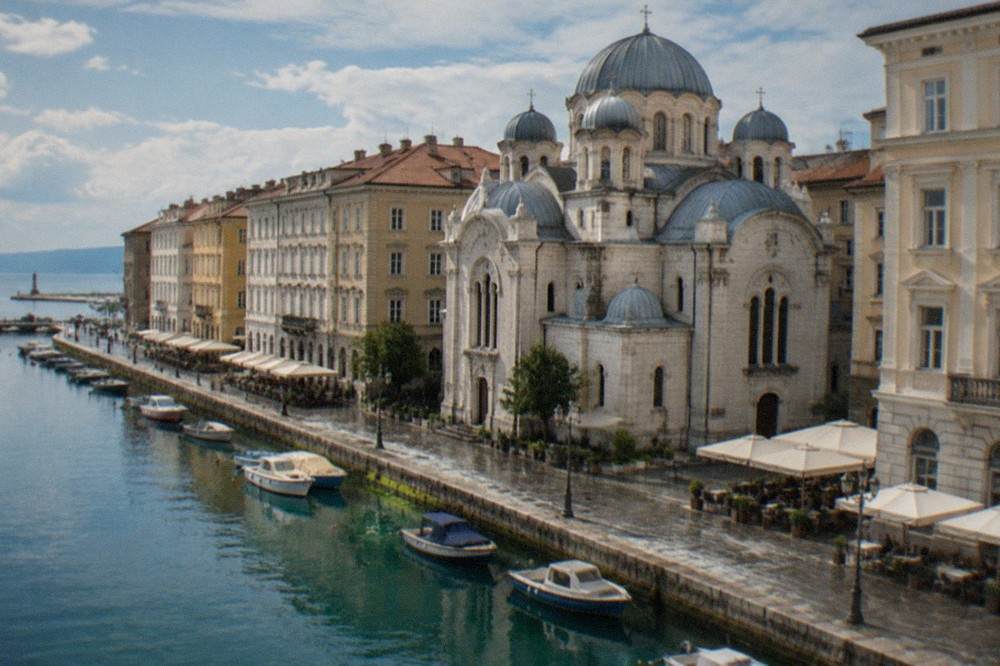
Trieste has one short canal, the Canal Grande of the Borgo Teresiano, lined with historic buildings and the Sant'Antonio Taumaturgo church, but it is a single 18th-century harbour channel, not a canal network. The two cities are not comparable on this.
Whatever you decide, decide with your dates open: Trieste in October is a different city from Trieste in February, and the sailing, the swimming and the osmize season all move with the calendar. More on that, and on everything else this corner of Italy does differently, is across the rest of Trieste Travel Guide.