Is the Train Ride from Venice to Trieste Scenic?
Is the train ride from Venice to Trieste scenic? An honest answer for the Venice to Trieste line in northeast Italy, plus what to do and see once the train reaches Trieste, Italy.
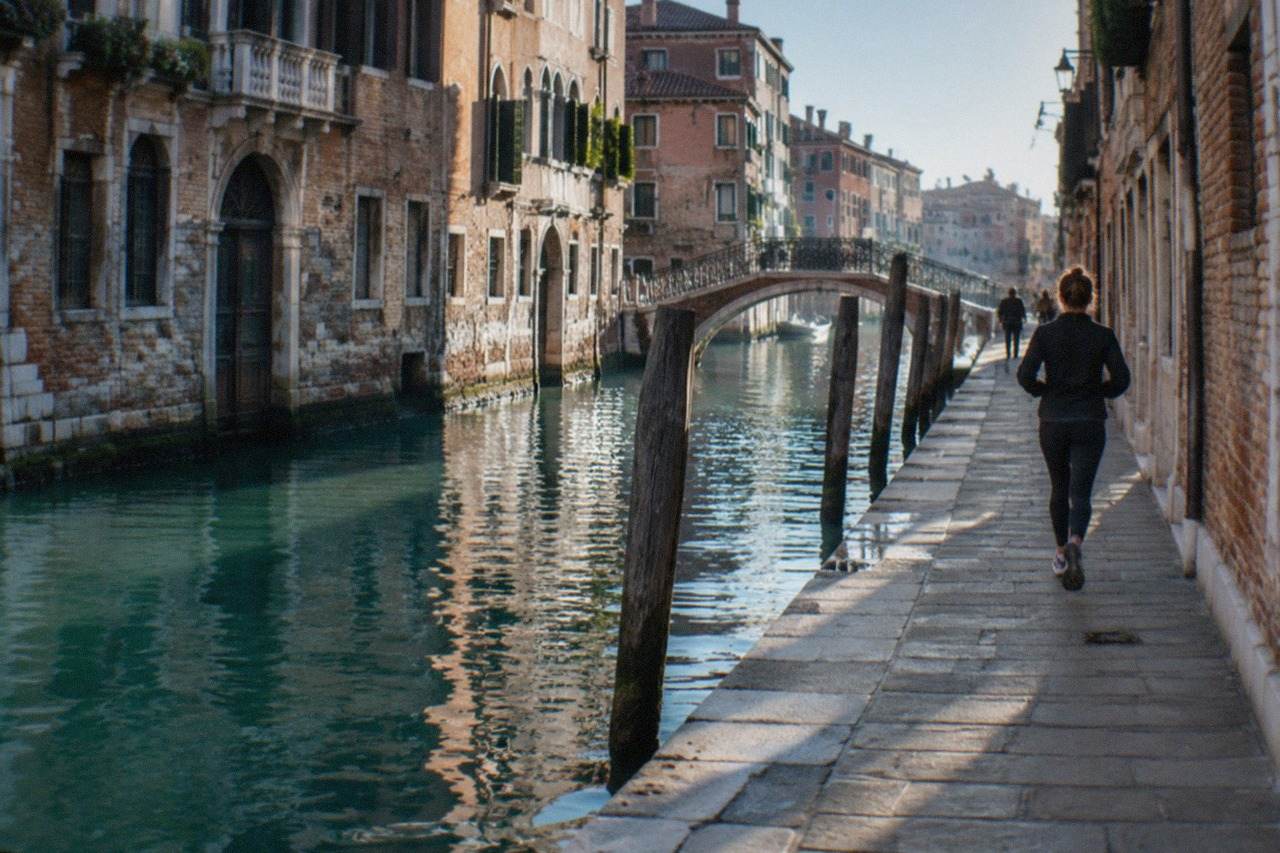
The train from Venice to Trieste, the Adriatic port city in Friuli Venezia Giulia in the northeast corner of Italy, is a ride that changes character along the way, and the question of whether it is scenic deserves a straight answer rather than a brochure line. This page is about that specific rail journey, the one that ends at Trieste Centrale a short distance from Piazza Unità d'Italia, and it is written for travellers deciding whether the train is the right way to make the trip or whether a bus, a car or an organised transfer serves them better. The scenery question and the arrival question are linked: the ride itself is one half of the experience, and what waits at the terminus is the other half.
Is the Train Ride from Venice to Trieste Scenic?
The honest answer is partly scenic: the Venice to Trieste train ride in Italy is mostly flat Venetian plain at the start, and it earns its scenery late, when the line reaches the Gulf of Trieste and the Karst edge above the Adriatic. Travellers expecting Alpine drama for the whole ride will be disappointed; travellers who judge the ride by its coastal finale, and by the city at the end of it, will call it one of the better rail arrivals in Italy.
The ride starts in the lagoon basin, where the land is as flat as the water and the interest comes from the pattern of fields, drainage channels and small towns rather than from any panorama. That stretch is fast and functional, and the regional and high-speed services that run between the two cities do not linger over it. The scenery argument is really about the second half, as the line swings towards the sea and the landscape tightens into the coastal strip between the Venetian plain and the Trieste Karst.
What makes the arrival unusual, and what most comparisons with other Italian rail journeys miss, is that Trieste is a city the train reaches along the water's edge. The terminus sits within an easy, flat walk of the seafront landmarks: Molo Audace, the Canal Grande of Trieste and Piazza Unità d'Italia, the great open square that faces the Adriatic directly. Very few Italian rail journeys end with the sea as the first thing on the agenda, and that is the real scenic payoff of this route.
For the practical side of booking, timetables and ticket types, the companion page on getting from Venice to Trieste by train covers the details, and the longer Venice to Trieste by train guide walks through the whole connection in both directions.
What Kind of Scenery Does the Venice to Trieste Line Pass?
The route passes three landscape bands: the flat lagoon and Venetian plain at the start, the riverside plain around the middle of the journey, and the Adriatic coastal strip with the Karst escarpment as the line closes on Trieste, Italy. The first two bands are agricultural and low, the third is where the mountains meet the sea. It is a journey that improves steadily rather than one that starts beautiful and stays that way.
The plain section is what it is: cultivated fields, poplars, farmsteads and the occasional walled town. There is a quiet, ordered beauty in the Venetian countryside, and in winter the pale light across the flat land has its own character, but nobody boards this train for the first hour of fields.
The coastal approach is the reason the ride gets its scenic reputation. As the line tracks the northern Adriatic shore towards Trieste, the sea appears on one side and the limestone edge of the Karst plateau rises on the other. The cliff line between Duino and Trieste, the same coast walked by the Rilke Trail and crowned by Miramare Castle, is what the ride is really selling, and the city itself closes the view with its amphitheatre of hills around the gulf.
A fair way to summarise it for a friend: judge this train by where it is going, not by where it starts. The question of whether it is scenic has the same answer as the question of whether Trieste itself is worth the ticket, and on that the comparison pages are worth reading, including whether Trieste is better than Venice and the wider look at Venice or Trieste.
Which Seat Should You Pick for the Best Views?
There is no formally designated scenic side, and the operator publishes no seat-by-seat view guide, so the practical advice is simple: check the operator's route planner and live seat map when booking, and once on board, sit on the seaward side for the final approach into Trieste, where the Adriatic and the Karst cliffs carry the scenery. In the flat plain section the side you sit on makes little difference.
The seat question only really matters late in the journey. Across the plain the view is symmetrical, fields on both sides, and arguing about window sides there is wasted effort. On the coastal stretch the sea does the work, and travellers have two moves available if their assigned seat faces the wrong way: ask to move if the train is not full, or accept that the arrival platform at Trieste Centrale puts the city and the sea within a short flat walk in any case.
One honest caveat belongs here. A scenic train ride in this part of Italy is at the mercy of the weather, and Trieste's weather has a personality of its own. The city's own station tables from the molo Fratelli Bandiera, published by the regional met agency, show a climate where the wind is a permanent resident: gusts exceed 110 km/h in every single month of the year in the record tables, the all-time peak in the series is 168.1 km/h recorded in February 2012, and the sea's mean temperature runs from about 10.5 C in February to 25.9 C in August. None of that stops the ride; it just means a grey, blowing day flattens the coastal views in a way it would not flatten, say, a Tuscan hill town.
For travellers who want the scenery guaranteed rather than weather-dependent, the arrival city compensates generously. The table below collects the headline sights within easy reach of the terminus, with the entry figures the venues themselves publish.
| Sight in Trieste, Italy | Entry | Hours as published | Notes |
|---|---|---|---|
| Miramare Castle | EUR 17 adult, includes exhibition | Daily 9:00-19:00, last entry 18:30 | The park is free all year, April to September 8:00-19:00 |
| Castello di San Giusto | EUR 7 adult, EUR 5 reduced | Daily 10:00-19:00 to 11 October; Tue-Sun 10:00-17:00 after | Free first Sunday monthly and 3 November |
| Museo Revoltella | EUR 8 adult, EUR 6 reduced | Daily 10:00-19:00 | Closed Tuesdays |
| Risiera di San Sabba | Free | Daily 9:00-19:00 to 11 October; 9:00-17:00 after | Closed 25 December and 1 January |
| Cattedrale di San Giusto | Free | Weekdays 8:00-18:30; Sundays 9:00-19:30 | Bell tower hours seasonal; no verified tower price |
What Should You Expect When You Arrive in Trieste, Italy?
Arrival is unusually easy: Trieste Centrale sits a short, flat walk from the seafront, the city's sights are grouped between the station and Piazza Unità d'Italia, and a standard urban ticket at EUR 1.50 covers 60 minutes of the city's own buses and the Opicina tram. The train drops you into a compact, walkable Habsburg port rather than a sprawling terminus district.
The walk from the station into the centre is one of the quiet advantages of arriving by rail. The route runs down through the Borgo Teresiano grid towards the water, past the Canal Grande of Trieste and the Serbian Orthodox church of Sant'Antonio Taumaturgo, and out onto the Rive, the seafront that leads to Molo Audace and Piazza Unità d'Italia. Nothing in that sequence needs a map or a plan, which is exactly why this terminus suits train travellers.
For the onward logistics, the city's own 2026 fare sheet lists the options plainly: a 60-minute urban single at EUR 1.50, a 75-minute single at EUR 1.85, a day ticket at EUR 3.35, and 10-ride and 20-ride carnet tickets at EUR 13.50 and EUR 16.65. Contactless bank cards can be tapped on board, and the system applies the cheapest applicable fare, which removes most of the ticket-machine anxiety.
One warning for a day of exploring: the bora, Trieste's famous east-north-easterly wind, does not observe a season. The station record shows gusts over 90 km/h even in spring months, with April and May averaging 0.7 such days each and July 0.9. On a strong day the seafront squares are memorable in the wrong way, and the museums become the better half of the itinerary. The question of the best time to visit Trieste treats the calendar in more detail.
Once oriented, the fastest way past the postcard layer is a private walk with a local guide who lives in the city, and this site's own coverage at Trieste Travel Guide rates the hidden-gems format highly for a first afternoon. The listing for the Trieste hidden gems private walking tour covers the route and what it includes, and you can also Check availability before you commit.
Is the Train or a Day Trip the Better Way to Do Venice and Trieste?
For a scenic arrival, the train wins: it delivers you to the centre of Trieste, Italy with the sea in front of you and no transfers to plan. For a day trip that packs in more than the city centre, an organised excursion wins, because the region's strongest sights, the Karst caves and the Slovenian lakes, sit beyond the walkable core and the train does not serve them. The two options solve different problems.
The comparison is really about what a traveller wants from the Trieste side of the journey. The city itself rewards the independent rail arrival: Piazza Unità d'Italia, Città Vecchia, the caffè culture and the seafront are all self-service, walkable, and cheap to reach on the urban fares above. The traveller who books the train, walks out of the station and spends two days in the city needs no excursion at all.
The traveller with only one day has a harder calculation. Grotta Gigante, the giant cave above Sgonico, is guided-only with compulsory booking, closed on Mondays from September to February, and reached on tours from the city; the 2026 price list shows EUR 15 for adults and EUR 12 reduced. Postojna Cave, Predjama Castle and Lake Bled are all day-trip territory. Those are the products that make an excursion the rational choice, and the day-trip pages list them in full.
For the return leg, the scheduling question matters as much as the scenery one, and the pages on the high-speed option and train frequency between the two cities carry the practical detail.
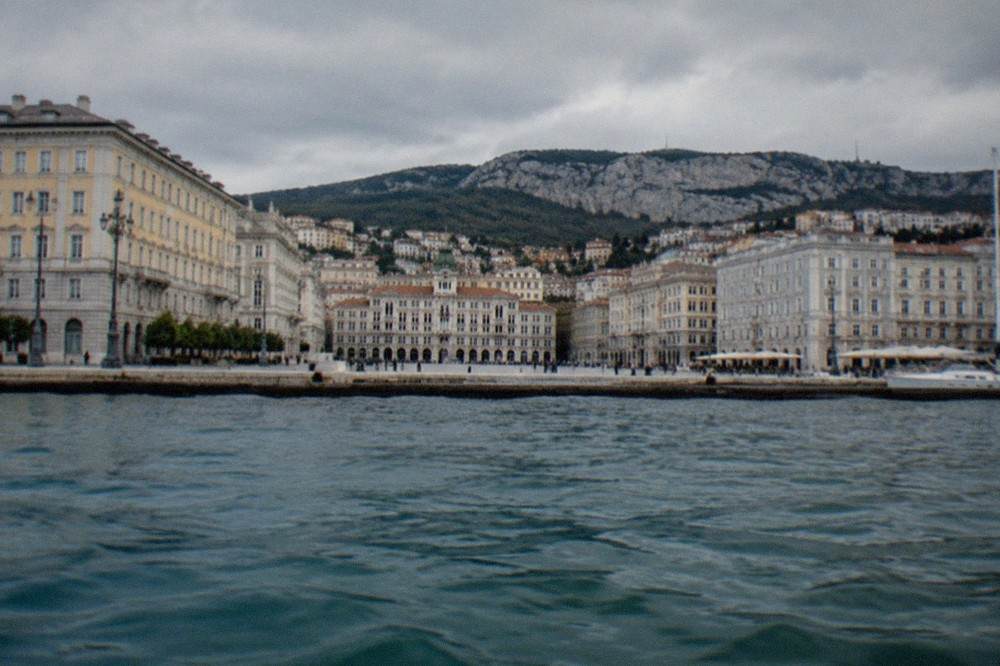
Whichever way the day-trip calculation lands, the first hours in the city are best spent on foot with someone who knows the lanes, and the hidden-gems walk is the product this site points rail arrivals at first.
Common Questions About the Venice to Trieste Train
Is the train ride from venice to trieste scenic?
Partly. The first stretch crosses the flat Venetian plain, which is agricultural and low, and the scenery that earns the ride its reputation comes later, as the line approaches the Gulf of Trieste and the Adriatic coast with the Karst above it. Judge it by the arrival, not the departure.
Which side of the train has the best view into Trieste?
No official scenic side is published, and the operator publishes no seat-view guide. The practical advice is to check the route planner when booking and, on the final coastal approach, take a seat on the seaward side, where the Adriatic and the cliff line do the work.
How walkable is Trieste once the train arrives?
Very. Trieste Centrale sits a short, flat walk from the seafront, and the sequence from the station down to the Canal Grande, Molo Audace and Piazza Unità d'Italia needs no transport at all. Urban tickets at EUR 1.50 for 60 minutes cover the buses and the Opicina tram for anything further out.
Does the weather affect the views on the ride?
Yes. The regional met agency's station tables show gusts over 110 km/h in the record for every month of the year and an average of 49 days annually with a gust over 72 km/h, and November is the wettest month at 109.8 mm. Summer is comparatively dry, with July at 53.8 mm, so the odds of a clear coastal finale are better in the warm months.
Is the train or a day trip better for seeing the coast and caves?
The train is the better scenic arrival, and the city rewards it. For the caves and lakes, an excursion is the rational choice, because Grotta Gigante, Postojna and Lake Bled sit beyond the walkable core and are covered by guided day trips from Trieste.