What Happened in Trieste, Italy?
The history of Trieste, Italy, told through what actually happened there: the Habsburg port, Maximilian and Miramare, the Second World War, the tram's long stop and return, and the Barcolana record.
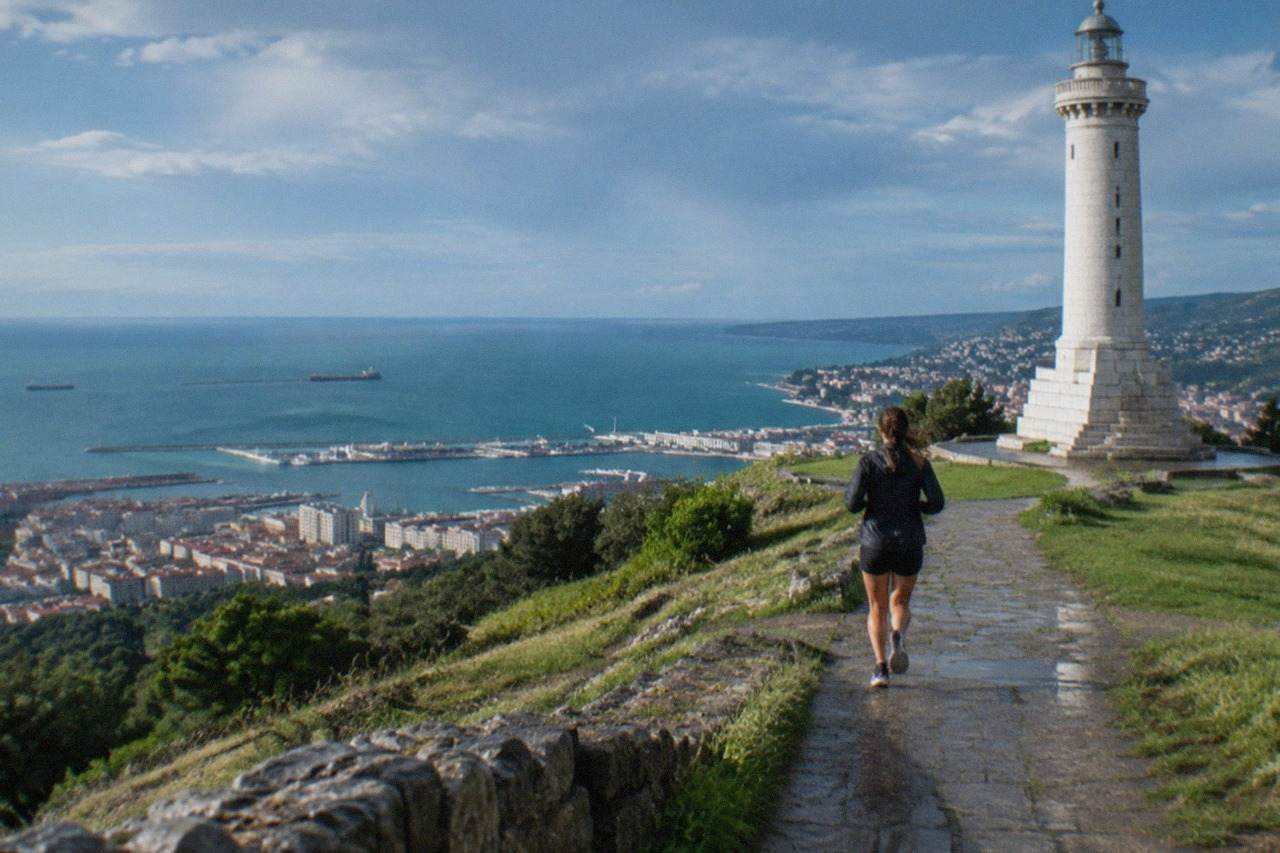
Trieste, Italy, sits on a narrow strip of coast between the Adriatic and the Karst plateau, and almost everything distinctive about it traces back to something that happened there. The Roman monuments in the city centre, the Habsburg squares around Piazza Unità d'Italia, the white castle Maximilian built above the sea at Miramare, the memorial at the Risiera di San Sabba, the tram that stopped for nearly a decade and came back, and a regatta that once put 2,689 boats on one start line: each of these is an event with a date, and together they explain why this Italian city feels unlike anywhere else in Italy. This page walks through them in order, using only figures the official sources publish.
What Happened in Trieste, Italy?
Trieste, Italy, accumulated its history in layers rather than in one dramatic moment: it was a Roman city whose theatre and arch still stand downtown, then the Habsburg Empire's great Adriatic port, then a city marked by the Second World War and the memorial at the Risiera di San Sabba, and today a Italian regional capital whose tram returned in 2025 and whose Barcolana regatta set a world record of 2,689 boats in 2018.
The Roman layer is the one most visitors trip over without noticing. The ministry's own page for the Teatro Romano describes a monument you look down into from the street rather than one you enter, and the Arco di Riccardo stands as another surviving piece of the ancient city. Nothing about these remains is cordoned off behind a ticket desk: they sit in the fabric of the Città Vecchia, which is why a walking tour is genuinely the best way to read them.
The Habsburg layer is louder. For centuries Trieste was the sea door of an empire that stretched inland to Vienna, and the city's architecture still shows it: broad squares, neoclassical facades and the historic caffè that made the city a coffee capital. The coffee trade is real and documented, though the repeated per-head consumption figures you will see elsewhere have no primary source behind them, so this site does not repeat them.
The modern layer is the one people ask about. The Second World War reached the city directly, the Cold War made its border a frontier between blocs, and the decades since have been about reopening rather than closing: the border checks with Slovenia are temporary and dated, the tram runs again, and the Barcolana fills the gulf with boats every October.
What Did the Habsburgs Leave in Trieste?
The Habsburgs made Trieste their empire's Adriatic port, and the physical result is the city you walk today: Piazza Unità d'Italia and the Borgo Teresiano district, the historic caffè of the city centre, and Miramare Castle, the white residence Archduke Maximilian built above the sea before he left to become Emperor of Mexico, now a museum where an adult ticket costs €17.
Maximilian's story is the most concrete event in this layer. The tour roster for the castle's private tour describes the former apartments of "Archduke Maximilian (later Emperor of Mexico) and his wife Charlotte," and the Ministry of Culture's own visit page for Miramare lists the castle's current terms: every day 9:00-19:00, last admission 18:30, adult €17 including the temporary exhibition, with the park free all year. A man built a house on a cliff over the gulf, sailed to Mexico, and never came back to live in it. That is the kind of thing that happened in Trieste.
The coffee port grew in the same period. Trieste became a roasting centre and the home of Illy, and the historic caffè of the city centre are the surviving institutions of that trade. What the sources do not support is the famous statistic that Triestini drink twice the Italian average: no chamber of commerce, port authority or company figure verifies it, so treat it as colour, not fact.
The Central European character this left behind is why the city confuses first-time visitors. It does not look or feel like the Mediterranean stereotype, and it is not supposed to. The what is Trieste famous for answer on this site covers that identity question in more depth, and the why is Trieste famous page traces the same story through its landmarks rather than its events.
What Happened in Trieste During and After the Second World War?
The Second World War brought occupation, deportation and destruction to Trieste, and the site the city preserves from that period is the Risiera di San Sabba, a national monument and civic museum today, with free entry, open daily 9:00-19:00 from 1 March to 11 October and 9:00-17:00 thereafter, closed only on 25 December and 1 January.
The Risiera's own site states its terms plainly: ingresso libero, no booking for individuals, groups required to book a slot between 1 March and 31 May. The monument stands a short way out of the centre and is the city's principal memorial to what happened here in the 1940s. This site's rule is to publish what the venue publishes and nothing more, so for the full historical account the memorial itself is the right source; for visiting practicalities, the hours and free entry above are current.
The postwar settlement is the other event people are really asking about when they type this question. Trieste ended up on the border between Italy and Yugoslavia, and that border shaped the city for two generations. The identity question it raised still arrives in search queries every day, and the is Trieste more Italian or Slovenian answer on this site addresses it directly.
What changed is that the border opened. Slovenia has been in the euro area since 1 January 2007 and in Schengen since December 2007, and Croatia joined both Schengen and the euro on the same day, 1 January 2023. The one live exception, and it is at Trieste's own doorstep: the European Commission's register lists temporary Italian border checks on the land border with Slovenia running from 19 June 2026 to 18 December 2026. Carry a passport or national ID card for a day trip into Slovenia, and check the register rather than assuming.
What Happened to Trieste's Famous Tram?
The Opicina tram, Trieste's historic funicular-tram line, was suspended after a collision in August 2016 and reactivated on 1 February 2025, and it runs today as urban line 2 from piazza Dalmazia to Opicina, about 5.175 km, on a timetable dated 20 July 2026, with a standard urban ticket valid on board.
Almost every guidebook still gets this wrong. The line was off the street for more than eight years after the 2016 accident, and plenty of published copy was written in that gap and never corrected. Trieste Trasporti's own line-2 page carries the current timetable, and TPL FVG's page states the reactivation date explicitly. The city terminus is piazza Dalmazia, not piazza Oberdan, which is the second error the older sources make.
The ride matters because the tram is one of the few hybrid funicular-trams left anywhere, climbing from the city to the Karst village of Opicina with the Obelisk viewpoint on the way. A standard urban single, €1.50 for 60 minutes on the 2026 tariff sheet, is valid, and contactless cards can be tapped on board.
If the tram is your reason to visit, pair it with the city walk rather than treating it as a substitute: the tram covers the hill, the walk covers the history. The what to do in Trieste in one day answer on this site sequences both.
What Big Events Happen in Trieste Now?
The biggest recurring event in Trieste is the Barcolana, the autumn sailing regatta first held in 1969 with 51 boats, which set its all-time record of 2,689 registered yachts in 2018, a figure the organisers describe as a Guinness World Record for the largest sailing race in the world, and whose 2026 edition runs 2-11 October with the main race on Sunday 11 October.
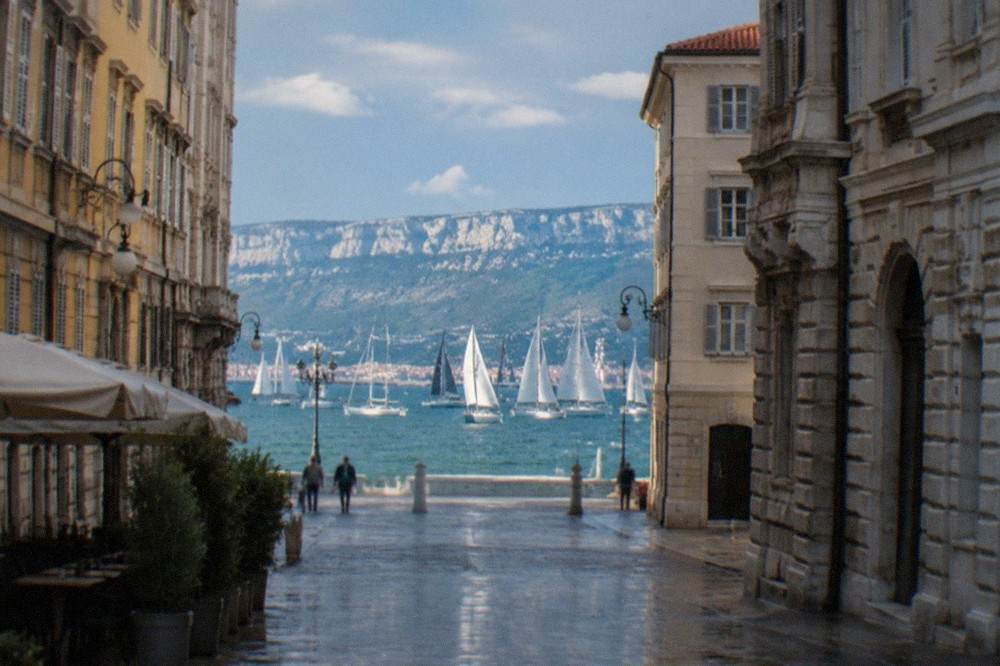
The Barcolana is what happened to Trieste's relationship with its own gulf. What began as a local race now fills the waterfront village around Piazza Unità d'Italia each October, and the 2025 edition drew 1,865 boats, the highest entry since 2019, according to the organisers' own news page. The regatta starts at about 10:30 on a fixed quadrilateral course of 13 nautical miles, finishing off Piazza Unità.
The other recurring "event" is the bora, the cold katabatic wind that blows from the east-north-east off the Karst. ARPA's station tables for the molo show 17.6 days a year on average with a gust over 90 km/h and 49 days over 72 km/h, with the strongest gust in the series at 168.1 km/h in February 2012. No official threshold exists at which the waterfront closes or ferries stop, so ignore any number a guidebook invents for that.
| Event in Trieste's story | What the record says |
|---|---|
| First Barcolana regatta | 1969, 51 boats on the start line |
| Barcolana entry record | 2,689 yachts in 2018, described by the organisers as a Guinness World Record |
| Barcolana 58 | 2-11 October 2026, main regatta Sunday 11 October, start about 10:30 |
| Opicina tram collision | August 2016, service suspended |
| Opicina tram reactivation | 1 February 2025, from piazza Dalmazia |
| Strongest gust in ARPA's series | 168.1 km/h, February 2012, molo Fratelli Bandiera |
Where Can You See What Happened, in Person?
You can see Trieste's layered history on foot in a single day: the Roman theatre and the Arco di Riccardo in the Città Vecchia, the Habsburg squares around Piazza Unità d'Italia, the Cathedral and Castello di San Giusto on the hill, and Miramare up the coast, with castle entry at €7 at San Giusto and €17 at Miramare, both on official venue pages.
The sites are cheap, which surprises people. The parish states cathedral entry is free. San Giusto Castle's own site lists €7 full, €5 reduced, covering the walls, the castle museum, the Lapidario Tergestino and temporary exhibitions. Museo Revoltella is €8, closed Tuesdays. The Risiera is free. Only Miramare, at €17 with the exhibition, costs real money, and its park costs nothing.
| Site in Trieste | What happened there | Entry on the venue's page | Hours |
|---|---|---|---|
| Teatro Romano | Roman city layer, viewed from the street | Free | Street access |
| Castello di San Giusto | Medieval and Habsburg hill fortress | €7 full, €5 reduced | 1 April-11 October daily 10:00-19:00; from 12 October Tue-Sun 10:00-17:00 |
| Cattedrale di San Giusto | The city's principal church on the hill | Free | Weekdays 8:00-18:30, Sundays 9:00-19:30 |
| Risiera di San Sabba | National monument to the wartime period | Free | 1 March-11 October daily 9:00-19:00; from 12 October daily 9:00-17:00 |
| Castello di Miramare | Maximilian's residence above the gulf | €17 adult, park free | Every day 9:00-19:00, last admission 18:30 |
A local guide turns those stones into the story, which is why the hidden-gems private walk is this page's related tour: the listing describes a private walk with a local guide through Trieste's hidden gems, 2h 30m, from $143.30 per person, rated 4.96 from 62 reviews on the operator's live listing. Check availability
The free option deserves its own line: GuruWalk runs a pay-what-you-want city walk, "Discover Trieste on a walking tour," led by a local guru and rated 4.86 from 50 reviews on its listing. It is free and tip based, and naming the platform and the guru is the honest way to describe it, because it is not this site's tour.
Common Questions About What Happened in Trieste, Italy
What happened in Trieste, Italy?
Trieste accumulated its history in layers: a Roman city, the Habsburg Empire's Adriatic port, a city marked by the Second World War and the Risiera di San Sabba memorial, and a modern regional capital whose tram returned in 2025 and whose Barcolana regatta set a record of 2,689 boats in 2018.
Is Trieste in Italy or Slovenia?
Trieste is in Italy, in the region of Friuli Venezia Giulia. It sits on the border with Slovenia, and Italy is running temporary checks on that land border from 19 June 2026 to 18 December 2026 per the European Commission's register, so carry ID for a cross-border day trip.
What happened to the Opicina tram?
It was suspended after a collision in August 2016 and reactivated on 1 February 2025. It runs today as urban line 2 from piazza Dalmazia to Opicina, and a standard urban ticket is valid.
What is the Barcolana record?
2,689 registered yachts in 2018, which the organisers describe as a Guinness World Record for the largest sailing race in the world. The first edition, in 1969, had 51 boats.
Who built Miramare Castle?
Archduke Maximilian, who later became Emperor of Mexico, built it as his residence above the Gulf of Trieste with his wife Charlotte. It is now a museum; the adult ticket is €17 and the park is free.
What is there to do in Trieste now?
Walk the Città Vecchia and Piazza Unità d'Italia, visit San Giusto hill, take the tram to Opicina, and time an October visit to the Barcolana. The one-day itinerary on this site sequences the highlights.
If your question is less about events and more about the city they produced, the what is special about Trieste, Italy answer covers the character, and Trieste Travel Guide holds the full set of landmarks, itineraries and day trips built on the same verified sources as this page.