What's the Best Time of Year to Visit Trieste?
The best time to visit Trieste, Italy, month by month: ARPA station weather data, the bora wind season, sea temperatures, Barcolana and crowd advice.
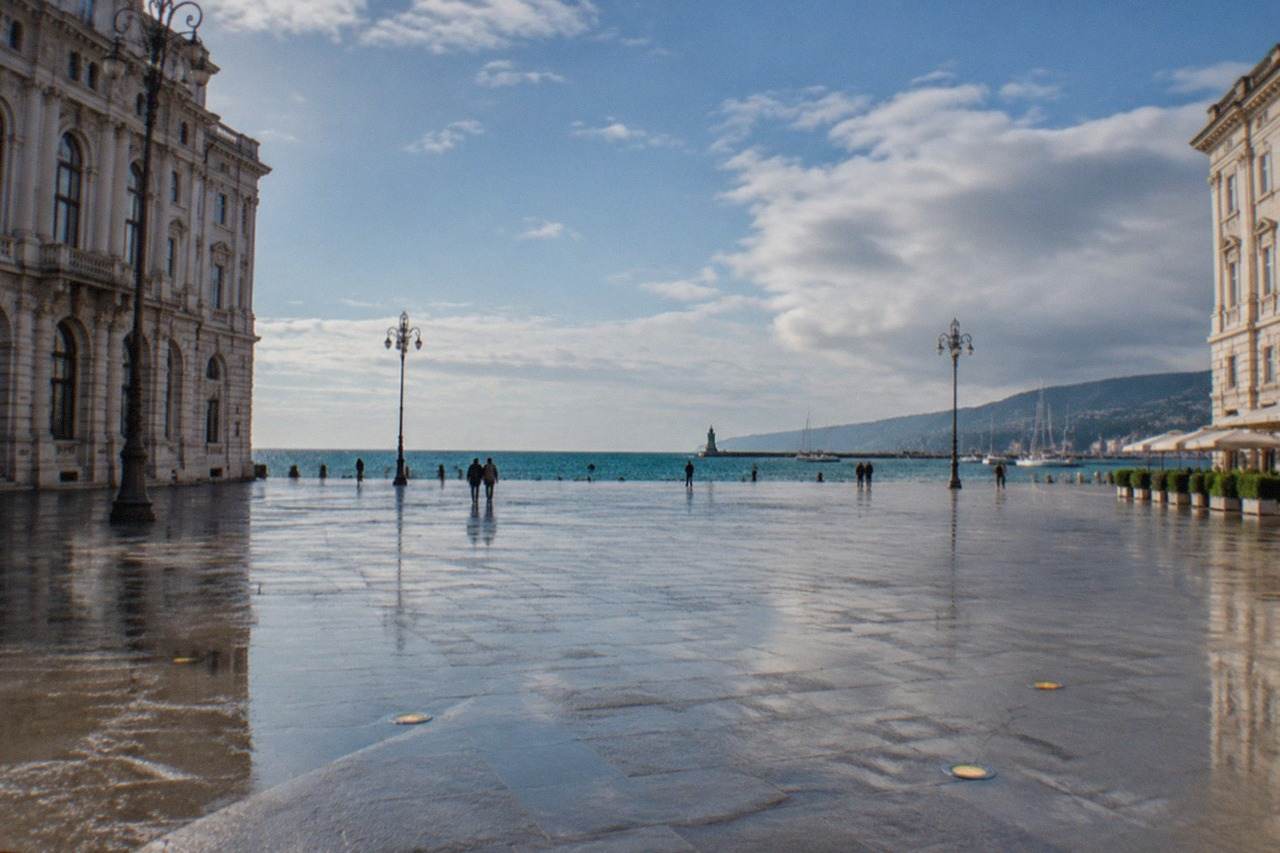
Trieste, the Adriatic port city in Friuli Venezia Giulia in the northeast corner of Italy, has a climate that surprises most visitors who arrive expecting the hot, dry Mediterranean south. The city sits at the foot of the Carso plateau, open to the gulf and to the east-north-easterly bora wind, and its weather is measured continuously by ARPA FVG's own waterfront station on the molo Fratelli Bandiera. That station record, covering 1995 to 2024, is what this page uses to answer the timing question with real numbers rather than folklore.
What's the Best Time of Year to Visit Trieste?
The best time of year to visit Trieste is late April to June, with September a close second and May the best month of all: the sea warms from 14 C in April to 17.9 C in May and 23.1 C in June, rain stays in a moderate 52.8 to 75 mm monthly band, and June is the calmest wind month with only 0.3 days carrying a gust over 90 km/h.
September pairs a 23.9 C sea with thinner crowds, at the cost of being the city's second wettest month.
May earns the top spot on the station's own numbers. Daytime highs average 21.7 C, the sea has climbed to 17.9 C, and the month averages just 0.7 days with a gust over 90 km/h. June is warmer still, 25.8 C on average by day with the sea at 23.1 C, and it is the least windy month in the whole record. The trade-off in June is the first genuinely hot days: the station logs 2.5 days over 30 C.
September is the shoulder-season pick. The sea, at 23.9 C, is actually warmer than it was in June because the water holds its summer heat into autumn, and the city is back to off-peak rhythms after August. The catch is rain: September is Trieste's second wettest month at 102.3 mm, so pack for showers and plan museum mornings around them. The full month-by-month picture, including how many days you need in Trieste, is laid out in the table below.
| Month | Mean high | Rain mm | Sea C | Days gust over 90 km/h |
|---|---|---|---|---|
| March | 13.0 | 52.8 | 11.6 | 2.1 |
| April | 16.8 | 60.7 | 14.0 | 0.7 |
| May | 21.7 | 75.0 | 17.9 | 0.7 |
| June | 25.8 | 62.5 | 23.1 | 0.3 |
| July | 28.2 | 53.8 | 25.9 | 0.9 |
| August | 28.1 | 71.7 | 25.9 | 0.9 |
| September | 23.9 | 102.3 | 23.9 | 1.1 |
| October | 19.6 | 88.6 | 20.3 | 1.4 |
When Should You Avoid Trieste, Italy?
Avoid November if rain matters to you: it is Trieste's wettest month at 109.8 mm across 9.5 wet days, and October is second at 88.6 mm, so the November window is the one to skip. The wind is a separate issue, and it does not follow the rain: February averages 6 days a month with gusts over 72 km/h and holds the all-time station record of 168.1 km/h from 2012, making it the windiest month to plan around.
The autumn rain is the fact most guides get wrong in both directions. Trieste is not a rainy summer city: July is the second driest month of the year at 53.8 mm, behind only January and March at 52.8 mm each. The wet period runs from September through November, with September at 102.3 mm and November the peak. If your trip lands in that window, the indoor backbone is strong: the Museo Revoltella is open daily 10:00-19:00 except Tuesdays, Castello di San Giusto charges €7 full price, and the city's rainy-day options are covered in a dedicated guide.
Winter, by contrast, is underrated. December and January average daytime highs of 10.7 C and 9.2 C, mild for a city at this latitude, and the Christmas market gives the cold months a reason of their own. What winter does carry is wind: the monthly record gust exceeds 110 km/h in every single month of the year, but the average number of strong-wind days climbs through the cool season, from 2.2 days over 72 km/h in June to 5.5 in January and 6.0 in February.
When Is the Bora Wind a Problem in Trieste?
The bora is a cool-season problem in Trieste, strongest and most frequent from November to March with February the peak, and it can blow at any time of year because the monthly record gust tops 110 km/h in every month. On average the city sees 49 days a year with a gust over 72 km/h and 17.6 days over 90 km/h, but June averages just 0.3 strong-wind days and July, at 0.9, has fewer than January's 2.4.
The bora blows from the east-north-east, funnelling down off the Carso plateau and across the gulf, and ARPA's regional wind sheet notes that gusts largely exceed 100 km/h in strong episodes. No official wind threshold exists at which the Rive seafront closes, ferries stop or events are cancelled: the authorities scale their response to conditions in real time rather than a published cutoff, so treat any specific number you read elsewhere with suspicion. In practice, a strong bora day means holding onto railings on the exposed waterfront and finding the sheltered side of the grid. Everything else covered here is indexed on Trieste Travel Guide.
For planning purposes, the wind data points the same way as the temperature data. The summer months are not just the warmest, they are among the calmest, and the famous bora is a winter phenomenon that a May or June visitor is statistically unlikely to meet at full force. If you do travel between November and March, the wind is part of what you are buying: the city's seafront architecture, the bora ropes of the old town and the whole personality of the place are shaped by it.
What Is Trieste Like in Peak Summer and During Barcolana?
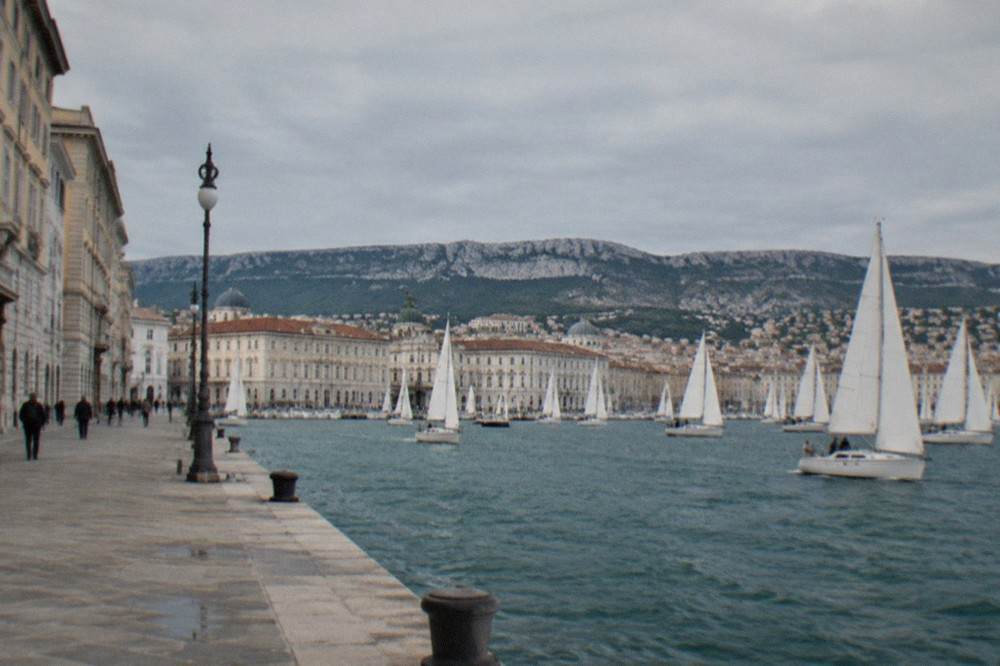
July and August are Trieste's warmest months, with mean highs of 28.2 C and 28.1 C, the sea at 25.9 C and rain at just 53.8 mm and 71.7 mm respectively, but August is the city's busiest month. The first half of October belongs to Barcolana: the 2026 edition runs 2-11 October, with the main regatta on Sunday 11 October from 10:30 over a 13 nautical mile course, and the event's record entry stands at 2,689 boats from 2018.
Barcolana is the single biggest date on the city's calendar, a sailing race that turns the whole gulf into a course and the waterfront into a village. It is a spectacle worth travelling for, but it changes the city: accommodation fills, the seafront is crowded, and the weather sits inside the windy shoulder of the year, with October averaging 1.4 days with gusts over 90 km/h. If you come for the regatta, book early and treat the weather as part of the show rather than a risk to be avoided.
Peak summer is a different proposition. The station logs 7.2 days over 30 C in July and 8.5 in August, which is modest by southern Italian standards, and the sea is at its annual maximum. The crowds are real but concentrated in August, when the beach culture of Barcola and the city's own seafront are in full swing. June delivers nearly the same warmth with meaningfully fewer people, which is why it ranks above July and August in this page's recommendation.
| Window | Why go | Trade-off |
|---|---|---|
| Late April to June | Warmest calm months, sea warming to 23.1 C | June has the first hot days |
| July and August | Sea at 25.9 C, driest midsummer | Busiest, hottest, 8.5 days over 30 C in August |
| September | Sea still 23.9 C, off-peak pace | Second wettest month at 102.3 mm |
| Early October | Barcolana, 2-11 October 2026 | Crowds, windier, 88.6 mm of rain |
| November to March | Fewest visitors, Christmas market | Wettest months, peak bora season |
What About Opening Hours and Prices Across the Year?
Opening hours in Trieste shift twice a year, in early October and early April, so the season changes what you can see and when: Castello di San Giusto runs daily 10:00-19:00 from 1 April to 11 October, then Tuesday to Sunday 10:00-17:00, while Miramare Castle keeps 9:00-19:00 every day with the park free year-round. Grotta Gigante is open daily from March to August but only Tuesday to Sunday from September to February, with booking compulsory.
These calendar switches matter more here than in cities with uniform year-round hours. A March visitor and an April visitor see different Triestes: the castle walls, the cave and the seafront kiosks all widen or narrow with the season. The ministry's first-Sunday-of-the-month free-entry scheme applies at state sites including Miramare, but the details have changed more than once, so check the venue's own page for the month you are travelling rather than assuming a standing rule.
Prices are stable across the year at the venues themselves, so the timing question is about hours and weather, not cost. Miramare Castle charges €17 for an adult including the temporary exhibition, Castello di San Giusto €7, the Museo Revoltella €8, and the Risiera di San Sabba is free. What does change is how far in advance you need to book: Grotta Gigante takes no walk-ins at all, and group slots at the Risiera must be reserved in advance for visits between 1 March and 31 May. For the wider picture of what Trieste is famous for, the timing follows the same logic.
Common Questions About When to Visit Trieste
What's the best time of year to visit Trieste?
Late April to June is the best window, with May the single best month: 21.7 C daytime highs, a 17.9 C sea, moderate rain and very few strong-wind days. September is the best shoulder-season alternative, with the sea still at 23.9 C.
Is Trieste rainy in summer?
No. July is the second driest month of the year at 53.8 mm, behind only January and March at 52.8 mm each. Trieste's rain is an autumn phenomenon: November is the wettest month at 109.8 mm and September is second at 102.3 mm, all from the waterfront station's 1995-2024 record.
When is the bora strongest in Trieste?
The bora peaks in the cool season, November to March, with February the windiest month at 6 days a month with gusts over 72 km/h on average. The all-time station record is 168.1 km/h from February 2012. June is the calmest month of the year.
Is Trieste warm enough to swim?
The sea reaches 25.9 C in July and August and is still 23.9 C in September, warmer than its June reading of 23.1 C, because the water retains summer heat into autumn. Spring is cooler: the sea averages 14 C in April and 17.9 C in May.
When does Barcolana take place?
Barcolana 58 runs from 2 to 11 October 2026, with the main regatta on Sunday 11 October starting at 10:30 over a 13 nautical mile course in the Gulf of Trieste. The record entry is 2,689 boats, set in 2018.
The short version: come in May or June for the best all-round weather, September for warm seas and fewer people, early October if Barcolana is the point of the trip, and treat November as the month to plan around. Whatever window you choose, the station data says you will not find the rainy summer or the year-round gale that the city's reputation sometimes suggests, just a city whose calendar is worth reading before you book.