How Do Italians Say Trieste?
How Italians pronounce Trieste, the port city in Friuli Venezia Giulia, Italy: where the stress falls, why English speakers get it wrong, and what locals and Slovene neighbours call it.
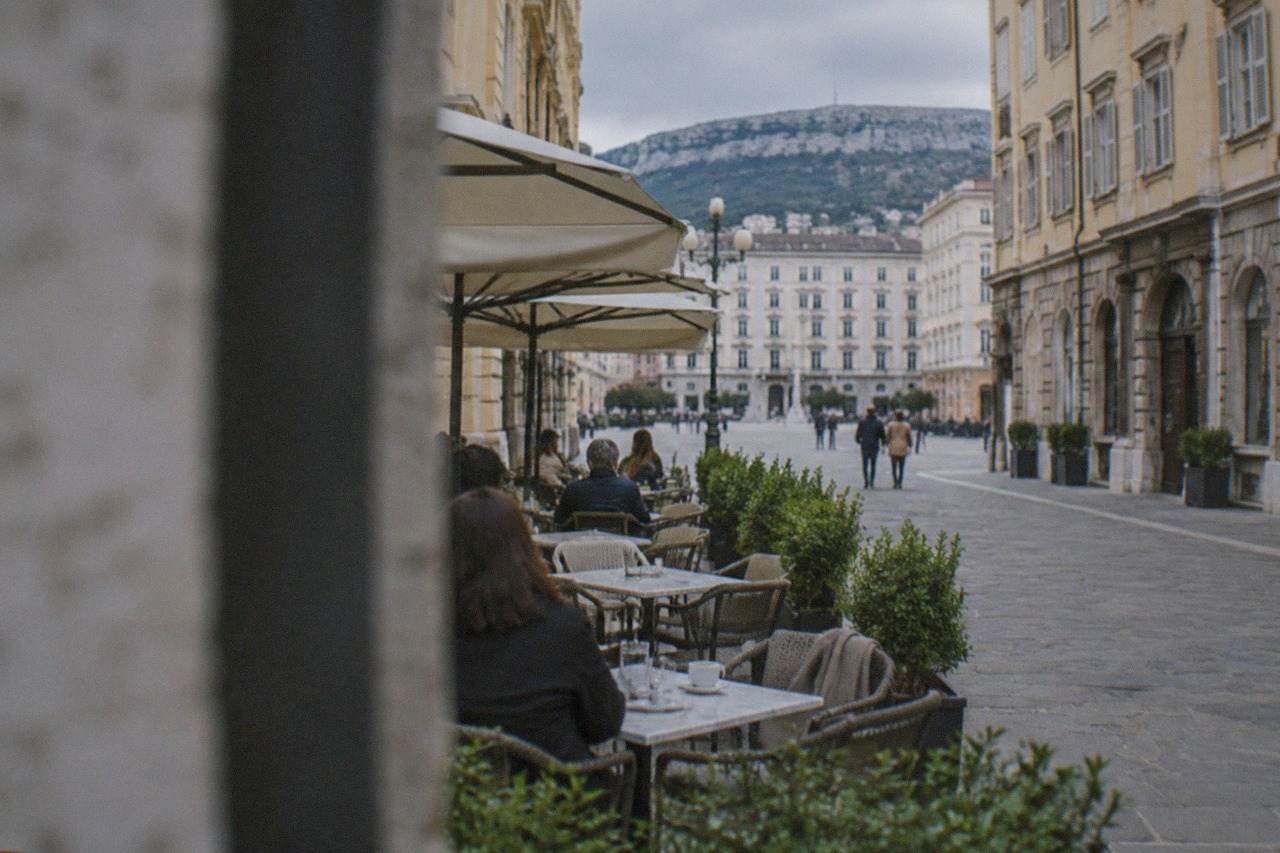
Ask how do italians say trieste? and the answer is short, but it opens onto a story about a border city that Italians, Austrians and Slovenes have all pronounced their own way. Trieste, the Adriatic port in Friuli Venezia Giulia in the far northeast of Italy, is a name that English speakers routinely mangle on the first attempt, because the spelling hides where the stress belongs. Italians do not say "tree-EST" and they do not say "try-EST". The name has three syllables in Italian and the weight sits squarely on the second one.
How Do Italians Say Trieste?
Italians pronounce Trieste as tree-ES-teh: three syllables, with the stress on the middle one and a crisp final vowel that English speakers tend to swallow. The "ie" is not the English long "ee" of "priest" stretched across the whole word, and the final "e" is never silent, because Italian does not drop word-final vowels. Say TREE-es-TEH with the emphasis on ES and you are, to an Italian ear, saying it correctly.
The single biggest mistake is collapsing the last two syllables into one. An English speaker reads "Trieste", sees a familiar shape, and produces something like "tree-EST" or even "try-EST", two syllables with a swallowed ending. Italian does not work that way. Every vowel in the written word is pronounced: T-R-I-E-S-T-E gives you tri, es, te, and the te is a full, clear syllable with an open eh sound, not a trailing ghost of a vowel.
The "ie" combination is where the confusion starts. In Italian it does not behave like the "ie" in English "believe". Here the i and the e split across a syllable boundary, so the i closes the first syllable and the e opens the second. The result is that the first syllable is short and clipped, tree, and the second syllable, es, carries the accent. If you tap the rhythm on a table it goes da-DUM-da, not DUM-da-da and not da-da-DUM.
Stress placement in Italian is mostly predictable but this word is one of the cases learners meet early, because it looks like it could go either way. Names ending in -e can be stressed on different syllables depending on the word, and Trieste happens to take the penultimate, which is the most common pattern in the language. So the good news is that the correct stress is also the default Italian stress: if you say tree-ES-teh you are following the same rule that gives you Ro-MA? no, that one is an exception too, but the rule holds for Trieste.
| Syllable | Sounds like | Stress | Common English error |
|---|---|---|---|
| tri | "tree", short and clipped | none | stretched to "try" |
| es | "ES", as in "estimate" | primary | moved to the first syllable |
| te | "teh", open and clear | none | dropped to a mumble or lost entirely |
Practice the word the way an Italian would drill it: slowly, three taps, weight on the middle. Tree-ES-teh. The final vowel is the part that gives the pronunciation away. A local hears "tree-EST" and knows immediately they are talking to a visitor, which in a city that lives off cruise passengers and conference traffic is no rarity, and nobody minds. But getting the last syllable in is the difference between a name and a near-miss.
Why Does the Spelling of Trieste Trip Up English Speakers?
The spelling trips English speakers up because "ie" and a final "-ste" have no stable reading in English, so the eye reaches for familiar patterns like "priest" or "haste" and lands the stress in the wrong place. Italian, by contrast, has almost no silent letters: the written form tells you the sounds, and the only real question is where the accent falls. Once you know it falls on the middle syllable, the rest of the word follows automatically.
English orthography is a minefield of exceptions, and readers pattern-match by analogy. "Trieste" visually resembles "priest", so many people pronounce the ie as one long vowel and end up with a two-syllable word. Others see the -ste ending and reach for "taste" or "haste", which drags the vowel quality in the wrong direction. Both analogies fail because the word is not English and never was: it is a Latin name, Tergeste, that came down through Venetian and Italian with its shape more or less intact.
Italian spelling, by contrast, is close to phonetic. Once you know that i and e here sit on either side of a syllable break, and that the final e is pronounced, there is nothing else to guess. That predictability is why Italian children do not have spelling bees: the language rarely hides a trap. Trieste is not a trap in Italian. It is only a trap for readers approaching it with English instincts.
There is a second layer of confusion that is specific to this destination, and it comes from the internet rather than from phonetics. Search for Trieste and you will meet the bathyscaphe Trieste, the vessel that descended into the Mariana Trench, a San Francisco café chain called Caffe Trieste, an actress, a basketball club and an Italian navy ship. All of them borrowed the city's name, and several of them get pronounced differently by the communities around them. The city in Friuli Venezia Giulia is the original, and the Italian pronunciation is the one that matters for the name on the map.
The city itself is worth the effort of getting right. It sits on the Gulf of Trieste at Italy's northeastern corner, a Habsburg-built port that only became part of Italy in the twentieth century, and its identity is the subject of its own questions: see what is Trieste famous for and what is Trieste in Italy famous for for the wider picture.
Each of those walks is led by someone who says the city's name the local way, which is quietly the best pronunciation lesson on offer.
Do Locals in Trieste Say It Differently?
Yes. Many residents, particularly older ones, say the name in local dialect as something closer to "Triest", one syllable flatter and harder than standard Italian, and the city's Slovene community and neighbouring Slovenia call it Trst, a single compact syllable with no final vowel. Standard Italian tree-ES-teh is what you will hear in schools, on television and from the recorded announcements on trains, but the dialect and Slovene forms are alive in the streets around you.
Trieste is a border city with a layered identity, and its name carries all of it. The local dialect, triestino, belongs to the Venetian family and it treats the city's name differently from standard Italian: the final vowel weakens or drops, and the word hardens into something an Italian from Rome or Milan would find almost foreign. You can hear it in the market, in the buffet bars serving jota and goulash, and among families who have been in the city for generations. More of these guides are collected on Trieste Travel Guide.
Then there is Slovene. Slovenia begins at the city's eastern edge, and the Slovene name for Trieste is Trst, one of the shortest place names in Europe. It is not a translation, it is the same name worn down by a different language's phonetics, and it is the name the city carries in Slovene-language media, signage and schooling on both sides of the border. The relationship between the two names is a small mirror of the city's own history as a meeting point of languages, which is covered in more depth in is Trieste more Italian or Slovenian.
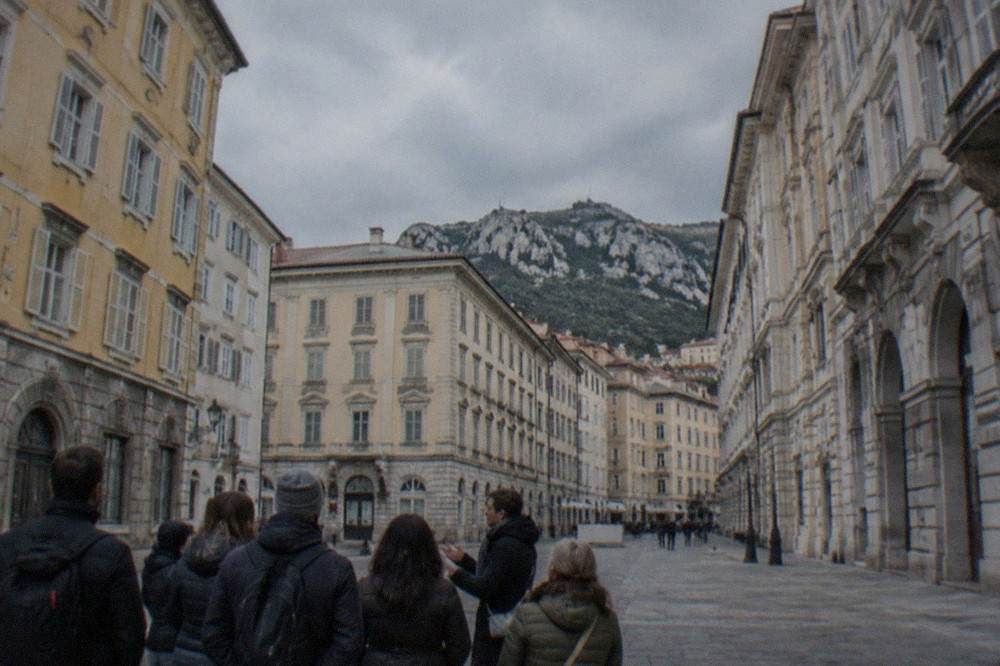
Hearing the name said by someone who lives there is one of the quiet pleasures of a guided walk. The Jewish heritage walking tour of Trieste, for instance, is a private three-hour walk through the port quarter where the city's multilingual past is written into the street names, and the guide's own pronunciation of those names is part of the experience. You can Check availability on the operator's live listing.
Does the Name Trieste Mean Anything in Italian?
The name does not mean anything to a modern Italian ear the way "Florence" or "Rome" might evoke a word, but it descends from Tergeste, the Roman name for the settlement, and the final part of that Latin name is widely linked to the idea of a market or trading place. To Italians today Trieste is simply a proper noun, a city name, and its meaning lives in etymology rather than in everyday speech.
The Latin form Tergeste is the ancestor of every version of the name in circulation: Italian Trieste, dialect Triest, Slovene Trst. Etymologists connect the first element to an old word for market, which would suit a trading settlement on the Adriatic, though the full explanation of the name is a matter for specialists rather than for a confident one-line answer. What is certain is that the name predates modern Italy by two thousand years, and the city wore it through Roman, Venetian, Habsburg and Austrian rule without changing its core shape.
That long foreign rule is why the pronunciation question exists at all. Trieste spent centuries as the Habsburg empire's great southern port, and German-speaking administrators had their own way of saying the name, just as the Venetians, the Slovenes and the Friulians did. The standard Italian pronunciation is the one the city uses now that it is Italian, but the older pronunciations did not vanish, they simply retreated into dialect, into neighbouring languages and into family names. The fuller story of the name is covered in what does Trieste mean in Italian.
| Language or context | Written form | Spoken form | Notes |
|---|---|---|---|
| Standard Italian | Trieste | tree-ES-teh | stress on the middle syllable, final vowel clear |
| Triestino dialect | Triest | roughly "treest" | final vowel weakened or dropped |
| Slovene | Trst | one compact syllable | the official Slovene name of the city |
| English | Trieste | tree-EST or try-EST | two syllables, stress on the first, final vowel lost |
Will Anyone Correct You If You Say It Wrong?
Almost certainly not out loud. Trieste is a port and cruise city that hears its name said every possible way, and locals are used to visitors arriving with two-syllable versions. The correction you get is quiet and automatic: the person you are speaking to simply says the name back correctly, tree-ES-teh, in their reply, and the conversation moves on. Getting the stress right earns a small nod of recognition, but nobody in a service city built on tourism will stop you over a vowel.
That said, the effort is worth making for a practical reason: clarity. The two-syllable English version is perfectly understood here, but the correct three-syllable version is what appears on train announcements, bus destination displays and recorded platform messages, and being able to match what you hear to what you say makes finding your way around marginally easier. The regional transport network, including the tram line up to Opicina, announces the city and its suburbs in standard Italian.
The city rewards a little preparation in other ways too, and the questions visitors ask most often are answered elsewhere on this site, from how many days in Trieste is enough to is Trieste a walkable city. If this is your first encounter with the city rather than just with its name, start with the pronunciation, then let the rest follow.
Any of these three is a good excuse to stand in the middle of the city and hear its name said properly, by someone who has said it all their life.
Common Questions About Saying Trieste
How do italians say trieste?
As tree-ES-teh: three syllables with the stress on the middle one. The final e is pronounced, because Italian never drops a word-final vowel, and the "ie" splits across a syllable boundary rather than forming one long sound.
Is the stress in Trieste on the first or second syllable?
On the second. The first syllable, tri, is short and unstressed; the second, es, carries the accent; the third, te, is unstressed but fully pronounced. English speakers default to first-syllable stress, which is the giveaway.
Do people in Trieste speak Italian or the local dialect?
Both. Standard Italian is the language of school, media and official life, while the local dialect, triestino, belongs to the Venetian family and remains in everyday use, especially among older residents. Slovene is also spoken in the city and across the border.
What do Slovenes call Trieste?
Trst, a single compact syllable. It is the official Slovene name of the city, used in Slovene-language media and signage, and it shares the same Latin root, Tergeste, as the Italian form.
Will saying "tree-EST" cause problems in Trieste?
No. The city is a port and cruise destination accustomed to every pronunciation of its name, and locals will understand you immediately. They will usually say the name back correctly in their reply, which is the gentlest possible correction.
Does the name Trieste mean anything?
Not to a modern Italian ear; it functions as a plain proper noun. It descends from the Roman name Tergeste, whose first element is widely linked by etymologists to an old word for a market, fitting for a trading port.