How Far Is the Trieste Cruise Port from the Town?
The cruise port of Trieste, Italy sits at the edge of the city centre itself: here is how close the terminal is to Piazza Unità d'Italia, what you can walk to, and what to do with a day ashore.
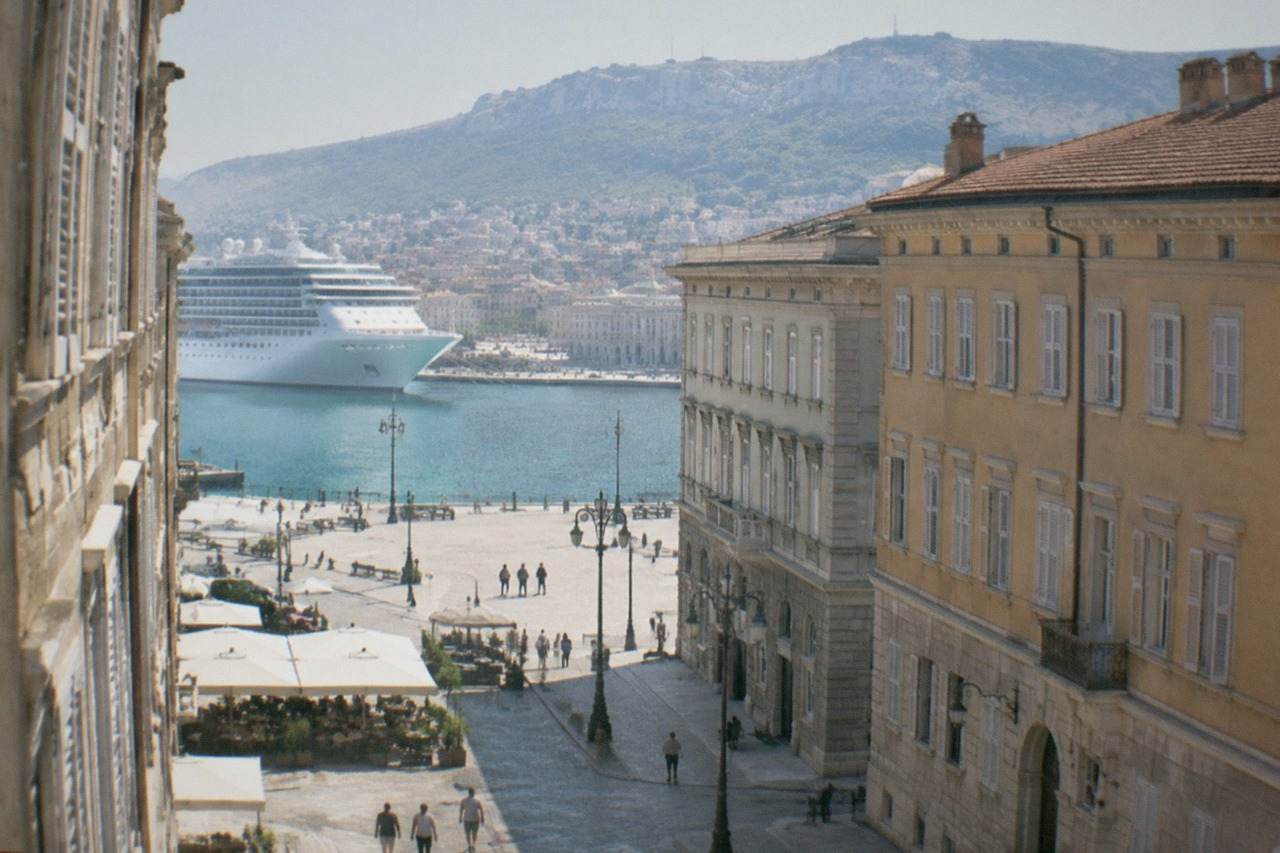
Trieste, Italy answers the cruise passenger's most anxious question better than almost any port on the Adriatic: the ships tie up along the waterfront of the city itself, with the seafront squares of the historic centre beginning where the quays end. There is no outport, no shuttle-bus transfer belt and no industrial buffer between the gangway and the town. What follows is what that actually means for a day ashore, drawn from the port's own geography, the operator's 2026 fare sheet and the venues' published hours.
How Far Is the Trieste Cruise Port from the Town?
The Trieste cruise port is not a separate port at all: ships berth on quays that sit at the very edge of the city centre, and the historic town of Trieste, Italy begins immediately inland of the terminal. Piazza Unità d'Italia, the great seafront square that most visitors count as the heart of the town, faces the water a short, flat walk from the berths, and no transport of any kind is needed to reach the old town, the Città Vecchia, or the cafès Trieste is famous for.
That single fact shapes everything else about a day ashore here. In ports like Genoa or Civitavecchia the first hour is spent escaping the docks; in Trieste the first hour is spent already inside the destination. The quays run along the curve of the gulf, and the grid of the old Habsburg city rises directly behind them, so the question of distance dissolves into a question of orientation: which direction to walk first, and how much of the town a few hours on foot can cover.
The practical answer for anyone comparing itineraries is that Trieste is a walking port. The site's own cruise port guide covers the terminals, the berths and the arrival logistics in detail, and the short version is that the town and the port share the same stretch of waterfront. If your ship is calling here, plan for time in the city itself rather than time in transit to it.
Where Do Cruise Ships Dock in Trieste, Italy?
Cruise ships dock on the Trieste waterfront inside the city, at berths along the gulf-facing quays that back directly onto the central districts, not at a remote cargo terminal. The berths serve the town the way a river landing serves a river town: the gangway opens onto the same seafront the residents use, and the walk from ship to square crosses ordinary city streets rather than fenced dockland.
The berths sit within the stretch of waterfront the city calls the Rive, the long seafront that runs from the old port areas toward the city's seafront squares. Molo Audace, the stone pier that locals and visitors both use for a stroll out over the water, is part of the same waterfront, and Piazza Unità d'Italia opens onto it. The old town, the Città Vecchia, climbs the hill behind that square, and the Borgo Teresiano grid of the nineteenth-century city lies just to the north-west.
For planning purposes the whole port-to-town relationship is best understood as one continuous waterfront rather than a journey. The ships arrive at one end of it and the postcard views are distributed along it, which is why so many passengers report that the town appeared to come to them. The related question of whether you can simply walk off the ship into the city is covered in detail in can you walk into Trieste from a cruise ship, and the answer there is the same as here: the geometry of the port does the work for you.
The one thing the port's position does not tell you is what to do with the hours you have. Trieste rewards a plan, and the site's one day ashore itinerary sequences the seafront, the hill and the cafès so that the walkable geography works in your favour.
Can You Walk from the Trieste Cruise Port to the Town Centre?
Yes, walking is the normal way to get from the Trieste cruise berths into the town centre, and the route is short, flat and along the seafront for most of its length. The terminal area and the central squares are parts of the same continuous waterfront, so a passenger with mobility and a few hours needs no bus, taxi or transfer of any kind to reach Piazza Unità d'Italia, the Città Vecchia or the Grand Canal.
The walk itself is part of the sightseeing. The seafront carries you past the Molo Audace pier, out over the water at its tip, and into the open flank of Piazza Unità d'Italia, which faces the Adriatic with the town at its back. From there the whole pedestrian core is reachable: the Città Vecchia on the hill, the Grand Canal with the Serbian Orthodox church of Saint Spyridon beside it, the shopping streets of the Borgo Teresiano, and the cafès that carry the city's coffee reputation. The site's answer page on whether Trieste is walkable from the cruise port goes deeper on routes and surfaces.
The hill deserves its own warning. The walk from the port to Piazza Unità d'Italia is level, but the climb from the square up to Castello di San Giusto and the cathedral is a real ascent on stepped and cobbled lanes. It is the single most rewarding detour from the waterfront, and the castle's own published terms make it an easy decision: adult entry is EUR 7.00, reduced EUR 5.00, and from 12 October it runs Tuesday to Sunday 10:00-17:00, closed Monday, with free entry on the first Sunday of the month and on 3 November, the patron saint's day. The cathedral beside it is free to enter, weekdays 8:00-18:30 and Sundays 9:00-19:30. The wider set of guides lives on Trieste Travel Guide.
If walking the whole circuit does not appeal, or the weather turns, the city's own transport is cheap and simple. The 2026 tariff sheet for Trieste's urban network lists a 60-minute single at EUR 1.50, a 75-minute single at EUR 1.85 and a day ticket at EUR 3.35, with singles extended to 240 minutes on Sundays and public holidays. Contactless bank cards and digital wallets can be tapped on board, and the system applies the cheapest applicable fare. There is nothing to buy in advance.
| Ticket | Code | 2026 price | Validity |
|---|---|---|---|
| Urban single | U01 | EUR 1.50 | 60 minutes |
| Urban single | U02 | EUR 1.85 | 75 minutes |
| Day ticket | U24 | EUR 3.35 | Full day |
| 10 rides | U10 | EUR 13.50 | Ten journeys |
| 20 rides | U20 | EUR 16.65 | Twenty journeys |
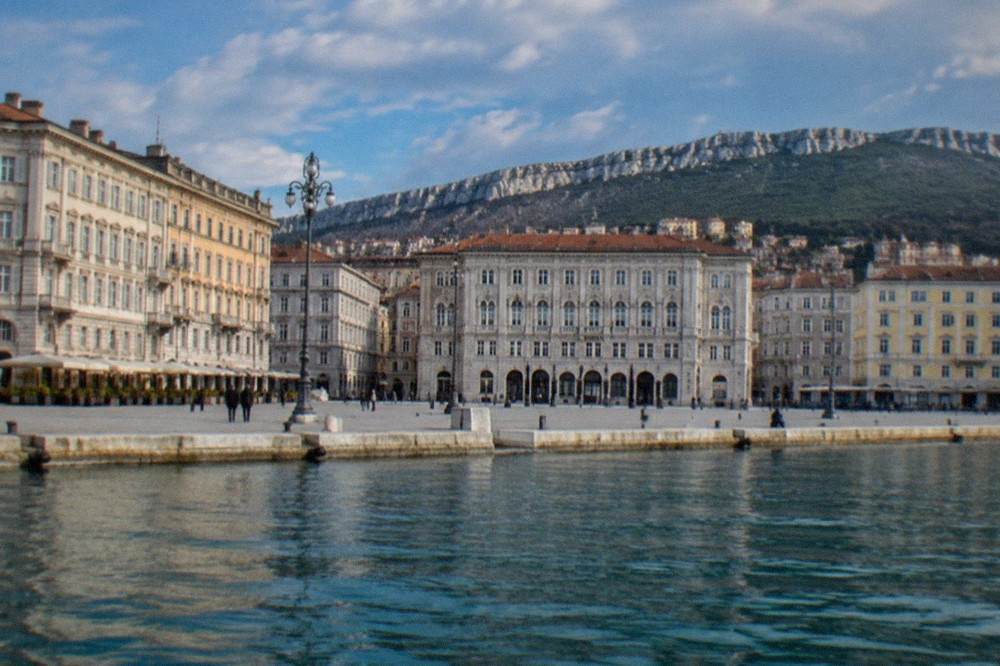
For anyone who would rather ride than walk at any point of the day, the sightseeing bus is the natural fit, and the related tour on this page is exactly that: Check availability on the operator's live listing.
The bus option is worth pausing on rather than scrolling past, because it solves the one real problem a walkable port creates. When everything is reachable on foot, the temptation is to see everything at street level and miss the connections between the seafront, the hill and the nineteenth-century grid; an audio commentary stitches those pieces together while your legs rest. The tour runs 1 hour 15 minutes, which leaves the bulk of an ashore day for the places you will want to linger in.
What Can You Reach on Foot from the Trieste Cruise Berths?
Almost everything a first-time visitor comes to Trieste for sits within easy walking of the cruise berths: Piazza Unità d'Italia, the Città Vecchia, Castello di San Giusto, the Grand Canal, the Roman theatre viewed from the street, and the seafront cafès of the Borgo Teresiano. The one famous sight that is not walkable is Miramare Castle, up the coast at Grignano, which is a deliberate half-day excursion rather than a stroll.
The walkable core is dense in a way few ports manage. The Roman theatre is looked down into from the street and is not routinely enterable by individuals, but seeing it costs nothing and takes minutes. The Museo Revoltella, the city's modern-art gallery, is a short walk into the Borgo Teresiano: adult EUR 8.00, reduced EUR 6.00, daily 10:00-19:00 with last entry at 18:00, closed Tuesdays. The Risiera di San Sabba, the national monument at the city's southern edge, is free to enter, daily 9:00-19:00 from 1 March to 11 October and 9:00-17:00 from 12 October.
| Sight | Position relative to the port | Entry | Published hours |
|---|---|---|---|
| Piazza Unità d'Italia | On the waterfront by the berths | Free | Always open |
| Castello di San Giusto | On the hill behind the square | EUR 7.00 adult | From 12 October Tue-Sun 10:00-17:00 |
| Cattedrale di San Giusto | Beside the castle | Free | Weekdays 8:00-18:30 |
| Teatro Romano | Street level in the old town | Free, viewed from the street | Street access |
| Museo Revoltella | Short walk into the Borgo Teresiano | EUR 8.00 adult | Daily 10:00-19:00, closed Tuesdays |
| Miramare Castle | Up the coast, not walkable | EUR 17.00 adult | Every day 9:00-19:00 |
Miramare is the one item on that table that changes your day. The castle up the coast at Grignano is the region's most visited monument, adult entry EUR 17.00 with the park free all year, and it is a deliberate excursion rather than something you drift into. The panoramic city-and-castle tours in the picks band below handle it as a half-day; if the ship's hours are short, the walkable core above is the better use of them.
The coffee culture is the other thing the port's position hands you for free. Trieste's historic caffès cluster in the blocks behind Piazza Unità d'Italia and along the Grand Canal, and the city's reputation as a coffee port is written into its own institutions rather than into a number: no per-capita consumption figure has a primary source, so the honest way to put it is that coffee here is a civic habit, and the cafès are within the same walkable few blocks as everything else on this list.
How Should You Spend the Time If the Port Is This Close?
Treat Trieste as a full destination day rather than a transfer day: with the town beginning at the quay, the real decision is between the walkable historic core, a guided tour that adds context, or one half-day excursion to Miramare or the Karst. A passenger with six to eight hours ashore can comfortably cover the seafront, the hill and a long coffee, and still have time for one excursion beyond the centre.
The guided options earn their place here precisely because the port removes the transit tax. A two-and-a-half-hour walking tour with a historic café stop starts and ends inside the same walkable core, so it costs no more of your day than the walk it replaces. The free-walk alternative also exists: GuruWalk runs a pay-what-you-want city walk led by a local guru, tip-based, and the Old Port industrial archaeology walk on the same platform covers the port district that cruise passengers literally arrive inside. Neither carries a price, because neither has one.
For the second half of the day, the standard choices are Miramare, the Karst, or Slovenia. The border point matters and is worth getting right: Italy, Slovenia and Croatia all use the euro and all three are in Schengen, but Italy is running temporary border checks on its land border with Slovenia through 18 December 2026, so carry a passport or national ID card for any trip across. Piran and Ljubljana both work as day trips from this port, and the site's day trips overview sets out the options with the border note attached.
Whichever of those three you book, the geometry of this port keeps the risk low: everything departs from and returns to the same waterfront your ship is tied to, and a delayed excursion is a short walk from the gangway rather than a panicked cross-city dash. That is the quiet advantage of a port that never left the town.
The audio-guided bus tour in particular is the one to hold in reserve. It covers the waterfront, the squares and the landmark buildings in 1 hour 15 minutes, it can absorb a whole family for less than a museum ticket each, and it turns a weather-shortened afternoon into a complete circuit of the city rather than a partial one. If the bora is blowing down the gulf, this is the plan that still works.
Common Questions About the Trieste Cruise Port
How far is the trieste cruise port from the town?
The port and the town are the same stretch of waterfront in Trieste, Italy: ships berth on quays at the edge of the city centre, and Piazza Unità d'Italia is a short, flat walk from the gangway with no transport needed.
Where do the cruise ships dock in Trieste, Italy?
Cruise ships dock on the city-centre waterfront along the gulf-facing quays known as the Rive, with the historic districts beginning directly inland. There is no remote outport or shuttle transfer between the berths and the town.
Can you walk from the Trieste cruise port to the train station?
Yes, and the site covers it in full in can you walk from the Trieste cruise port to the train station: Trieste Centrale sits within the same compact central area as the port, and the connection is made on foot through ordinary city streets.
Do you need a shuttle bus from the Trieste cruise terminal?
No. The terminal area opens onto the central waterfront, and the walk into town is short and flat. Urban buses are available for longer hops, with a 60-minute single at EUR 1.50 and a day ticket at EUR 3.35 on the 2026 tariff sheet.
Is Trieste a good port for a day trip to Venice?
It is possible, and the site's pages on transferring from the Trieste cruise port to Venice cover the routes, but Trieste itself is the destination most passengers regret skipping: the town is at the gangway, and Venice is the excursion that costs you the day.
What is the best way to see Trieste if the port is this close?
Walk the seafront to Piazza Unità d'Italia, climb to Castello di San Giusto and the free cathedral, then take a long coffee in a historic caffè. If you would rather ride, the sightseeing bus tour with audio guide covers the same core in 1 hour 15 minutes.
The short version of all of this: in Trieste the port does not stand between you and the town, because it never left the town in the first place, and that is the single best thing a cruise destination can do with the distance question.