Trieste, Italy from a Cruise Ship: One Day Ashore
Cruise ships berth within an easy walk of Trieste's grand Habsburg centre, and one day ashore is enough for the seafront square, the canal, the castle hill and a proper caffè stop.
Short answer
Ships dock at the Trieste cruise terminal beside the city centre, and Piazza Unità d'Italia is a short flat walk away. A single day covers the square, the Grand Canal, Città Vecchia, San Giusto hill and either Miramare Castle or a Carso osmiza. Urban tickets cost EUR 1.50 to 1.85, a day ticket is EUR 3.35, and the city's headline museums close on different weekdays.
Trieste, the Adriatic port city in Friuli Venezia Giulia in the northeast corner of Italy, is one of the few Mediterranean cruise stops where the ship berths practically inside the attraction. The terminal sits on the waterfront a short flat walk from Piazza Unità d'Italia, the largest seafront square in Italy, and the whole Habsburg grid behind it was built for walking. That makes a day ashore unusually low-stress: no shuttle, no taxi debate, no risk of missing the ship because of a traffic jam. This Trieste Travel Guide lays out the full port day below. The constraints are different here. Museums keep different closing days, the bora wind can rearrange a plan in an afternoon, and the city's rhythm, caffè first, sights second, does not run on a cruise-ship clock.
This page covers a full port day: where you come ashore, what is reachable on foot, what each stop costs at 2026 prices, and what to do when the weather or the clock is against you. If you want the background reading, the full Trieste cruise port guide covers terminals and berths in detail, and the shore excursions overview compares the organised options.
Where Does the Cruise Ship Dock in Trieste, Italy?
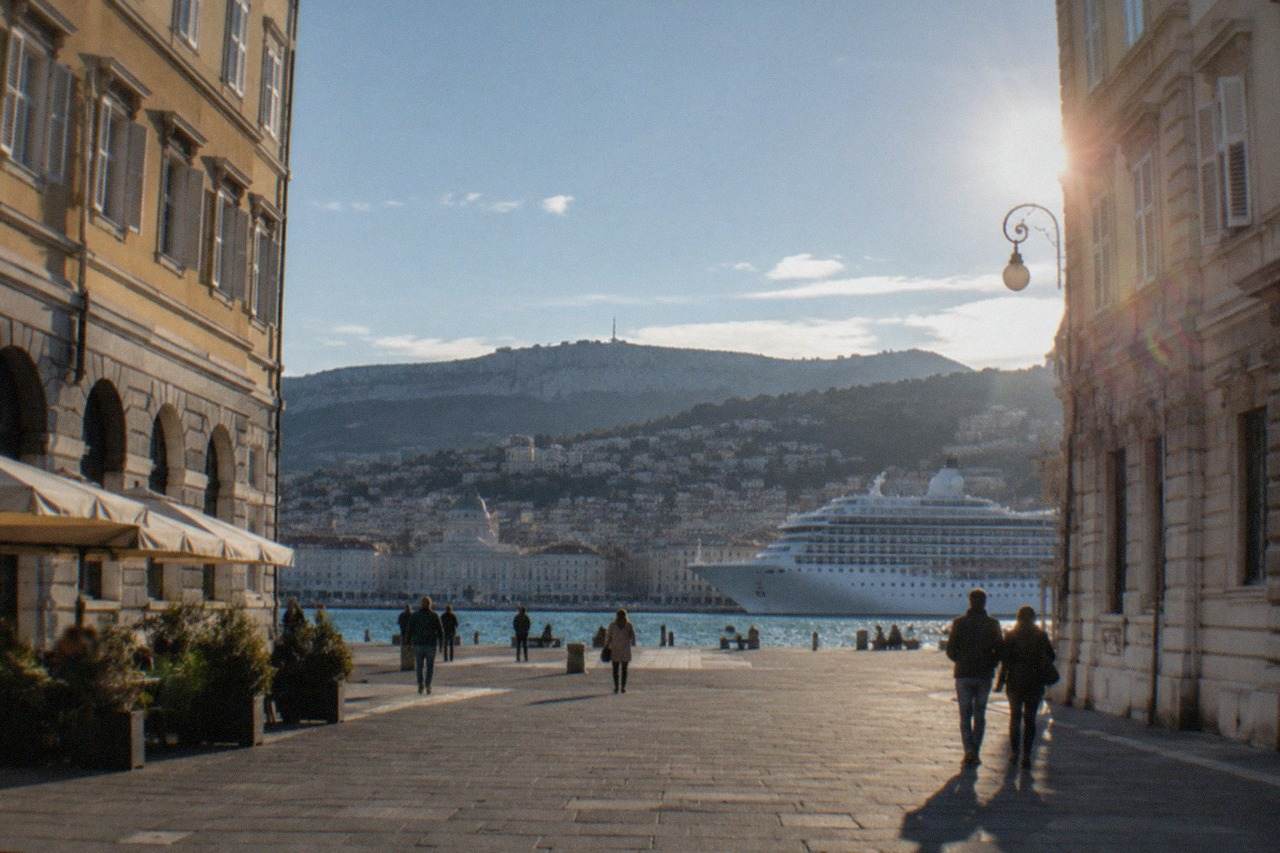
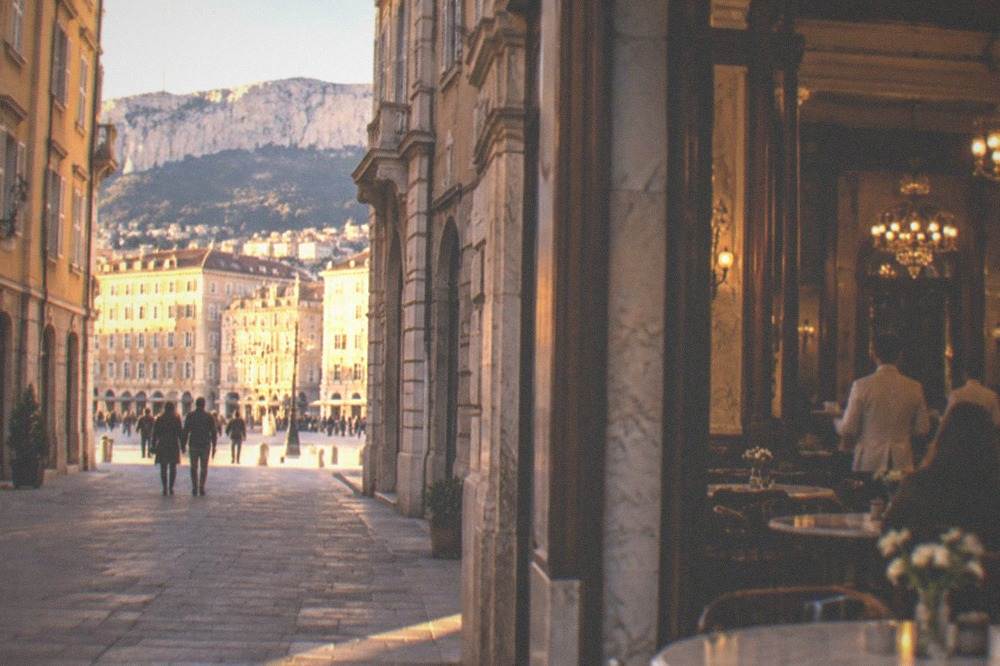
Cruise ships berth at the Trieste cruise terminal on the waterfront north of the city centre, and Piazza Unità d'Italia sits a short flat walk away along the seafront. There is no shuttle bus and no taxi needed to reach the old core: the Grand Canal, Città Vecchia and the Borgo Teresiano grid all begin within an easy stroll of the gangway. The question for a port day is not how to get into Trieste but how far into it your legs allow.
The port sits between the seafront and the railway line, so everything a visitor wants is on one side of you. Turning right out of the terminal area puts you on the Rive, the long seafront promenade, with Molo Audace, the pier that now doubles as a sunset viewpoint, ahead of you. Turning left runs you along the newer waterfront works toward the Old Port district. Straight on leads into the Borgo Teresiano, the eighteenth-century grid of straight streets the Habsburgs laid out around the Grand Canal.
Two habits from other ports do not transfer here. First, Trieste is not a tender port for standard calls, so the gangway-to-sidewalk step is genuinely short. Second, the things that make this city unusual, the caffè culture, the Habsburg squares, the borderland food, are all in the first half kilometre. Passengers who queue for an excursion bus often drive past the very streets that are the reason to stop.
For orientation before you walk, the answers page on walking into Trieste from a cruise ship covers the practical detail, and the broader one-day Trieste itinerary adapts the same route for visitors arriving by train.
Can You Walk Everywhere from the Cruise Terminal?
Yes, the whole core of Trieste is walkable from the terminal, and the walk from the berth to Piazza Unità d'Italia is short and flat along the seafront. The only climbs are the short rise up San Giusto hill to the castle and cathedral, and anything involving the Carso plateau or Miramare, which need a tram, a bus or a booked tour. For a standard port day of six to nine hours, everything except those two excursions can be done on foot.
The geography rewards a loop rather than an out-and-back. Leave the terminal, walk the Rive to Molo Audace, come into Piazza Unità d'Italia from the sea so the square opens properly, then head north through the Borgo Teresiano grid to the Grand Canal and the Serbian Orthodox church of Sant'Antonio Taumaturgo at its head. Cross into Città Vecchia, the old town, work up to San Giusto, then descend the other side past the Roman theatre, which you look down into from the street, and follow the Rettondo back toward the water. That loop touches every headliner without repeating a street.
Urban buses and the tram use one ticket system, and the 2026 tariff sheet, dated 29 December 2025, prices it like this:
| Code | Ticket | Price |
|---|---|---|
| U01 | Urban single, 60 minutes | EUR 1.50 |
| U02 | Urban single, 75 minutes | EUR 1.85 |
| U24 | Day ticket | EUR 3.35 |
| U10 | 10 rides | EUR 13.50 |
| U20 | 20 rides | EUR 16.65 |
Two details from the tariff sheet matter on a port day. Singles run 60 or 75 minutes and are extended to 240 minutes on Sundays and public holidays, so a Sunday call effectively makes a single an all-day ticket. And contactless bank cards, Mastercard, Visa and American Express, can be tapped directly on the "Eva" readers on board, with the system applying the cheapest applicable fare, so there is no need to hunt a ticket office first.
If your port day is short and your legs are not up to the full loop, there are structured ways to buy back time. A private guide compresses the centre into a couple of focused hours, and the hidden-gems walk below is the one most port passengers pick for exactly that reason.
What Should You See in Trieste with One Day Ashore?
The five stops that define a Trieste port day are Piazza Unità d'Italia, the Grand Canal with Sant'Antonio Taumaturgo, Città Vecchia, the Castello di San Giusto and the free Cattedrale di San Giusto Martire on the hill above it, and a historic caffè in between. The castle costs EUR 7.00 full or EUR 5.00 reduced, the seafront and canal cost nothing, and the whole set fits a morning and an early afternoon at an unhurried pace.
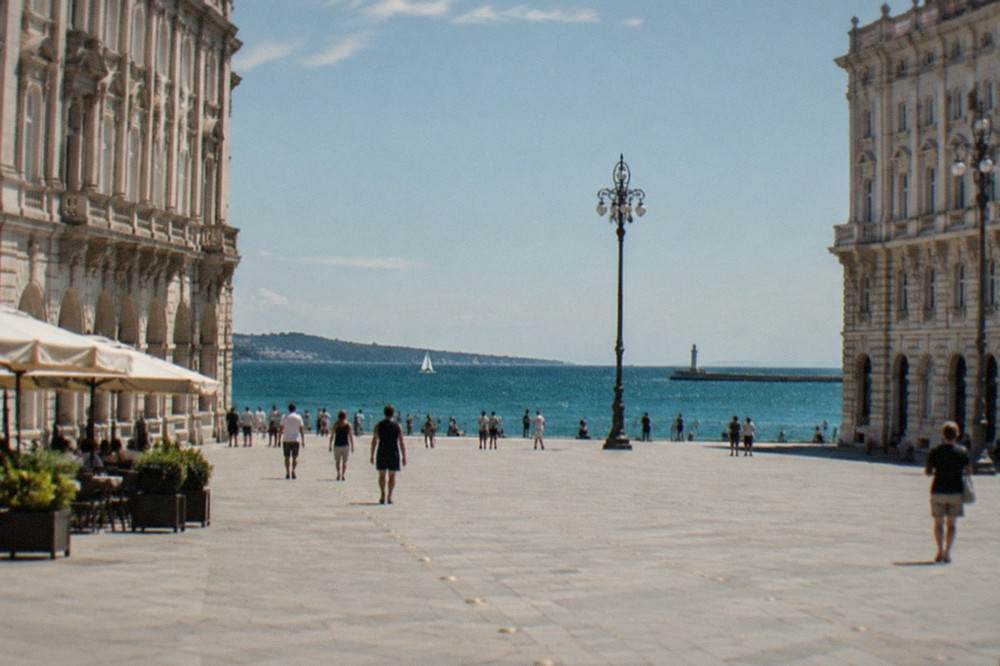
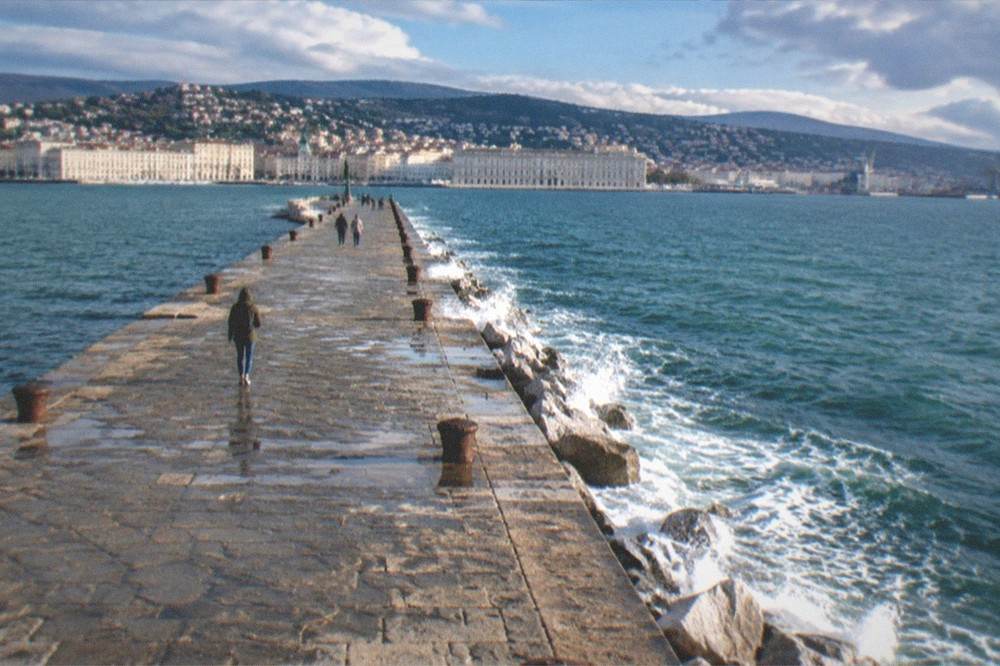
Start at the square, because it is the city's signature and it works best before the afternoon light flattens it. Piazza Unità d'Italia opens straight onto the sea with no road between the facades and the water, and the palazzi around it are Habsburg Trieste at its most confident. From there the Molo Audace pier extends into the harbour and gives the classic reverse view of the square, the hill and the ships.
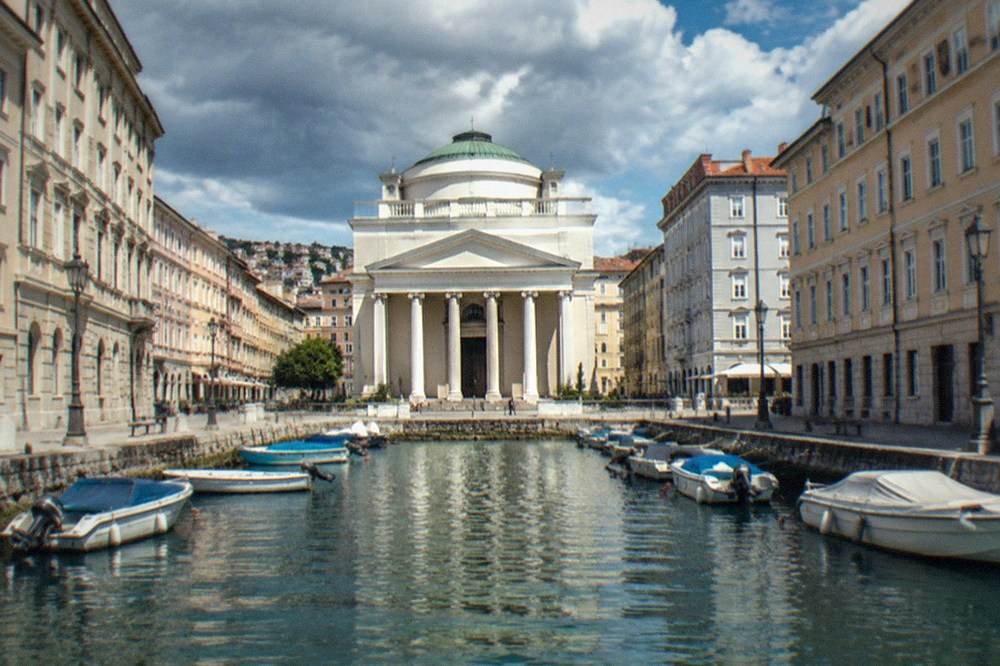
The Grand Canal is a short walk north through the grid. It is a working remnant of the same era, cut so cargo could reach the warehouses, and today it holds small boats and opens the view to the Serbian Orthodox church at its head. Città Vecchia, the old town behind the canal and up the slope, is where the Roman city lived, and its lanes now hold most of the city's character: the Arco di Riccardo, a Roman gate you can stand beside for free, and, at the foot of the slope, the Roman theatre, visible from the street and not routinely enterable by individuals.
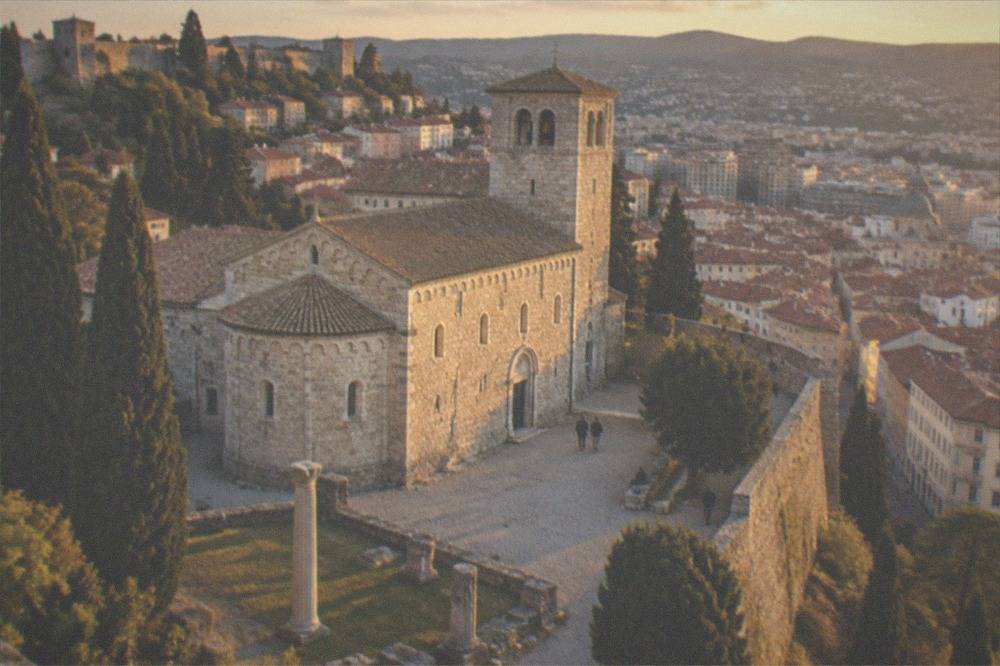
San Giusto hill collects the castle, the cathedral, the Lapidario and the views in one climb. Here is what the stops on the hill and around the centre cost and when they are open, from each venue's own published details:
| Stop | Entry | Hours | Closed |
|---|---|---|---|
| Cattedrale di San Giusto Martire | Free | Weekdays 8:00-18:30, Sundays and holidays 9:00-19:30 | None stated |
| Castello di San Giusto (incl. museum, walls, Lapidario) | EUR 7.00 full, EUR 5.00 reduced | 1 April to 11 October daily 10:00-19:00; from 12 October Tue-Sun 10:00-17:00 | Monday from 12 October |
| Museo Revoltella | EUR 8.00 full, EUR 6.00 reduced | Daily 10:00-19:00, last entry 18:00 | Tuesday |
| Risiera di San Sabba | Free | 1 March to 11 October daily 9:00-19:00; from 12 October daily 9:00-17:00 | 25 December and 1 January |
| Teatro Romano | Looked down into from the street | Street level | Entry not routinely available |
The castle ticket is good value on a port day because it bundles the walls and bastions, the Civico Museo del Castello di San Giusto-Armeria and the Lapidario Tergestino, and the wall walk delivers the best rooftop-and-sea panorama in the city. The cathedral, free and generous with its hours, holds mosaics worth ten quiet minutes. The Risiera di San Sabba, the national monument at the former rice mill, is free, powerful and a bus ride out of the centre, so treat it as a choice rather than a default for a short call.
Between the hill and the water, schedule a caffè. Trieste's coffee culture is the reason many ships stop here at all, the port has been a coffee-trading and roasting centre for well over a century, and the historic caffè in the centre are monuments in their own right. Sit down, order by the local names, and let the clock run for twenty minutes. The deep background is in the site's Trieste coffee culture guide, and the must-see list for one-day visitors matches this route stop for stop.
If the self-guided loop sounds like too much navigation for your hours in port, a private local guide solves it in one booking. The hidden-gems private walk, from $143.30 per person, 2 hours 30 minutes, with 62 reviews behind it, is built around exactly this problem: it takes the centre and the corners a map does not flag, and it moves at your pace rather than a group's. Check availability
One reassurance worth knowing before you book anything for a port day: the operator's live listing carries the cancellation terms, and most of the city's walking options can be reserved without paying everything up front. That matters when a ship's schedule shifts, which is the one thing a port day cannot insure itself against.
Is the Hop-On Bus Worth It on a Short Port Day?
The Trieste bus tour with audio guide, from $19.49 per person and 1.5 hours long, is the sensible pick when your call is short, your mobility is limited or the weather is against walking, because it covers the spread-out sights without a timetable you can miss. With a full day and good legs, the centre is compact enough that the bus adds less, and a walking option or the castle climb uses the hours better.
The bus fills a specific gap. Trieste's headline sights cluster in the centre, but the city's character, the cliff-hung approaches, the Barcola seafront, the views down onto the gulf, sits on the roads around it, and those are what a wheeled tour delivers. The audio-guide format also means you are not bound to a guide's language or pace, which matters when your all-aboard time is fixed.
For a working comparison of the three structured options most port passengers weigh:
| Option | From (per person) | Duration | Reviews |
|---|---|---|---|
| Bus tour with audio guide | $19.49 | 1.5 hours | 2,638 |
| Hidden gems private walking tour | $143.30 | 2 hours 30 minutes | 62 |
| Panoramic city and Miramare Castle tour | $129.94 | 4 hours | 21 |
The pattern is plain. The bus is cheap and quick and covers ground; the private walk costs more per hour and buys depth and flexibility in the centre; the panoramic tour buys the one headline sight outside the centre, Miramare, with the logistics handled. Many passengers with a full day do the walk in the morning and still have the afternoon for the seafront, because the two do not compete for the same hours.
Where Should You Eat and Drink in Trieste on a Cruise Day?
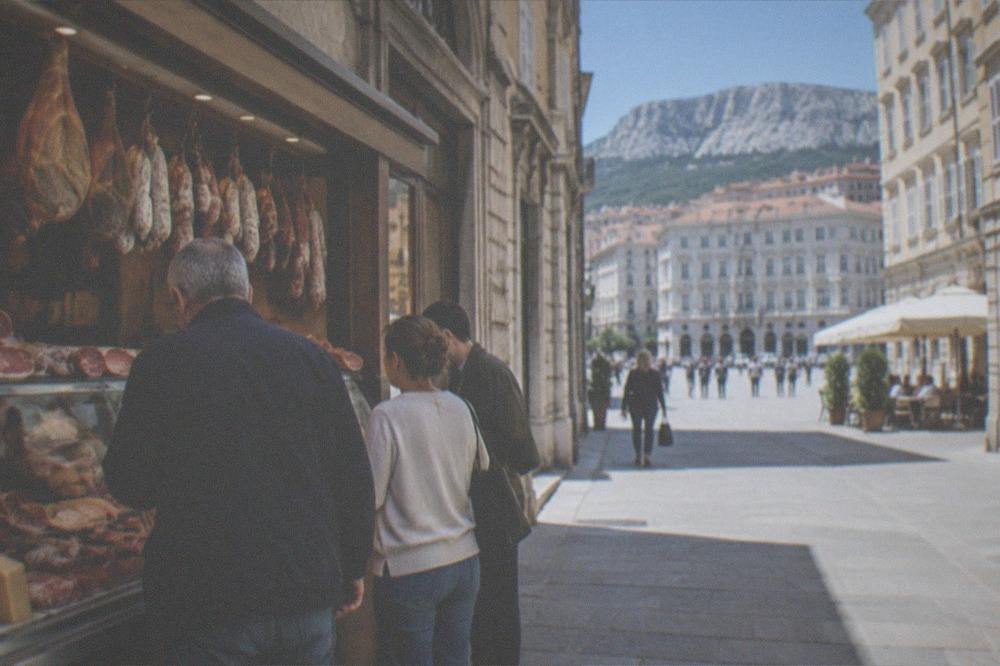
Trieste's port-day eating runs on two registers: the buffet, a bar counter serving pork, sauerkraut and boiled meats that is the city's own invention, and the caffè, the institution the port built. A plate at a historic buffet, a coffee taken standing at a marble bar, and, in the right season, a slice of presnitz or putizza cake cover the essentials. Nothing in the centre requires a reservation if you eat on the local clock rather than the ship's.
The buffet tradition is the honest local lunch: it is Central European food that arrived with the Habsburg administration and stayed. The signature dishes are jota, a soup of sauerkraut, beans and smoked pork, and goulash served with polenta or bread, and the counters that serve them are scattered through the centre lanes. The site's buffet and jota guide maps the tradition, and locals will point you at whichever kitchen is nearest your route.
Coffee is the other half of the day. Order at the bar in the Triestine way: a capo is a small cappuccino classically served in a glass, an espresso arrives by name alone, and the historic caffè in and around the centre have hosted writers, insurers and shipbrokers for generations. The coffee port story, and the addresses that matter, are in the coffee culture guide linked above. One caution the site's research backs: no reliable primary source exists for the repeated claim that Trieste drinks more coffee per head than anywhere in Italy, so enjoy the culture without repeating the statistic.
Timing matters more than choice. The caffè fill between ten and noon and again after four, the buffets peak at one sharp, and a cruise passenger who eats at eleven or at two gets the room almost to themselves. If you want to plan the meal before you dock, the city's signature plates, jota first among them, are easy to research in advance, and the buffet counters post their daily offerings on the door.
Can You Fit Miramare Castle Into a Cruise Day?
Yes, if your call is a full day: the panoramic city and Miramare Castle tour, from $129.94 per person and 4 hours with 21 reviews, exists precisely for this case, pairing a guided pass through central Trieste with the castle up the coast and handling the transfer time. The castle itself costs EUR 17.00 with the current exhibition included, and the park is free every day of the year. On a short call of five hours or less, skip it.
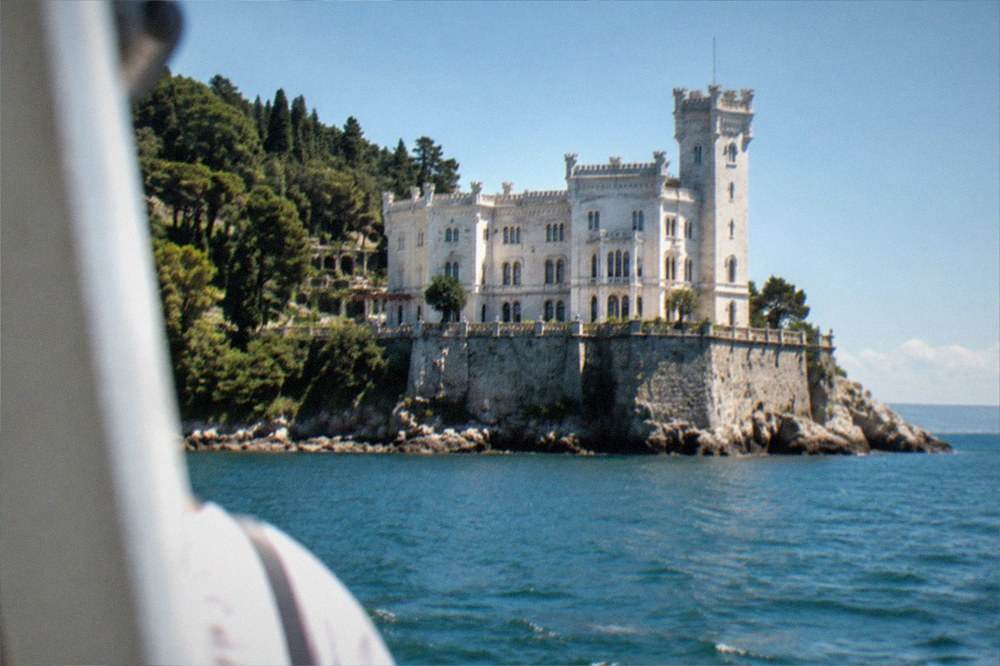
Miramare is the white castle Archduke Maximilian built on a promontory above the gulf, and it is the one Trieste sight that genuinely competes with the centre for a visitor's day. The museum inside preserves the apartments of Maximilian and Charlotte, and the clifftop park around it is free and open daily with seasonal hours, 8:00-19:00 from April through September, shorter in the winter months. The castle is open every day 9:00-19:00 with last admission at 18:30, so a late-afternoon visit is possible on a full-day call.
The decision is really about hours ashore and transport appetite. The tour above bundles the two halves of the day into one booking, which is the safe option when the all-aboard time is unforgiving. Visitors with longer calls can reach the castle area on their own with urban tickets and the coastal routes, then return to the centre for the evening. The Miramare Castle guide covers the rooms, the park and the protected marine area at its feet, and notes that the ministry's first-Sunday scheme applies to the castle while the park is always free.
Do not buy a city museum card on the assumption it covers Trieste's sites. There is no Trieste-only museum pass; the regional FVGcard exists and does cover Grotta Gigante and Museo Revoltella, among others, but its current prices could not be verified at the time of writing, so this site will not quote them. Buy single entries, or check the regional pass against your own itinerary before you commit.
What If It Rains or the Bora Blows on Your Port Day?
Rain in Trieste is a real possibility in every season except high summer, and the bora, the cold north-easterly wind that funnels down across the gulf, can close in on any month of the year, with the station tables showing gusts over 110 km/h recorded in every single calendar month. The right response is to swap the seafront loop for the museum core: Museo Revoltella, the castle museums on San Giusto hill and the historic caffè are all indoor.
The numbers, from the regional weather agency's own station tables for the waterfront, are worth knowing before you pack. Trieste averages 867 mm of rain a year, and the wettest month is November at 109.8 mm, with September second at 102.3 mm; July, at 53.8 mm, is one of the driest months, and the guidebook image of a rainy Adriatic city in summer is simply wrong for Trieste. Wind is the other variable: the station records an average of 17.6 days a year with a gust over 90 km/h, and the all-time peak in the series is 168.1 km/h, recorded in February 2012.
| Month | Mean high | Rain | Sea temperature |
|---|---|---|---|
| May | 21.7 C | 75.0 mm | 17.9 C |
| June | 25.8 C | 62.5 mm | 23.1 C |
| July | 28.2 C | 53.8 mm | 25.9 C |
| August | 28.1 C | 71.7 mm | 25.9 C |
| September | 23.9 C | 102.3 mm | 23.9 C |
| October | 19.6 C | 88.6 mm | 20.3 C |
When the bora does blow, the city adapts rather than shuts down, and so should you. The seafront loses its charm in a strong episode, the Rive are exposed and the spray is real, but the lanes of Città Vecchia, the arcaded shopping streets of the Borgo Teresiano, the museums and the caffè are all built for exactly this weather. The site's rainy day itinerary is a complete wet-weather route, and the bora wind guide explains what the wind is and why it shapes the city so thoroughly. One rule of thumb the research supports: no official published wind threshold exists at which ferries stop or waterfronts close, so judge the day by what you see, not by a number someone told you.
How Do You Get Back to the Ship, and What Can Go Wrong?
The walk back to the Trieste cruise terminal from the centre is the same short flat route as the walk in, and the failure modes are few: losing track of time in a caffè, misjudging the uphill sections of Città Vecchia on the return, or, if you have crossed into Slovenia, hitting the temporary border checks Italy is running on the land border through 18 December 2026. Build in a margin for the hill and keep your ID on you if you left Italy.
The mechanical advice is short. Urban tickets are valid for 60 or 75 minutes, 240 on Sundays and public holidays, so time any bus ride back within the window or tap your contactless card on the reader and let the system charge the cheapest fare. The train station walk answer covers the terminal-to-station leg if your plan involves a rail detour.
Two excursions deserve special clock care. Anything crossing into Slovenia or Croatia, Piran, Ljubljana, the cave systems, means an international boundary, and while all three countries are in the euro and in Schengen, Italy's temporary checks on the Slovenia land border are real and dated through 18 December 2026, so carry a passport or a national ID card and leave more margin than a domestic trip would need. The day trips overview and the Croatia day trip answer set out the options. And the Venice question, which a remarkable number of Trieste passengers ask on the morning of: a Venice transfer from the cruise port is possible with the right timings, but it is not a casual add-on to a port day.
For passengers who prefer their margin bought rather than improvised, the structured options below all return to the city on a schedule, which is exactly what a fixed all-aboard time wants.
Common Questions About a Cruise Day in Trieste
Can you walk into Trieste from a cruise ship?
Yes. The Trieste cruise terminal sits beside the city centre and Piazza Unità d'Italia is a short flat walk along the seafront, with no shuttle or taxi required. The centre, the canal, Città Vecchia and San Giusto hill are all reachable on foot from the berth.
Is Trieste walkable from the cruise port?
Yes, the whole core is walkable from the port, and the only real climbs are the slope up to San Giusto castle and cathedral. Miramare and the Carso plateau sit outside the centre and need a bus, the tram or a booked tour, but a standard port day's sights are all on foot.
Can you walk from Trieste cruise port to train station?
Yes, the terminal and Trieste Centrale station are close together on the same waterfront side of the port, and the route is flat and signposted along the seafront. The details are on the site's dedicated answer page for that walk.
What to do in Trieste from a cruise ship?
Walk the seafront to Piazza Unità d'Italia and Molo Audace, cross the Grand Canal to Città Vecchia, climb to the Castello di San Giusto (EUR 7.00) and the free cathedral, then take a caffè stop in a historic bar. With a full day, add Miramare Castle (EUR 17.00, park free) or a Carso excursion.
Can I transfer from Trieste cruise port to Venice?
Yes, Venice is reachable from Trieste by train from Trieste Centrale, and the transfer is a known cruise itinerary in both directions. It needs a full day's margin rather than a spare afternoon, and the timings are covered on the site's Venice transfer pages.
Does it rain a lot in Trieste?
Trieste averages 867 mm of rain a year, wettest in November at 109.8 mm and September at 102.3 mm, with July among the driest months at 53.8 mm. Summer cruise calls are the least likely to be rained off, and the indoor core of museums and caffè covers the wetter seasons.
One day ashore in Trieste, Italy is enough to see why the city confuses people who arrive expecting a standard Italian port: the squares are Austrian, the lunch is Central European, the coffee is the port's own invention and the border is a walk away. Walk off the ship, turn right along the Rive, and let the square do the rest.