Trieste Cruise Port Guide: Italy's Adriatic Gateway for Cruise Ships
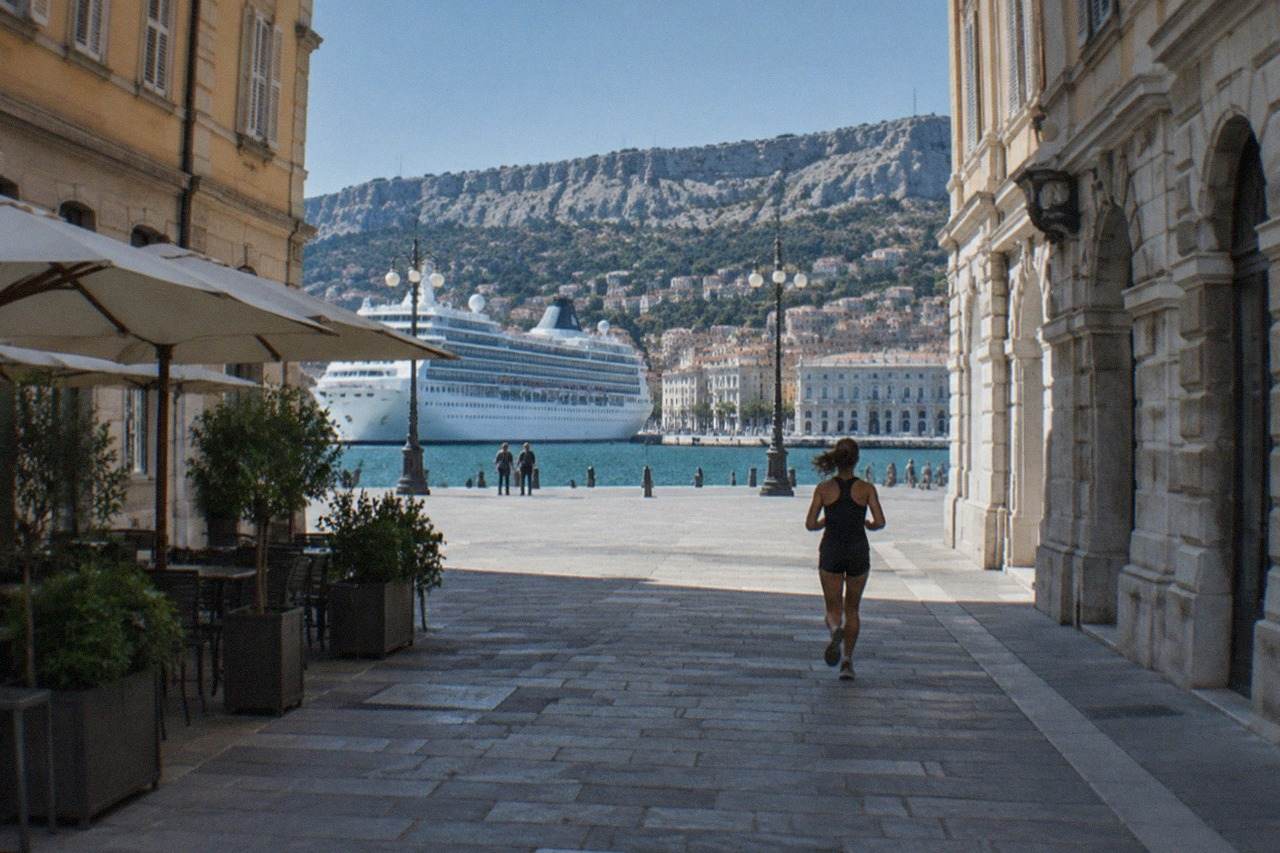
Trieste, in the far northeast of Italy, is one of the Mediterranean's most walkable cruise ports: ships tie up beside the city itself, and Piazza Unità d'Italia sits a short stroll along the seafront.
Short answer
Cruise ships dock at Trieste's passenger port on the Italian Adriatic, right beside the city centre. Piazza Unità d'Italia, the Città Vecchia, Molo Audace and the Canal Grande are all within an easy walk, an urban bus single costs EUR 1.50, and a day ticket is EUR 3.35.
Trieste, in the Friuli Venezia Giulia region of northeast Italy, is a cruise port that behaves unusually well: the passenger terminals sit beside the city rather than behind a fence in an industrial dockland, and the seafront promenade the locals call the Rive runs from the berths straight into the historic centre. This guide from Trieste Travel Guide covers where ships actually tie up in Trieste, Italy, what is within walking distance of the gangway, what buses and tickets cost in 2026, which attractions are open on a port day, and how to connect onward to Venice, the airport or Slovenia if your itinerary allows more than a few hours ashore.
Where Do Cruise Ships Dock in Trieste, Italy?
Cruise ships berth at Trieste's passenger port on the northern Adriatic, along the waterfront quays that adjoin the city centre rather than at a remote container terminal, so the gangway puts you on the Rive seafront with the historic centre of Trieste, Italy, immediately inland. The port area and the town run into one another along the seafront, which is the single most important fact about a Trieste port call: you do not need a shuttle, a taxi or a transfer to start sightseeing. Trieste is also a turnaround port as well as a port of call, so some passengers begin or end their voyage here, which changes what a port day means.
The distinction matters for planning. If Trieste is a call on a longer Adriatic itinerary, you have a fixed window ashore and the walkable city is your best friend. If you are starting or ending a cruise here, you will also care about the train station, the airport and where to sleep, and those are covered further down. For the question of exactly where the quays sit relative to the town, see our dedicated answer on how far the Trieste cruise port is from the town, and for the mechanics of arriving on foot, whether you can walk into Trieste from a cruise ship covers the gate and security side of things.
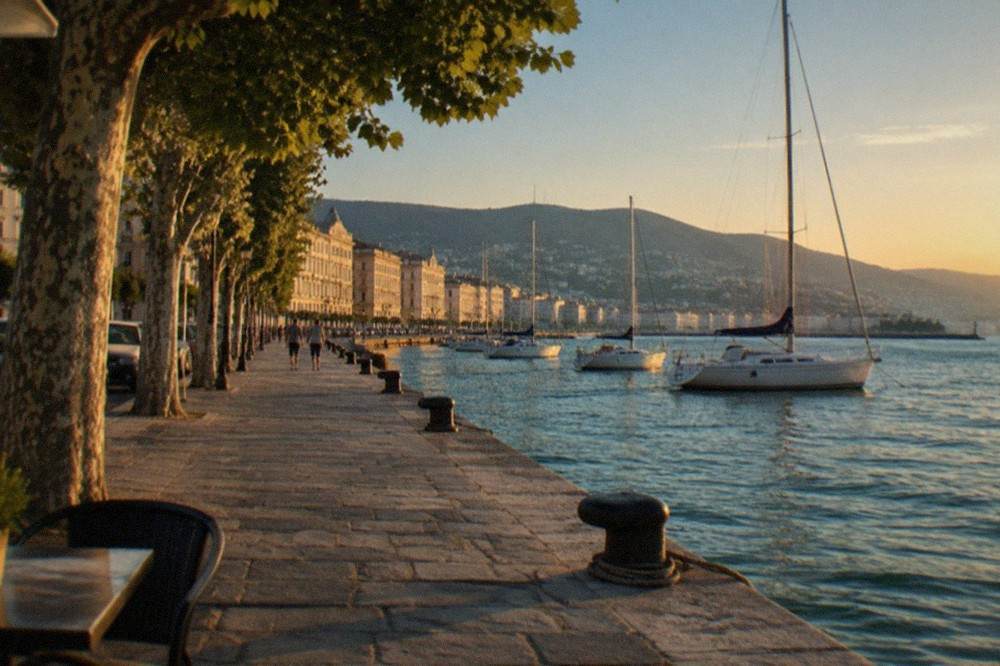
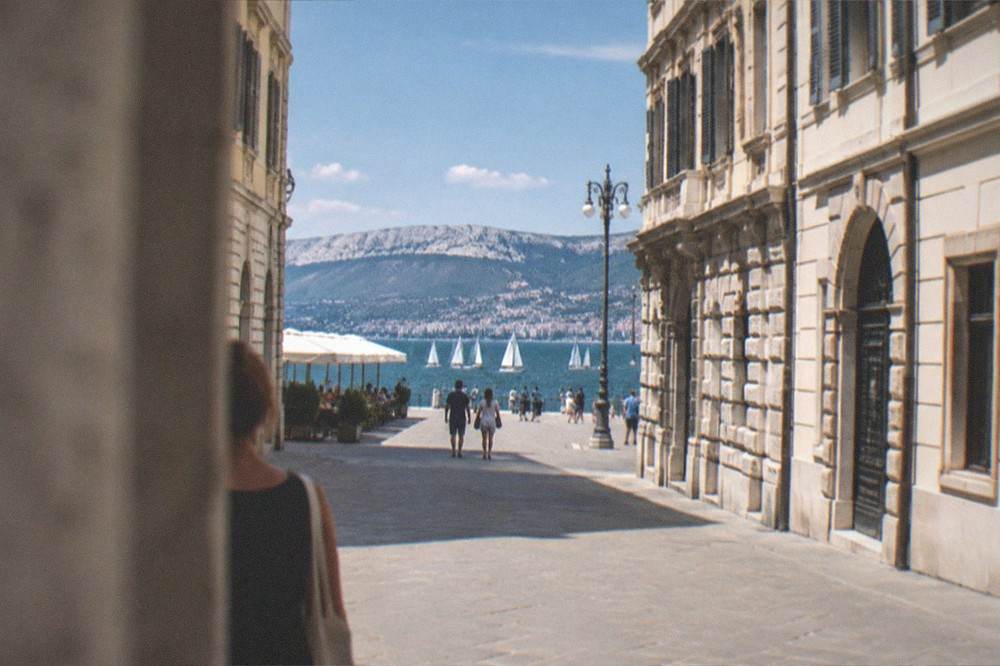
The waterfront itself is a destination. The Rive, the long quay lined with sailing clubs and small marinas, leads to Molo Audace, the straight stone pier that juts into the Gulf of Trieste and gives the classic view back across the water to Piazza Unità d'Italia. On a clear day the Carso plateau rises behind the city and the Slovenian coastline curves away to the south. None of this requires a ticket, a tour or even much planning, which is why Trieste regularly surprises passengers who expected an industrial arrival.
What Can You Walk to from the Trieste Cruise Port?
Piazza Unità d'Italia, Molo Audace, the Città Vecchia, the Canal Grande with the church of Sant'Antonio Taumaturgo, and the Borgo Teresiano grid of Habsburg-era streets are all within an easy, flat walk of the cruise berths, and the whole cluster is compact enough that a first-time visitor can see the main squares, the pier and the old town in a single port morning without any transport at all. This is the answer to the question almost every passenger asks on the ship, and it is the reason Trieste scores so highly as a walkable port: the sights are not near the port, they are the port's immediate neighbourhood.
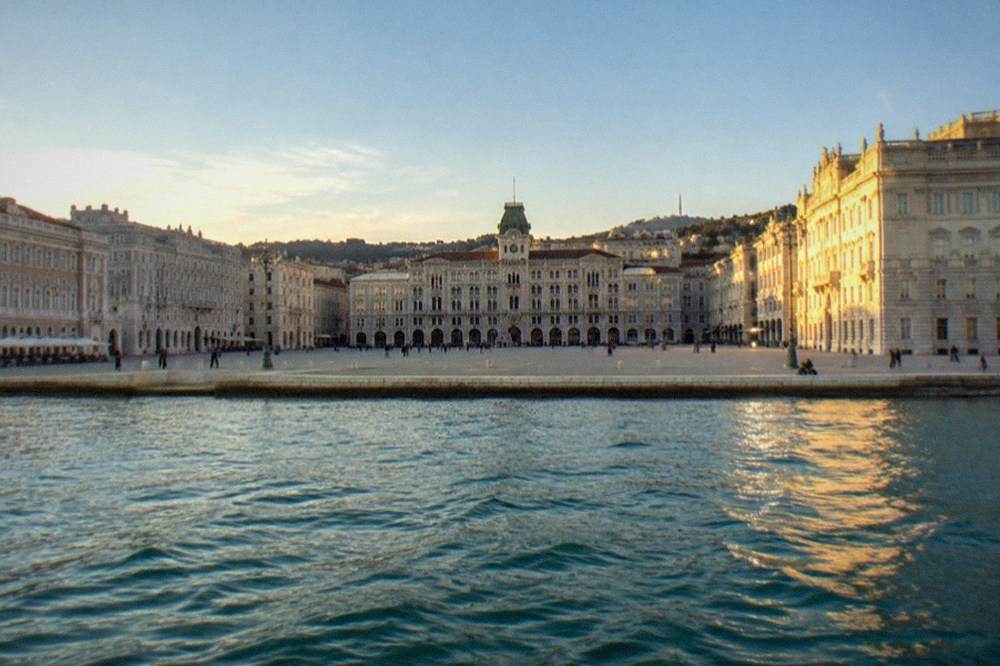
Start on the Rive and walk to Molo Audace first, because the pier gives you the postcard view of the square from the water's edge. Then Piazza Unità d'Italia itself, the vast seaside square the city built during its Habsburg golden age, with the town hall facing the sea and the historic caffè along its flanks. Behind the square, the Città Vecchia climbs toward San Giusto hill in a grid of narrow streets, Roman remains and scruffy-elegant palazzi. The Canal Grande, Trieste's short but photogenic ship canal, cuts through the Borgo Teresiano a few blocks north, with Sant'Antonio Taumaturgo standing at its head. For a fuller rundown, what to do in Trieste from a cruise ship lists the options in port-day order, and our answer on whether Trieste is walkable from the cruise port goes deeper on distances and terrain.
If your port day is short or the weather is against you, a guided walk buys a lot of context in little time. The "City that will definitely surprise you" tour is the classic first-hours move: it runs about 2h 30m from $68.79 per person, is rated 4.97 from 106 reviews, and pairs a walk through the centre with a coffee in a historic bar, which is about as Triestine an introduction as exists. A private hidden-gems walk goes the other way: about $143.30 per person, 2h 30m, rated 4.96 from 62 reviews, with a local guide steering you through the Città Vecchia lanes most cruise passengers never enter. And if you want the city's other famous export, a one-hour city-centre wine tasting with food pairings, from about $56.18 and rated 4.61 from 22 reviews, pours the Carso's own Vitovska and Terrano a short walk from the square.
How Do You Get from the Trieste Port Into the City Centre?
You walk: the berths adjoin the centre and the seafront leads directly to Piazza Unità d'Italia, so most passengers never need transport at all, but if you do, a Trieste urban single costs EUR 1.50 for 60 minutes or EUR 1.85 for 75 minutes, a day ticket is EUR 3.35, and contactless bank cards can simply be tapped on board, with the system applying the cheapest applicable fare. Those fares come from Trieste Trasporti's 2026 urban tariff sheet, dated 29 December 2025, and they cover the whole city network, including the Opicina tram up the escarpment to the village of Villa Opicina.
The tariff sheet's full structure is worth knowing, because a family or a group ashore for a full day can save real money:
| Code | Ticket | Price | Validity |
|---|---|---|---|
| U01 | Urban single | EUR 1.50 | 60 minutes |
| U02 | Urban single | EUR 1.85 | 75 minutes |
| U24 | Day ticket | EUR 3.35 | One calendar day |
| U10 | 10 rides | EUR 13.50 | Carnet |
| U20 | 20 rides | EUR 16.65 | Carnet |
Two details from the same tariff sheet matter on a port day. Single tickets are extended to 240 minutes on Sundays and public holidays, so a Sunday call effectively turns a single into a day-roaming ticket. And the "Eva" readers on board accept Mastercard, Visa, American Express and digital wallets, so there is no need to find a ticket machine before your first ride. The station and rail side of the city, useful for turnaround passengers, is covered in our Trieste train station and rail connections guide, including the answer to whether you can walk from the Trieste cruise port to the train station.
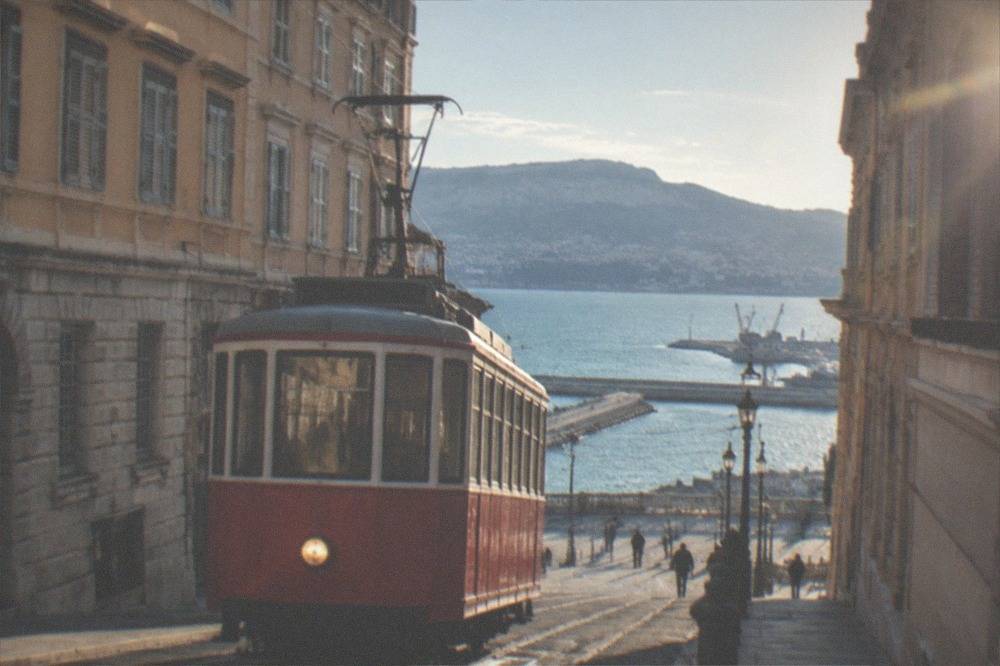
The tram deserves a special note because almost every older guide gets it wrong. The tram de Opicina, urban line 2, was reactivated on 1 February 2025 after the long suspension that followed a 2016 accident, and it runs today between piazza Dalmazia, its city terminus, and Opicina, a route of about 5.175 km up the escarpment. A standard urban ticket covers it. The one thing to check is the live status on the operator's site before you commit a port afternoon to it, because maintenance windows come and go.
What Are the Best Shore Tours from the Trieste Cruise Port?
The strongest shore tours from Trieste are the city's own: a 2h 30m guided walk ending with coffee in a historic bar from $68.79 and rated 4.97 from 106 reviews, a foodie walking tour of about 3 hours from $71.08 rated 4.91 from 264 reviews, and the historic caffès experience at about 3 hours from $74.52, while the big-hitters beyond the city are Postojna Cave with Predjama Castle from about $137.57 and Lake Bled with Ljubljana from about $108.91. Which of those fits depends entirely on how long your ship stays: a half-day call keeps you in the city, a full day opens the Karst caves and the Slovenian lakes.
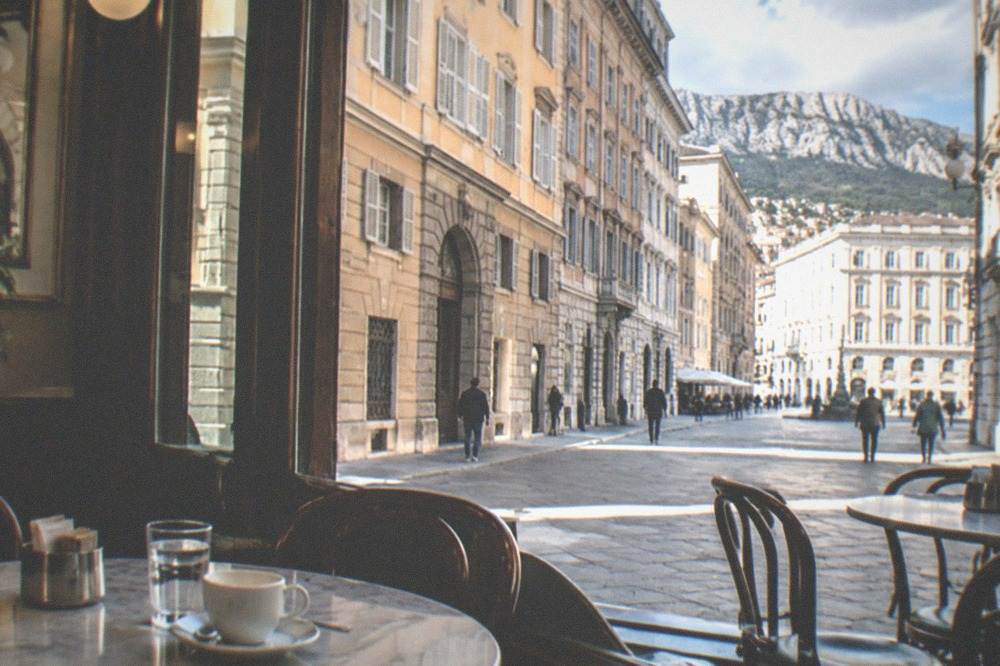
Within the city, the food and coffee tours are the ones passengers write home about, because Trieste's café culture is the real thing, a working port-city tradition rather than a tourist performance. The guided foodie walk runs about 3 hours, from $71.08 per person, rated 4.91 from 264 reviews, and works through the buffet tradition of jota, goulash and panini alongside the sweets. The historic caffès experience, from $74.52 and rated 4.91 from 19 reviews, walks the grand cafès of the Borgo Teresiano and the old town. There is also a free, tip-based option: the GuruWalk pay-what-you-want city walk, run by a local guru and rated 4.86 from 50 reviews, which costs nothing up front and takes a flexible route through the centre.
For a guided walk with a coffee stop built in, the "City that will definitely surprise you" tour remains the best single orientation choice for a short call, and the operator's live listing carries the current departure point and times. Our Trieste shore excursions guide compares the full set, including the private options, and the one-day-ashore itinerary in Trieste from a cruise ship: one day ashore sequences them hour by hour.
Beyond the city, the Karst caves dominate. Postojna Cave with Predjama Castle, from about $137.57 per person and rated 4.76 from 543 reviews, is the best-known pairing; Škocjan Caves with the Lipica stud farm, from about $129.93 and rated 4.86 from 23 reviews, is the quieter, wilder alternative. Grotta Gigante, the giant cave at Sgonico on the Italian side of the Karst, is the closest to the port: a 1-hour guided tour with museum entry from about $17.20, rated 4.78 from 151 reviews. Slovenia's lakes come next: Ljubljana and Lake Bled together run about 9 hours from $108.91, rated 4.69 from 544 reviews. All of these are day trips, not city sights, so they only work on a full-day call.
One border note before you book anything into Slovenia or Croatia: all three countries use the euro, and Croatia joined Schengen and adopted the euro on the same day, 1 January 2023. But Italy is running temporary border checks on its land border with Slovenia through 18 December 2026, so carry a passport or national ID card on any cross-border tour and expect the possibility of a brief check on the road.
What Do Trieste's Main Attractions Cost and When Are They Open?
The headline prices for a Trieste port day are Castello di San Giusto at EUR 7.00 adult, Museo Revoltella at EUR 8.00, Castello di Miramare at EUR 17.00 with its park free, Grotta Gigante at EUR 15.00 guided-only, and the cathedral, the Risiera di San Sabba and the Roman theatre viewable for free, with opening hours that shift on 12 October and several Monday and Tuesday closures that can catch a port day out. These are the venue's own published figures for 2026 and they should anchor any budget for time ashore.
| Attraction | Adult entry | Hours | Closed |
|---|---|---|---|
| Castello di San Giusto | EUR 7.00 | 1 Apr-11 Oct daily 10:00-19:00; from 12 Oct Tue-Sun 10:00-17:00 | Mondays from 12 Oct |
| Cattedrale di San Giusto | Free | Weekdays 8:00-18:30; Sun 9:00-19:30 | Never, but avoid Mass times |
| Museo Revoltella | EUR 8.00 | Daily 10:00-19:00 | Tuesdays |
| Risiera di San Sabba | Free | 1 Mar-11 Oct daily 9:00-19:00; from 12 Oct daily 9:00-17:00 | 25 Dec, 1 Jan |
| Castello di Miramare | EUR 17.00 | Daily 9:00-19:00, last entry 18:30 | Park free, all year |
| Grotta Gigante | EUR 15.00 | Sep-Feb Tue-Sun; Mar-Aug daily, tours on the hour | Mondays Sep-Feb, 25 Dec, 1 Jan |
Three of these need extra care on a cruise schedule. The cathedral's bell tower has no published ticket price, so do not budget one; the parish site simply does not print it. The Roman theatre, the Teatro Romano, is looked down into from the street and is not routinely enterable by individuals, so treat it as a free viewpoint, not a venue. And Grotta Gigante is guided-only with compulsory booking, by phone or email, with departures at 9:00, 10:00, 11:00, 12:00, 14:00, 15:00 and 16:00, so a port day visit means booking the slot before you sail.
Free-entry days can transform the budget. State-run sites, Miramare included, take part in the ministry's first-Sunday-of-the-month scheme, and San Giusto castle is free on the first Sunday of the month and on 3 November, the patron saint's day. The scheme's details have changed more than once in recent years, so check the venue's own page for the month you sail rather than assuming. A different kind of free is listed below: the sights that never charge at all.
| Free sight | What you get |
|---|---|
| Miramare park | Free all year, hours vary by month |
| Cattedrale di San Giusto | Free entry, respect Mass times |
| Risiera di San Sabba | Free entry, national monument |
| Teatro Romano | Street-level view into the Roman theatre |
| Molo Audace and the Rive | The seafront walk itself |
For the food side of a port day, the buffet tradition is the one to seek out, and our what to eat in Trieste guide covers jota, goulash and the city's Austro-Hungarian table. If you would rather taste your way through it with a guide, the foodie walk is the one to book.
How Do You Get to Venice or the Airport from the Trieste Cruise Port?
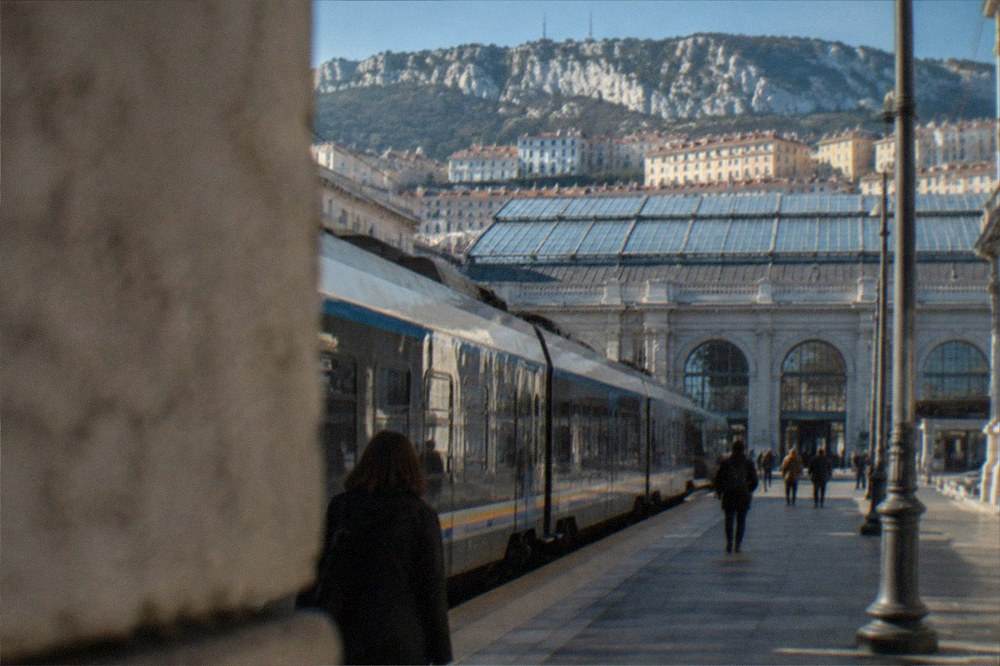
Trieste Centrale station is within reach of the port on foot, and from it Venice is reachable by direct regional and high-speed trains, while Trieste Airport at Ronchi dei Legionari has its own railway station connected to the terminal by a covered walkway of roughly 400 m, so both onward journeys are train-first, with exact fares and times to be checked on the operator's own planner before you travel. The pack does not verify a Venice fare or a station-to-port walking time, so plan those on the live planners rather than on a number printed here.
For turnaround passengers the practical questions come in a cluster. The Trieste train station and rail connections guide covers the station itself, and the Trieste to Venice by train guide handles the most common onward route, with the airport side of things in the Trieste airport guide. Venice transfers in particular attract optimistic numbers online, so check the operator's planner before booking a tight connection, and never trust a transfer time quoted in a forum.
Staying over? Trieste rewards it, and the port location means you can sleep within sight of your ship. The where to stay in Trieste guide breaks down the Borgo Teresiano, the Città Vecchia and the seafront at Barcola. One cost to factor in: the city's tourist tax runs from EUR 1.50 per person per night at campsites up to EUR 3.80 at five-star hotels, charged for a maximum of five consecutive nights, with under-18s exempt.
What Should You Know Before Your Trieste Port Day?
Four things shape a Trieste port call more than anything else: the bora wind, which averages 17.6 days a year with gusts over 90 km/h at the waterfront station, a November-wet, July-dry rain pattern, opening hours that change on 12 October, and the temporary border checks on the Slovenia land border running through 18 December 2026, so pack a windproof layer, carry ID on cross-border tours and check each venue's Monday or Tuesday closure against your sailing date. None of these is a dealbreaker, and all of them are predictable.
The bora deserves a paragraph of respect rather than fear. It is a cold, dry katabatic wind that pours off the Carso plateau down the Gulf of Trieste, strongest in the cool season and statistically calmest in June, though the monthly record gust exceeds 110 km/h in every single month of the year. No official threshold exists at which ferries stop or the Rive close, so ignore any number a guide gives you: conditions are judged in real time by the authorities. In practice, a bora day is bright, clear and bracing, and the city has ropes rigged along exposed stretches of the seafront for exactly this weather.
Weather-wise, the ARPA station tables give mean highs of 28.2 C in July and August against 9.2 C in January, with sea temperatures peaking at 25.9 C in the same two summer months, and rain concentrated in September, October and November. If your sailing calls in October, you may coincide with the Barcolana, the city's famous regatta: the 2026 edition runs 2-11 October, with the main race on Sunday 11 October, and the record entry stands at 2,689 boats, set in 2018. The regatta fills the waterfront with spectators and stalls for the whole ten days, which is either a reason to sail then or a reason not to, depending on your temperament.
Finally, the honest summary of Trieste as a cruise port. It is not Venice and does not try to be: there are no canals full of gondolas, and the one ship canal is short and working. What it offers instead is a genuinely Central European city sitting on the Italian coast, Habsburg architecture, serious coffee, a Roman hill, a free seafront and a port that puts you inside the city within minutes of the gangway. Passengers who walk off expecting a generic Adriatic stop tend to spend the afternoon revising their opinion, and passengers who book one tour, one table and one walk tend to run out of hours, not things to do. If your itinerary allows only a half day, stay in the centre and do it slowly; if you have a full day, the Karst caves and the Slovenian coast are close enough to be real.
Common Questions About the Trieste Cruise Port
Where do cruise ships dock in Trieste, Italy?
At the passenger port along the waterfront quays that adjoin the city centre, on the Rive seafront, with the historic centre immediately inland. There is no remote industrial terminal to commute from, which is Trieste's great advantage as a port of call. See our full answer on where the cruise ships dock in Trieste, Italy.
Can you walk into Trieste from a cruise ship?
Yes. The berths sit beside the city, and the seafront promenade leads directly to Piazza Unità d'Italia, the Città Vecchia and the Canal Grande, so most passengers never need transport at all.
How far is the Trieste cruise port from the town?
The port and the town adjoin each other along the Rive, so the distance from gangway to the main square is a short flat stroll rather than a transfer. Exact walking distances are covered in the dedicated answer page.
How much do buses cost in Trieste in 2026?
A 60-minute urban single is EUR 1.50, a 75-minute single EUR 1.85, and a day ticket EUR 3.35, per the Trieste Trasporti 2026 tariff sheet. Singles extend to 240 minutes on Sundays and public holidays, and contactless cards can be tapped on board.
Is the Opicina tram running?
Yes. It was reactivated on 1 February 2025 and runs between piazza Dalmazia and Opicina as urban line 2, covered by a standard urban ticket. Check the operator's live status page on the day, since maintenance windows come and go.
Do I need a passport for a day trip to Slovenia from the Trieste port?
Yes, carry one. Italy is running temporary border checks on its land border with Slovenia through 18 December 2026, so even though both countries are in Schengen and the euro, a passport or national ID card should be with you on any cross-border tour.