Trieste Airport (Ronchi Dei Legionari) Guide: Flying Into Trieste, Italy
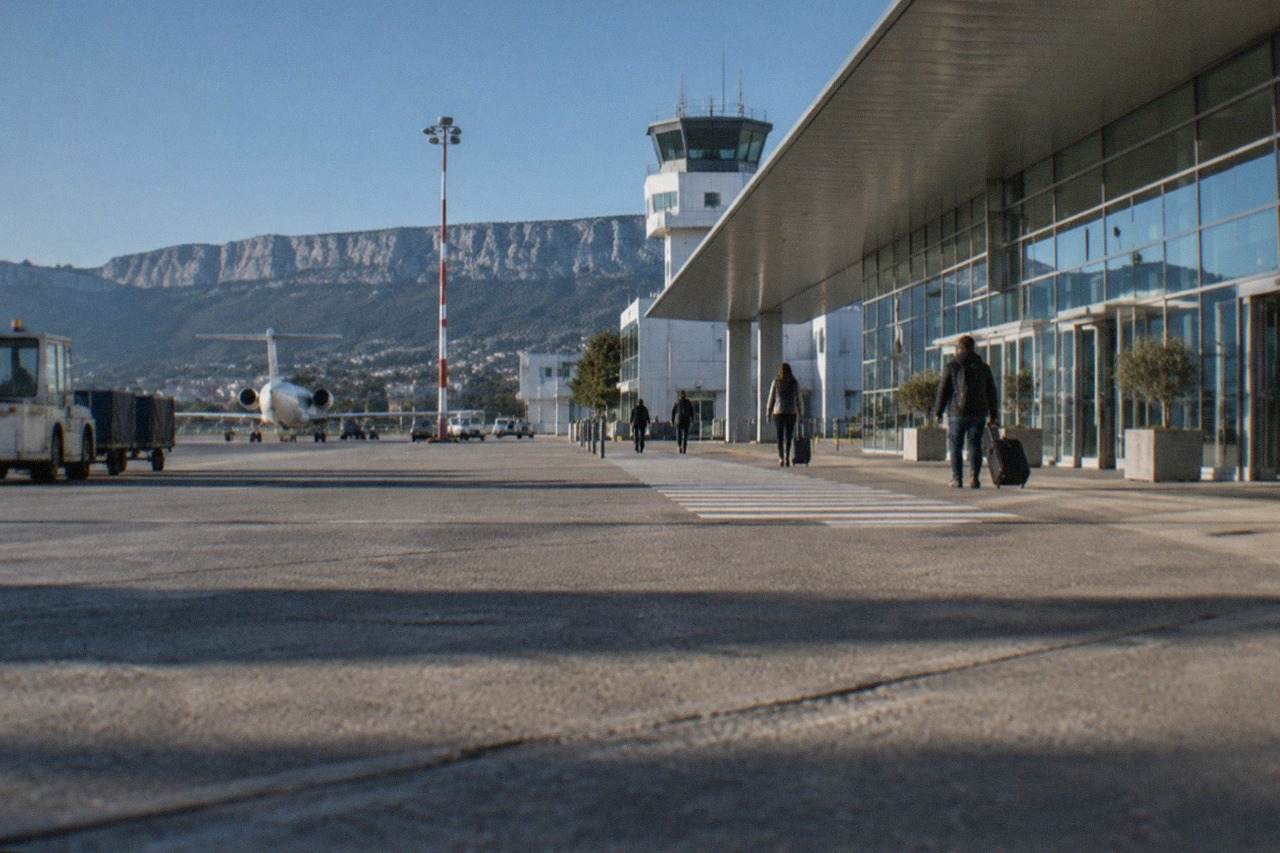
Trieste Airport, known locally as Ronchi dei Legionari and coded TRS, is the closest airport to Trieste, the Adriatic port city in Friuli Venezia Giulia, Italy, and one of the few Italian airports with its own railway station attached to the terminal.
Short answer
Trieste Airport (TRS) at Ronchi dei Legionari is a compact airport in Friuli Venezia Giulia, Italy, with its own railway station linked to the terminal by a covered walkway of roughly 400 m. Regional, Intercity and Frecciarossa trains serve it, buses leave from an intermodal hub beside the terminal, and a short regional train ride connects it with Trieste Centrale in the city centre.
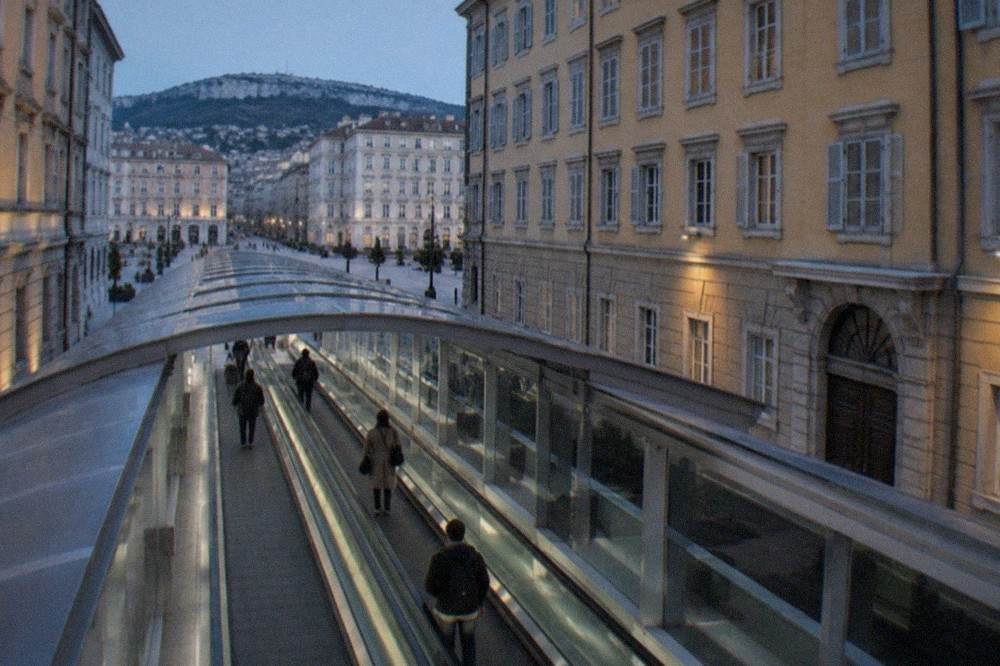
Trieste Airport, the Italian gateway to the Adriatic port city of Trieste in Friuli Venezia Giulia, sits at Ronchi dei Legionari and carries the code TRS. It is a genuinely unusual airport for Italy: rather than stranding arrivals on a ring road an hour from anywhere, it has its own railway station, joined to the terminal by a covered pedestrian walkway of roughly 400 m with moving walkways, served by regional, Intercity and Frecciarossa trains. That single fact changes how you plan a trip here, because the airport behaves less like a transport headache and more like a suburban interchange on the national rail network.
This guide covers what the airport is, how to get from it into the city centre, whether a hire car makes sense, and how it compares with flying into Venice and transferring across. It also covers what to do with a first day in Trieste once you have dropped your bags, with a nod to the coffee culture, the seafront and the Karst hills behind the city. Every figure here comes from the operators' own published material, and where a fare or a journey time has not been verified, this guide says so instead of guessing.
What Is Trieste Airport and Where Is It?
Trieste Airport, coded TRS and named for the town of Ronchi dei Legionari where it stands, is the airport that serves Trieste, the regional capital of Friuli Venezia Giulia in north-east Italy, on the Adriatic. It is a small, single-terminal airport whose defining feature is an attached railway station, so the transfer into the city is a train ride rather than a long taxi negotiation.
The airport's full Italian name is Aeroporto di Trieste-Ronchi dei Legionari, and most locals simply call it Ronchi. It is a compact operation by the standards of Italian hubs, which is its charm: walking distances inside the terminal are short, and the walkway to the station is covered and equipped with moving walkways, a detail that matters more than it sounds when you are hauling a suitcase in the summer heat or the bora wind.
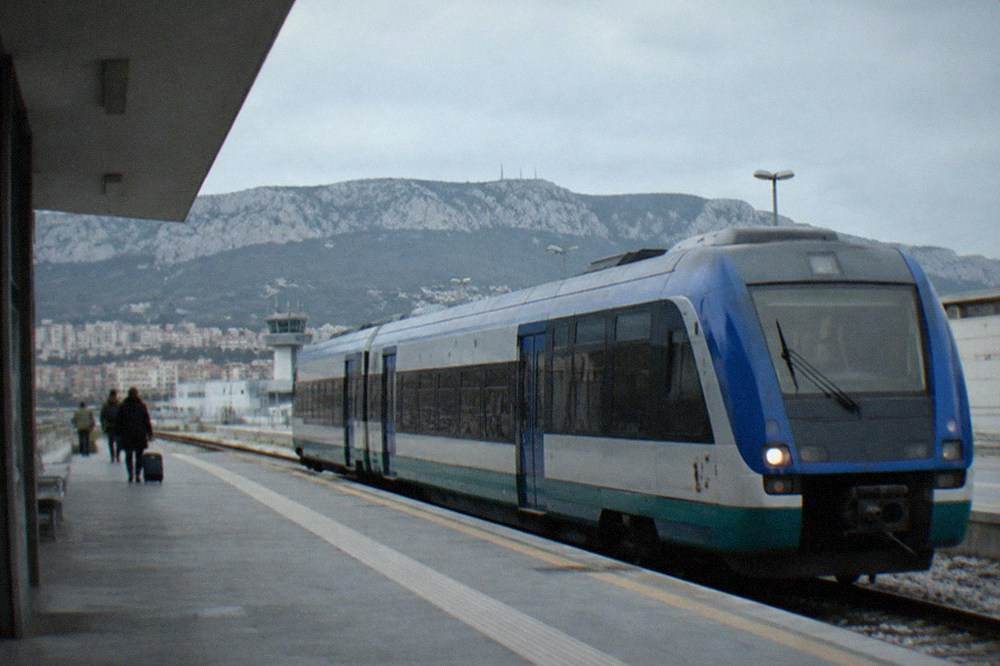
The station is not a shuttle stop or a people-mover gimmick. It is a stop on the national network, listed as "Trieste Airport", and the airport's own service charter confirms that regional trains, Intercity services and Frecciarossa high-speed trains all call there, alongside some international services towards Villach and Ljubljana. That last point deserves emphasis for anyone planning a multi-country trip: the airport is not only a door into Italy but a rail junction on the cross-border corridor towards Austria and Slovenia.
| Service type | What it is | Where it goes from the airport station |
|---|---|---|
| Regional (regionale) | Stopping local trains | Trieste Centrale and stations along the regional network |
| Intercity | Medium-distance express | Major cities on the national corridor |
| Frecciarossa | High-speed trains | Long-distance Italian destinations |
| International | Cross-border services | Villach and Ljubljana, per the airport's service charter |
For readers still choosing how to reach the city at all, the site's broader flights to Trieste guide covers routes and planning, and the answer page what airport do you fly into to get to Trieste, Italy? addresses the same question in short form.
How Do You Get from Trieste Airport to Trieste City Centre?
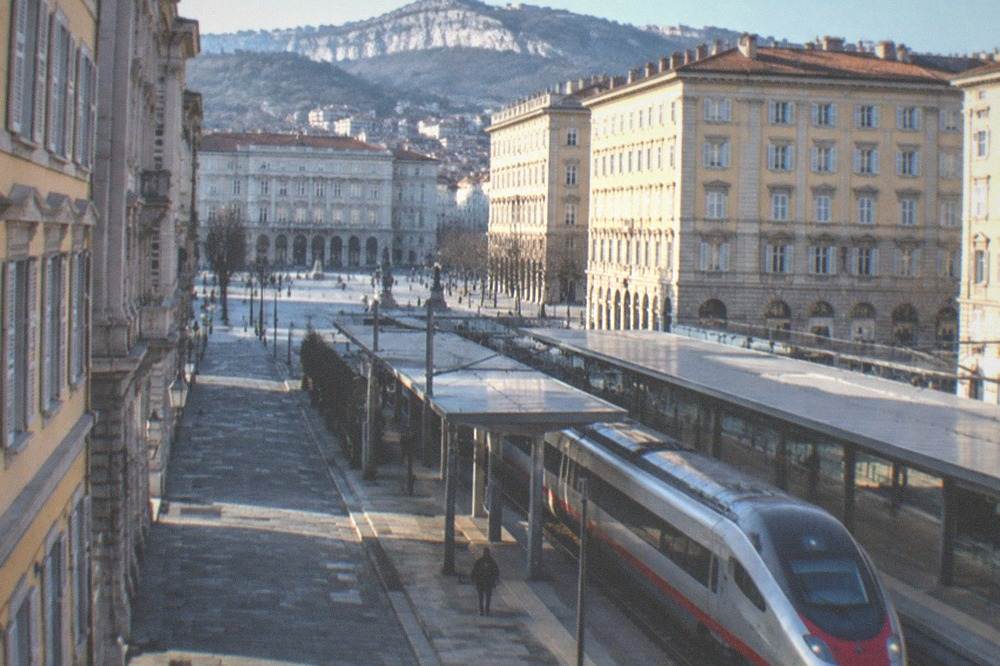
The fastest documented route from Trieste Airport into the centre is the train: the airport's own station sits a covered walk of roughly 400 m from the terminal, and a short regional train ride connects it to Trieste Centrale, the city's main station, with no transfer needed. Buses are the alternative, leaving from the intermodal hub beside the terminal.
The train option is the one the airport itself puts first. You leave the terminal, follow the signs into the covered walkway, let the moving walkways do most of the work, and buy a ticket from Trenitalia's machines or website before boarding. The journey time and the fare to Trieste Centrale are not published in a form this site can verify, so the honest phrasing is simply "a short regional train ride": treat any specific number of minutes or euros you read elsewhere with suspicion unless it comes from Trenitalia directly.
The bus alternative departs from the intermodal hub beside the terminal. The regional operator TPL FVG runs urban and suburban lines from there, including lines 1, 26, 51 and 52, and long-distance coaches also use the same hub. Frequencies and fares for individual routes are not verified in the operators' published material, so check the live planner rather than trusting a printed timetable from a third-party site.
| Transport | Where it departs | Where it goes | Verified detail |
|---|---|---|---|
| Train | Trieste Airport station, via the covered walkway | Trieste Centrale and beyond | Regional, Intercity and Frecciarossa services call |
| TPL FVG bus | Intermodal hub beside the terminal | Regional destinations including Trieste | Lines 1, 26, 51 and 52 are listed by the operator |
| Long-distance coach | Intermodal hub beside the terminal | Cities across the region and beyond | Operators confirmed; timetables not verified |
Once you are at Trieste Centrale, the city is genuinely walkable: the station sits at the edge of the Borgo Teresiano district, and the seafront, Piazza Unità d'Italia and the Città Vecchia are all reachable on foot without a bus. The site's guide to the Trieste train station and rail connections picks up exactly where this one leaves off, covering onward trains to Venice, Ljubljana and the rest of the region.
Arriving by plane and then facing a new city cold is tiring, and a first-afternoon orientation tour saves the wasted evening that often follows. Three options stand out for day one.
A private walk with a local is the flexible pick: the format runs two to six hours and bends around whatever you actually care about, whether that is the seafront and the Roman remains or the Habsburg cafès and the Jewish quarter. The Prosecco and Karst day trip is the choice if you would rather skip the city entirely on day one and head straight for the hills and the wine, and the guided foodie walk turns the Città Vecchia itself into the itinerary, tasting as you go.
Should You Hire a Car at Trieste Airport or Use Public Transport?
For most trips centred on Trieste city itself, public transport beats a hire car: the airport's attached station puts Trieste Centrale a short train ride away, the historic centre is compact and largely pedestrian, and urban buses, trams and contactless payment cover the rest. A car earns its cost mainly for touring the Karst plateau, the Slovenian coast or Istria at your own pace.
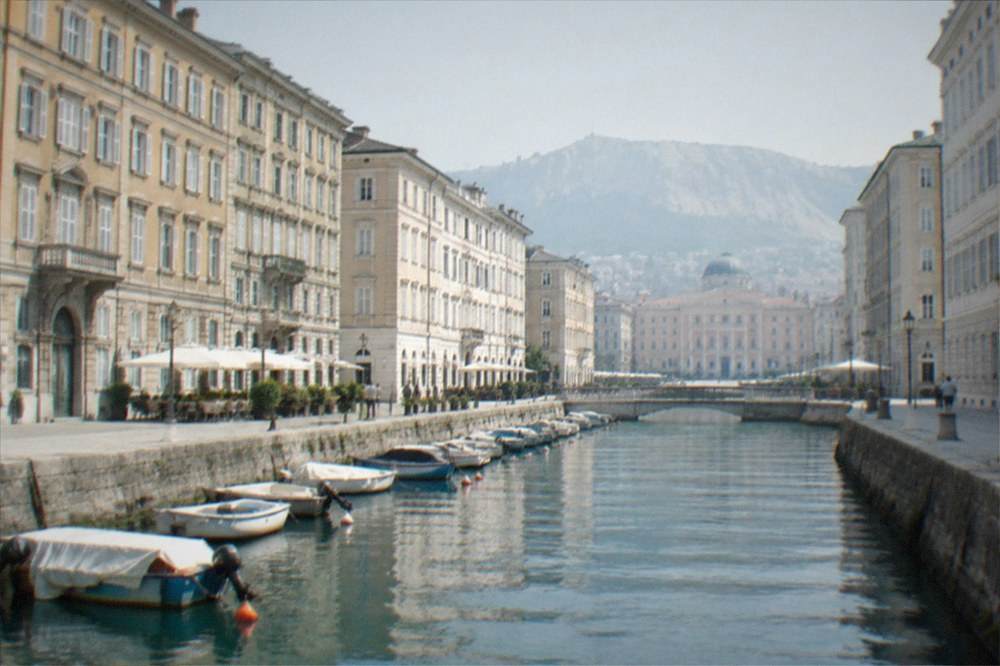
The case against a car in the city is straightforward. Trieste's centre is a dense grid of nineteenth-century streets around the Canal Grande and the seafront, parking is a known frustration, and the city's own transport network, run by Trieste Trasporti, is cheap and simple once you understand the ticket codes. A standard urban ticket is valid on the whole network, including the tram de Opicina, and you can tap a contactless bank card on board instead of hunting for a ticket machine.
| Code | Ticket | Price | Validity |
|---|---|---|---|
| U01 | Urban single | €1.50 | 60 minutes |
| U02 | Urban single | €1.85 | 75 minutes |
| U24 | Day ticket | €3.35 | Full day |
| U10 | 10 rides | €13.50 | Ten urban journeys |
| U20 | 20 rides | €16.65 | Twenty urban journeys |
The 2026 tariff sheet, published by Trieste Trasporti, also notes that single tickets run 60 or 75 minutes, extended to 240 minutes on Sundays and public holidays, and that contactless Mastercard, Visa and American Express cards and digital wallets can be tapped on the on-board readers, with the system applying the cheapest applicable fare. Season-pass prices appear in the same document but did not extract cleanly, so this guide does not print one.
The case for a car is real but specific. If your itinerary is the Karst plateau's osmize, the Slovenian coast at Piran and Portorož, or Istria beyond, a car gives you the freedom the region's scattered attractions reward. One border fact matters if you drive or take a day trip into Slovenia: Italy is running temporary border checks on its land border with Slovenia through 18 December 2026, per the European Commission's own register, so carry a passport or national ID card even though all three countries, Italy, Slovenia and Croatia, are in the euro and in Schengen. Croatia joined both on the same day, 1 January 2023, and no currency change is involved anywhere on this itinerary.
If you would rather not drive at all and still see the coast, the site's guide to day trips from Trieste covers the train, bus and tour options for Piran, Ljubljana, Postojna and the Karst in detail.
A private walk with a local, booked for the morning after you land, is also the most efficient way to learn the city's geography before you plan anything else. The listing describes a flexible private format of two to six hours with a local guide, rated 4.6 from 94 reviews and priced from $56.05 per person on the operator's live listing, and the flexibility is the point: you can ask for the seafront and the Roman remains, or the Habsburg cafés and the Jewish quarter, and get exactly that.
Is Trieste Airport Your Best Arrival Point, or Should You Fly Into Venice?
Trieste Airport is the best arrival point when a flight into it exists for your route and date, because the attached station removes the transfer problem entirely. Venice's airports serve far more routes, so many visitors, especially those flying long-haul, arrive there instead and transfer to Trieste by train, bus or private transfer across the plain.
The trade is between convenience and reach. TRS is a small airport with a limited route map, and depending on where you start, there may be no direct flight at all. Venice, by contrast, is one of Italy's best-connected cities, and the onward journey to Trieste, while longer, is well documented on this site: the guide to Venice airport to Trieste covers the transfer options from both of Venice's airports, and the answer page is there a shuttle from Venice airport to Trieste? addresses the most common question directly. For the rail version, the Trieste to Venice by train guide works in both directions.
If you are still weighing the two cities as destinations rather than as airports, the comparison is not really close in kind: Venice is a spectacle and Trieste is a lived-in port, and the site's Trieste vs Venice guide makes the case in full. What the airport comparison adds is that Trieste's small airport punches above its weight because of the station, while Venice's transfer, though longer, is routine and well-served.
| Arrival option | Best for | The catch |
|---|---|---|
| Trieste Airport (TRS) | Direct flights into Friuli Venezia Giulia | Smaller route map than Venice |
| Venice airports plus train | Long-haul and low-cost routes | A cross-country transfer after the flight |
| Venice airports plus private transfer | Cruise passengers with luggage | Cost, and booking ahead |
Cruise passengers have their own arithmetic, since Trieste is a turnaround port. The site's Trieste cruise port guide covers the terminal, the walk into town and the shore-time options, and the answer page on the closest airport to the cruise terminal addresses the airport question for sailing day specifically.
What Should You Do on Your First Day in Trieste After Landing?
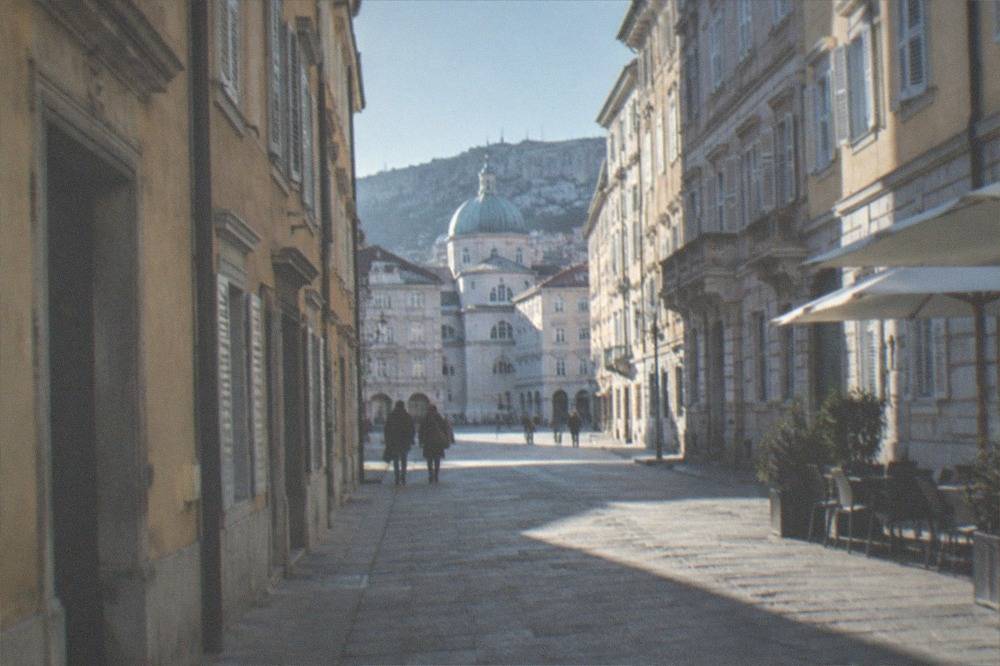
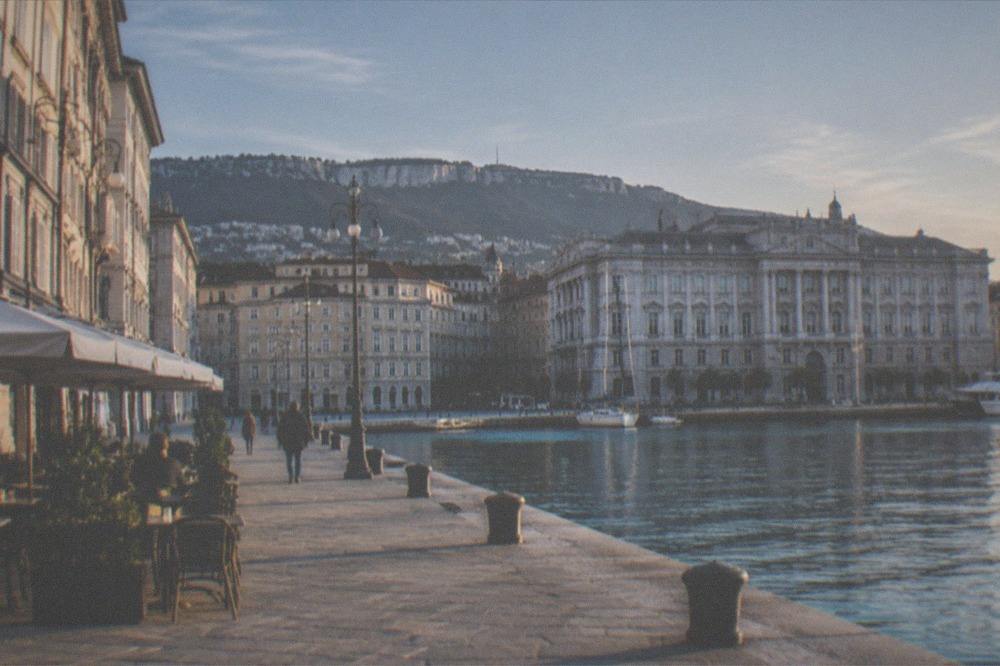
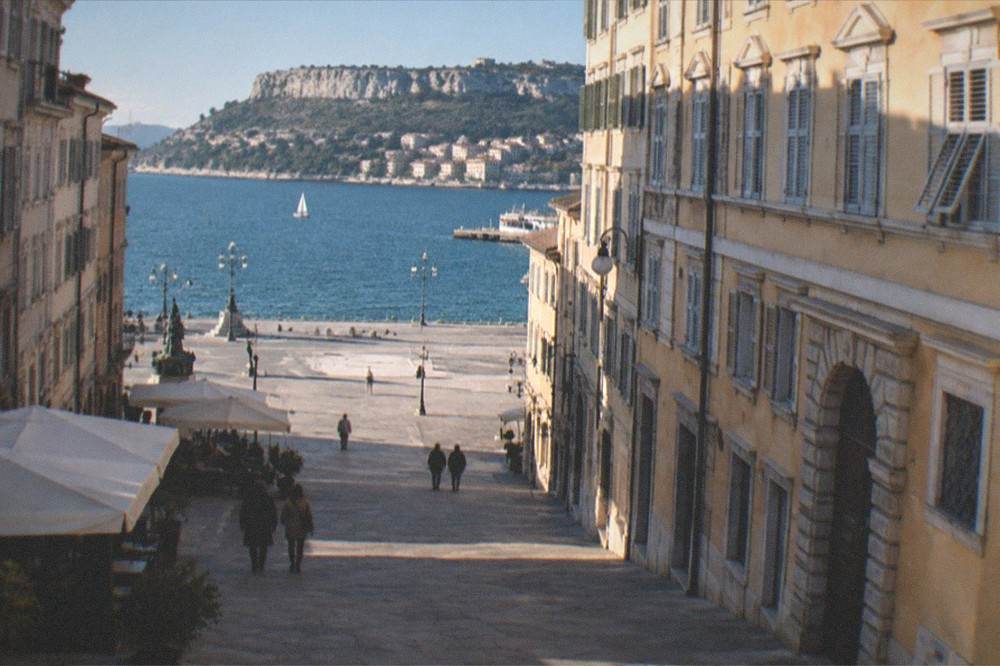
Spend your first afternoon in Trieste on the seafront and in the historic centre: walk from Trieste Centrale through the Borgo Teresiano to Piazza Unità d'Italia, the sea-facing square that opens straight onto the Molo Audace, then work back through the Città Vecchia or stop in one of the historic caffès, which are the city's signature institution and a better jet-lag cure than any nap.
The geography makes this easy. The station sits inland of the Canal Grande, and the walk to the sea passes through the Borgo Teresiano, the elegant Habsburg-era grid of streets that gives Trieste its Central European feel. Piazza Unità d'Italia is the payoff: a vast square on the water, with the Molo Audace, a stone pier you can walk to the end of, sticking straight out into the gulf. On a clear evening the view across the water towards the Karst and the distant lights of Slovenia is the city's defining image.
The caffè stop is not optional padding, it is the point. Trieste is Italy's historic coffee port and a roasting centre to this day, and its caffès, some of them centuries old, operate as public living rooms where you order at the counter in the local idiom. The site's guide to Trieste coffee culture explains the whole vocabulary, from the capo in b to the meanings of the counter bells, and it is worth reading before your first order rather than after.
For the evening, food is the answer, and Trieste's is unlike the rest of Italy's: Austro-Hungarian, Slavic and Mediterranean at once. The guides to what to eat in Trieste and the best restaurants in Trieste cover the territory, from jota, the sour barley-and-bean soup, to the buffet culture of cured pork. If you have more energy than a landing day usually allows, the free things to do in Trieste guide lists what costs nothing, including the Miramare park, which is free all year while the castle itself charges €17 for adults, reduced to €7 for EU citizens aged 18 to 25 with the temporary exhibition included.
If your flight lands early and the hotel room is not ready, the standard move is to leave the bags and head straight into the old town with a guide, and a food walk is built for exactly that dead afternoon: three hours of tasting through the Città Vecchia, a working map of the city in your head before dinner.
The listing describes a guided foodie walking tour of Trieste, priced from $71.08 per person and rated 4.91 from 264 reviews on the operator's live listing, running three hours through the city's best street food. It is an orientation tool and a lunch at the same time, which is the correct tool for day one. Check availability
Where Should You Stay After Landing at Trieste Airport?
Most first-time visitors to Trieste should stay in the Borgo Teresiano or the streets behind Piazza Unità d'Italia, the central districts closest to Trieste Centrale station, the seafront and the Città Vecchia, because the city is compact enough that any central base puts everything within a walk. The choice that matters more is hotel category, since Trieste charges a tourist tax per person per night that scales with the star rating.
The tourist tax, published by the Comune di Trieste in its 2026 rate table, runs from €1.50 per night at campsites up to €3.80 at five-star hotels, with three-star properties at €3.00 and most B&B and short-let categories between €1.80 and €2.30. It is charged for a maximum of five consecutive nights in the same property, and everyone under 18 is exempt, along with several other categories including people with a certified disability of 80% or more. It is a small sum, but it is per person, per night, so a family of four in a four-star hotel should budget for it rather than be surprised by it on the final bill.
| Accommodation type | Tourist tax per person, per night |
|---|---|
| 5-star hotel | €3.80 |
| 4-star hotel or self-catering | €3.30 |
| 3-star hotel or self-catering | €3.00 |
| 2-star hotel, B&B Superior, affittacamere | €2.30 |
| Hostels, agriturismi, short-let properties | €2.30 |
| 1-star hotel or B&B Standard | €1.80 |
| Campsites and motorhome areas | €1.50 |
For the neighbourhood choice itself, the site's where to stay in Trieste guide walks through the districts in detail: the Borgo Teresiano for elegance and station proximity, the Città Vecchia for atmosphere and restaurants, Barcola for the seafront and the swimming, and the streets around the station for pure arrival convenience after a late flight.
What Day Trips Can You Take from Trieste Without a Car?
Day trips from Trieste work well without a car because the city sits on a working rail and coach network at the top of the Adriatic: Ljubljana and Lake Bled in Slovenia, Piran on the Slovenian coast, Postojna Cave and Predjama Castle, and the Karst plateau's caves and stud farm are all reachable by train, coach or organised tour, with the two big Slovenian caves among the most-booked excursions from the city.
The organised options are worth taking seriously here, because the cross-border logistics, border checks, sparse rural bus timetables and cave booking systems, are exactly what a tour operator absorbs for you. The Postojna and Predjama combination is the classic: the listing describes a six-hour tour from Trieste covering the cave and the castle, priced from $137.57 per person and rated 4.76 from 543 reviews on the operator's live listing. The Lipica and Škocjan alternative covers the white horses of the Lipica stud farm and the UNESCO-listed Škocjan Caves, from $129.93 per person, rated 4.86 from 23 reviews.
| Day trip | What it covers | From (per person) | Rating | Duration |
|---|---|---|---|---|
| Postojna Cave and Predjama Castle | Slovenia's best-known cave and the cave castle | $137.57 | 4.76 from 543 reviews | 6 hours |
| Lipica and Škocjan Caves | The stud farm and the UNESCO-listed gorge cave | $129.93 | 4.86 from 23 reviews | 6 hours |
| Ljubljana and Lake Bled | Slovenia's capital and its most famous lake | $108.91 | 4.69 from 544 reviews | 9 hours |
| Piran and the Slovenia coast | The Istrian coast and the old port town | $114.64 | 4.57 from 136 reviews | 6 hours |
For the deeper planning, the site's day trips from Trieste hub covers every direction, including the individual routes to Ljubljana, Piran and Postojna, with the border and currency facts that trip up visitors who assume Schengen means no checks. On this border, until 18 December 2026, it does not.
The Karst itself, the limestone plateau that rises directly behind the airport's flight path, is the day trip that most visitors under-plan. Its osmize, the farm-cellar wine outlets signposted by a leafy frasca branch at the turning, open in seasonal windows tracked by the osmize.com calendar, and the site's osmize of the Carso guide explains how to find one and what to expect when you do. The wine to look for is Vitovska, Malvasia or Terrano, the Karst's own grapes: Trieste is not in the Prosecco DOC, and the village of Prosecco on the gulf's north shore gave the wine its name without growing it commercially today.
The full-day Prosecco and Karst tour, from $145.22 per person and rated 4.48 from 23 reviews on the operator's live listing, is the version of this trip with all the driving handled. It runs seven hours and covers the wine country and the plateau in one loop from the city.
When Is the Best Time to Fly Into Trieste?
The best months to fly into Trieste for warm, settled weather are June through September, when mean daily highs run from about 25.8 C to 28.2 C and the sea reaches its warmest at 25.9 C in July and August, while October is the month to avoid if you dislike wind and rain, since it averages 88.6 mm of rain and sits inside the windy shoulder of the year around the Barcolana regatta.
The climate record behind that comes from ARPA FVG's own station tables for the molo Fratelli Bandiera, the waterfront gauge with a 1995-2024 series, and it corrects a myth that follows this city around: Trieste is not a rainy summer destination. July is the second-driest month of the year at 53.8 mm, wetter only than the deep winter, while November is the wettest at 109.8 mm and September is second at 102.3 mm. Autumn, not summer, is the wet season here.
| Month | Mean high C | Rain mm | Sea C | Note |
|---|---|---|---|---|
| June | 25.8 | 62.5 | 23.1 | Sea warming fast |
| July | 28.2 | 53.8 | 25.9 | Second-driest month of the year |
| August | 28.1 | 71.7 | 25.9 | Warmest sea of the year |
| September | 23.9 | 102.3 | 23.9 | Second-wettest month |
| October | 19.6 | 88.6 | 20.3 | Barcolana month, windy shoulder |
| November | 14.7 | 109.8 | 16.8 | Wettest month of the year |
The wind deserves a paragraph, because the bora is Trieste's defining weather fact and the reason the October sailing regatta exists at all. ARPA's tables show an average of 17.6 days a year with a gust over 90 km/h at the molo station, and the monthly record gust exceeds 110 km/h in every single month of the year, so a summer flight is not a guarantee of calm. No published wind threshold exists at which ferries stop or the seafront closes; the authorities scale their response to conditions in real time. The site's bora wind guide covers the practical side, and the best time to visit Trieste guide weighs it all against the events calendar.
Common Questions About Trieste Airport
Is Trieste Airport the same as Ronchi dei Legionari?
Yes. Trieste Airport's full name is Aeroporto di Trieste-Ronchi dei Legionari, its code is TRS, and locals commonly call it simply Ronchi. It is the airport serving Trieste, the Adriatic port city in Friuli Venezia Giulia, Italy.
Does Trieste Airport have its own train station?
Yes, and this is its defining feature. The station, listed as "Trieste Airport", is joined to the terminal by a covered pedestrian walkway of roughly 400 m with moving walkways, and regional, Intercity and Frecciarossa trains call there, along with some international services towards Villach and Ljubljana.
How do I get from Trieste Airport to the city centre?
Take the train: the attached station connects to Trieste Centrale by a short regional train ride, with no transfer needed. Buses, including TPL FVG lines 1, 26, 51 and 52, are the alternative from the intermodal hub beside the terminal. Exact journey times and fares are not published in a verifiable form, so check Trenitalia or the regional operator before travel.
Is it better to fly into Trieste or Venice for a trip to Trieste?
Fly into Trieste Airport if a direct flight exists for your route, because the attached station removes the transfer problem. Venice's airports serve far more routes, so many visitors arrive there and transfer onwards; this site's guides cover the Venice airport transfer and the train option in detail.
Do I need a passport for a day trip to Slovenia after landing at Trieste Airport?
Yes, carry one, or a national ID card. Although Italy, Slovenia and Croatia are all in the euro and in Schengen, Italy is running temporary border checks on its land border with Slovenia through 18 December 2026, per the European Commission's register, so checks are possible on the crossing.
Can I visit Trieste without a car after flying into the airport?
Easily. The train links the airport to Trieste Centrale, the centre is walkable from the station, urban tickets cost from €1.50 for 60 minutes or €3.35 for a day ticket in 2026, and the major day trips to Slovenia and the Karst caves run as organised tours or by train and coach.
The short version of all of this: Trieste Airport is a small airport that behaves like a train station, and that is the whole reason to use it. Land, walk the covered walkway, board a regional train, and you are in one of Italy's most surprising cities before your luggage carousel would have finished at a larger hub. Plan the first afternoon around the seafront and a caffè, save the Karst and Slovenia for the days when the jet lag has gone, and let the Trieste Travel Guide handle the rest of the itinerary.