Best Restaurants in Trieste, Italy: Where to Eat and What to Order
Trieste, Italy, eats like a port that spent centuries inside a Central European empire: jota and goulash beside seafood, caffè culture everywhere, and farm cellar doors called osmize up on the Carso. This guide covers what to order, where to eat it, and which food tours and classes are worth your money.
Short answer
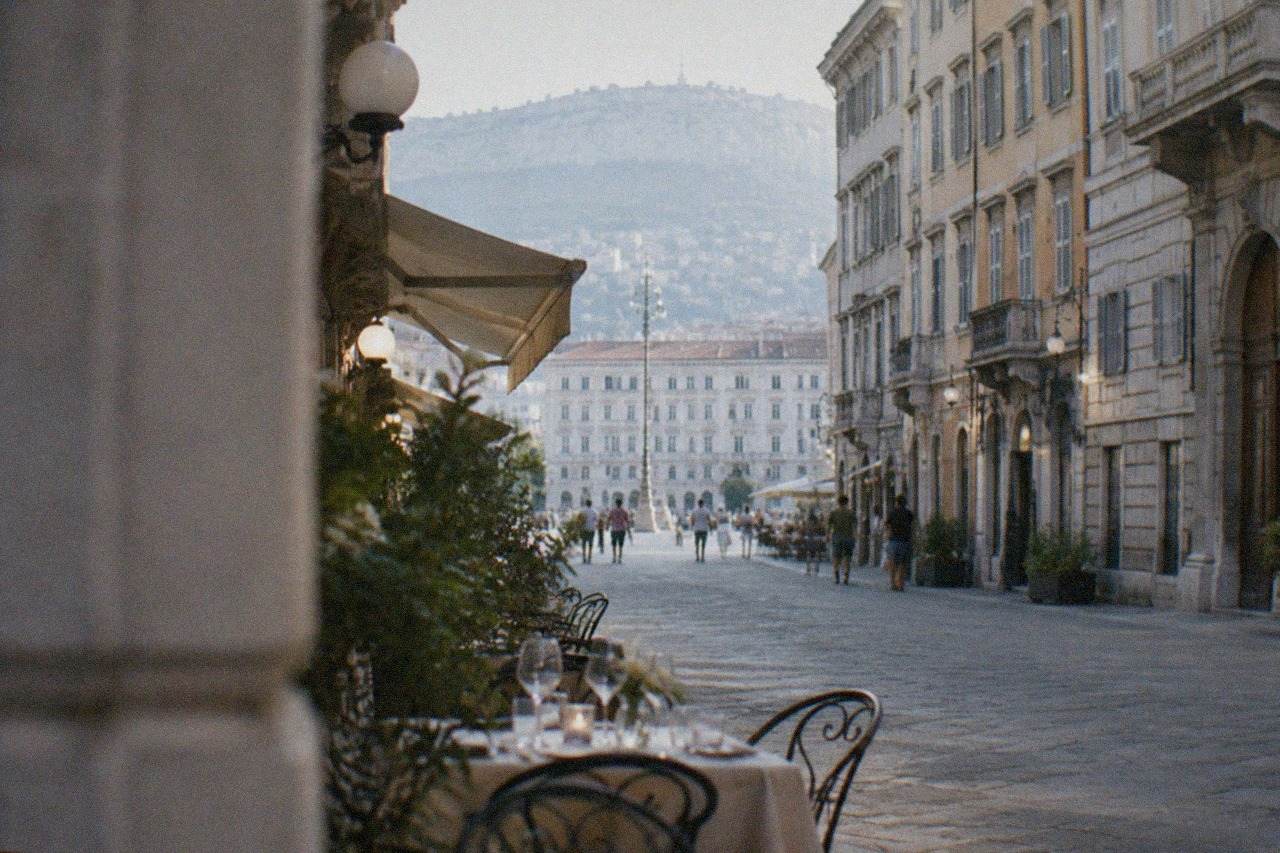
Trieste's restaurant identity mixes Adriatic seafood with Austro-Hungarian comfort food. Order jota, goulash with gnocchi, and frico; eat in Città Vecchia, the Borgo Teresiano, and the Carso osmize; and book a food tour or cooking class to shortcut the search.
Trieste, Italy, is the one Italian port city where dinner can legitimately mean sauerkraut soup followed by espresso in a Habsburg-era caffè. The restaurants here reflect four centuries as the main sea gate of a Central European empire, and the menus still show it: Austro-Hungarian jota and goulash sit beside Adriatic grilled fish, and the wine lists lean on the Carso plateau's own grapes rather than the better-known names of mainland Italy. This guide walks through what to order, which districts to eat in, how the osmize farm cellars of the Karst work, and which guided food experiences are actually worth booking, with prices and ratings taken from the operators' own listings.
What Kind of Food City Is Trieste, Italy?
Trieste, Italy, is a hybrid food city: an Adriatic port whose restaurant culture was shaped by the Austro-Hungarian empire rather than by southern Italy. Its tables carry jota, a sauerkraut and bean soup, goulash served with potato gnocchi, and frico, alongside grilled catch from the gulf. The city is also a historic coffee port and roasting centre, so caffè culture frames every meal, and the Carso plateau above the city supplies its own wines, Vitovska, Malvasia and Terrano, rather than Prosecco.
The mix is the whole point. A restaurant in Città Vecchia can serve a soup built on fermented cabbage and then close the meal with a properly pulled espresso, and nobody considers that a contradiction. The empire that ran this port until 1918 drew its food from Vienna, the Balkans and the Adriatic at once, and the menus never fully standardised afterwards.
Two things catch visitors out. First, Trieste is not in the Prosecco DOC: the sparkling wine's name comes from a Carso village, but the region's own bottles are the three above, and a restaurant's local list is the place to try them. Second, the coffee culture is real but numerically unverified: no official source publishes a per-head consumption figure for this city, so treat any "Trieste drinks more coffee than anywhere" claim as folklore rather than fact. Our guide to what to eat in Trieste covers the individual dishes in more depth.
Which Guided Food Experiences Help You Find the Best Restaurants?
The strongest food-tour option in the city is the three-hour Unique Food Tour with Local Flavors and Tastings, listed from $87.58 per person and rated 4.9 from 88 reviews, which walks the city centre with multiple tastings. A cheaper alternative is the Guided Foodie Walking Tour, from $71.08 per person, rated 4.91 from 264 reviews. Both are walking tours of roughly three hours; the higher-priced one is the same product family on a different operator, so read both listings before booking.
A food tour earns its cost in a city like this one because the signature dishes are not on every menu. Jota in particular is a winter dish that not every kitchen in the tourist core keeps on the card all year, and a local guide knows which buffet kitchens still cook it daily. The listings for these tours describe tastings of local street food and specialities, with the walk running about three hours.
| Experience | Listed price | Rating | Reviews | Duration |
|---|---|---|---|---|
| Unique Food Tour with Local Flavors and Tastings | from $87.58 per person | 4.9 | 88 | 3 hours |
| Guided Foodie Walking Tour | from $71.08 per person | 4.91 | 264 | 3 hours |
| Unique Food Tour with Local Flavors and Tastings (alternate listing) | from $85.98 per person | 4.74 | 123 | 3 hours |
Note the third row: the same tour concept is sold under two listings at two prices, and the ratings differ accordingly. That is normal on this site's roster, and the honest advice is to compare both live listings for the current departure dates and cancellation terms before choosing. You can also Check availability on the operator's page, and read more in our overview of free and paid walking tours in Trieste.
Where Should You Eat in Trieste, District by District?
The three restaurant districts that matter are Città Vecchia, the old town on the San Giusto hillside, the Borgo Teresiano with its grid of streets around the Canale Grande, and the seafront stretch from Piazza Unità d'Italia towards Barcola. Città Vecchia holds the historic trattorie and buffet kitchens, the Borgo Teresiano carries the elegant Habsburg-era caffè and newer restaurants, and the seafront is where the seafood and the ice-cream walks are. Up on the Carso plateau, the osmize are a category of their own.
The old town is where the buffet tradition lives. A buffet in Trieste is not a hotel breakfast spread: it is a modest kitchen serving the Austro-Hungarian comfort dishes, and it is the most reliable place to find jota and goulash cooked rather than reheated. The Borgo Teresiano, laid out under Maria Theresa's administration, is the district of the grand caffè and the wider range of restaurants, and it is where most visitors end up eating by default simply because their hotel is there.
The seafront matters for two reasons. The ice cream walk along the Rive towards Barcola is a Trieste institution, and the seafood kitchens along that stretch serve the gulf's catch. If you are choosing where to sleep, our where to stay in Trieste guide maps the districts against hotel locations.
What Should You Order in a Trieste Restaurant?
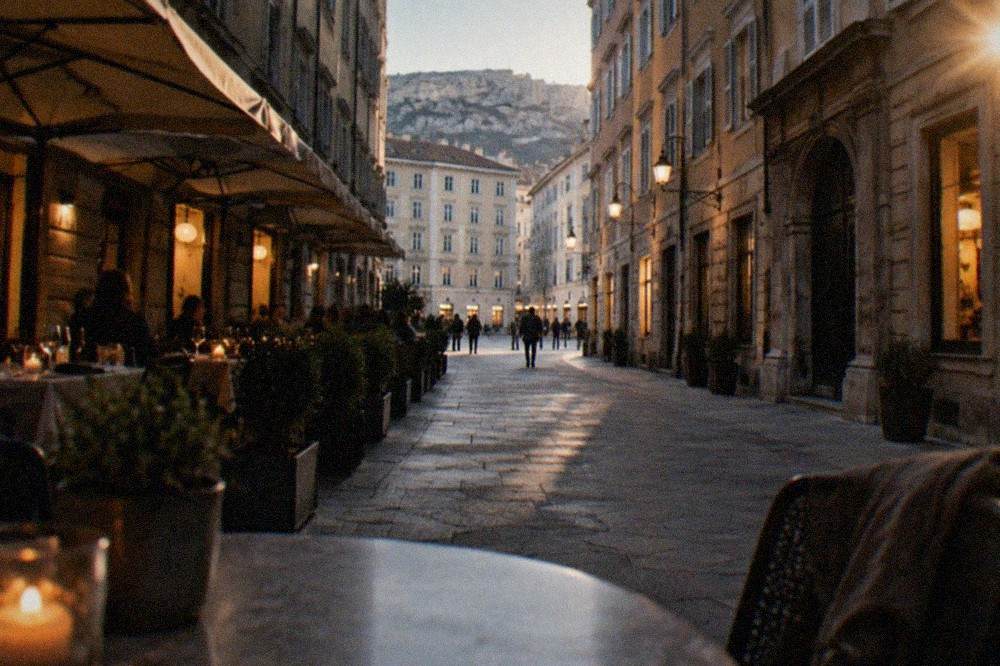
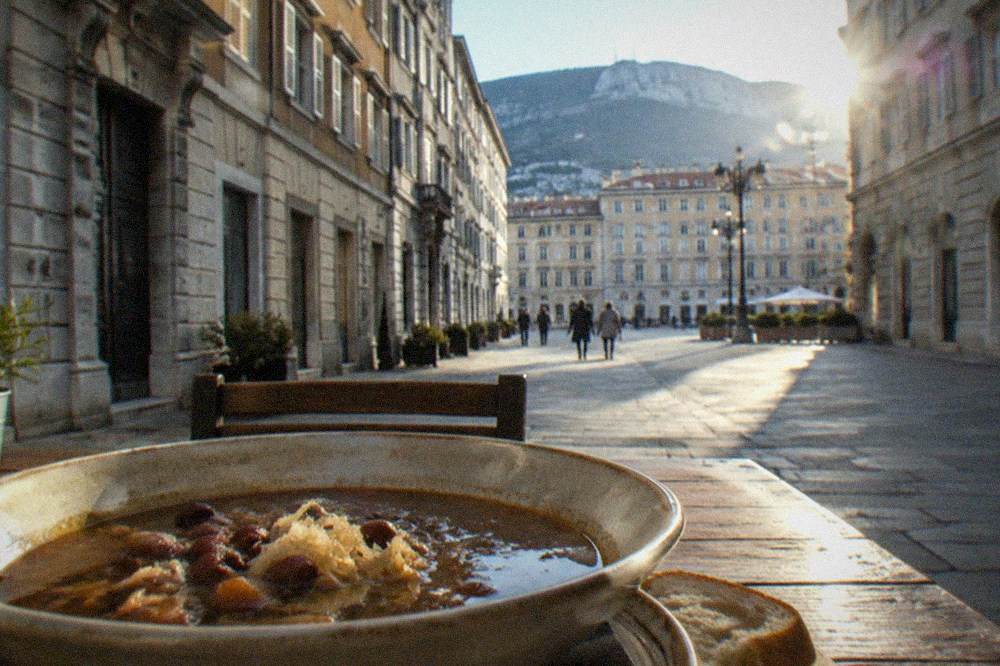
Order jota first: the sauerkraut, bean and potato soup with pork is the city's signature dish and the truest test of a kitchen. Then goulash, served Trieste-style with potato gnocchi, and frico, the crisp cheese and potato cake of the Friuli tradition. On the seafood side, look for the Adriatic catch of the day. For dessert, expect the Central European pastry tradition, and finish with an espresso, because in this city the caffè is part of the meal, not an afterthought.
Jota divides visitors sharply. It is a sour, hearty soup, and if fermented cabbage is not your thing, a goulash with gnocchi is the safer order that still tells you the kitchen is cooking Triestine food rather than a generic Italian menu. The buffets in Città Vecchia are the traditional home of both.
The wine list is where the interesting decision happens. Trieste is not in the Prosecco DOC, and the Carso's own bottles are Vitovska, a white, Malvasia, and Terrano, a red grown on the iron-rich karst soil. A restaurant with a serious local list will offer these by the glass, and they are worth ordering over the national brands precisely because they do not travel far. Our Friuli Venezia Giulia wine guide goes deeper on the region's bottles.
| Dish | What it is | Where it fits |
|---|---|---|
| Jota | Sauerkraut, bean and potato soup with pork | The buffet kitchens of Città Vecchia |
| Goulash with gnocchi | Austro-Hungarian meat stew served over potato gnocchi | Buffets and trattorie citywide |
| Frico | Crisp cake of cheese and potato | A Friuli tradition on Triestine menus |
| Adriatic catch of the day | Grilled gulf fish | Seafront kitchens along the Rive |
| Espresso in a historic caffè | The mandatory close to a Triestine meal | The grand caffè of the Borgo Teresiano |
How Do the Historic Caffè Fit Into a Restaurant Trip?
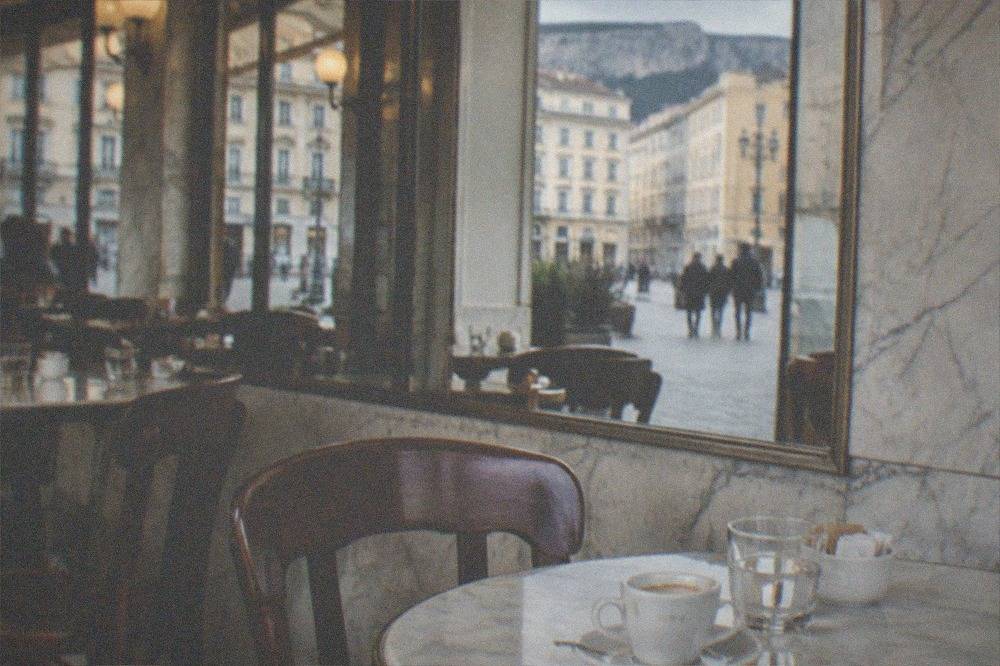
The historic caffè are restaurants' third act in Trieste, Italy: grand Habsburg-era rooms where the espresso is the point and the pastry counters are serious. They cluster in the Borgo Teresiano near Piazza Unità d'Italia and the Canale Grande.
A three-hour Historic Cafés Experience tour, listed from $74.52 per person and rated 4.91 from 19 reviews, walks the coffee culture with stops in the historic rooms, and a two-and-a-half-hour guided city walk ending with coffee in a historic bar runs from $68.79 per person.
The caffè tradition here is Central European, not Italian-fast: the rooms were built as literary institutions under the empire, and the ritual is to sit. The city's coffee identity is real and documented as a historic roasting port, but be sceptical of any specific consumption statistic you read elsewhere, because no primary source publishes one. What the caffè themselves offer is verifiable: the rooms, the counters, and a coffee menu with named preparations that exist mainly in this city. Our Trieste coffee culture guide covers the individual caffè and the drinks.
The coffee walk is also a good rainy-day option, and this city has a real rainy season: November is the wettest month at the molo Bandiera station with 109.8 mm, and September is second at 102.3 mm, per ARPA's own tables. Plan indoor caffè time for the shoulder months, and see our month-by-month weather guide before you set dates.
What Are the Osmize, and Why Do They Beat Some Restaurants?
The osmize are seasonal farm outlets on the Trieste Karst where producers sell their own wine and home-made food direct from the property, and they are the city's most distinctive eating experience outside a restaurant. An open osmiza is signposted by a frasca, a leafy branch hung at the turning. The de facto opening calendar, with addresses and a map, is published at osmize.com, and openings concentrate in spring and autumn.
The custom dates to a Habsburg-era right for farmers to sell their own produce for limited periods.
The legal history is folklore-adjacent: secondary sources cite an eighteenth-century decree and a fixed day count, but neither is verified against a primary document, so treat the mechanism, not the dates, as the fact. What is observable is the frasca and the calendar. You drive or take the bus up to the plateau, you sit in a cellar or a farmyard, and you drink the farm's own Vitovska or Terrano with cured meats and cheese the same family made.
The osmize are not restaurants: they open when the producer decides, the menu is whatever the farm has, and the setting is a working cellar. That makes them the best value eating in the region when they are open, and completely unavailable when they are not. Our full osmize of the Carso guide explains how to read the calendar and plan a visit.
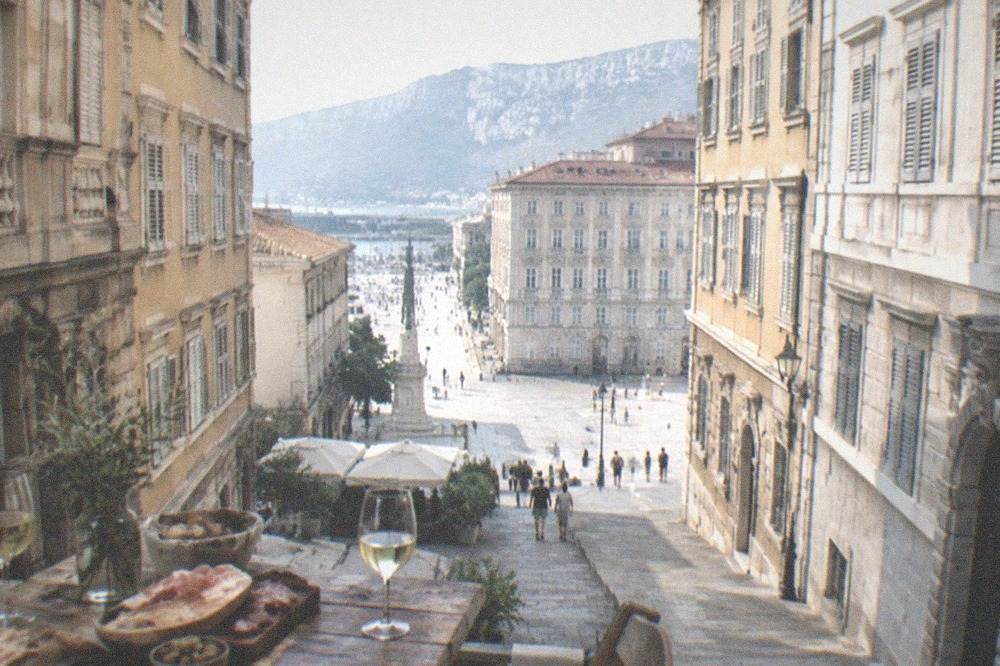
Which Cooking Classes and Wine Tastings Are Worth Booking from Trieste?
The best-value class on the roster is the small-group pasta and tiramisu class, listed from $157.65 per person and rated 4.4 from 40 reviews, a three-hour hands-on lesson. For wine, the city-centre tasting with food pairings runs from $56.18 per person, rated 4.61 from 22 reviews, and the two-and-a-half-hour Prosecco Origins tour with tastings, from $68.79 per person and rated 4.93 from 227 reviews, visits the Carso village that gave the wine its name.
A cooking class is the one experience that survives the trip home: the pasta and tiramisu format teaches two dishes you will actually cook again, and the small-group setting is why it costs more than a tasting. The Prosecco Origins tour deserves a note of honesty, because it is the one tour in this city whose name needs unpacking: it visits the village of Prosecco on the Carso, the place that gave the sparkling wine its name, but Trieste itself is not in the Prosecco DOC, and the tour's own description frames it as the story of where the name began.
| Experience | Listed price | Rating | Reviews | Duration |
|---|---|---|---|---|
| Small-group pasta and tiramisu class | from $157.65 per person | 4.4 | 40 | 3 hours |
| Private cooking class at a local's home | from $166.23 per person | 3.91 | 6 | 3 hours |
| City-centre wine tasting with food pairings | from $56.18 per person | 4.61 | 22 | 1 hour |
| Prosecco Origins tour and tastings | from $68.79 per person | 4.93 | 227 | 2h 30m |
| Prosecco Origins wine experience (village visit) | from $70.07 per person | 5 | 91 | 2 to 3 hours |
The two Prosecco listings overlap heavily and the ratings diverge, so read both live listings for what is actually included before you pay. The one-hour city-centre tasting is the cheapest structured way to try the Carso's Vitovska, Malvasia and Terrano without leaving town, which makes it a sensible first evening activity.
How Do You Get Around Trieste for a Restaurant Crawl?
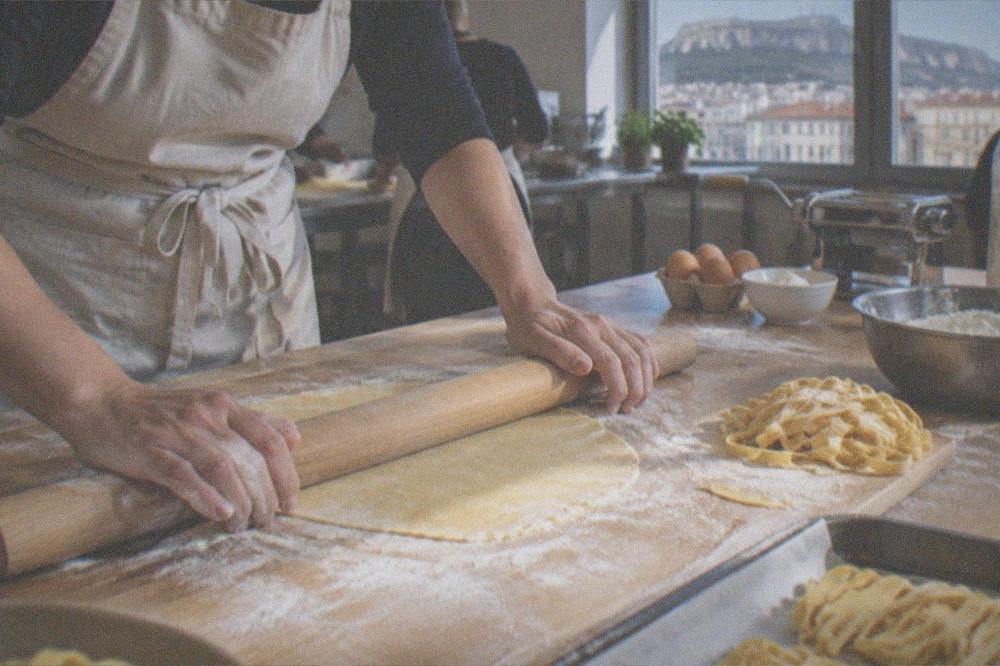
A single urban bus or tram ticket in Trieste costs €1.50 for 60 minutes or €1.85 for 75 minutes, a day ticket is €3.35, and a 10-ride carnet is €13.50, per the operator's 2026 tariff sheet. Contactless bank cards and digital wallets can be tapped on board, and the system applies the cheapest applicable fare. The Opicina tram, line 2, runs from piazza Dalmazia up to the Carso village of Opicina, so the plateau's osmize are reachable on an ordinary urban ticket.
The tram detail matters for food planning: it was reactivated on 1 February 2025 after a long suspension, and its city terminus is piazza Dalmazia, not piazza Oberdan as older guides claim. It is part of the ordinary urban network, so the same €1.50 ticket covers it. For the live status, check the operator's own site rather than any printed schedule, because maintenance suspensions are announced there first.
| Ticket | Code | Price |
|---|---|---|
| Urban single, 60 minutes | U01 | €1.50 |
| Urban single, 75 minutes | U02 | €1.85 |
| Day ticket | U24 | €3.35 |
| 10 rides | U10 | €13.50 |
| 20 rides | U20 | €16.65 |
Single tickets are valid 240 minutes on Sundays and public holidays, which is a genuinely useful quirk for a long lunch-and-wander day. If you are arriving by plane or rail, our Trieste airport guide and train station guide cover the connections into the centre.
What Does a Food-Focused Trip to Trieste Cost Beyond the Menu?
Beyond the restaurant bill, the verified extra costs are the tourist tax, charged per person per night for a maximum of five consecutive nights, at €3.30 for a four-star hotel, €3.00 for a three-star, €2.30 for a B&B Superior or two-star, and €1.50 at campsites, per the Comune's 2026 rate table. Everyone under 18 is exempt.
Guided experiences add $56.18 to $157.65 per person on the listings above, and the free GuruWalk city walks cost nothing up front, being tip-based.
The tourist tax is the line item visitors forget, and in this city it is published and exact: the 2026 table runs from €1.50 at a campsite to €3.80 at a five-star property, capped at five consecutive nights in the same property. Under-18s do not pay it at all, which matters for families planning a longer stay.
| Accommodation type | Tax per person, per night |
|---|---|
| 5-star hotel | €3.80 |
| 4-star hotel or self-catering case vacanza | €3.30 |
| 3-star hotel or case vacanza | €3.00 |
| 2-star hotel, B&B Superior, affittacamere | €2.30 |
| Hostels, agriturismi, short-let properties | €2.30 |
| B&B Comfort | €2.00 |
| 1-star hotel, B&B Standard | €1.80 |
| Campsites and motorhome areas | €1.50 |
On the experience side, the free walks deserve their own line. The GuruWalk pay-what-you-want city walk, Discover Trieste on a walking tour, is rated 4.86 from 50 reviews and is run by a local guru on tips alone; the same platform's free Old Port industrial archaeology walk is rated 5 from 4 reviews. GuruWalk is not this site's product, which is exactly why it is named here: a free walk costs you nothing but the tip, and it is a fair way to get oriented before you spend money on food.
When Is the Best Time to Visit Trieste for Eating Out?
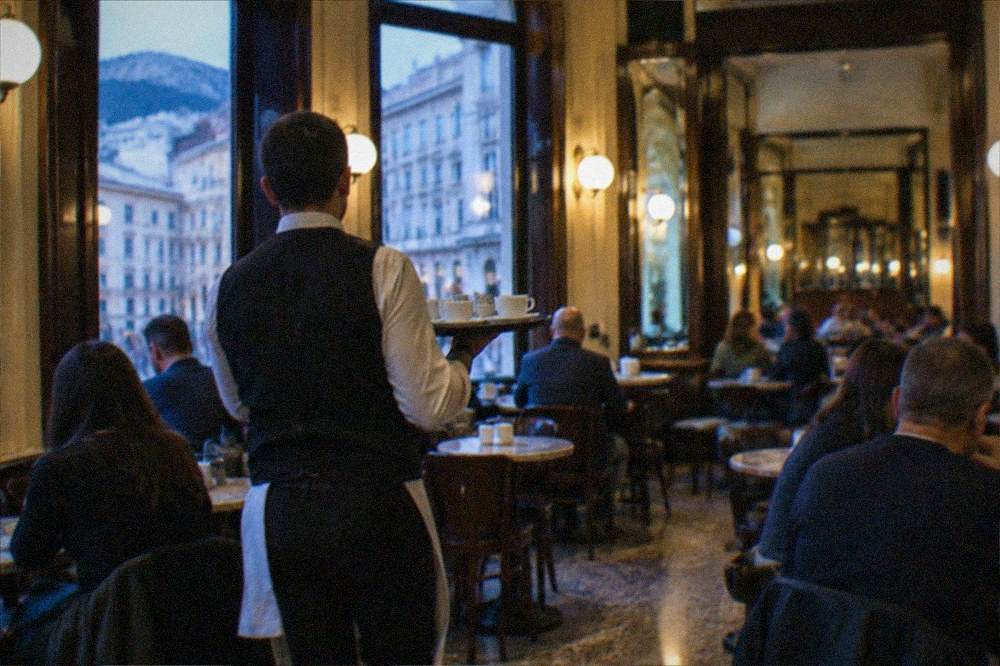
The best eating months are late spring and early autumn: April to June and September to October bring the outdoor tables out, the spring osmize openings on the Carso, and the October Barcolana week, when the city is at its busiest and its restaurants hardest to book. Winter suits the buffet kitchens and the caffè, because jota and goulash are cold-weather dishes and November is the city's wettest month at 109.8 mm.
July and August are warm, with mean sea temperatures of 25.9 C, and the driest spell sits in early summer.
The seasonal logic of this city's food is straightforward. The Austro-Hungarian dishes are winter food, the seafood and the seafront ice cream walks are summer food, and the osmize concentrate their openings in spring and autumn. October is the double-header: the Barcolana regatta runs 2 to 11 October 2026, with the main race on Sunday 11 October, and the village along the waterfront means the restaurant core is full for that whole window. Book ahead for those dates, and see our best time to visit Trieste guide for the full seasonal breakdown.
Common Questions About Trieste Restaurants
What is the most famous dish in Trieste?
Jota, the sauerkraut, bean and potato soup with pork, is the city's signature dish, followed closely by goulash served with potato gnocchi. Both come from the Austro-Hungarian side of Trieste's kitchen rather than from southern Italian cooking.
Is Trieste good for food?
Yes. Trieste is a genuinely hybrid food city: Adriatic seafood, Austro-Hungarian comfort dishes, its own caffè tradition, and the Carso's Vitovska, Malvasia and Terrano wines. The food-tour listings on this site's roster, rated between 4.74 and 4.91, suggest visitors agree.
Where do locals eat in Trieste?
The buffet kitchens of Città Vecchia for jota and goulash, the seafood rooms along the Rive, and, when they are open, the osmize farm cellars on the Carso, whose openings are listed on the osmize.com calendar and signposted by a frasca branch.
Do I need to book restaurants in Trieste in advance?
In the Barcolana week of 2 to 11 October 2026, yes, without question. In July and August, book for the seafront and the Borgo Teresiano at weekends. Outside those windows, walk-ins are usually workable, but a food tour booked ahead guarantees the tastings regardless.
What wine should I drink with dinner in Trieste?
The Carso's own bottles: Vitovska as the white, Malvasia as the aromatic option, and Terrano as the red grown on the karst's iron-red soil. Trieste is not in the Prosecco DOC, so the local list, not the national one, is where the interesting glasses are.
Are there vegetarian options in Trieste restaurants?
Yes, though the signature dishes are pork-centred. Frico, the crisp cheese and potato cake, is the classic vegetarian main from the Friuli tradition, and the pasta and tiramisu cooking class on this page's roster is fully adaptable to vegetarians on request per its listing.
Eating in Trieste, Italy, rewards exactly the kind of planning this page exists for: know the dishes, know the districts, book the one or two guided experiences that genuinely shortcut the search, and leave room in the itinerary for a caffè you did not plan and an osmiza you did. The rest of the site, starting with Trieste Travel Guide, covers every one of those pieces in depth.