Friuli Venezia Giulia Wine from Trieste, Italy: Grapes, Tastings and Day Trips
Trieste, Italy, sits at the coastal edge of the Friuli Venezia Giulia wine region, where Carso limestone vineyards, osmize farm cellars and the village of Prosecco make it one of the most unusual wine cities in Europe.
Short answer
Trieste is the coastal gateway to Friuli Venezia Giulia wine. The Carso plateau above the city grows Vitovska, Malvasia and Terrano, sold direct at osmize farm cellars and poured in the city's historic caffè, while the village of Prosecco sits on the Karst just above the port.
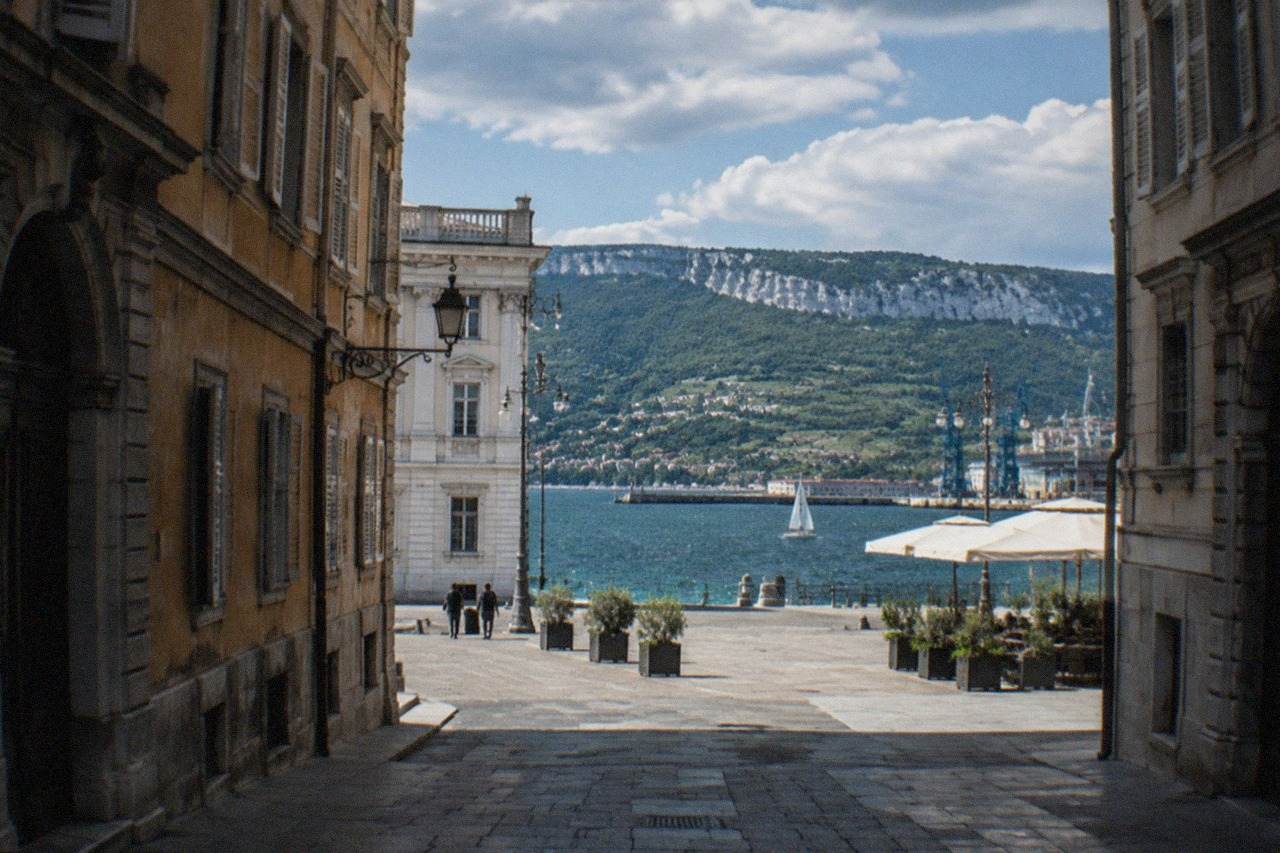
Trieste, the Adriatic port city in Friuli Venezia Giulia in the northeast corner of Italy, is one of the few cities in Europe where you can stand in an Austrian-Habsburg square in the morning and drink wine grown on limestone a few hundred metres above your head in the afternoon. The wine region that surrounds it is the Friuli Venezia Giulia, and Trieste is its coastal anchor: the Carso plateau rises directly behind the city, its thin red soil over limestone producing some of the least known and most distinctive bottles in Italy. This guide from Trieste Travel Guide covers what grows where, which tastings and tours you can actually book from the city, how the osmize farm cellars work, and how to avoid the single most common mistake visitors make about the word Prosecco.
What Is Friuli Venezia Giulia Wine and Why Does Trieste Sit at Its Centre?
Friuli Venezia Giulia wine is the output of Italy's northeasternmost region, and Trieste is its capital city and its only real coastal hub, with the Carso plateau, a limestone shelf shared with Slovenia, rising immediately behind the port. The region's best known white zones lie to the west and north, but the stretch of vineyard closest to Trieste itself is the Carso, whose own grapes are Vitovska, Malvasia and Terrano, and whose farmers have sold wine direct from their cellars for centuries under the osmiza custom.
What makes Trieste unusual among Italian wine cities is geography rather than grandeur. Most regional wine capitals sit in the middle of their vineyards; Trieste sits below its own. The Carso, or Karst, is the limestone plateau that climbs from the edge of the built-up area towards the Slovenian border, and its vineyards are close enough to the city that a tasting afternoon does not need a whole day of driving. The plateau's stone shapes everything: the soil is thin, the water drains straight through cracks in the rock, and the sea moderates the temperature of the nearest slopes.
The city itself plays its part too. Trieste was the coffee port of the Habsburg empire and remains a roasting centre, and its grand historic caffè, the ones you can read about in our guide to Trieste's coffee culture, pour wine as well as espresso in the evening. The Central European trading past is the reason the region's wine has always travelled, and the reason a visitor today finds both Italian and Slovene names on labels from the same plateau.
Which Wine Tours and Tastings Can You Book from Trieste?
The bookable options from Trieste itself are a 2.5-hour Prosecco Origins tour with tastings from $68.79 per person, a full-day History of Prosecco and the Karst Region trip from $145.22, a one-hour city-centre wine tasting with food pairings from $56.18, and the Prosecco Village wine experience from $70.07, plus food-and-wine day trips across the Slovenian coast. Every price here comes from the operator's live listing, and ratings and durations below are the listing's own figures.
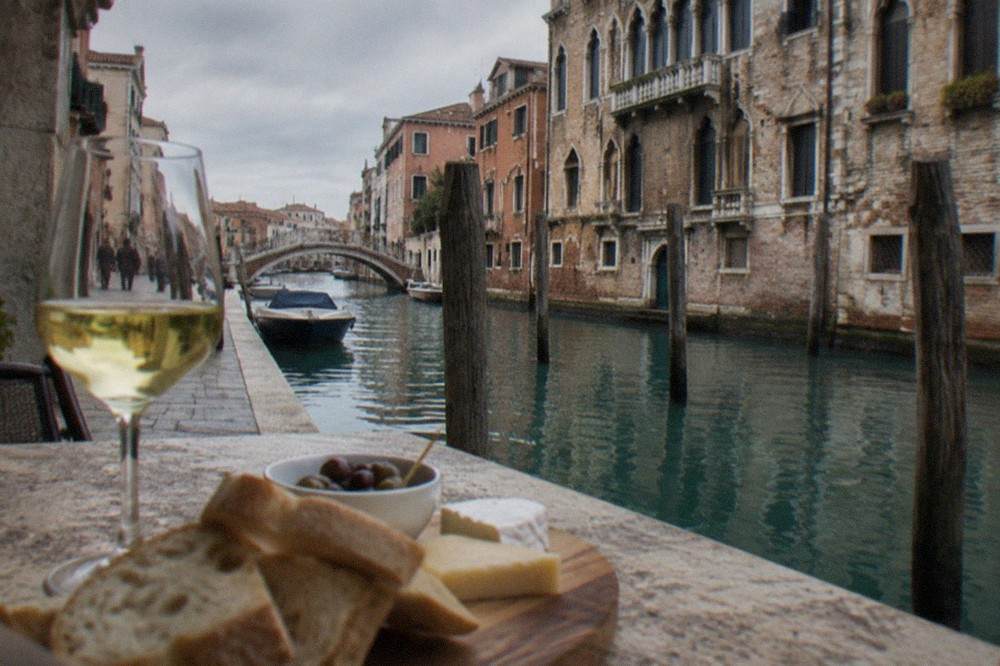
The shortest useful introduction is the city-centre tasting. The Trieste City Center wine tasting with food pairings runs about an hour, is rated 4.6 from 22 reviews on the listing, and pours the flavours of the Friuli Alps alongside olive oil and local delicacies. It is the right choice for a first evening, when you want to know what a Vitovska smells like before you commit to a plateau afternoon.
The 2.5-hour Prosecco Origins tour and tastings, rated 4.9 from 227 reviews on its listing, is the one that connects the city to the vineyards most directly: it steps back to the 14th century, as the listing puts it, to walk the pieces of land where the sparkling wine's story began. Check availability. The full-day version, the History of Prosecco and the Karst Region, stretches that idea across seven hours at $145.22 per person and is rated 4.5 from 23 reviews.
Here is how the bookable wine experiences from the city compare, using each operator's own listing figures:
| Experience | From (per person) | Rating on listing | Reviews | Duration |
|---|---|---|---|---|
| Prosecco Origins tour and tastings | $68.79 | 4.9 | 227 | 2h 30m |
| Prosecco Origins Wine Experience (village) | $70.07 | 5.0 | 91 | 2-3 hours |
| City centre wine tasting with food pairings | $56.18 | 4.6 | 22 | 1 hour |
| History of Prosecco and the Karst Region | $145.22 | 4.5 | 23 | 7 hours |
| Slovenian Coast tour with food and wine | $137.57 | 4.98 | 50 | 5h 30m |
The Slovenian Coast tour deserves a word of its own because it crosses a border that is only a border on paper where wine is concerned. The plateau continues into Slovenia without a break in the rock, and the coastal strip from Muggia down towards Piran drinks from the same limestone. That tour is rated 4.98 from 50 reviews and runs five and a half hours, pairing the coast's food with its wine. Our guide to eating in Trieste covers the city side of the same table.
Is Prosecco from Trieste? The Village and the Wine Are Two Different Things
No, the sparkling wine called Prosecco is not from Trieste, and Trieste is not in the Prosecco DOC: the name belongs to a designated zone far to the west, around the towns of the same name in the hills between Veneto and Friuli. But there is a real village called Prosecco on the Carso directly above Trieste, the place that gave the wine its name, and the two must never be confused. The Carso's own wines are Vitovska, Malvasia and Terrano.
This is the single most repeated error in Trieste wine writing, and it runs in both directions. Some guides send readers to taste sparkling wine in the village of Prosecco, which is not where the fizz comes from; others write the village off as a coincidence of names. Neither is right. The village exists, it sits on the Karst above the city, and its name is the origin of the wine's name, in the way that Burgundy the region gave its name to a shade of colour without the colour being paintable. The sparkling wine's actual production zone lies west of the region's coastal end.
What you taste in and around Trieste, when a tour calls itself a Prosecco Origins experience, is the story of the name: the village, the land above it, and the history the listing describes as reaching back to the 14th century. The two Prosecco tours in the comparison table above are exactly this, and the Prosecco Village wine experience, rated 5.0 from 91 reviews at $70.07, is built around the village itself. What you should not expect is a glass of the sparkling DOC wine poured at its source, because the source is elsewhere.
What Are the Carso's Own Wines: Vitovska, Malvasia and Terrano?
The three grapes that matter on the Trieste Carso are Vitovska, a white that is the plateau's signature, Malvasia, the other white in every cellar's line-up, and Terrano, the red that grows in the plateau's iron-red soil over limestone. These are the wines an osmiza pours and the wines a Trieste wine list is built on, and they are what distinguish the Carso from every better known Italian wine zone to the west.
Vitovska is the one to learn first, because it is the one you will not find anywhere else in any volume. It is a white that likes exactly the conditions the Carso imposes: wind, thin soil and limestone. Malvasia, the second white, is a name that travels across the whole Mediterranean, but the Carso's version of it is its own thing, grown on the same stone in the same small plots. Terrano, the red, is the plateau's answer to the question of what red wine can taste like when the vine roots run through ferric red earth over pure limestone.
The practical way to meet all three is not a vineyard tour at all but an osmiza, the farm cellar described in the next section, where the farmer pours what the farm grew. The second practical way is the city-centre tasting with food pairings, which the listing describes as discovering the flavours of the Friuli Alps with wine, olive oil and delicacies.
What Is an Osmiza and How Do You Find One Open?
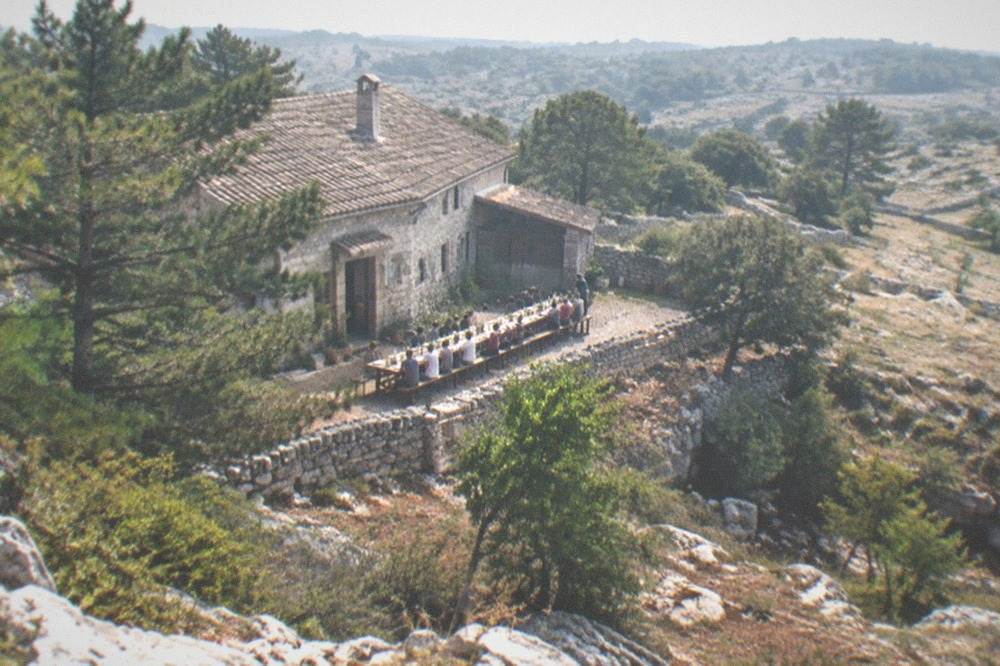
An osmiza is a farm on the Trieste Carso that sells its own wine and simple home produce, salumi, cheeses and eggs, direct from the farmhouse or cellar for a limited period each year, under a Habsburg-era right. The name comes from the Slovene osem, eight, for the eight days originally allowed. Each farm now sets its own open days, so the calendar changes constantly and the osmize.com calendar is the only reliable listing.
You find an open osmiza by two signs. The first is the frasca: a leafy branch, hung at the turning, that tells you the farm is pouring. The second is the osmize.com calendar, the long-established volunteer-run reference that the whole region relies on, because there is no municipal equivalent. Never plan a trip around a specific osmiza being open on a specific day, and treat any printed list of openings, including any you might find in an older guidebook, as out of date the moment it is printed.
The experience itself is the opposite of a tasting room. You sit at a shared table, the farmer brings what the farm made, and you pay for what you take. The wine is the farm's own, which on the Carso means Vitovska, Malvasia or Terrano, and the produce is whatever the kitchen and the cellar have that week. Our full guide to the osmize of the Carso covers the custom, the etiquette and the practicalities in detail.
One planning note matters more than any other: an osmiza afternoon is a spring and autumn activity in practice, because the farms open in periods, concentrated in spring and autumn, and the whole point of the custom is that it is not permanent. If your dates are fixed, check the calendar before you fix anything else.
How Do You Get to the Wine Country from Trieste?
The Carso vineyards begin at the edge of the city, so the wine country is not really a journey at all: the plateau is the hill visible from Piazza Unità d'Italia. Trieste's urban tickets cover the network including the Opicina tram up onto the plateau, and the operator's 2026 tariff sheet lists a 60-minute single at €1.50, a 75-minute single at €1.85 and a day ticket at €3.35.
The 2026 tariff sheet from the city's transport operator lists the fares exactly, and they are worth knowing because the tram is part of the ordinary urban network: a standard ticket is valid and contactless bank cards can be tapped on board. The relevant fares:
| Ticket | Price | Validity |
|---|---|---|
| Urban single (U01) | €1.50 | 60 minutes |
| Urban single (U02) | €1.85 | 75 minutes |
| Day ticket (U24) | €3.35 | One day |
| 10 rides (U10) | €13.50 | Ten journeys |
| 20 rides (U20) | €16.65 | Twenty journeys |
Single tickets run 60 or 75 minutes, extended to 240 minutes on Sundays and public holidays, per the same tariff sheet. The Opicina tram, urban line 2, climbs from its city terminus at piazza Dalmazia up to Opicina on the plateau, a route of about 5.175 km, and it is running again after its long suspension, with a current timetable dated 20 July 2026 on the operator's line-2 page. Check the operator's site for live status rather than any guide, including this one, because maintenance suspensions happen and are announced there first.
For wine country beyond walking-and-tram range, the bookable day trips are the practical answer. The full-day Prosecco and Karst tour at $145.22 handles the driving, and the cross-border options cover the Slovenian side of the same rock. One border fact matters for those: Italy is running temporary checks on its land border with Slovenia through 18 December 2026, per the European Commission's own register, so carry a passport or national ID card on any trip that crosses, even though Slovenia, like Italy and Croatia, uses the euro and is in Schengen. Our Trieste weather month-by-month guide and the best time to visit Trieste cover when to schedule all of this.
When Is the Best Month for a Wine Trip to Trieste?
The best months are the spring and autumn shoulders, and the osmize custom reinforces this: the farms concentrate their openings in spring and autumn. ARPA's station tables for the Trieste waterfront show April averaging a 16.8 C mean high with 60.7 mm of rain, September 23.9 C with 102.3 mm and October 19.6 C with 88.6 mm, while July, at 28.2 C and 53.8 mm, is one of the two driest months in the series.
The numbers deserve a careful read, because Trieste's rain pattern is not the Mediterranean one people expect. The wettest month at the molo station is November, at 109.8 mm, and September is second at 102.3 mm; July, at 53.8 mm, is the second driest month of the year. Summer is not the rainy season here, and autumn is. That makes September a trade-off: it is wetter than any summer month, but it is when the plateau's farms are open and the sea is at its warmest of the whole series, at 23.9 C.
| Month | Mean high C | Rain mm | Wet days | Sea C |
|---|---|---|---|---|
| April | 16.8 | 60.7 | 8.0 | 14.0 |
| May | 21.7 | 75.0 | 8.5 | 17.9 |
| June | 25.8 | 62.5 | 6.1 | 23.1 |
| July | 28.2 | 53.8 | 5.4 | 25.9 |
| September | 23.9 | 102.3 | 7.4 | 23.9 |
| October | 19.6 | 88.6 | 7.6 | 20.3 |
The wind matters too, if you are going up on the plateau. The bora blows from the east-north-east and the station series averages 17.6 days a year with a gust over 90 km/h, concentrated in the cool season and peaking in February, which recorded the series' all-time peak gust of 168.1 km/h in 2012. June is the calmest month in the table. Our guide to the bora wind explains what that means for a visitor, and it is worth reading before any autumn trip, because a strong bora day on the exposed plateau is a different experience from the same day down at the seafront.
How Much Does a Wine Day in Trieste Cost?
A tasting day built on the bookable options runs from about $56.18 for the one-hour city-centre wine tasting with food pairings, through $68.79 for the 2.5-hour Prosecco Origins tour, to $145.22 for the full-day Prosecco and Karst trip, with the Slovenian Coast food-and-wine day at $137.57, all per person from the operators' live listings. City transport adds €1.50 for a 60-minute single or €3.35 for a day ticket, per the 2026 tariff sheet.
The spread is wide enough that the choice is really about how much of the story you want. The one-hour tasting tells you what the wines are. The 2.5-hour origins tour tells you where the name came from. The full-day version adds the Karst region itself. The cross-border coast tour adds Slovenia's share of the same limestone. None of these prices includes what you buy to take home, and the honest advice is to leave room in the budget for a bottle of Vitovska, because it is the one you will not easily find outside the plateau.
If wine is one strand of the trip rather than the whole of it, the pairing that works best is food. The premium three-hour food tour of the city, rated 4.9 from 88 reviews at $87.58 on its listing, walks the same Central European and Mediterranean mix that shows up in the glass, and our guide to Trieste's best restaurants covers where the two meet at dinner. The history is worth an evening too: the short history of Trieste explains why a city so far east of the classic Italian wine zones drinks the way it does.
Can You Combine Trieste Wine with a Day Trip to Slovenia?
Yes, and the border is the easy part: Slovenia is in Schengen and uses the euro, so there is no currency change, but Italy is running temporary checks on its land border with Slovenia through 18 December 2026, per the European Commission's register, so carry a passport or national ID card. The bookable options include the Slovenian Coast tour with food and wine tasting at $137.57, rated 4.98 from 50 reviews, and the Piran coast tour at $114.64, rated 4.57 from 136 reviews.
The limestone does not stop at the border and neither does the wine culture, which is the quiet point of these trips. The Slovenian coast tour's listing describes exactly that: hidden gems of the Slovenian coast, with food and wine, on a relaxed day out from Trieste. The Piran version is a scenic six-hour run down the Istrian coast at $114.64. Both are cheaper ways to see the same rock from a different angle than any route you could improvise by public transport, and neither requires you to plan a cross-border timetable yourself.
| Day trip from Trieste | From (per person) | Rating | Reviews | Duration |
|---|---|---|---|---|
| Slovenian Coast with food and wine tasting | $137.57 | 4.98 | 50 | 5h 30m |
| Piran and Slovenia coast tour | $114.64 | 4.57 | 136 | 6 hours |
| Piran and panoramic Slovenian coast, small group | $125.13 | 4.9 | 82 | 5 hours |
| Lipica stud farm and Škocjan Caves | $129.93 | 4.86 | 23 | 6 hours |
| Ljubljana and Lake Bled | $108.91 | 4.69 | 544 | 9 hours |
Two of those rows are not wine trips at all, and that is deliberate. The Lipica stud farm sits on the same Karst, and the Škocjan Caves are the plateau's stone laid open, a UNESCO-listed cave system that the listing ranks among the world's great natural sights. The Ljubljana and Lake Bled day, rated 4.69 from 544 reviews at $108.91, is the region's most popular full-day excursion and pairs well as a second day for anyone who has already done the coast. Our overview of why Trieste is famous puts all of this in context.
Common Questions About Friuli Venezia Giulia Wine from Trieste
Is Prosecco from Trieste?
No. The sparkling wine's production zone lies west of the region's coastal end, and Trieste is not in the Prosecco DOC. There is a village called Prosecco on the Carso above Trieste that gave the wine its name, but the fizz does not come from there. The Carso's own wines are Vitovska, Malvasia and Terrano.
What grapes grow on the Carso above Trieste?
The three to know are Vitovska, the plateau's signature white, Malvasia, the other white in every cellar, and Terrano, the red grown in the plateau's red iron soil over limestone. These are what the osmize pour and what a Trieste wine list is built on.
What is an osmiza?
A farm on the Trieste Carso that sells its own wine and simple home produce direct from the property for a limited period each year, under a Habsburg-era right. The name comes from the Slovene osem, eight, for the eight days originally allowed. An open one is signposted by a frasca, a leafy branch at the turning, and the osmize.com calendar lists which farms are open when.
How much does a wine tasting in Trieste cost?
The bookable options run from $56.18 per person for a one-hour city-centre tasting with food pairings to $145.22 for the full-day Prosecco and Karst tour, per the operators' live listings. An osmiza charges only for what you take, at prices each farm sets itself.
Do I need a passport for a wine day trip to Slovenia from Trieste?
Yes, carry one, or a national ID card. Slovenia is in Schengen and uses the euro, so there is no currency change, but Italy is running temporary checks on its land border with Slovenia through 18 December 2026 per the European Commission's register.
When is the best month for wine in Trieste?
Spring and autumn. The osmize farms concentrate their openings in those seasons, and ARPA's station tables show April at a 16.8 C mean high and October at 19.6 C. July is one of the driest months in the series at 53.8 mm of rain, but it is not osmiza season.
Trieste, Italy, is the rare wine city where the vineyards are visible from the main square, the farm cellars open their doors a tram ride away, and the biggest mistake a visitor can make is a confusion of names rather than a bad bottle. Learn the three Carso grapes, watch the osmize.com calendar, carry your ID for the border, and let the plateau do the rest.