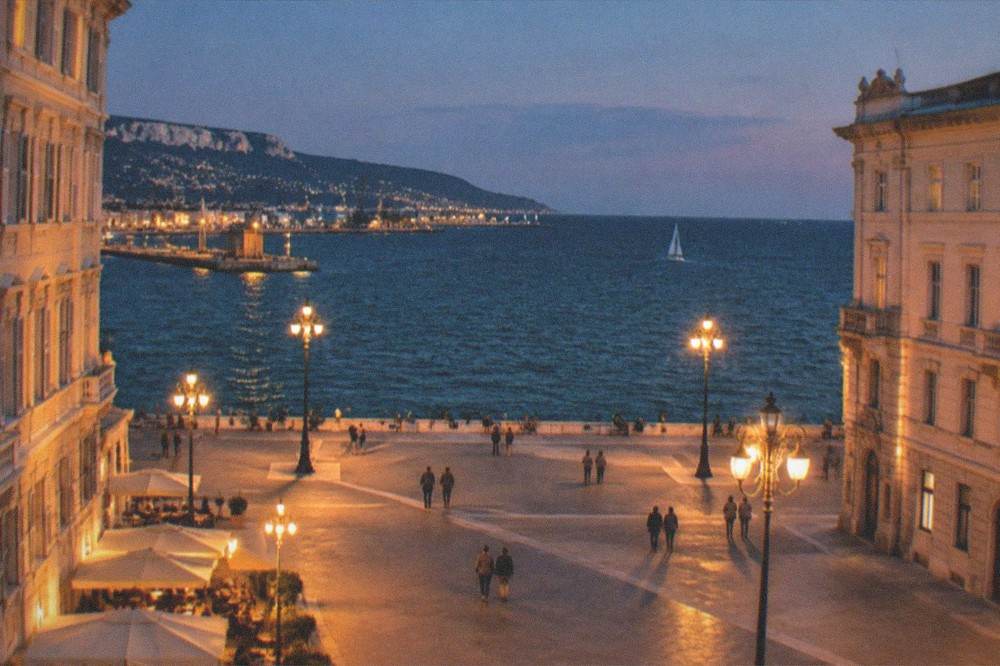
Why Trieste Is Famous: Italy's Adriatic Port City Explained
Trieste, the Adriatic port city in Friuli Venezia Giulia in northeast Italy, is famous as the Habsburg Empire's outlet to the sea, as Italy's historic coffee capital, and as the windy city of the bora, with a seafront square that faces the water like few others in Europe.
Short answer
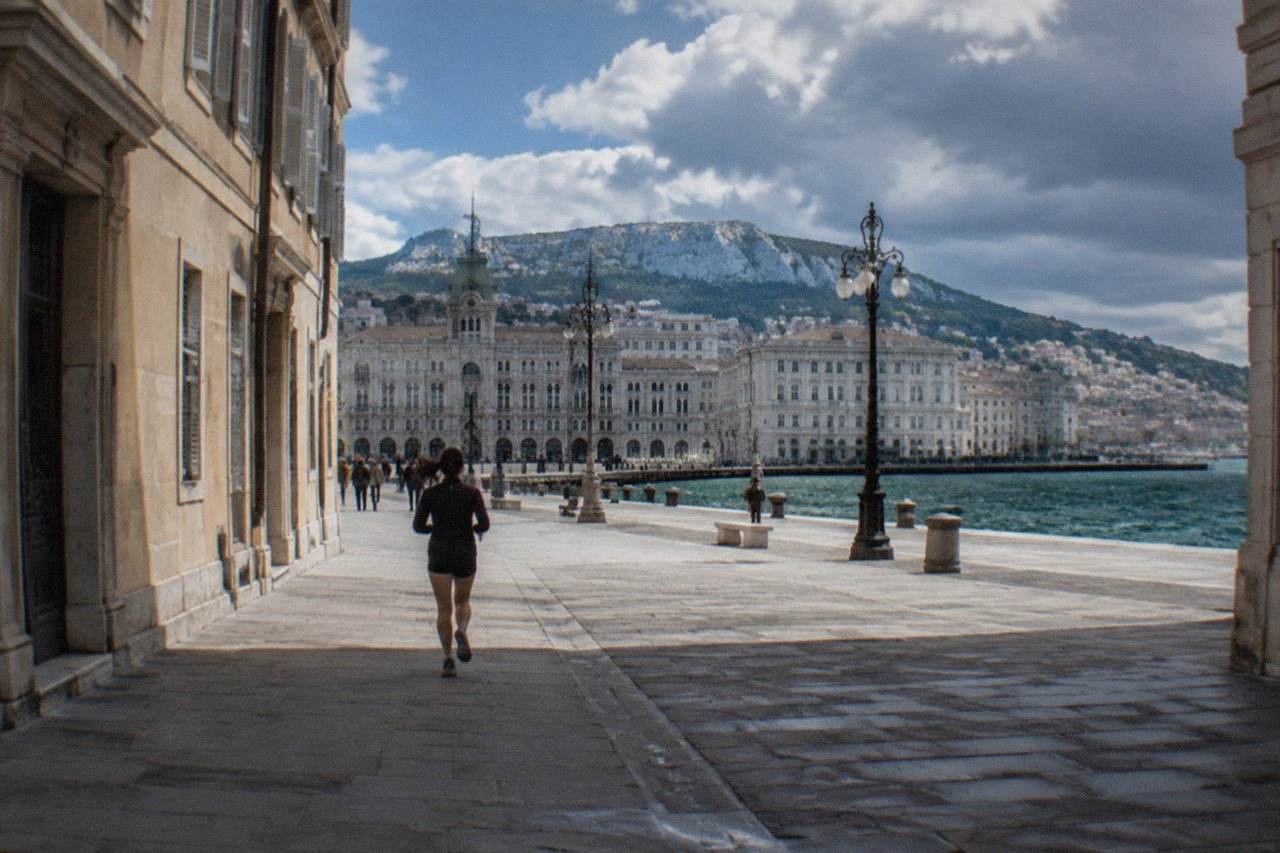
Trieste is famous for being the Habsburg Empire's main seaport, for its historic coffee houses and roasting industry, for Piazza Unità d'Italia's sea-facing square, for the bora wind that funnels down off the Carso, and for sights like Miramare Castle, San Giusto hill and the Barcolana sailing regatta.
Trieste, the Adriatic port city in Friuli Venezia Giulia in the far northeast of Italy, is famous for a combination no other Italian city shares: it was the Habsburg Empire's only great seaport, it became the coffee-trading and roasting capital of the Mediterranean, and it sits on a fault line of languages, borders and winds that shaped everything about it. The result is an Italian city that looks Austrian, drinks coffee like Vienna, speaks a border dialect, and holds the world's largest sailing race. This guide breaks down each strand of that fame, with the verified prices, dates and figures that most summaries get wrong.
Why Is Trieste Famous?
Trieste is famous as the seaport of the Habsburg Empire, which made it one of the busiest and richest ports in the Mediterranean, and for the coffee culture that grew out of that trade, the sea-facing Piazza Unità d'Italia, the bora wind off the Carso plateau, Miramare Castle, and the Barcolana, the world's largest sailing race with a record 2,689 boats entered in 2018.
Those are the headlines. Underneath them sits a more unusual story: a city that was the empire's window on the sea, was contested between Italy, Austria and Yugoslavia, and only settled as Italian territory after the Second World War. Trieste's fame is really the fame of a border capital, and the border shows in everything from the architecture to the food to the accents of the people.
The city's identity has been described by this site before, from different angles. If you want the short version of the city's claims to fame, the pieces on what Trieste is famous for and why Trieste is famous, the bare question cover the essentials, while this guide goes deeper into each strand.
What Did the Habsburg Empire Do for Trieste?
The Habsburgs declared Trieste a free port in the eighteenth century and poured investment into it for the next century and a half, which is why the city centre looks like Vienna on the sea: the Borgo Teresiano grid of neoclassical palazzi, the grand banks and insurance buildings, and Piazza Unità d'Italia itself, one of the largest sea-facing squares in Europe, are all imperial infrastructure.
Empires build ports for one reason, and the Austrian Habsburgs needed an outlet to the sea that they controlled. Trieste became it. The free-port decision turned a modest fishing and trading town into the empire's principal Mediterranean harbour, and the money that followed built the city visitors now photograph. The grandeur is not decorative: it is the working architecture of shipping companies, trading houses and the coffee brokers who made the port rich.
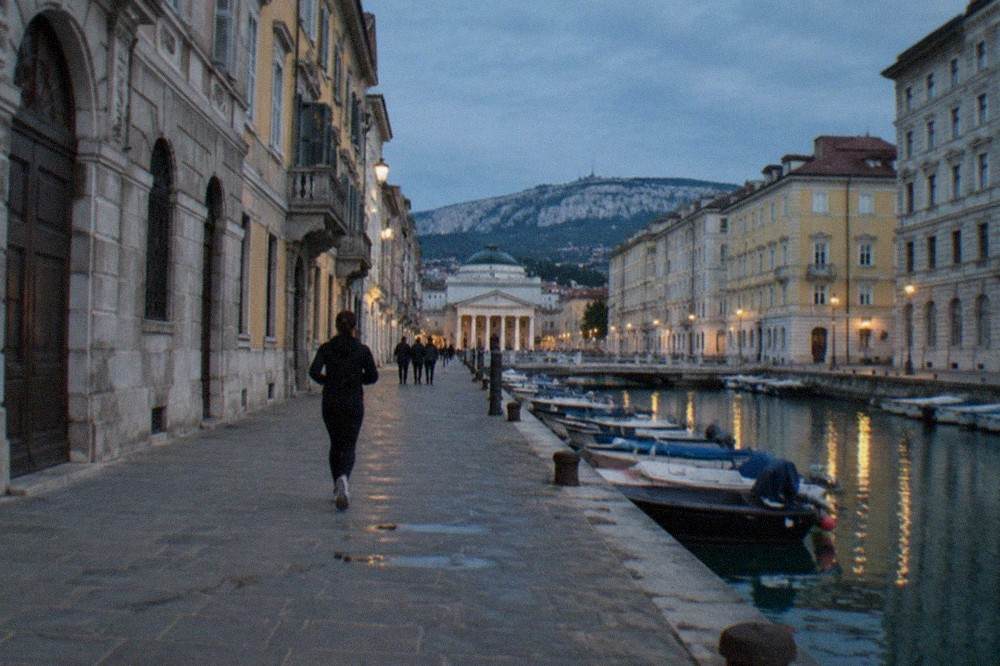
The legacy is visible in the street plan. The Borgo Teresiano, named for Empress Maria Theresa, is a rational grid cut through with the Canal Grande, built so goods could move from ship to warehouse by water. The canal's banks are lined with the palazzi of the families the port enriched, and the district is now the heart of the city's elegant core. The Città Vecchia, by contrast, is the older, steeper, rougher settlement on the hill, and the contrast between the two is the clearest single illustration of what the empire changed.
That imperial past also explains the city's famous Central European atmosphere, which every visitor notices and most struggle to name. Trieste does not feel like Rome or Naples. It feels like a piece of Mitteleuropa that happens to sit on the Adriatic, because that is exactly what it was for most of its modern history. The short history of Trieste traces the whole arc, from Roman Tergeste through the free port to the twentieth-century border disputes.
The imperial layer is best read on foot, because it is written into the squares and the facades rather than into single monuments. A flexible private walk such as Trieste Private Walking Tour with a Local covers the Habsburg core in the company of someone who lives in it, on a schedule you set. Check availability if you want the imperial story told street by street.
Why Is Trieste Famous for Coffee?
Trieste is famous for coffee because its port was the Mediterranean's historic gateway for green coffee beans entering Central Europe, which built a roasting industry and a cafe culture that still defines the city, with historic grand cafes like those on Piazza Unità d'Italia serving as the social institutions of the port.
Coffee made Trieste rich twice over. First as cargo: the port's trading houses moved coffee from the producing world into the Austrian and Central European markets, and Trieste remains a working coffee port and roasting centre, home to a major international coffee company headquartered in the city. Second as culture: the grand cafes that opened to serve the merchants, insurers and writers of the port became the city's living rooms, and they still are. The Trieste coffee culture guide covers the cafes, the rituals and the local ordering vocabulary, which includes named drinks you will not find anywhere else in Italy.
One caution belongs here, because it is the single most-repeated false claim about the city. There is no verified primary source for the figure often quoted about Trieste's per-capita coffee consumption, no kilogram count, no "twice the Italian average" statistic that any official body or company publishes. The coffee culture is real and deep, but it is written here without a number, because the number does not exist in any checkable source. Treat any figure you see elsewhere as folklore.
What is verifiable is the cafe layer itself. The historic cafes are working businesses, not museums, and the oldest cafe in Trieste question has its own answer page. The coffee-house experience is also one of the city's best-value paid activities: a guided historic cafes walk takes in the culture with the espresso.
Why Is Trieste Famous for the Bora Wind?
The bora is a cold, dry north-easterly katabatic wind that pours down off the Carso plateau onto the Gulf of Trieste, and ARPA FVG's own station tables for the molo Fratelli Bandiera record an average of 17.6 days a year with a gust over 90 km/h, an all-time series peak of 168.1 km/h in February 2012, and monthly record gusts above 110 km/h in every single month of the year.
The bora is not weather colour, it is a defining physical fact of the city. It sculpts the vegetation on the plateau, closes the exposed seafront when it blows hard, and gives Trieste its reputation as the windy city of the Adriatic. The bora wind guide covers the mechanics, the seasons and how to plan around it. The honest summary is that it is most frequent and persistent in the cool season from November to March, peaking in February, and rare and weak in summer, with June the calmest month in the station tables.
Two things the tables also show, and which contradict the stereotype that summer is windless: July actually records more days with gusts over 90 km/h than April, May or June, and the monthly record gust exceeds 110 km/h in every month, including high summer. The bora can reach the city at any time of year. What does not exist, and must never be quoted, is an official wind threshold at which the Rive seafront closes or ferries stop: no such published cutoff exists in any official source.
| Month | Mean high C | Rain mm | Days gust over 90 km/h | Record gust km/h |
|---|---|---|---|---|
| January | 9.2 | 52.8 | 2.4 | 148 |
| February | 9.8 | 59.7 | 2.9 | 168 |
| July | 28.2 | 53.8 | 0.9 | 125 |
| August | 28.1 | 71.7 | 0.9 | 124 |
| November | 14.7 | 109.8 | 1.9 | 147 |
The figures come from ARPA FVG's OSMER regional network, station Trieste molo Fratelli Bandiera, series 1995-2024. Note what the table quietly corrects: November, not any summer month, is the wettest month at 109.8 mm, and July is one of the driest at 53.8 mm. Trieste is not a rainy-summer destination, and the weather month by month guide carries the full table.
Why Is Trieste Famous for Piazza Unità d'Italia?
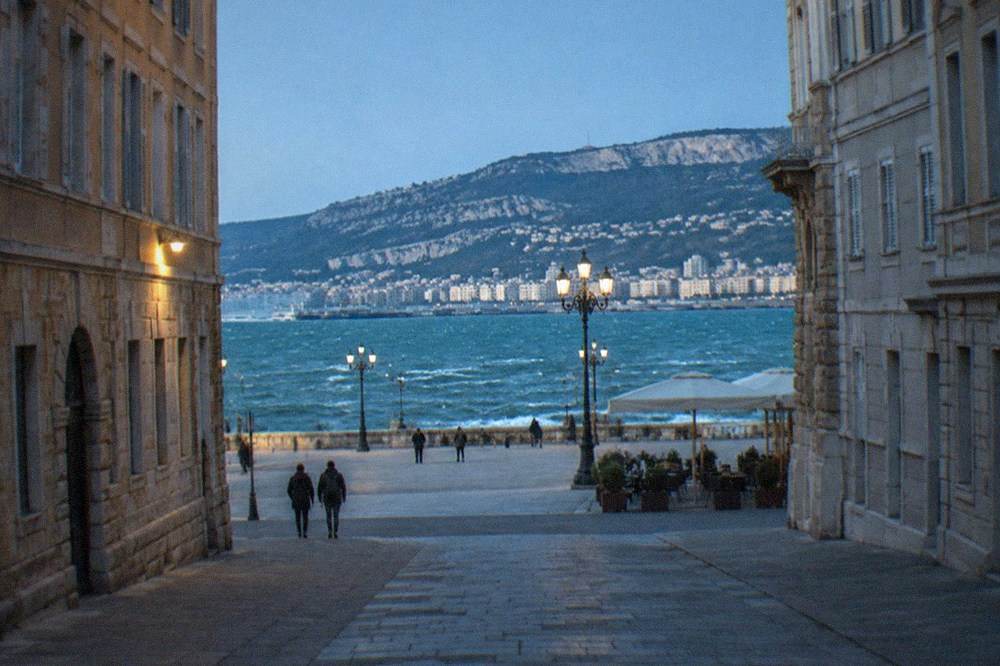
Piazza Unità d'Italia is famous as one of the largest sea-facing squares in Europe, a wide Habsburg-era piazza whose open side drops straight onto the Adriatic, framed by the palazzo of the region, the former insurance and shipping headquarters, and the municipal buildings of the old free port.
The square is the postcard of Trieste and the single image most responsible for the city's fame online. What the photographs do not convey is that it is a working civic square, not a monument: the regional government sits on it, the city's municipal palazzo opens onto it, and the Molo Audace, a stone pier named after a ship, extends the square's axis out over the water. At the Molo Audace you stand on the sea looking back at the square, which is the view most visitors miss.
The square's name carries the city's political story. "Unità d'Italia", Italian unity, was given to the square after the city's final incorporation into Italy, replacing the Habsburg-era name. The square itself, like the rest of the Borgo Teresiano, was rebuilt in imperial times on land reclaimed from the sea. The Piazza Unità d'Italia guide covers the buildings and the history, and the square sits at the centre of every self-guided Trieste walking tour.
Why Is Trieste Famous for Miramare Castle?
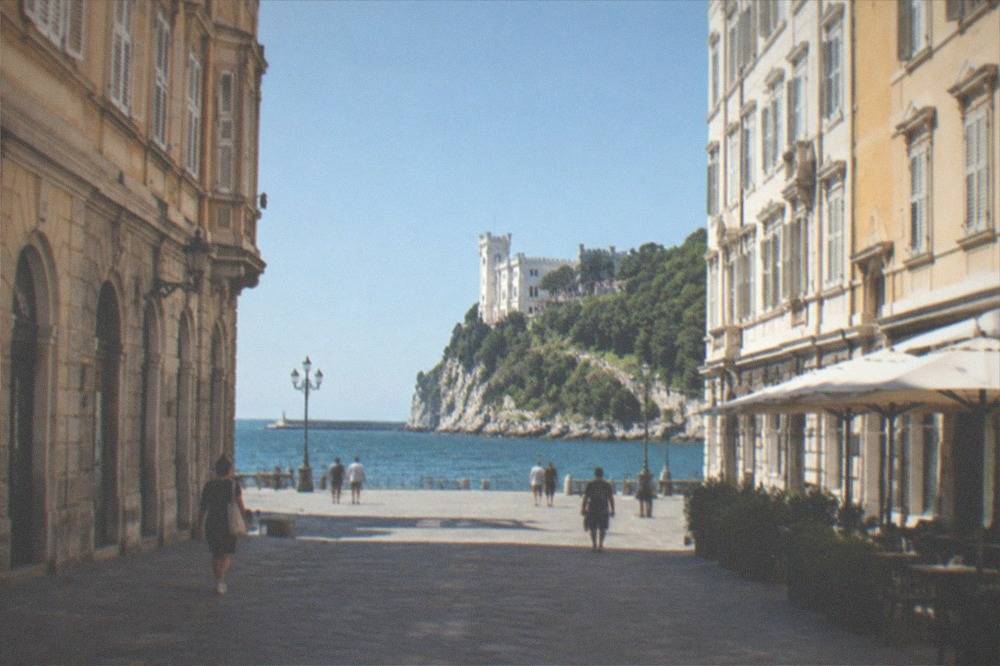
Miramare Castle is famous as the seaside residence built for Archduke Ferdinand Maximilian of Habsburg, the brother of the Austrian emperor who later became emperor of Mexico, a white cliff-top castle above the Gulf of Trieste whose park is free to enter all year while the castle itself charges €17 for an adult ticket, every day 9:00-19:00.
The castle is Trieste's most-visited monument and the second image, after the piazza, that made the city famous. It stands above the sea at Grignano, and its story is one of the strangest in the Habsburg world: Maximilian built his romantic seaside home, accepted the crown of Mexico, and was executed there, leaving the castle as a monument to an interrupted life. The rooms are preserved, and the Miramare Castle guide covers the apartments, the park and the marine protected area offshore.
The pricing split is the detail everyone gets wrong, so it is worth stating plainly: the park is free all year, with hours that vary by month, and the castle is a paid museum with hours that do not match the park's. The castle's adult ticket is €17 and includes the temporary exhibition, with reduced tickets of €7 for EU citizens aged 18-25 with the exhibition or €2 for castle-only access. The castle is open every day 9:00-19:00 with last admission at 18:30. The park in April to September runs 8:00-19:00, and in January only 8:00-16:00.
| Miramare ticket | Price | Notes |
|---|---|---|
| Castle, adult | €17 | Includes temporary exhibition |
| Castle, reduced EU 18-25 | €7 | With exhibition |
| Castle, reduced EU 18-25 | €2 | Castle only |
| Park | Free | Hours vary by month |
| Castle hours | 9:00-19:00 | Last admission 18:30, every day |
| Park hours, April-September | 8:00-19:00 | Free entry |
Miramare also takes part in the ministry's first-Sunday-of-the-month free-entry scheme, but the rules of that scheme have changed more than once, so confirm the specific date on the venue's own page rather than trusting a calendar. The castle can also be visited on a ticket-plus-audio-app product, or with a guided panoramic tour from the city.
Why Is Trieste Famous for the Barcolana?
The Barcolana is famous as the largest sailing race in the world by number of entrants: the organisers hold a Guinness World Record for 2,689 registered yachts at the 50th edition in 2018, and the race sails a 13-nautical-mile course in the Gulf of Trieste every October, with the 2026 edition, Barcolana 58, running 2-11 October and the main regatta on Sunday 11 October starting at 10:30.
The Barcolana is the one weekend a year when Trieste's fame goes international, and it is a genuinely strange event: a mass-start regatta in which Olympic racers, century-old hulls and family dinghies all cross the same start line off the city front, finishing in front of Piazza Unità d'Italia. The first edition was in 1969 with 51 boats. The 2025 edition drew 1,865 boats, the highest entry since 2019, though still far short of the record.
The regatta sits inside the windy shoulder of the year, which is the point of it: October averages 1.4 days with gusts over 90 km/h and 88.6 mm of rain at the molo station, and the race exists because the autumn gulf produces real sailing weather. The Barcolana regatta guide covers the event, the village and how to watch it, and the best time to visit Trieste places the regatta in the planning calendar.
| Barcolana fact | Figure |
|---|---|
| First edition | 1969, 51 boats |
| Record entry | 2,689 boats, 2018 (Barcolana 50) |
| 2025 entry | 1,865 boats |
| Course | 13 nautical miles |
| 2026 dates | 2-11 October |
| 2026 main race | Sunday 11 October, start 10:30 |
Why Is Trieste Famous for Its Food?
Trieste is famous for a cuisine that is half Italian and half Central European: jota, a soup of sauerkraut, beans and pork; pork and beef dishes served in the city's buffet eateries; and a coffee-and-pastry culture inherited from the empire, with the food question answered in full on the city's dedicated food pages.
The food is where the border shows most clearly. A Triestine buffet is not an Italian bar: it is a counter serving boiled pork, goulash and sauerkraut in the Austro-Hungarian manner, and it is a working lunch institution. The jota, goulash and the Trieste buffet guide covers the savoury side, and the famous food of Trieste answer page gives the short list. The sweet side, the pastries and the cakes served in the historic cafes, belongs to the coffee chapter above.
The Carso adds a layer the city centre cannot: the osmize, seasonal farm outlets on the Karst plateau where growers sell their own wine and home produce direct from the property, signposted by a frasca, a leafy branch hung at the turning. The opening calendar lives at osmize.com, and the osmize of the Carso guide explains the custom and how to find an open one. The plateau's own wines, Vitovska, Malvasia and Terrano, are covered in the Friuli Venezia Giulia wine guide, and one caution belongs here: Trieste is not in the Prosecco DOC, and the village of Prosecco on the Carso is a place, not the wine's home.
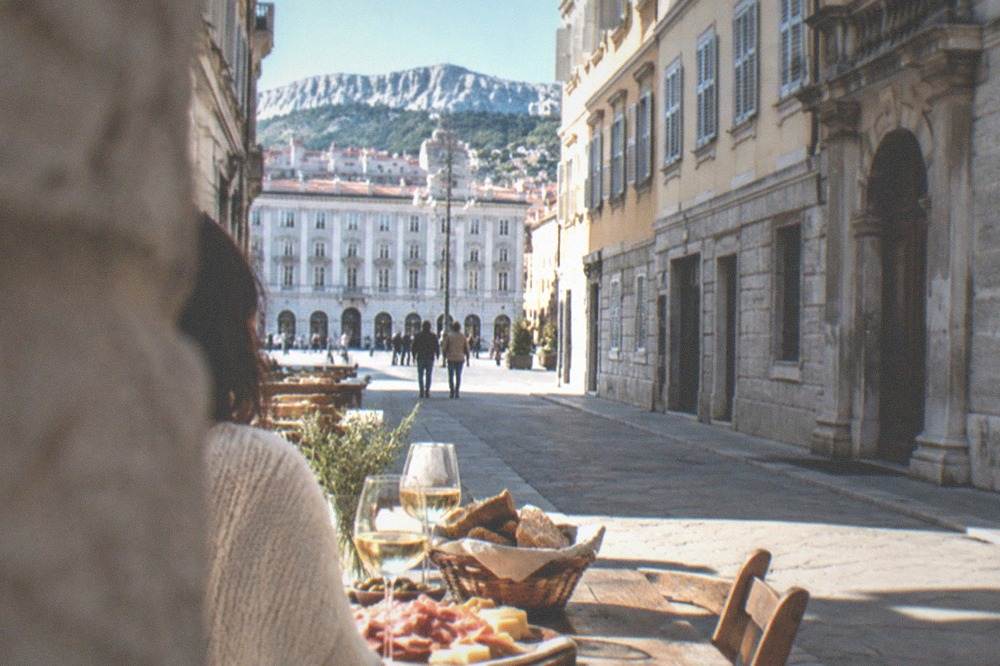
The food fame is best eaten rather than read, and a guided walk does the eating for you. The Trieste food tour with local flavors and tastings is a three-hour tasting walk through the savoury side of the city's cuisine.
Why Is Trieste Famous as a Border City?
Trieste is famous as the city where Italy, the Slovene world and the Habsburg world meet: it sits on the Italian-Slovenian border, was contested between states into the 1950s, and today operates as a bilingual border capital, with Italy currently running temporary border checks on its land border with Slovenia through 18 December 2026 per the European Commission's register.
The border is not history, it is the present. Slovenia has been in Schengen and the euro area since 2007, Croatia joined both on the same day, 1 January 2023, and all three countries use the euro, so there is no currency change on a day trip. But the Commission's register of temporary internal border controls currently lists Italy running checks on its land borders with Slovenia from 19 June 2026 to 18 December 2026, which means a passport or national ID card should be carried even for a short hop to Piran or Ljubljana. The day trips from Trieste guide covers the cross-border options.
The linguistic layer is the quieter half of the fame. The city has a historic Slovene community, bilingual signage, and a local dialect that borrows across the border, which the language and identity on the Slovenian border guide explores. This is also why Trieste's famous writers, James Joyce among them, found the city so productive: it was a multilingual imperial port where several worlds were available within one walk.
Why Is Trieste Famous for the Opicina Tram?
The Opicina tram is famous as one of the last hybrid tram-funiculars in the world, a line that climbs from the city up onto the Carso plateau with a cable-hauled middle section, and it is running: it was reactivated on 1 February 2025 after a long stop, and its current city terminus is piazza Dalmazia, not piazza Oberdan as almost every older guide states.
The tram is the city's most-loved piece of transport and the one most often misdescribed. The line runs about 5.175 km between piazza Dalmazia and Opicina, with a funicular section hauling the cars up the steepest part of the cliff. It is part of the ordinary urban network, so a standard Trieste ticket is valid and contactless cards can be tapped on board. The Opicina tram and obelisk guide covers the route and the obelisk at the top.
The correction matters because the misinformation is everywhere. Guides written before 2016 describe a tram that left from piazza Oberdan, and guides written between 2016 and 2025 describe a tram that was not running at all. Both were true once and neither is true now. The live status is published by the city's transport operator, and the timetable attachment on its line-2 page is the current authority.
| Trieste urban ticket | Price | Validity |
|---|---|---|
| Single, 60 minutes | €1.50 | 240 min on Sundays and holidays |
| Single, 75 minutes | €1.85 | 240 min on Sundays and holidays |
| Day ticket | €3.35 | One day |
| 10 rides | €13.50 | Carnet |
| 20 rides | €16.65 | Carnet |
The fares above come from the operator's own 2026 urban tariff sheet, and the same tickets cover the tram, the buses and the rest of the urban network. The getting around Trieste guide explains the whole system.
What Is Trieste Famous for Beyond the Headlines?
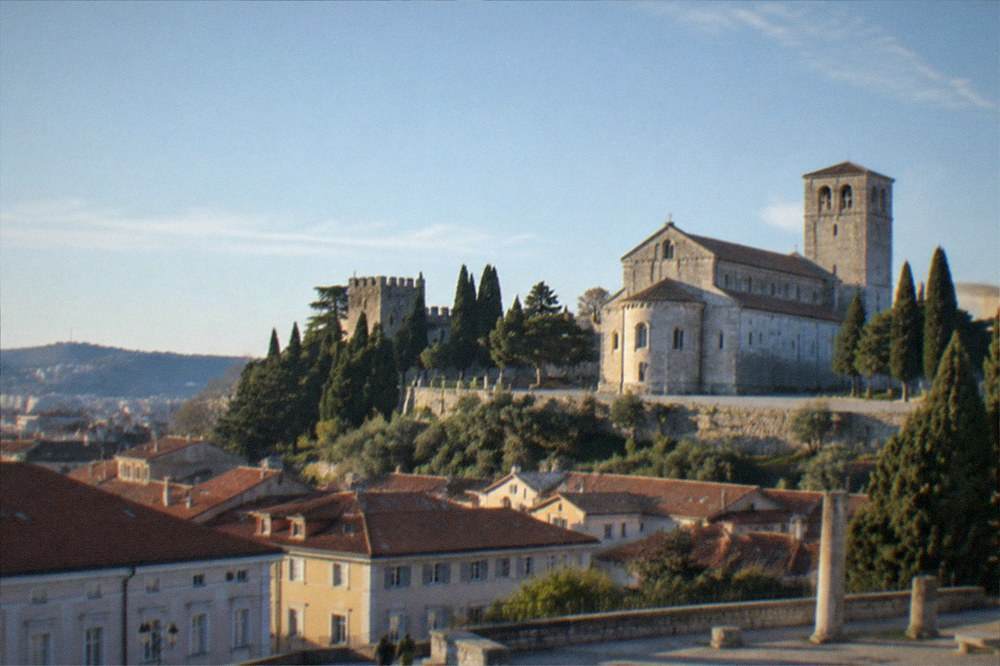
Beyond the famous square, castle and wind, Trieste is known for San Giusto hill with its cathedral and castle, the Roman theatre you look down into from the street, the Risiera di San Sabba national monument, the Revoltella modern art museum, and the seafront swimming culture of Barcola and the Pedocin, the historic segregated bathing establishment.
The second tier of fame is where the city rewards a second day. San Giusto hill stacks a Roman forum, a medieval castle and the cathedral on one rise, with castle entry at €7 full price and free first Sundays. The Roman theatre is free to look at from the street but not routinely enterable, so do not plan a visit inside. The Risiera di San Sabba, the only Nazi extermination camp on Italian soil, is a free national monument. The Revoltella charges €8 and closes on Tuesdays. The details, hours and free days for all of them are in the museums of Trieste and castles in and around Trieste guides.
| Trieste sight | Entry cost | Key hours |
|---|---|---|
| Castello di San Giusto | €7 full, €5 reduced | 1 Apr-11 Oct daily 10:00-19:00; from 12 Oct Tue-Sun 10:00-17:00 |
| Cattedrale di San Giusto | Free | Weekdays 8:00-18:30, Sun 9:00-19:30 |
| Museo Revoltella | €8 full, €6 reduced | Daily 10:00-19:00, closed Tuesdays |
| Risiera di San Sabba | Free | 1 Mar-11 Oct daily 9:00-19:00 |
| Teatro Romano | Free, street view | Not routinely enterable |
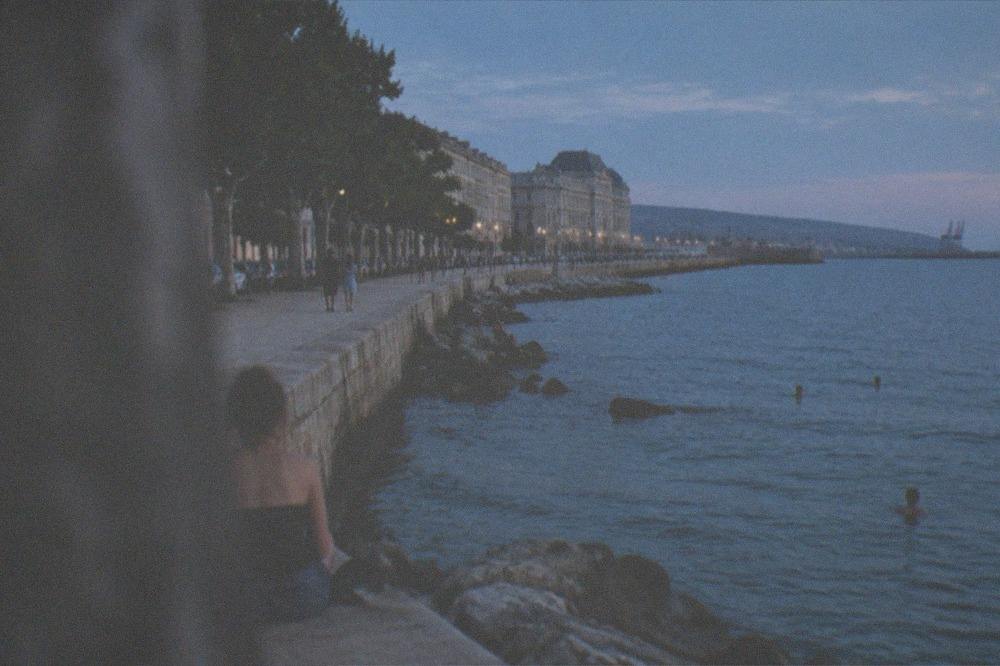
The swimming culture is the strand foreign visitors least expect. The city swims from its own seafront: Barcola's rocky coast is the local beach, and the Pedocin, the historic bathing establishment at the Lanterna, is famously one of the last in Italy with separate men's and women's sections. The Trieste beaches and swimming guide covers where the water is and when, and ARPA's oceanographic bulletins show the gulf's sea temperature peaking in August around 25.9 C in the long-term tables, with swimmable conditions generally running from June into early autumn.
How Many Days Do You Need to See Why Trieste Is Famous?
Two full days cover the famous core of Trieste, the piazza, the hill, the cafes and the seafront, with a third day for Miramare and the Carso, and a fourth for a cross-border day trip, which is the pattern the city's own itinerary pages recommend, though the famous centre itself can be seen in one long day from a cruise call or a train stopover.
The honest answer depends on how much of the fame you want. The famous centre is compact and walkable, and the one day in Trieste itinerary covers it. Two days let you add San Giusto properly, the museums and the evening cafe culture, per the two days in Trieste guide. Three days add Miramare, Barcola and a taste of the Carso, per the three days in Trieste plan. Cruise passengers with a single ashore day have their own route in the cruise shore excursions guide.
Common Questions About Why Trieste Is Famous
Why is Trieste famous?
Trieste is famous as the Habsburg Empire's seaport, as a historic coffee-trading and roasting city, for the sea-facing Piazza Unità d'Italia, for the bora wind off the Carso, for Miramare Castle, and for the Barcolana, the world's largest sailing race.
Why is Trieste famous for coffee?
The port made Trieste the historic Mediterranean gateway for coffee into Central Europe, which built both a roasting industry and a grand-cafe culture that still defines the city. No verified per-capita consumption figure exists in any primary source, so treat any number you see as folklore.
What is Trieste in Italy most famous for?
Piazza Unità d'Italia, the sea-facing Habsburg square, is the single most famous image, followed by Miramare Castle, the historic cafes, the bora wind and the Barcolana regatta.
Is Trieste famous for anything unusual?
Yes: the Opicina tram, one of the world's last hybrid tram-funiculars, running since its 2025 reactivation from piazza Dalmazia; the Pedocin bathing establishment with its historic separate sections; and the osmize, seasonal farm outlets on the Carso signposted by a leafy frasca branch.
What food is Trieste famous for?
Jota, a sauerkraut, bean and pork soup; boiled pork and goulash served in the city's buffet counters; and the pastries of the historic cafes, all reflecting the city's half-Central-European cuisine.
Is Trieste worth visiting for its famous sights alone?
Yes: the famous core, the piazza, the hill, the canal district and the seafront, fits into one long day, and Miramare plus the Carso add a second. The Trieste Travel Guide homepage carries the full sight list.
What Should You Actually Book to Experience Trieste's Fame?
A private walking tour with a local guide is the single best first booking for Trieste, because the city's fame is architectural and cultural rather than ticketed, and a three-hour food tour plus a Miramare entry ticket cover the two experiences that most reward paying for: the cuisine and the castle.
Trieste is not a city of must-book attractions. The famous square is free, the hill is nearly free, the seafront is free, and the coffee culture costs the price of an espresso. What is worth paying for is interpretation and access: a guide who can read the Habsburg facades, a food walk that gets you into the buffets you would never find alone, and a castle ticket that saves the queue at Miramare. The trio above covers all three.
The final planning links: where to stay in Trieste for the neighbourhoods, what to eat in Trieste for the full food list, and the best restaurants in Trieste for where to sit down. However long you stay, the fame holds up: Trieste is the rare Italian city whose reputation understates it.