A Short History of Trieste, Italy: From a Roman Hill Town to a Border City
Trieste, the Adriatic port city in Friuli Venezia Giulia, Italy, packs Roman remains, Habsburg palaces, a coffee-obsessed port identity and a complicated 20th-century border story into one walkable seafront. This is the short version, built from official venue pages and agency data.
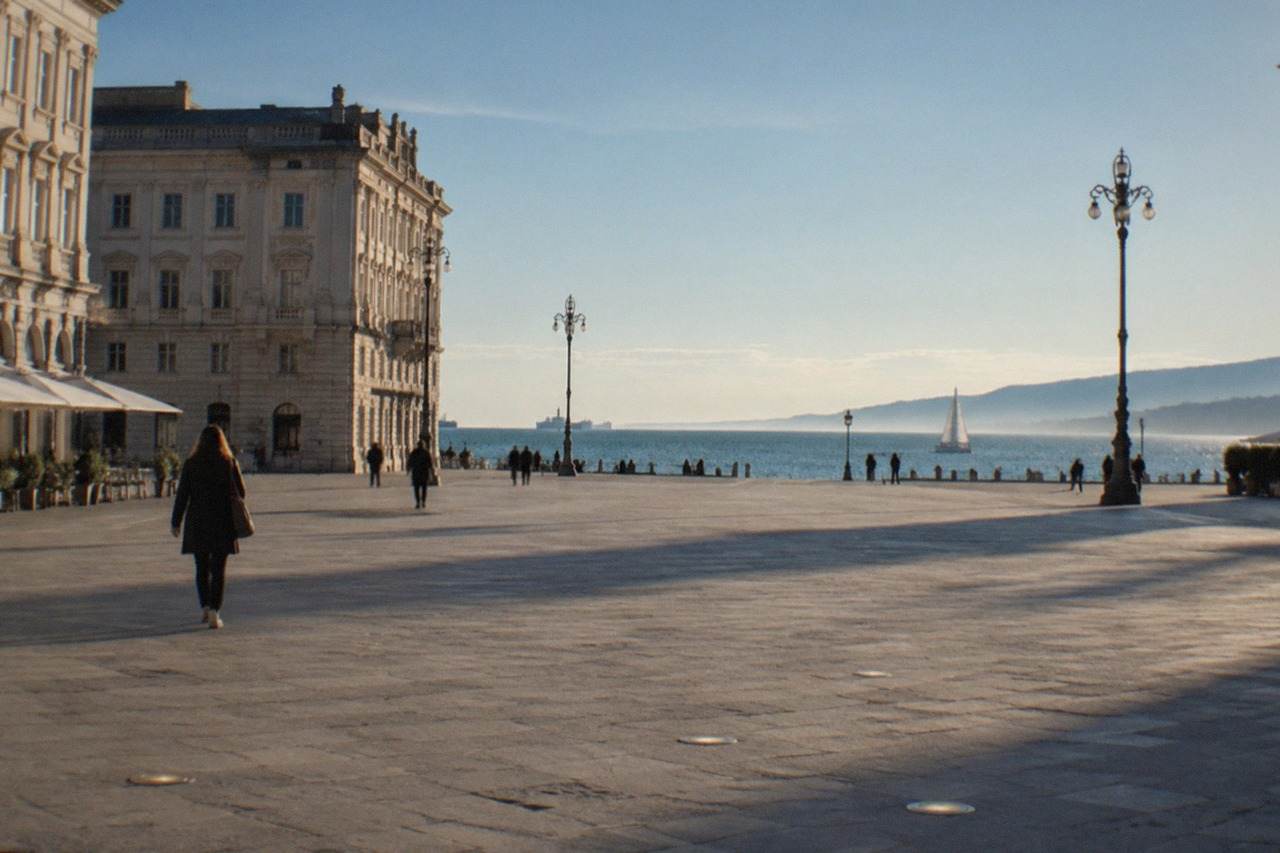
Short answer
Trieste in Italy began as a Roman settlement on the San Giusto hill, grew rich as the Habsburg empire's only big port, became a Central European coffee and shipping capital, and passed through the 20th century as a contested border city before settling into its current role as Italy's gateway to Slovenia and Croatia.
Trieste, the Adriatic port city in Friuli Venezia Giulia in the far northeast of Italy, has one of the strangest historical profiles of any city in the country. It was a modest Roman settlement on a limestone hill, then spent centuries as the Habsburg empire's outlet to the sea, then became a prize fought over by neighbouring states in the 20th century. The result is a city where a Roman theatre sits below a Habsburg-favoured cathedral, where the seafront squares look more Vienna than Venice, and where the border with Slovenia runs through what used to be the same cultural region. This guide walks through that story in order, and every price, date and figure below comes from the official venue pages and agency tables this site verifies before publishing.
What Is the Short History of Trieste, Italy?
Trieste in Italy is a Roman-founded port city that history moved around: it grew from a settlement on the San Giusto hill into the Habsburg empire's principal sea outlet, absorbed a Central European commercial and coffee culture, spent the 20th century contested between Italy, Slovenia and the wider region, and today sits inside Italy as the capital of Friuli Venezia Giulia, right on the border with Slovenia. The layers are physically stacked: the Roman theatre and the Arco di Riccardo at the bottom, the cathedral and castle on the hill, the Habsburg-era grid of the Borgo Teresiano around the Grand Canal, and the modern port structures along the waterfront.
The city's fame rests on that stack. Visitors arriving for the first time often expect a typical Italian seaside town and find something closer to a Habsburg time capsule with Roman footings, a point this site covers in more depth in why Trieste is famous. The sea-level gauge at Molo Sartorio, on the waterfront, holds one of the longest continuous sea-level records in the world, with monthly means from January 1875 and annual means from 1869, which tells you how long this port has been measured and managed as a working harbour rather than a resort.
That working-harbour character explains the rest. A port city on an imperial frontier collected merchants, insurers, shippers and writers, and their institutions, caffè, insurers' palaces and museums, are what you now walk past. The coffee culture and the shipping identity are not separate tourist themes; they are the same story, the port importing and roasting what the empire drank.
What Did the Romans Leave Behind in Trieste?
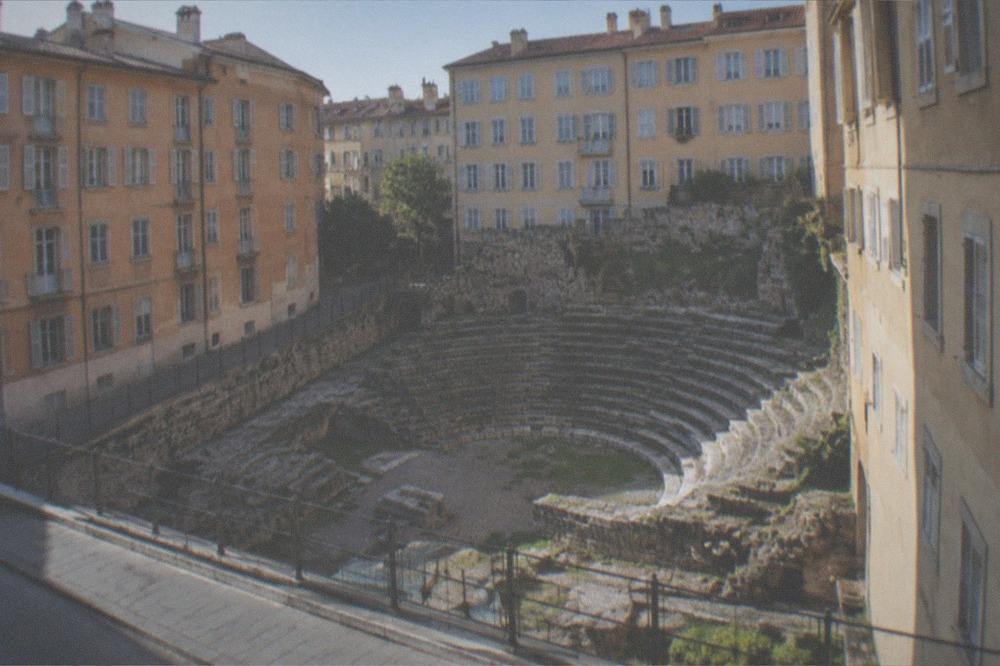
The visible Roman inheritance in Trieste centres on three things: the Teatro Romano, a Roman theatre you look down into from the street and which is not routinely enterable by individuals, the Arco di Riccardo, a standing Roman gate on the old hill road, and the San Giusto hill itself, where the cathedral complex and the Lapidario Tergestino inside the castle preserve and display the Roman city's stonework. Entry to the theatre is not something to plan around, and the ministry's own page for the monument is the reference for what access exists, with guided visits for groups and schools on request.
The theatre's position is the striking part. It sits at the foot of the San Giusto hill, directly on a modern street, so the Roman cavea is part of the everyday townscape rather than a ticketed archaeological park. The Arco di Riccardo, a short climb up the hill, is a gate from the Roman city's walls and one of the oldest standing structures you can walk to for free at any hour.
The Lapidario Tergestino, inside the Castello di San Giusto complex, is where the Roman city's inscriptions and stonework are kept, and it is covered by the standard castle ticket. That ticket is worth stating exactly, because it bundles several historical layers into one price.
| Site | What you see | Access | Cost |
|---|---|---|---|
| Teatro Romano | Roman theatre at the foot of San Giusto hill | Look down from the street; guided visits for groups and schools on request | Free to view from the street |
| Arco di Riccardo | Standing Roman gate on the old hill road | Open street access, any time | Free |
| Castello di San Giusto and Lapidario Tergestino | Walls, bastions, castle museum, armoury and Roman stonework | Ticketed, daily 10:00-19:00 from 1 April to 11 October; Tuesday to Sunday 10:00-17:00 from 12 October, closed Monday | EUR 7.00 adult, EUR 5.00 reduced, EUR 1.00 school and university groups |
| Cattedrale di San Giusto Martire | Cathedral on the Roman and medieval hill, with the bell tower alongside | Free entry, weekdays 8:00-18:30, Sundays and holidays 9:00-19:30 | Free; no bell-tower price is published |
A note on the cathedral: the parish states plainly that visiting the basilica is free, and it asks guides not to bring groups on Sundays during services. The bell tower keeps seasonal hours, 9:00-17:30 daily from 1 April to 30 September, but no ticket price is printed on the parish site, so this guide does not state one.
Why Does Trieste Look So Central European?
Trieste looks Central European because it was: for roughly the last two centuries of the Habsburg era it served as the empire's principal sea port, and the commercial class that grew up around that trade, its palaces, its grid-planned Borgo Teresiano district, its insurance buildings and its grand caffè, were built in the empire's own architectural and social image rather than in the Venetian or broadly Italian style of most Adriatic cities. The Grand Canal of Trieste, cut through the Borgo Teresiano so goods could move from ships to warehouses, is the clearest single piece of evidence: it is a working-harbour structure from the imperial period, not a romantic waterway.
That imperial port role is also why the city's food, language and café life carry Mitteleuropean traces alongside Italian ones, a mix this site explores in what to eat in Trieste and in the wine guide to Friuli Venezia Giulia. The buffet tradition, the beer halls and the pastry shops are port-city institutions with a Habsburg pedigree.
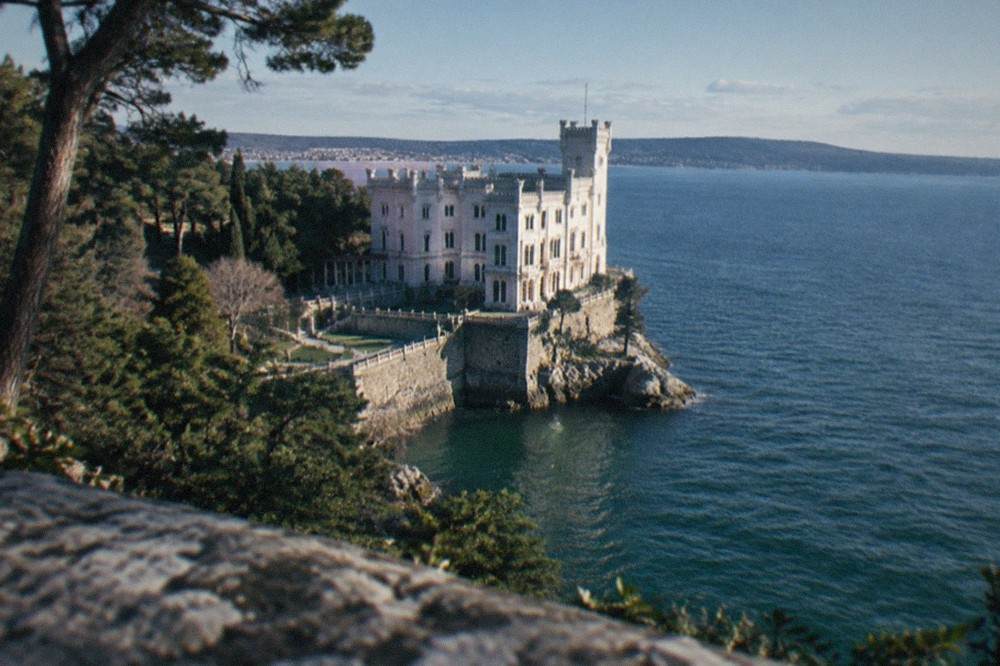
The most personal monument to the era sits up the coast: Miramare Castle, built for Archduke Maximilian of Habsburg, later Emperor of Mexico, and his wife Charlotte. The castle's own museum now occupies the former apartments, and the site keeps the two parts deliberately distinct in price and hours, which matters for planning.
| Habsburg-era landmark | What it is | 2026 admission | Hours |
|---|---|---|---|
| Castello di Miramare (castle and museum) | Maximilian and Charlotte's former residence, now a history museum with temporary exhibition | EUR 17.00 adult; EUR 7.00 reduced for EU citizens 18-25 with exhibition, EUR 2.00 castle only | Every day 9:00-19:00, ticket office closes 18:30 |
| Miramare park | The castle's landscaped grounds above the sea | Free, all year | Hours vary by month; April to September 8:00-19:00 |
| Museo Revoltella | Modern-art museum founded on a 19th-century banker's bequest, a product of the port's merchant wealth | EUR 8.00 adult, EUR 6.00 reduced, EUR 1.00 schools | Daily 10:00-19:00, last entry 18:00, closed Tuesdays |
| Grand Canal and Borgo Teresiano | The imperial-era canal and grid district built for port commerce | Public streets | Always open |
Miramare also takes part in the culture ministry's first-Sunday-of-the-month free-entry scheme; the scheme exists and has changed more than once in recent years, so confirm the specific month on the venue's own page rather than trusting a date printed anywhere else, including here.
Who Were Maximilian and Charlotte at Miramare?
Archduke Maximilian of Habsburg built Miramare as his residence above the Gulf of Trieste before accepting the crown of Mexico, a decision that ended with his execution there and left his wife Charlotte in declining mental health in Europe; the castle and its park, now a state museum, preserve their apartments and grounds as the most intimate surviving document of Habsburg Trieste. A private tour of the castle explores the former apartments of the couple, and the castle's own pages describe the residence's history in detail.
The story is the reason the castle reads differently from other Italian palaces. This is not a dynasty's ceremonial seat but a young archduke's seaside project, built at the water's edge with the park running down to the shore, and then abandoned by history when its owner left for a throne he did not hold. The castle's listing on this site, an entry ticket with an audio-guide app, is the straightforward way to see it independently.
The park deserves separate billing: it is free all year, which the venue states explicitly, and its hours shift month by month, from 8:00-19:00 in the April-September stretch to earlier closes in the winter months. Visitors who only want the grounds can come at opening and walk the seafront paths without a ticket.
What Happened to Trieste in the 20th Century?
The 20th century treated Trieste as a prize, not a participant: the city passed out of Habsburg hands at the end of the First World War, was occupied and annexed by Fascist Italy, suffered under German occupation in the Second World War, during which the Risiera di San Sabba functioned as a Nazi concentration and transit camp, now a free national monument and civic museum, then spent the early postwar years under Allied military administration before settling as an Italian city on the new border with Yugoslavia, now Slovenia. Each of those episodes left a physical trace you can visit.
The Risiera di San Sabba, a rice-husking plant turned camp, is the darkest and most direct memorial. Entry is free, the site is open daily 9:00-19:00 from 1 March to 11 October and 9:00-17:00 from 12 October, closed only on 25 December and 1 January, with early closure at 14:00 on 24 and 31 December. Groups must book a slot from 1 March to 31 May; individuals do not book.
The border story is the part that still shapes daily life, and it has a live twist in 2026. Slovenia has been in the euro area since 1 January 2007 and in Schengen since December 2007; Croatia joined both Schengen and the euro on the same day, 1 January 2023. So no currency change and no routine passport control should apply on a day trip from Trieste to Piran or Ljubljana, except that Italy is currently running temporary checks on its land border with Slovenia, listed in the European Commission's register from 19 June 2026 to 18 December 2026. Carry a passport or national ID card, and treat the checks as temporary and dated rather than permanent.
| 20th-century site or fact | What to know | Access |
|---|---|---|
| Risiera di San Sabba | National monument and civic museum on the site of a Nazi camp | Free entry; daily 9:00-19:00 to 11 October, then 9:00-17:00; closed 25 December and 1 January |
| Italy-Slovenia border checks | Temporary controls listed by the European Commission from 19/06/2026 to 18/12/2026 on Italy's land borders with Slovenia | Carry a passport or national ID card for cross-border day trips |
| Croatia's currency and border | Euro and Schengen both from 1 January 2023 | No currency change from Italy or Slovenia |
| Molo Sartorio sea-level record | Continuous measurement from the 19th century, monthly means from January 1875 | Visible on the waterfront; data published by national tide networks |
The city's identity questions, Italian, Slovenian, Central European or something of each, are not settled history here; they are current conversation, and the architecture keeps all the answers visible at once.
Why Is Trieste Famous for Coffee?
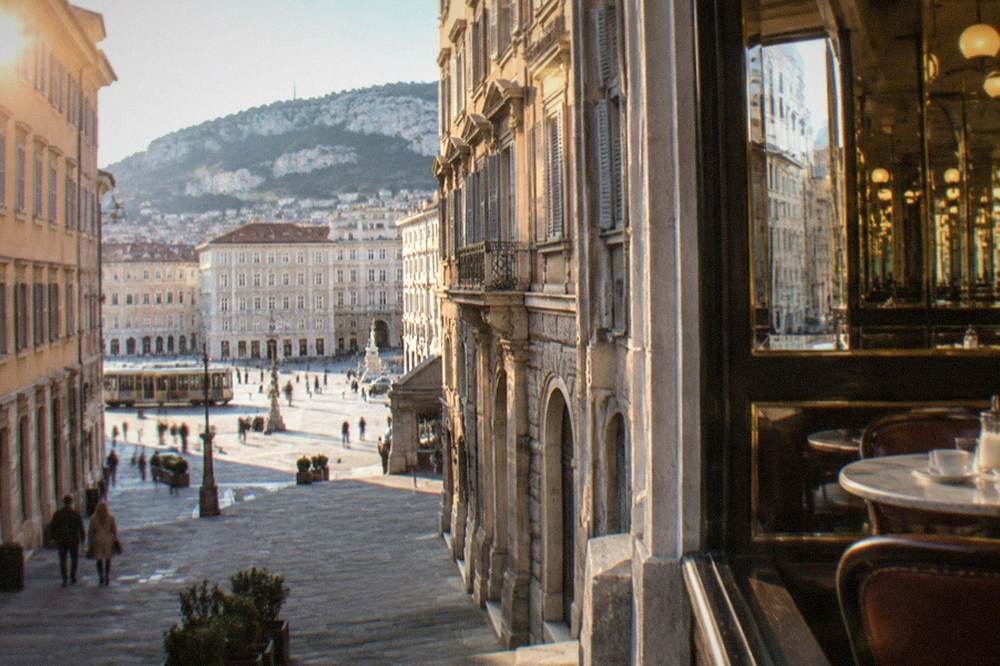
Trieste is famous for coffee because its port handled the empire's green coffee imports and grew a roasting industry around them, and the city's historic caffè, several of them still operating in their original rooms, remain the most visible institutions of that port-era commercial life; the often-repeated claim that locals drink more coffee per head than anywhere else in Italy has no primary source behind it, so this guide repeats the industry and the caffè, not the number. Coffee here is a trade history first and a café scene second.
The practical version of that history is easy to visit. The caffè in the city centre preserve the rooms, the mirrors and the newspaper tables of the merchant city, and several walking tours build the whole story into a route, including one that ends with a coffee in a historic bar. The dedicated coffee culture guide covers the caffè one by one.
What can be said with confidence, because the sources support it: Trieste is a historic coffee port and a roasting centre, home to a major international roaster's headquarters and industry events. What cannot be said, because no primary source exists for it in the Chamber of Commerce, port authority or company channels: any per-capita consumption figure, any multiple of the national average, any "coffee capital" ranking with a number attached. The full index of guides sits on Trieste Travel Guide.
How Old Is the Opicina Tram?
The Opicina tram, Trieste's hybrid tram-and-funicular line to the Karst village of Opicina, is over a century old in concept and very much alive today: it was suspended after an accident in August 2016, reactivated on 1 February 2025, and now runs as urban line 2 between piazza Dalmazia and Opicina station over a route of about 5.175 km, using a current timetable dated 20 July 2026. Almost every older guide online gets at least one of those facts wrong.
The line matters to the history of the city because it is the surviving link between the port town and the Karst plateau above it, the limestone upland where the osmize farm-taverns sit. It is also part of the ordinary urban network: a standard Trieste urban ticket is valid, and contactless bank cards can be tapped on board.
| Opicina tram fact | Detail |
|---|---|
| Line and status | Urban line 2, running; reactivated 1 February 2025 after the post-2016 stop |
| City terminus | piazza Dalmazia, not piazza Oberdan |
| Route | piazza Dalmazia, piazza Casali, Sant'Anastasio, via Romagna, Vetta Scorcola, Cologna, Conconello, Obelisco, Opicina |
| Length | About 5.175 km |
| Fares | Ordinary urban tickets apply: EUR 1.50 for 60 minutes, EUR 1.85 for 75 minutes, EUR 3.35 day ticket |
For the live status, including any short maintenance suspension, the operator's own site is the only reliable source, and this guide deliberately does not bake a date in. The bora wind guide explains the weather that occasionally interrupts services on this exposed coast.
What Are the Osmize and How Far Back Do They Go?
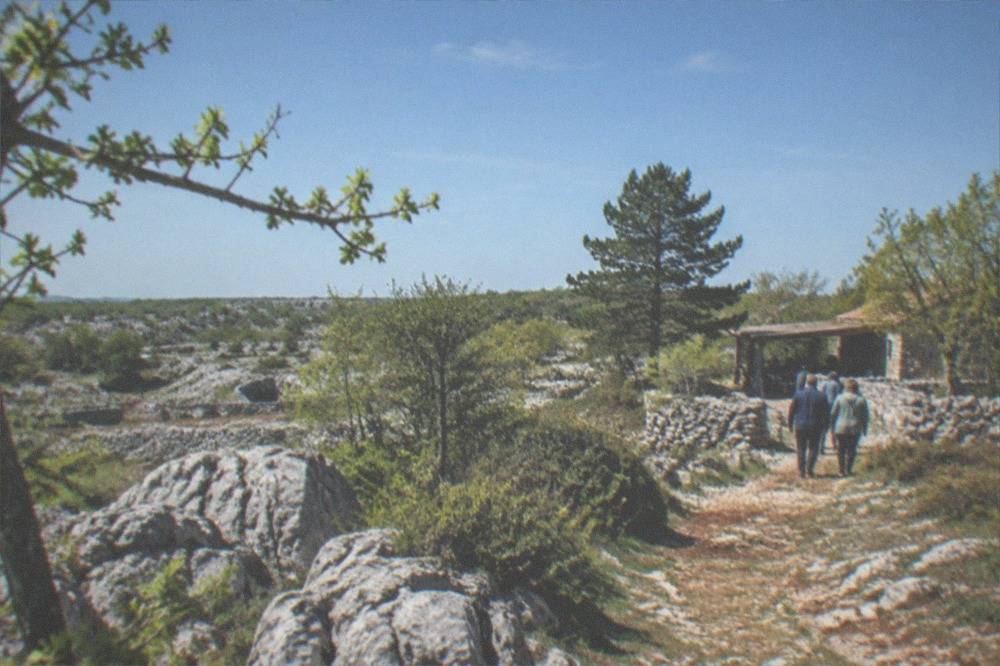
The osmize are seasonal farm-taverns on the Trieste Karst where farming families sell their own wine and simple homemade produce directly from the property for limited periods each year, a custom whose name comes from the Slovene word for eight, osem, for the eight days the right originally allowed, and whose openings are signposted by a frasca, a leafy branch hung at the turning; the de facto live calendar of which osmiza is open on which day is published at osmize.com. The custom is a living piece of the rural history of the plateau above the port.
The legal history is murkier than most write-ups admit. The specific decree date and the exact number of days a year are repeated everywhere but not verified against a primary source, so this guide states the custom and the branch, which are observable, and leaves the statute out. What is certain is the experience: Vitovska, Malvasia and Terrano, the Karst's own wines, poured in a farmyard.
The osmize guide covers how to plan a visit, and the plateau itself has its own page on this site. Note that Prosecco the wine and Prosecco the Carso village are different subjects, and Trieste is not in the Prosecco DOC; the Karst pours its own grapes.
How Did the Barcolana Regatta Start?
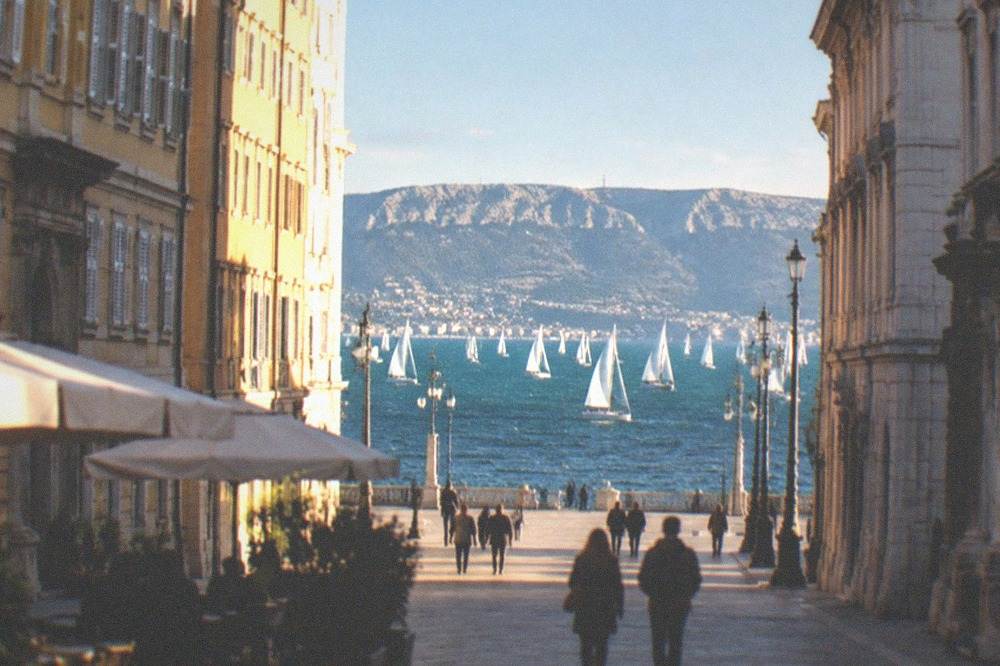
The Barcolana, the sailing regatta that fills the Gulf of Trieste every October, first ran in 1969 with 51 boats on the start line, and it grew into the event the organisers describe as the largest sailing race in the world, with a record 2,689 registered yachts in 2018, Barcolana 50, a figure the organisers credit as a Guinness World Record; the 2026 edition, Barcolana 58, runs from 2 to 11 October 2026 with the main race on Sunday 11 October over a 13-nautical-mile course. It is the youngest of the city's big traditions and now its most visible.
The regatta is a piece of living history in another sense: it sits deliberately inside the windy shoulder of the year. October averages 1.4 days with gusts over 90 km/h at the waterfront station, and the whole point of an autumn race in the Gulf of Trieste is that the bora can and does show up. The full story is in the Barcolana guide.
| Barcolana edition | Year | Boats on the start line |
|---|---|---|
| First edition | 1969 | 51 |
| Barcolana 50, the record | 2018 | 2,689 |
| Barcolana 57, the highest since 2019 | 2025 | 1,865 |
| Barcolana 58 | 2026 | To be confirmed; regatta Sunday 11 October 2026, start 10:30 |
Where Can You See Trieste's History Today?
Every layer of Trieste's history is visitable in a compact area: the Roman theatre and Arco di Riccardo in the old town, the cathedral and castle on the hill, the Habsburg grid of the Borgo Teresiano around the Grand Canal, the historic caffè on the central squares, Miramare up the coast and the Karst above the city, and the whole lot can be walked in a couple of days because the historic centre is small and flat along the waterfront. The sites below are the ones with verified 2026 admission figures.
| Site | Layer of history | 2026 admission | Hours |
|---|---|---|---|
| Cattedrale di San Giusto Martire | Medieval and earlier, on the Roman hill | Free | Weekdays 8:00-18:30, Sundays and holidays 9:00-19:30 |
| Castello di San Giusto | Renaissance fortress, Habsburg-era museum use | EUR 7.00 adult, EUR 5.00 reduced | Daily 10:00-19:00 to 11 October; Tuesday to Sunday 10:00-17:00 from 12 October, closed Monday |
| Museo Revoltella | 19th-century merchant wealth and modern art | EUR 8.00 adult, EUR 6.00 reduced | Daily 10:00-19:00, closed Tuesdays |
| Castello di Miramare | Habsburg residence and park | EUR 17.00 adult, park free | Castle 9:00-19:00 daily; park hours vary by month |
| Risiera di San Sabba | Second World War, national monument | Free | Daily 9:00-19:00 to 11 October, then 9:00-17:00 |
| Grotta Gigante, Sgonico | The Karst's natural history, guided only | EUR 15.00 adult, EUR 12.00 reduced, children 6-18 EUR 8.00 | Guided tours at 9:00, 10:00, 11:00, 12:00, 14:00, 15:00, 16:00; booking compulsory |
Two planning notes from the verified pages. Grotta Gigante is guided-only with compulsory booking, and from September to February it closes on Mondays. And there is no Trieste-only museum card; the regional FVGcard exists and covers several of these sites, but its prices could not be verified from this machine, so this guide quotes none.
The free-entry rhythm is worth knowing: San Giusto castle, the Revoltella and Miramare all take part in the first-Sunday-of-the-month scheme, and San Giusto is also free on 3 November, the patron saint's day. Confirm each month on the venue's own page before relying on a date.
How Should You Tour Trieste's Historic Sights?
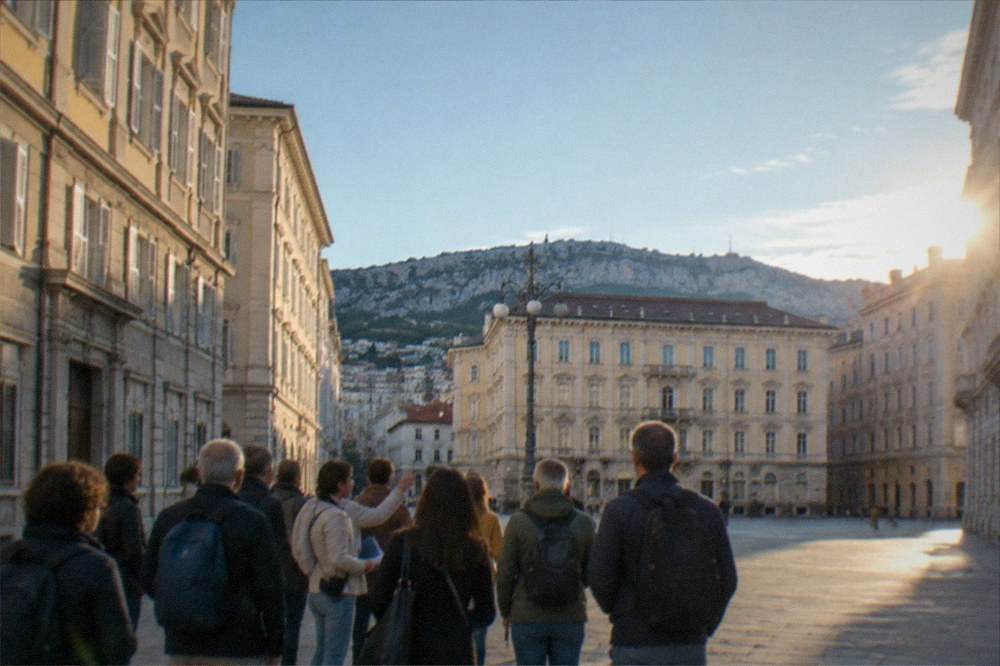
The efficient way to tour Trieste's history is a route, not a list: start on the waterfront and the Grand Canal, climb to the cathedral and castle through the old town, come down past the Roman theatre, then take the tram line or a short ride up to the Karst or along the coast to Miramare, and a guided or self-guided walking product is the cheapest way to hold the story together because the historic centre is compact and the layers sit on top of each other. Three options on this site cover the range.
The self-guided scavenger hunt turns the centre into a puzzle route with no schedules, and it suits visitors who want the story at their own pace; the operator's live listing carries the current price and free cancellation. A private two-hour walking tour with a guide covers the landmarks with a fixed itinerary and a local's commentary. And for orientation at no fixed cost, there is a free, tip-based city walk listed on GuruWalk, run by a local guru, where you pay what you think the walk was worth at the end; it is not this site's product, which is exactly why the platform and the guru are named here.
For readers who prefer a fixed private format, the two-hour private walk covers the modern and ancient landmarks in one loop.
And the free option, for budget travellers or anyone who wants to test the city before paying for anything else:
When Is the Best Time to See Historic Trieste?
The best time to see Trieste's historic core is the shoulder season: spring and early autumn combine open hours at every major site, sea temperatures warm enough for a swim after a day of sightseeing, and fewer of the October and November rain days that make November, at 109.8 mm, the wettest month at the waterfront station, while July and August are the warmest and driest but bring the year's only days over 30 C. The numbers come from ARPA FVG's own station tables for Trieste molo Fratelli Bandiera.
The seasonal rhythm matters more here than in most Italian cities because so much of the history is outdoors: the hill, the waterfront, the Karst and the Miramare park are the sights, and the bora blows hardest in the cool season, with February holding the station's all-time peak gust of 168.1 km/h from 2012. The full month-by-month breakdown, including sea temperatures and wind days, is in the weather guide, and the planning summary is in the best time to visit Trieste.
| Season | Mean high | Rain | What it means for sightseeing |
|---|---|---|---|
| Spring (March-May) | 13-21.7 C | 52.8-75 mm per month | Full opening hours at all sites; park and Karst at their best |
| Summer (June-August) | 25.8-28.2 C | 53.8-71.7 mm per month | Warmest and driest; the only months with days over 30 C |
| Autumn (September-November) | 23.9 down to 14.7 C | 102.3-109.8 mm per month | Barcolana in October; September and November are the two wettest months |
| Winter (December-February) | 9.2-10.7 C | 52.8-77.4 mm per month | Shortest hours; February carries the record bora gust of 168 km/h |
Common Questions About Trieste History
Was Trieste always part of Italy?
No. Trieste spent its most prosperous centuries under Habsburg rule as the empire's principal port, passed to Italy after the First World War, and only settled as an Italian city after the Allied administration that followed the Second World War. Today it is the capital of Friuli Venezia Giulia, Italy's most north-easterly region.
What did the Romans call Trieste?
The Roman settlement on the San Giusto hill was Tergeste, and its remains are still visible: the Teatro Romano at the foot of the hill, the Arco di Riccardo gate, and the Roman stonework displayed in the Lapidario Tergestino inside the Castello di San Giusto complex.
Why does Trieste have a Habsburg castle?
Miramare was built for Archduke Maximilian of Habsburg and his wife Charlotte before he left to become Emperor of Mexico. The castle and its free park are now a state museum, open every day 9:00-19:00 with adult admission at EUR 17.00.
Is Trieste Italian or Slovenian in culture?
Both, plus a Central European layer. The city's Habsburg port decades gave it a Mitteleuropean café and commercial culture, its position on the border with Slovenia gives it a bilingual present, and its 20th-century history as a contested city left all three identities visible in the architecture and the food.
What is the oldest thing you can see in Trieste?
The Roman remains: the Arco di Riccardo, a standing gate from the Roman city's walls, and the Teatro Romano, which you look down into from the street. The theatre is not routinely enterable by individuals, so plan to view it from outside.
Does Trieste's history affect practical travel today?
Yes, in one dated way: Italy is running temporary checks on its land border with Slovenia from 19 June 2026 to 18 December 2026, so carry a passport or national ID card for a day trip to Piran, Ljubljana or the Slovenian coast even though all three countries are in Schengen and the euro.
Trieste's history is not a museum piece behind ropes; it is the working fabric of a small city where the Roman gate, the Habsburg caffè and the modern border all sit within a short walk of each other, and where the verified 2026 prices and hours above let you plan the whole sweep in an afternoon.