Arco Di Riccardo in Trieste, Italy: The Roman Arch Below San Giusto Hill
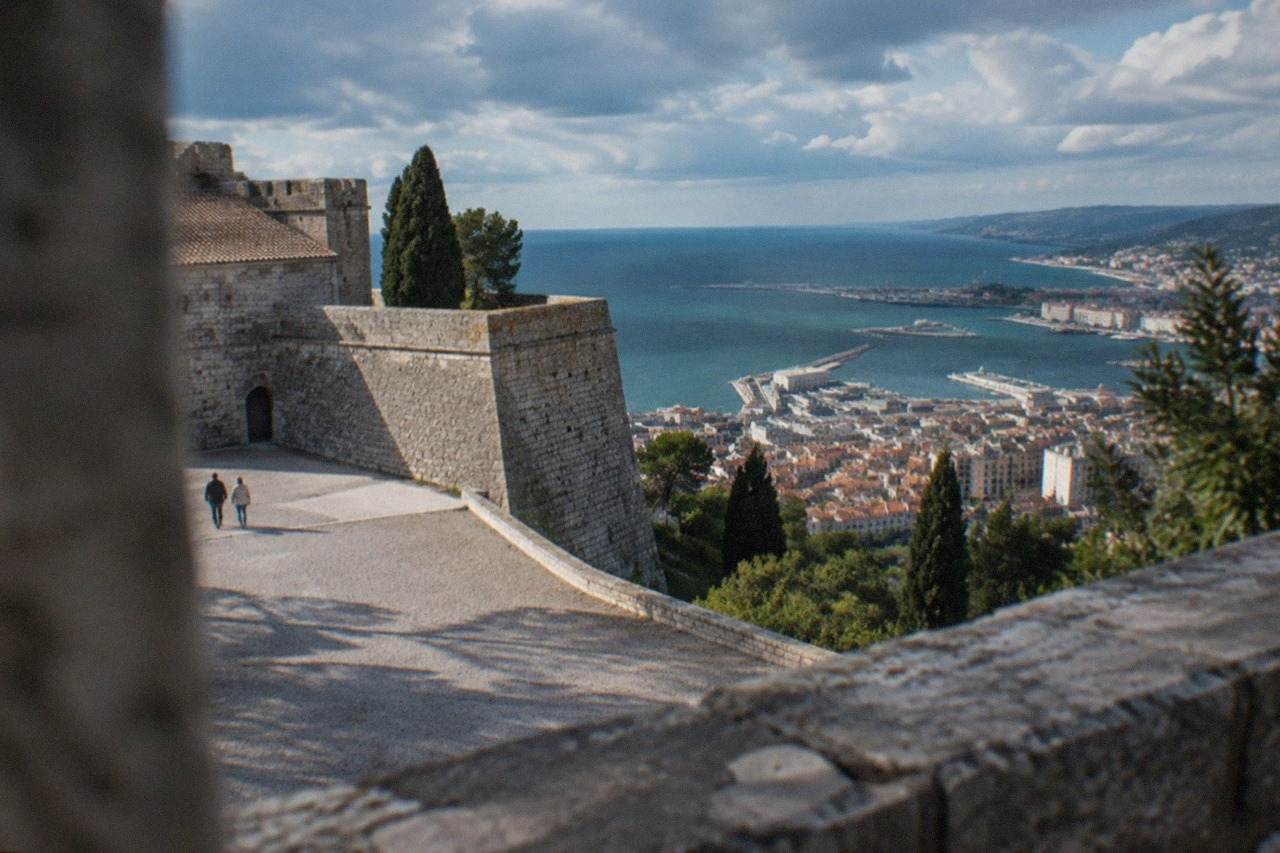
The Arco di Riccardo is a Roman-era gate of ancient Tergeste, standing on the slope of San Giusto hill in Trieste, Italy, free to see at any hour and five minutes from the city's most important historic monuments.
Short answer
The Arco di Riccardo is a surviving gate of Roman Tergeste on the slope below Castello di San Giusto in Trieste, Italy. It is visible from the street, free to visit, and pairs naturally with the castle, the cathedral and the Roman theatre on the same hill.
Trieste, Italy, keeps its oldest self tucked into the slope below Castello di San Giusto, and the Arco di Riccardo is the most concentrated piece of it: a Roman gate of the ancient city of Tergeste, standing in plain view on a narrow street, free to look at, open at any hour, and a two-minute stroll from the castle walls, the cathedral and the Roman theatre. Most visitors to Trieste walk within a hundred metres of it without ever learning what it is. This guide covers what the arch is, where exactly it stands, what it costs to see, and how to fold it into a day that takes in the whole of San Giusto hill, with verified prices, hours and climate data for planning.
What Is the Arco Di Riccardo in Trieste, Italy?
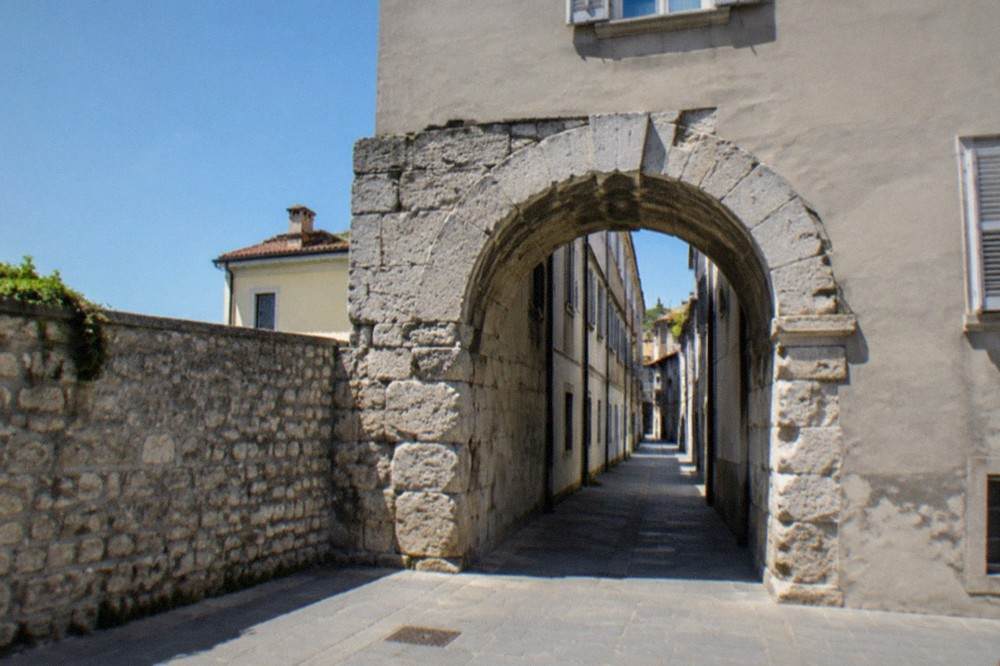
The Arco di Riccardo is a Roman-era city gate of Tergeste, the settlement that became Trieste, and it stands on the slope of San Giusto hill a short distance below the castle. It is one of the very few surviving structures from the Roman city visible at street level, it is not a museum, there is no ticket and no barrier, and you simply walk up to it and look at it, at any time of day or night, free of charge.
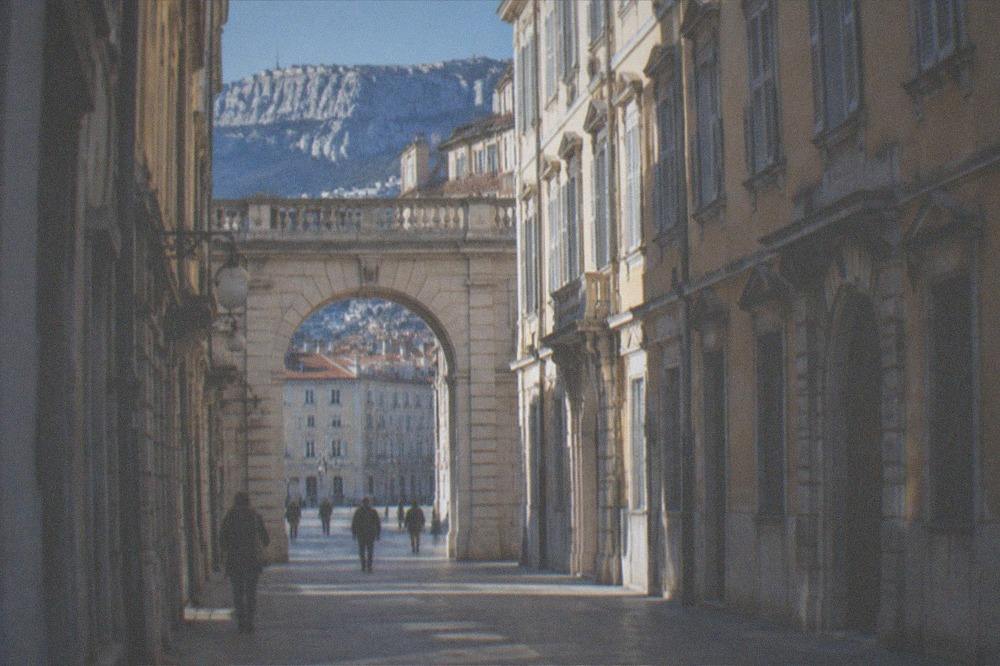
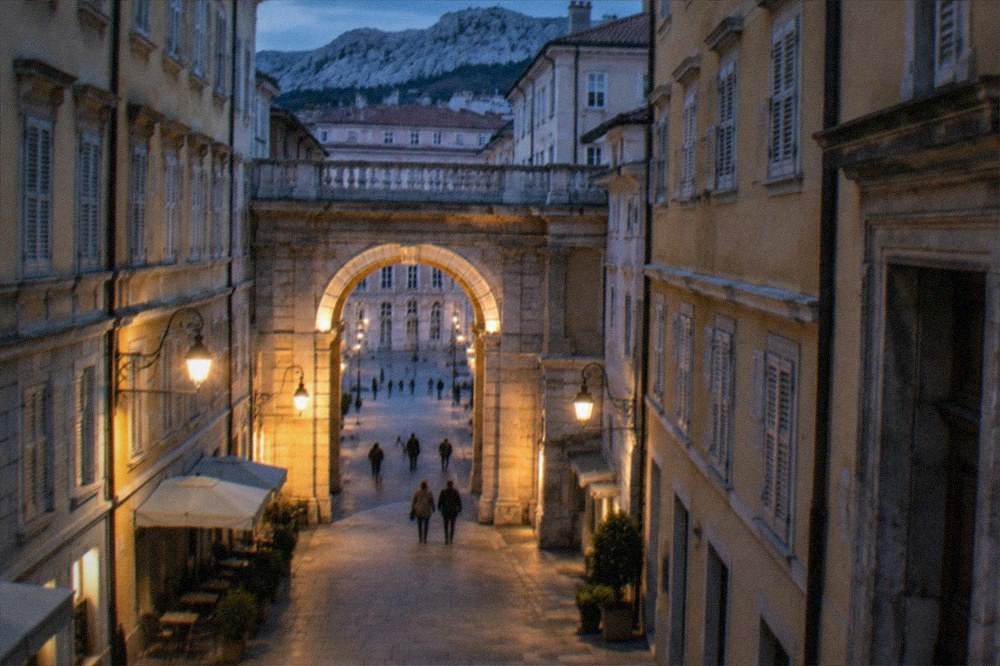
The arch is a gate, not a triumphal monument. It once formed part of the walled circuit of Roman Tergeste, the town that grew up on the hill above the Adriatic and later spilled down to the sea. What stands today is a single opening framed in dressed stone, set into a narrow street of the Città Vecchia, the old-town district that climbs from the modern city up toward San Giusto. The setting is part of the appeal: the arch is not fenced off behind glass or a ticket desk. Laundry lines, parked scooters and old plaster sit within arm's reach of two-thousand-year-old masonry, which is very much the Triestine way of treating its past.
The name is a separate puzzle. "Riccardo" is the Italian Richard, and folk explanations for the name have circulated for centuries, but none of them is documented in any primary source, and no official account endorses one story over another. The honest position is that the arch carries a name whose origin nobody can prove, which is itself a small piece of the city's character: Trieste has been Roman, Venetian, Habsburg and Italian in turn, and its street-level monuments absorb legends the way the seafront absorbs weather. For the fuller sweep of that story, read our short history of Trieste, which sets the arch in context.
Where Is the Arco Di Riccardo and How Do You Reach It?
The arch stands on Via Don Francesco di Paola, on the north-facing slope of San Giusto hill in Trieste's Città Vecchia, below the castle and a short walk up from the city centre. There is no dedicated transport: you reach it on foot from Piazza Unità d'Italia or the canal area, or as part of the climb to Castello di San Giusto, and there is nothing to book, pay or validate to see it.
The practical route is simple. From Piazza Unità d'Italia you walk inland and up, through the lanes of the old town, and the arch sits on the ascent. Coming the other way, from the castle forecourt, you descend through the Città Vecchia and meet it on the way down. Either direction makes it a natural waypoint rather than a destination you travel to for its own sake, which is the right way to treat it: it is a five-minute stop, a photograph and a moment of orientation, sitting inside a district that rewards an hour of wandering.
Because there is no ticket, no desk and no posted opening time, the arch is one of the few sights in the city that fits any schedule. Cruise passengers ashore for a single day can see it on the standard climb to San Giusto. Early risers get it in flat morning light. In the evening the street is quiet and the arch is lit by ordinary street lamps, which suits photographers who want the stone without crowds. Check the weather before you plan the climb: the hillside lanes are steep, and Trieste's bora wind, which the regional met agency measures at an average of 17.6 days a year with gusts over 90 km/h at its waterfront station, can make exposed slopes bracing at any season.
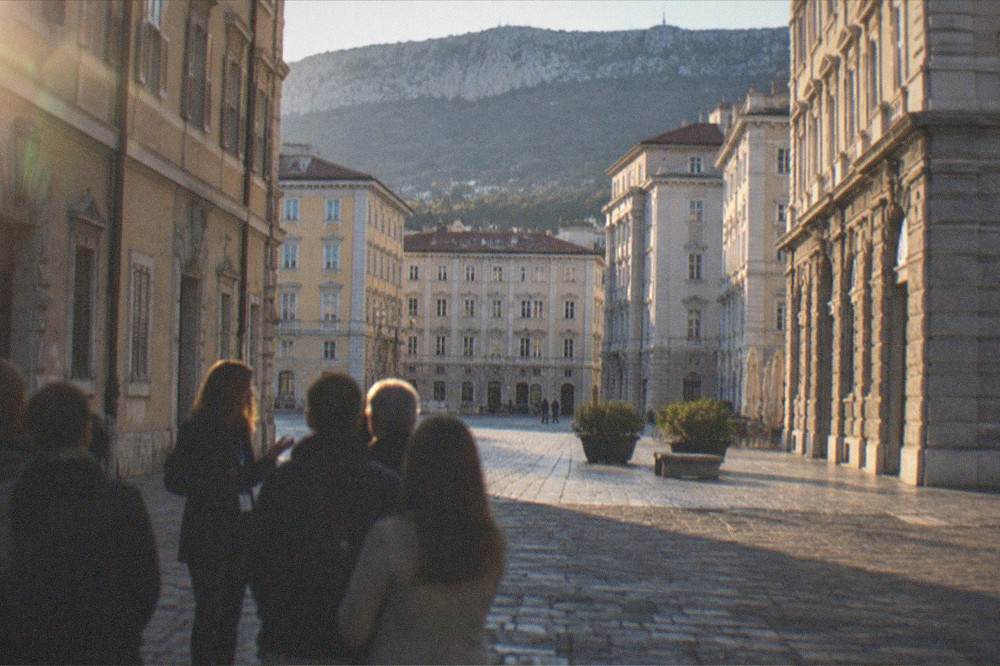
A guided walk is the easiest way to see the arch with its stories attached. The Experience Trieste city walk, a 2-hour-30-minute group walk rated 5 from 113 reviews, covers the old town and the hill, and the same operator listing covers the waterfront and the Habsburg city below. Book it on the operator's live listing if you want a local to connect the arch to the walls, the theatre and the castle in one loop.
What Does the Arch Tell You About Roman Tergeste?
The arch is the street-level proof that Roman Tergeste was a walled town on this hill, and it belongs to the same ancient fabric as the Roman theatre on the slope below and the objects displayed inside the castle museums. Reading it together with those two sites gives you the whole Roman layer of Trieste in a single morning: a gate, a theatre and a museum collection, all within a few minutes' walk of one another, and only the museum part costs anything.
Roman Tergeste occupied the hill and its slopes, with the theatre cut into the hillside facing the sea and the walls running the perimeter. The Roman theatre of Trieste is the other great survivor of that town: you look down into it from the street, it is free to view from outside, and it is not routinely enterable by individuals, with guided access for groups and schools on request through the heritage authority. The arch and the theatre are the two pieces of Roman Trieste you can see without a ticket, and they sit on the same hill, so the sensible route takes in both.
The third piece is indoors. Castello di San Giusto's ticket covers the walls and bastions, the Civico Museo del Castello-Armeria, the Lapidario Tergestino and temporary exhibitions, and the Lapidario in particular holds inscriptions and stonework from the Roman city, the kind of material that puts a gate like the Arco di Riccardo into context. The castle's own site lists the full ticket at €7 full price, €5 reduced and €1 for school and university groups. Between the arch outside, the theatre below and the lapidary inside, San Giusto hill is effectively a single Roman site with a medieval and Habsburg castle built on top of it.
One thing worth knowing before you go: the arch has no interpretive panel of any quality, and what it "means" depends on what you bring to it. A guide fills that gap. The Trieste: City Hidden Gems Private Walking Tour, a 2-hour-30-minute private walk rated 4.96 from 62 reviews, makes a point of the old-town lanes around the hill, and the Trieste: Habsburg History Private Walking Tour covers the era that followed the Roman one. Either can be booked on the operator's live listing.
How Does the Arch Fit Into a Visit to San Giusto Hill?
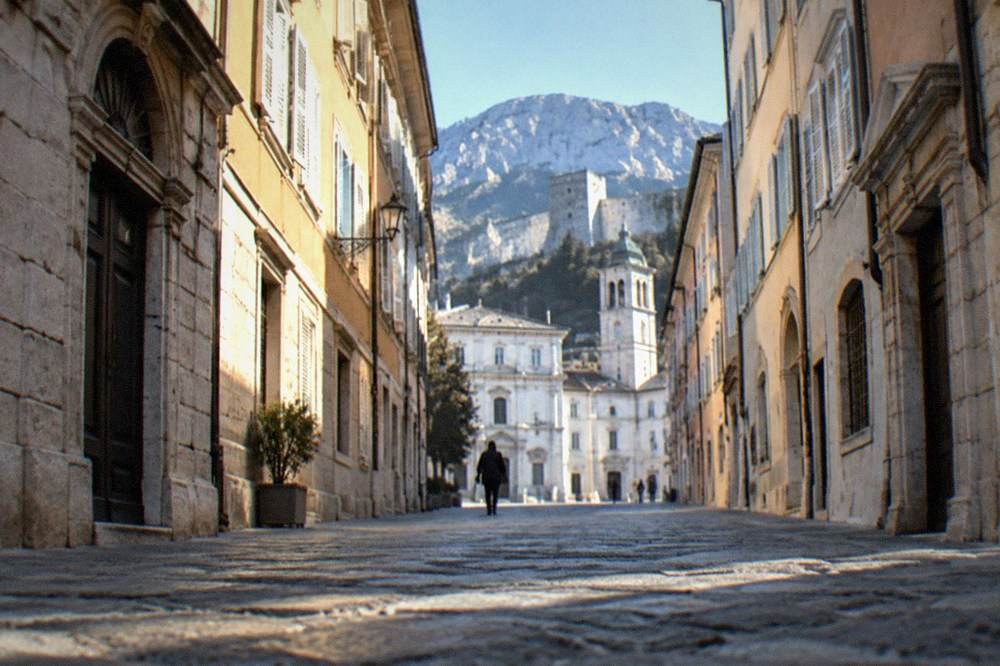
Treat the Arco di Riccardo as the base note of a San Giusto circuit: start at the arch in the Città Vecchia, climb to the castle walls, visit the cathedral, then descend past the Roman theatre. The hill takes half a day at a relaxed pace, and the verified costs are €7 for the castle, free entry to the cathedral and free views of the theatre, with the castle open daily 10:00-19:00 through 11 October and Tuesday to Sunday 10:00-17:00 from 12 October.
The hill is Trieste's densest sightseeing block, and the arch is its natural starting point because it sits lowest, at the old-town end of the climb. From there the route rises through the lanes to the castle and hill of San Giusto, whose walls give you the best rooftop and gulf panorama in the city centre. The castle's published hours matter more than most: from 1 April to 11 October it opens daily 10:00-19:00 with last entry at 18:30, and from 12 October it runs Tuesday to Sunday 10:00-17:00 with last entry at 16:30, closed Mondays. Entry is free on the first Sunday of the month and on 3 November, the patron saint's day.
Next to the castle stands the cathedral of San Giusto. Entry to the cathedral is free, published as such by the parish itself: weekdays 8:00-18:30, Sundays and holidays 9:00-19:30. The bell tower keeps separate hours, 9:00-17:30 daily from 1 April to 30 September and split morning and afternoon slots in March and October, and no ticket price for the tower is printed on the parish site, so check there rather than trusting any figure you see quoted elsewhere. The parish asks that visitors avoid the cathedral during Sunday Mass, which is both a courtesy and a practical scheduling note.
Below it all, the Roman theatre completes the descent. The table below pulls the hill's sites into one planning view, with every figure taken from the venues' own published pages.
| Site on San Giusto hill | Entry cost | Published hours | Booking |
|---|---|---|---|
| Arco di Riccardo | Free, street-level | Always visible, no posted hours | None |
| Castello di San Giusto (walls, museums, exhibitions) | €7 full, €5 reduced, €1 school and university groups | 1 Apr-11 Oct daily 10:00-19:00; from 12 Oct Tue-Sun 10:00-17:00 | Optional online booking |
| Cattedrale di San Giusto | Free | Weekdays 8:00-18:30; Sun and holidays 9:00-19:30 | None |
| Cathedral bell tower | No price printed on the parish site | 1 Apr-30 Sep daily 9:00-17:30; Mar and Oct 9:00-12:00 and 14:30-17:00 | Winter by arrangement |
| Roman theatre | Free, viewed from the street | Always visible from outside | Groups and schools on request |
The free first Sundays are worth planning around if your dates allow: the castle participates in the ministry's recurring first-Sunday scheme, and the rules of that scheme have changed more than once, so confirm the specific month on the venue's own page rather than treating it as guaranteed.
What Are the Opening Hours and Prices at Trieste's Other Museums?
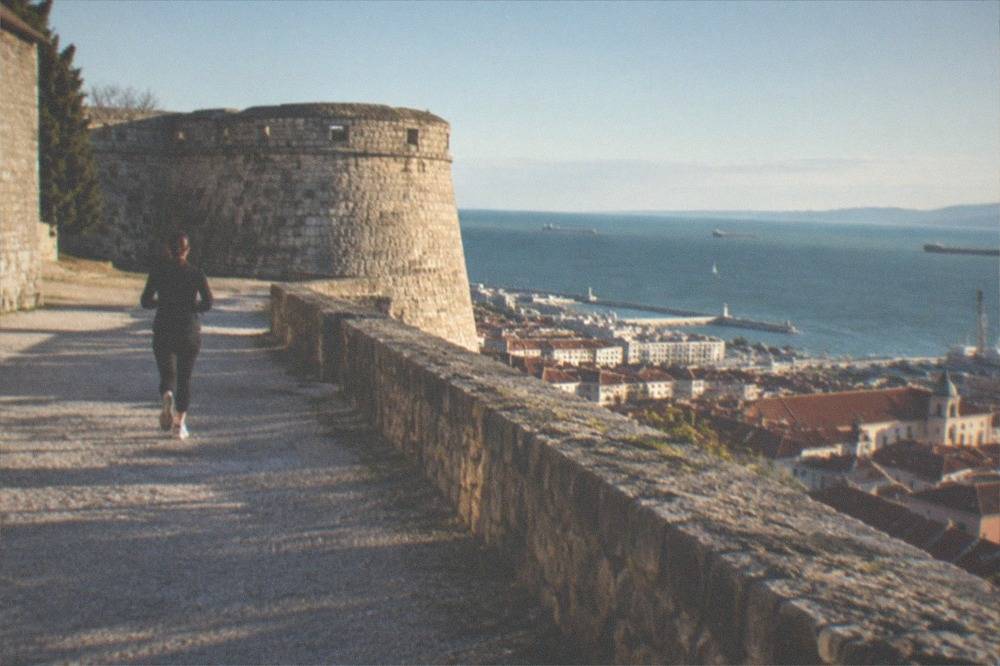
The other major museums around the centre are the Museo Revoltella at €8 full and €6 reduced, closed Tuesdays, and the Risiera di San Sabba national monument, which is free and open daily 9:00-19:00 through 11 October and 9:00-17:00 thereafter. There is no Trieste-only museum pass; the regional FVGcard exists, but its price could not be verified on the operator's own site from this desk, so check it there before relying on any figure.
The Revoltella Museum, the city's modern-art gallery on the seafront, is the natural indoor pairing for a history morning: it is the opposite end of the city's story, Habsburg-era patronage and twentieth-century art, and it keeps the most restrictive weekly closure of the major venues, shut every Tuesday. Its published rates are €8 adult, €6 reduced and €1 for schools, daily 10:00-19:00 with last entry at 18:00, and free on the first Sunday of the month and on the patron saint's day.
The Risiera di San Sabba is the city's most solemn site, a national monument and civic museum with free entry. Its published hours run daily 9:00-19:00 with last entry at 18:30 from 1 March to 11 October, then daily 9:00-17:00 with last entry at 16:30 from 12 October, closed 25 December and 1 January, with early closure at 14:00 on 24 and 31 December. Groups must book a slot from 1 March to 31 May; individuals do not book. It is a short bus ride from the centre rather than on the San Giusto circuit, and it belongs to the twentieth-century chapter of the city's history rather than the Roman one.
| Venue | Full price | Reduced | Weekly closure | Free days |
|---|---|---|---|---|
| Castello di San Giusto | €7 | €5 | Monday, from 12 Oct | First Sunday monthly, 3 Nov |
| Museo Revoltella | €8 | €6 | Tuesday | First Sunday monthly, patron saint's day |
| Risiera di San Sabba | Free | Free | None (closed 25 Dec, 1 Jan) | Always free |
| Cattedrale di San Giusto | Free | Free | None | Always free |
| Grotta Gigante, Sgonico | €15 | €12, children 6-18 €8 | Monday, Sep-Feb | FVGcard holders per the venue |
Two planning notes sit behind that table. Grotta Gigante, the great karst cave up on the Carso plateau, is a different kind of outing entirely, guided-only with compulsory booking, and it closes on Mondays from September to February, so it does not pair with a San Giusto Monday. And the FVGcard, the regional pass that covers several of these sites, is sold by the regional tourism body whose own site could not be checked from this desk, so the honest instruction is to look the current price up there rather than trust a number printed anywhere else.
When Is the Best Time of Year to Visit Trieste for the Arch?
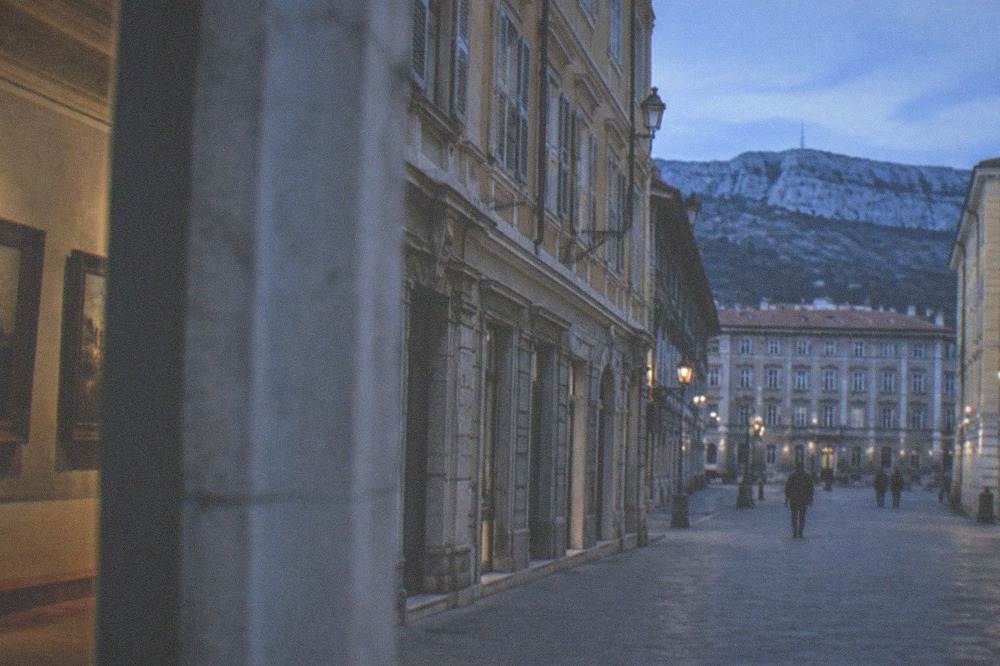
The climate data from the regional met agency's own Trieste station says the warmest, driest and calmest window is late spring through September: June averages a 25.8 C mean high with 62.5 mm of rain, July 28.2 C with just 53.8 mm, and June is the calmest month for wind in the whole year. November is the wettest month at 109.8 mm, and the bora blows hardest in the cool season, so October to March visits mean packing for wind as well as rain.
The numbers come from ARPA FVG-OSMER's station tables for Trieste molo Fratelli Bandiera, the 1995-2024 series, and they overturn the lazy assumption that a northern Adriatic port is a summer-flooded or shoulder-season city. July is the second-driest month of the year here, at 53.8 mm, wetter only than the 52.8 mm of January and March. September, often recommended for Italian cities generally, is actually Trieste's second-wettest month at 102.3 mm, behind November's 109.8 mm. If dry matters to you more than warm, the June-July-August block is the statistical sweet spot, with mean highs of 25.8 C, 28.2 C and 28.1 C.
Wind is the other variable, and on a hillside visit it matters. The station records an annual average of 49 days with a gust over 72 km/h and 17.6 days over 90 km/h, with the monthly record gust exceeding 110 km/h in every single month of the year. June is the calmest month, and the cool season from November to March carries the most windy days. The lanes around the Arco di Riccardo are sheltered compared with the exposed castle terraces above, but the climb itself is steep and open in stretches, so a windproof layer earns its place in your bag outside high summer.
| Month | Mean high C | Mean low C | Rain mm | Wet days | Days gust over 90 km/h |
|---|---|---|---|---|---|
| March | 13 | 7.9 | 52.8 | 6.1 | 2.1 |
| April | 16.8 | 11.4 | 60.7 | 8 | 0.7 |
| May | 21.7 | 16.1 | 75 | 8.5 | 0.7 |
| June | 25.8 | 20.2 | 62.5 | 6.1 | 0.3 |
| July | 28.2 | 22.4 | 53.8 | 5.4 | 0.9 |
| August | 28.1 | 22.3 | 71.7 | 6.6 | 0.9 |
| September | 23.9 | 18.4 | 102.3 | 7.4 | 1.1 |
| October | 19.6 | 14.8 | 88.6 | 7.6 | 1.4 |
The sea tells the same story with a lag. Sea-surface means at the gulf reach 25.9 C in both July and August and stay at 23.9 C in September, warmer than June's 23.1 C despite similar air temperatures, because the water holds its heat through late summer. If you want to combine a history morning with a swim, the Barcola seafront is the city's own bathing stretch, and the late-summer sea figures say September swimming is warmer than June swimming, not colder.
What Do You Need to Know About Getting Around and Where to Stay?
A Trieste urban single ticket costs €1.50 for 60 minutes or €1.85 for 75 minutes, a day ticket is €3.35, and contactless bank cards can be tapped directly on board, so you rarely need to buy anything in advance. The city's tourist tax runs from €1.50 per person per night at campsites up to €3.80 at five-star hotels, charged for a maximum of five consecutive nights, with everyone under 18 exempt.
The transport figures come from the operator's own 2026 urban tariff sheet, and they make the practical point simply: the hill circuit around the Arco di Riccardo is walkable, and everything else in the city is cheap to reach. Single tickets are valid 60 or 75 minutes, extended to 240 minutes on Sundays and public holidays, and the on-board contactless system applies the cheapest applicable fare automatically. The famous tram to Opicina, urban line 2, runs from piazza Dalmazia, not from piazza Oberdan, and it is part of the ordinary network, so a standard urban ticket covers it; the Opicina tram and obelisk page covers that ride in full.
The tourist tax table is worth reading before you book accommodation, because the rates differ by category and the cap is short. The Comune's own 2026 multilingual rate table sets the charges below, and the exemptions list is generous: everyone under 18 pays nothing, as do people with a certified disability of 80% or more, one companion per hospital inpatient, coach drivers and tour leaders accommodated free, and one group leader per 15 minors.
| Accommodation category | Tourist tax per person, per night |
|---|---|
| 5-star hotel | €3.80 |
| 4-star hotel, self-catering case vacanza | €3.30 |
| 3-star hotel, case vacanza | €3.00 |
| 2-star hotel, B&B Superior, affittacamere | €2.30 |
| Hostels, agriturismi, short-let properties | €2.30 |
| B&B Comfort | €2.00 |
| 1-star hotel, B&B Standard | €1.80 |
| Campsites and motorhome areas | €1.50 |
Where to base yourself is a separate question, and the arch itself argues for the old town: staying in the Città Vecchia puts you on the hill, with the arch, the castle and the cathedral as your backyard, and the descent to Piazza Unità d'Italia and the Molo Audace as your evening walk. The seafront and Borgo Teresiano suit travellers who prefer Habsburg elegance and flat streets; the old town suits travellers who do not mind stairs. What no published source supports is a claim about which area is "best", so treat that as a trade-off rather than a verdict.
Which Tours and Experiences Pair Well with the Arch?
The best-matched tours are the city walking tours that include the old town and San Giusto hill, from the free GuruWalk pay-what-you-want walk to private guided options, plus the scavenger-hunt self-guided format if you prefer to move at your own pace. For a bigger day out, the Slovenia lake-and-capital day trips from Trieste cover Ljubljana and Lake Bled in a single excursion, and the karst cave tours cover the underground layer of the same landscape the arch stands above.
Walking first, because the arch rewards explanation more than almost any sight in the city. The Discover Trieste on a walking tour is the GuruWalk free, pay-what-you-want city walk, tip-based and run by a local guru, rated 4.86 from 50 reviews: it is not this site's product, it costs nothing up front, and you tip the guru at the end. Alongside it, the Experience Trieste group walk, rated 5 from 113 reviews over 2 hours 30 minutes, is the paid option that pairs the old town with the waterfront. The Trieste Scavenger Hunt and Highlights self-guided walking tour, from $4.67 per person and rated 4.6 from 28 reviews, turns the same ground into a game with no guides or schedules.
For the deeper history, two private formats stand out in the roster. The Trieste: Private guided tour of Trieste, rated 5 from 115 reviews over 2.5 hours at $194.89 per group of up to 10, is the classic private option, and the Trieste: City that will definitely surprise you walk, rated 4.97 from 106 reviews, ends with a coffee in a historic bar, which is the most Triestine possible way to finish a history walk. Every one of these can be booked on the operator's live listing, with the usual free-cancellation terms stated there.
Day trips come in two flavours from this base. The Lake Bled and Ljubljana tour from Trieste, 7 hours at $145.97 per person and rated 4.5 from 214 reviews, crosses into Slovenia for the lake and the capital, and the karst cave tours, from Postojna to Škocjan, explore the underground of the same limestone plateau that gives the Carso its name. One border note before you book anything into Slovenia: carry a passport or national ID card, because Italy is running temporary checks on its land border with Slovenia, in force through 18 December 2026 per the European Commission's own register. All three countries, Italy, Slovenia and Croatia, use the euro, so there is no money to change.
| Tour | Format | Duration | Rating | From |
|---|---|---|---|---|
| Discover Trieste on a walking tour | GuruWalk free walk, tip-based | Varies | 4.86 from 50 reviews | Free, tip the guru |
| Experience Trieste | Guided group walk | 2 hours 30 minutes | 5 from 113 reviews | $198.52 per group |
| Trieste Scavenger Hunt and Highlights | Self-guided | 2 hours | 4.6 from 28 reviews | $4.67 per person |
| Trieste: Private guided tour of Trieste | Private walk | 2.5 hours | 5 from 115 reviews | $194.89 per group up to 10 |
| Trieste: City that will definitely surprise you | Guided walk with caffè stop | 2h 30m | 4.97 from 106 reviews | $68.79 per person |
| Lake Bled and Ljubljana tour from Trieste | Day trip to Slovenia | 7 hours | 4.5 from 214 reviews | $145.97 per person |
If a group walk does not suit your dates or your pace, the surprise-yourself format is the middle path worth a second look.
Common Questions About the Arco Di Riccardo in Trieste
Is the Arco di Riccardo in Trieste free to visit?
Yes. The arch stands on a public street in the Città Vecchia below San Giusto hill, there is no ticket, no barrier and no posted opening time, and it is visible at any hour. It is one of the few sights in Trieste that costs nothing and fits any schedule.
How old is the Arco di Riccardo?
It is a Roman-era gate of Tergeste, the ancient town on San Giusto hill that became Trieste. No verified primary source for a precise construction date is published by the city's official cultural channels, so treat any exact year you read elsewhere with caution and enjoy the arch as the street-level survivor of the Roman walled town.
Why is it called the Arco di Riccardo?
Nobody can prove it. Folk stories have long connected the name to Richard the Lionheart, but no documented explanation exists in a primary source, and no official account endorses one tale over another. The name is simply older than any evidence for it.
How do I get to the Arco di Riccardo from Piazza Unità d'Italia?
Walk inland and uphill from the piazza into the lanes of the Città Vecchia; the arch sits on the ascent toward Castello di San Giusto. There is no dedicated transport, and the climb is steep in stretches, so wear comfortable shoes and check the forecast, since the bora wind can be brisk on the exposed slopes.
What else should I see on San Giusto hill?
The full circuit is the arch, Castello di San Giusto at €7 full price, the free cathedral with its separately-timed bell tower, and the Roman theatre viewed from the street. The castle ticket also covers the Civico Museo del Castello-Armeria and the Lapidario Tergestino, which display stonework and inscriptions from the same ancient town the arch belonged to.
Is the Arco di Riccardo worth seeing with limited time in Trieste?
Yes, precisely because it costs no time to see. It sits directly on the standard route between the city centre and the castle, so even a single-day visit takes it in on the climb. Give it five minutes, a photograph and a look at the masonry, then continue up to the walls for the panorama.
The Arco di Riccardo is the smallest of Trieste's major monuments and the easiest to miss, which is exactly why it deserves a deliberate stop: it is the one place in the city where you can stand inside the footprint of Roman Tergeste, in an ordinary working street, with the whole sweep of the city's history, castle, cathedral and theatre, stacked on the hill above it. For more on how this port city accumulated its layers, start with Trieste Travel Guide's overview of the tourist attractions of Trieste and the city's longer story, then walk up the hill and check the arch off in person.