How Many Days Should You Spend in Trieste?
How many days should you spend in Trieste, Italy? A practical length-of-stay answer with verified ticket prices, a day-by-day plan and what to add if you have more time.
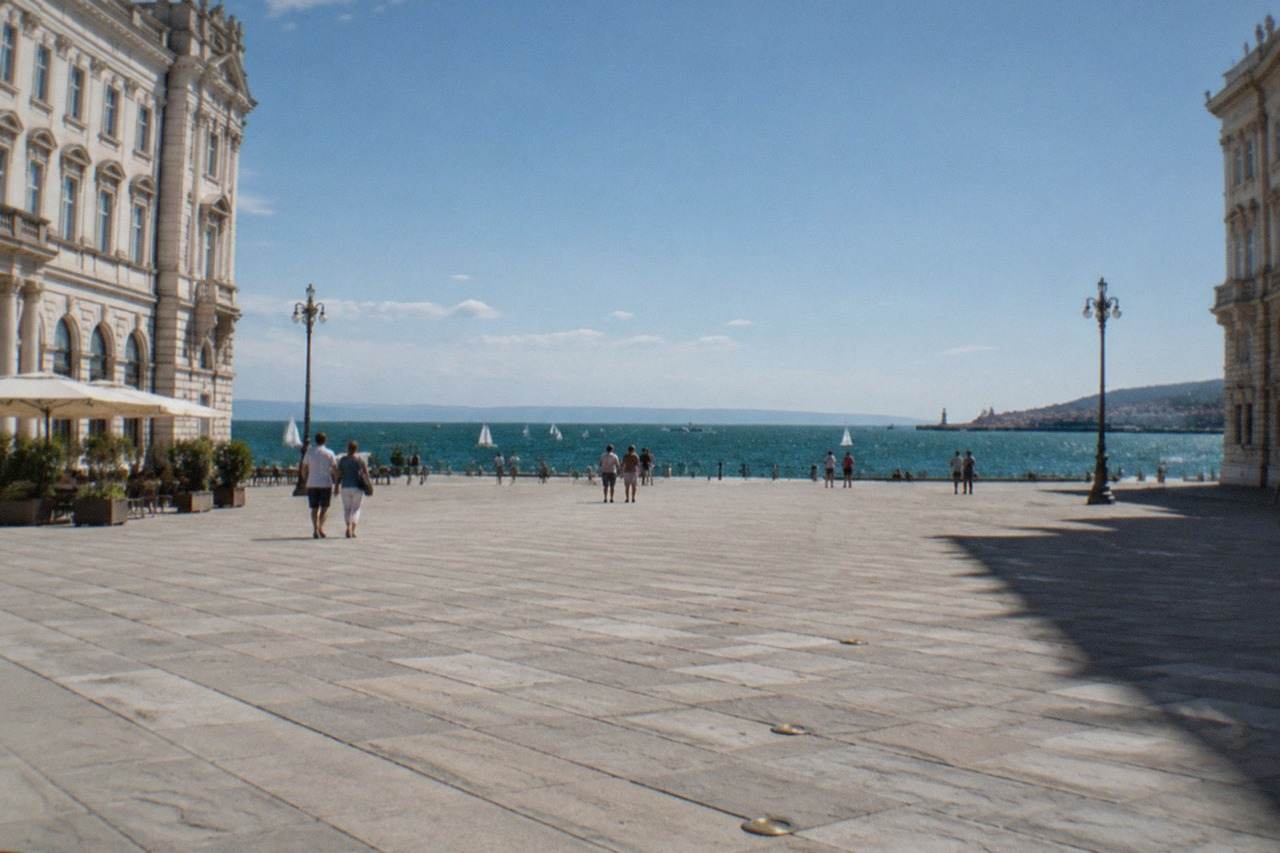
Trieste, Italy, is small enough that its whole historic centre fits between one seafront square and one hilltop castle, which is exactly why the question of how long to stay catches people out. The compactness is deceptive. Piazza Unità d'Italia, the Canal Grande, Città Vecchia and the Cathedral of San Giusto can be walked in a day, but the city's best material, the Miramare Castle up the coast, the Karst plateau above it, the osmize farm cellars and the cross-border day trips into Slovenia, sits outside that walkable core. The honest answer depends on whether you are treating Trieste as a destination or as a stop on the way to somewhere else, and on which day of the week you arrive, because the city's two biggest museums close on different weekdays.
How Many Days Should You Spend in Trieste?
Most visitors should plan two full days in Trieste, Italy, with three as the comfortable ideal: day one for the compact centre around Piazza Unità d'Italia, the Canal Grande and Città Vecchia, day two for the San Giusto hill and the museums, and a third day for Miramare Castle and the Karst plateau above the city. One day is enough only for the seafront core, and four or more days only make sense if you are using Trieste as a base for Slovenia, Croatia or the Friuli coast.
That two-day baseline is not a compromise, it is what the geography gives you. The centre is genuinely walkable in a way few Italian port cities are: the Roman theatre is something you look down into from the street, Molo Audace is a flat stroll from the main square, and the climb to the Cathedral of San Giusto takes minutes rather than a commute. What breaks the two-day plan is not distance but opening hours. The Museo Revoltella closes on Tuesdays, Castello di San Giusto closes on Mondays from 12 October, and Grotta Gigante, the giant cave on the Karst, runs Tuesday to Sunday only from September to February. A visitor who arrives on the wrong weekday can find the two things they most wanted to see both shut.
The third day earns its keep differently depending on the season. Miramare Castle, at EUR 17.00 for an adult ticket with the park free all year, is the single most popular sight in the area and sits up the coast at Grignano, outside the walkable core. The Karst above the city adds the osmize, the farm cellars where local producers sell their own wine, signposted by a frasca branch at the turning and tracked on the osmize.com calendar. In October the whole calculation shifts again, because the Barcolana regatta, 2-11 October 2026 with the main race on Sunday 11 October, fills the gulf with the largest sailing fleet in the world and turns the seafront into the show itself. This is the planning logic the whole of Trieste Travel Guide is built around: match the day count to the weekday, not just to the sight list.
Is One Day in Trieste Enough?
One day in Trieste, Italy, is enough to see Piazza Unità d'Italia, Molo Audace, the Canal Grande with the Serbian Orthodox church, the Roman theatre from the street, and the Cathedral of San Giusto, all on foot and all without rushing, but it is not enough for Miramare Castle, the museums or the Karst, and it leaves no room for the caffè culture the city is actually known for. Treat a single day as the seafront-and-hill circuit, and accept that you are sampling the centre rather than the city.
The one-day route works because the core is flat and linear. Start at Piazza Unità d'Italia, walk out along Molo Audace for the view back at the square, then cut inland to the Canal Grande and the Borgo Teresiano grid before climbing to San Giusto. The cathedral is free to enter, weekdays 8:00-18:30 and Sundays 9:00-19:30, and the castle beside it costs EUR 7.00. If you want structure on a short stop, a guided walk helps: the guided tour in the heart of the city runs 2h 30m from $50.44 per person and ends with an experience in a historic caffè, and Check availability if that format suits your day. For a cheaper overview, the bus tour with audio guide covers the same core from $19.49.
Cruise passengers face a slightly different version of this question, and the answer is friendlier than at most ports: the terminal sits close to the centre, so a single day ashore genuinely delivers the seafront, the canal and the hill. The trade-off is that everything beyond the core, Miramare especially, has to be dropped or reached on a timed excursion, and what to do in Trieste in one day covers that compressed circuit in detail.
What Does a Two-Day Trieste Itinerary Cover?
Two days in Trieste, Italy, covers the entire walkable centre properly: day one for Piazza Unità d'Italia, Molo Audace, the Canal Grande, Città Vecchia and the Borgo Teresiano, day two for the San Giusto hill, Castello di San Giusto, the Museo Revoltella and the Risiera di San Sabba, with evenings free for the historic caffès and the waterfront. Two days is the length at which Trieste stops being a sightseeing sprint and starts being a city you have actually been in.
The split matters. Day one should stay flat: the seafront, the canal, the old town lanes of Città Vecchia, and the café culture that runs through all of it, because the caffès are not an add-on here, they are the living room the city was built around. Day two should take the hill: San Giusto's castle and cathedral, then the Revoltella for modern art and, if your interests run that way, the Risiera di San Sabba, the national monument at the former rice-husking complex, which is free to enter and open daily 9:00-19:00 through 11 October, then 9:00-17:00. A full two-day plan is laid out in a two-day Trieste itinerary, and the question of whether that is enough has its own treatment at how many days in Trieste is enough.
Why Do Three Days Work Better for Trieste?
Three days in Trieste, Italy, adds the two things the centre cannot give you: Miramare Castle up the coast, with its EUR 17.00 adult ticket and free park, and the Karst plateau above the city, where Grotta Gigante runs guided-only visits at EUR 15.00 and the osmize farm cellars open seasonally. The third day is where the city's setting, between the Adriatic and the limestone plateau, finally gets its turn.
The pattern is simple: two days on the city as above, then a day that leaves it. Miramare is the headline, the white castle Maximilian built over the gulf, and the park around it is free all year even if you skip the castle interior. The Karst is the counterweight: Grotta Gigante is guided-only with compulsory booking, departures at 9:00, 10:00, 11:00, 12:00, 14:00, 15:00 and 16:00, and it runs every day from March to August but Tuesday to Sunday only from September to February. Getting up the hill is cheap, an urban day ticket is EUR 3.35 and the Opicina tram, running from piazza Dalmazia since its 1 February 2025 reactivation, is covered by the same ticket. A three-day Trieste itinerary sequences all of this, and what to do in Trieste for 3 days covers the same ground from the activities side.
| Length of stay | What fits | What you miss |
|---|---|---|
| 1 day | Piazza Unità d'Italia, Molo Audace, Canal Grande, Città Vecchia, San Giusto hill | Miramare, museums, the Karst, the caffè culture at leisure |
| 2 days | The full centre plus Museo Revoltella, Castello di San Giusto, Risiera di San Sabba | Miramare Castle, Grotta Gigante, the osmize |
| 3 days | Everything above plus Miramare and the Karst plateau | Cross-border day trips to Slovenia or Croatia |
| 4+ days | All of the above plus Ljubljana, Piran, Postojna or the Friuli coast | Nothing within day-trip range |
If the third day is the one that sells you on three nights, it is also the one worth locking in early: Miramare's combined castle-and-park ticket with the current exhibition is the most time-sensitive item on the list, and the operator's live listing shows the dates it runs.
When Should You Plan More Days in Trieste?
Plan four or more days in Trieste, Italy, only when you are using the city as a base for the region, because Ljubljana, Lake Bled, Piran, Postojna Cave and the Friuli towns all sit within day-trip range, and each one consumes a full day of transport and visiting. Trieste the city is a two-to-three-day destination; Trieste the region is a week.
The border position is the reason this works. Slovenia is minutes away, and Croatia is close beyond it, with all three countries using the euro. The one live caveat: Italy is running temporary border checks on its land border with Slovenia through 18 December 2026, so carry a passport or national ID card rather than assuming a borderless crossing. Popular day trips include the full-day Ljubljana and Lake Bled tour from $108.91 per person, the Piran and Slovenia coast tour from $114.64, and Postojna Cave with Predjama Castle from $137.57, each a full day of the four-day plan. The how many days do you need in Trieste page addresses the same question from a planning angle.
| Verified sight | Adult price | Hours that shape the plan |
|---|---|---|
| Castello di San Giusto | EUR 7.00 | Daily 10:00-19:00 to 11 Oct; Tue-Sun 10:00-17:00 from 12 Oct, closed Monday |
| Cattedrale di San Giusto | Free | Weekdays 8:00-18:30, Sundays 9:00-19:30 |
| Museo Revoltella | EUR 8.00 | Daily 10:00-19:00, closed Tuesdays |
| Castello di Miramare | EUR 17.00 | Daily 9:00-19:00, park free all year |
| Grotta Gigante | EUR 15.00 | Guided only, booking compulsory; daily Mar-Aug, Tue-Sun Sep-Feb |
| Risiera di San Sabba | Free | Daily 9:00-19:00 to 11 Oct, then 9:00-17:00 |
Common Questions About How Many Days to Spend in Trieste
How many days should you spend in Trieste?
Two full days for the centre, three if you want Miramare Castle and the Karst plateau, and four or more only if you are basing yourself in Trieste for day trips into Slovenia, Croatia or the Friuli region.
Is one day in Trieste enough?
One day covers Piazza Unità d'Italia, Molo Audace, the Canal Grande, the Roman theatre from the street and the San Giusto hill, but not Miramare, the museums or the Karst. It works as a cruise stop or a Venice detour, not as a visit to the city.
What day of the week should you arrive in Trieste?
Avoid landing your museum day on a Tuesday, when the Museo Revoltella is closed, and from 12 October avoid Mondays for Castello di San Giusto. Grotta Gigante is closed Mondays from September to February. Check your arrival weekday against these before booking.
Can you visit Miramare Castle and Trieste centre on the same day?
Yes, but it makes for a full day, which is why the two-day plan keeps the centre and the three-day plan adds Miramare. The castle is EUR 17.00, open daily 9:00-19:00, and its park is free all year.
Is Trieste walkable enough to save time?
The historic centre is compact and flat along the seafront, so walking saves both time and fare money; an urban day ticket at EUR 3.35 covers the buses and the Opicina tram for anything uphill or out of town.
Is Trieste a good base for day trips?
Excellent: Ljubljana, Lake Bled, Piran, Postojna and Lipica are all within day-trip range, and Italy, Slovenia and Croatia all use the euro. Carry ID, because Italy is running temporary checks on the Slovenia land border through 18 December 2026.
The short version: book two days and you leave having seen Trieste, book three and you leave having understood it, and book four when the border itself is part of the plan.