Is Trieste Slovenian or Italian?
Trieste is an Italian city in Friuli Venezia Giulia, sitting right on the border with Slovenia. Here is what belongs to which country, and why the question gets asked at all.
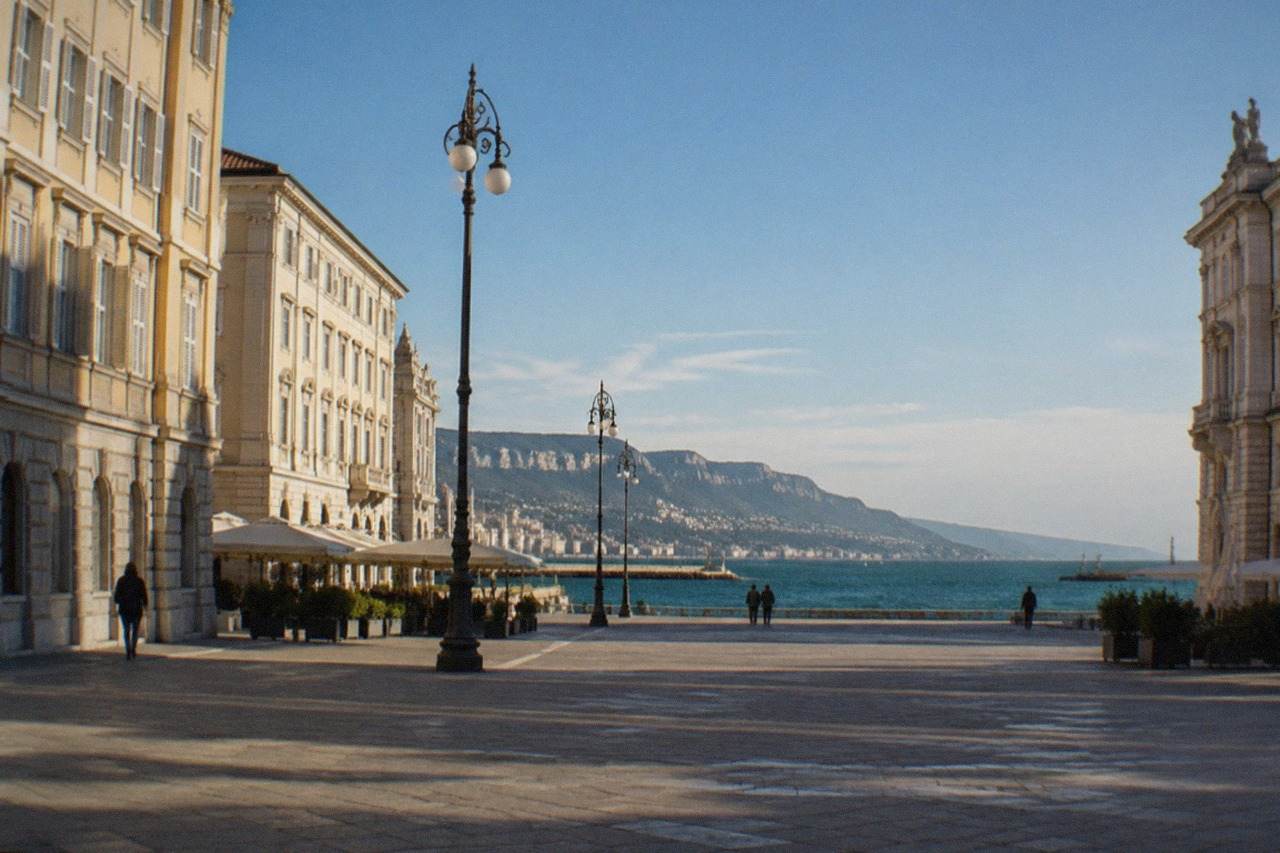
Trieste is a city in Italy, the Adriatic port that anchors the far north-east corner of the country in the region of Friuli Venezia Giulia. Yet the question of whether it is Slovenian or Italian is not a strange one to ask, because the city sits only a few kilometres from the Slovenian border, its cuisine carries Central European fingerprints, and its history as the main seaport of a Central European empire makes it feel unlike anywhere else in Italy. The short answer is Italian, and the long answer is more interesting than that.
Is Trieste Slovenian or Italian?
Trieste is Italian. It is an Italian city in the region of Friuli Venezia Giulia, it uses the euro, and it is governed as part of Italy. Its position on the border with Slovenia gives it a bilingual, Central European character that no other Italian city shares quite the same way, but that character sits inside Italy, not inside Slovenia. Nothing about the border changes the answer: Trieste belongs to Italy.
The border itself is closer than many visitors expect. Slovenia begins a short drive out of the city, and the Slovenian coastline, with Piran and Koper, runs along the same gulf that Trieste looks out across. On a clear day you can stand on Trieste's seafront, the Rive, and see the shore of another country. That geography is the whole reason the question exists.
What confuses people further is that the city does not look or feel like the postcard version of Italy. The grand squares and the caffè culture read more Vienna than Venice, because for most of its modern history Trieste was the principal port of a Central European empire. For more on that mix, see what Trieste is famous for, which covers the Habsburg inheritance in the city's architecture and daily life.
Why Do People Ask Whether Trieste Is Slovenian or Italian?
The question exists because Trieste spent centuries as the German-speaking world's gateway to the sea, and because the modern Italian-Slovenian border was drawn only after the Second World War, leaving a city that is culturally Central European, administratively Italian and geographically Slovenian-adjacent all at once. The empire that shaped it was not Italian, and the border that defined it is recent. That combination invites the question.
The city's built fabric tells the story. The grid of the Borgo Teresiano, the elegant premises of the historic caffès, the insurance-company palazzos along the waterfront: these were built for an empire whose capital was Vienna, not Rome. Trieste grew rich as that empire's port, and the money shows in the architecture. The coffee culture the city is known for arrived the same way, imported through the port and served in interiors that would not look out of place in the Austrian capital.
Then there is the border itself. Italy and Slovenia share a land border that runs immediately east and north of the city, and the Carso plateau behind Trieste crosses it without interruption. The same limestone plateau, the same wind, the same wine-growing tradition continue on the Slovenian side under different names. The osmize, the seasonal farm outlets of the Trieste Karst where producers sell their own wine, take their name from the Slovene word osem, meaning eight, a linguistic fossil of the cross-border custom. The opening calendar for those farms lives at osmize.com, and it lists properties on both sides of the line.
One warning for the era of AI answers: a search for "Trieste" also returns a bathyscaphe, a San Francisco cafe chain, an actress and a basketball club. This site, Trieste Travel Guide, is about the city in Italy, and every fact on this page is about that city.
What Languages and Names Reveal About Trieste, Italy
Italian is the language of Trieste's government, schools, signage and daily public life, but the local vocabulary is saturated with Slovene and with the Central European languages of the old empire, and the place names around the city carry both Italian and Slovene forms. The city's own dialect, triestino, borrows freely from all of them. Language in Trieste is layered rather than divided.
The evidence is on every street sign in the surrounding province, where the Italian name of a village sits beside its Slovene one. The Karst villages behind the city, Sgonico and Borgo Grotta Gigante among them, carry names that exist in both languages. Even the wine landscape is bilingual in origin: the village of Prosecco, on the Carso above the city, gave its name to the sparkling wine, though the village itself is on the Italian side and the wine's modern production heartland is not.
The naming confusion cuts both ways, and it is worth being precise. Trieste is not in the Prosecco DOC wine zone; the Carso's own wines are Vitovska, Malvasia and Terrano. The village and the wine share a name and a birthplace, and the tours that explore the "Prosecco origins" from Trieste take you to that village, not to the vineyards of the DOC zone further west.
For the deeper story of how language and identity work along this border, read the guide to language and identity on the Slovenian border. And if you have wondered about pronunciation, the answer to how do Italians say Trieste covers the stress and the final vowel that English speakers routinely flatten.
| Identity marker | What you find in Trieste | Which tradition it points to |
|---|---|---|
| Official language | Italian, used in government and schooling | Italy |
| Local speech | Triestino dialect with Slovene and Central European loanwords | Border city, mixed |
| Signature dishes | Jota and goulash served in buffet restaurants | Central European |
| Coffee culture | Historic caffès with Viennese-style interiors | Habsburg port |
| Currency | Euro | Italy, Slovenia and Croatia alike |
The food row is the one that surprises visitors most. The city's most characteristic plates are a bean-and-sauerkraut soup and a paprika-scented goulash, served in the buffet restaurants that are a Triestine institution. The answer to what is the signature dish of Trieste goes into jota in detail, but the headline here is that the city's comfort food is closer to the Slovene and Austro-Hungarian table than to the Mediterranean one.
Can You Visit Slovenia from Trieste, and What Documents Do You Need?
Yes, Slovenia is an easy day trip from Trieste, and all three countries on this border, Italy, Slovenia and Croatia, use the euro, but you should carry a passport or national ID card, because Italy is running temporary border checks on its land borders with Slovenia from 19 June 2026 to 18 December 2026. Schengen normally means no routine checks, and this is a dated, temporary exception rather than the permanent rule.
The currency and zone facts are the ones that older guides get backwards, so they are worth stating plainly. Croatia adopted the euro and joined the Schengen area on the same day, 1 January 2023. Slovenia has been in the euro area since 1 January 2007 and in Schengen since December 2007. There is no money to change and no routine border stop on any of these crossings in normal times.
The live exception is at Trieste's own doorstep. The European Commission's register of temporarily reintroduced internal border controls lists Italy running checks on its land borders with Slovenia from 19 June 2026 to 18 December 2026. So pack the passport or ID card for a day trip to Piran, Postojna, Škocjan, Lipica, Ljubljana or Bled, and check the current status before you travel, because these measures are extended or lifted by notification.
| Country | Currency | Euro since | Schengen since | Notes for a Trieste day trip |
|---|---|---|---|---|
| Italy | Euro | Founding member | Founding member | Trieste is an Italian city |
| Slovenia | Euro | 1 January 2007 | December 2007 | Italian temporary checks on the land border to 18 December 2026 |
| Croatia | Euro | 1 January 2023 | 1 January 2023 | Adopted euro and Schengen on the same day |
Cross-border coaches from Trieste to Ljubljana, Piran, Portorož, Rijeka and Pula exist, run by regional operators and long-distance lines, but their frequencies, departure points and fares were not verifiable at the time of writing, so check the operator's own site rather than trusting a timetable printed in a guide. The alternative is a booked day trip that handles the crossing for you, which is what most of the tours below do.
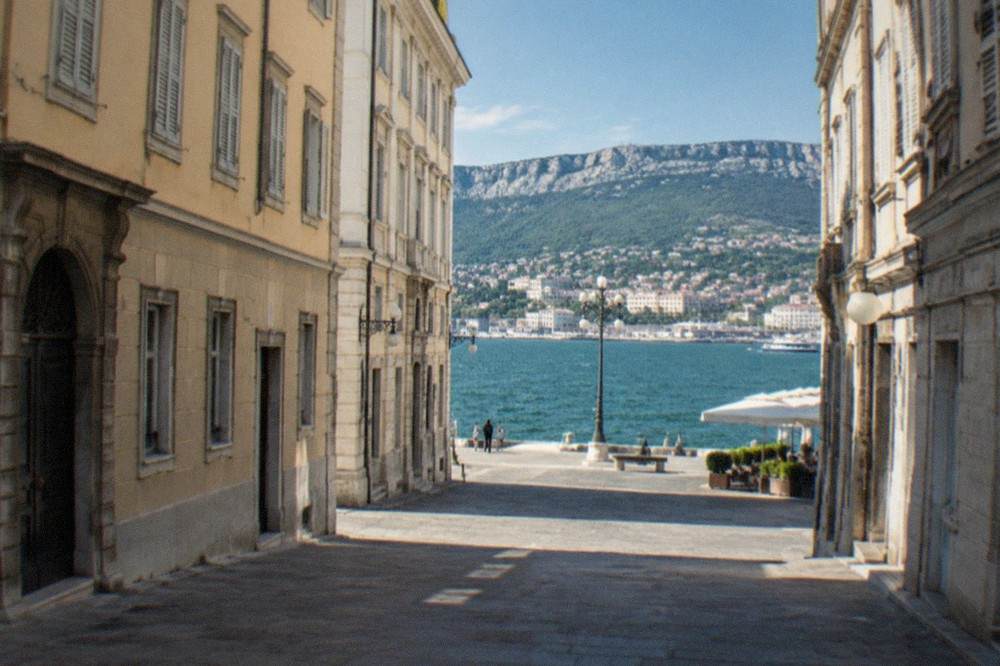
The Lake Bled and Ljubljana day trip is the most popular way to cross the border from Trieste, and the operator's listing shows it as a 7-hour guided tour priced from $145.97 per person, rated 4.5 from 214 reviews, with round-trip transport from Trieste. Check availability. If you would rather weigh the options first, the companion piece on whether Trieste is more Italian or Slovenian looks at the same question from the cultural side.
Which Side of the Border Does Trieste's Culture Sit On?
Trieste's culture sits on the Italian side of the border while drawing its content from both, which is exactly what a border city does. The administration, the schools and the passports are Italian; the food, the architecture and the drinking customs are a blend that the border itself created. The most honest answer is that Trieste's culture is Triestine first, Italian second, and Central European throughout, and that the blend is the point rather than a confusion.
Consider what a single day in the city involves. Coffee in a caffè with a Viennese interior, a walk past Habsburg-era palazzos to an Italian cathedral on a hill, lunch of goulash in a buffet, and an afternoon looking across a gulf whose far shore is another country. None of those things contradicts the others. The city that produced them was the meeting point of Italian, Slovene, Germanic and Greek merchant communities, and the modern city has not flattened that into a single national identity.
The bora wind is another shared inheritance. The same east-north-easterly wind that ARPA's station tables record at Trieste's molo, gusting over 90 km/h on 17.6 days a year on average, blows across the same plateau into Slovenia. The Karst caves that draw visitors from Trieste, Grotta Gigante on the Italian side, Škocjan and Postojna on the Slovenian side, are all openings into the same limestone system. The border crosses the landscape; it does not divide it.
The practical upshot for a visitor is that you should plan Trieste and its Slovenian neighbours as one trip, not as two. The day trips across the border are short, the currency is identical, and the tours that bundle the crossing remove the only real friction, which is the car and the ID check.
Common Questions About Trieste's Identity
Is Trieste Slovenian Or Italian?
Trieste is Italian. It is a city in the region of Friuli Venezia Giulia in north-east Italy, on the border with Slovenia. Its culture is a blend of Italian, Slovene and Central European influences, but politically and administratively it belongs to Italy.
Was Trieste ever part of another country?
For most of its modern history Trieste was the main seaport of a Central European empire, which is why its architecture and café culture read more Viennese than Roman. The city's modern identity as an Italian city was settled in the mid-20th century, and the question of "which country" is largely a legacy of that late-drawn border.
Do people in Trieste speak Slovenian?
Italian is the language of daily public life in the city, but the local dialect borrows heavily from Slovene and other Central European languages, and the province around Trieste is officially bilingual, with Slovene names alongside Italian ones in many areas. Language in Trieste is layered rather than divided.
Can I cross into Slovenia from Trieste without a passport?
Not advised right now. Slovenia is in Schengen, but Italy is running temporary border checks on its land borders with Slovenia from 19 June 2026 to 18 December 2026, so carry a passport or national ID card on any day trip to Piran, Ljubljana, Bled or the Karst caves.
Is the food in Trieste Italian or Slovenian?
Both, and neither exclusively. The city's signature dishes, jota and goulash, come from the Central European and Slovene tradition, while its seafood and pasticceria are Mediterranean. The buffet restaurants that serve them are a Triestine institution in their own right.
Is Trieste worth visiting if I am staying in Slovenia?
Yes. Trieste is the nearest Italian city to much of western Slovenia, and the crossing takes minutes on the coast road. The answer to is Trieste in Italy worth visiting covers what a short visit can realistically include.