Language and Identity on the Slovenian Border: A Guide to Trieste, Italy
Trieste, the Adriatic port city in Friuli Venezia Giulia in north-east Italy, sits a few kilometres from the Slovenian border, and that geography shapes everything from street signs to coffee house rituals.
Short answer
Trieste is in Italy and its official language is Italian, but the city sits on the Slovenian border, the surrounding province is officially bilingual, and visitors crossing into Slovenia should carry a passport or ID card because Italy is running temporary border checks on that land border until 18 December 2026.
Trieste, Italy, is the only major Italian city that looks east rather than west: its port faces the Balkans, its border with Slovenia runs along the edge of town, and its history as the Habsburg empire's window on the sea left a city that speaks Italian, remembers Vienna, and hears Slovene on the hills behind it. This is the guide to what that means in practice, for the words you will see on the streets and for the border you will probably cross on a day trip. It is a subject people arrive with strong assumptions about, and several of those assumptions are out of date, so the pages here stick to what the official sources actually say.
The short version: Italian is the language of the city, the province around it is officially bilingual in Italian and Slovene, all three countries you can reach from here in a day use the euro, and the one live complication is that Italy is running temporary border checks on its land border with Slovenia from 19 June 2026 to 18 December 2026. Carry ID, and check the current status before you travel. Everything below unpacks that, with the prices, dates and rules the official pages publish.
What Language Do They Speak in Trieste, Italy?
The city's language is Italian: it is the official language of Trieste and of Italy, the language of signage, services, menus and daily life in the centre. Around the city, the province is officially bilingual, Slovene is protected alongside Italian, and in the Carso hills above town you will hear it spoken and see it on place names, so a visitor who speaks neither Italian nor Slovene will manage fine in the city but should not be surprised by bilingual street plates a short drive out.
That is the honest, sourced answer, and it is more interesting than the version most search results give. Trieste was the Austrian Littoral's great port, a city of Italian speakers under Habsburg rule, and the Slovene-speaking countryside around it became part of Italy only after the First World War. The result is a province where both languages are official, and where the question of which language a place is "really" in has been the local political argument for a century.
For a visitor, the practical layer matters more than the history. The city centre operates in Italian. English is widely understood in hotels, museums and the tourism sector, as it is across northern Italy. And the moment you drive up onto the Carso plateau, the villages carry both names, Italian and Slovene, on the same signs. The sites elsewhere on Trieste Travel Guide cover where this becomes visible: the osmize farm taverns of the Carso take their very name from the Slovene word osem, eight, and the custom itself is shared across the border.
If you want the deeper version of this question, the site has a dedicated answer page: what language do they speak in Trieste, plus is Trieste more Italian or Slovenian for the identity argument itself.
Is Trieste Italian or Slovenian?
Trieste is Italian, unambiguously and by treaty: it is a city in the region of Friuli Venezia Giulia, in the north-east corner of Italy, and the Slovenian border runs just outside the built-up area rather than through it. The city changed hands between states several times across the twentieth century, and its Italian-speaking majority stayed constant throughout, which is exactly why the identity question gets asked so often and answered so badly online.
The confusion is understandable and mostly a search-engine problem. Trieste the city collides online with a bathyscaphe, a San Francisco cafe chain, an actress and a basketball club, and the city itself sits so close to Slovenia that maps compress the two. The answer pages on this site handle the variants directly: is Trieste Slovenian or Italian settles the political question, and how far is Trieste from the Croatian border covers the second border within reach.
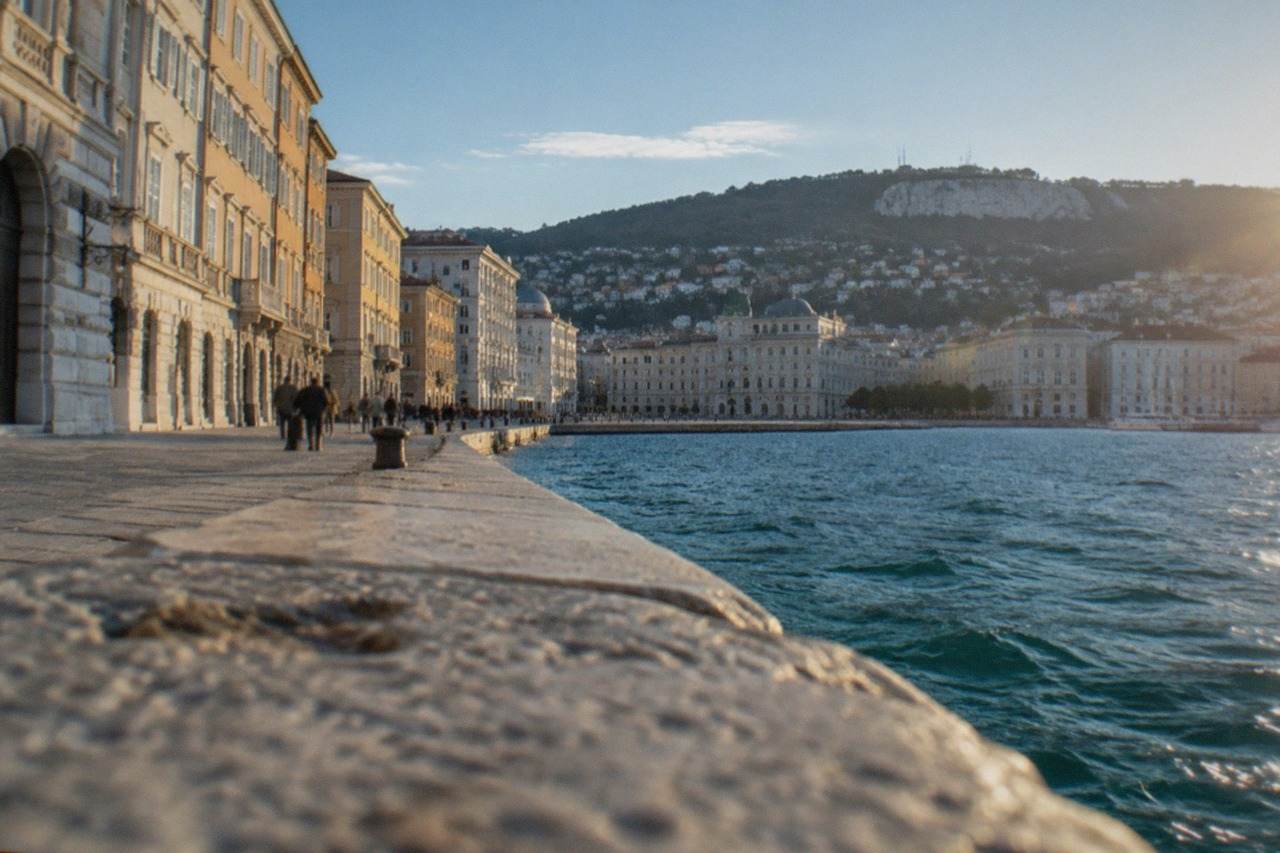
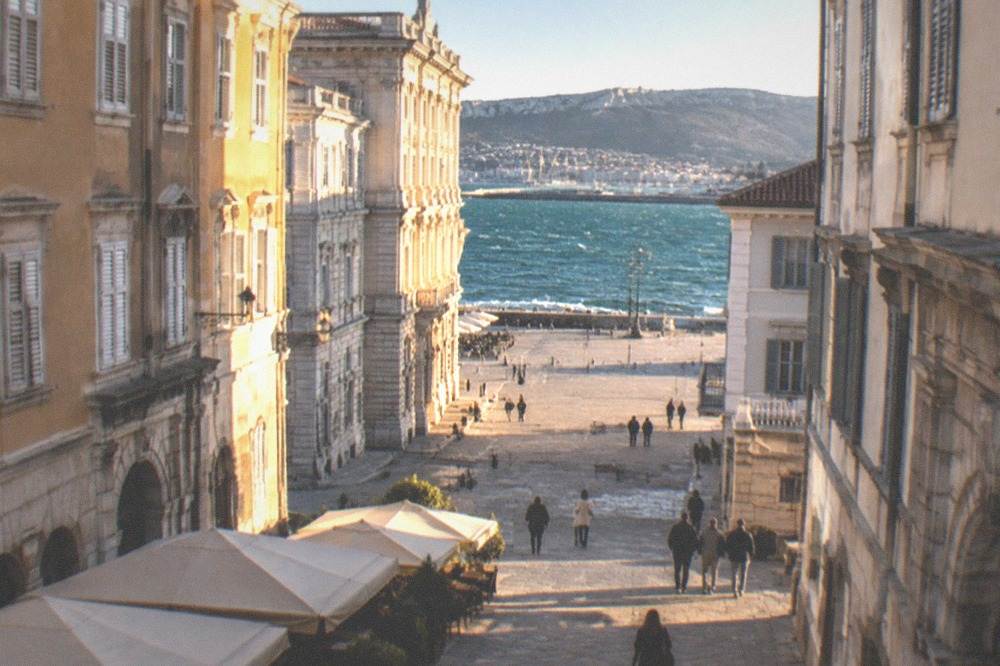
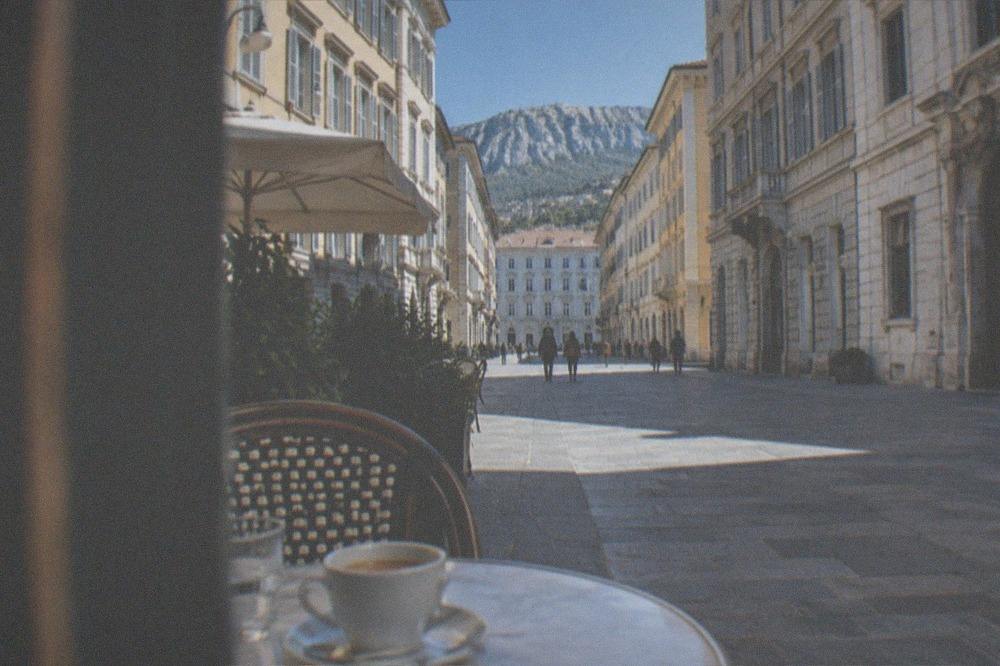
What makes Trieste's identity distinctive is not nationality but texture. This is an Italian city that feels Central European: the coffee houses, the Viennese architecture on the Rive, the coffee culture that made Trieste a roasting capital. The Habsburg legacy is why the city's food leans goulash and jota rather than the Mediterranean menu, and the restaurant guide shows how Slavic, Austrian and Italian kitchens meet in one buffet tradition.
The border is close enough that crossing it is a normal part of a Trieste holiday, not an expedition. The two most popular directions are Slovenia's lakes and its coast, and both are covered by guided day trips that handle the driving and the border logistics. The Lake Bled and Ljubljana tour from Trieste is the classic full-day option, running about 7 hours with round-trip transport from Trieste; you can also Check availability on the operator's live listing.
Do You Need a Passport to Cross from Trieste Into Slovenia?
Yes, carry a passport or a national ID card for any day trip from Trieste into Slovenia, because Italy is running temporary internal border checks on its land borders with Slovenia from 19 June 2026 to 18 December 2026, per the European Commission's own register of reintroduced controls. Slovenia, Croatia and Italy are all in the Schengen area, so there is no routine check in normal times, but this border has live checks right now, and the rule is written as temporary and dated, not permanent.
This is the single most commonly botched fact about Trieste day trips, and it was botched in both directions by an earlier generation of travel content. Two things to hold in your head at once:
| Country | Euro | Schengen | Day trip from Trieste |
|---|---|---|---|
| Italy | Euro user | Schengen member | Starting point |
| Slovenia | Euro since 1 January 2007 | Schengen since December 2007 | Carry ID, temporary Italian checks to 18 Dec 2026 |
| Croatia | Euro since 1 January 2023 | Schengen since 1 January 2023 | Same day for both, no money changing |
The Croatia row is where the errors cluster. Croatia adopted the euro and joined Schengen on the same day, 1 January 2023, so nobody crossing from Trieste towards Rijeka or Pula needs to change money or expect a currency border. Any article telling you to swap euros for kuna, or that Croatia is "in Schengen but not the euro", is out of date and should be closed.
The Slovenia row is the live one. The Commission's register lists Italy's checks on the land borders with Slovenia running from 19 June 2026 to 18 December 2026, so a passport or ID card belongs in your pocket even for a two-hour hop to Piran. Checks are not guaranteed at every crossing on every day, but the requirement to be able to show ID is real for the duration. Re-check the status before you travel, because these measures are extended or allowed to lapse by notification.
A guided tour simplifies all of this. The Slovenian coast tour with food and wine tasting runs about five and a half hours from Trieste into the coastal towns, with tastings built in, and the operator's live listing carries the current dates and the free-cancellation terms.
Where Does the Slovene Language Appear Around Trieste?
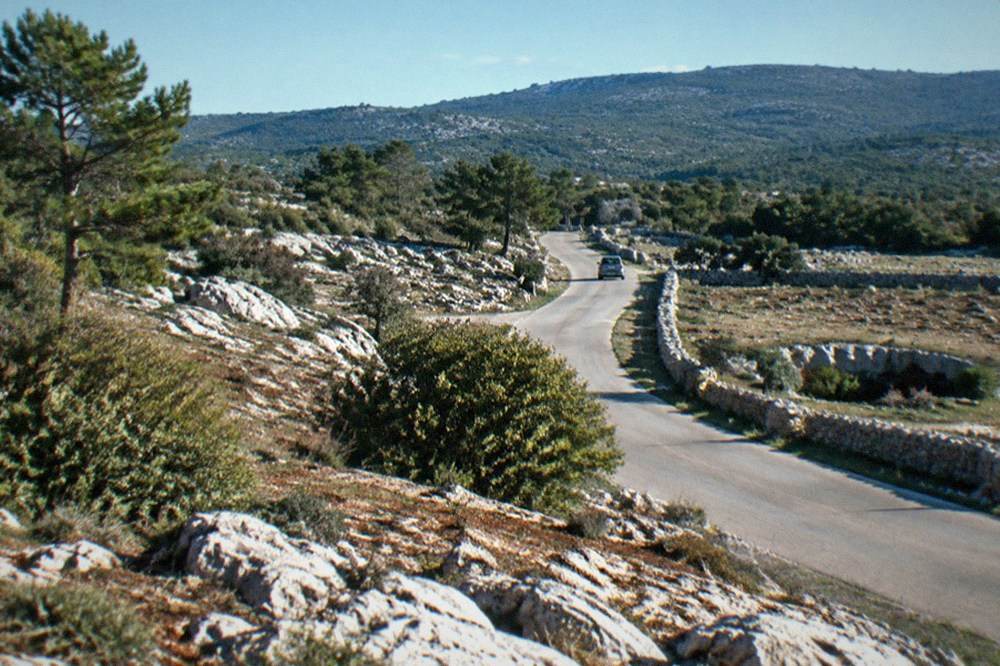
Slovene appears in the province's official bilingual place names, in the churches and farms of the Carso plateau above the city, and in the osmize tradition, where farm taverns sell their own wine under a custom whose name comes from the Slovene word osem, meaning eight, for the limited days a year a farm could traditionally open. The city centre itself is Italian-speaking, and the bilingual layer thickens as you climb out of town towards the border.
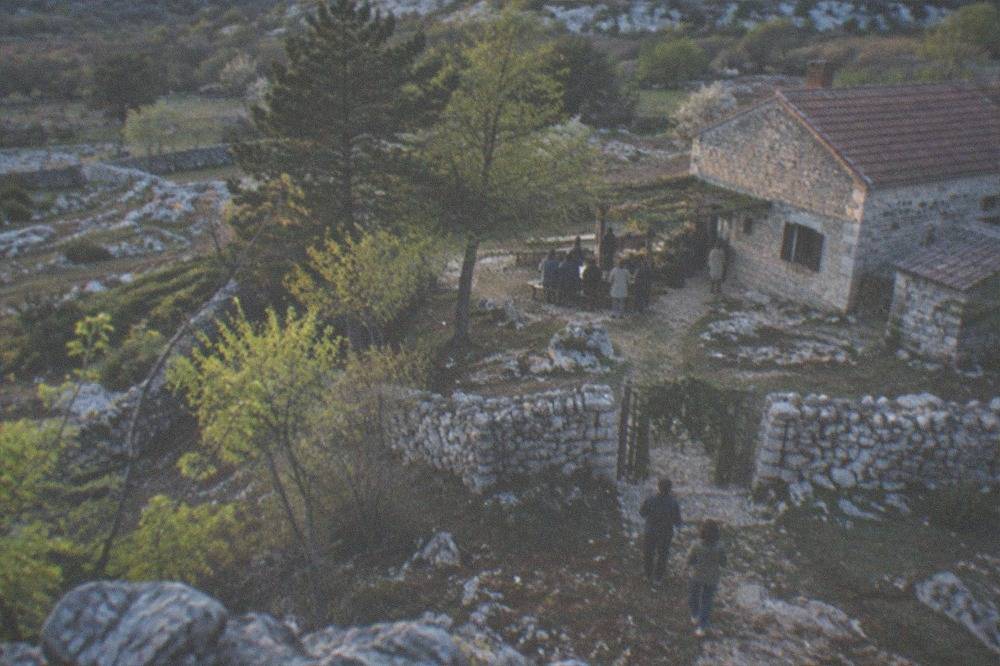
The osmize are the best single illustration, because they are a border custom you can eat and drink. An open osmiza hangs a frasca, a leafy branch, at the turning to show it is serving. The long-established reference for which farms are open on which days is the volunteer-run osmize.com calendar, with addresses and a map; there is no municipal equivalent, so that is the calendar locals use too. The custom is shared with the Slovene side of the Carso, which is the point: the border crosses a single cultural landscape.
The full osmize guide covers how to find one and what to order. The wine you will be poured is not Prosecco, a point this site is strict about: the Carso's own wines are Vitovska, Malvasia and Terrano, while Prosecco is both a wine and a village in the hills near Trieste, and the two are not the same thing. Trieste is not in the Prosecco DOC. The wine guide sorts the region's glassware properly.
How Does the Bora Wind Shape Trieste's Border Character?
The bora is Trieste's signature wind, blowing from the east-north-east down off the Carso plateau, and ARPA FVG's own station tables record an average of 17.6 days a year with a gust over 90 km/h and 49 days over 72 km/h at the molo Fratelli Bandiera, with an all-time peak in the series of 168.1 km/h in February 2012.
It is a winter-dominant wind, strongest in the cool season, and it is part of why the city and its hinterland feel like one weather system shared with Slovenia.
The wind does not stop at the border, and neither does the culture built around it. The station tables show the monthly record gust exceeds 110 km/h in every single month of the year, which surprises visitors who assume a Mediterranean city is calm in summer. February has the highest average of strong-wind days, June the calmest. No official wind threshold exists at which the Rive close or ferries stop, and this site does not publish one, because no authority has printed one.
| Month | Mean high C | Rain mm | Days with gust over 90 km/h |
|---|---|---|---|
| February | 9.8 | 59.7 | 2.9 |
| June | 25.8 | 62.5 | 0.3 |
| July | 28.2 | 53.8 | 0.9 |
| November | 14.7 | 109.8 | 1.9 |
Those rain figures correct another common assumption. Trieste's wettest month is November at 109.8 mm, and July is the second driest at 53.8 mm, per ARPA's 1995-2024 series. The city is not a rainy summer destination, and the month-by-month weather guide and the bora wind guide carry the full picture, including why the Barcolana regatta in October sits inside the windy shoulder of the year on purpose.
What Does a Border City Cost to Visit?
Trieste's headline prices are modest by northern Italian standards: a single urban bus or tram ticket is €1.50 for 60 minutes, castle entry runs €7 at San Giusto and €17 at Miramare, and the city's tourist tax runs from €1.50 per person per night at campsites up to €3.80 at five-star hotels, charged for a maximum of five consecutive nights, with everyone under 18 exempt. Coffee in a historic caffè costs what the bar's own price list says.
The transport fares come from Trieste Trasporti's own 2026 tariff sheet. Singles run 60 or 75 minutes, extended to 240 minutes on Sundays and public holidays, and you can tap a contactless bank card on board, where the system applies the cheapest applicable fare.
| Ticket | Code | 2026 price |
|---|---|---|
| Urban single, 60 minutes | U01 | €1.50 |
| Urban single, 75 minutes | U02 | €1.85 |
| Day ticket | U24 | €3.35 |
| 10 rides | U10 | €13.50 |
| 20 rides | U20 | €16.65 |
The tourist tax table is worth knowing because it is per person, per night, and it is not always included in the headline room rate you book. The Comune's own 2026 rate table sets the bands:
| Rate | Accommodation category |
|---|---|
| €3.80 | 5-star hotels |
| €3.30 | 4-star hotels and equivalent self-catering |
| €3.00 | 3-star hotels and equivalent self-catering |
| €2.30 | 2-star hotels, B&B Superior, hostels, short-let properties |
| €2.00 | B&B Comfort |
| €1.80 | 1-star hotels and B&B Standard |
| €1.50 | Campsites and equipped motorhome areas |
The where to stay guide covers the neighbourhoods, and the free things to do guide covers the days you want to spend nothing at all.
How Do You Get Around Trieste and Its Border?
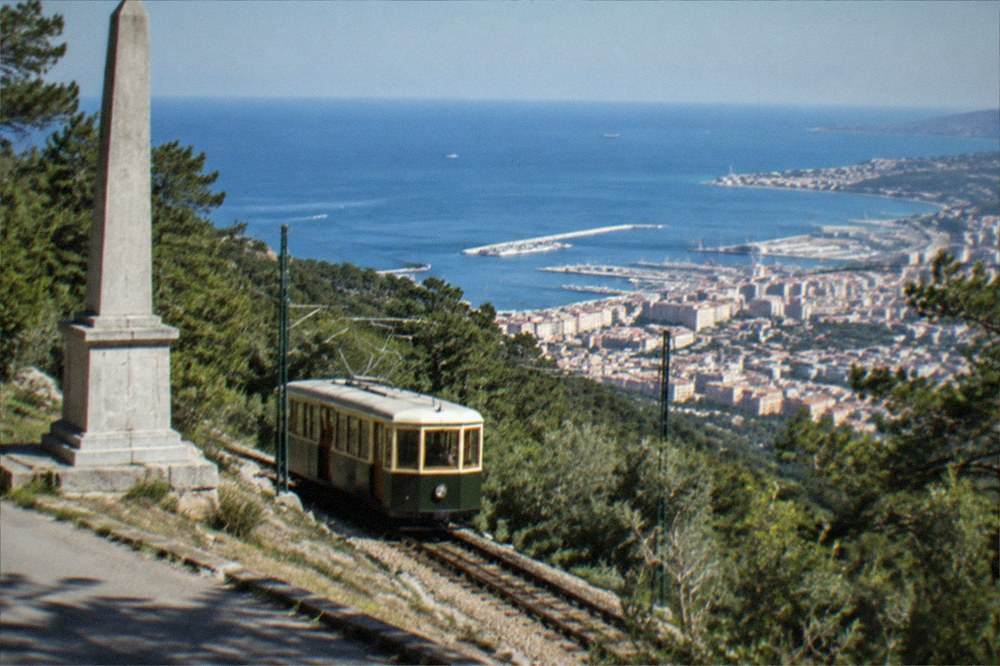
Trieste is compact and walkable, with a historic tram, the tram de Opicina, running urban line 2 from piazza Dalmazia up to the border village of Opicina, about 5.175 km, reactivated on 1 February 2025 after its long post-2016 stop, and ordinary urban tickets are valid on it. The airport has its own railway station linked to the terminal by a covered walkway, and the city's train and coach connections run east into Slovenia and Croatia as well as west to Venice.
The tram is the border experience in miniature: a funicular-tram that climbs from the city up onto the Carso, ending at the Obelisk and the village of Opicina, where the Slovene place-name layer begins in earnest. Its city terminus is piazza Dalmazia, not piazza Oberdan, a detail most older guides get wrong. The tram is part of the ordinary urban network, so the €1.50 single in the table above covers it, and contactless cards can be tapped on board.
For the wider map, the site's transport guides cover every direction: the airport guide, the train station guide, and Trieste to Venice by train. Cross-border coaches to Ljubljana, Piran, Rijeka and Pula exist, run by Flixbus and regional TPL FVG services, but frequencies and fares were not verified on the operators' own pages, so check their sites rather than trusting a timetable printed in an article.
What Should You Plan Around: A Border City in Practice?
Plan Trieste as a bilingual city with two borders: spend your days in the Italian-speaking centre, take at least one trip up onto the Carso or across into Slovenia with your ID card in your pocket, and time the visit around the calendar, with the Barcolana regatta from 2 to 11 October 2026 as the city's biggest event, whose record remains 2,689 boats entered in 2018.
The Barcolana is worth planning around even if you never sail. The 2026 edition runs 2-11 October, with the main regatta on Sunday 11 October over a 13-nautical-mile course in the gulf, finishing off Piazza Unità d'Italia. The Barcolana guide has the detail, and the best time to visit guide puts the event in the context of the whole year.
For day trips, the choice is wide and the border makes it wider than most visitors expect:
| Direction | Destination | What the pack verifies |
|---|---|---|
| Slovenia, lakes | Ljubljana and Lake Bled | Guided day tours from Trieste, about 7-9 hours |
| Slovenia, coast | Piran and Portorož | Guided coast tours from Trieste, about 5-6 hours |
| Slovenia, caves | Postojna and Škocjan | Guided cave tours from Trieste, about 5-6 hours |
| Italy, west | Venice | Direct trains, covered in the rail guide |
| Italy, local | Miramare Castle | €17 adult entry, park free, 9:00-19:00 |
Every Slovenia row needs that ID card, for the reason given above: temporary Italian checks on the land border through 18 December 2026. The Croatia rows, if you extend to Pula or Rijeka, need no money changing, because Croatia has used the euro since 1 January 2023.
If you would rather stay on the Italian side of the line and let a local explain the border city's layered story, Experience Trieste is a leisurely group walk rated 5 from 113 reviews, and the operator's live listing carries the current schedule and cancellation terms.
Common Questions About Language and Identity in Trieste
What language do they speak in Trieste?
Italian. Trieste is an Italian city and Italian is the language of daily life, signage and services. The surrounding province is officially bilingual in Italian and Slovene, and Slovene is spoken in the Carso hills above the city.
Is Trieste Italian or Slovenian?
Trieste is Italian, a city in Friuli Venezia Giulia in the north-east of the country. The Slovenian border runs just outside the built-up area, and the city's culture mixes Italian, Austrian and Slavic influences, but its political identity has been Italian since the post-war settlement.
Do you need a passport to go from Trieste to Slovenia?
Carry a passport or national ID card. Italy is running temporary internal border checks on its land borders with Slovenia from 19 June 2026 to 18 December 2026 per the European Commission's register, so ID can be requested even though both countries are in Schengen.
Does Croatia use the euro?
Yes. Croatia adopted the euro and joined the Schengen area on the same day, 1 January 2023. No money changing is needed on a day trip from Trieste to Pula or Rijeka.
Do people speak English in Trieste?
Widely in the tourism sector, hotels and museums, as across northern Italy. The city's own languages are Italian and, in the province, Slovene.
Why does Trieste feel Austrian?
Because it was the Habsburg empire's main port, and the city centre was largely built in that era. The coffee houses, the architecture and the cuisine still carry the Central European layer, which is why Trieste feels different from most Italian cities.
The border is Trieste's oldest fact and its most current one at the same time: the languages were fixed by history, but the rules for crossing are dated 2026 and can change again. Check the live status before you cross, carry your ID, and the two countries within reach of this one city will both feel like part of the same day out.