What Language Do They Speak in Trieste?
Italian is the official language of Trieste, Italy, but the city's streets carry Triestine dialect, Slovene and plenty of English. Here is what you will actually hear.
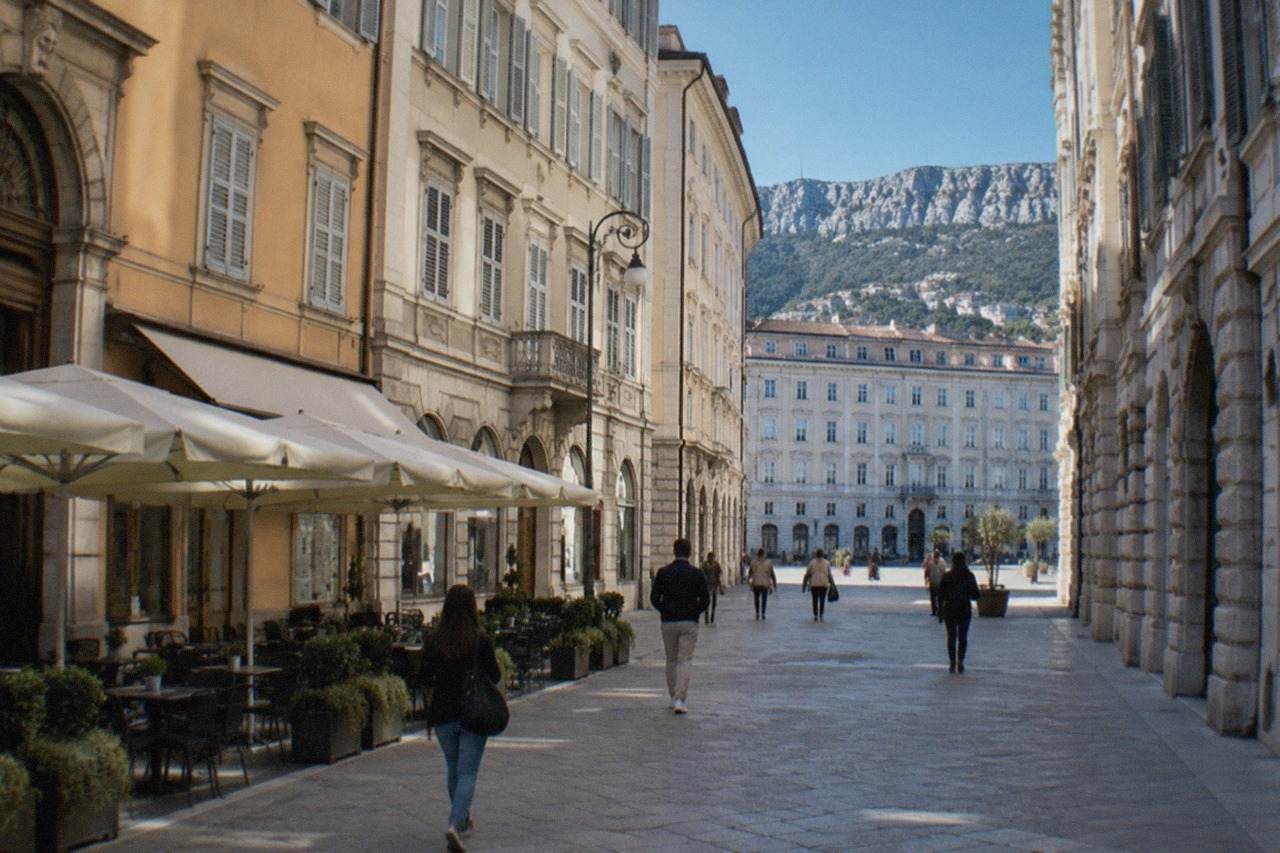
Trieste, the Adriatic port city in Friuli Venezia Giulia in the far northeast of Italy, has spent centuries as a crossroads of Italian, Slovene, German and Greek-speaking worlds, and you can still hear all of that in its streets today. The short answer to the language question is Italian, but the full answer is richer: most residents switch between standard Italian and a local dialect in a single conversation, Slovene is a protected minority language with co-official standing in the region, and English runs deep in the tourism and coffee-house economy. This page, part of Trieste Travel Guide, lays out exactly what you will hear, where, and what you need to book, say and carry.
What Language Do They Speak in Trieste?
The official language of Trieste, Italy, is Italian, and it is what you will hear in shops, restaurants, museums and on every sign in the city. In everyday speech, most locals actually talk in Triestine, a Venetian-derived dialect that most Italian speakers can follow with effort. Slovene is also present as a co-official minority language in Friuli Venezia Giulia, and English is widely used in hotels, guided tours and the historic caffè district.
That three-layer arrangement is the practical reality. A waiter may greet you in Italian, joke with a colleague in Triestine, and hand you an English menu without changing expression. The city's Habsburg past as the main port of the Austrian Empire left it with a Central European character that shows up in vocabulary as much as in architecture: the historic caffè culture, the buffet kitchens serving jota and goulash, and street names that switch between Italian and Slovene forms as you cross the municipality. For the deeper story of how the border shaped identity here, read our guide to language and identity on the Slovenian border.
| Language | Status in Trieste | Where you will hear it |
|---|---|---|
| Italian | Official language of Italy | Everywhere: signage, menus, transport, museums |
| Triestine dialect | Everyday spoken language, no official status | Markets, bars, among locals, in jokes and greetings |
| Slovene | Co-official minority language in Friuli Venezia Giulia | Some signage, schools, media, and across the border in Slovenia |
| English | Foreign language, strong in tourism | Hotels, guided tours, historic caffè, younger speakers |
Is Italian the Only Official Language in Trieste?
No. Italian is the sole state language of Italy, but Friuli Venezia Giulia is one of the country's five autonomous regions with special statute, and within it Slovene holds co-official status alongside Italian in the areas where the Slovene-speaking minority lives, which includes Trieste itself. In practice this means Slovene appears in official use, education and local media, while standard Italian remains the default for almost all visitors' interactions.
The Slovene presence is not a footnote. Trieste sits directly on the land border with Slovenia, and the neighbouring country's capital, Ljubljana, is close enough that the two cities function as a single day-trip zone. That geography has consequences for travellers that go beyond language: all three countries in this corner of Europe, Italy, Slovenia and Croatia, use the euro, so no currency change is ever needed on a cross-border excursion. The one live exception is border documentation, covered below.
Do People in Trieste Also Speak Slovenian?
Yes, a visible minority of Triestines speak Slovene as a first or family language, and the city has Slovene-language schools, churches and cultural institutions, a legacy of the border running through the Karst plateau immediately above town. Most Slovene speakers in Trieste are fully bilingual in Italian, so you are never expected to use anything but Italian with them, but knowing that the language is alive here explains much of the city's bilingual street furniture and its layered place names.
For visitors, the practical question is not whether anyone speaks Slovene but what the border means for a day trip. Slovenia is a euro-country inside Schengen, so in normal times you would cross without a checkpoint at all. These are not quite normal times on this particular frontier: Italy has temporary internal border controls in force on its land borders with Slovenia from 19 June 2026 to 18 December 2026, listed in the European Commission's register. The rule for your packing list is simple and dated, not permanent: bring a passport or national ID card, and check the current status before you travel.
| Country or crossing | Currency | Schengen status | Current border reality for day trips from Trieste |
|---|---|---|---|
| Italy | Euro | Member | Temporary checks on the Slovenia land border, 19 June to 18 December 2026 |
| Slovenia | Euro, since 1 January 2007 | Member since December 2007 | No active controls listed on its own borders; carry ID for the Italian side |
| Croatia | Euro and Schengen, both since 1 January 2023 | Member | No routine internal checks; carry ID as standard practice |
Language is also the lens through which the city tells its own history, and guided walks are a good way to hear it. The Trieste: Jewish Heritage Guided Walking Tour, a three-hour private walk for up to three people rated 5 from 4 reviews on the operator's live listing, traces a community that historically conducted its life in Italian, German, Slovene and Greek, and the guide's commentary is where that multilingual past becomes audible. You can Check availability on the listing page, and read more in our guide to Trieste's Jewish heritage and the city's layered identity.
What Is the Triestine Dialect?
Triestine is the local spoken dialect of the city, a variety of the Venetian dialect group that developed apart from Tuscan-based standard Italian during the centuries when Trieste was the principal seaport of the Habsburg Empire. It is the language of everyday conversation among locals, it borrows words from Slovene and German, and it is mutually intelligible with standard Italian for most purposes, though visitors sometimes mistake its faster rhythms and clipped vowels for a different language entirely.
You will hear it the moment you leave the tourist strip. Triestine is not written on signs and it is not taught in schools, but it dominates the market, the buffet kitchens and the standing bar of a historic caffè at breakfast. The dialect's vocabulary is where the port's history shows: words traded in from Slovene, from the German of the imperial administration, and from the shipping languages of the Adriatic. A few phrases go a long way with locals, and the food scene is the easiest place to test them, since the buffet counters serving jota and goulash are the dialect's natural habitat. See our answer to what food Trieste is famous for for where to start.
Can You Get by in Trieste with English?
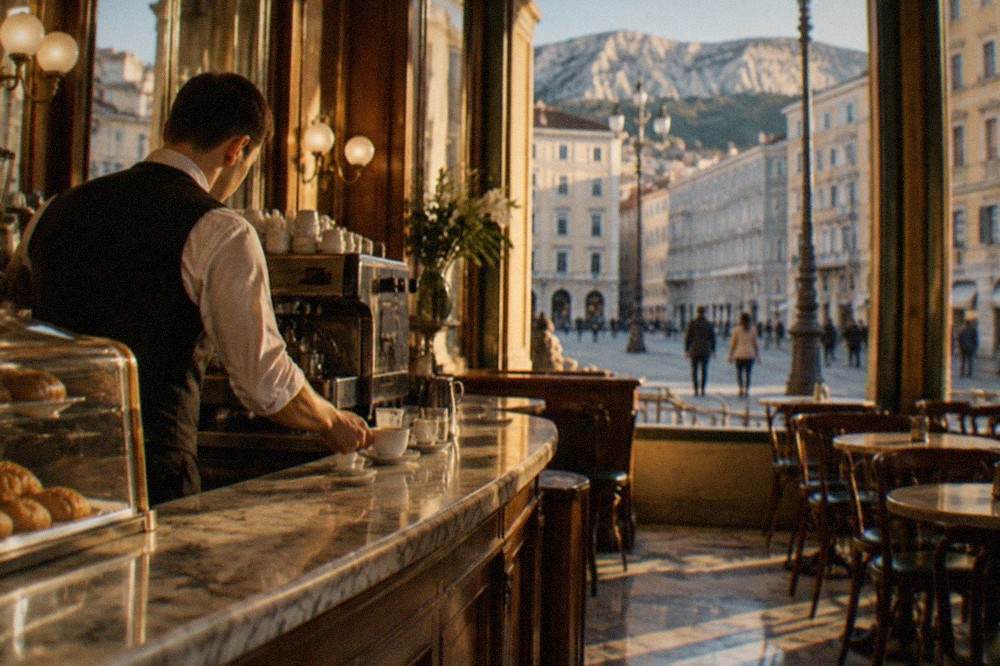
Yes. English is spoken widely enough in Trieste's tourism economy, in hotels, at major attractions, on guided tours and in the historic caffè, that a visitor with no Italian can manage comfortably, and younger residents generally have solid English. Italian remains the polite default for greetings and small transactions, and a visitor who opens in Italian before switching will get a warmer reception, but nobody in the visitor economy expects fluency and menus in the centre are routinely available in English.
The city's guided tours are the clearest example: products like the From Trieste: Ljubljana and Lake Bled day trip run with commentary in both Italian and English, and the same is true of the food walks and private city tours on the operator's live listings. If you want a fuller treatment of the practical side, including how much English to expect outside the centre, read our dedicated answer to whether they speak English in Trieste, Italy. The honest summary is that Trieste is one of the easier Italian cities for monolingual English speakers, precisely because its own identity has never been monolingual.
| Tour | Duration | From price on the listing | Rating |
|---|---|---|---|
| Trieste: Jewish Heritage Guided Walking Tour | 3 hours | $194.89 per group up to 3 | 5 from 4 reviews |
| Trieste: Unique Food Tour with Local Flavors and Tastings | 3 hours | $85.98 per person | 4.74 from 123 reviews |
| Miramare Castle and Park entry with Sphinx exhibition | Varies | EUR 20.50 per person | 4.4 from 146 reviews |
Common Questions About Language in Trieste
Visitors ask the same handful of language questions about Trieste, and the answers are consistent: Italian is the official language and the one to use by default, the Triestine dialect is what locals speak among themselves, Slovene is a co-official minority language you may notice on signage near the border, and English covers nearly every tourist situation from hotel check-in to guided commentary. The details below repeat the verbatim question this page answers, along with the practical follow-ups travellers most often have.
What language do they speak in trieste?
Italian is the official language of Trieste, Italy. In everyday speech most locals use the Triestine dialect, a Venetian-group variety, and Slovene is a co-official minority language in the wider region. English is widely available in tourism settings.
Is Slovenian spoken in Trieste?
Yes. A minority of Triestines speak Slovene as a first or family language, and the city has Slovene-language schools and institutions. Slovene speakers are typically fully bilingual in Italian, and the language is most visible in place names and signage near the Karst border.
Do I need to speak Italian to visit Trieste?
No. English is widely used in hotels, attractions and guided tours, and the historic caffè district in particular is used to international visitors. Learning a few Italian greetings is appreciated but not required.
What is the Triestine dialect?
Triestine is the city's everyday spoken dialect, part of the Venetian dialect group, shaped by centuries under Habsburg rule with borrowings from Slovene and German. It is not used on official signage but dominates local conversation.
What language is spoken across the border in Slovenia and Croatia?
Slovenian in Slovenia and Croatian in Croatia, but both countries use the euro and are in Schengen, and English is common in the tourist towns. Carry a passport or national ID card, because Italy is running temporary checks on its Slovenia land border through 18 December 2026.
How do Italians say Trieste?
Italians pronounce the city's name tree-ES-teh, with the stress on the second syllable and a sharp final vowel. Our separate answer on how Italians say Trieste covers the pronunciation in full.
The language layer is one of the quiet pleasures of this city: you can order in English, be answered in Italian, and overhear Triestine and Slovene at the next table, all within a single piazza. For what to do with the time you save by not studying phrasebooks, start with our answer to what Trieste is famous for and plan from there.