What Food Is Trieste Famous For?
Trieste, Italy is famous for jota, buffet pork dishes, goulash, Adriatic seafood and a coffee culture rooted in its Habsburg port past. Here is what to eat and how to taste it.
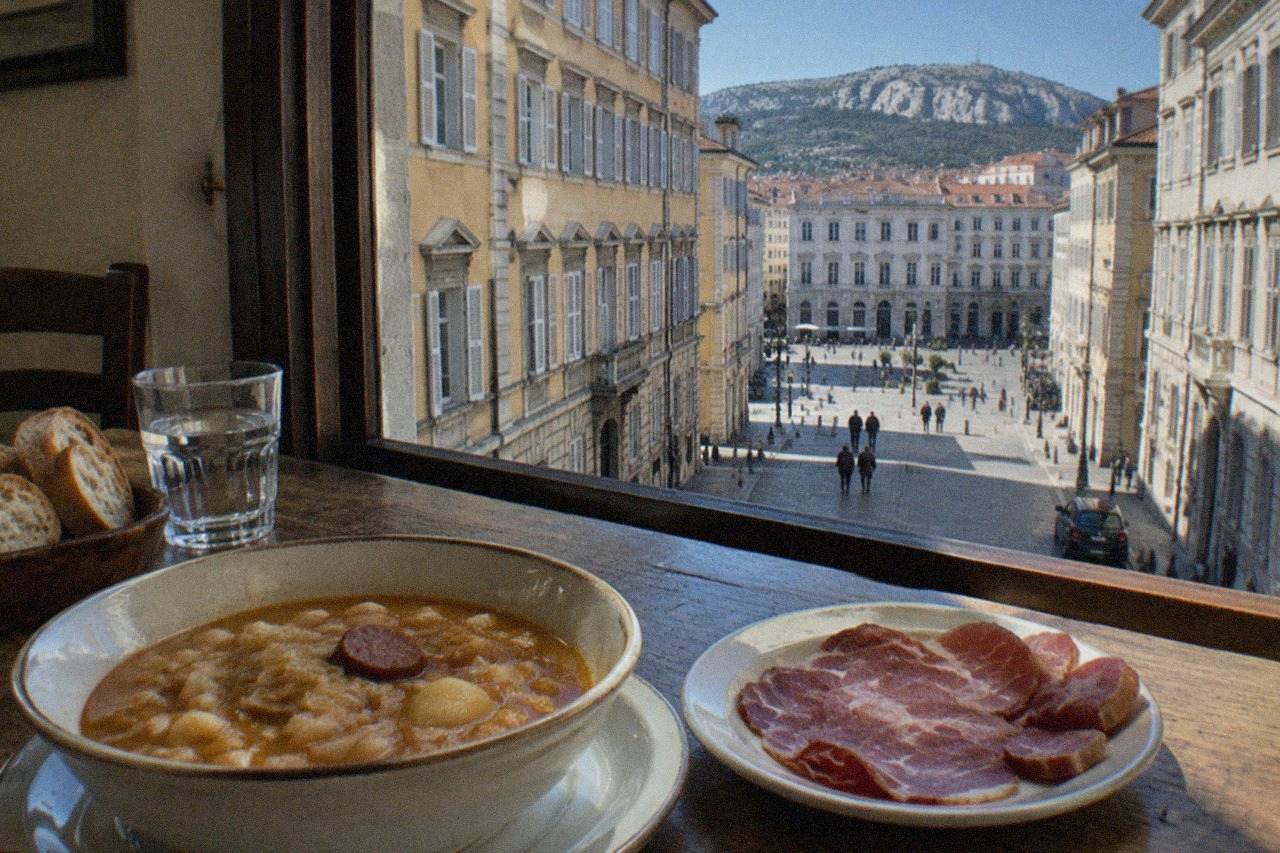
Trieste, the Adriatic port city in Friuli Venezia Giulia in the far northeast of Italy, is famous among eaters for a cuisine that looks north and east as much as it looks south. This was the Habsburg empire's great sea outlet, and the food still shows it: sauerkraut and pork in the soups, goulash on the menu, Austro-Hungarian cakes in the pastry windows, all sitting beside fresh Adriatic fish and a coffee culture that the port's trade history made central to city life. The question of what to actually order here confuses plenty of first-time visitors, because the answer is not the pasta-and-pizza register most people associate with Italy.
What Food Is Trieste Famous For?
Trieste, Italy is famous for jota, a sauerkraut, bean and pork soup; the buffet, a counter serving boiled pork, sausages and cured meats with mustard and horseradish; Austro-Hungarian goulash; Adriatic seafood; and presnitz and strudel-style sweets, all washed down with a deeply rooted caffè culture inherited from the city's centuries as the Habsburg empire's coffee port. None of this is the standard Italian register, which is exactly the point.
That mix is the honest answer. The city sits on a border where Italian, Slovene and Austro-Hungarian kitchens meet, and the local menu records every one of those influences. A visitor eating well in Trieste for two days will probably never order a pizza, and will not miss it. The dishes below are the ones the city's own kitchens are known for, the ones that show up on every local table from the Città Vecchia to the Karst villages above the city.
For a full restaurant-by-restaurant treatment, the companion guide to what to eat in Trieste goes deeper, and the page on the signature dish of Trieste takes the single most local plate of all, jota, on its own.
Which Savoury Dishes Define Trieste's Tables?
Three savoury dishes define Trieste: jota, the sauerkraut, borlotti bean and pork soup that is the city's signature; the buffet spread of boiled pork, cotechino and other cured and cooked meats served with mustard, horseradish and bread; and goulash, the paprika-rich stew that arrived with the city's Austro-Hungarian past and never left. Seafood from the Adriatic completes the picture.
Jota is the one to start with, because no other Italian city makes anything like it. Sauerkraut in a soup is a Central European habit, and Trieste is the one place on the Italian peninsula where it is a beloved everyday dish rather than a curiosity. The buffet tradition is just as distinctive: these are not buffets in the hotel sense but old-fashioned meat counters, where pork cooked in broth is sliced to order and eaten standing or at a small table with sharp accompaniments. It is hearty, cheap by local standards, and entirely of the port's working past.
Goulash rounds out the Central European third of the menu, a legacy of the decades when Trieste was the busiest port of a Central European empire. Then the sea asserts itself: the Gulf of Trieste supplies the fish that appears in local kitchens, and the seafood side of the menu is the one that most resembles the rest of coastal Italy. The local guide to jota, goulash and the Trieste buffet covers where these traditions came from and where to find them today.
Eating your way through that list on your own takes planning, and the city's guided food walks exist precisely to solve it. The table below compares the main food-focused experiences available, with the prices and ratings each operator's live listing currently shows.
| Experience | Duration | From price | Rating |
|---|---|---|---|
| Guided foodie walking tour | 3 hours | $71.08 per person | 4.9 from 264 reviews |
| Unique food tour with local flavors and tastings | 3 hours | $87.58 per person | 4.9 from 88 reviews |
| Small group pasta and tiramisu class | 3 hours | $157.65 per person | 4.4 from 40 reviews |
| Private cooking class at a local's home | 3 hours | $166.23 per person | 3.9 from 6 reviews |
Why Is Trieste a Coffee City Before Anything Else?
Trieste is a coffee city because the port made it one: green coffee has been landed, warehoused and roasted here on an industrial scale for well over a century, the historic caffè houses of the Habsburg era survive in the city centre, and residents order coffee with a local vocabulary all their own. The habit is observable everywhere; what is not observable is a reliable per-head consumption figure, and no official body publishes one.
That last sentence matters. You will read, in many a guide, that Trieste drinks two or three times the Italian average. No primary source for that number exists: it appears nowhere in official statistics, and neither the port authority nor the city's own coffee institutions publish it. The culture does not need the number. It shows up in the grand caffè of the centre, in the city's role as a roasting hub, and in the way a Triestino orders at the counter, using local names for coffee styles that a visitor will not find in Rome or Naples. Other pages covering the same trip are gathered on Trieste Travel Guide.
The coffee story connects to the food story at every turn, because the historic caffè are also where the sweets live. The page on why Trieste is famous for coffee takes that thread further, and the wider question of what Trieste is most famous for places the caffè culture alongside the port and the architecture.
What Sweets and Seafood Should You Order in Trieste, Italy?
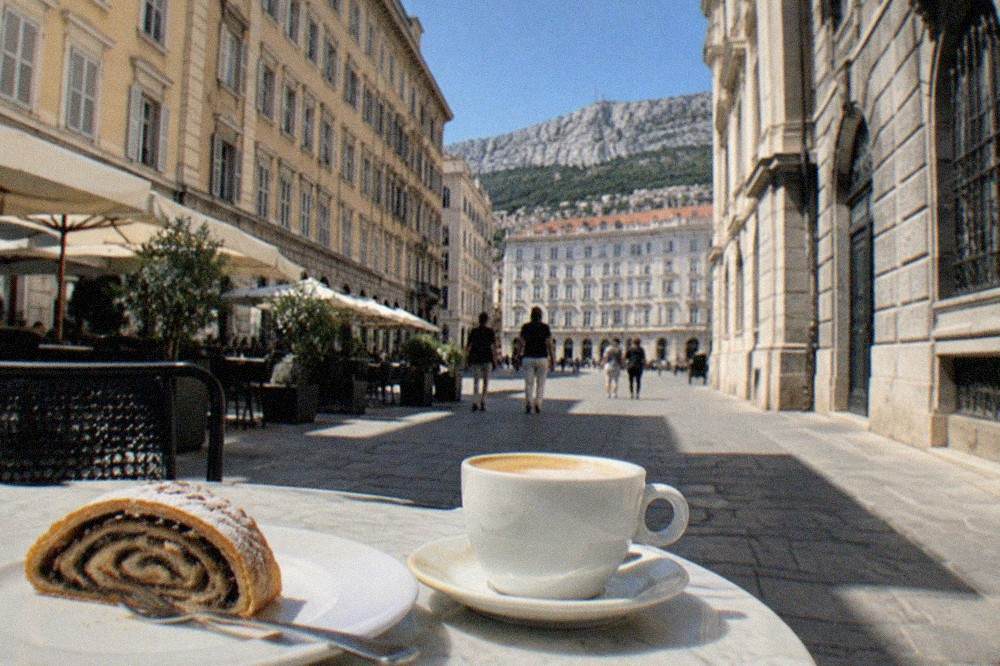
The sweets to order in Trieste are presnitz, a rolled pastry of dried fruit and nuts, and the local strudel tradition inherited from the Austro-Hungarian kitchen; the seafood to order is whatever the Gulf of Trieste landed that day, from small fried fish to shellfish and sardines, which appear on menus all along the waterfront from Città Vecchia to Barcola.
Presnitz is the one to seek out by name. It is a spiral of pastry wrapped around a filling of nuts, dried fruit and honey, the kind of cake that makes sense only once you remember which empire this city belonged to. The strudel here follows the same logic. Both sit in pastry cases that have more in common with Vienna than with Naples, and both are traditionally paired with the city's coffee rather than with wine.
The seafood half of the menu runs on the gulf. The waterfront districts, from the old city down to the Barcola seafront where locals swim, are the natural places to eat it, and the fish is simply whatever the boats brought in. If your trip is short and food is the point, the question of how many days in Trieste is enough has a food-specific answer: two days is the minimum to cover a buffet lunch, a seafood dinner, a caffè morning and a pastry stop without rushing any of them.
How Do You Taste Trieste's Food Culture in a Few Hours?
The fastest way to taste Trieste's food culture is a guided food walk: the best-rated options run about three hours and cover street food, buffet dishes and sweets in one outing, with prices from $71.08 to $87.58 per person according to the operators' live listings. A cooking class goes deeper for about three hours at $157.65 and up, and a self-guided crawl through the caffè and buffets costs nothing but the food.
The guided walks earn their price because the buffet tradition especially benefits from explanation. A counter full of boiled pork and unfamiliar names is intimidating on arrival and second nature after ten minutes with a local guide, which is exactly the gap the food tours fill. The pasta and tiramisu class suits families and anyone who wants to take a technique home, and the private cooking class at a local's home is the most expensive and least reviewed of the set, a fact the listing's own numbers make plain.
Between the guided options, a reasonable plan for a food-focused day in Trieste looks like this: caffè and presnitz in the morning, a buffet counter for lunch, the seafront or a museum in the afternoon, and seafood in the evening, with a guided walk slotted in wherever the schedule allows. The city is compact enough that none of this requires transport beyond your own feet, which the page on whether Trieste is a walkable city covers in detail.
Common Questions About Food in Trieste
What food is Trieste famous for?
Trieste, Italy is famous for jota, a sauerkraut, bean and pork soup; the buffet tradition of boiled and cured pork served with mustard and horseradish; goulash; presnitz and other Austro-Hungarian sweets; fresh Adriatic seafood; and a historic caffè culture tied to the port's coffee trade.
What is the signature dish of Trieste?
Jota, the soup of sauerkraut, beans and pork, is the dish most often named as Trieste's signature, because no other Italian city makes it and local kitchens treat it as an everyday staple rather than a novelty.
Is Trieste good for food?
Yes, though the food is not the standard Italian register: Trieste's kitchen mixes Central European dishes like goulash and strudel with local pork traditions and fresh Adriatic fish, and the city's caffè culture is among the most distinctive in Italy.
Why is Trieste famous for coffee?
Because the port made it a coffee-trading and roasting city under the Habsburgs, and the grand caffè of the city centre survive from that era. The habit is real and observable; the often-quoted consumption-per-head figure has no primary source and should be treated with suspicion.
What is the traditional dessert of Trieste?
Presnitz, a rolled pastry filled with nuts, dried fruit and honey, is the dessert most closely tied to Trieste, served alongside the local strudel tradition in the city's pastry shops and historic caffè.
Can you cover Trieste's food in one day?
Yes, with a plan: caffè and a pastry in the morning, a buffet lunch, seafood in the evening, and a three-hour guided food walk to tie the threads together. Two days is more comfortable, but one focused day reaches every signature dish.