Why Is Trieste Famous for Coffee?
Why the Adriatic port city of Trieste, Italy is famous for coffee: the port's historic role in the coffee trade, the Habsburg-era cafés, the local ordering vocabulary, and how to experience it today.
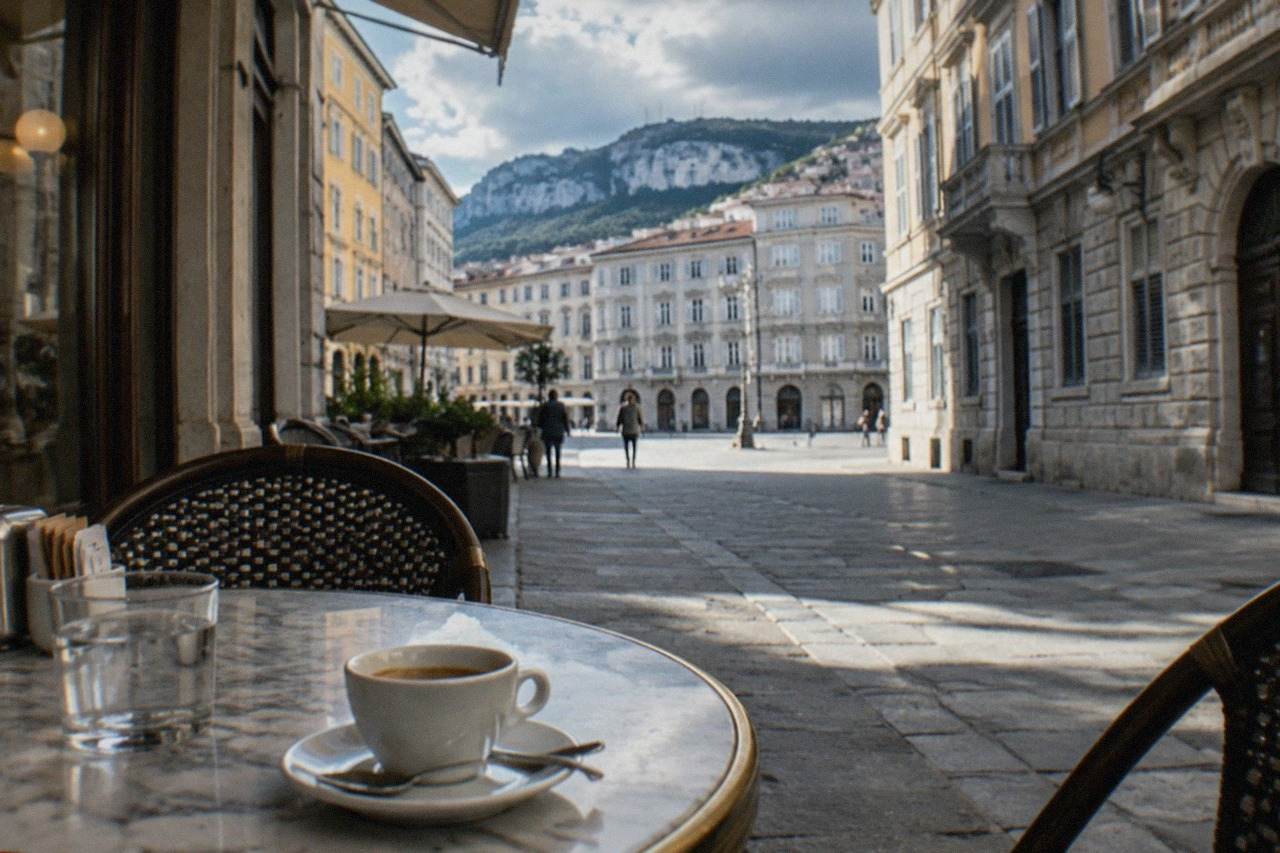
Trieste, the Adriatic port city in Friuli Venezia Giulia in the far northeast of Italy, is famous for coffee in a way few Italian cities are: not just for drinking it, but for importing it, roasting it, selling it, and building an entire civic culture around it. The city's identity as a coffee capital comes from three things that are all still visible today. The port of Trieste grew into one of the Mediterranean's great coffee-trading hubs under the Habsburgs, and green coffee still moves through it. The grand cafés of the Habsburg era survived the empire that built them and remain part of daily life. And the locals order their coffee in a dialect vocabulary, words like capo and nero, that you will not hear in a bar in Rome or Naples.
This page explains where the reputation comes from, what is actually verifiable, and how to experience the coffee side of Trieste on a visit. One caution before anything else: the widely repeated claim that Triestini drink two or three times the Italian average, usually quoted as around ten kilograms per person per year, has no primary source behind it. It appears in travel media, not in Chamber of Commerce figures, port authority data or the roasters' own publications. The coffee culture is real; the famous number is not, and this site does not print it. For the broader picture of the city's reputation, see our guide to why Trieste is famous.
Why Is Trieste Famous for Coffee?
Trieste is famous for coffee because its free port made it a central hub of Europe's coffee trade from the eighteenth century onward, because the Habsburg-era cafés that served the city's merchant class are still standing and still busy, and because the city hosts a major international roaster and a working port that continues to handle green coffee today. The fame rests on trade, architecture and habit rather than on any measured drinking record.
The trade came first. When Trieste was declared a free port under the Habsburg monarchy, goods flowing into the city moved under favourable customs treatment, and coffee became one of the commodities that defined the harbour. Merchants, insurers and shipping agents settled in the city, and the cafés of the Città Vecchia and the Borgo Teresiano grew up as their offices, meeting rooms and reading rooms. The café in Trieste historically functioned the way the pub does in Britain or the Kaffeehaus does in Vienna: a heated, lit, public interior where business, newspapers and politics happened over a small cup.
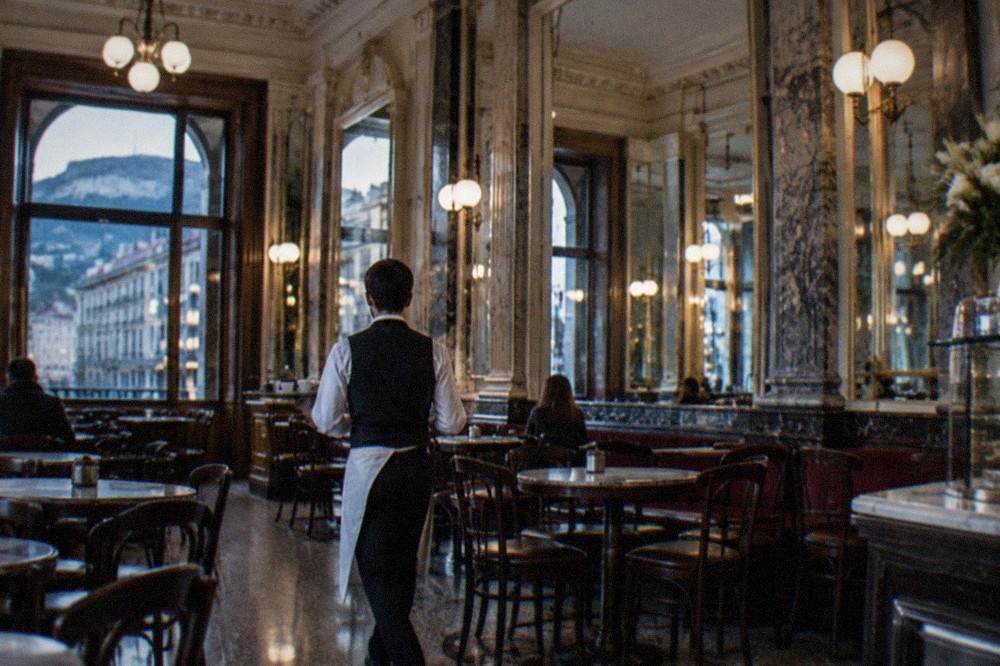
That inheritance is physical. Walk from Piazza Unità d'Italia into the Città Vecchia and you pass café interiors with the marble, mirrors and newspaper tables of the Central European tradition, a short walk from the water where the cargo once landed. The city also remains a working coffee city: Illy, the international roasting company, has its headquarters in Trieste, and the port continues to handle green coffee as part of its cargo mix. The port authority and the company both treat coffee as part of the city's economic identity, which is more than most Italian cities can claim.
The third pillar is the everyday one. Triestini order coffee in a local vocabulary that has no exact equivalent elsewhere in Italy, and they drink it standing at the bar or seated in grand rooms that elsewhere would be museums. The habit is the visible proof of the history, and it is the part a visitor can actually join in within about five minutes of arriving. For the city's wider claims to fame, our answer to what is Trieste famous for covers the rest.
How Did the Port of Trieste Build a Coffee City?
The port of Trieste built a coffee city because its free-port status channelled Central European coffee imports through the harbour, which drew merchants, shippers and roasters to settle in the city, which in turn created the demand for grand cafés and a local roasting industry. Trade created the cafés, the cafés created the culture, and the culture outlived the empire that started it.
The sequence matters, because it explains why Trieste's coffee fame feels different from, say, Naples'. In Naples the coffee story is about preparation and ritual at the bar. In Trieste it starts with customs regimes and cargo manifests. The Habsburg monarchy needed a sea outlet for its inland territories, developed Trieste as that outlet, and coffee was among the goods that made the harbour rich. A city of merchants, shipowners and insurers needs places to meet, and the café filled that role with a Central European seriousness: newspapers on sticks, marble-topped tables, and a waiter who expects you to stay a while.
The roasting industry followed the trade. Illy, founded in Trieste and still headquartered there, is the most visible example, and the company's presence means the city is not just a place that drinks coffee but a place that makes its living from it. The port's modern role as an Adriatic cargo hub keeps the connection alive: the harbour that made the city a coffee port in the eighteenth century is still a working port today, and coffee is still part of what it moves.
What that history leaves for a visitor is a compact, walkable coffee geography. The historic cafés cluster within the streets between Piazza Unità d'Italia and the Città Vecchia, a few minutes from the waterfront, so the coffee side of the city needs no transport and no planning beyond knowing which doors to walk through. The culture is also, unusually for a European port city, something you can join rather than just observe: sit down, order in the local way, and you are doing the thing the city is famous for. Our Trieste coffee culture guide goes deeper on the individual cafés and their interiors.
How Do You Order Coffee in Trieste Like a Local?
In Trieste you order coffee in the local dialect vocabulary rather than in standard Italian: a capo is a small coffee with a splash of milk, a capo in tazza grande comes in a proper cup rather than glass, a nero is an espresso taken black, and a caffè latte is what the rest of Italy calls a latte. The words are part of the city's identity and bartenders expect them.
The vocabulary is the detail that catches visitors out, and it is the one thing every source on Trieste agrees on without needing a statistic to prove it. Order a "capo" anywhere else in Italy and you will get a blank look; order it in Trieste and the barman starts making a small coffee with a little milk, traditionally in a glass. The table below gives the words a visitor actually needs.
| Order it as | What arrives | Closest standard Italian |
|---|---|---|
| Capo | Small coffee with a splash of milk, often in a glass | No direct equivalent |
| Capo in tazza grande | The same, in a large cup with more milk | Closer to a small cappuccino |
| Nero | Espresso, black | Caffè |
| Nero in tazza grande | A longer black coffee in a large cup | Caffè lungo |
| Caffè latte | Coffee with plenty of milk | Latte / caffellatte |
| Caffè dec | Decaffeinated, available in most bars | Caffè decaffeinato |
Two practical notes. First, the milk-coffee convention holds all day in Trieste: the Roman rule that a cappuccino after noon marks you as a tourist is looser here, because the capo is the local all-day drink. Second, prices at the bar counter are the ordinary Italian ones, and the standing-bar culture is as strong here as anywhere in the north; the grand cafés charge table-service prices for the same coffee if you sit, which is the standard Italian trade-off between cost and atmosphere. The ordering vocabulary costs nothing to use and it is the single fastest way to stop feeling like an outsider in the city.
Which Historic Cafés and Coffee Experiences Should You Try in Trieste?
The historic cafés to try in Trieste are the grand survivors of the Habsburg era in and around the Città Vecchia and Piazza Unità d'Italia, where interiors of marble, mirrors and newspaper tables survive from the city's merchant past, and the best way to experience them with context is a guided coffee-culture walk, since the Trieste Historic Cafés Experience runs three hours through the city's café heritage from $74.52 per person.
The interiors are the attraction. These are large, formal rooms in the Viennese tradition, and they function as public living rooms rather than quick-stop bars. A visitor with a free afternoon can walk between several of them, take a capo in each, and read the city's whole history off the ceilings. What the cafés sell is atmosphere as much as coffee, and the table-service prices reflect that; the coffee itself is the ordinary excellent espresso of northern Italy.
For structure, a guided walk does in three hours what a map cannot. The Trieste Historic Cafés Experience is the tour built exactly around this question: a three-hour guided walking tour of Trieste's coffee culture, rated 4.9 from 19 reviews, from $74.52 per person, and you can Check availability on the operator's live listing. There is also a free, tip-based option worth knowing about: GuruWalk runs a pay-what-you-want city walk with a local guru, and the roster includes a Discover Trieste walk rated 4.86 from 50 reviews, though the free walks cover the city generally rather than the cafés specifically.
| Experience | What it covers | Length | From |
|---|---|---|---|
| Trieste Historic Cafés Experience | Guided coffee-culture walk through historic cafés | 3 hours | $74.52 per person |
| Trieste: City that will definitely surprise you | City-centre walk ending with coffee in a historic bar | 2h 30m | $68.79 per person |
| Trieste: Guided Foodie Walking Tour | Street food and local flavours across the centre | 3 hours | $71.08 per person |
| GuruWalk: Discover Trieste on a walking tour | Free, tip-based general city walk with a local guru | Varies | Free, tip based |
If your interest runs wider than coffee, the food side of the city is covered in our answer to what food is Trieste famous for, and the coffee walk pairs naturally with a food walk on a longer stay.
Is the Coffee Claim Actually True, and What Should You Not Believe?
The verifiable part of Trieste's coffee fame is the port's historic role in the coffee trade, the surviving Habsburg-era cafés, the presence of a major international roaster headquartered in the city, and the local ordering vocabulary; the unverifiable part is the famous statistic that Triestini drink several times the Italian average, which no official body, port authority or roaster publishes a primary source for. Believe the culture, distrust the number.
The number circulates everywhere. It is quoted as ten kilograms per person per year, or as double or triple the national average, or as the highest consumption in Italy. The trail of citations, when followed, ends in travel articles quoting other travel articles. The Chamber of Commerce does not publish it, the port authority does not publish it, Illy does not publish it, and no national statistics body does either. A site that prints the figure is passing on folklore with a decimal point.
This matters for two reasons. First, honesty: a reader planning a trip deserves to know which parts of a city's reputation are checkable. Second, it does not actually diminish Trieste. The claim never needed the statistic. A city whose port made its fortune partly on coffee, whose grand cafés survived two world wars and a Cold War border, which hosts the headquarters of a globally known roaster, and whose residents order in a coffee dialect of their own, is a coffee city by any observable standard. The kilogram figure is decoration on a building that is already standing.
There is a parallel here with the city's other famous export, the bora wind, where ARPA's own station tables for the molo Fratelli Bandiera give real numbers: an all-time peak gust of 168.1 km/h in February 2012, and 17.6 days a year on average with a gust over 90 km/h. The wind has data behind it. The coffee has everything except data, and it is still true.
Common Questions About Coffee in Trieste, Italy
Can You Do a Coffee Tour of Trieste in One Day?
Yes, you can do a coffee tour of Trieste in one day, because the historic cafés cluster within the compact streets between Piazza Unità d'Italia and the Città Vecchia, all reachable on foot, and a guided option like the Trieste Historic Cafés Experience covers the coffee culture in a single three-hour walk, leaving the rest of the day free for the port, the castle or the seafront.
A realistic plan is a morning walking the cafés on your own with a capo in two or three of them, a guided walk in the afternoon for the history, and the evening at one of the waterfront spots. The city's compactness is what makes it work: unlike Rome or Milan, Trieste's coffee geography is a single neighbourhood. For a fuller day plan see our answer to what to do in Trieste in one day, and for longer stays, how many days do you need in Trieste.
What Is a Capo, and Why Can You Only Order It in Trieste?
A capo is Trieste's local milk coffee: a small espresso-based coffee with a splash of milk, traditionally served in a glass, and it exists only under that name in Trieste because the word comes from the city's own dialect tradition rather than from standard Italian. Order it anywhere else in Italy and you will be asked to explain yourself; order it in Trieste and it arrives without a word.
The word is short for a longer dialect phrase, and the drink sits somewhere between an espresso macchiato and a miniature cappuccino. Variants are equally local: capo in tazza grande for the cup version, nero for black. The vocabulary is the living layer of the city's coffee history, a Habsburg-era port city habit that never standardised to national Italian, and using it is the quickest way to be treated as a local rather than a visitor.
Common Questions About Coffee in Trieste
Why is Trieste famous for coffee?
Trieste is famous for coffee because its free port made it a major hub of Europe's coffee trade, its Habsburg-era cafés survived and remain in daily use, a major international roaster is headquartered there, and its residents order coffee in a local dialect vocabulary found nowhere else in Italy.
Do people in Trieste really drink more coffee than other Italians?
The claim that Trieste has the highest coffee consumption in Italy, often quoted as around ten kilograms per person per year, has no primary source. It does not appear in Chamber of Commerce figures, port authority data or roaster publications. The coffee culture is real and observable; the statistic is not verifiable and should be treated as folklore.
What coffee should I order in Trieste?
Order a capo for the local milk coffee, a nero for a black espresso, and a caffè latte if you want a milky drink. The capo is often served in a glass and is the all-day local standard. Using the local words marks you as someone who knows the city.
Which historic cafés in Trieste should I visit?
The grand historic cafés sit in and around the Città Vecchia and Piazza Unità d'Italia, all within a short walk of each other. Their marble, mirrors and newspaper tables are the Habsburg-era inheritance, and several can be visited in a single afternoon on foot.
Is there a coffee tour in Trieste?
Yes. The Trieste Historic Cafés Experience is a three-hour guided walking tour of the city's coffee culture, from $74.52 per person, rated 4.9 from 19 reviews. GuruWalk also runs a free, tip-based city walk with a local guru for a general introduction to the city.
Trieste's coffee fame, stripped of the unverifiable statistic, turns out to be stronger rather than weaker: a port that still trades the commodity, cafés that still serve it in the rooms it built, and a vocabulary that proves the habit never left. For more on the city behind the cup, see what Trieste Travel Guide covers across its attractions, itineraries and day trips.