Do They Speak English in Trieste, Italy?
Do they speak English in Trieste, Italy? A practical answer for visitors, covering where English is easy, which languages locals actually use, and how the city's border position shapes the answer.
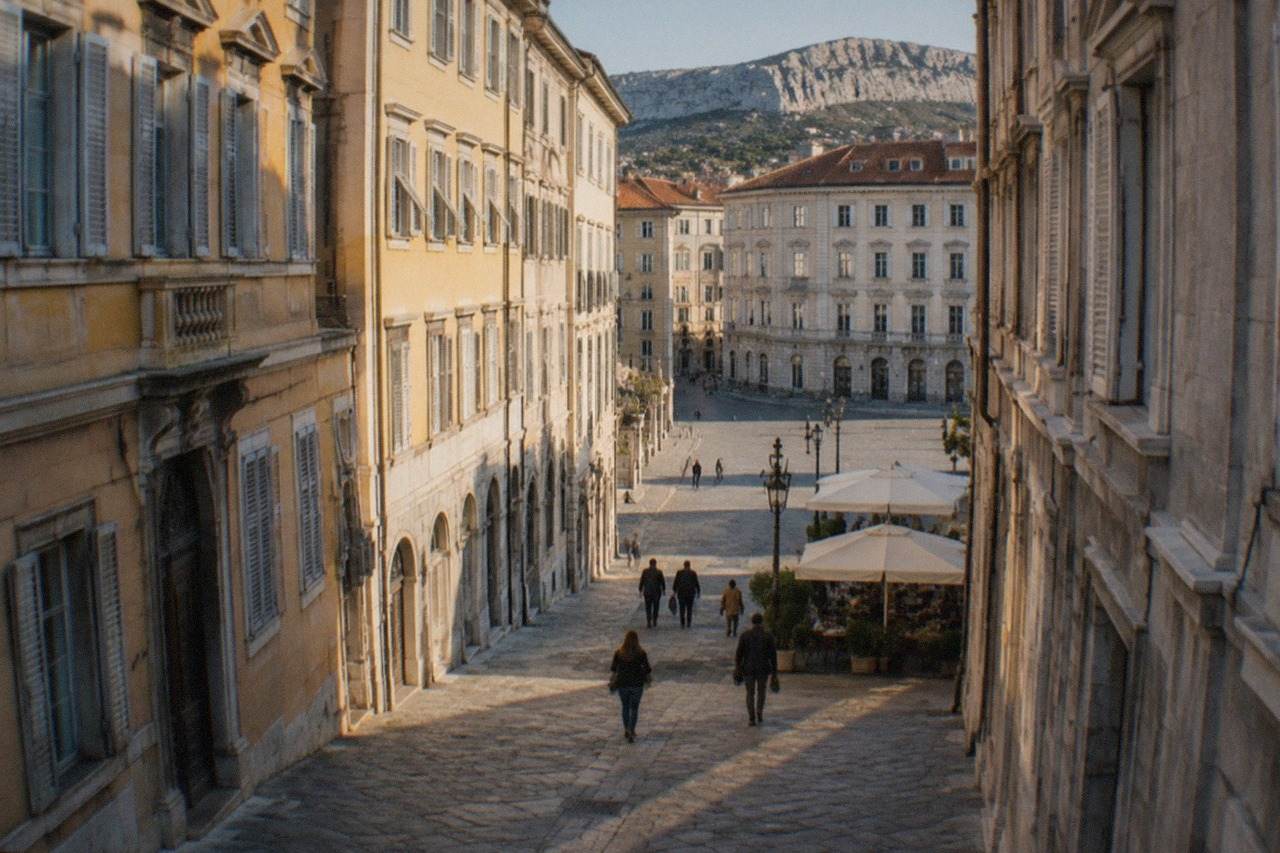
Trieste, the Adriatic port city in Friuli Venezia Giulia in the northeast corner of Italy, is one of the easiest Italian cities for an English speaker to get around in. That is partly tourism, but it is more than that: this is a border town with a Habsburg past, a Slovene-speaking minority, a university, a coffee trade that has always faced outward, and a cruise and conference economy that runs on visitors who do not speak Italian. The short answer to the question is yes, and the interesting part is why, and where the exceptions sit.
Do They Speak English in Trieste, Italy?
Yes, English is widely and reliably spoken in Trieste, Italy, in the places a visitor depends on: hotels, cafés and restaurants in the centre, museum ticket desks, the cruise terminal, the train station and the tour operators. Staff in the historic caffè and the main attractions deal with English-speaking customers every day, guided tours run in English as standard, and an English-only traveller can organise a full visit, order meals, buy transport tickets and take day trips without speaking a word of Italian.
The reason is structural rather than accidental. Trieste has spent most of its modern history as the main port of a Central European empire, then as a contested border city, and today as a university town and a conference destination. A city with that profile does not have the option of being monolingual. The person pulling your espresso at a counter on Piazza Unità d'Italia may well switch between Italian, Slovene and English in the same five minutes, and none of those switches will feel like an effort to them.
That said, "widely spoken" is not "universally spoken", and the texture varies by neighbourhood and by situation. In the Borgo Teresiano grid around the station and the Grand Canal, English is routine. Up in Città Vecchia, in the osmize of the Carso, or at a neighbourhood trattoria where the menu is a laminated sheet, you may find yourself pointing and smiling, which in Trieste works fine. The city rewards a few words of Italian socially, but it does not require them functionally. For the deeper background on the city's languages, see our page on what language they speak in Trieste.
Which Languages Do You Actually Hear in Trieste, Italy?
The everyday language of Trieste, Italy, is Italian, and the local variety has a distinctive accent and a large stock of borrowed words. Alongside it, a Slovene-speaking community has deep roots in the city and across the surrounding Carso, and the border position means Slovene place names, signs and surnames are woven into everyday life. English is the working third language of tourism, study and business, and German and Friulian also appear, so a short walk can plausibly expose you to four languages.
Italian here is not the Italian of a Tuscan phrasebook. The Triestine dialect borrows heavily from Slovene, German and Croatian, and locals move between it and standard Italian without noticing. Street names, village names and family names around the province carry Slovene forms, and the city's own identity is genuinely plural, something we go into in more detail on why Trieste is famous and on whether Trieste is more Italian or Slovenian.
For a visitor, the practical consequence is good news: a city where multilingualism is normal is a city where switching to English carries no social penalty. Nobody in Trieste treats English as an imposition, and younger staff, who studied it at school and use it online daily, often prefer it to your attempted Italian. A guided walk is the fastest way to see this in action: the city's group and private tours are offered with English commentary as a matter of course, and the guides handle questions in it fluently.
A food tour is a particularly good test of the language question, because markets and counters are where language barriers usually bite hardest. The guided foodie walks of Trieste, which run about three hours with tastings, are conducted in English among other languages, and the vendors along the route are used to it. The same applies at the historic caffè, where the waiters have been serving an international clientele since the Habsburg era and the menu is the least of your problems.
Will You Manage in English at Trieste's Museums, Stations and Attractions?
Yes, Trieste's main attractions handle English confidently. Miramare Castle and its park, Castello di San Giusto, the Museo Revoltella, the Revoltella-era museums, the Risiera di San Sabba and Grotta Gigante all have English information available, and the guided products that cover them run with English commentary. At Trieste Centrale station and the cruise terminal, signage and staff support for English are part of the daily routine, and the tourist information desks deal almost entirely in it.
There are a few honest caveats. Smaller civic museums sometimes have Italian-only wall text, so an audio guide or a guided tour adds real value there. Grotta Gigante is guided-only with compulsory booking, and the tours are the point: the guide is your access to the cave, and English-language visits are a normal part of their schedule, though you should confirm the language when you book. At the Risiera di San Sabba, the national monument at the former rice-husking complex, the weight of the place survives any language, but English documentation is available for those who want it.
The one place where language genuinely matters is booking. Compulsory-booking venues and popular guided products fill their English-language slots first, so reserve ahead through the operator's live listing rather than counting on walking up. The table below sets out the main visitor situations and what to expect.
| Situation in Trieste, Italy | What to expect in English | Practical tip |
|---|---|---|
| Cafés and restaurants in the centre | Menus often bilingual, staff switch readily | A few Italian words are welcomed, not required |
| Miramare Castle and park | English information and audio options | Book the castle ahead in peak months |
| Grotta Gigante | Guided visits only, English tours available | Booking compulsory, confirm language when reserving |
| Trieste Centrale station | English signage and ticket machines | Contactless payment works on urban transport |
| Osmize on the Carso | Little or no English, cash-and-pointing culture | Go with a guide or a car and a sense of adventure |
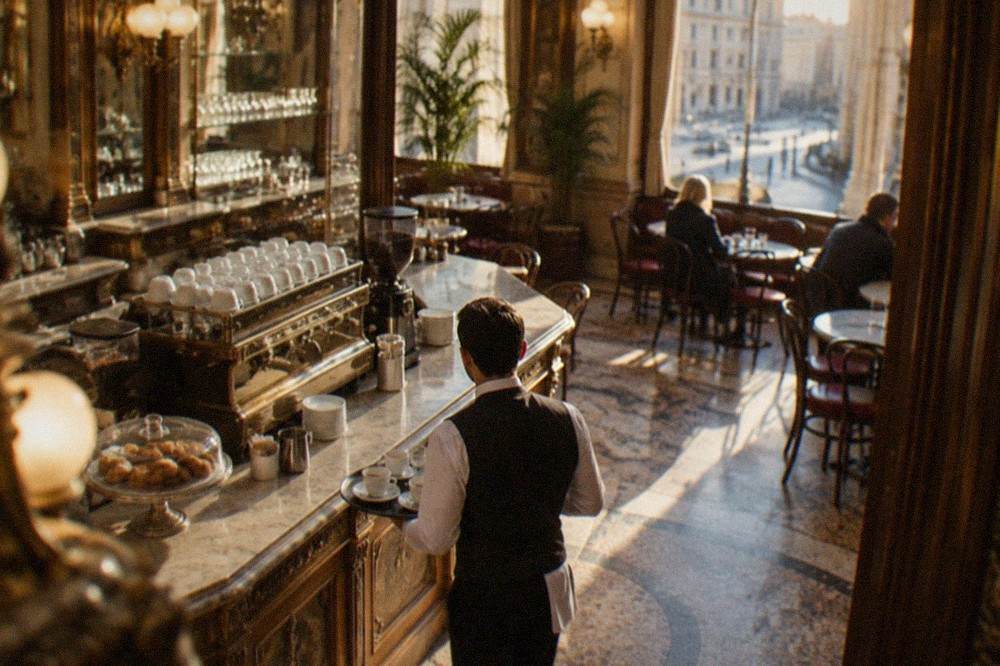
The historic café experience deserves its own word, because it is the thing most visitors come for and the thing where people most fear the language gap. Trieste's coffee culture is famous, and the grand caffè of the centre have been serving a polyglot clientele for well over a century. Ordering a caffè here is a local ritual with its own vocabulary, and the waiters will help you through it in English if you ask, or in Italian if you want to try. Either way you get the same coffee. For the food side of the city, start with what food Trieste is known for.
Do You Need More Than English for Day Trips from Trieste?
For day trips from Trieste, Italy, into Slovenia or Croatia, English alone is enough in practice: all three countries use the euro, the tourist towns of Piran, Portorož, Ljubljana, Lake Bled, Rovinj and Pula are accustomed to English-speaking visitors, and the guided day tours that depart from Trieste run with English commentary. One genuine border formality exists: Italy is running temporary checks on its land border with Slovenia until 18 December 2026, so carry a passport or national ID card even though all three countries are in Schengen.
That border point is the one thing a visitor can genuinely get wrong, and it has nothing to do with language. Croatia joined the Schengen area and adopted the euro on the same day, 1 January 2023, and Slovenia has been in both for years, so there is no currency to change and no routine passport control in normal times. But the European Commission's own register currently lists Italian checks on the Slovenia land border through 18 December 2026, and a spot check on a coach or a regional bus is a real possibility. Bring the ID, keep the rest easy.
Language-wise, the Slovenian and Croatian coasts are as relaxed as Trieste. Piran's old town lives off summer visitors, the guides at Postojna Cave and the Lipica stud farm work in multiple languages, and the organised day trips from Trieste, which run from roughly five to nine hours depending on the route, include English-speaking guiding as standard. If you are planning the crossing itself, our pages on whether there is a ferry from Trieste to Croatia and on what to do in Trieste for 3 days cover the logistics.
A Few Words of Italian That Earn Their Keep
You do not need Italian to get around Trieste, Italy, but a small working vocabulary changes the tone of every interaction, and the local coffee counter has its own grammar worth learning. Six short words cover most daily situations: buongiorno for greetings, grazie for thanks, scusi for attention, il conto per favore for the bill, plus the two coffee terms caffè and capo in b that mark you as someone who has done a little homework on this city.
Order like a local and you get the local experience, order in English and you still get the coffee. The table below is the working minimum, and everything on it is pronounced as written.
| Italian | What it means | Where you will use it |
|---|---|---|
| Caffè | An espresso, not a filter coffee | Every counter in the city |
| Capo in b | A caffè macchiato in a small glass, a Trieste signature | Historic caffè and bars |
| Buongiorno | Good morning | Entering any shop or café |
| Grazie | Thank you | Everywhere, constantly |
| Il conto, per favore | The bill, please | At the end of a meal |
| Scusi | Excuse me | Getting attention politely |
The capo deserves a note: it is a Trieste-specific coffee with a head of milk foam, served in a glass, and asking for one marks you as someone who has done a little homework. The barista will not grade you. For the full story of the city's coffee identity, which is tied to its port history rather than to any consumption statistic, see the Trieste coffee culture guide here on Trieste Travel Guide.
Common Questions About Speaking English in Trieste, Italy
Do they speak English in Trieste, Italy?
Yes. English is widely spoken in Trieste's hotels, cafés, restaurants, museums, stations and tour operations, and an English-only visitor can manage the whole city comfortably. The city's border history and international port economy make multilingual service the norm rather than the exception.
Is English better in Trieste than in other Italian cities?
Visitors consistently report that Trieste is easier in English than many comparable Italian cities, which fits its profile as a border city, a university town and a conference and cruise destination. The historic caffè and the main attractions deal with English-speaking customers daily, and guided tours run in English as standard.
Do people in Trieste also speak Slovene?
Yes. Trieste has a long-established Slovene-speaking community, and Slovene names and signs are part of everyday life in the city and across the Carso. Italian is the everyday language of the city, with the local dialect borrowing heavily from Slovene, German and Croatian.
Will I need Italian for the osmize on the Carso?
Not strictly, but English thins out fast at an osmiza, the seasonal farm outlets where locals sell their own wine and produce. They are signposted by a frasca, a leafy branch hung at the turning, and the osmize.com calendar lists which are open. Point, smile and pay, or visit with a guide.
Can I take an English-language tour of Trieste?
Yes. Group and private walking tours of the city, food tours and day trips to Miramare, the caves and Slovenia all operate with English commentary. The operator's live listing states the languages offered for each departure, and English-language slots book out first in peak season.
Trieste, Italy, answers the language question better than almost any city of its size on the Adriatic: come with English, leave with a capo in b and a few words of Triestine, and the city will meet you more than halfway.