What Food Is Trieste Known For?
What food is Trieste in Italy known for? The signature dishes, the buffet culture, the coffee houses and the Karst wine of Italy's most Central European port city.
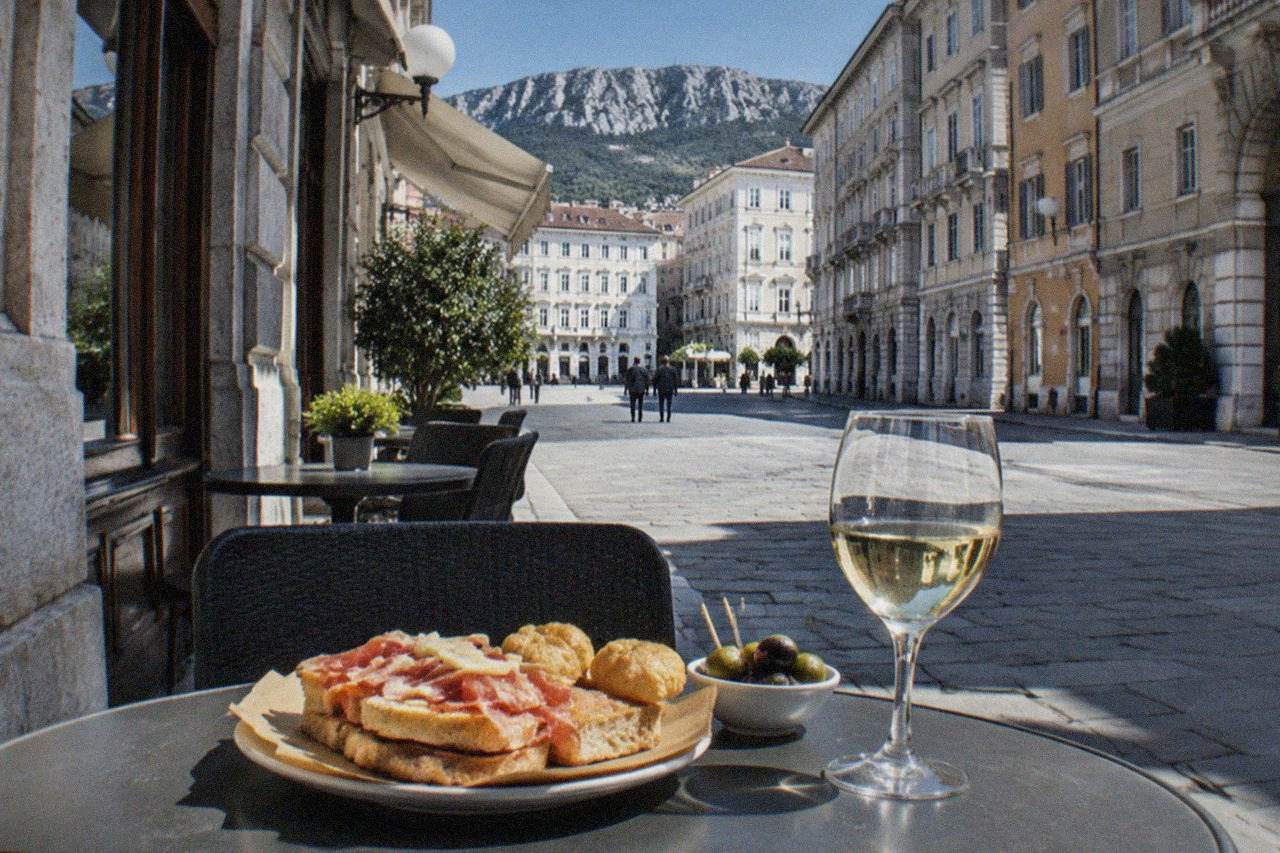
Trieste, the Adriatic port city in Friuli Venezia Giulia in the northeast of Italy, is known for food you will not find further south: a sauerkraut-and-bean soup called jota, pork and goulash off the buffet counter, prosciutto in a roll, and a cafe culture that came with the Habsburgs. The city sits on the border of the Italian, Slavic and Austro-Hungarian worlds, and its kitchen is the record of all three. The coffee houses are the other half of the answer: Trieste is a historic coffee port with a roasting industry and an ordering vocabulary all its own, and the caffè storici are still where the city does its talking.
What Food Is Trieste Known For?
Trieste, in Italy, is known for jota, a soup of sauerkraut, beans and pork, for buffet dishes like pork shank, goulash and sausages served from steam counters, for prosciutto and cheese sandwiches at the city's buffet bars, for presnitz and putizza pastries, and for a cafe culture built on the port's historic role in the coffee trade. The wines of the surrounding Carso plateau, above all Vitovska, complete the picture.
That list is short, and every item on it reflects the city's position rather than any Italian tradition. Trieste was the Habsburg Empire's great seaport, and its food still looks toward Vienna, Ljubljana and Istria as much as toward Rome or Naples. The jota that opens the list is the clearest example: sauerkraut, the defining ingredient, is a Central European staple, and the soup is closer in spirit to a Hungarian or Slovenian one than to anything in the Italian canon. It is the dish most locals would name first, and it is the one you should order first if you only have one meal in the city. The full story of the city's eating culture, dish by dish and neighbourhood by neighbourhood, is in the guide to what to eat in Trieste.
The buffet is the second key. A Triestino buffet is not a hotel breakfast spread but a type of eating house, often standing-room only, where cooked pork dishes, sausages and goulash come over the counter and often end up in a bread roll. It is fast, cheap by local standards and entirely specific to this city and its borderlands. Between the buffet and the cafe, a visitor can eat a whole day in Trieste without once touching a plate of pasta.
| Food | What it is | Where it fits |
|---|---|---|
| Jota | Soup of sauerkraut, beans and pork | The signature dish, on menus citywide |
| Buffet dishes | Pork shank, goulash, sausages from a steam counter | Lunch in the Città Vecchia and city centre |
| Panino con prosciutto | Prosciutto in a roll, often with a glass of Malvasia | The classic mid-morning or mid-afternoon stop |
| Presnitz and putizza | Rolled pastry desserts with dried fruit and nuts | The sweet side, from the Habsburg pastry kitchen |
| Caffè culture | Historic cafes and a local ordering vocabulary | The port's coffee trade made visible |
| Carso wines | Vitovska, Malvasia, Terrano from the plateau behind the city | The local pour, dry and mineral |
The pastries deserve a word of their own. Presnitz, a spiral of pastry wrapped around a filling of nuts, dried fruit and spirits, is the one to look for, and putizza is its richer cousin. Both come from the same Austro-Hungarian pastry tradition that produced the coffee-house cakes of Vienna, which is exactly the point: in Trieste the dessert course and the coffee arrive together, and the caffè is where both live.
Where Should You Eat These Dishes in Trieste, Italy?
The buffet bars and osterie of the Città Vecchia and the streets behind Piazza Unità d'Italia are where Trieste's cooked dishes are served, the historic caffè along the waterfront and in the Borgo Teresiano are where the coffee and pastries are, and the osmize on the Carso plateau above the city are where the local wine and home-cured produce come straight from the farm.
The city centre is compact and the eating is concentrated. The old town, the Città Vecchia, holds most of the traditional buffets, and the grid of the Borgo Teresiano, the Habsburg-era district behind the canal, holds the grand cafes. If you are planning a short visit, the one-day Trieste itinerary can absorb a buffet lunch and a caffè stop without any detour, because both sit on the natural walking line between the main sights.
The third location is the least known and the most distinctive. The osmize are seasonal farm outlets on the Carso, the limestone plateau that rises immediately behind the city, where growers sell their own wine and simple home produce direct from the farmhouse. An open osmiza is signposted by a frasca, a leafy branch hung at the turning, and the openings are concentrated in spring and autumn. The long-established calendar of which osmiza is open on which day, with addresses and a map, is published at osmize.com, and it is the reference everyone uses because there is no municipal equivalent. The custom itself is the point: this is not a restaurant but a farmer's right to sell what the farm produced, exercised for a limited window. The guide to the osmize of the Carso covers how the system works in practice.
Eating your way around the city with a guide is one way to shortcut the search, and Trieste has several strong options.
| Tour | Duration | From price | Rating |
|---|---|---|---|
| Trieste: Unique Food Tour with Local Flavors and Tastings | 3 hours | $87.58 per person | 4.9 from 88 reviews |
| Trieste: Guided Foodie Walking Tour | 3 hours | $71.08 per person | 4.91 from 264 reviews |
| Trieste: Private Cooking Class at a Local's Home | 3 hours | $166.23 per person | 3.9 from 6 reviews |
The first two are walking tours through the city centre with tastings at the buffet and cafe stops; the third puts you in a local home with a certified cook. Prices and ratings are as listed on the operator's live listing at the time of writing, so check the current page before booking. More of these guides are collected on Trieste Travel Guide.
Why Is Trieste, Italy, Famous for Coffee?
Trieste is famous for coffee because it is a historic coffee port and roasting city: green coffee has entered Italy through its docks for generations, the headquarters of a major international roaster stands in the city, and the Habsburg-era caffè storici remain the centre of public life. The local ordering vocabulary, with names for coffee-with-milk variations that exist nowhere else in Italy, is part of the same culture.
The port's role in the coffee trade is the material fact behind the reputation. Trieste has been an import gateway for green coffee since its years as the Habsburgs' Mediterranean port, and the roasting industry that grew around the docks is still there, anchored by Illy, whose headquarters is in the city. What this site will not do is repeat the famous statistic, the one about Trieste drinking two or three times the Italian average: no primary source exists for that figure, not at the chamber of commerce, not at the port authority, not in official statistics. The coffee culture is real and observable without it. The historic cafes, the roasting industry and the port trade are the sourced story, and the guide to Trieste coffee culture tells it in full.
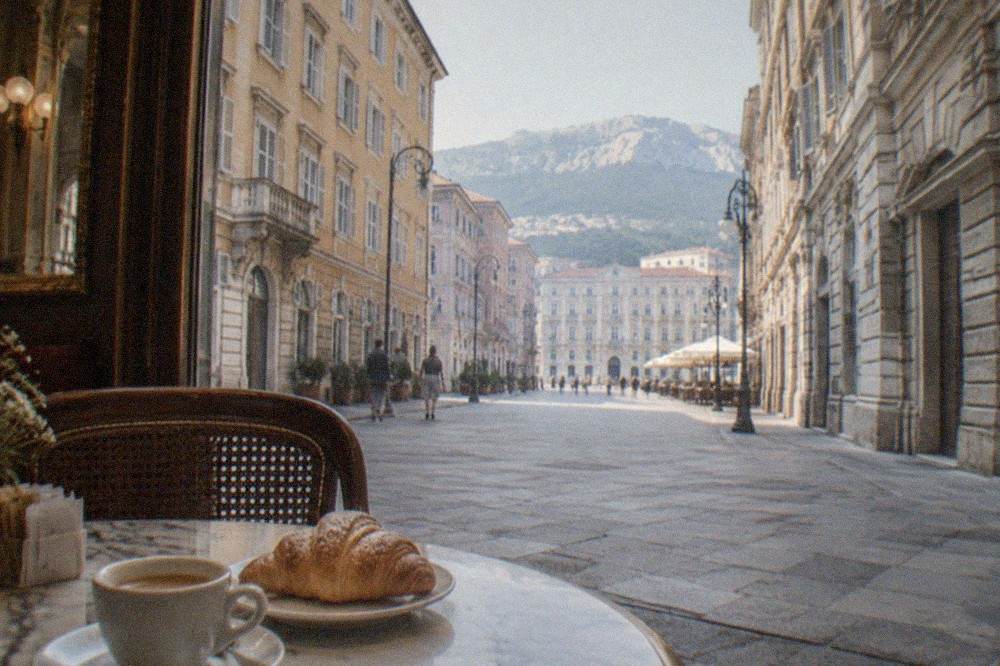
What a visitor actually notices is the ordering. Triestini order a capo, a goccia and other variations whose names do not travel beyond the city limits, and a barman here will expect to be asked in the local terms. It is one of the few Italian cities where the coffee vocabulary is genuinely regional, a direct inheritance of the cafe culture the Habsburg administration brought and the port trade paid for. Sitting in one of the caffè storici with a presnitz is the single most Triestine thing you can do with an afternoon, and the question is Trieste good for food? has its answer partly right there.
What Should You Drink with Trieste Food?
The local drinks are the dry white wines of the Carso plateau, above all Vitovska, plus Malvasia and the red Terrano, all grown on the limestone within sight of the city. Trieste is not in the Prosecco DOC zone, but the village of Prosecco, which gave the wine its name, sits on the Italian side of the border near the city and is the subject of local tours.
The Carso is the wine district, and its wines are the reason a glass of something local accompanies the buffet and osmiza table. Vitovska, a mineral white from the plateau's stone terraces, is the one to ask for by name, and Terrano, a red that grows in the red earth over the limestone, is its counterpart. These are not the wines of the national supermarket shelf; they are small-production, close-to-the-city wines that the osmize pour straight from the farm. The guide to Friuli Venezia Giulia wine sets out the region's bottles.
The Prosecco point trips up a lot of visitors, so it is worth being precise. The village of Prosecco, which gave the world's best-selling sparkling wine its name, lies in the hills near Trieste, but Trieste itself is not inside the Prosecco DOC production zone. The wine named after the village comes from further west, in the Veneto and Friuli hills. What you can do from Trieste is visit the village itself and the surrounding Karst country on a guided tour of the origins of the sparkling wine, tasting as you go. The local sparkling tradition and the Carso still wines are separate stories, and the still wines are the ones actually grown at the city's back door.
If you would rather taste the food than read about it, the three-hour food walk through the city centre is the most direct route: it covers the buffet classics and the local flavours with a guide, and it runs on a free-cancellation basis so you can book ahead without locking in your day.
Between the two, a word on how the pieces fit together. The food walk and the cooking class cover the same territory from opposite ends: one walks you to the dishes where they are made, the other teaches you to make them where a local lives. The private walking tour in the trio is the orientation layer, useful if you want the history of the buffet district and the grand cafes explained before you eat your way through them. Most visitors with two or three days pick the food walk first and add the cooking class if the weather turns, and the question of how many days you need in Trieste usually settles which of those is realistic.
Common Questions About Trieste Food
What food is Trieste known for?
Trieste is known for jota, the sauerkraut-and-bean soup that is the city's signature dish, for buffet-counter pork dishes, goulash and sausages, for prosciutto sandwiches, for the presnitz and putizza pastries, and for a historic cafe culture built on the port's coffee trade.
What is the signature dish of Trieste?
Jota, a soup of sauerkraut, beans and pork, is the dish most closely identified with Trieste. It reflects the city's Austro-Hungarian and Slavic heritage rather than the Italian tradition, and it appears on menus across the city.
Is Trieste good for food?
Yes. The city has a distinct buffet tradition, historic cafes, a roasting industry and the seasonal osmize farm outlets on the Carso, which together make it one of the more unusual food cities in northern Italy.
Why is Trieste famous for coffee?
Trieste has been a coffee import port since its Habsburg years, hosts the headquarters of a major international roaster, and retains grand historic cafes with a local coffee-ordering vocabulary found nowhere else in Italy.
What drinks are local to Trieste?
The dry wines of the Carso plateau: Vitovska and Malvasia as whites, Terrano as the local red, poured in the city's bars and at the osmize farms where they are made.
What are the osmize?
Seasonal farm outlets on the Carso where growers sell their own wine and home produce direct from the property for limited periods, signposted by a frasca branch at the roadside and listed on the osmize.com calendar.
Eating in Trieste, Italy, is the fastest way to understand why the city feels different from everywhere else in the country: order the jota, take the buffet counter, sit in a caffè storico and finish with a glass of Vitovska, and the borderland that built the city is on the table in front of you.