Is Venice Close to Trieste?
Is Venice close to Trieste, Italy? How the two Adriatic cities connect by rail, which makes the better base, and what to do with your time in Trieste instead.
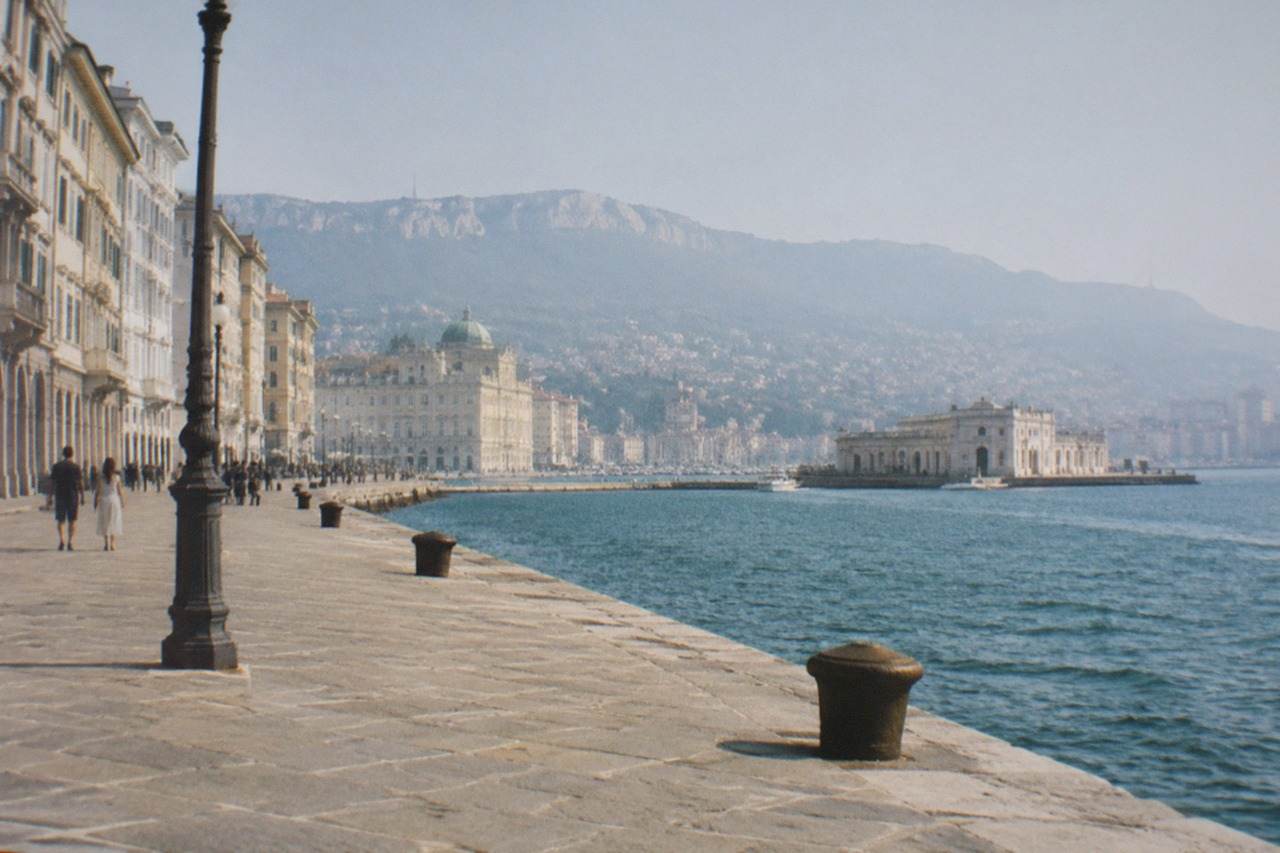
Trieste, the Adriatic port city in Friuli Venezia Giulia in northeast Italy, is often mentioned in the same breath as Venice, and the reason is geography: both sit on the northern edge of the same sea, in the same corner of the country, with the lagoon city to the west and Trieste hard against the Slovenian border to the east. Travellers planning an Italian itinerary reasonably ask whether the two can be combined, and the honest answer is yes, with some planning. What this page does is stick to what the official sources actually confirm: the rail connection that exists, the border situation on Trieste's eastern side, and what you would do with your time if you based yourself in Trieste rather than Venice. This Trieste Travel Guide page exists because the question gets answered badly elsewhere, with invented distances and invented train times.
Is Venice Close to Trieste?
Yes, Venice is close to Trieste in the only sense that matters for a trip: the two cities are in the same region of northeast Italy, on the same Adriatic coast, and are connected by a direct rail line, so Trieste works as a base for Venice or as a second city on an itinerary that starts in Venice. No verified official source publishes a single door-to-door distance or journey time for the pair, so any exact figure you read elsewhere should be treated with suspicion.
The relationship is better described in terms of what each city is. Venice is the lagoon city to the west, one of the most visited places in Europe. Trieste is the port city at the far northeastern end of the Adriatic, the capital of Friuli Venezia Giulia, and a place whose identity is Habsburg, Central European and maritime at once rather than purely Venetian. The two are close enough that the question which city is close to Trieste has several answers, but Venice is the one with the biggest pull on itineraries.
What the verified transport record confirms is that Trieste is a genuine rail hub, not a dead end. Trieste Centrale is the city's main station, and Trieste Airport at Ronchi dei Legionari has its own railway station joined to the terminal by a covered walkway of roughly 400 m with moving walkways, served by regional, Intercity and Frecciarossa high-speed trains. That a high-speed line reaches the Trieste area at all tells you the city is wired into the national network, and Venice sits on the same northeastern corridor. For the specifics of the Venice connection, the dedicated pages on this site go deeper than a summary can: how to get from Trieste to Venice and whether the train from Venice to Trieste is scenic.
One point worth making early: closeness on a map is not the same as sameness. Trieste is not a smaller Venice. It has almost no canals, one short artificial canal in the Borgo Teresiano apart, and its waterfront opens onto a gulf rather than a lagoon. If you want the comparison done properly, see is Trieste better than Venice.
How Do You Travel Between Trieste and Venice?
The practical link between Trieste and Venice is the railway: Trieste Centrale and the Venice stations sit on the same northeastern Italian rail corridor, with regional and high-speed services serving the Trieste end, and the airport station at Ronchi dei Legionari on the same line. The official operator pages do not publish a journey time in the sources verified for this page, so check the operator's own journey planner for current schedules rather than trusting a number quoted in a travel article.
The rail facts that are verified are these. Trieste Airport's own service charter confirms its station is connected to the terminal by a covered pedestrian walkway of roughly 400 m with moving walkways, and that regional, Intercity, Frecciarossa and some international trains call there, including services towards Villach and Ljubljana. Trieste Centrale is the urban terminus. Tickets are sold through the national operator's site and machines at the station and terminal. That is the verified picture, and it is a good one: a visitor in Trieste is on a main line, not a branch line.
For planning, the questions travellers actually ask branch into a few separate ones, and this site answers each in its own page: can you do a day trip from Trieste to Venice, how often trains run between the two, how to make the trip by rail, and for cruise passengers, how to get from Venice to Trieste for a cruise. There is no ferry service between the two cities in the verified record, and the question of a water taxi between Venice and Trieste is addressed on its own page on this site.
While the rail corridor handles the Venice side, Trieste's eastern side has a live border detail that most guides miss. Italy is running temporary internal border checks on its land borders with Slovenia from 19 June 2026 to 18 December 2026, per the European Commission's own register. That does not affect the Venice route at all, but it matters if you treat Trieste as a base for Ljubljana or the Istrian coast, and it is the kind of dated, checkable fact this site exists to publish.
Is Trieste or Venice the Better Base?
Trieste is the better base if you want three countries in reach, sea swimming off a city seafront, coffee-house culture and prices that sit below Venice's, while Venice is the better base if the lagoon itself is the purpose of your trip. The two cities are not substitutes: Venice is a destination people cross oceans for, and Trieste is a working port city that rewards a slower, more local kind of visit. The honest advice is to see both, in that order or the reverse.
The cost picture is concrete where the sources allow. Trieste's own official tariff sheet for 2026 lists the city's tourist tax at €1.50 per person per night at campsites, €2.30 at a two-star hotel or B&B Superior, €3.00 at a three-star, €3.30 at a four-star and €3.80 at a five-star, charged for a maximum of five consecutive nights. Those are published municipal figures, and they give a real floor to the budget question that is Trieste cheap or expensive covers in full. Venice's own rates are not in the verified pack for this page, so no comparison figure is printed here.
Entry prices inside Trieste are equally checkable. The castle at Miramare, the Habsburg residence up the coast at Grignano, costs €17 for an adult ticket including the temporary exhibition, and its park is free all year. Castello di San Giusto on the hill above the city is €7 full price, €5 reduced, and free on the first Sunday of the month and on 3 November. The Museo Revoltella, the city's modern art gallery, is €8 full price and is closed on Tuesdays. The Cathedral of San Giusto is free to enter. These are the figures the venues themselves publish, and they add up to a city where the sightseeing spend is modest.
| Trieste sight | Adult entry | Opening pattern | Free entry |
|---|---|---|---|
| Miramare Castle | €17.00 | Daily 9:00-19:00, last entry 18:30 | First Sunday of the month (castle); park free all year |
| Castello di San Giusto | €7.00 | 1 April-11 October daily 10:00-19:00; from 12 October Tue-Sun 10:00-17:00 | First Sunday of the month and 3 November |
| Museo Revoltella | €8.00 | Daily 10:00-19:00, last entry 18:00, closed Tuesdays | First Sunday of the month |
| Cattedrale di San Giusto | Free | Weekdays 8:00-18:30; Sundays 9:00-19:30 | Entry is always free |
| Risiera di San Sabba | Free | 1 March-11 October daily 9:00-19:00; from 12 October daily 9:00-17:00 | Entry is always free |
The comparison question also has a subjective layer, and the pages is Venice or Trieste better and is it better to stay in Venice or Trieste take it on properly. The short version: Venice in high summer is a crowd-management exercise, while Trieste in the same months averages a July mean high of 28.2 C with the sea at its annual peak of 25.9 C, per the regional met agency's station tables, and a seafront at Barcola where the swimming is off the city's own shore.
What Do You Do with a Day in Trieste, Italy?
A day in Trieste, Italy runs from Piazza Unità d'Italia, the sea-facing square that opens straight onto the gulf, up the hill to the Cathedral of San Giusto and the Roman theatre you look down into from the street, out along the Rive seafront to Molo Audace, and, if the timing works, up the coast to Miramare Castle, whose park is free all year. The city centre is compact and walkable, and the coffee houses in between are the point, not a sideline.
The centre holds. Piazza Unità d'Italia is the largest sea-facing square in Italy and the city's front room; the Molo Audace, the old pier, reaches out from it into the gulf; and the Città Vecchia climbs behind the piazza towards the cathedral and castle hill. The Roman theatre sits below street level and is viewed from the railing rather than entered, which is exactly how the ministry's own page for the monument presents it. None of this requires a car or a ticket, which is why a first visit rewards a guide who can put the Habsburg story in order.
That is where the paid options earn their keep. The best-of private walking tour with a local guide covers the modern and ancient landmarks of Trieste in about two hours, priced from $217.82 per group of up to 10 and rated 4.94 from 31 reviews on the operator's live listing. Check availability A cheaper orientation exists too: a GuruWalk pay-what-you-want city walk, tip based, rated 4.86 from 50 reviews, and a second free GuruWalk walk through the Old Port industrial district, both listed on this site's tours pages.
For a day that goes beyond the centre, the verified options split into three kinds. Up the coast, the panoramic city and Miramare Castle tour runs four hours from $129.94 per person, rated 4.97 from 21 reviews, pairing the city with the Habsburg castle. Underground, Grotta Gigante at Sgonico is a guided-only cave with compulsory booking, €15 for an adult on the venue's own price list, running daily from March to August and Tuesday to Sunday from September to February. And on the plate, the food tours walk the buffet tradition of jota and goulash as well as the coffee houses: the guided foodie walking tour runs three hours from $71.08 per person, rated 4.91 from 264 reviews.
| Trieste tour option | Duration | From (per person) | Rating on the listing |
|---|---|---|---|
| Best-of private walking tour, group up to 10 | 2 hours | $217.82 per group | 4.94 from 31 reviews |
| Panoramic city and Miramare Castle tour | 4 hours | $129.94 | 4.97 from 21 reviews |
| Guided foodie walking tour | 3 hours | $71.08 | 4.91 from 264 reviews |
| Historic cafés experience | 3 hours | $74.52 | 4.91 from 19 reviews |
| Grotta Gigante guided tour with museum entry | 1 hour | $17.20 | 4.78 from 151 reviews |
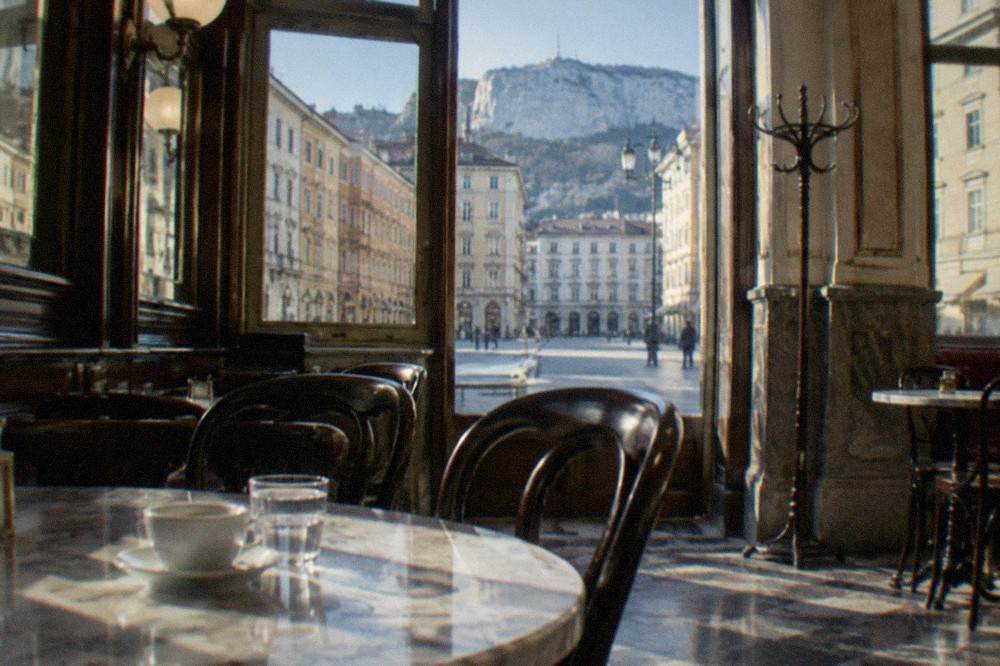
The coffee question deserves its own word, because it is the one thing people think they know. Trieste is a historic coffee port and a roasting centre, and the coffee-house culture is real and observable in the historic caffè of the centre. What is not real, at least in any verifiable form, is the per-head consumption figure repeated across the internet: no primary source, not the chamber of commerce, not the port authority, not the roasters themselves, publishes it. Write the culture, skip the number.
Common Questions About Trieste and Venice
Is Venice close to Trieste?
Yes. Both cities are in northeast Italy on the same Adriatic coast, connected by the same rail corridor, with high-speed services reaching the Trieste area. No verified official source publishes a single distance or journey time for the pair, so plan against the operator's own journey planner rather than a figure quoted in a travel article.
Can you do a day trip from Trieste to Venice?
It is a reasonable question and the rail corridor makes it plausible, but the verified sources for this page do not publish a journey time, so check the operator's schedules before committing. The dedicated page on this site, can you do a day trip from Trieste to Venice, works through the timings and the trade-offs.
Is Trieste cheaper than Venice?
Trieste's official 2026 tourist tax runs from €1.50 per night at campsites to €3.80 at five-star hotels, charged for a maximum of five consecutive nights, and major sights cost €7 to €17 or are free. Venice's comparable rates are not in the verified pack for this page, so no head-to-head figure is printed here, but Trieste's published floor is low by any Italian city standard.
Is there a ferry from Trieste to Venice?
No ferry service between the two cities appears in the verified record. The connection is by rail, and the question of a water taxi between Venice and Trieste is addressed on its own page on this site. Trieste's ferry routes serve destinations across the gulf, not the lagoon.
Do you need a passport to travel from Trieste to Venice?
No. Both cities are in Italy, so the journey is domestic and no border is crossed. The ID question that does matter at Trieste is on the other side: Italy is running temporary checks on its land border with Slovenia through 18 December 2026, so carry ID for a Ljubljana or Piran day trip.
Which is better for a first visit, Trieste or Venice?
They do different jobs. Venice is the destination; Trieste is the city you live in for a few days. If the lagoon is the point, go to Venice. If you want coffee houses, a swimmable seafront, three countries in reach and prices from the published tariff sheet, base yourself in Trieste and take Venice from there.