What Does Trieste Mean in French?
The French word behind the name Trieste, Italy: why the Adriatic port city's name looks like the French adjective for sad, and what it actually means.
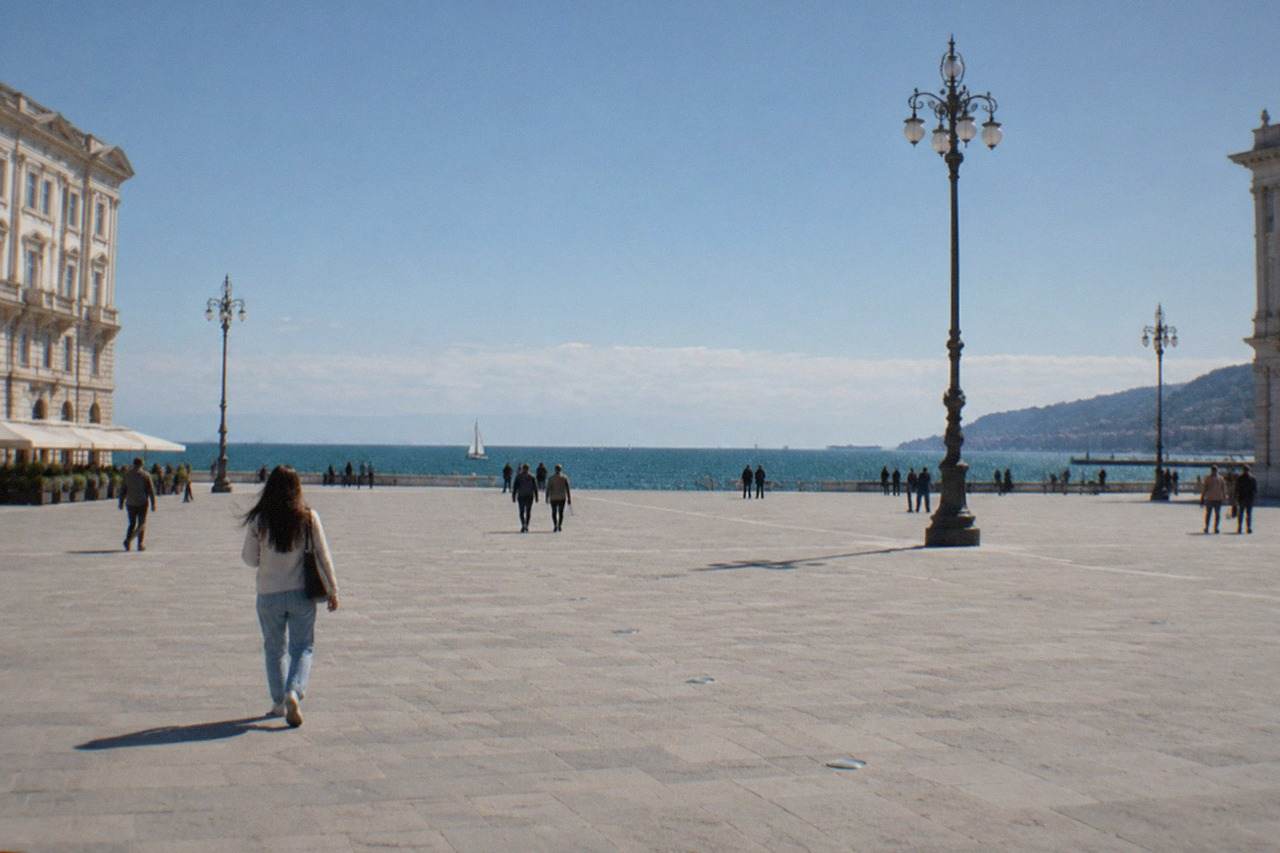
Trieste, the Adriatic port city in Friuli Venezia Giulia in the far northeast of Italy, has a name that looks suspiciously like a common French word. Ask a French speaker what "triste" means and they will answer immediately: sad. Add one letter and you have the name of the city. That one-letter gap is why "what does trieste mean in french?" is a real search query, and the honest answer has two parts: no, the city is not named after sadness, and yes, the two words share a distant Latin ancestor. This page untangles the etymology, the coincidence, and the other Triestes that crowd the search results, from a deep-sea bathyscaphe to a San Francisco café chain.
What Does Trieste Mean in French?
In French, "triste" (with one r) is the everyday adjective meaning sad, sorrowful or gloomy, and the city name Trieste is not that word. Trieste is a proper noun, the Italian name of the port city in northeast Italy, and French speakers use it exactly as a place name. The two words look almost identical because both descend from the same Latin root, but the city was never named after sadness, and no French dictionary gives the city as a meaning of anything.
The Latin root is "tristis", meaning sad, grave or serious, and it is the parent of the modern French adjective "triste", of the Italian adjective "triste", and of several other cognates across the Romance languages. The city's own name, however, comes to Italian through Latin "Tergeste", the name the Romans gave the settlement, and the most widely repeated ancient explanation of "Tergeste" parses it as a compound of Illyrian or Venetic origin meaning "market town" or, in some tellings, "the town with three walls". The similarity between "Tergeste" and "triste" is a linguistic accident of sound shifts over centuries, not a statement about the city's mood.
That accident is convincing enough that French visitors notice it constantly. The Italian adjective "triste" and the French adjective "triste" are, in fact, the same word, so a French speaker reading an Italian sentence like "è una storia triste" understands it without translation. When the word is capitalised and used as a place name, though, it stops being an adjective entirely. French newspapers write "Trieste" for the city, French railway timetables list it, and nobody reading them thinks of melancholy.
A quick comparison of the cognates makes the family relationship clear while keeping the city separate from the adjective:
| Word | Language | Part of speech | Meaning |
|---|---|---|---|
| triste | French | adjective | sad, sorrowful |
| triste | Italian | adjective | sad, sorrowful |
| Trieste | French | proper noun | the city in Italy |
| Trieste | Italian | proper noun | the city in Italy |
| Tergeste | Latin | proper noun | the Roman name of the city |
The useful takeaway for a traveller: if you are in France and hear "triste", someone is describing a mood. If you see "Trieste" with a capital T and a final e, it is the Italian city, and the word carries no emotional meaning at all.
Is Trieste the Italian Word for Sad?
No. The Italian word for sad is "triste", with one r, and it is an ordinary adjective. Trieste, with a capital T and a final e, is only the name of the city in Friuli Venezia Giulia, and it is never used as a common noun or an adjective in Italian. An Italian speaker hearing "Trieste" thinks of the port, the seafront and the coffee houses, not of sadness, and the two words do not even rhyme precisely in most Italian mouths.
The confusion works in the other direction for English speakers too, because English has borrowed "triste" as a rare literary adjective meaning sad or dismal, straight from French. So the chain of lookalikes runs: Latin "tristis", French "triste", English "triste" (rare), Italian "triste", and then, off to the side, the unrelated-but-similar city name Trieste. The city's name passed through Latin "Tergeste" and then a long slow vowel shift in the local vernacular before settling into its modern form, and the fact that it landed one letter away from a common adjective is pure coincidence.
Italian speakers do occasionally make the pun, the way English speakers pun on place names. It is a joke, not an etymology. The city's own self-image is the opposite of gloomy: Trieste is famous in Italy for its seafront, its Habsburg-era elegance and its coffee culture, a city where the historic caffè are institutions and where the local word for a coffee stop is part of the dialect. If you want the full picture of the city's reputation, our page on what Trieste is famous for covers it without any wordplay.
For travellers who enjoy the language layer, the city is a genuinely rewarding place to listen. Street signs, shopfronts and menus shift between Italian, the local Triestine dialect and Slovene, and the Slavic influence on the local vocabulary is visible everywhere in the names of dishes, places and winds. The bora, the katabatic wind that funnels down off the Carso plateau and across the gulf, has a name that arrived from the same direction as much of the city's vocabulary. Our guide to how Italians say Trieste goes deeper on pronunciation, which is where most of the confusion with "triste" actually dissolves: in Italian the city's name is pronounced with a sharp "eh" ending, three syllables, unmistakably not the adjective.
Why Do French Speakers Ask About Trieste, Italy?
French speakers ask because the near-identical spelling creates a genuine moment of doubt, and because Trieste is a city many French tourists actually visit: it sits on the Adriatic between Venice and the Slovenian border, a short hop from France by plane or a stop on a Venice-to-Trieste rail route. The name also collides with several other famous Triestes, including a deep-sea submersible and a café chain, so the word turns up in French texts in contexts that have nothing to do with the Italian city.
The search results for the bare word "Trieste" are crowded with things that are not the city. The bathyscaphe Trieste is the vessel that carried the first crewed descent to the deepest part of the ocean, and its name was chosen in honour of the city where it was built. Caffe Trieste is a well-known café business in San Francisco. There is an actress, a basketball club and an Italian navy ship carrying the name as well. A French speaker who encounters any of these and then wonders whether the word itself means something in French is asking a reasonable question, and the answer is that the city gave its name to all of them, not the other way round. The rest of the planning pages sit on Trieste Travel Guide.
The main things called Trieste, sorted out:
| Name of the thing | What it is | Relationship to the city |
|---|---|---|
| Trieste | The port city in Friuli Venezia Giulia, Italy | The original proper noun |
| The bathyscaphe Trieste | A deep-sea submersible | Built in the city, named after it |
| Caffe Trieste | A café business in San Francisco | Named after the city's coffee culture |
| Trieste | An Italian navy vessel | Named after the city |
For French travellers planning an actual visit, the practical facts matter more than the wordplay. Trieste uses the euro, like France, so there is no currency exchange to think about. The city is on Italy's border with Slovenia, and Slovenia uses the euro as well, so a day trip across the frontier involves no money changing either, though the current travel advice is worth checking: Italy is running temporary border checks on its land border with Slovenia through 18 December 2026, so carry a passport or national ID card even for a short hop to Koper or Piran. Our page on whether Trieste is more Italian or Slovenian explains the border city's split identity, which is also the reason its name sounds so un-Italian to French ears.
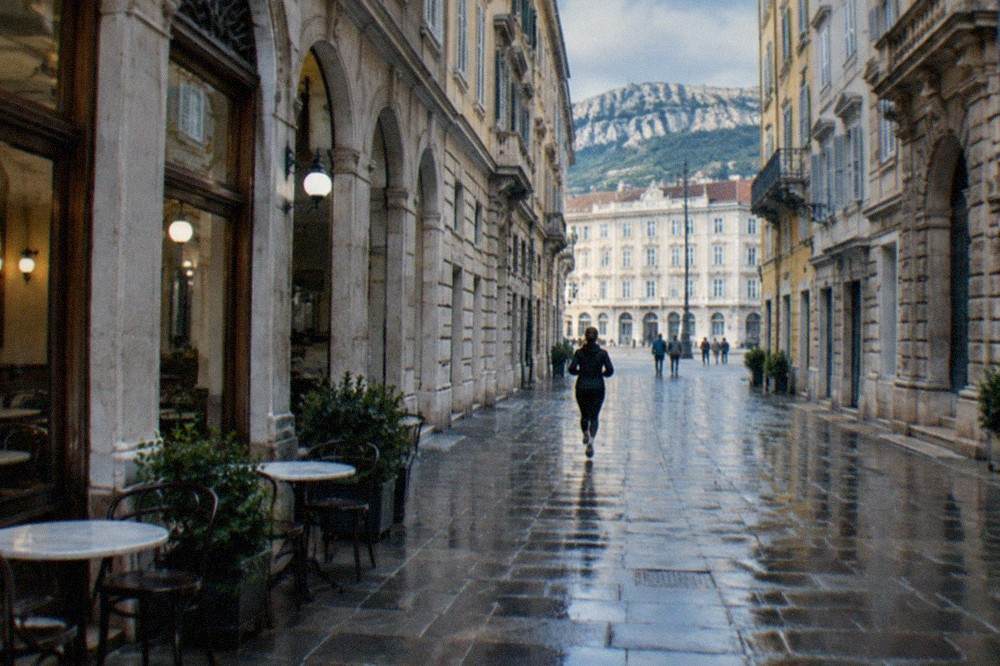
The city rewards the linguistically curious in person. On a two-hour private walking tour with a local guide, the layered names are impossible to miss: Piazza Unità d'Italia, the Città Vecchia, the Canal Grande with the church of Sant'Antonio Taumaturgo at its head, and street names that switch between Italian and Slovene spellings within a few blocks. The guides who run the Trieste 2-hour private walking tour cover exactly this ground, and the operator's live listing carries current times and availability: Check availability.
Booking a walk like this is the easiest way to hear the city's names spoken aloud by someone who grew up with them, and the private format means the route can bend toward whatever corner of the story interests you most, whether that is the Roman layer, the Habsburg layer or the dialect still spoken in the Città Vecchia.
Does the Name Trieste Have a Meaning at All?
Yes, but not in French and not in modern Italian: the name is a fossil from antiquity. Latin "Tergeste" was the Roman name for the settlement, and the most commonly repeated ancient derivation reads it as a compound meaning "market town", with a competing folk etymology involving "three walls". Neither derivation has anything to do with the Latin adjective "tristis", sad, despite the surface resemblance, and the modern form Trieste is simply what centuries of sound change did to Tergeste in local speech.
The ancient derivations come down through Roman writers rather than modern linguistics, so they should be taken as tradition rather than settled science. What is settled is the shape of the word's journey: Tergeste in Latin, then a gradual compression in the vernacular, arriving at the modern three-syllable name. The neighbouring languages kept their own versions, which is a nice demonstration that the name is old enough to have been borrowed several times over. Slovene calls the city Trst, German calls it Triest, and the local dialect has its own pronunciation, all from the same root.
The neighbouring-language forms of the city's name:
| Language | Name for the city | Notes |
|---|---|---|
| Italian | Trieste | The official name, used in French and English too |
| Slovene | Trst | One syllable, reflecting the city's Slavic neighbours |
| German | Triest | Dating from the Habsburg period of rule |
| Latin | Tergeste | The Roman name, source of the modern forms |
That Habsburg layer is why the city feels Central European in a way that surprises French visitors expecting a typical Italian port. The grand caffè, the broad grid of the Borgo Teresiano and the elegant shopfronts under the arcades of the city centre all date from the centuries when Trieste was the Austrian Empire's main outlet to the sea. The coffee culture that grew up around the port's coffee trade is still the city's signature, and it is the reason a San Francisco café chain borrowed the name. Our page on why Trieste is famous for coffee covers that story, and our answer to what Trieste means in English handles the same question from the English side.
Common Questions About Trieste in French
What does trieste mean in french?
In French, "triste" with one r means sad. The city name Trieste is not that word: it is the proper noun for the port city in Friuli Venezia Giulia, Italy, and French uses it purely as a place name. The two words share a distant Latin ancestor, which explains the resemblance.
Is Trieste a French word?
No. Trieste is an Italian proper noun, the name of the city in northeast Italy. French borrowed the adjective "triste" from the same Latin root, but the city's name in French is simply the Italian name used as a place name, like Rome or Venice.
Does Trieste mean sad in Italian?
The Italian word for sad is "triste", one r, a common adjective. Trieste with a capital T is only the city name and is never used to mean sad in Italian.
Why does Trieste look like the French word for sad?
Both descend from Latin: the adjective from "tristis", meaning sad, and the city name from "Tergeste", the Roman name of the settlement. Centuries of sound change brought the two words within one letter of each other by coincidence.
What did Trieste originally mean?
The Roman name Tergeste is most commonly explained in ancient tradition as meaning "market town", with a competing folk etymology of "three walls". Neither is connected to sadness, and both are traditions rather than proven linguistics.
What is Trieste called in other languages?
Italian and French say Trieste, Slovene says Trst, and German says Triest, a legacy of the Habsburg period. All come from the same Latin name, Tergeste.
The short version, for anyone who arrived here from a French search box: the city in Italy is not named after an emotion, the shared spelling is a Latin coincidence, and the place itself, perched on its gulf between the Italian and Slovenian coasts, is considerably more cheerful than the word it resembles. Trieste Travel Guide covers the rest of the story, from the coffee houses to the border crossings, in the pages linked above.