What Is the Famous Food of Trieste?
The famous food of Trieste, Italy: jota and goulash, buffet pork sandwiches, osmize farm taverns on the Karst, and a coffee culture like nowhere else in the country.
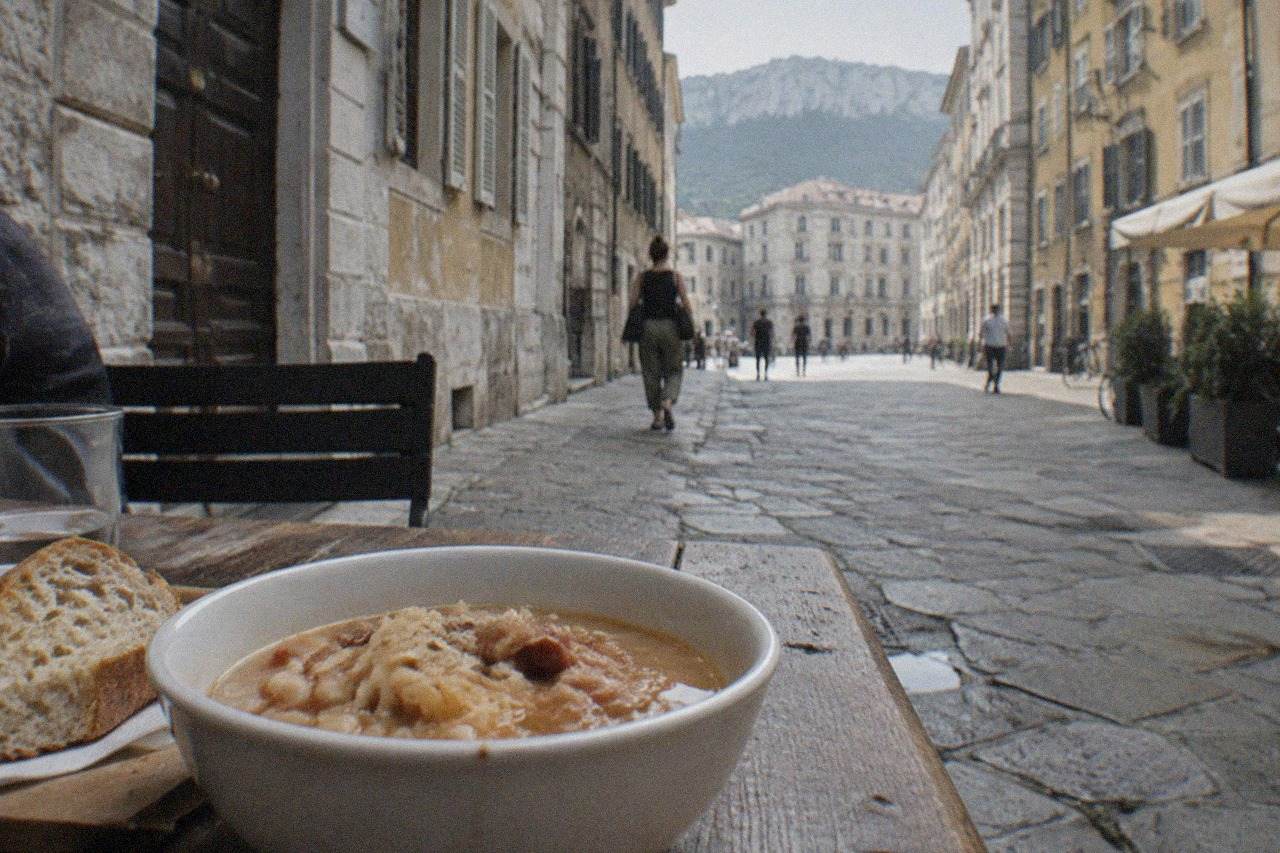
Trieste, the Adriatic port city in Friuli Venezia Giulia in the northeast corner of Italy, is famous for food that most visitors do not expect to find in an Italian city: a sauerkraut-and-bean soup called jota, beef goulash in the Hungarian manner, and cured pork served from bare neighbourhood taverns known as buffets. That is the short answer, and it is also the interesting one, because Trieste's kitchen is the product of two centuries as the Habsburg empire's outlet to the sea. Slovene farmers, Austrian bureaucrats, Greek merchants and Illyrian sailors all left their mark on the table, and the coffee houses are the third act of the same story. This page sets out what the famous food of Trieste actually is, where each dish came from, and how to eat your way through it, with the details a first page of search results tends to get wrong.
What Is the Famous Food of Trieste?
The famous food of Trieste is jota, a sour soup of sauerkraut, beans, potatoes and smoked pork, followed by beef goulash served with bread or polenta, and by panino con porcina, a sandwich of boiled cured pork with mustard and horseradish from the city's buffets. Around them sit local ham, cheese from the Karst plateau and the sweet presnitz and putizza pastries, all taken with coffee in a historic caffè. It is Central European cooking on an Italian coastline.
Jota is the dish locals will name first if you ask them. It is a winter soup built on sauerkraut, and its very presence on an Italian menu tells you where Trieste's cooking comes from: the sauerkraut arrives with the Slovene and Austrian traditions of the countryside behind the city, not with the Mediterranean south. The goulash tells the same story from another direction, a Hungarian dish that became everyday eating here during the decades when Trieste was the main port of an empire whose capital was Vienna. If you want the full story of the signature dish, our page on Trieste's signature dish goes deeper on jota alone.
The buffets are the other half of the answer. A Trieste buffet is not a hotel breakfast spread: it is a small, often standing-room tavern, some of them run by the same families for generations, where porcina, boiled cured pork, is carved to order and served in a roll with mustard, horseradish and sometimes sauerkraut or boiled egg. There are a handful of historic ones scattered through the centre and the Città Vecchia, and queuing at one for lunch is as close as a visitor gets to eating the way the city eats on a working day. The what to eat in Trieste guide maps the individual dishes and the addresses in detail.
| Dish | What it is | The tradition behind it |
|---|---|---|
| Jota | Sour soup of sauerkraut, beans, potatoes and smoked pork | Slovene and Habsburg-era country cooking from behind the city |
| Goulash | Beef stewed in the Hungarian manner, served with bread or polenta | The Austrian empire's everyday meat dish, still standard in Trieste trattorias |
| Panino con porcina | Boiled cured pork in a roll with mustard and horseradish | The classic lunch at a Trieste buffet tavern |
| Prosciutto and Karst cheese | Local cured ham with Terrano-aged cheese from the plateau | Farmhouse tradition of the Carso above the city |
| Presnitz and putizza | Rich rolled pastries filled with dried fruit, nuts and honey | Triestine festive baking served with coffee |
The pastries matter more than visitors expect. Presnitz, a spiral of pastry wrapped around a filling of nuts, dried fruit and honey, is the cake that comes out at Christmas in Triestine homes, and putizza is its yeast-raised cousin. Both are sold by the slice in the city's pastry shops all year, and both belong with coffee, which in Trieste is less a drink than a civic institution.
Why Does Trieste in Italy Eat More Like Vienna Than Rome?
Trieste eats like Vienna because it spent longer as a Habsburg port than as an Italian city: it was the main sea outlet of the Austrian empire, and its kitchens, cafés and wine customs came with the bureaucrats, sailors and merchants of central Europe. Sauerkraut, goulash and strudel arrived overland, while the fish, olive oil and Mediterranean habits came up the Adriatic. The result is a border kitchen with two vocabularies.
The city's whole identity sits on that seam, and food is where you see it most clearly. Triestine cooking carries Slovene dish names, Austrian habits and an Italian frame, sometimes inside a single menu. The bread dumplings, the sauerkraut, the boiled meats and the vinegars-and-mustard condiment tray at a buffet are all central European; the seafood at the Molo Audace end of town, the grilled sardines and the baccalà, are Adriatic. A restaurant in the Città Vecchia will often serve both without seeing any contradiction, because for the people who live here there is none. Our why is Trieste famous page covers the history that produced this.
Coffee is the clearest case of the whole pattern. Trieste is a historic coffee port and a roasting centre, home to Illy's headquarters, and its caffès are the surviving public rooms of the Habsburg era, places where you sit at a marble table and order from a vocabulary of coffee names that exists nowhere else in Italy. What you should not repeat is the number that gets attached to the story. The widely quoted figure for how many kilograms of coffee per head Triestini drink, and every "twice the Italian average" claim built on it, has no primary source behind it: it is not on the Chamber of Commerce pages, not in the port authority's data and not in official statistics. The culture is real and observable, the number is not. The why is Trieste famous for coffee page covers the caffè culture properly, without the invented statistics.
Tasting the food culture with a guide is one of the more efficient ways in, because the buffets and pastry shops do not announce themselves and the vocabulary does not explain itself.
Where Do You Actually Eat the Famous Food of Trieste?
You eat the famous food of Trieste in three settings: the buffets for porcina and goulash at lunch, the trattorias of the centre and Città Vecchia for jota and seafood, and the osmize, seasonal farmhouse taverns on the Karst plateau above the city, where farmers sell their own wine, ham and cheese under a leafy frasca branch hung at the turning. Each setting has its own season and its own rules.
The buffets are a daytime institution and porcina is their signature. You order at the counter, the pork is carved in front of you, and the condiments are the point: mustard, kren horseradish, sometimes sauerkraut on top. It is standing food or counter food, cheap by the standards of a European city centre, and it is the single most Triestine lunch there is.
The osmize are the other pole entirely. An osmiza is a farm on the Karst that, for a limited period each year, opens its cellar door and sells its own wine and its own produce: ham, cheese, eggs, salumi and simple hot dishes, eaten at shared tables. The custom is old and comes with the Slovene name, from osem, meaning eight, for the limited days originally allowed; today each farmer decides their own opening days and notifies the local authority, and the whole thing runs on the calendar at osmize.com. The signal is the frasca, a branch of greenery hung at the roadside to mark the turning for an open osmiza, the way a wine flag once marked a tavern. You drive or take a bus up to the plateau, you drink what the farm made, and you pay for what you took. There is no fixed menu and no ceremony, which is exactly why the osmize of the Carso page treats them as a destination in their own right rather than a restaurant recommendation.
| Setting | What you get | How it works |
|---|---|---|
| Buffet tavern | Panino con porcina, boiled meats, goulash, sauerkraut | Order at the counter, stand or perch, pay as you go |
| City trattoria | Jota, goulash, Adriatic fish, local pastries | Ordinary restaurant service, menus in Italian and often Slovene and English |
| Osmiza farmhouse | The farm's own wine, ham, cheese and eggs | Seasonal openings listed on the osmize.com calendar, signposted by a frasca branch |
| Historic caffè | Coffee, presnitz, putizza | Table service, marble tables, Habsburg-era rooms |
For the osmize, timing matters: openings cluster in spring and autumn, the calendar is the only reliable source, and you should check it for the week you are actually there rather than trusting a blog post. For the buffets, lunch is the hour that matters. And if you would rather have someone walk you into the first one, the classic three-hour food walk covers buffets and bars with a local guide: Check availability. If you are weighing the city itself before the menu, is Trieste good for food answers the broader question.
Is a Guided Food Tour in Trieste Worth Booking?
A guided food tour is worth booking in Trieste because the famous food is scattered across buffets, pastry shops and caffès that do not advertise, and because the ordering vocabulary is local: a guide gets you to the right counter and translates the menu on the first day. A three-hour guided foodie walk starts around $71.08 per person, and hands-on pasta and tiramisu classes run around $157.65 per person, both bookable with free cancellation on the operator's listing.
The figures come straight from the operators' listings. The guided foodie walking tour, a three-hour walk through the city's culinary traditions, is priced from $71.08 per person and carries a rating of 4.9 from 264 reviews; its listing promises the best of Trieste's street food with a local guide. A second three-hour food walk with local flavors and tastings, from $85.98 per person, is rated 4.7 from 123 reviews and covers much of the same ground in a smaller format. The small-group pasta and tiramisu class, from $157.65 per person for three hours, rated 4.4 from 40 reviews, is the hands-on alternative if you want to cook the food rather than only taste it. Prices move with the season, so treat these as the listing figures at the time of writing and confirm on the live page when you book.
Whichever you pick, the same logic applies: the tours are city walks, they run in the streets and the buffets of the centre, and they are the fastest way to learn the vocabulary that the counters assume you already have.
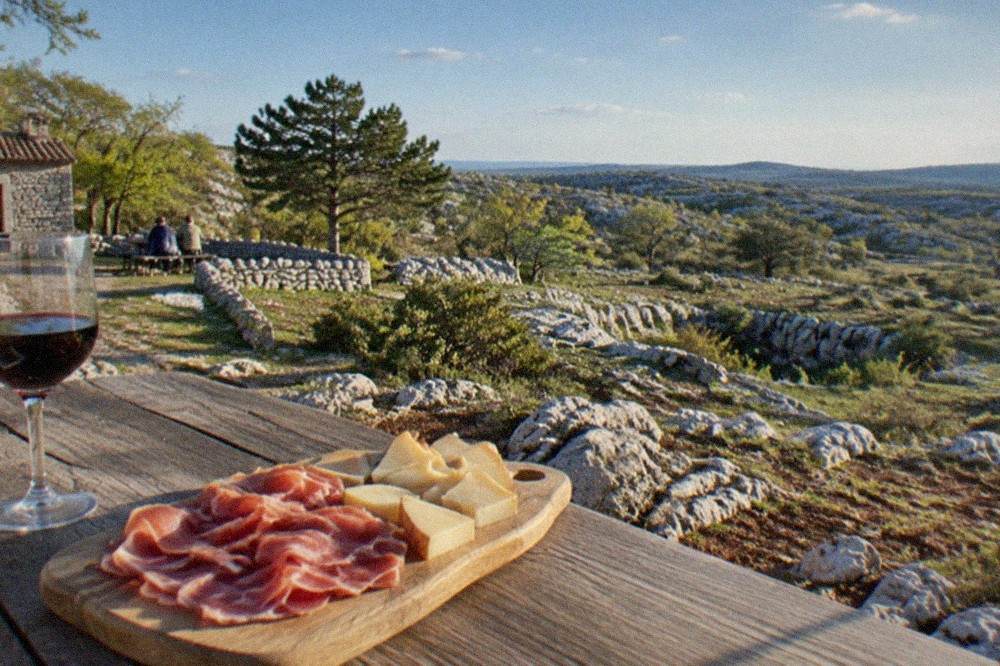
One thing a guided walk will not do for you is get you up to an osmiza, because the farmhouse taverns are on the plateau and the tours are city walks. If the osmize are what drew you, plan a separate afternoon for them, check the calendar for the day you will actually be there, and expect the drive, not the walk, to be the limit. And if you are deciding how many days to give the city in total, how many days in Trieste is enough is the page that does that arithmetic; the short version is that one day covers the famous sights and a buffet lunch, while two or three lets you add the Karst. This site, Trieste Travel Guide, exists precisely because the city rewards that kind of slow, cross-border appetite: a place where the answers are jota and goulash, the coffee comes in a Habsburg caffè, and the best wine of the day is drunk at a shared table on a plateau above the sea.
Common Questions About Food in Trieste
What is the famous food of Trieste?
Jota, the sauerkraut, bean and potato soup, is the dish locals name first, followed by beef goulash and the panino con porcina served at the city's buffet taverns. Presnitz and putizza pastries with coffee complete the list.
What is the signature dish of Trieste?
Jota. It is a sour soup of sauerkraut, beans, potatoes and smoked pork, rooted in the Slovene and Habsburg traditions behind the city rather than in Mediterranean cooking.
What food is Trieste known for?
Buffet porcina, goulash, jota, Karst ham and Terrano cheese, osmize farmhouse taverns, presnitz and putizza pastries, and a historic caffè culture built on the city's role as a coffee port.
Is Trieste good for food?
Yes, though it is not the food most people expect from Italy. The kitchen is Central European on an Adriatic coastline, and the range runs from standing-room buffets to farmhouse osmize on the Karst.
What is an osmiza?
A farmhouse on the Trieste Karst that opens for a limited period each year to sell its own wine and home produce, signposted by a frasca branch at the turning and listed on the osmize.com calendar.
Does Trieste really drink that much coffee?
The caffè culture is real, Habsburg-era and central to the city's identity, but the repeated per-head consumption figure has no primary source, so no honest site prints a number.