What Is Trieste, Italy Known for Food?
Trieste, Italy is known for jota soup, buffet pork dishes, osmize farm taverns on the Carso, and a historic coffee culture. Here is what to eat and drink in Trieste.
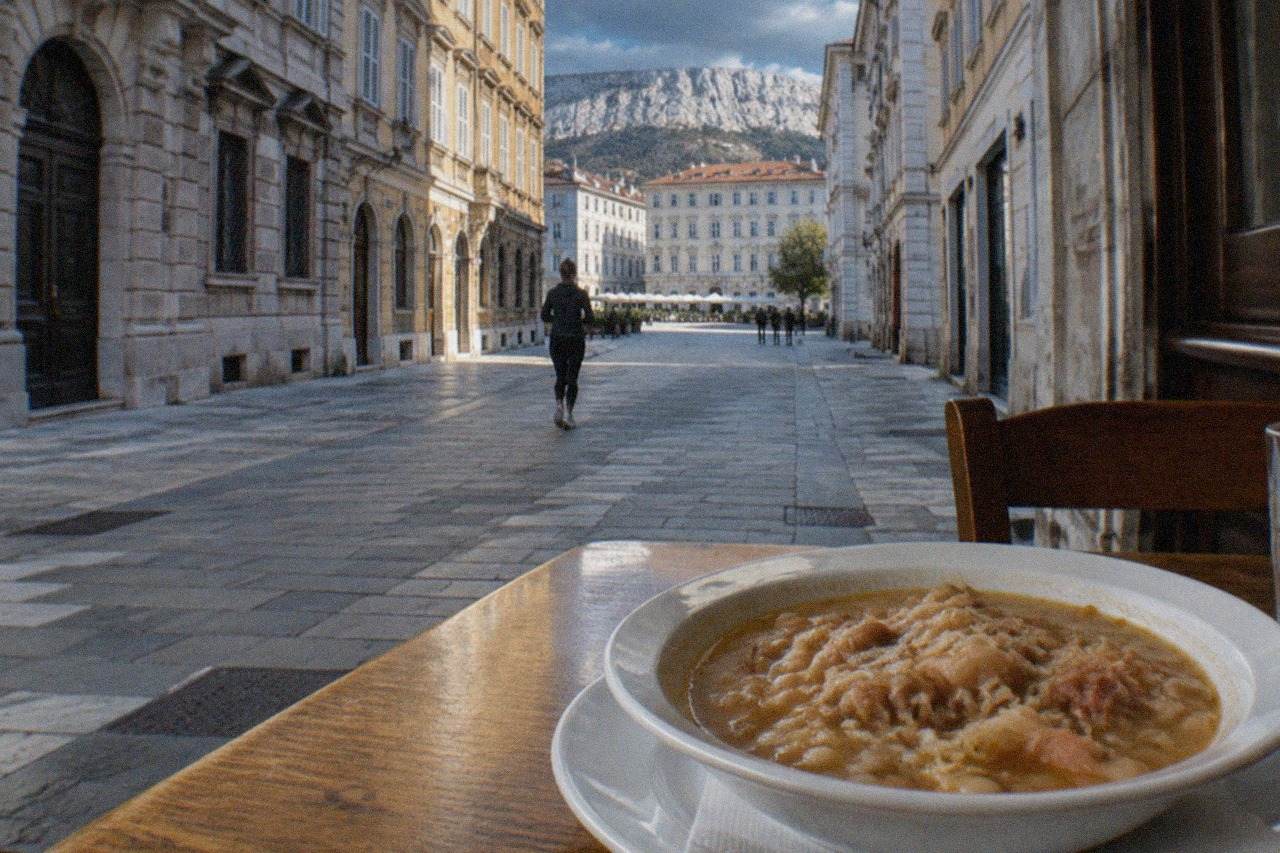
Trieste, the Adriatic port city in Friuli Venezia Giulia in northeast Italy, answers the question of what it is known for food with a menu that surprises almost everyone who expects standard Italian cooking. This is a border city that spent centuries inside the Habsburg empire, and its tables show it: pork and sauerkraut rather than pasta and tomato, bean-and-sauerkraut soup rather than minestrone, and a coffee ritual imported from Vienna and then made its own. The result is one of the most distinctive regional food cultures in Italy, and this page on Trieste Travel Guide sets out exactly what is on it.
The short version: Trieste is known for the jota, the city's signature soup of beans, sauerkraut, potato and smoked pork; for the buffet, a tavern serving Austro-Hungarian pork dishes like pork knuckle, sausages and goulash; for osmize, seasonal farm taverns on the Carso plateau selling their own wine and produce; for Vitovska, Malvasia and Terrano, the Carso's own wines; and for a coffee culture rooted in the port's historic role in the coffee trade. The long version, dish by dish, follows.
What Is Trieste, Italy Known for Food?
Trieste, Italy is known for food that sits between Italy and Central Europe: jota, a soup of beans, sauerkraut, potato and smoked pork; the buffet tradition of pork knuckle, sausages and goulash; presnitz and putizza desserts; osmize farm taverns on the Carso selling their own wine; the Carso's Vitovska, Malvasia and Terrano wines; and a historic coffee culture built on the port's role in the green-coffee trade. None of this is the tomato-and-pasta cooking most visitors expect.
That gap between expectation and table is the whole point of eating in Trieste. The city was the Habsburg empire's great Mediterranean port, and its cuisine absorbed Slovene, Austro-Hungarian, Greek, Jewish and Levantine influences over the centuries. What came out is a cooking style that a first-time visitor from Rome or Naples would struggle to place as Italian at all, and that is precisely why food is one of the strongest reasons to visit. The full dish-by-dish breakdown is in what to eat in Trieste; this page answers the question directly.
The signature dish question has its own answer, and it is the jota. The soup is a cold-weather staple built on cheap, storable ingredients that travelled well to a port city: dried beans, sauerkraut, potatoes and a smoked pork product, cooked slowly until the whole pot tastes of smoke and acid. Locals treat it as the definitive Triestine dish, and the question what is the signature dish of Trieste gets the same reply every time.
Which Savoury Dishes Define Trieste's Tables?
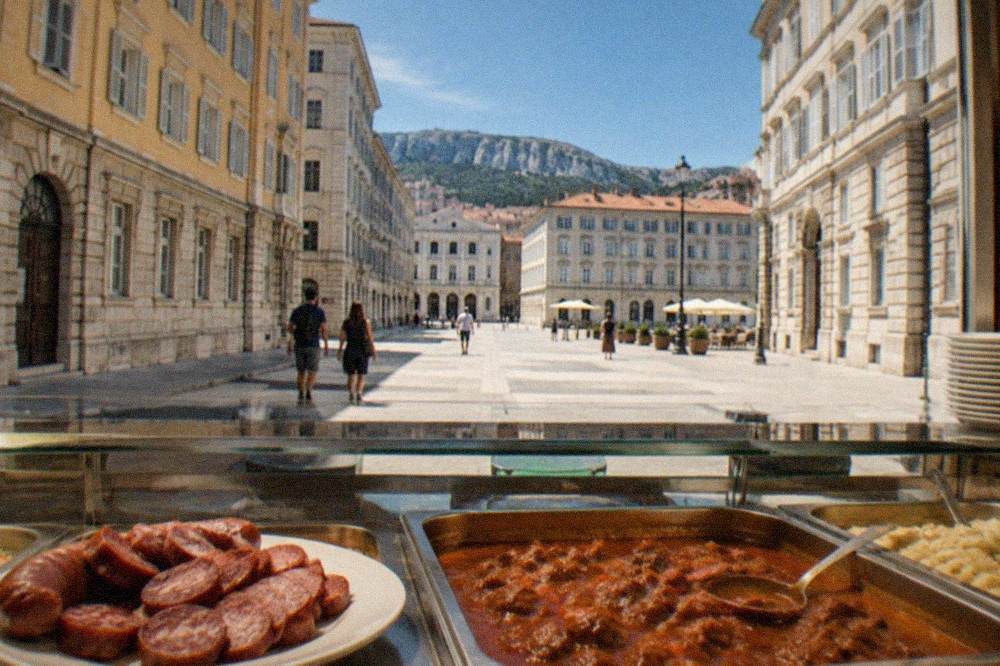
The savoury core of Trieste's cooking is the buffet tradition: pork knuckle (stinco), cotechino and other sausages, goulash, and boiled pork served in tavern-style rooms, alongside jota soup, cevapcici and other Balkan grilled dishes, and seafood from the Adriatic such as sardoni in savor. The buffet is a Trieste institution, a half-tavern half-deli where you eat standing or at simple tables, and it has no equivalent elsewhere in Italy.
The buffet is where the Habsburg legacy is most visible. These rooms serve the heavy pork cookery of the old empire: stinco di maiale, cotechino, musetto, goulash in the Triestine style, and sauerkraut by the ladle. The format is part of the appeal, because a buffet is closer to a Central European Wirtshaus than to an Italian trattoria, and the habit of ordering a plate of mixed boiled pork with mustard and horseradish is entirely local. The tradition has its own dedicated page on this site, covering jota, goulash and the Trieste buffet.
Alongside the buffet sits a seafood layer that surprises visitors who assume a pork city cannot also be a fish port. Grilled sardines, cod dishes and the sardoni in savor, sardines preserved sweet-and-sour with onion and raisins, all come out of the Adriatic on the city's doorstep. The two traditions coexist rather than compete, and a single long lunch in Città Vecchia can take in both.
Here is the short list of what to look for on a menu in Trieste, Italy:
| Dish | What it is | Where the tradition comes from |
|---|---|---|
| Jota | Soup of beans, sauerkraut, potato and smoked pork | The city's signature dish, shared with the Slovene and Friulian kitchen |
| Stinco di maiale | Slow-cooked pork knuckle, usually with sauerkraut | The buffet tradition, Austro-Hungarian in origin |
| Goulash triestino | Beef goulash in the local style, often over bread or polenta | Habsburg-era Central European cooking |
| Cotechino and musetto | Boiled pork sausages served with mustard and horseradish | Buffet counters across the city |
| Sardoni in savor | Sardines in a sweet-and-sour onion and raisin dressing | Adriatic port preserving culture |
| Cevapcici and grilled meats | Balkan-style minced meat rolls and grills | The city's Slovene and Balkan neighbours |
The easiest way to taste several of these in one walk is a guided food tour. The Trieste: Guided Foodie Walking Tour runs three hours, from $71.08 per person, and is rated 4.9 from 264 reviews on the operator's live listing. Check availability
Why Is Trieste Famous for Coffee?
Trieste is famous for coffee because it was the Mediterranean's great green-coffee port: beans landed here for the Habsburg empire, roasters grew up around the port, and the city developed a Viennese-style cafe culture with its own ordering vocabulary that survives today. Illy, one of Italy's best-known roasters, is headquartered in the city, and historic cafes around Piazza Unità d'Italia still serve espresso standing at the bar or seated in velvet rooms.
The port's role in the coffee trade is the observable, sourced core of the story. Trieste's free port handled goods for the interior of Central Europe, and coffee was one of them; roasting and trading companies settled around the harbour and some, Illy among them, are still there. The famous claim that Triestini drink several times the Italian average has no primary source behind it, and this site does not repeat it. The culture does not need the number anyway: what a visitor can verify is the density of historic cafes, the local ordering vocabulary, and the fact that coffee is the city's default social ritual rather than a morning pit stop.
The vocabulary is the fun part. Order like a local and the barista will understand words you will not find in a Florentine bar:
| Local term | What you get |
|---|---|
| Capo in b | A small cappuccino in a glass, the city's signature order |
| Capo in t | The same, in a cup |
| Nero | An espresso |
| Goccia | An espresso "with a drop" of milk |
| Corrected variants | Coffee with a shot of a local spirit, ordered by name |
The cafe culture has its own full treatment on Trieste coffee culture, including the historic cafes themselves and how the ordering system works in practice. Several guided walking tours fold a coffee stop into a city walk, which is a good way to get the history and the cup in one sitting.
What Are Osmize and the Carso Wine Tradition?
Osmize are seasonal farm taverns on the Trieste Karst, the Carso plateau above the city, where farming families sell their own wine and simple homemade produce, salumi, cheese and eggs, direct from the farmhouse for a limited period each year. An open osmiza is signposted by a frasca, a leafy branch hung at the turning, and the current opening calendar with addresses and a map is published at osmize.com. The Carso's own wines are Vitovska, Malvasia and Terrano, not Prosecco.
The custom is the single most distinctive food experience in Trieste's orbit, and it is free of tourism staging: an osmiza exists because a family has wine to sell, it opens when it opens, and the frasca at the roadside is the only advertising. You drink the family's own wine, often by the litre carafe, eat whatever they have made, and pay a modest farm-gate price. Openings cluster in spring and autumn, and the calendar is the thing to check before setting out, because nothing is open year-round.
The wine side needs one careful correction. Prosecco is a village on the edge of the Carso, and it gave the sparkling wine its name, but Trieste is not in the Prosecco DOC and the plateau's own bottles are different: Vitovska, a local white with minerality from the limestone; Malvasia; and Terrano, a red that grows in the red soil the plateau is famous for. Confusing the village with the wine is the mistake most outside writing makes. The full picture is on the osmize of the Carso.
A wine-led tour is the efficient way to reach this world without a car. The Prosecco Origins Wine Experience visits the village that gave the wine its name, runs two to three hours, from $70.07 per person, and is rated 5 from 91 reviews on the operator's live listing. The plateau's vineyards and osmize sit above the city rather than in it, so allow half a day for them.
How Do You Taste Trieste's Food Culture in a Short Visit?
You taste Trieste's food culture in a short visit by combining one buffet meal, one historic cafe, one food walk and one Carso wine experience: a bowl of jota and a plate of boiled pork in a buffet, a capo in b in a cafe around Piazza Unità d'Italia, a guided food tour for the street-food layer, and a Prosecco-origins or Carso wine trip for the plateau. Each of these is bookable, and the food tour runs three hours from $71.08 per person.
The order matters less than the coverage. A single day can hold a morning coffee, a lunch of jota and goulash, and an afternoon food walk, but the Carso needs half a day of its own because the osmize and the vineyards sit above the city rather than in it. If you are working out how long to allow overall, the planning question how many days do you need in Trieste is worth a read; food justifies at least one full day and one half-day excursion on its own.
For visitors who want to take the cooking home rather than just eat it, the hands-on option is a class. The Trieste: Private Cooking Class at a Local's Home runs three hours with a certified home cook, from $166.23 per person, rated on the operator's live listing. A group pasta and tiramisu class is the alternative, three hours from $157.65 per person, rated 4.4 from 40 reviews.
If one experience has to carry the whole answer, make it the foodie walk. It covers the buffet tradition, the street-food layer and a coffee stop in a single three-hour route, and it is the tour this site points food questions at first.
Common Questions About Trieste Food
What is trieste, italy known for food?
Trieste, Italy is known for jota soup, buffet pork dishes like stinco and goulash, osmize farm taverns on the Carso, the Carso's Vitovska, Malvasia and Terrano wines, and a historic coffee culture built on the port's role in the green-coffee trade.
What is the signature dish of Trieste?
The jota: a soup of dried beans, sauerkraut, potato and smoked pork, cooked slowly and treated by locals as the definitive Triestine dish.
Is Trieste good for food?
Yes. Trieste's food culture is one of the most distinctive in Italy, blending Austro-Hungarian pork cookery, Balkan grills, Adriatic seafood and a serious coffee ritual; a three-hour guided food tour is the fastest way to cover the ground.
What desserts is Trieste known for?
Presnitz, a rolled pastry of dried fruit and nuts, and putizza, a richer filled cake, are the city's best-known desserts, both from the Habsburg-era baking tradition.
Do I need a car to reach the osmize?
Not necessarily. Several Carso wine tours run from the city, including a Prosecco-origins experience of two to three hours and a full-day Karst trip, and the plateau's villages are also reachable by the Opicina tram line, which runs from piazza Dalmazia.
The honest summary is that Trieste, Italy is known for food you cannot reliably find anywhere else in the country, and the city rewards a visitor who arrives hungry and leaves the pasta expectations at the border. Start with a bowl of jota, order a capo in b at the bar, follow the frasca up onto the Carso, and the question answers itself.