Sistiana Beach and Bay on the Trieste Coast, Italy
Sistiana is the sheltered bay on the Trieste coast in Friuli Venezia Giulia, the stretch of shoreline where the city's grit gives way to cliffs, pine and some of the clearest water within reach of Trieste, Italy. This page covers the beach itself, the kayak and boat options, how the bay fits a Duino coast day, and when the sea and the bora make it worth the trip.
Short answer
Sistiana is a small coastal settlement and bay in the Duino-Aurisina area north-west of Trieste, Italy, known for its beach, its marina and the limestone cliffs that rise behind it. The sea here sits inside the Gulf of Trieste, so the water warms through summer and the beach works best between late June and September. Kayak tours of the Duino coast and castles depart in this area, and the Carso plateau starts almost at the back of the bay.
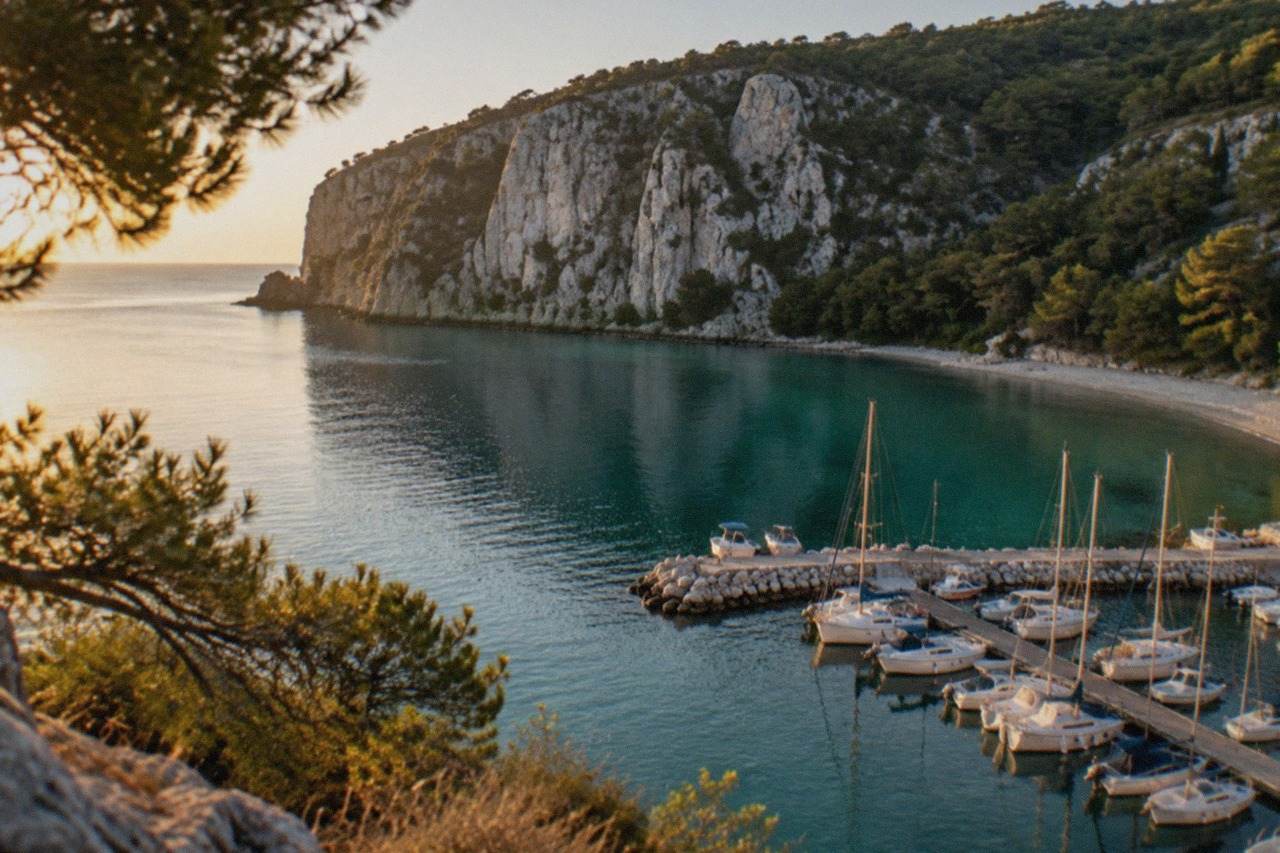
Sistiana sits on the Adriatic coast of Trieste, Italy, in the Friuli Venezia Giulia region, roughly where the city shoreline ends and the limestone cliffs of the Duino coast begin. It is a settlement of two parts: a compact marina and beach bay at sea level, and a village above it on the plateau edge, where the Carso karst plateau starts its roll inland. The bay looks out across the Gulf of Trieste toward Miramare and, on clear days, the line of the Istrian shore. This page is the area guide: what the beach is actually like, what you can do on and around the water, how the bay connects to Duino and the Rilke trail country, and when the sea temperature and the bora wind make it a good day out or a wasted one.
Where Is Sistiana on the Trieste Coast?
Sistiana is a coastal village and bay in the Duino-Aurisina municipality, on the shore of the Gulf of Trieste north-west of Trieste city, in the Friuli Venezia Giulia region of Italy. The bay sits below a bluff that separates the waterline from the upper village, and behind the upper village the terrain climbs onto the Carso, the limestone plateau that gives this whole stretch of coast its cliffs, caves and dry stone walls.
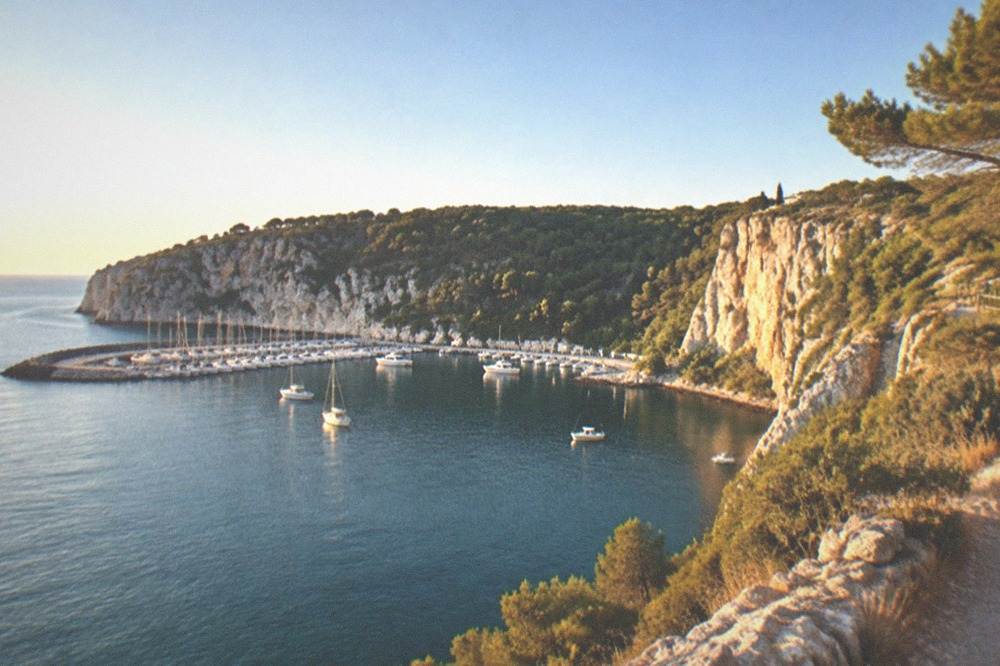
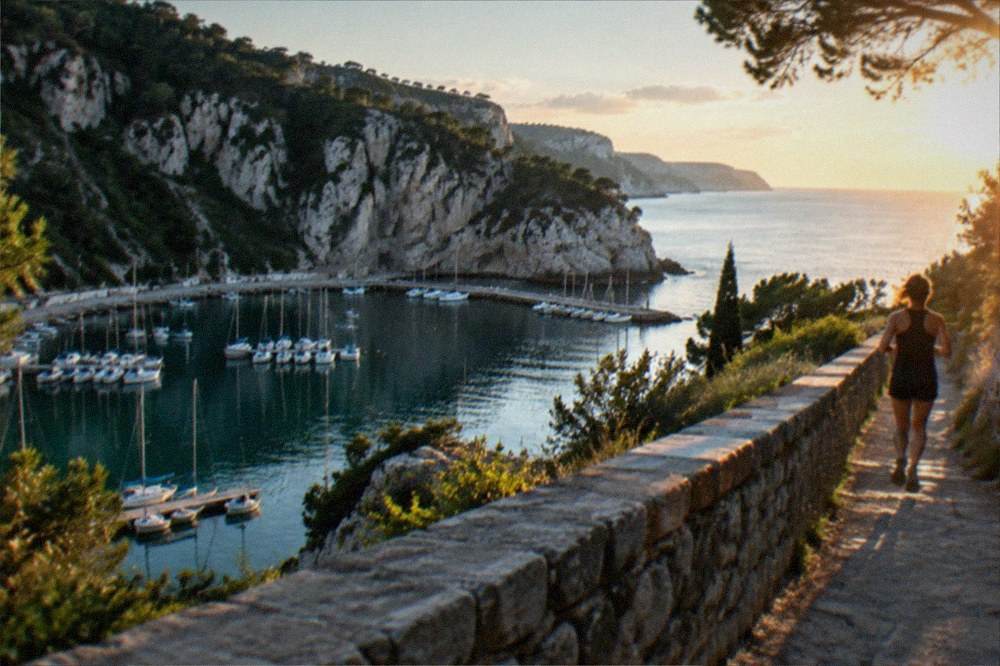
The geography is the reason the place works. The Gulf of Trieste is a wide, shallow arm of the northern Adriatic, and its north-western shore runs in a series of headlands and pocket bays from Barcola and Miramare, past the grey cliffs toward Duino at the far end. Sistiana occupies one of the few genuinely sheltered indentations along that run. The marina sits inside the curve, the beach fills the head of the bay, and the cliffs rise on either side of it.
Two names on the map confuse people. Sistiana itself is the bay and the settlement above it. Duino, with its two castles and the mouth of the Timavo river stories, is the next headland along. Locals and listings treat the two as one continuous stretch of coast, and most of the guided activities sold on this shoreline, including the kayak trips, are described as Duino coast or Trieste coastline experiences that include Sistiana's cliffs in their route. If you are booking anything on the water here, read the listing's route description rather than assuming which bay it means.
The upper village is where the practical services cluster: parking, a handful of food outlets, and the road connections that run along the top of the bluff. The beach level is reached on foot down the slope, and the marina sits at the northern end of the curve. The Duino area guide covers the castles end of this coast in detail.
What Is the Sistiana Beach Actually Like?
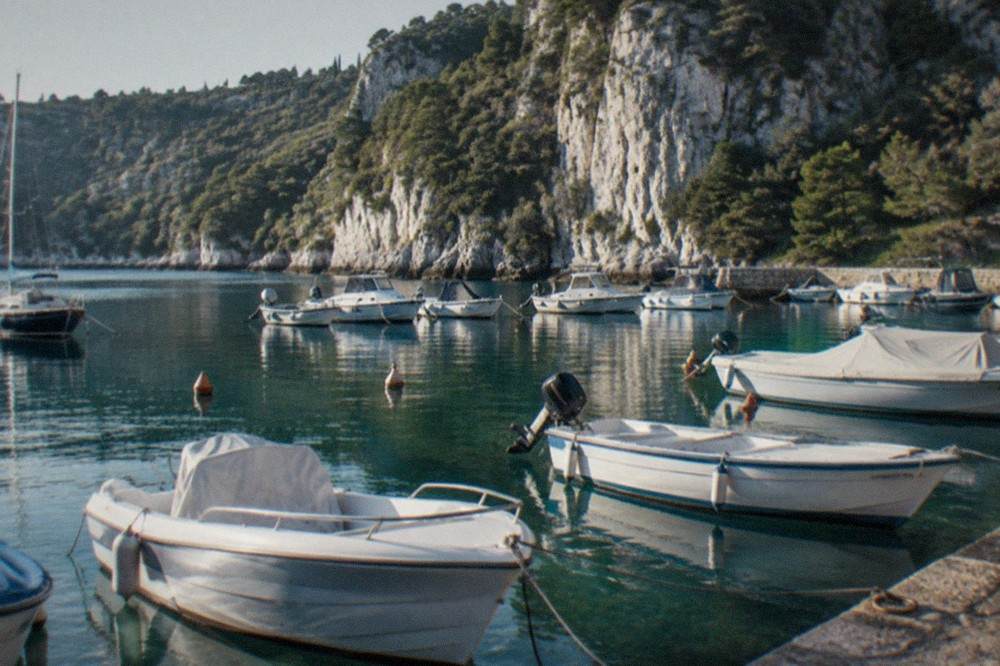
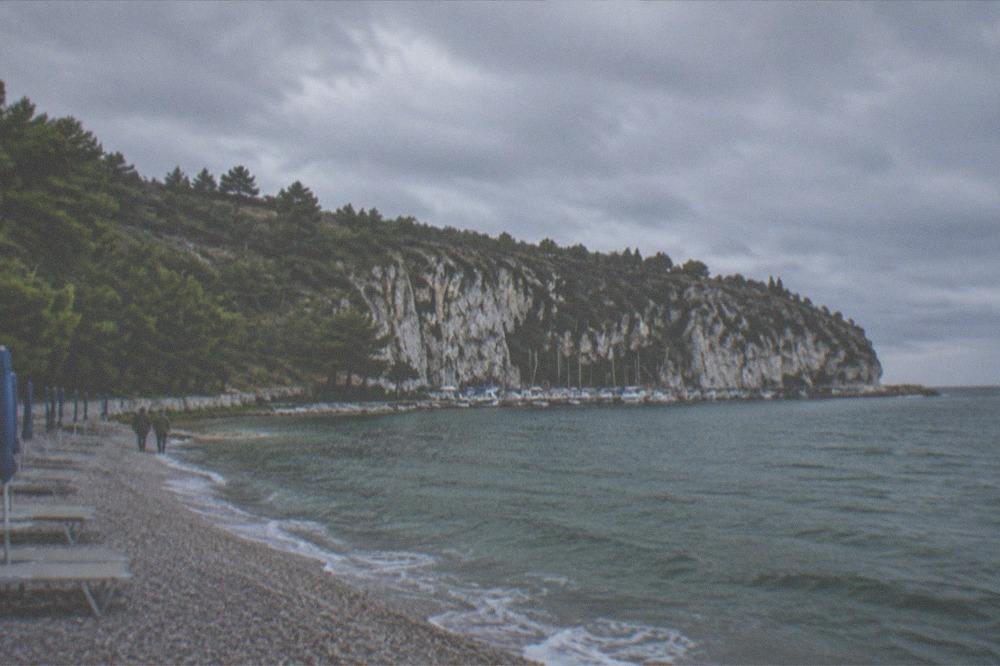
The beach at Sistiana is a narrow strip of sand and fine pebble at the head of the bay, backed by pine slopes and fronted by the calm, shallow water of the gulf. It is a proper swimming beach rather than a walking promenade: the bay shelters the water, the depth comes in gradually, and the setting is green cliffs rather than concrete seafront. Summer weekends draw Trieste families, and weekdays are markedly quieter.
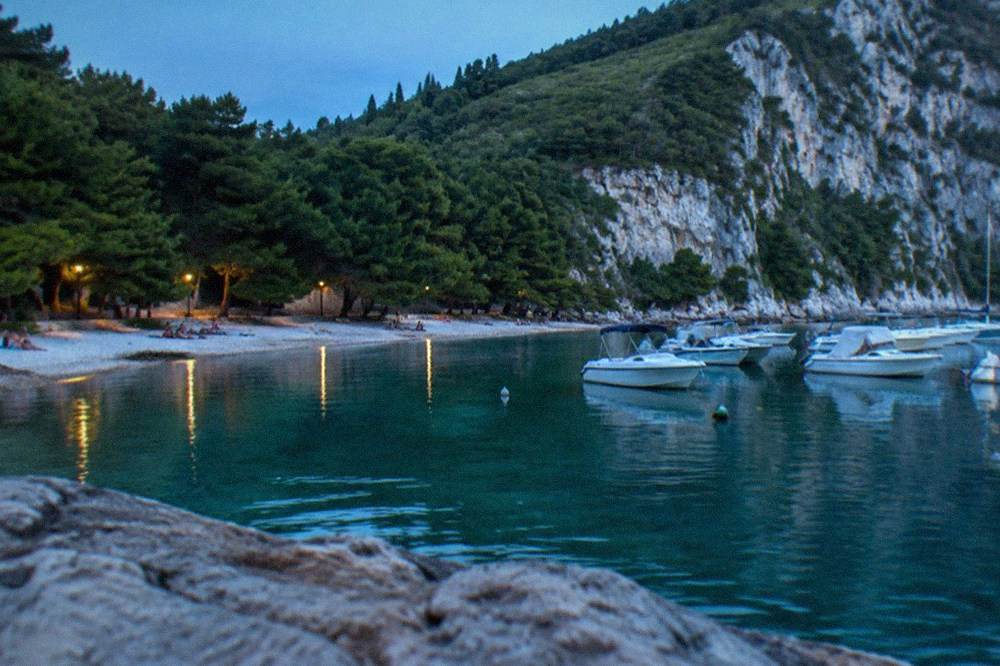
It is worth being honest about what it is not. This is not a long sandy riviera. The usable beach is compact, it fills on hot August Sundays, and the shoreline alternates between sandier patches and coarser pebble where you will want footwear. What it does have, and what the Trieste city beaches largely do not, is enclosed-bay calm and a backdrop that photographs well in every direction: pine to the waterline, cliff walls at the edges, and moored boats in the marina at the north end.
The water is the draw. ARPA FVG's station tables for Trieste molo Fratelli Bandiera put the mean sea temperature at 23.1 °C in June, 25.9 °C in July, 25.9 °C in August and 23.9 °C in September. The gulf is shallow and warms early, which is why swimming from this coast is realistic from late June, and why September, with the crowds gone and the sea holding its summer heat, is arguably the better beach month here. Those station figures are measured at the molo in Trieste itself; the water off Sistiana sits in the same gulf and behaves the same way.
For swimming context beyond this bay, the guides to whether Trieste works as a beach holiday and to the quiet swimming spots locals actually use cover the rest of the coast, including the historic segregated bathing establishment on the city side and the rocky platforms of Barcola.
Those three are the products this coast actually sells: the kayak trip on the water here, the cross-border coastal run into Slovenia, and the audio bus tour for orientation back in the city. Prices and ratings above come from each operator's live listing, and the rest of this page explains where each one fits a Sistiana day.
How Do You Get to Sistiana from Trieste?
Sistiana is reached from Trieste by road along the coastal strip toward Duino and Monfalcone, by regional bus services that run this shore, and by boat in summer, with the exact schedules best checked with the operators before you set out. There is no rail halt at the bay itself; the railway runs inland of the bluff. Driving gives the most flexibility for combining the beach with the upper village, the Carso or Duino, while buses suit a straight beach day.
This is a coastline served by regional transport, and the honest advice is to check rather than assume. Trieste Trasporti and TPL FVG run the regional services, and their sites carry the current timetables; the coastal road is also the route used by long-distance coaches heading north-west from the Trieste stations toward Monfalcone and beyond. Within Trieste city itself, the urban network uses standard tickets, a 60-minute single at €1.50 or a 75-minute single at €1.85, with a day ticket at €3.35, per the operator's 2026 tariff sheet; contactless bank cards can be tapped on board and the system charges the cheapest applicable fare. Confirm on the operator's pages which fare zone covers the trip out to Sistiana before relying on the city tariff.
Arriving by sea is the option people forget. Trieste's port area sits close to the city centre, and the paddle out along this coast is exactly what several of the guided kayak products cover. Boat and kayak tour operators in the gulf run trips that trace the cliffs between Trieste, Sistiana and Duino, and those listings state their own meeting points, usually on the Trieste side, so read the meeting-point line carefully if you are staying near the bay.
If you are building a wider stay around this coast, the itineraries for one, two or three days in Trieste show where a Sistiana beach half-day fits against the Città Vecchia old town and the rest of the city.
What Can You Do on the Water at Sistiana?
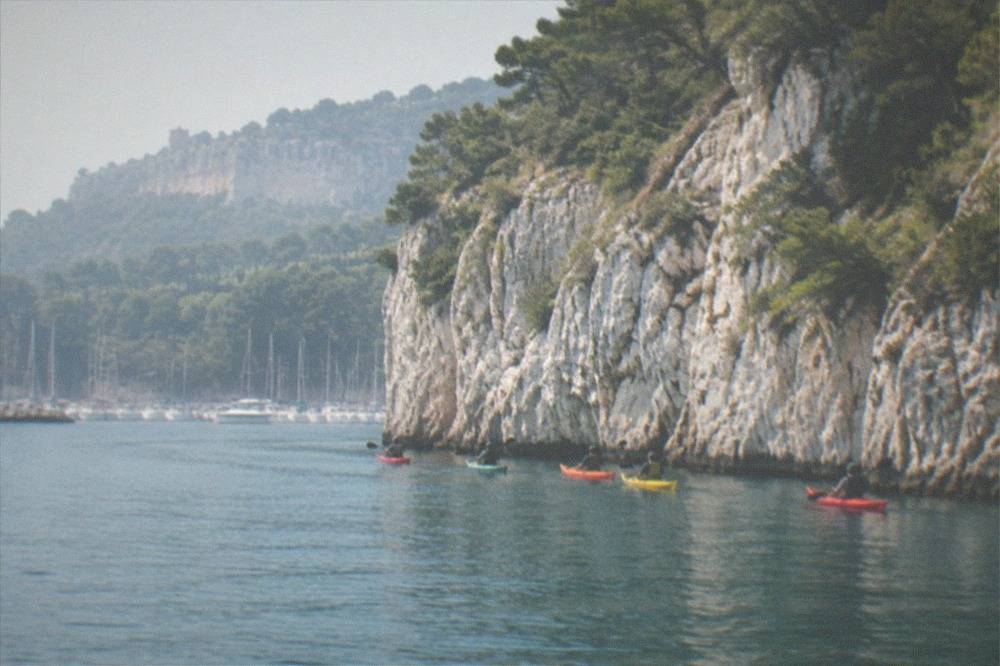
The signature water activity on this stretch of coast is the guided 3-hour kayak trip along the Duino shoreline and beneath the Duino castles, listed from $76.81 per person and rated 4.89 from 11 reviews. It is an active tour, paddling beneath cliffs you cannot see from the road, and it is the product most closely attached to this bay's geography. Beyond it, the gulf supports boat tours, swims off the beach itself and, further along the coast, tours that cross into Slovenian waters.
The kayak product deserves the description. Its listing runs under the name Trieste Kayak Adventure: Duino Coast and Castles, three hours, exploring the Trieste coastline beneath the Duino castles. The rating sits at 4.89 from 11 reviews, and the price is listed from $76.81 per person. Small-group, guide-led, and priced in the mid band for this coast's active products. You can check dates on the operator's live listing: Check availability.
The other active option that touches this shore is the e-bike tour of the old town, Miramare Castle and gelato, a 6-hour product listed from $174.26 per person, rated 5 from 2 reviews, visiting San Giusto Castle and Miramare Castle by e-bike. It is a Trieste-centric day rather than a Sistiana one, but the coastal riding between the city and Miramare points the same direction as this bay.
For the comparative numbers on the water and coast products:
| Tour | Duration | From price | Rating | Reviews |
|---|---|---|---|---|
| Kayak Adventure: Duino Coast and Castles | 3 hours | $76.81 | 4.89 | 11 |
| E-Bike Tour: Old Town, Miramare and Gelato | 6 hours | $174.26 | 5.0 | 2 |
| Slovenian Coast Tour with Food and Wine | 5h 30m | $137.57 | 4.98 | 50 |
| Piran and Panoramic Slovenian Coast | 5 hours | $125.13 | 4.9 | 82 |
Swimming from the beach itself needs no booking and no fee. The bay is the sort of water you can swim laps across on a flat morning, and the marina walls give a sheltered edge when the chop rises in the afternoon. Note that the bora blows from the east-north-east and funnels down the gulf; when it is blowing, the sea state anywhere on this coast changes fast, and ARPA's tables show gusts over 90 km/h have occurred in every single month of the year at the Trieste molo station, so a wind forecast is part of the swimming forecast here.
What Sits Just Along the Coast from Sistiana?
The two anchors either side of the bay are Duino with its castles and the Rilke trail country at the north-west end, and, to the south-east, the Miramare promontory with its castle and marine protected area. Between them runs the whole cliff shoreline that makes this coast worth a full day: castle interiors, a cliff-top walking trail, a protected sea area and, inland, the Carso plateau with Grotta Gigante and the osmize farmhouses.
Duino is the headland stop. The castles and the shoreline walk are covered in the Duino area guide, and the Rilke trail, named for the poet who wrote in the old castle, runs along the cliff tops of this coast; the trail's own guide carries the access points and route notes. The combination that works is a morning at the castles end, an afternoon at the beach, or the reverse depending on the wind.
South-east along the shore, the Miramare Castle promontory sits between this coast and Trieste city, with its park free all year and the castle itself ticketed at €17 for adults, €7 reduced for EU citizens aged 18-25 with the exhibition, or €2 castle-only for that age group, per the Ministry of Culture's own visit page, open every day 9:00-19:00 with last admission at 18:30. The surrounding sea is a protected marine area, which is one reason the water quality along this whole stretch of shore is what it is.
Inland, the Carso begins behind the upper village. The plateau's guide covers the walking country, the dry stone walls and the osmize, the seasonal farm outlets where Karst families sell their own wine and produce, signposted by a frasca branch at the turning. Grotta Gigante, the giant cave at Sgonico on the plateau above this coast, is listed in the Grotta Gigante guide: adult entry €15, guided tours only with compulsory booking, departures at 9:00, 10:00, 11:00, 12:00, 14:00, 15:00 and 16:00, open Tuesday to Sunday from September to February and daily from March to August, closed 25 December and 1 January, per the venue's own price list and schedule pages.
When Is the Best Time to Visit Sistiana Beach?
The best months for Sistiana beach are late June through September, when the mean sea temperature in the Gulf of Trieste runs from 23.1 °C up to 25.9 °C and back down to 23.9 °C, with July and August delivering 28 °C average daily highs. September is the connoisseur's pick: the sea is still at 23.9 °C, the holiday crowds have gone, and the wind statistics stay moderate. Avoid November, the wettest month at 109.8 mm.
The climate record for this coast is unusually well documented, because ARPA FVG maintains a long measurement series at the Trieste molo Fratelli Bandiera station on the waterfront. The table below is that station's 1995-2024 normals. Note these are the Trieste molo figures: the water off Sistiana sits in the same gulf and the air over it is the same air mass, but the station is the city's, not the bay's.
| Month | Mean high °C | Sea °C | Rain mm | Wet days | Days gust over 72 km/h |
|---|---|---|---|---|---|
| May | 21.7 | 17.9 | 75.0 | 8.5 | 2.7 |
| June | 25.8 | 23.1 | 62.5 | 6.1 | 2.2 |
| July | 28.2 | 25.9 | 53.8 | 5.4 | 3.3 |
| August | 28.1 | 25.9 | 71.7 | 6.6 | 2.9 |
| September | 23.9 | 23.9 | 102.3 | 7.4 | 3.5 |
| October | 19.6 | 20.3 | 88.6 | 7.6 | 4.0 |
Two things in that table decide a beach day. First, the sea's heat lag: September's water is as warm as June's is, but the air is gentler and the rainfall, at 102.3 mm on average, is the month's only real drawback. Second, the wind: June is the calmest month on the waterfront, 2.2 days with a gust over 72 km/h, and the summer months sit well below the February peak of 6. The bora's strong season is the cool half of the year, so a summer visit is unlikely to meet a serious episode, though never impossible; the all-time peak gust in the station series is 168.1 km/h, recorded in February 2012.
The shoulder seasons have their own uses. May on this coast is for the cliff walks, the Carso and the osmize openings rather than swimming, with the sea at a mean 17.9 °C. October, at 20.3 °C sea and 19.6 °C average air, still gets swimmers on bright days, and the coast offers the castles, the plateau and the walking trails when the beach stops being the point.
Whichever month you pick, the same three products cover the coast: paddle it, cross it by coach, or see it from the bus with a commentary. The listings above carry the current dates and the free-cancellation terms.
Can You Cross the Border from Sistiana for the Day?
Yes, and easily: Slovenia's Adriatic coast starts a short run north-west of this bay, and Croatia's Istrian coast continues beyond it. All three countries, Italy, Slovenia and Croatia, use the euro and all three are in Schengen, so there is no currency change and no routine passport control. One live exception: Italy is running temporary border checks on its land border with Slovenia through 18 December 2026, so carry a passport or national ID card on any day trip that crosses by road.
That exception matters on this coast more than anywhere else in Italy, because Sistiana sits closer to the Slovenian line than most Trieste day-trip routes. The European Commission's own register of reintroduced internal border controls lists Italy's checks on the land borders with Slovenia as running from 19 June 2026 to 18 December 2026. Treat that as a temporary, dated measure, and check the register or the border authorities before you travel, because these extensions change.
The tours that run this route from Trieste give a sense of the range:
| Day trip from Trieste | Duration | From price | Rating | Reviews |
|---|---|---|---|---|
| Piran and Slovenia Coast Tour | 6 hours | $114.64 | 4.57 | 136 |
| Slovenian Coast Tour with Food and Wine | 5h 30m | $137.57 | 4.98 | 50 |
| Piran and Panoramic Slovenian Coast, small group | 5 hours | $125.13 | 4.9 | 82 |
| Ljubljana and Lake Bled | 9 hours | $108.91 | 4.69 | 544 |
The Slovenian coast product with food and wine tasting, 5h 30m from $137.57 and rated 4.98 from 50 reviews, is the one that pairs a coastal day with the region's table, and the small-group Piran trip at 5 hours and $125.13 keeps the group tight. Piran itself, the preserved Venetian-ruled peninsula town, is the natural first stop across the line.
Where Does Sistiana Fit in a Trieste Itinerary?
Sistiana works as the coastal half-day in a Trieste itinerary of two days or more: a morning or afternoon at the beach and cliffs, paired with Duino's castles on the same road out, or bolted onto a Carso afternoon of caves and osmize. On a strict one-day Trieste visit it is a stretch, because the city's own concentration of Piazza Unità d'Italia, the San Giusto hill, the canals and the historic cafès fills a day on its own.
For a two-day plan, the split that suits most visitors is city day one and coast day two. Day one covers the Piazza Unità d'Italia waterfront, the San Giusto castle hill, the Città Vecchia lanes and a caffè stop. Day two runs out along this shore: Miramare park and castle on the way, the kayak trip or the beach at Sistiana, and Duino at the end of the afternoon light. On three days, add the Carso, Grotta Gigante and an osmiza lunch, or the Muggia direction along the bay's southern shore instead.
For travellers arriving without a car, the practical pattern is a guided coastal or cross-border product from the city rather than independent buses, and the small-group Piran half-day above is the lightest way to sample the far end of this shoreline in one morning.
Common Questions About Sistiana
Is Sistiana beach sandy or pebbly?
The beach at the head of the bay is a mix: sandier patches with coarser pebble sections, and footwear is sensible on the pebble. It is a narrow strip, backed by pine, rather than a broad sandy riviera.
How warm is the sea at Sistiana?
The Gulf of Trieste's mean sea temperature, measured at ARPA's Trieste molo station, reaches 25.9 °C in July and August and still averages 23.9 °C in September, against 23.1 °C in June. The water off Sistiana sits in the same gulf.
Can you swim at Sistiana in September?
Yes. September's mean sea temperature of 23.9 °C is the same as June's, and the air averages a 23.9 °C daily high, so early September is one of the best swimming windows on this coast, with thinner crowds than August.
Is Sistiana worth visiting from Trieste?
As a beach-and-cliffs half-day, yes: the bay is the most sheltered swimming spot on the Trieste side of the gulf, and it pairs naturally with Duino and the Carso. On a one-day city visit, Trieste's own centre is the better use of the time.
Do you need a passport for a day trip from Sistiana to Slovenia?
Carry one. Italy, Slovenia and Croatia are all in the euro and Schengen, so there is no currency change and no routine control, but Italy is running temporary checks on its land border with Slovenia through 18 December 2026, so a passport or national ID card should travel with you.
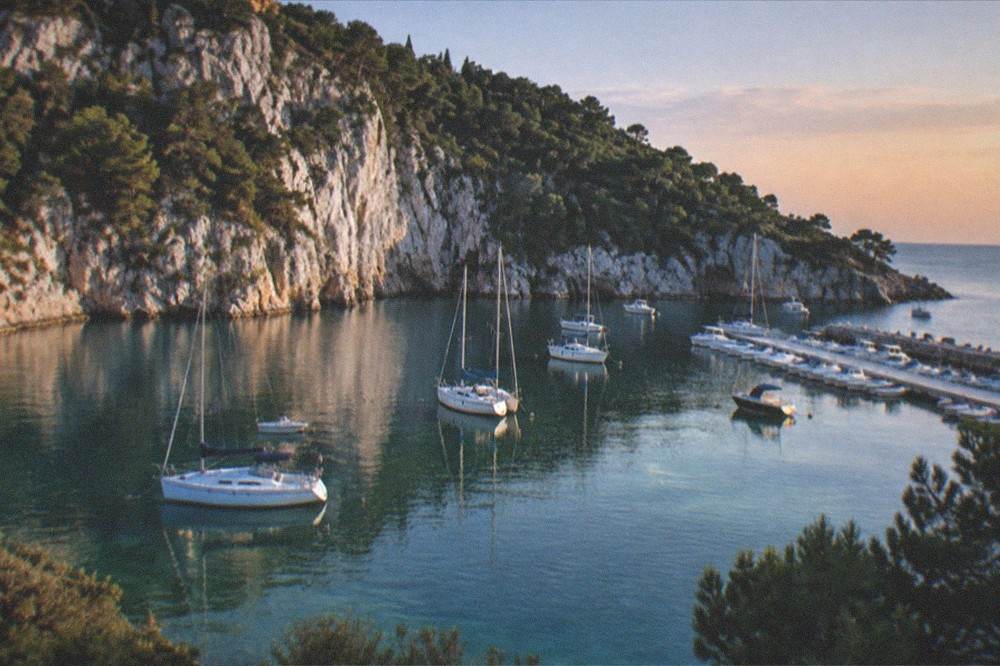
Sistiana rewards exactly the kind of traveller who has done the piazzas and wants the coast that made this city a port in the first place: a real bay, warm gulf water, cliffs that belong to the Carso, and a border country either side of it. Pick your month off the sea-temperature table, watch the wind forecast the day before, and the rest of the plan writes itself. More coastal and city planning is on the Trieste Travel Guide homepage.