Trieste to Udine, Italy: A Day Trip to Friuli's Regional Capital
Udine is the quiet regional capital sitting inland from Trieste, Italy, and it makes one of the easiest day trips on the Friulian plain: no border, no currency change, and a historic centre built for wandering.
Short answer
Udine is reached from Trieste Centrale by Trenitalia's regional network with no border crossing, since both cities are in Friuli Venezia Giulia, Italy. Allow a full day for the hilltop castle, the arcaded squares, the Tiepolo frescoes and a long lunch of frico and prosciutto.
Trieste, Italy, the Adriatic port city in Friuli Venezia Giulia, sits so close to Slovenia and Croatia that its most obvious day trips point east across the border. But the region's own capital lies the other way, inland on the Friulian plain, and it is the trip most visitors never think to take. Udine is the historical heart of Friuli, an arcaded, Venetian-flavoured city of loggias and hilltop views, and a day trip there from Trieste involves no border post, no currency exchange and no timetable gymnastics. This guide covers how to get from Trieste to Udine, what to do when you arrive, what the trip costs, and how it compares with the other excursions you can book from Trieste's doorstep.
Why Visit Udine on a Day Trip from Trieste, Italy?
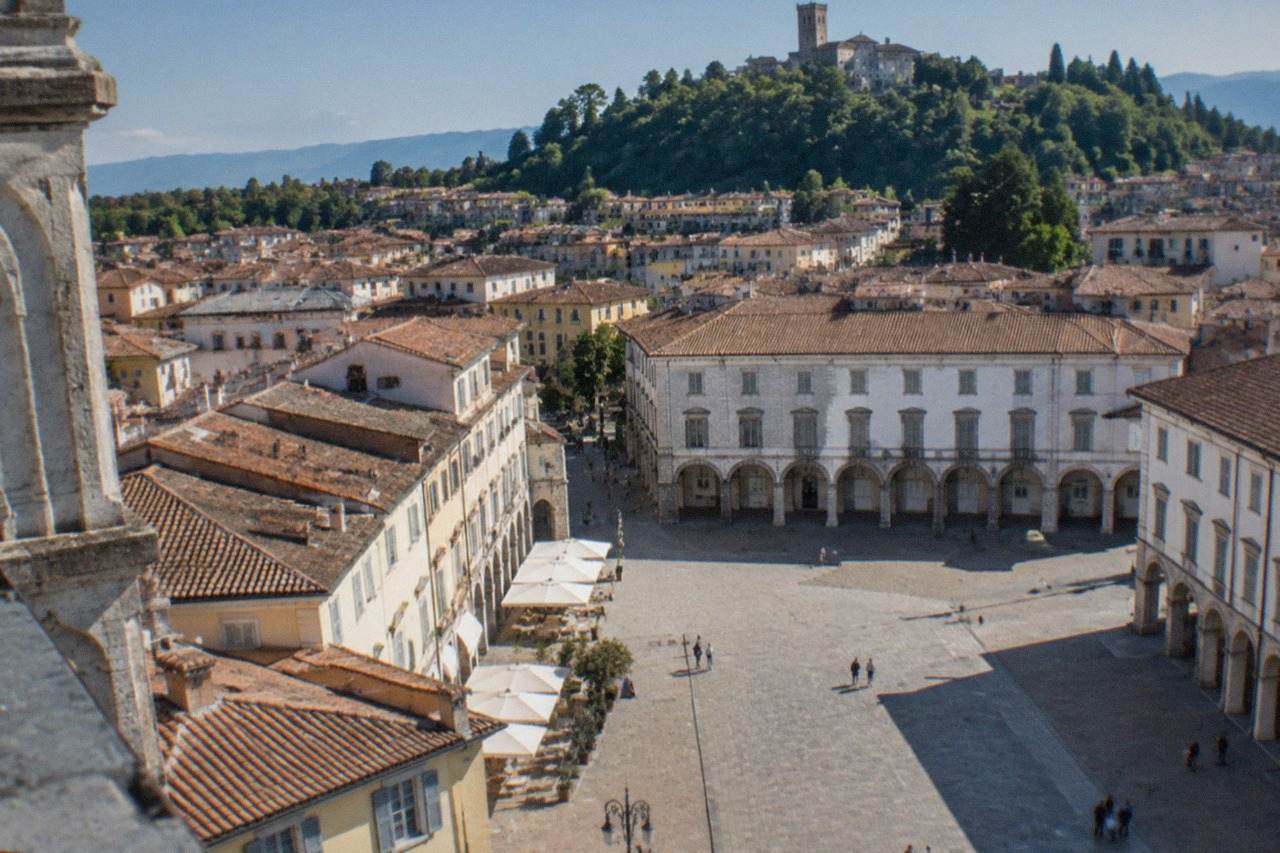
Udine is the regional capital of Friuli Venezia Giulia and the most Venetian city in the region, a compact place of arcaded squares, a hilltop castle and frescoed palaces, all an easy inland hop from Trieste with no border to cross. It gives you a completely different face of the same region: Trieste is Habsburg and Central European, Udine is Venetian and Friulian, and seeing both in one trip shows you why Friuli Venezia Giulia has always felt like two regions stitched together.
The contrast is the whole argument for going. Trieste's grand squares, like Piazza Unità d'Italia, were built to impress an empire whose capital was Vienna. Udine's centre was shaped by the Republic of Venice, and it reads that way: a loggia instead of a palace facade, a lion of St Mark instead of a double-headed eagle, and a language, Friulian, that is neither Italian nor Slovene but its own Romance tongue, still spoken and signposted around the region.
Udine also stays refreshingly free of the crowds that throttle Venice and even Trieste's own waterfront in peak season. You will share the Piazza della Libertà with students from the university, office workers on their lunch break and local families, not with a queue of tour groups. That is a rare quality anywhere within a day trip of the Veneto, and it is the reason the region's own tourism material keeps nudging visitors inland.
For a traveller based in Trieste the practical case is just as strong. You sleep in one place, keep your hotel, and add a second regional city to the trip without repacking a bag. Our overview of day trips from Trieste ranks the options in every direction, and Udine belongs on the shortlist precisely because it is the one that asks the least of you.
How Do You Get from Trieste to Udine?
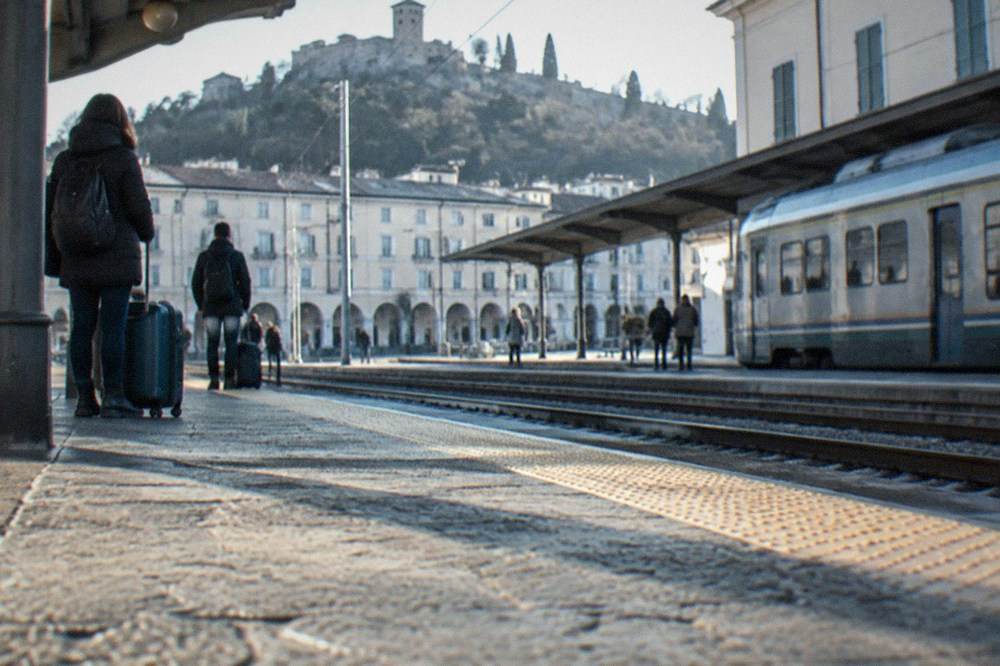
You get from Trieste to Udine by train from Trieste Centrale, on Trenitalia's regional network, with no border crossing because both cities are in Italy. There is no passport check, no currency change and no reservation stress; you buy a ticket through Trenitalia's own channels and board. Exact journey times and fares vary by departure and date, so treat the operator's live planner as the only timetable worth trusting, not any figure printed in a guide.
Trieste Centrale is the city's main station, and the same building complex you would use for getting to Trieste by train connections in the other direction. Regional services fan out across Friuli Venezia Giulia from here, and Udine is the hub through which most of them pass. The airport line described in our Trieste airport guide context runs through the same regional network, which tells you how central Udine is to the region's rail geography: it is the junction, not the end of the line.
Buy tickets at the station machines, at the ticket office or through Trenitalia's own app, and validate paper tickets before boarding as Italian practice requires. If you are staying outside the centre of Trieste, the urban network gets you to the station first, and Trieste Trasporti's 2026 tariff sheet sets those prices:
| Ticket | Validity | Price |
|---|---|---|
| Urban single U01 | 60 minutes | €1.50 |
| Urban single U02 | 75 minutes | €1.85 |
| Day ticket U24 | full day | €3.35 |
| 10 rides U10 | ten journeys | €13.50 |
| 20 rides U20 | twenty journeys | €16.65 |
Single tickets run 60 or 75 minutes, extended to 240 minutes on Sundays and public holidays, and contactless bank cards and digital wallets can be tapped on board, with the system applying the cheapest applicable fare. One point of local colour if you are using Trieste's transport on the way: the Opicina tram, urban line 2, was reactivated on 1 February 2025 and runs from piazza Dalmazia, not piazza Oberdan, a detail almost every older guide gets backwards.
Driving is the alternative, and the region's autostrada network links the two cities directly, but for a one-day visit the train is the calmer choice: Udine's centre is compact and walkable, and parking there is one more thing not to plan around.
If, once you have looked at the rail planner, you would rather spend your one booked excursion inland than across the border, the tours above are the strongest booked alternatives from Trieste, and the sections below compare them properly.
What Are the Best Booked Tours You Can Take from Trieste Instead?
The best booked tours from Trieste are the cross-border day trips into Slovenia, because transport, guiding and entry logistics come bundled at one price: the Ljubljana and Lake Bled excursion from $108.91 per person, the Slovenian coast food-and-wine tour from $137.57, and the Postojna Cave and Predjama Castle trip from $146. Udine has no equivalent organised tour from Trieste, which is itself the argument for doing it independently by train.
That last point is worth sitting with. The tour industry clusters around Trieste because of the border: Slovenia's caves, coast and lakes are close but fiddly to reach by public transport, so a booked coach solves a real problem. Udine is in the same country and on a simple rail line, so nobody bundles it, and the independent traveller gets the better day. The trade-off only reverses if you would rather not plan anything at all, in which case the trio below is where the money is best spent.
| Tour | Duration | From price | Rating |
|---|---|---|---|
| From Trieste: Ljubljana and Lake Bled | 9 hours | $108.91 per person | 4.69 from 544 reviews |
| TRIESTE: Slovenian Coast Tour with Food and Wine Tasting | 5h 30m | $137.57 per person | 4.98 from 50 reviews |
| Postojna Cave & Predjama Castle from Trieste | 5 hours | $146 per person | 4.7 from 139 reviews |
| From Trieste: Piran and Slovenia Coast Tour | 6 hours | $114.64 per person | 4.57 from 136 reviews |
| Lipica Stud Farm and Škocjan Caves from Trieste | 6 hours | $129.93 per person | 4.86 from 23 reviews |
The Ljubljana and Lake Bled tour is the workhorse option, with round-trip transport and a guided tour in Italian and English, and it suits anyone who wants a capital city and an alpine lake in a single day. The Slovenian coast food and wine tour is the pick for travellers whose real interest is lunch, and the Postojna Cave and Predjama Castle trip is the one for families, since the cave does most of the entertaining by itself.
One border fact applies to every Slovenian option above, and it is the detail an older guide will have wrong. Italy is running temporary checks on its land borders with Slovenia from 19 June 2026 to 18 December 2026, per the European Commission's own register of reintroduced internal border controls, so carry a passport or national ID card even though all three countries are in Schengen and all three use the euro. Croatia, for the record, adopted the euro and joined Schengen on the same day, 1 January 2023; if a guide tells you otherwise, it has not been checked. Write none of this off as permanent: the checks are dated, temporary and listed on the Commission's register, which is where the current status lives.
For a self-guided comparison of the same territory, our Trieste to Ljubljana page covers the capital route independently, and Trieste to Piran does the same for the coast.
What Should You See in Udine in One Day?
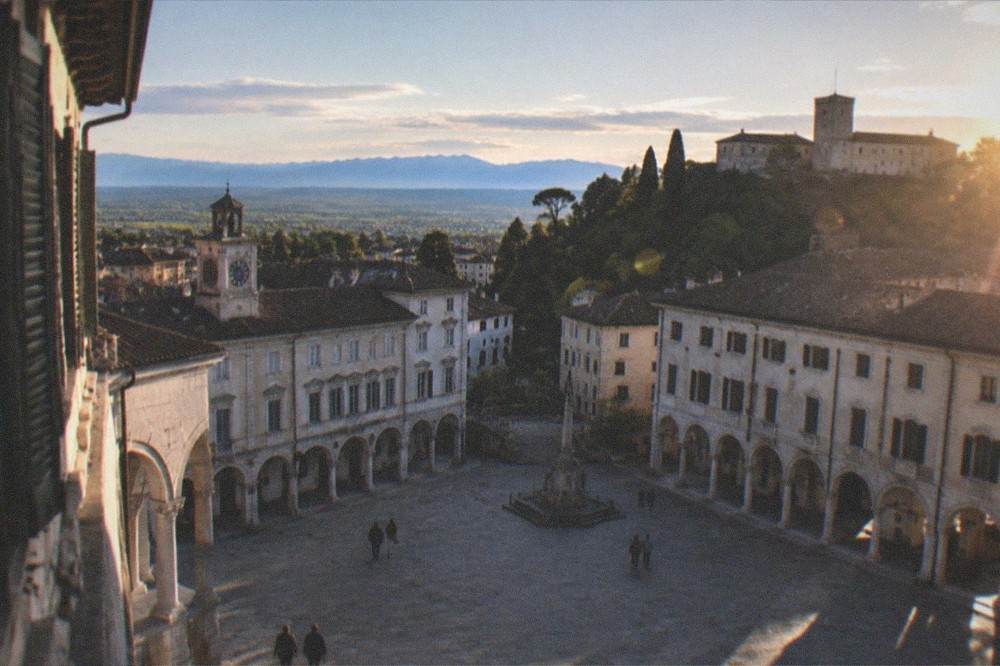
Spend your day in Udine around three anchors: the Piazza della Libertà and its loggia at the heart of the old town, the hill of the castle with its panoramic views over the Friulian plain to the Alps, and the art in the city's palaces and museums, most famously the fresco cycles the region celebrates as Tiepolo's. Everything sits within a compact walkable centre, so one unhurried day covers the lot without rushing.
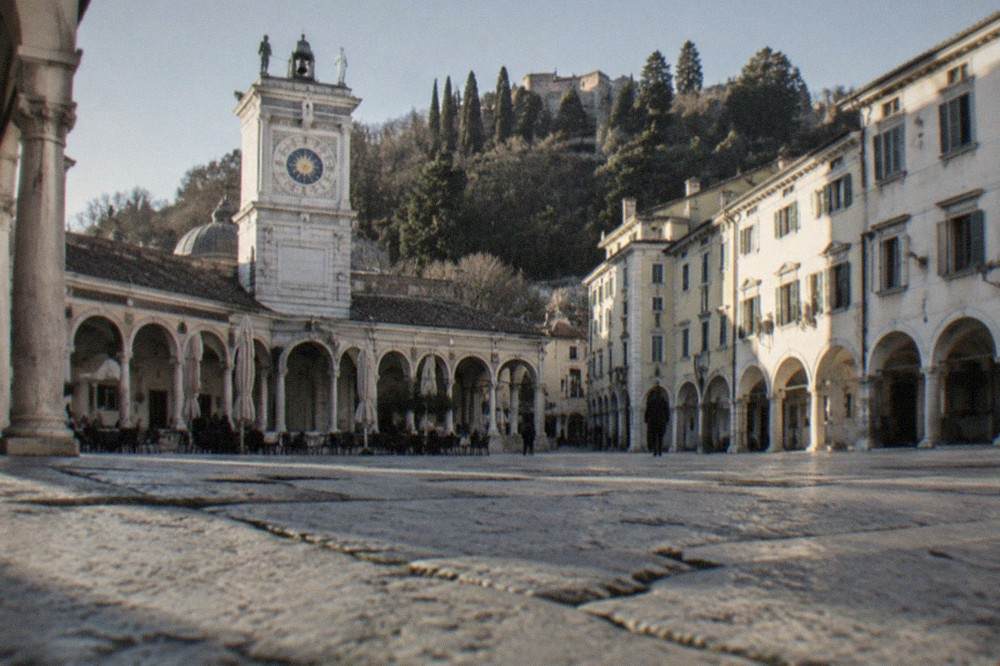
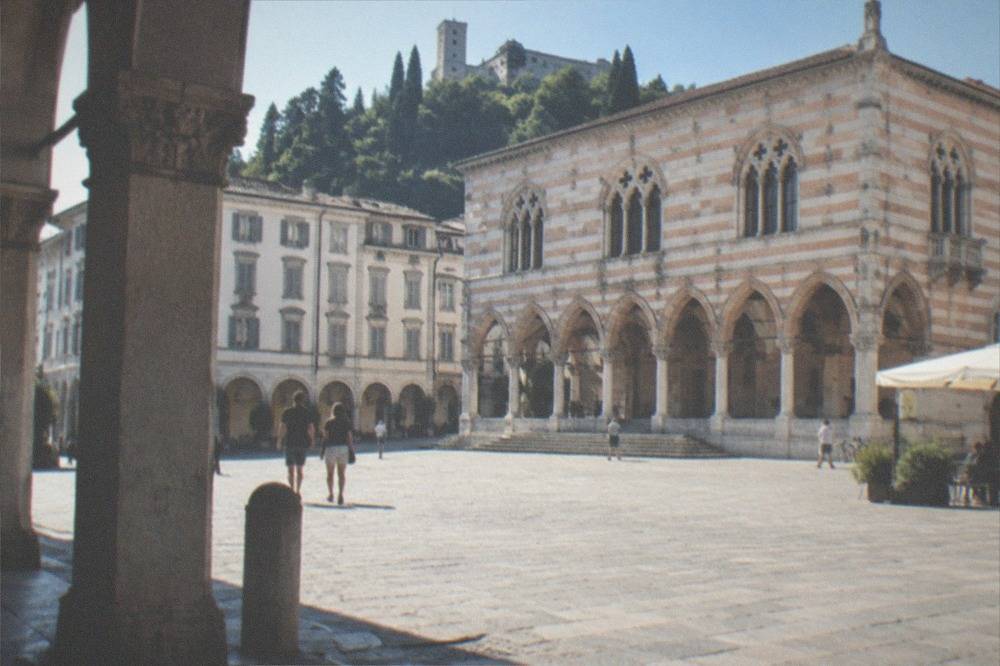
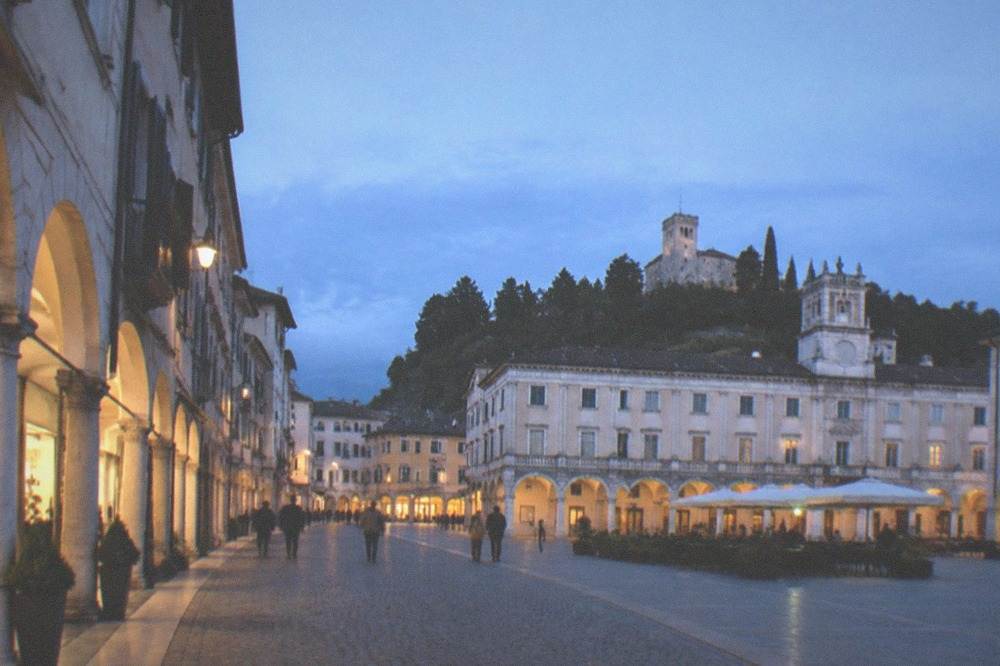
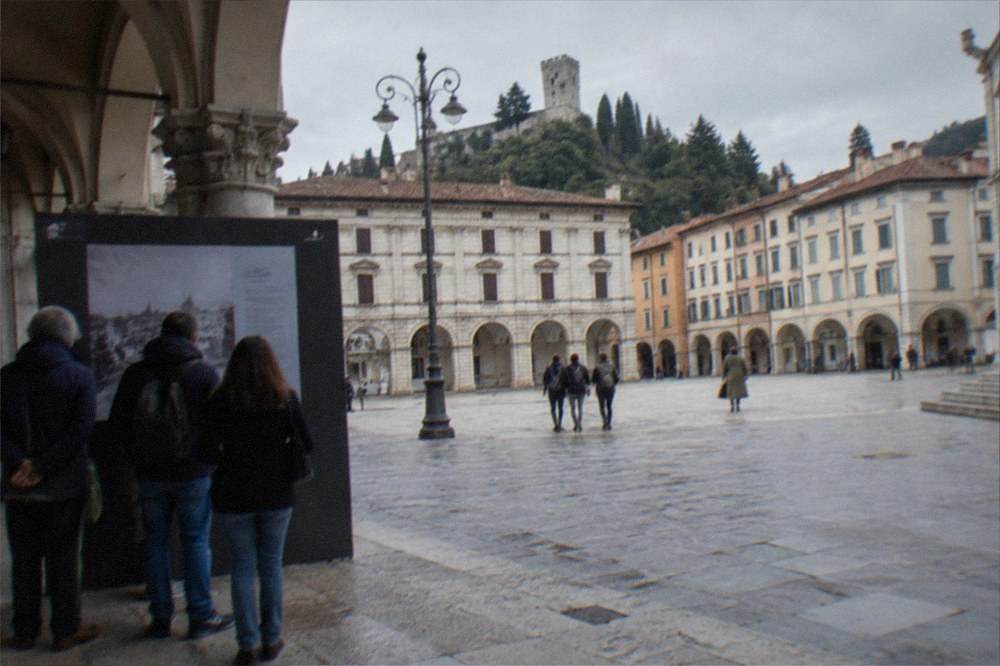
Start in the Piazza della Libertà, the square the city treats as its living room. The Loggia del Lionello faces it, the clock tower with its moors stands beside it, and the arcades do what arcades do in this part of Italy: they hold caffè tables and keep them dry. From the square, the colonnade known as the Porticato del Lione leads uphill toward the castle, and the climb, modest as it is, is the point: from the top the plain opens out, with the Alps riding the northern horizon on a clear day.
The art comes next. Udine's galleries and churches hold the fresco cycles that made the city a destination for eighteenth-century painting, and the region's tourism material treats the Tiepolo itinerary as its signature art route. Check opening days before you build the itinerary around any single museum, since civic museums across Italy close one weekday, and Trieste's own pattern, Museo Revoltella closed Tuesdays, Castello di San Giusto closed Mondays from 12 October, is a reminder that the day matters.
Afternoon belongs to the shopping streets and the Mercatovecchio quarter, where the old market has become the city's stroll, and to a proper stop at a caffè. Friuli's coffee culture is real, and Udine drinks it standing at the bar the way Trieste does, though Trieste's own historic caffè scene, which we cover in our Trieste coffee culture guide context and related pages, remains the regional benchmark.
If one day in Udine leaves you wanting more of inland Friuli, the obvious extensions are Cividale del Friuli, the Lombard capital further up the Natisone valley, and the Roman ruins and basilica at Aquileia, both reachable on the same regional rail and road network. Pairing Udine with either one turns a day trip into a two-day inland loop, and Grado adds a lagoon beach to finish it off.
What Should You Eat in Udine?
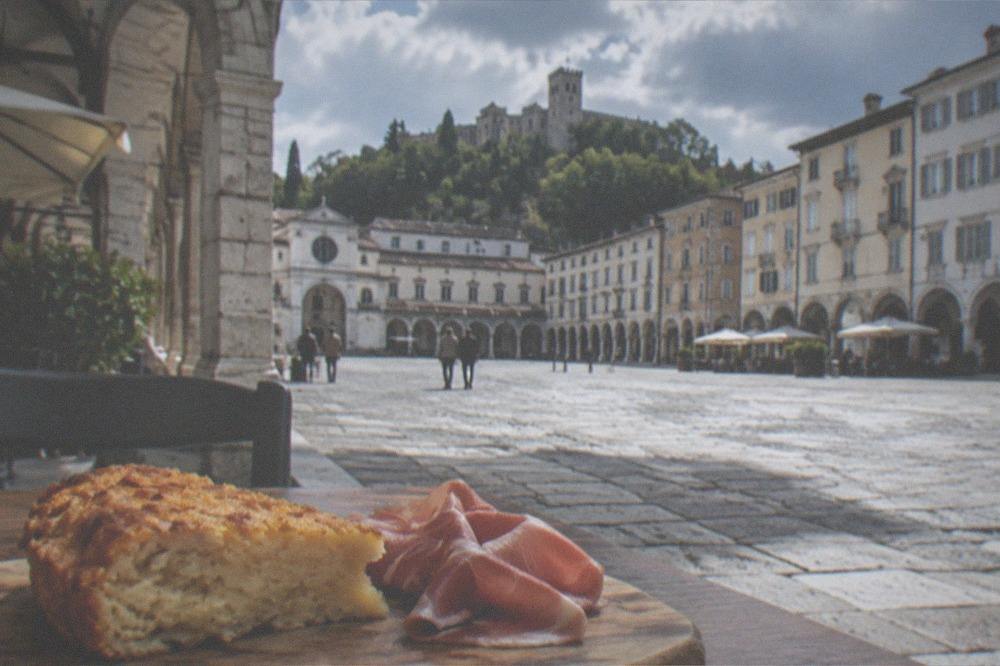
Eat the dishes Friuli is actually known for: frico, the crisp cake of fried Montasio cheese and potatoes, cjarsòns and other stuffed fresh pastas from the Friulian tradition, and prosciutto di San Daniele, cured in the town just north of Udine and served everywhere in the city. Udine is the region's capital of Friulian home cooking, and a long lunch here is as much the reason to come as the architecture.
Frico is the emblem. It appears on menus as a crisp golden disc, sometimes with potato folded through it, and it is the dish every local kitchen measures itself by. The cured pork is the other pillar: San Daniele del Friuli gives its name to a prosciutto with protected status, and the town lies in the hills behind Udine, so the city's salumerie and trattorie serve it at its freshest. Add a glass of the region's white wines, which we cover in our Friuli Venezia Giulia wine guide context elsewhere on this site, and lunch stops being a refuelling stop.
For structure, plan one proper sit-down meal and graze the rest. The market streets around the centre hold bakeries selling the region's sweet pastries, and the caffè serve through the morning. If you want the same territory with a guide holding the map, the food-focused walking tours in Trieste itself, such as the street food walk rated 4.91 from 264 reviews at from $71.08 per person, show what the format can do, and the Slovenian coast food and wine tour listed above applies the same idea across the border. The rest of the planning pages sit on Trieste Travel Guide.
What Does a Day Trip to Udine Cost?
A self-guided day trip to Udine costs the train fare plus food and any museum entries, and the only figures worth printing are the ones the operators publish: Trieste's urban tickets run €1.50 to €3.35 per the 2026 tariff sheet, and the city's major paid attractions charge €7 to €17. The Trieste to Udine rail fare is not published in our verified sources, so treat Trenitalia's planner as the price list, and budget your day around lunch, which is the expense you actually control.
The honest arithmetic is that an inland day trip is cheap by design. You are not paying for a coach, a guide or a border transfer; you are paying for a regional train ticket, one museum or two if the weather turns, and a lunch you were going to eat somewhere anyway. The table below gathers the verified paid-entry figures for Trieste's own sights, which matter if you are splitting your stay between the two cities and want to know where the money goes.
| Attraction | Adult entry | Hours pattern |
|---|---|---|
| Castello di Miramare (castle) | €17.00 | daily 9:00-19:00, last entry 18:30 |
| Miramare park | free | daily, hours by month |
| Castello di San Giusto | €7.00 | daily to 11 Oct, then Tue-Sun |
| Museo Revoltella | €8.00 | daily 10:00-19:00, closed Tuesdays |
| Grotta Gigante | €15.00 | guided only, booking compulsory |
| Risiera di San Sabba | free | daily, seasonal hours |
| Cattedrale di San Giusto | free | weekdays 8:00-18:30 |
Two savings rules hold across the region. State museums take part in the ministry's first-Sunday-of-the-month free-entry scheme, which Miramare joins, but the rules have changed more than once, so check the venue's own page for the specific month rather than trusting a standing promise. And if you are doing several paid sites, the regional FVGcard covers Trieste venues including Grotta Gigante and Museo Revoltella, though we do not publish its price because it could not be verified against the operator's own site from this desk.
If you would rather put the same day's budget into a booked excursion, here is what the comparable options cost from the roster:
| Booked day trip from Trieste | Price basis | Duration |
|---|---|---|
| From Trieste: Ljubljana and Lake Bled | from $108.91 per person | 9 hours |
| From Trieste: Lake Bled and Ljubljana Tour | from $137.57 per person | 7 hours |
| Lake Bled and Ljubljana Tour from Trieste | from $145.97 per person | 7 hours |
| From Trieste: Piran and Slovenia Coast Tour | from $114.64 per person | 6 hours |
| Trieste Panoramic City and Miramare Castle Tour | from $129.94 per person | 4 hours |
The price spread between the Bled-and-Ljubljana products is a lesson in checking the listing: three tours cover essentially the same pair of destinations at three price points, with different group sizes, inclusions and review histories behind them. The listing, not the headline, tells you which one earns its premium.
When Is the Best Time to Visit Udine from Trieste?
The best months for a Trieste to Udine day trip are May, June and September, when ARPA's own station tables for Trieste's waterfront show mean highs of 21.7 C, 25.8 C and 23.9 C with modest rainfall, and the inland plain is warm without the summer heat. July and August work too, since July is Trieste's second-driest month at 53.8 mm, but they are the months when Italian cities feel emptiest at midday and fullest at lunch.
The climate data comes from ARPA FVG's OSMER station at Trieste molo Fratelli Bandiera, and it describes the coast; Udine, inland on the plain, runs a shade warmer in summer and colder in winter, so treat the table as the regional baseline and pack one layer either way.
| Month | Mean high C | Rain mm | Wet days | Sea C |
|---|---|---|---|---|
| April | 16.8 | 60.7 | 8 | 14 |
| May | 21.7 | 75 | 8.5 | 17.9 |
| June | 25.8 | 62.5 | 6.1 | 23.1 |
| July | 28.2 | 53.8 | 5.4 | 25.9 |
| September | 23.9 | 102.3 | 7.4 | 23.9 |
| October | 19.6 | 88.6 | 7.6 | 20.3 |
Two seasonal notes that most guides get backwards. Trieste's wettest month is November at 109.8 mm, with September second at 102.3 mm, so the shoulder season carries real rain risk and a museum-heavy Udine plan is the right hedge. And the bora, the cold north-easterly that defines this coast, blows hardest in the cool season: the station series averages 17.6 days a year with a gust over 90 km/h, with the all-time peak in the series at 168.1 km/h in February 2012. Udine, sheltered inland, is the natural plan for a windy day on the coast.
Which Other Day Trips from Trieste Go Well with Udine?
The day trips that combine best with Udine are the inland Friuli routes: Cividale del Friuli up the Natisone valley, Aquileia for Roman mosaics, and Grado for the lagoon beach, all on the same regional network. If your appetite is for the border instead, the Slovenian options, Ljubljana, Piran, Postojna and Škocjan, are the strongest booked alternatives, and they need a passport or ID card through 18 December 2026.
Think of Friuli Venezia Giulia as a fan with Trieste at the hinge. One spoke runs inland to Udine and on to Cividale; another follows the coast to Grado and Aquileia; the rest cross into Slovenia. A week based in Trieste can sweep most of the fan, and the pages below cover each spoke in detail:
| Day trip direction | Destination | Booked tour from price |
|---|---|---|
| Inland Friuli | Udine (this page, independent) | rail fare only |
| Inland Friuli | Cividale del Friuli | independent |
| Roman heritage | Aquileia | independent |
| Lagoon coast | Grado | independent |
| Slovenia capital | Ljubljana and Lake Bled | from $108.91 |
| Slovenia coast | Piran | from $114.64 |
| Slovenia caves | Postojna and Predjama | from $146 |
The Veneto spoke deserves a word too: Trieste to Venice is a feasible day trip by rail, and our Trieste to Venice and Venice to Trieste pages cover it in both directions, including the cruise-transfer case. But if you have already seen Venice, Udine is the better one-day taste of something you cannot get anywhere else, which is Friuli itself: the food, the language and the quiet arcades that the crowds never reach.
Whichever way you finally point your free day, the booked options above all leave from Trieste itself, which keeps the logistics simple even when the destination is another country. The cave trip in particular earns its place on any shortlist, because Postojna is the kind of sight that justifies a coach, a guide and a fixed departure in a way that few inland Italian cities ever do.
Common Questions About a Trieste to Udine Day Trip
How do you get from Trieste to Udine?
By train from Trieste Centrale on Trenitalia's regional network, with no border crossing since both cities are in Friuli Venezia Giulia, Italy. Buy tickets through Trenitalia's own channels and check the operator's live planner for times and fares, which vary by departure.
Is Udine worth visiting from Trieste?
Yes, if you want the Venetian-Friulian half of the region rather than a second coastal day. Udine's arcaded centre, castle hill and frescoed palaces make a full and unhurried day, and the food alone, frico and prosciutto di San Daniele, justifies the train ride.
Do you need a passport for a day trip to Udine from Trieste?
No. Udine is in Italy, so the trip is domestic and no ID check applies. A passport or national ID card is only needed for the Slovenian and Croatian excursions, because Italy is running temporary checks on its land borders with Slovenia from 19 June 2026 to 18 December 2026.
What is Udine famous for?
Its arcaded Piazza della Libertà, the hilltop castle views over the Friulian plain toward the Alps, the eighteenth-century fresco cycles the region celebrates as Tiepolo's, and its position as the capital of Friulian food culture, especially frico and prosciutto di San Daniele.
Can you do Trieste to Udine as a half-day trip?
You can, but it is a compressed one. The centre is compact enough that a focused half day covers the main square, the castle hill and a good lunch, though you will leave the museums and the slower pleasures of the city for a return visit.
What is the best time of year for a Trieste to Udine day trip?
May, June and September, when Trieste's ARPA station shows mean highs of 21.7 C to 25.8 C and the plain is warm without peak heat. November is the region's wettest month at 109.8 mm in Trieste's station series, so pack for rain if you travel then and lean on the museums.
Udine will never compete with Bled's lake or Postojna's caverns for the postcard slot, and that is exactly why it rewards the traveller who takes the inland train instead: a regional capital at its own pace, an hour of the best cured pork in Italy, and a view of the Alps from a city most itineraries skip. Trieste Travel Guide covers the rest of the fan, from the Carso plateau walks to the border towns, and Udine is the spoke that shows you the region whole.