Trieste to Aquileia: The Roman Ruin Day Trip in Friuli Venezia Giulia, Italy
Aquileia is the Roman day trip you can make from Trieste, Italy, almost without noticing you have left the coast: one of the great cities of the ancient Adriatic, now a small village among its own excavations, an hour or so inland by road or rail-plus-short-hop.
Short answer
Aquileia makes an easy day trip from Trieste, Italy by car, coach or train with a short final hop. The Roman excavations, the early-Christian basilica with its mosaic floor, and the river port remains are the core sights. Go with a full day, spring through autumn, and book any guided visit ahead.
Trieste, Italy, is a port city that faces the sea, and most of its famous day trips lean that way too: Miramare up the coast, Piran across the gulf, the caves of the Carso behind it. Aquileia goes the other direction. It sits inland in the flat farmland of Friuli Venezia Giulia, and two thousand years ago it was one of the biggest cities in the Roman north, a river port that funnelled trade toward the Alps. Today the modern village is small and the ancient one is enormous, lying in pieces under and around it: excavated streets, a excavated river port, and a basilica floor of early-Christian mosaics that is the single reason many visitors make the trip at all.
This guide covers the practical side of the Trieste to Aquileia run: how to get there without a car, what you are actually looking at once you arrive, what the day costs, where to eat, and how the trip fits with the other destinations you can reach from Trieste. Everything here is desk-researched from operator and venue material, because this site has no named author and nobody writing it has stood in the basilica. Where a figure could not be verified, you will be told to check the operator or the venue rather than given a confident guess.
Why Is Aquileia One of the Best Day Trips from Trieste, Italy?
Aquileia is the closest thing Trieste has to a Roman capital within easy reach: a single village containing the excavated remains of a major imperial city, including one of the largest surviving early-Christian mosaic floors in Europe, all compact enough to see on foot in a day trip. It pairs a heavyweight archaeological site with a genuinely relaxed visit, no queues of the kind Venice produces, and a landscape of flat farmland and lagoon that is a complete contrast to Trieste's cliffs and bora-swept waterfront.
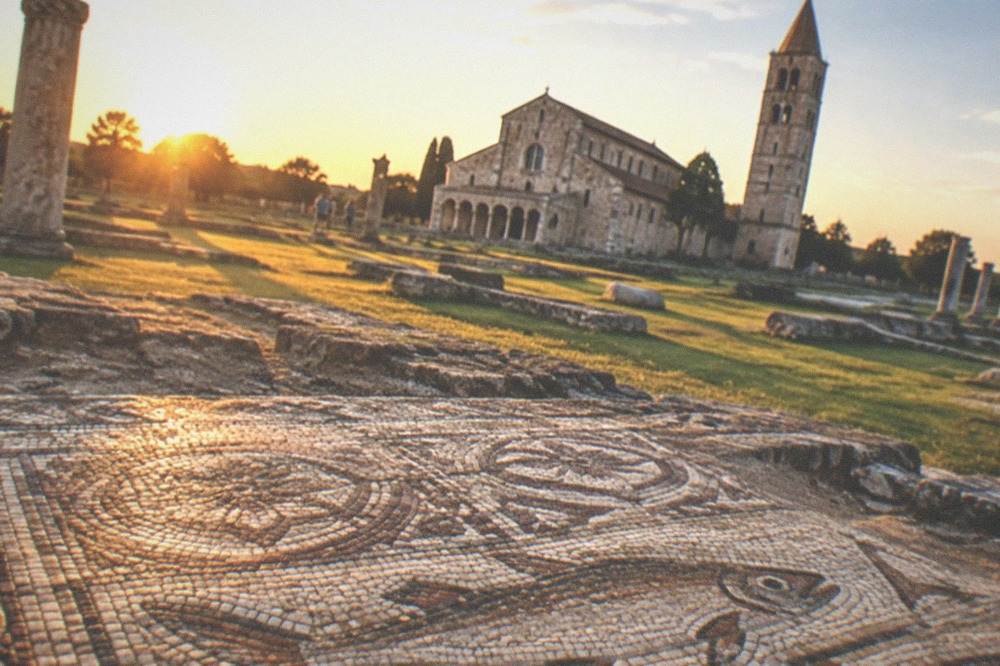
The contrast is the point. Trieste's own Roman monument, the Teatro Romano, is something you look down into from the street, and the ministry's own page for it does not promise routine individual entry. Aquileia is where you go when you want to walk around inside the Roman world instead of peering at it. The basilica's mosaic floor is the headline: a vast carpet of early-Christian symbolism, fish and portraits and inscriptions, laid where the first cathedral community walked on it. Around it the excavations keep unearthing the streets of the river port that made the city rich before it was levelled, abandoned and quarried over the centuries.
What the site asks of you is patience more than fitness. The terrain is flat, the distances between the excavated areas are short, and the pace is set by how long you want to stand over a mosaic rather than by any climb. That makes it a good trip for visitors who have already done Trieste's hills, the San Giusto Castle and the Città Vecchia, and want a day that runs at a different tempo. Families manage it well, and anyone with an interest in early Christianity, Roman trade or mosaics will get more out of it than from most half-day excursions.
For planning purposes, treat it as a full day. The site is not a two-hour sight, and the journey each way eats a chunk of daylight, particularly if you are going by public transport. In high summer the flat Friulian plain is hotter than the coast, so start early; in late autumn and winter the exposed sites are bitterly cold, and the shorter daylight hours squeeze the visit. The sweet spots, on the climate evidence below, are spring and early autumn.
How Do You Get from Trieste to Aquileia Without a Car?
You have three realistic options: drive, using the regional road network toward Palmanera and the Friulian plain; take a regional train on the Trieste-Venezia line toward Cervignano del Friuli and complete the last short hop by bus or taxi; or book a coach or guided excursion that handles the whole transfer. No single published timetable for the final hop could be verified from operator pages, so check the regional operator's route planner before you commit to the train option.
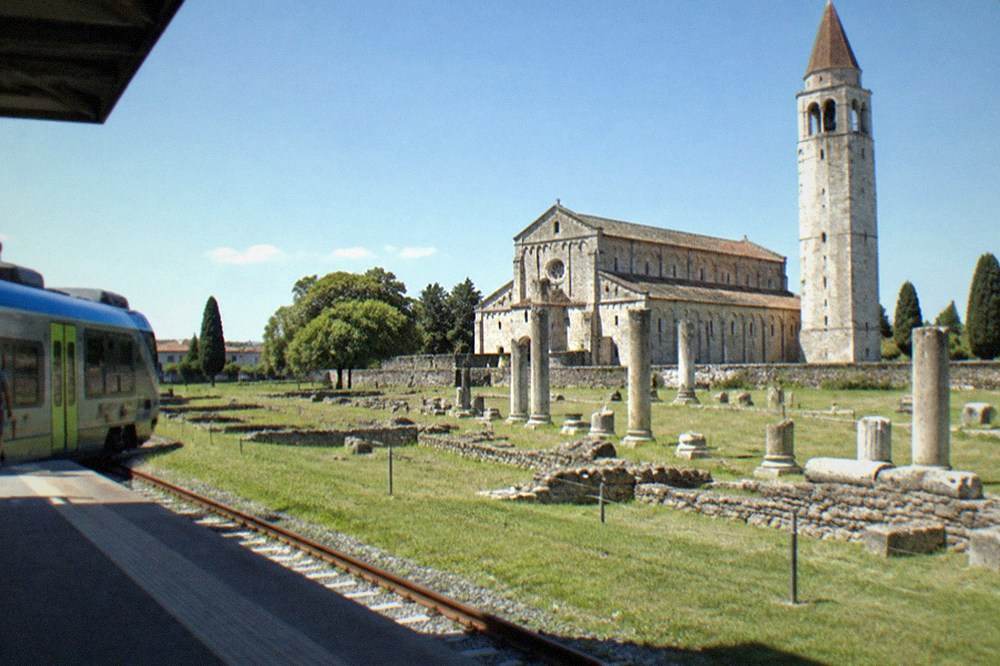
The rail option is the one most independent travellers use. Aquileia itself has no working passenger station of consequence for visitors; the practical railhead is Cervignano del Friuli on the Venezia-Trieste line, from which local buses and taxis cover the remaining distance. Trenitalia's own infomobility pages currently note maintenance works on the Venezia-Trieste line with some bus replacements running through October, so check the live service status on the day you travel rather than assuming the printed pattern holds. Buy regional tickets before boarding, and remember that the Trieste side of your journey uses the ordinary Trieste Trasporti urban network if you start from the centre.
The 2026 urban tariff sheet for Trieste, published by the city operator, sets the fares for the Trieste end of any journey you make within the city before you leave:
| Code | Ticket | 2026 price |
|---|---|---|
| U01 | Urban single, 60 minutes | €1.50 |
| U02 | Urban single, 75 minutes | €1.85 |
| U24 | Day ticket | €3.35 |
| U10 | 10 rides | €13.50 |
| U20 | 20 rides | €16.65 |
Single tickets run 60 or 75 minutes, extended to 240 minutes on Sundays and public holidays, and contactless bank cards and digital wallets can be tapped on board on the "Eva" readers, where the system applies the cheapest applicable fare. None of that covers the regional leg to Cervignano, which is a Trenitalia ticket priced separately.
Driving is the simplest option if you have a car, and the roads are flat, fast and far less dramatic than the coastal routes to the north-west. If you are basing yourself in Trieste without a vehicle, the arithmetic changes: by the time you have bought a regional ticket, waited for a connection and taken the last hop, a guided day trip that includes transport starts to look competitive, especially outside summer when frequencies thin out. The roster of excursions below includes cross-border and regional options; check the operator's live listing for what is actually running on your date, because day-trip rosters change with the seasons.
One note for anyone planning a wider week of excursions from Trieste: if your itinerary also crosses into Slovenia, to Piran, Postojna, Škocjan or Lipica, carry a passport or national ID card. Italy is running temporary checks on its land borders with Slovenia from 19 June 2026 to 18 December 2026, per the European Commission's own register of reintroduced internal border controls. That does not affect the Aquileia trip, which stays inside Italy the whole way, but it matters for the rest of the region's day trips. Our overview of day trips from Trieste lists the full menu.
What Should You See in Aquileia Once You Arrive?
The basilica and its early-Christian mosaic floor come first, then the excavated river port area, then the archaeological museum and the open-air excavation zones that sit among the village streets, in roughly that order of priority, and every one of them is walkable from the village centre. The whole circuit fits comfortably into a day with a long lunch, and the flat terrain means the pace is set by how long you linger rather than by any climb.
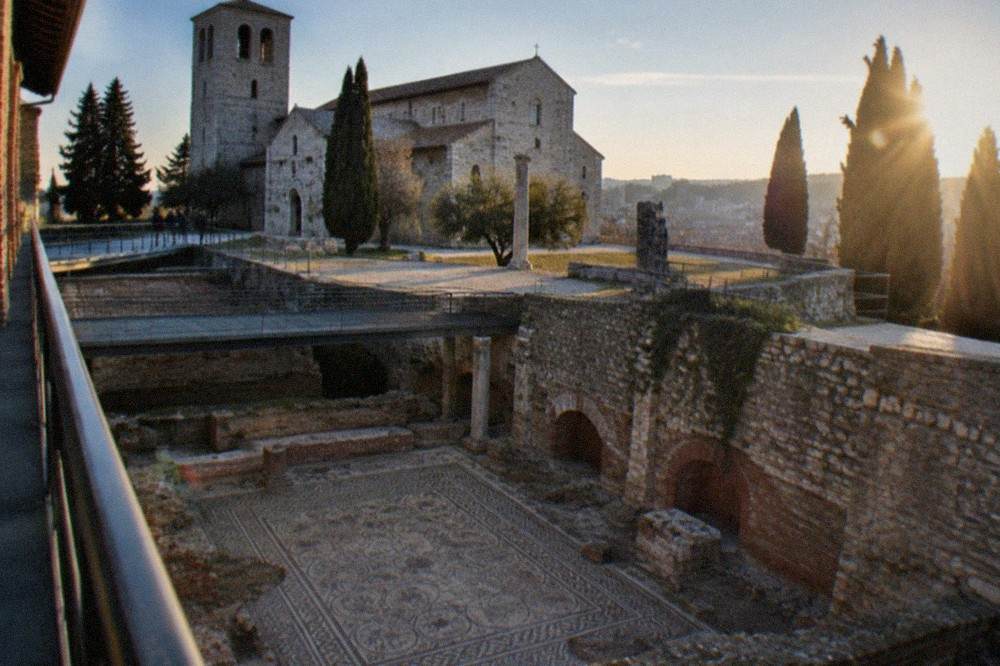
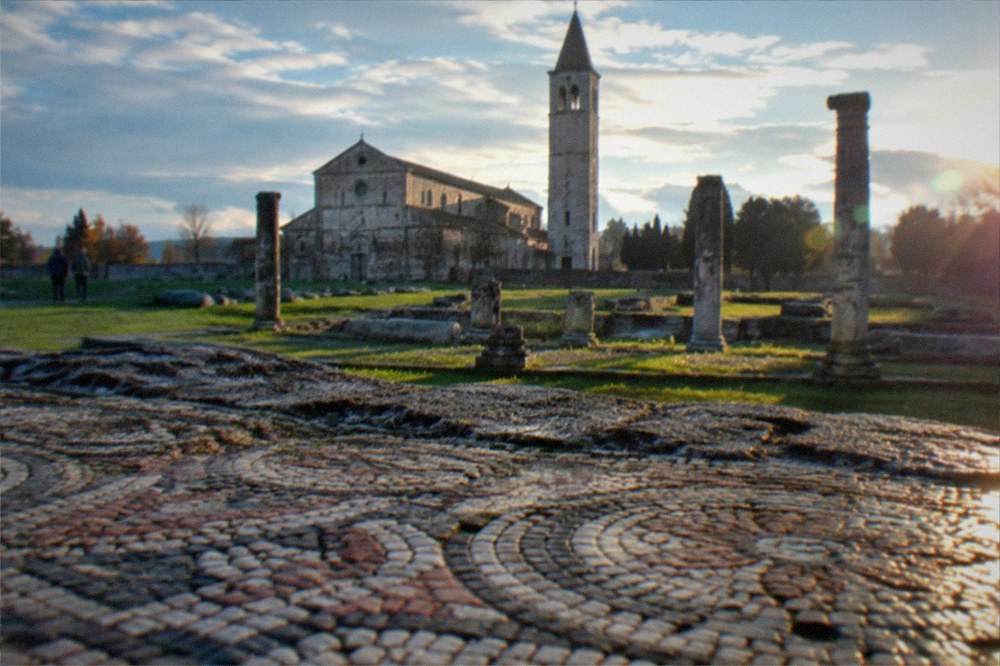
The basilica is the anchor. The present church is medieval in its bones, but beneath the nave the excavated floor of the early-Christian basilica survives, and it is that floor people cross Friuli to see: a continuous spread of mosaics with animal figures, portraits of donors and inscriptions, viewed from a raised walkway. Photography is the practical challenge, not access. Give it more time than you expect; the detail rewards the visitor who walks it twice, once for the whole and once for the small scenes.
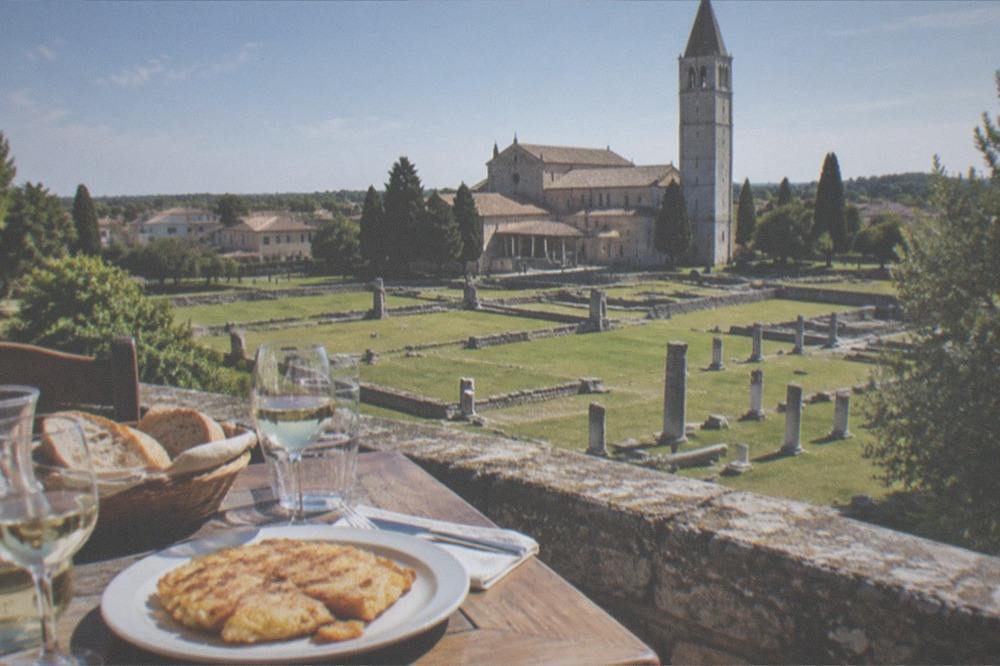
The river port excavation is the second essential. Aquileia was a port city, and the remains of its wharves and warehouse district are exposed where the ancient channel ran. Standing there makes the city's whole logic visible: goods offloaded from the Adriatic, stacked, taxed and sent north. The open-air excavations around the village continue the same story, with stretches of Roman street and wall visible in and between the ordinary houses. The archaeological museum rounds the visit out with the portable finds, and the bell tower, where it is open, gives you the only elevated view of how the ancient city lies under the modern plain.
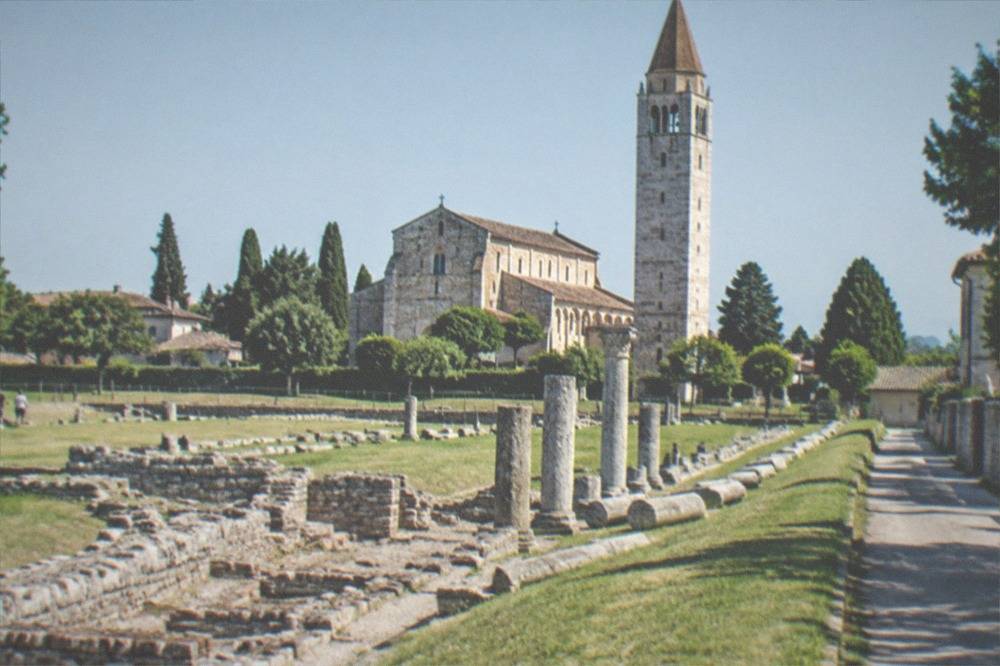
Two planning warnings from the desk. First, no entry price, opening hour or closure schedule for the Aquileia sites could be verified from the pack used for this page, so check the venue's own pages before you set the itinerary, and never trust a third-party aggregator's hours over the venue. Second, do not build the day around a single timed tour without a booking: guided visits for the excavated areas run on published schedules, and the quiet of the site in the shoulder season partly reflects how few slots there are. If a guided interpretation matters to you, book it before you leave Trieste rather than on arrival.
If your day trip appetite is bigger than one Roman city, the same departure logic from Trieste serves a whole family of excursions. The Postojna Cave and Predjama Castle combination is one of the most-booked from the city, and the operator's listing carries the current schedule:
Back inside Italy, the panoramic city and Miramare Castle tour covers Trieste's own headline monument in half a day, which pairs neatly with an Aquileia day earlier or later in the week:
And if you want the Roman theme to continue, the Venice as a day trip from Trieste route runs along the same rail corridor you will use for Aquileia, so the two days share their logistics.
How Long Should You Spend in Aquileia, and When Is the Best Month to Go?
Give Aquileia a full day, and go between April and June or in September and early October, when the Friulian plain is warm without the July and August heat, the daylight is long, and Trieste's own weather is at its most cooperative, with July among the driest months on the waterfront station's record. A half-day is possible by car but it short-changes the mosaics.
The climate table below is the one that should drive your date choice, and it comes with a correction to the stereotype. Trieste is not a rainy Mediterranean city in summer: the ARPA FVG waterfront station's 1995-2024 series puts November as the wettest month at 109.8 mm, with September second at 102.3 mm, while July is the second driest at 53.8 mm. The plain where Aquileia sits runs hotter than the coast in summer and colder in winter, so shift the coastal figures a little further apart in your head for the inland site. The full index of guides sits on Trieste Travel Guide.
| Month | Trieste mean high C | Trieste mean C | Rain mm | Wet days | Sea C |
|---|---|---|---|---|---|
| April | 16.8 | 14.0 | 60.7 | 8.0 | 14.0 |
| May | 21.7 | 18.8 | 75.0 | 8.5 | 17.9 |
| June | 25.8 | 23.1 | 62.5 | 6.1 | 23.1 |
| July | 28.2 | 25.2 | 53.8 | 5.4 | 25.9 |
| August | 28.1 | 25.2 | 71.7 | 6.6 | 25.9 |
| September | 23.9 | 21.2 | 102.3 | 7.4 | 23.9 |
| October | 19.6 | 17.1 | 88.6 | 7.6 | 20.3 |
| November | 14.7 | 12.5 | 109.8 | 9.5 | 16.8 |
The sea temperature column is included because most Trieste itineraries mix an inland day like Aquileia with coastal days, and the ARPA series shows the sea holding its warmth into September, often warmer than early summer despite the shorter days. That asymmetry, thermal lag in the water, is the reason a September trip can give you both a warm swim off Barcola and a comfortable Roman ruin walk inland.
One dated event worth planning around if your trip falls in the first half of October: the Barcolana regatta. The 58th edition runs 2-11 October 2026, with the main race on Sunday 11 October starting at 10:30 over 13 nautical miles in the Gulf of Trieste. The regatta's record entry stands at 2,689 boats, set in 2018. On that weekend Trieste's hotels fill and the city itself is the spectacle, so either book early or shift the Aquileia day to the middle of that week, when the coast is busy and the plain is empty.
Where Should You Eat Around Aquileia?
Eat in the village and the surrounding Friulian countryside rather than rushing back to Trieste: the plain around Aquileia is working farmland, and its trattorie serve the Friuli Venezia Giulia repertoire, polenta, frico, river fish and the region's white wines, at prices that shame a coastal capital. Book a table for lunch in the high season, because the village's capacity is small and the day-trip traffic is not.
The food of this part of Friuli is not the food of Trieste. The coast gives you jota and goulash in the buffet tradition; the plain gives you the dishes that go with its maize and its dairy. Pair any of it with the region's whites. The Carso behind Trieste has its own native grapes, Vitovska, Malvasia and Terrano, and those are the bottles to look for if you want a taste of the province rather than a national label. One naming trap for the wine list: Prosecco the wine and Prosecco the Carso village are different things, and Trieste is not in the Prosecco DOC, so a bottle billed as local Prosecco is a mislabel, whatever the menu implies.
If the day runs long and you would rather eat back in Trieste, that works too: the food tour roster from the city is strong, and the guided foodie walk, from $71.08 per person and rated 4.9 from 264 reviews for 3 hours, is the operator's most-reviewed eating experience. Check availability on the operator's live listing if a food-focused evening appeals after a ruins-heavy day.
| Food experience from the Trieste roster | Price from | Rating | Duration |
|---|---|---|---|
| Guided Foodie Walking Tour | $71.08 per person | 4.9 from 264 reviews | 3 hours |
| Unique Food Tour with Local Flavors and Tastings | $85.98 per person | 4.7 from 123 reviews | 3 hours |
| Historic Cafés Experience | $74.52 per person | 4.9 from 19 reviews | 3 hours |
| City Center Wine Tasting with Food Pairings | $56.18 per person | 4.6 from 22 reviews | 1 hour |
For the midday meal in Aquileia itself, the desk cannot honestly recommend a specific restaurant, because no verified list of openings, hours or menus for the village's trattorie exists in the pack behind this page. What can be said is structural: the village is small, so anything open at lunchtime is within a short walk of the basilica, and the surrounding agricultural plain means the short-menu agriturismo model, a few dishes from the farm, is common in the area. Arrive with the expectation of simple food done well rather than a gastronomic event, and you will not be disappointed.
What Does a Day Trip to Aquileia Cost?
Budget the day around three costs: the transport from Trieste, which on the urban-plus-regional model starts at a few euro on the city side plus the regional fare, the site entries in Aquileia, which you must check on the venue's own pages because no verified price list is in this site's pack, and lunch, which in the Friulian plain is the cheapest eating of the whole region. A couple travelling by train and eating a simple trattoria lunch will spend far less than the same couple on any guided cross-border excursion.
The one cost the pack does verify precisely is the Trieste accommodation tax, which applies to the nights before and after your day trip, not to the trip itself, but which belongs in any honest budget. The Comune's 2026 table sets it per person, per night, for a maximum of five consecutive nights in the same property, with everyone under 18 exempt:
| Rate per person, per night | Accommodation category |
|---|---|
| €3.80 | 5-star hotel / residenze turistico-alberghiere |
| €3.30 | 4-star hotel / RTA / self-catering "case vacanza" |
| €3.00 | 3-star hotel / RTA / "case vacanza" |
| €2.30 | 2-star hotel / B&B Superior / hostels / agriturismi / short-let properties |
| €2.00 | B&B Comfort |
| €1.80 | 1-star hotel / B&B Standard |
| €1.50 | Campsites and equipped motorhome areas |
For comparison, the guided day trips from the Trieste roster run at a completely different price point, and they are listed here not as a recommendation for the Aquileia run specifically but as the honest benchmark for what a fully-organised excursion day from this city costs:
| Guided day trip from Trieste | Price from | Rating | Duration |
|---|---|---|---|
| Postojna Cave & Predjama Castle | $137.57 per person | 4.8 from 543 reviews | 6 hours |
| Piran and Slovenia Coast Tour | $114.64 per person | 4.6 from 136 reviews | 6 hours |
| Lipica Stud Farm and Škocjan Caves | $129.93 per person | 4.9 from 23 reviews | 6 hours |
| Ljubljana and Lake Bled | $108.91 per person | 4.7 from 544 reviews | 9 hours |
The self-guided day wins on cost and loses on convenience, which is the standard trade. What it does not lose is quality: Aquileia's sights are self-explanatory to a prepared visitor, and the money you save on a guide buys a better lunch. If your budget runs to one paid excursion in a Trieste week, many travellers put it toward the caves or the Slovenian coast rather than a Roman site you can read up on in advance, and that is a defensible choice.
Which Other Day Trips from Trieste Pair Well with an Aquileia Day?
The natural pairings are the other inland Friulian destinations on the same rail corridor, Udine, Cividale del Friuli and Grado on the lagoon, plus the coastal and cross-border classics, Piran, Postojna and Ljubljana, if your stay is long enough to run a second or third excursion day. A week in Trieste can comfortably absorb three day trips without repetition, and Aquileia slots best as the quiet day between two louder ones.
The logic is geographic. Aquileia sits on the Venezia-Trieste axis, so it shares its transport with Udine, Cividale del Friuli and, at the far end, Venice itself. Grado, the lagoon town to the south, is the coastal complement: same flat Friulian world, different mood. If you are building a multi-day plan, put Aquileia and one of those on consecutive days and use the same rail leg twice, which makes the logistics nearly automatic by the second day.
The cross-border days are the other half of the menu, and they carry the one live caveat repeated elsewhere on this site: carry a passport or national ID card for Slovenia, because Italy is running temporary checks on that land border until at least 18 December 2026. Croatia and Slovenia both use the euro, and Croatia joined Schengen and adopted the euro on the same day, 1 January 2023, so there is no money-changing to plan anywhere in the region. The Ljubljana and Lake Bled full-day tour is the most-reviewed cross-border option from the city, from $108.91 per person and rated 4.7 from 544 reviews over 9 hours:
For a full menu of options, from the Slovenian coast to the Karst caves, see the master day trips from Trieste page, and for the coastal classic nearest to hand, our Trieste to Piran guide covers the shortest international hop of all. If your base is Venice rather than Trieste, the route also works in reverse, and our Venice to Trieste as a day trip guide explains that direction.
Common Questions About a Trieste to Aquileia Day Trip
Common Questions About a Trieste to Aquileia Day Trip
Can you do Aquileia as a day trip from Trieste, Italy?
Yes. Aquileia is an established day trip from Trieste by car, by regional train with a short final hop, or with an organised excursion. It is a full-day outing rather than a half-day one, particularly on public transport, so set out early.
Is there a train station in Aquileia?
The practical railhead is Cervignano del Friuli on the Venezia-Trieste line, with a short onward hop by local bus or taxi. Check the regional operator's route planner for the final leg before you travel, and note that Trenitalia is running some bus replacements on the Venezia-Trieste line through October.
What is Aquileia famous for?
Its Roman past as a major river port city of the northern Adriatic, and above all the early-Christian mosaic floor of its basilica, one of the largest and finest surviving in Europe. The excavated river port and the open-air ruins around the village complete the picture.
How much time do you need in Aquileia?
A full day including travel from Trieste, with roughly half of it on site. That is enough to see the basilica floor properly, walk the excavations, visit the museum and have an unhurried lunch. A rushed half-day by car covers the basilica and little else.
Do you need a guided tour of Aquileia?
You do not need one to enjoy the basilica and the main excavations, but a guided visit adds a great deal to the less self-explanatory remains. If you want a guide, book ahead from Trieste rather than arriving and hoping, because guided slots are limited outside peak season.
When is the best time of year for the trip?
Spring, early summer and September to early October. The Friulian plain is hot in July and August and cold and short on daylight from November to February. Trieste's own driest stretch, on the ARPA waterfront station's 1995-2024 series, runs through the summer, with July the second-driest month at 53.8 mm.
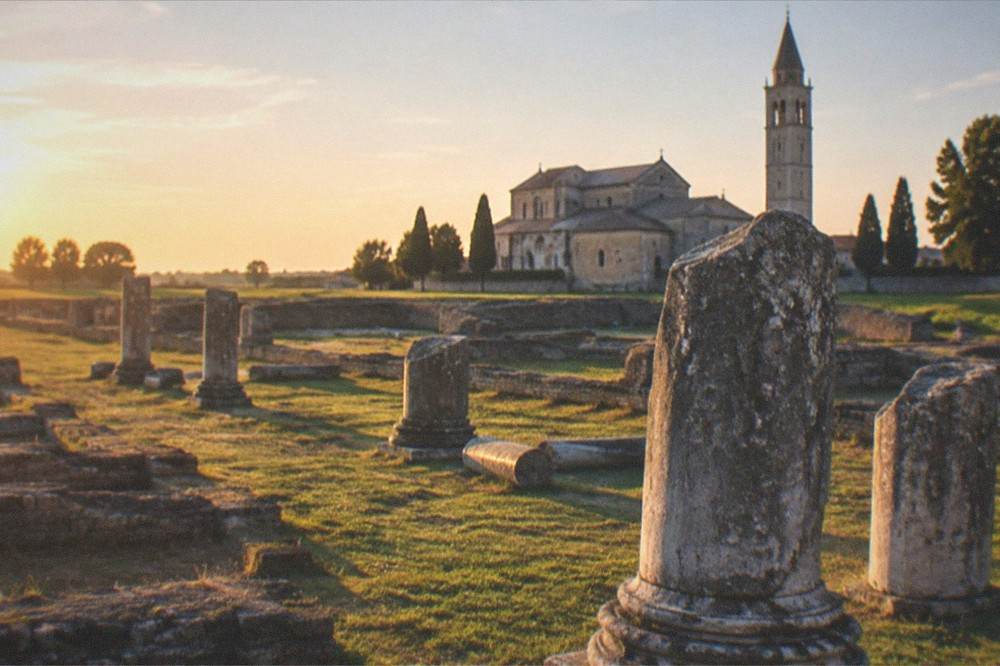
Aquileia rewards the traveller who treats it as the quiet day of a Trieste week: no border, no bora, no crowds, just a Roman city lying open under the Friulian sky and a mosaic floor that justifies the whole journey. Plan the transport the night before, carry the venue's own hours rather than an aggregator's, and the day takes care of itself.