Is There a Ferry to Trieste?
Is there a ferry to Trieste, Italy? What passenger boat services actually run from this Adriatic port, what the weather does to sailings, and the land routes that reach the city.
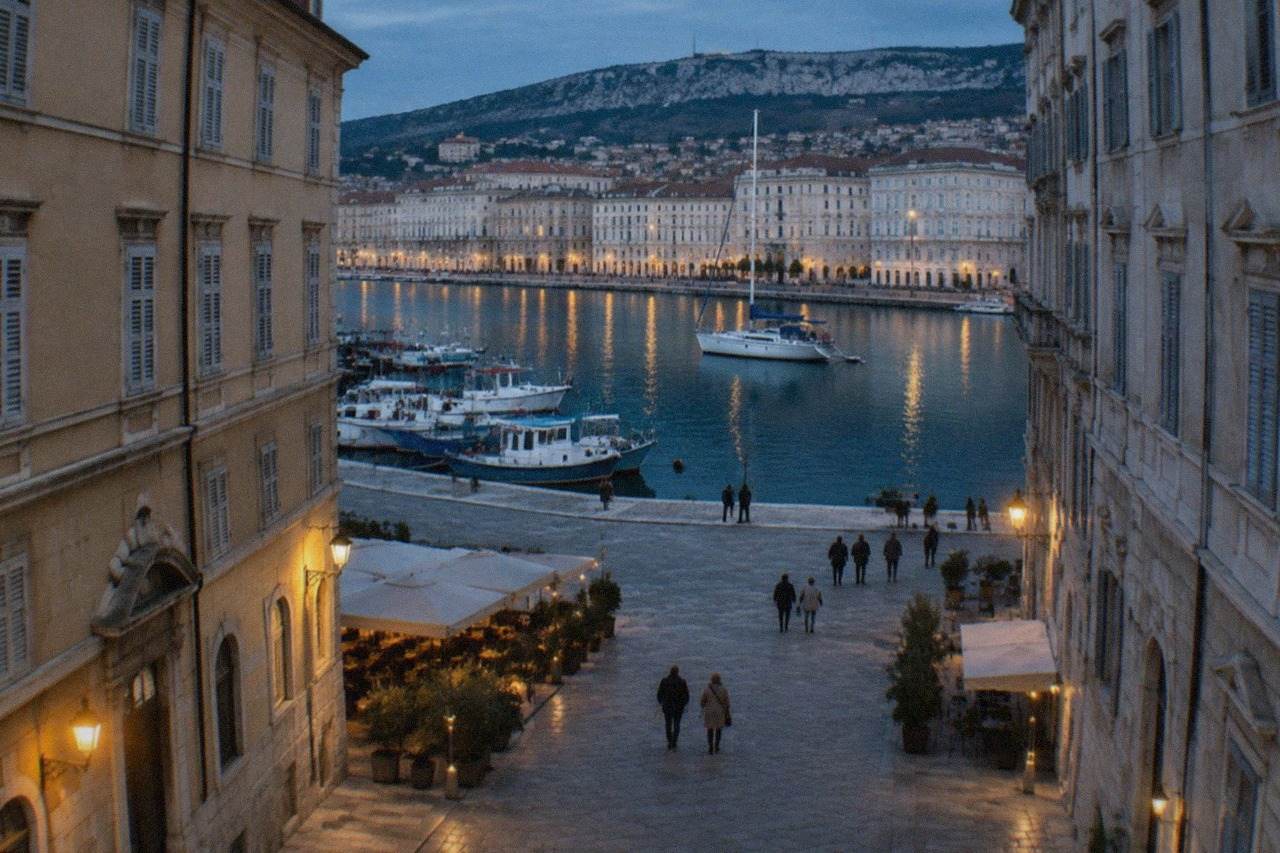
Trieste, the Adriatic port city in Friuli Venezia Giulia in northeast Italy, is one of those places people assume must have a big ferry terminal because it looks like one: a deep-water harbour, a long waterfront of moles and piers, and a cruise terminal that opens straight onto the city. The honest answer about ferries is more limited than the skyline suggests. This page sets out what passenger boat service the city actually has, what the verified facts say about the routes and the conditions that govern them, and what to do instead when no sailing fits your dates.
Is There a Ferry to Trieste?
Yes, but on a small scale: Trieste, Italy, is a working cruise and cargo port with seasonal, limited passenger ferry connections rather than a year-round car-ferry hub. Cruise ships dock here regularly, and small passenger services run across the gulf in the warmer months, but the city is not an Ancona or a Venice-style ferry gateway with daily car-carrying sailings to distant coasts. For anything specific, the operator's live listing is the only source worth trusting.
The port itself is genuine and busy. Cruise passengers walk off their ship and into the centre in minutes, which is one of Trieste's quiet advantages as a call. What the port does not have, on the verified record, is a dense network of scheduled car ferries. The routes people usually ask about, Trieste to Piran and Portorož across the gulf in Slovenia, and Trieste to points on the Croatian coast, are covered in detail on the site's ferries from Trieste guide and in the answer to is there a ferry from Trieste to Croatia?, and the short version is that these are seasonal, small-craft services whose timetables change from year to year.
That seasonality is the practical point. A summer crossing to the Slovenian coast can be a lovely half day; the same route in January simply does not exist. Anyone planning a trip around a ferry crossing should treat the sailing as the bonus, not the backbone, and build the itinerary on legs that run in every month.
What Passenger Boat Routes Run from Trieste?
The verified pattern is short, seasonal crossings close to the city: passenger ferry links across the Gulf of Trieste to the Slovenian coast, including Piran and Portorož, in the summer season, plus the occasional Croatia-bound service. No operator publishes a timetable or fare this site could verify as standing, so every crossing must be confirmed on the operator's live listing before you plan a day around it. There is no verified year-round scheduled car ferry from the city.
The most useful crossing for a visitor is the short hop across the gulf to Slovenia, which turns the Piran and Portorož day trip into a sea-level experience rather than a bus ride. The dedicated page on travelling to Croatia from Trieste by ferry covers the longer, less frequent options in that direction. Neither page will quote you a fare or a departure time, because the operators change them and no verified figure belongs in print here.
If the ferry is not running, the coast does not become unreachable. It becomes a road trip. A guided option such as the Slovenian Coast Tour with Food and Wine Tasting covers the same shoreline with tastings built in, and the operator's listing shows the current price of around $137.57 per person for a five-and-a-half-hour day. For a different axis entirely, the full-day Ljubljana and Lake Bled tour runs about seven hours from Trieste and is rated 4.5 from 277 reviews on its listing.
What Does the Bora Do to Ferry Sailings?
The bora, Trieste's cold katabatic wind from the east-north-east, is the single biggest variable in any Gulf of Trieste crossing: ARPA FVG's own station tables show an average of 17.6 days a year with a gust over 90 km/h at the molo, and the monthly record gust exceeds 110 km/h in every single month. No official wind threshold at which sailings are cancelled has ever been published, so cancellations are a live operational decision, not a number you can plan around.
This is a fact worth sitting with. The calmest month in the tables is June, with 2.2 days of gusts over 72 km/h and only 0.3 days over 90 km/h. July, high summer, actually records more days over 90 km/h than April, May or June, at 0.9. The windy season proper is the cold half of the year, peaking in February with 2.9 days over 90 km/h and the all-time series peak gust of 168.1 km/h, recorded in February 2012 at the molo Fratelli Bandiera station.
| Month | Mean gust days over 72 km/h | Mean gust days over 90 km/h | Mean sea temperature C |
|---|---|---|---|
| April | 3.5 | 0.7 | 14 |
| May | 2.7 | 0.7 | 17.9 |
| June | 2.2 | 0.3 | 23.1 |
| July | 3.3 | 0.9 | 25.9 |
| August | 2.9 | 0.9 | 25.9 |
| September | 3.5 | 1.1 | 23.9 |
| October | 4 | 1.4 | 20.3 |
The sea temperatures come from a different series, the ERA5 ocean reanalysis rather than the land station, and they tell the other half of the story: the water is at its warmest in July and August at 25.9 C on average, and September stays warmer than June despite the shorter days, because the sea holds its heat. That asymmetry is why the local swimming season runs later than visitors expect. What no source anywhere publishes is a wind speed at which the ferries stop, the Rive close or an event is called off. When the bora blows hard, sailings are suspended on the judgement of the port and the operator in real time, and the only reliable move is to check the operator's page on the morning.
If a cancelled sailing would wreck your one day on the coast, a coach or small-group tour is the more weatherproof choice: it runs on roads the bora does not close, and the Slovenian coast tour above includes the food and wine stops that make the day worthwhile either way.
How Do You Reach Trieste Without a Ferry?
Almost everyone arrives by land or rail: Trieste Airport has its own railway station connected to the terminal by a covered walkway of roughly 400 m, served by regional, Intercity and Frecciarossa trains, and the city's urban network includes the reactivated Opicina tram, running from piazza Dalmazia since 1 February 2025. A single urban ticket costs €1.50 for 60 minutes or €1.85 for 75 minutes on the 2026 tariff sheet, and a day ticket is €3.35.
The airport rail link is the detail that surprises people. You land at Ronchi dei Legionari, walk a covered bridge with moving walkways, and board a train; the airport's own service charter confirms the setup. No verified journey time or fare to Trieste Centrale is published on the operator pages this site could check, so the honest phrasing is a short regional train ride, with tickets via the rail operator's site or machines at the station. Everything else covered here is indexed on Trieste Travel Guide.
| Ticket (2026 urban tariff) | Price |
|---|---|
| Single, 60 minutes | €1.50 |
| Single, 75 minutes | €1.85 |
| Day ticket | €3.35 |
| 10 rides | €13.50 |
| 20 rides | €16.65 |
Single tickets stretch to 240 minutes on Sundays and public holidays, and contactless bank cards can be tapped directly on board, with the system applying the cheapest applicable fare. The Opicina tram, line 2, is part of that same ordinary urban network: it was reactivated on 1 February 2025 after the long stop following the August 2016 accident, its city terminus is piazza Dalmazia, and Trieste Trasporti's own line page carries the current timetable. Anyone who tells you the tram is suspended or that it leaves from piazza Oberdan is working from an old page.
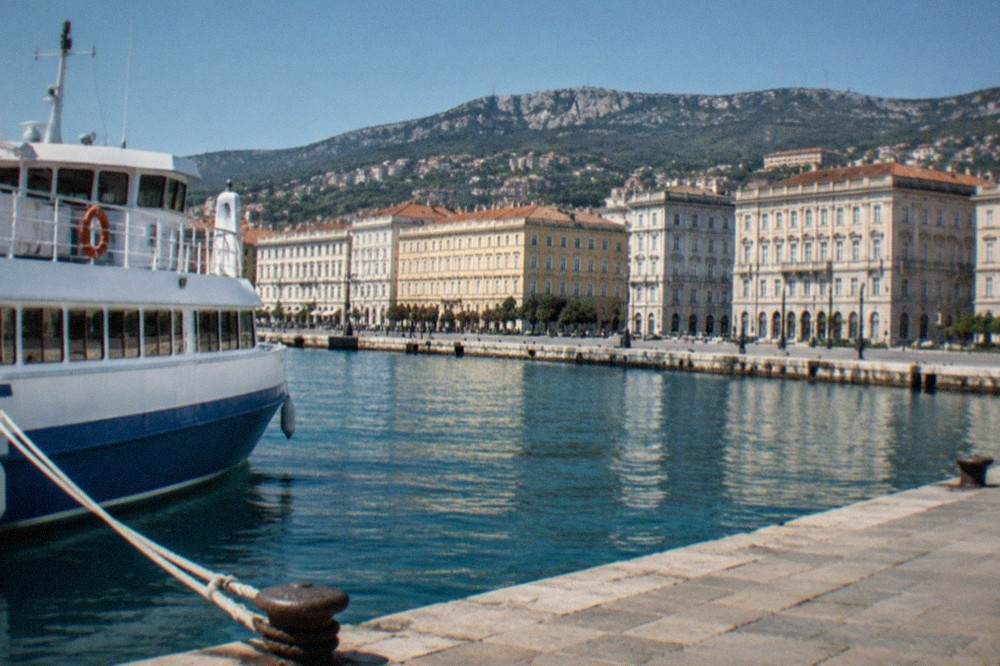
Do You Need a Passport for a Ferry Day Trip from Trieste?
Yes, carry one. Italy, Slovenia and Croatia all use the euro and all three are in Schengen, so there is no currency change and no routine border post, but Italy is running temporary checks on its land borders with Slovenia from 19 June 2026 to 18 December 2026, per the European Commission's own register. A sea crossing does not remove the requirement to be able to prove who you are, and the checks are dated and temporary, not a new permanent regime.
The currency point matters because old advice dies slowly. Croatia joined the Schengen area and adopted the euro on the same day, 1 January 2023, so nobody crossing from Trieste toward Istria needs to change money anywhere on the route. The border point matters because Schengen does not currently mean check-free on this particular frontier: the Commission's register lists the Italian measures on the Slovenia land border through 18 December 2026, and the practical instruction is to carry a passport or national ID card and check the current status before you travel, since extensions and lapses both happen.
Is a Ferry the Best Way to See the Coast from Trieste?
For most visitors, no: the ferry is a fair-weather bonus, and the coast is better explored by coach, tour or the Opicina tram on the Karst side. The seasonal sailings are short, weather-dependent and limited in frequency, while the road and rail network reaches Piran, Portorož, Muggia and the Croatian border in every month of the year. Book the crossing when it runs, and book the tour for the day it does not.
The site's own coverage reflects that split. The walking answer on is Trieste a walkable city? makes the case that the city itself is best on foot, and the question of how many days in Trieste is enough usually resolves to two or three, with a coast day as the optional third act. A ferry crossing fits that third act beautifully in July. In November, which ARPA's tables show as the wettest month at 109.8 mm, with 9.5 wet days and 5.2 days of gusts over 72 km/h, it fits nothing.
That is why the Slovenian Coast Tour with Food and Wine Tasting is this page's pick rather than any sailing: it runs from Trieste, it covers the same shoreline the ferry touches, and its listing shows a 4.98 rating from 50 reviews at around $137.57 per person for five and a half hours. You can Check availability against your own dates, and the operator's live listing carries the current departure details.
Common Questions About Ferries to Trieste
Is there a ferry to Trieste?
Yes, on a small scale. Trieste, Italy, has seasonal passenger crossings, principally across the gulf to the Slovenian coast, plus its cruise terminal. It does not have a year-round car-ferry network, and every sailing should be confirmed on the operator's live listing.
Is there a ferry from Trieste to Croatia?
Services toward the Croatian coast exist but are seasonal and limited, and no timetable or fare could be verified as standing. The site's dedicated guide to Trieste to Croatia by ferry carries the full picture, and the land routes are usually the faster option.
How much is the ferry from Trieste to Venice?
There is no scheduled passenger ferry between Trieste and Venice, and the question usually comes from confusion with the cruise transfers. The answer page on the Venice ferry question explains the reality, and the rail link is the practical alternative.
Do ferries get cancelled by the bora?
Yes, strong bora episodes suspend sailings, but no official wind threshold for cancellations has ever been published. ARPA's tables show 17.6 days a year on average with a gust over 90 km/h at the molo, so in the windy half of the year check the operator's page on the morning of travel.
Do I need a passport for a ferry day trip from Trieste?
Carry one. Italy, Slovenia and Croatia are all in Schengen and all use the euro, but Italy is running temporary checks on its land borders with Slovenia through 18 December 2026, and identification can be asked for on any cross-border leg.
What is the best month for a ferry crossing from Trieste?
June is the calmest month in ARPA's tables, with 2.2 days of gusts over 72 km/h, and the sea reaches its warmest at 25.9 C in July and August. September stays warmer than June and is a good shoulder-season choice if a sailing is running.
The short version of this whole page: Trieste, Italy, has a real port, a modest set of seasonal crossings, and a wind that decides more than any timetable does. Plan the trip on legs that run in every month, treat the ferry as the fair-weather bonus it is, and check the operator's live listing before you commit a day to it.