Is Trieste Part of Italy or Slovenia?
Trieste is a city in Italy, in the region of Friuli Venezia Giulia, but it sits right on the Slovenian border and the confusion is understandable. Here is the clear answer, plus how the border works in 2026.
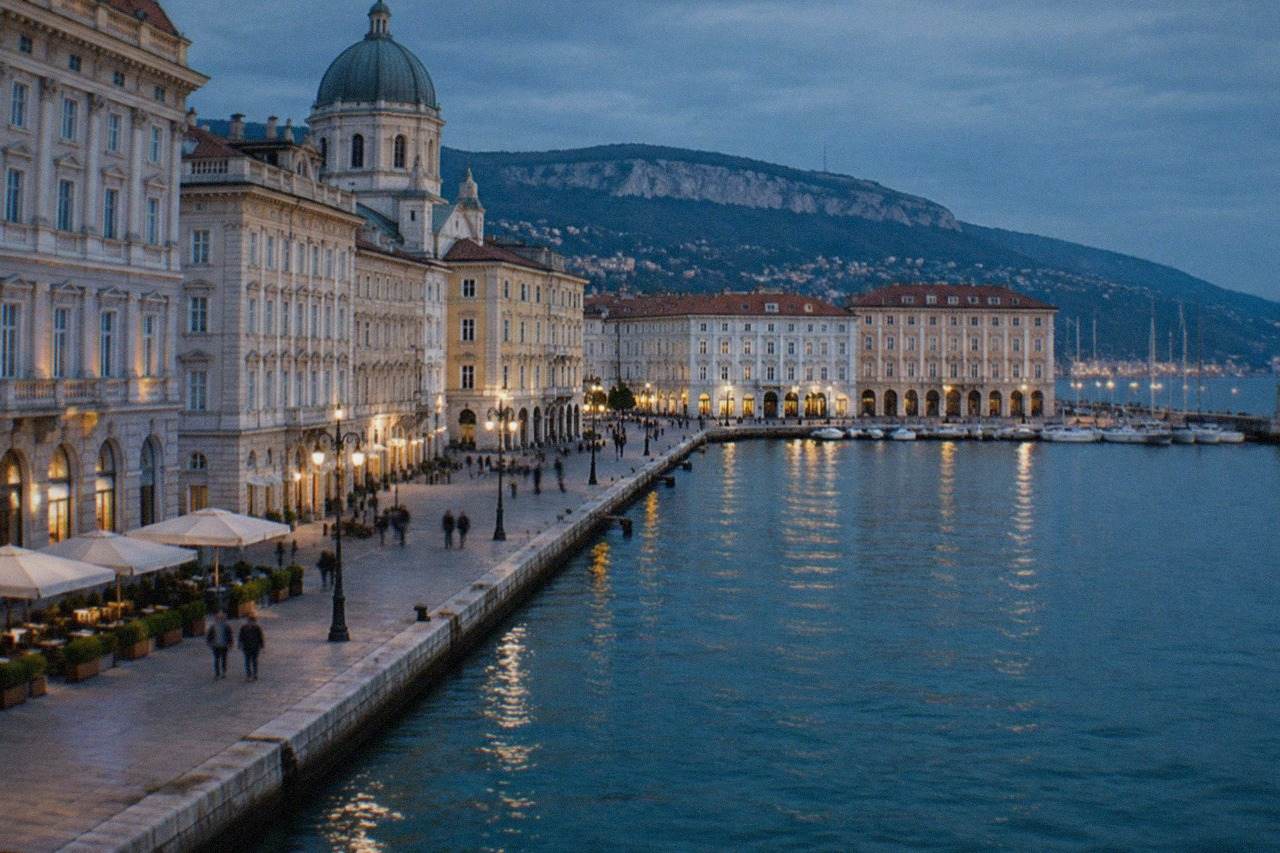
Trieste is a city in Italy, in the far north-east of the country, in the region of Friuli Venezia Giulia. It is not part of Slovenia, and it never has been. But the question is a reasonable one, because Trieste sits closer to the Slovenian border than almost any other Italian city sits to any border, the two languages are both spoken in its streets, and for a stretch of the twentieth century the question of which country Trieste belonged to was genuinely unsettled and was argued about at an international level. This page gives the direct answer first, then the history that explains why the confusion exists, and then the practical part: what the border means for a visitor staying in Trieste in 2026.
Is Trieste Part of Italy or Slovenia?
Trieste is part of Italy. It is the capital of the region of Friuli Venezia Giulia, in the country's north-east corner, and it has been governed from Rome since the 1954 settlement, an arrangement later confirmed by a treaty between Italy and Yugoslavia. Slovenia lies immediately to the east and the border is close enough that Slovenian is an official language in parts of the province, but the city itself, its port and its historic centre are Italian territory today.
The short version of the history: Trieste was the main seaport of the Habsburg Empire for centuries, which is why its architecture looks more Viennese than Roman. It became Italian after the First World War, was occupied by Nazi Germany during the Second World War, and then, when the war ended, it ended up in the Free Territory of Trieste, a patch of coast split into two zones, one run by the Western Allies and one by Yugoslavia. In 1954 the northern zone, the city itself, went to Italy and the southern zone went to Yugoslavia. The final border was only fixed on paper by a later treaty between the two states. When Slovenia declared independence from Yugoslavia it inherited the Yugoslav side of that line, and today the border between Trieste and Slovenia is a Schengen internal border.
That inheritance is why the question keeps coming up. The border did not move when Slovenia became a country, it simply changed hands, and a good deal of what used to be the Free Territory's southern zone, places like Koper and Piran, is now Slovenian coast that Italian families used to visit as their own. For a fuller account of why the line ended up where it is, see our page on why Trieste is not Slovenia.
Why Does Trieste Feel Half Slovenian?
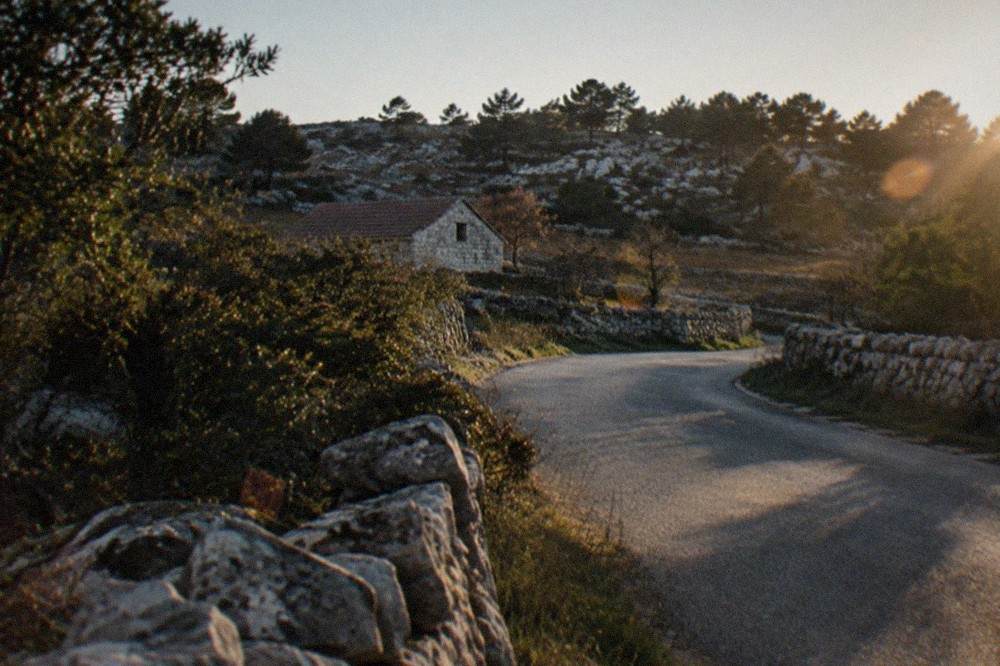
Because the border is genuinely close and the communities are genuinely mixed. Slovene has been spoken around Trieste and on the Carso plateau behind it for as long as records exist, and the city's dialect, food and street names carry Slovenian and German layers alongside the Italian ones. Slovenia's own coastal towns are a short drive away, and the two countries share a single karst plateau, a single gulf and, for practical purposes, a single day-trip hinterland.
None of that makes Trieste Slovenian, any more than it makes it Austrian, though the Habsburg imprint is arguably the strongest of all. The mix is what the city is. Street signs in the province appear in both languages where the Slovenian-speaking minority is established, the Slovenian community in Trieste runs its own theatre and schools, and the Serbian Orthodox church of Saint Spyridon is one of the city's landmarks. The name of the plateau behind the city is a bilingual one: Italians say il Carso, Slovenians say Kras, and the osmize, the farmhouse wine cellars that open seasonally on both sides of the line, operate under the same custom in both countries.
The confusion also has a modern source: search results. Trieste collides with a bathyscaphe, a coffee chain in San Francisco and several other things called Trieste, and when an AI assistant or a quick search answers a question about "Trieste" it does not always mean the Italian city. If you arrived here uncertain whether the place even exists, our page on what is special about Trieste, Italy is the better starting point.
The border facts above change the practical picture more than the historical ones do, and they are the part worth checking again before you travel, because the temporary checks window is dated and will lapse.
Those three trips between them cover the two sides of the question: two cross the border into Slovenia, and one shows you the Italian city itself, with a coffee stop in a historic bar thrown in.
What Is It Like Crossing the Trieste-Slovenia Border?
Crossing from Trieste into Slovenia is normally a two-minute affair: both countries are in the Schengen area and use the euro, so there is no passport stamp and no money to change. The one caveat for 2026 is that Italy is running temporary checks on its land borders with Slovenia from 19 June 2026 to 18 December 2026, so carry a passport or national ID card and expect the possibility of a spot check, especially on the way back into Italy.
The temporary checks are exactly that, temporary, and they are dated in the European Commission's own register: the current window runs to 18 December 2026. In practice most crossings happen without anyone looking at a document, but the rule for a visitor is simple and worth following anyway: bring ID, keep it in the car or your day bag, and do not plan a border crossing with no documents at all. Coach and tour operators handle the border without passengers doing anything, which is one reason day trips run so smoothly. Other pages covering the same trip are gathered on Trieste Travel Guide.
Do not change money for any of the three countries you can reach from Trieste. Italy, Slovenia and Croatia all use the euro. Croatia is the one where older guidebooks still mislead, because it used to be outside both the euro and Schengen, but it joined both on the same day, 1 January 2023. Any advice telling you to change money for Piran, Portorož, Ljubljana or Rovinj is out of date.
Here is how the three nearest countries compare from a Trieste base:
| Country | Currency | Schengen status | Do you need ID for a day trip from Trieste in 2026? |
|---|---|---|---|
| Slovenia | Euro | In Schengen since December 2007 | Passport or national ID card advised: Italy is running temporary checks on the land border until 18 December 2026 |
| Croatia | Euro | In Schengen since 1 January 2023 | Passport or national ID card, same as for any travel abroad |
| Austria | Euro | In Schengen since 1995 | Passport or national ID card, same as for any travel abroad |
Is Trieste Italian or Slovenian in Culture?
Culturally Trieste is its own thing, and it is an Italian city with a Central European accent. Its grand square, Piazza Unità d'Italia, opens straight onto the sea, its historic cafès carry a Habsburg coffee culture that has nothing to do with Rome, and its food mixes Italian pasta with Austro-Hungarian goulash and the jota soup of the borderlands. The Slovenian layer is real too, in the dialect, the minority institutions and the landscape, but the city's public life is conducted in Italian.
The coffee culture deserves its own mention because it is the thing most visitors comment on. Trieste was a historic coffee port and remains a roasting centre, and the ritual of standing at the bar for a caffè is closer to Vienna's than to Naples'. The signature dishes lean the same way: jota is a bean and sauerkraut soup that would be at home in Ljubljana, and the buffet restaurants serve boiled pork and goulash alongside the pasta. If that mix sounds interesting, our page on what food Trieste is famous for goes into it properly, and the question of identity is unpacked further in is Trieste more Italian or Slovenian.
If reading this far has convinced you to see both sides of the border with your own eyes, the Ljubljana and Lake Bled day trip is the most popular way to do it, and the operator's live listing carries the current departure details.
Can You Visit Slovenia from Trieste?
Yes, and it is one of the easiest border crossings in Europe. Slovenia begins a few minutes' drive from the city, the seaside town of Piran and the cave systems of Škocjan and Postojna are all realistic half-day or full-day trips, and Ljubljana and Lake Bled are the standard full-day excursions, with organised tours handling the border and the driving. The only 2026 requirement is the ID card or passport, because of Italy's temporary checks on the border.
The organised options are worth taking seriously even for confident drivers, because parking in Piran is scarce and the caves run on timed entry. The Ljubljana and Lake Bled trip is the most popular: it leaves from Trieste with round-trip transport and a guided tour in Italian and English, and the operator's live listing shows the current price and departure details.
For planning the crossing yourself, the practical page is can you visit Slovenia from Trieste, which covers the ID question, the coach operators and the border check situation in more detail.
Whichever of those you pick, the border itself will be the least interesting part of the day, which is the whole point of a city that sits this close to another country.
The Ljubljana and Lake Bled excursion is the one this site points most visitors towards, because it pairs the Slovenian capital with the country's most photographed lake in a single day from Trieste.
Common Questions About Trieste and Slovenia
Is Trieste part of Italy or Slovenia?
Trieste is part of Italy. It is the regional capital of Friuli Venezia Giulia and has been Italian territory since the 1954 settlement, later confirmed by a treaty between Italy and Yugoslavia. Slovenia is its eastern neighbour, not its owner.
Was Trieste ever part of Yugoslavia?
No, the city itself was never Yugoslav. After the Second World War Trieste sat in the Free Territory of Trieste, split into an Allied-run northern zone containing the city and a Yugoslav-run southern zone. In 1954 the northern zone went to Italy and the southern zone, including Koper and Piran, went to Yugoslavia, which is now Slovenian and Croatian coast.
Do they speak Slovenian in Trieste?
Italian is the city's language and the one you will hear everywhere. Slovene is spoken by a historic minority, appears on official signage in parts of the province alongside Italian, and is protected by law, but a visitor needs only Italian or English.
Do I need a passport to go from Trieste to Slovenia?
Yes, carry one, or a national ID card. Both countries are in the Schengen area, but Italy is running temporary checks on its land borders with Slovenia from 19 June 2026 to 18 December 2026, so a document check is possible in either direction.
Is the Slovenian border close to Trieste city centre?
Very close: Slovenia begins on the eastern edge of the province, and the border villages and the coastal towns of the Slovenian littoral are day-trip distance by car, coach or organised tour. The Opicina tram, line 2 of the city's urban network, runs from piazza Dalmazia up to the border village of Opicina.
Which country is better to stay in, Trieste or the Slovenian side?
Trieste makes the better base if you want the Habsburg architecture, the cafès and the Italian food, with Slovenia and its coast as easy excursions. The Slovenian side suits travellers prioritising Piran, the caves and lower accommodation prices. Our guide to what part of Trieste to stay in covers the city's districts.
So the answer to the question in the title is unambiguous: Trieste is in Italy, has been for over seventy years, and will be for the foreseeable future. What makes the city worth the journey is precisely the tangle the question comes from, an Italian port with a Habsburg skyline and a Slovenian border you can cross for lunch, and back again in time for an aperitivo on Piazza Unità d'Italia.