What Is the Unusual Thing to See in Trieste?
The unusual sights that make Trieste, Italy different from every other Italian city: a Roman theatre you view from the street, a cliff-climbing tram, Karst farm taverns and the wind that shapes everything.
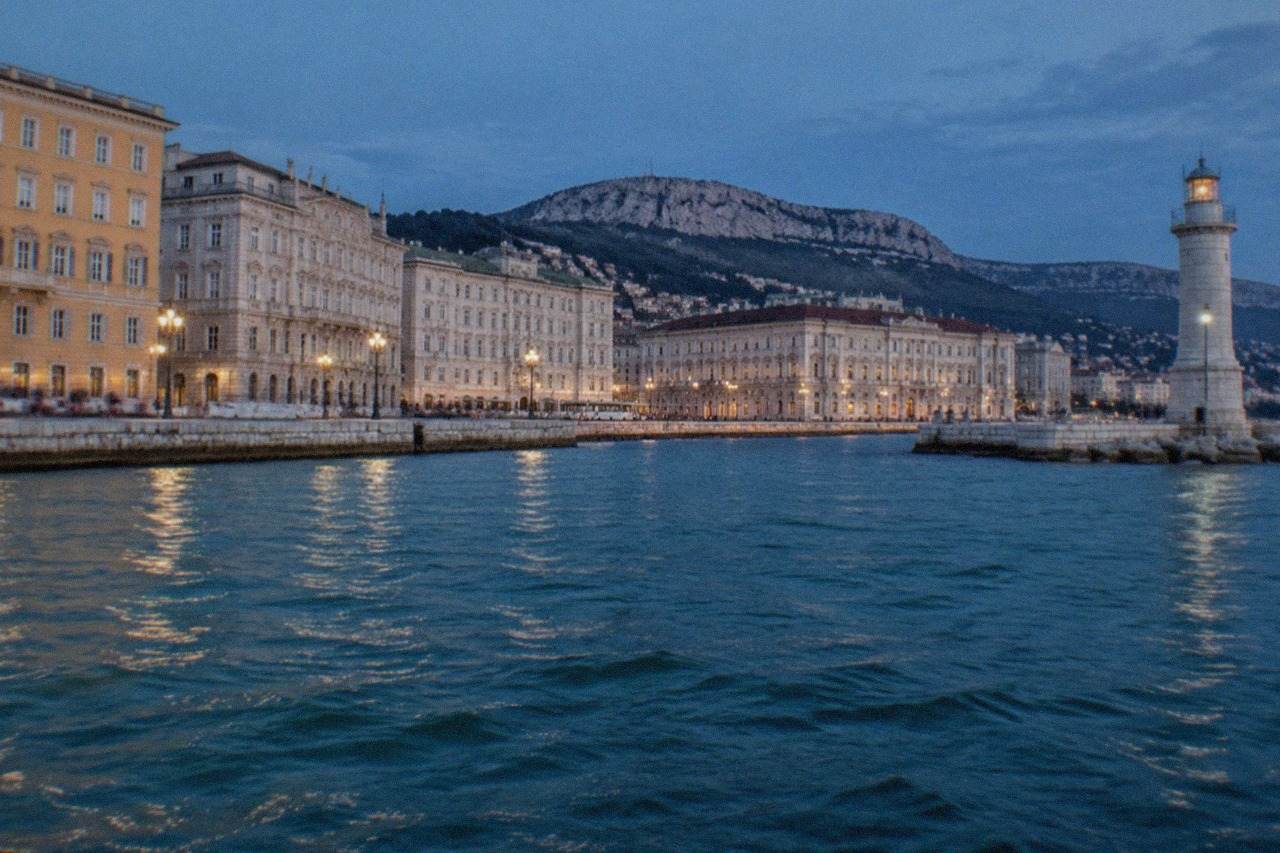
Trieste, the Adriatic port city in Friuli Venezia Giulia in the northeast corner of Italy, keeps its strangest sights in plain view, and most visitors walk past at least two of them without noticing. The question of what is unusual here has better answers than the standard checklist suggests: a Roman theatre you look down into from an ordinary street, a tram that has climbed a limestone cliff for over nine decades, farmhouse wine taverns on the Karst announced by a branch hung on a pole, and a wind so defining that it shapes when the seafront is pleasant and when it is not. This page runs through the genuinely odd things to see, with the verified prices and hours for each, and points to the unusual things to do in Trieste for the activity side of the same question.
What Is the Unusual Thing to See in Trieste?
The single most unusual sight in Trieste, Italy is the Teatro Romano, a Roman theatre you view from the street above rather than enter, sitting at the foot of the San Giusto hill in the middle of the modern city. Beyond it, the city's oddities stack up quickly: the Opicina tram, reactivated on 1 February 2025, which climbs the Karst escarpment from piazza Dalmazia; the osmize, seasonal farm taverns on the Carso signposted by a leafy frasca; and the Risiera di San Sabba, a free national monument inside a former rice factory. None of these fits the postcard idea of Italy, which is precisely the point.
The Roman theatre is the one that catches people out. The Ministry of Culture's own page for the monument describes a structure built into the slope of the San Giusto hill, and the practical reality is that you look down into it from via del Teatro Romano, an ordinary street, with no ticket and no turnstile. The ministry's page notes visits for groups and schools can be arranged on request through the Soprintendenza, but the everyday experience is a pavement view. That is unusual for a Roman theatre of this size anywhere in Italy, and it is free.
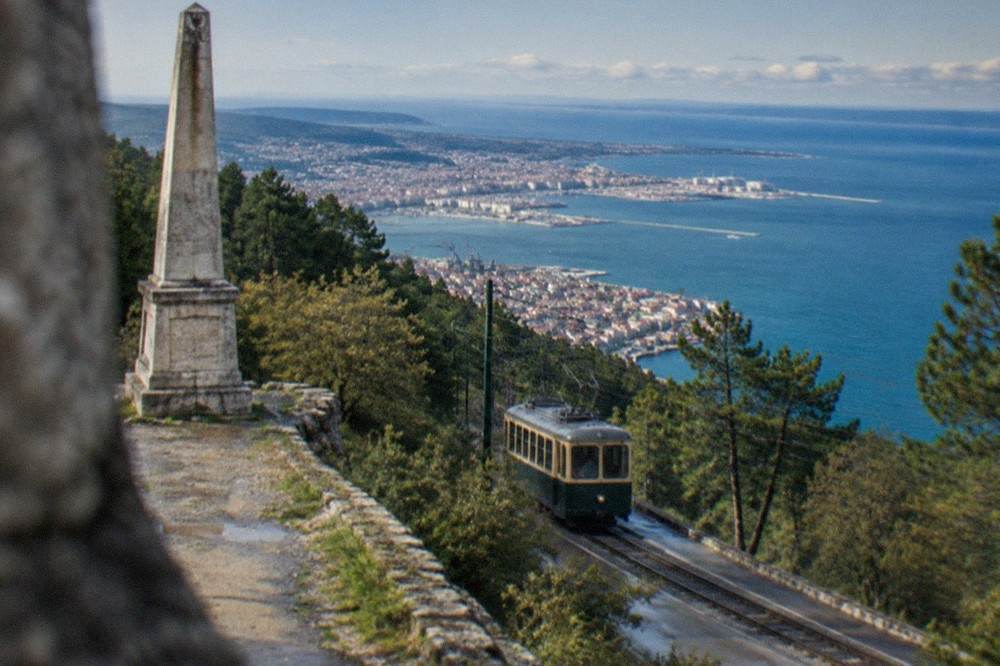
The Opicina tram is the second. Trieste Trasporti's own line-2 page carries a current timetable dated 20 July 2026 for the route between piazza Dalmazia and Opicina, and TPL FVG's page states the line was reactivated on 1 February 2025 after the long stop that followed the August 2016 collision. Almost every older guide still describes it as suspended or as leaving from piazza Oberdan, and both statements are wrong: it runs, and its city terminus is piazza Dalmazia. A standard urban ticket, €1.50 for 60 minutes on the 2026 tariff, covers it, and contactless cards can be tapped on board. A tram that functions as an ordinary city bus route while hauling itself up a cliff on a funicular section is genuinely strange, and it is one of the sights people remember. The full story is on the Opicina tram and obelisk page.
Why Is the Roman Theatre in Trieste So Strange?
The Teatro Romano is unusual because it is a substantial ancient theatre with no public entrance, no ticket and no fence between it and daily life: the city's own streets pass directly above it, and the standard way to see it is to look down from the pavement. The Ministry of Culture's page for the monument confirms its position against the San Giusto hill, and notes that guided access for groups and schools is handled on request. For an individual visitor, the experience costs nothing and takes about as long as crossing the street.
This is not how ancient theatres normally work in Italy. In Verona or Taormina you queue, pay and file into a managed monument. In Trieste the theatre sits in a working quarter at the edge of Città Vecchia, and the view from above, tiered seating and the stage wall below street level, is the intended one. The setting makes sense once you know the hill behind it: the theatre was built to use the natural slope, and the same hill carries the cathedral and castle that now dominate it. The Roman theatre of Trieste page covers the history in full.
The strangeness is contextual rather than hidden. Walk from the theatre up to the cathedral of San Giusto and you pass the Arco di Riccardo, a Roman gate that also stands in a street, un-ticketed and unguarded. Trieste's ancient remains are woven into the modern city rather than fenced off from it, and that is the honest answer to why the theatre feels odd: it is not that the monument is strange, it is that the city treats it as street furniture.
What Are the Osmize and Why Is a Branch Hanging on a Pole?
An osmiza is a farmhouse or cellar on the Trieste Karst where the family sells its own wine and home produce directly for a limited season, and the only sign that one is open is a frasca, a leafy branch hung at the roadside or on the building. There is no shopfront, no fixed opening calendar and often no printed menu: the osmize.com site, the long-established volunteer-run calendar, is the de facto reference for which farms are open on which days, with addresses and a map.
The custom is real and observable even where its legal history is not verifiable. The name is usually traced to the Slovene word for eight, for the limited days originally allowed, and the tradition is described as a Habsburg-era right for farmers to sell their own wine, but the specific decree and day counts circulate in secondary sources only, so treat them as lore rather than fact. What you can verify on the day is the frasca, the wine, and the simple food: the farms of the del Carso plateau pour their own Vitovska, Malvasia and Terrano, the Karst's own wines, alongside salumi, cheese and eggs from the property.
The unusual part for a visitor is the mechanics. You drive or take the bus up onto the Karst, you follow the branch, and you sit at a shared table in a working farmyard drinking wine that never entered a shop. Nothing equivalent exists on the Italian side of the border elsewhere, and the osmize of the Carso page explains how to plan around the calendar. Note one thing the pack is firm on: Trieste is not in the Prosecco DOC, and the village of Prosecco on the Karst road gave the wine its name without being inside today's production zone, a distinction the Prosecco origins tour handles well.
Is the Bora Wind Itself Something to See?
Yes: the bora is a sight in its own right, a cold east-north-east wind that funnels down the Karst escarpment onto the gulf, and ARPA FVG's station tables record 17.6 days a year on average with a gust over 90 km/h at the molo Fratelli Bandiera, with an all-time series peak of 168.1 km/h in February 2012. The same tables show the monthly record gust exceeds 110 km/h in every single month of the year, which means the wind is not a winter curiosity but a permanent feature of the city.
What makes it unusual to see rather than just feel is the visible response. On strong-bora days the sea off the Rive is whipped into short, steep whitecaps while the sky stays hard blue, the classic bora-clear day, and the seafront empties while the sunny squares behind the waterfront stay busy. No official wind threshold exists at which the Rive close or ferries stop, and no such cutoff has ever been published, so do not trust any guide that quotes one. What you can say is that the calmest month in the station tables is June, with 2.2 days of gusts over 72 km/h, and that February, the windiest, averages 6.
The wind also explains two other unusual sights. The Barcolana regatta, the sailing race whose 2018 edition holds the record with 2,689 boats and a Guinness World Record as the largest sailing race in the world, sits deliberately in the windy shoulder of October, a month that averages 1.4 days with gusts over 90 km/h. And the city's architecture, heavy Habsburg-era palazzi with deep sheltered ground floors, is shaped by it. The bora wind page has the full data.
What Unusual Sits Inside the City's Museums and Monuments?
The most unusual monument in Trieste is the Risiera di San Sabba, a free national monument inside a former rice-husking plant that became the only Nazi extermination camp on Italian soil, open daily 9:00-19:00 from 1 March to 11 October with entry free and no booking needed for individuals. Alongside it, the city holds a civic museum inside a castle, a modern-art gallery in a banker's former palazzo, and one of the world's longest sea-level records, kept at Molo Sartorio since monthly means began in January 1875.
The Risiera is the one that stops people. The monument's own site states entry is free, with hours that shift to 9:00-17:00 from 12 October, and closure on 25 December and 1 January. It is not an easy visit, but it is an unusual one in the strict sense: nowhere else in Italy does a rice factory carry that history, and the building's bland industrial shell against the weight of what happened there is the point. The Risiera di San Sabba page covers it properly.
The stranger details sit in the smaller institutions. The Civic Museum of Natural History and the Museo Sartorio hold the sort of 19th-century collections that stopped growing decades ago, and the Revoltella Museum, €8 for adults and closed on Tuesdays per its own site, is a modern gallery built around a financier's bequest in a palazzo he lived in. The sea-level datum is the invisible one: Molo Sartorio's gauge is the reference for Italian elevations, which means every altitude sign in the country traces back to a pier in Trieste.
| Unusual sight | What it is | Entry cost | Verified detail |
|---|---|---|---|
| Teatro Romano | Roman theatre viewed from street level | Free | Guided visits for groups on request via the Soprintendenza |
| Opicina tram | Cliff-climbing tram, urban line 2 | €1.50 urban single, 60 min | Reactivated 1 February 2025; terminus piazza Dalmazia |
| Osmize | Seasonal Karst farm wine taverns | Wine and food priced per farm | Openings listed on the osmize.com calendar |
| Risiera di San Sabba | National monument in a former rice plant | Free | Daily 9:00-19:00 to 11 October; individuals do not book |
| Grotta Gigante | One of the world's largest tourist caves | €15 adult, €8 child 6-18 | Guided tours only, booking compulsory; closed Mondays September-February |
| Molo Sartorio gauge | The sea-level datum for all Italian elevations | Not open as an attraction | Monthly means recorded since January 1875 |
The cave deserves its line in that table. Grotta Gigante, at Borgo Grotta Gigante near Sgonico, is run by the Società Alpina delle Giulie and its own price list charges €15 for adults, €8 for children 6-18, with departures at 9:00, 10:00, 11:00, 12:00, 14:00, 15:00 and 16:00, and booking is compulsory. It is closed on Mondays from September to February. What the venue's own pages do not print, despite endless repetition elsewhere, is a step count, a constant cave temperature or a Guinness record, so a guide that quotes those is guessing. The Grotta Gigante page sticks to what the venue publishes.
Where Can You See Trieste's Strangest Sights in One Day?
The unusual sights cluster on two axes: the San Giusto hill, where the Roman theatre, the Arco di Riccardo, the free-entry cathedral and the €7 castle all sit within a short walk of each other, and the waterfront, where Molo Audace, the Rive and the bora's whitecaps line up along the sea. A single day can cover the hill in the morning, the seafront in the afternoon and the Opicina tram as a late excursion, using nothing more than urban tickets.
Start at the theatre, since it costs nothing and takes minutes. Climb to the castle of San Giusto, where the €7 ticket covers the walls, the Civico Museo del Castello-Armeria, the Lapidario Tergestino and temporary exhibitions, open daily 10:00-19:00 to 11 October and Tuesday-Sunday 10:00-17:00 after, with free entry on the first Sunday of the month and on 3 November. The cathedral next door is free, though the parish publishes no bell-tower price and none should be invented. Come down through Città Vecchia to Piazza Unità d'Italia, then out onto Molo Audace.
The afternoon is the seafront's turn, and the unusual version of it is the Bagno Marino La Lanterna at Pedocin, the historic bathing establishment with separate men's and women's sections that survives inside the working port city. If the wind is up, that is the show: the Rive under a bora sky are more memorable than the same seafront on a flat calm day. For the tram, check the live status on the operator's own site before you go, because maintenance suspensions happen and are announced there first.
A private guide compresses all of this, and the Habsburg-history walk is the one that connects the odd pieces, the theatre, the arch, the imperial palazzi, into a single story of a city that was the Habsburgs' outlet to the sea. The Miramare Castle and the park private tour covers the strangest royal residence on the Adriatic, a white castle built for Archduke Maximilian and Charlotte above the water at Grignano, where the castle costs €17 and the park is free all year, per the Ministry of Culture's visit page.
Common Questions About Unusual Sights in Trieste
What is the unusual thing to see in trieste?
The Teatro Romano, a Roman theatre you look down into from an ordinary street with no ticket, is the most unusual sight in Trieste, Italy. The Opicina tram climbing the Karst cliff from piazza Dalmazia, the frasca-signposted osmize farm taverns, and the Risiera di San Sabba national monument complete the set.
Can you go inside the Roman theatre in Trieste?
Not as an individual. The theatre is viewed from the street above, and the Ministry of Culture's page notes that guided visits for groups and schools can be arranged on request through the Soprintendenza. For a solo visitor the pavement view is the experience, and it is free.
Is the Opicina tram running?
Yes. TPL FVG's own page states the line was reactivated on 1 February 2025, and Trieste Trasporti's line-2 page carries a timetable dated 20 July 2026. The city terminus is piazza Dalmazia, not piazza Oberdan. Check the operator's site for live status, since short maintenance suspensions are announced there.
What is an osmiza and how do you find one open?
An osmiza is a Karst farmhouse selling its own wine and home produce for a limited season, signposted by a frasca, a leafy branch. The volunteer-run osmize.com calendar lists which farms are open on which days, with addresses and a map. The Karst's own wines are Vitovska, Malvasia and Terrano.
Does the bora close the Trieste seafront?
No official wind threshold for closing the Rive or stopping ferries has ever been published, so any number a guide quotes is invented. ARPA FVG's station tables average 17.6 days a year with gusts over 90 km/h, and on those days the seafront is dramatic rather than closed.
Is Trieste worth visiting just for the unusual sights?
Yes, if the Habsburg-on-the-Adriatic oddity appeals: a cliff tram, a street-level Roman theatre, Karst farm taverns and a world-record sailing race in October. The Trieste Travel Guide covers the rest of the city, including how many days are enough and what the food is famous for.