Unusual Things to Do in Trieste, Italy
Trieste, Italy, rewards the visitor who skips the obvious: a swimming bath divided by a wall, farmhouse wine rooms on the Karst, a tram that climbs a cliff, and a wind that owns the city's calendar.
Short answer
The most unusual things to do in Trieste, Italy are swimming at the walled Pedocin sea bath, eating at an osmiza on the Carso, riding the Opicina tram from piazza Dalmazia, walking the Old Port, watching for the bora wind, and visiting the Risiera di San Sabba and Grotta Gigante.
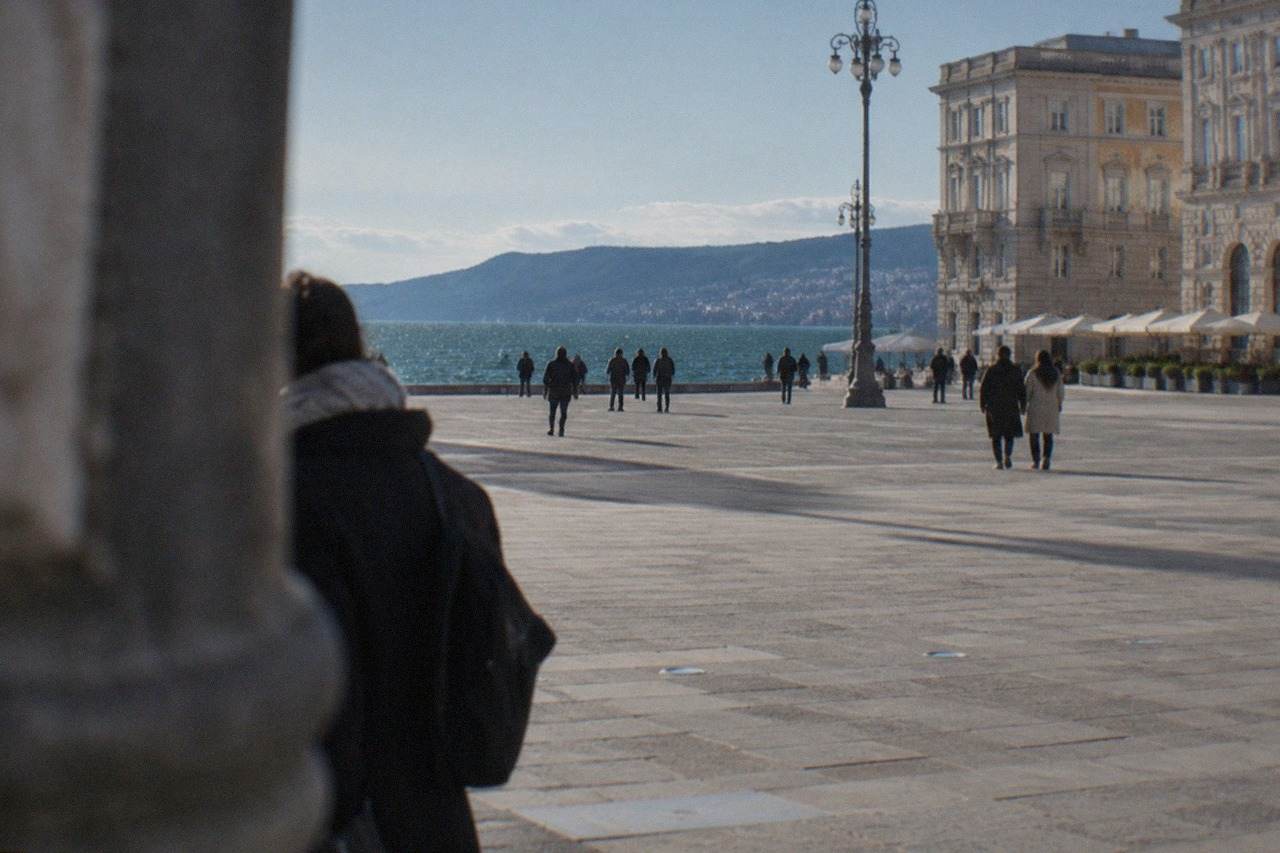
Trieste, Italy, is the country's most central European city, an Adriatic port that spent centuries inside the Habsburg empire and still drinks its coffee standing at a marble bar. That history left behind a set of attractions that genuinely do not exist anywhere else in Italy: a public sea bath divided down the middle by a wall, farmhouse wine rooms that open only when a branch is hung at the gate, a hybrid tram that pushes a carriage up a limestone cliff, and a wind so defining that the city's biggest sailing race is scheduled around it. This guide walks through the unusual things to do in Trieste, with the verified prices, hours and rules for each, because several of these places trip up visitors who arrive without knowing how they work.
What Are the Most Unusual Things to Do in Trieste, Italy?
The most unusual things to do in Trieste, Italy, are swimming at the walled Pedocin sea bath at Bagno Marino La Lanterna, eating and drinking at an osmiza on the Carso plateau, riding the Opicina tram from piazza Dalmazia up to the village of Villa Opicina, walking the redeveloped Old Port, standing on Molo Audace during a bora, and visiting the Risiera di San Sabba, a free national monument inside a former rice-husking plant.
Each one is either unique to Trieste or works by a rule you will not find elsewhere in the country.
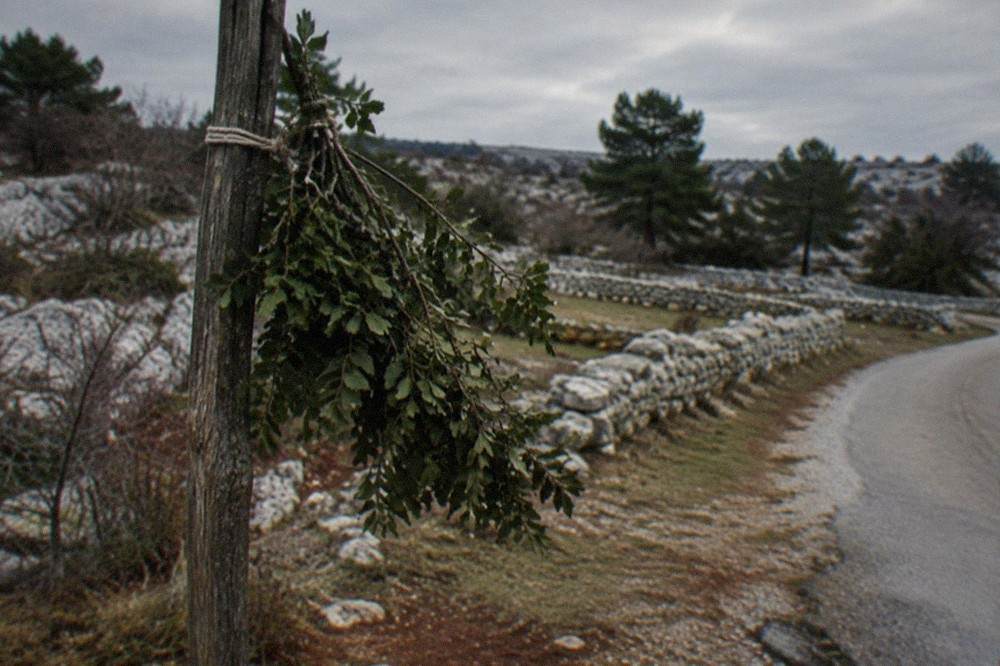
Most Italian cities separate their visitors from their strangest corners. Trieste does the opposite: its oddities are public, cheap and often free, and they sit within a short walk of Piazza Unità d'Italia. The Risiera di San Sabba, the only extermination-camp complex with a civic museum on Italian soil, charges nothing and opens daily. The Pedocin has been the city's working sea bath for over a century and still separates its two halves with a wall, one side for men and one for women. The osmize, the Karst farmhouses that sell their own wine for a few weeks a year, are signposted by nothing more than a leafy branch hung at the turning.
The trick with all of them is timing and rules, not tickets. The osmize open in waves in spring and autumn and the calendar lives on a volunteer-run site rather than any official one. The tram runs as an ordinary urban line, so a standard city ticket covers it. The bora arrives on its own schedule, and the city has never published a wind speed at which anything closes. The sections below give you the working detail for each, plus the guided options where a local adds something a signpost cannot.
Where Can You Swim Behind a Wall in Trieste?
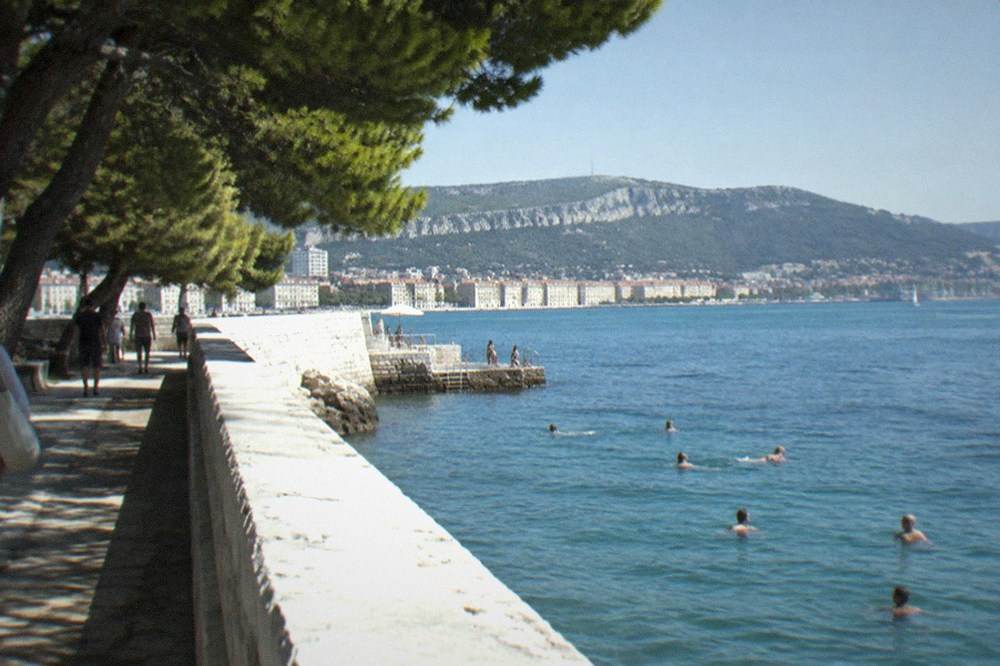
Trieste's Bagno Marino La Lanterna, known locally as Pedocin, is a public sea bath on the waterfront whose two halves are divided by a high wall: one side is reserved for men and one for women, a layout that has survived from the early twentieth century and exists nowhere else in a modern Italian city. It is a functioning municipal bathing establishment, not a museum piece, and swimming there is one of the strangest ordinary experiences in the country.
The wall is the whole story. On the women's side, bathers sunbathe and swim in a space that has stayed single-sex since the bath opened, and the rule is enforced as ordinary practice rather than historical reenactment. The men's side works the same way on the other side of the partition. You bring a towel, you pay at the entrance like any lido, and you swim in the Adriatic a few minutes' walk from the city centre. The water in the gulf is genuinely warm in late summer: ARPA FVG's oceanographic bulletins put the August mean at about 25.9 C, and September stays warmer than June because the sea holds its heat. Our Trieste beaches and swimming guide covers the rest of the coast, from Barcola's rocky shore to the sheltered spots further out.
What makes Pedocin unusual rather than merely old is that it is not marketed at tourists at all. It is where the city swims, and the visitors who find it are the ones who ask. If you want the sea without the wall, Barcola's long seafront is the free alternative, and if you want the full waterfront picture, our free things to do in Trieste guide lists the stretches that cost nothing.
For a structured introduction to the city before you strike out to the waterfront, a guided walk is the efficient option. The Experience Trieste private walk runs about two and a half hours, is rated 5 from 113 reviews, and costs from $198.52 per group, and the operator's live listing carries the current availability.
What Is an Osmiza and Why Is a Branch Hanging by the Road?
An osmiza is a farmhouse on the Trieste Karst that opens its cellar door for a limited period each year to sell its own wine and home-cured produce directly to whoever turns up, a right that dates to Habsburg-era rules and survives today as a living custom. The name comes from the Slovene word osem, eight, for the eight opening days originally allowed, and an open osmiza is signalled by a frasca, a leafy branch hung at the turning, with no other advertising.
There is no fixed season and no central booking system. Each farmer decides when to open based on what the vintage produced, and the days are notified to the local authority rather than published as a calendar by anyone official. In practice the openings cluster in spring and autumn, and the de facto reference for what is open on any given day is the long-established volunteer-run calendar at osmize.com, which lists addresses and a map. There is no municipal equivalent, so that site, and the frasca itself, are the whole information system. Our dedicated osmize of the Carso guide explains the etiquette: you sit at shared tables, you order by the glass or the bottle, and the produce is whatever the farm made that year.
The wine is the reason to take the custom seriously. The Carso's own varieties are Vitovska, Malvasia and Terrano, and none of them is Prosecco, a point worth holding on to because Trieste sits next to a village called Prosecco that gave the famous sparkling wine its name without being inside the modern DOC zone. Our Friuli Venezia Giulia wine guide covers those varieties properly. For the eating side of the plateau, the what to eat in Trieste guide maps the buffets and the cured pork the osmize pour alongside.
If you would rather have the Karst's flavours brought to you in the city, a guided food walk does it in three hours. The Trieste Unique Food Tour with Local Flavors and Tastings runs from $87.58 per person and is rated 4.9 from 88 reviews.
Can You Walk Through Trieste's Abandoned Old Port?
Yes: the Old Port of Trieste, Porto Vecchio, is a vast early twentieth-century port complex of warehouses, silos and cranage that has been opening to the public in stages in recent years, and a free GuruWalk pay-what-you-want walking tour, Trieste and the Old Port, Industrial Archeology Tour, explores it with a local guru on a tip basis. The district is a city within the city, and until recently it was closed to everyone.
The free walk is run through GuruWalk, which matters because it is not one of this site's products: it is a tip-based walk led by an individual local guide, and the price is whatever you choose to give at the end. The listing describes the Old Port as a district only opened to the public in recent years, and the industrial archaeology, the grain silos and the freight sheds, is the draw. It is rated 5 from 4 reviews. Book through the operator's live listing, and treat the guru's own page as the source of truth for the meeting point.
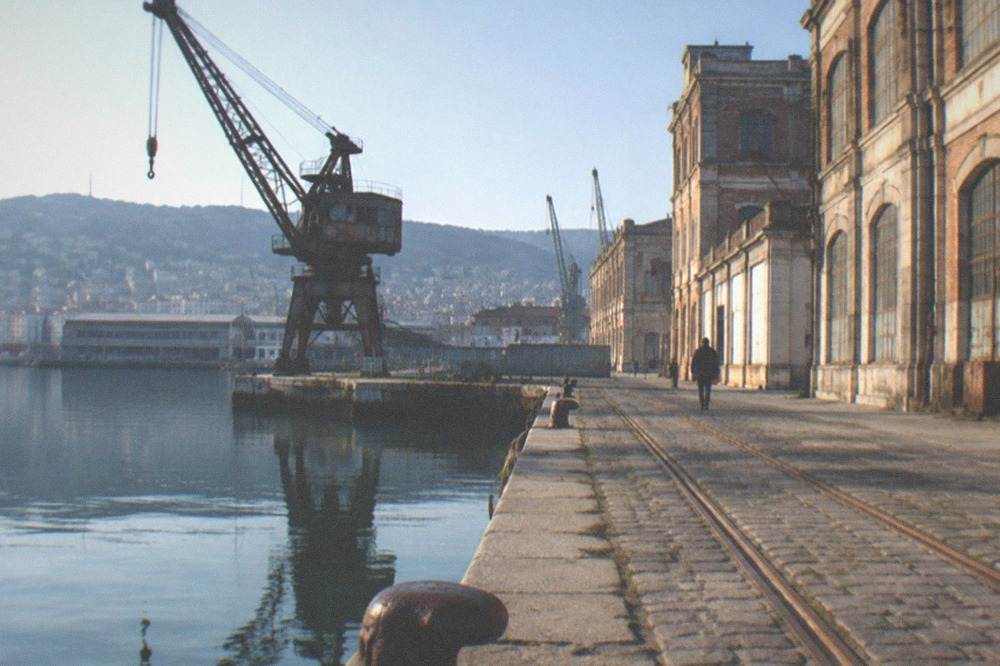
The Old Port pairs naturally with the city's other free guided option. Discover Trieste on a walking tour is a GuruWalk free city walk, tip based and rated 4.86 from 50 reviews, and it covers the centre rather than the port. Between the two, a visitor can see both halves of Trieste's split personality, the Habsburg grid and the industrial waterfront, without paying a fixed fee to anyone. Our free walking tours in Trieste page gathers the free options in one place.
For a paid alternative with a fixed itinerary, the city's private walks are inexpensive for groups. The Best of Trieste private walking tour costs from $217.82 per group of up to 10 and runs two hours, rated 4.94 from 31 reviews.
Does the Trieste Tram Really Push Itself Up a Cliff?
Yes: the Opicina tram, urban line 2, is a hybrid tram and funicular that runs about 5.175 km between piazza Dalmazia in the city and the village of Opicina on the Karst edge, and its central section works with a cable tractor that pushes the carriage up the steepest stretch of the route. It was reactivated on 1 February 2025 after a long stop following an August 2016 accident, it runs today, and it uses ordinary Trieste urban tickets.
Almost every older guide gets this wrong in both directions: some say the tram is closed, which it is not, and others send you to piazza Oberdan, which has not been the terminus for years. The published route is piazza Dalmazia to Opicina via Sant'Anastasio, Vetta Scorcola, Conconello and the Obelisco, and Trieste Trasporti's own line 2 page carries the current timetable. Because it is part of the ordinary urban network, the standard fares apply and you can tap a contactless bank card on board. The rest of the planning pages sit on Trieste Travel Guide.
| Code | Ticket | Price | Validity |
|---|---|---|---|
| U01 | Urban single | €1.50 | 60 minutes |
| U02 | Urban single | €1.85 | 75 minutes |
| U24 | Day ticket | €3.35 | Whole day |
| U10 | 10 rides | €13.50 | Carnet |
| U20 | 20 rides | €16.65 | Carnet |
Single tickets are valid 60 or 75 minutes, extended to 240 minutes on Sundays and public holidays, per the operator's 2026 tariff sheet. The ride itself is the attraction: the line climbs from the city grid onto the limestone plateau, and the Obelisco stop puts you at the viewpoint where the whole gulf opens up. Our Opicina tram and Obelisk guide companion piece on the plateau, the Carso Karst plateau guide, helps you plan what to do at the top. Check the live status on the operator's site before you go, because maintenance stops are announced there rather than anywhere else.
What Is the Bora and Can You Watch It?
The bora is a cold, dry north-easterly wind that funnels down over the Karst onto the Gulf of Trieste, and it is measurable fact rather than folklore: ARPA FVG's station tables for the molo Fratelli Bandiera record an all-time peak gust of 168.1 km/h in February 2012, an average of 17.6 days a year with a gust over 90 km/h, and a monthly record gust above 110 km/h in every single month of the year.
You can watch it, but you should pick your spot.
The numbers come from the regional agency's own tables, series 1995-2024, and they overturn two stereotypes at once. Trieste is not a rainy southern city in summer: July is the second driest month at 53.8 mm, while November is the wettest at 109.8 mm. And the bora is not a winter-only event: July averages more days with gusts over 90 km/h than April, May or June. The calmest month is June. What no source publishes is a wind speed at which the seafront closes or ferries stop; there is no official threshold, so do not plan around one. Our bora wind guide and the month-by-month weather guide give the full picture.
| Month | Rain mm | Days gust over 90 km/h | Mean sea C |
|---|---|---|---|
| February | 59.7 | 2.9 | 10.5 |
| June | 62.5 | 0.3 | 23.1 |
| July | 53.8 | 0.9 | 25.9 |
| November | 109.8 | 1.9 | 16.8 |
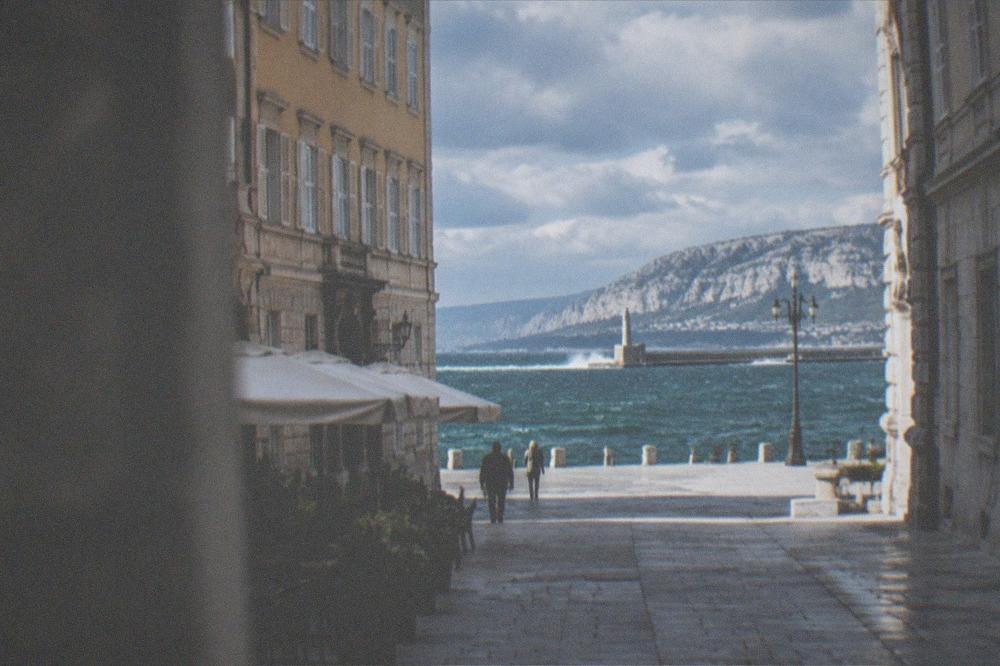
The local way to watch the bora is from a sheltered corner, not the open seafront. On the strongest days the Rive, the long waterfront promenade, is where the wind is at its worst and where the spray crosses the road. Molo Audace, the stone pier that juts straight out from Piazza Unità d'Italia, is the place to feel it when it blows and the place to walk when it does not. Our Molo Audace guide is one of several pages that cover the pier; the main planning resource is the best time to visit Trieste, which weighs the bora season against the swimming season.
Where Can You Go Underground Around Trieste?
The biggest underground attraction near Trieste is Grotta Gigante, a show cave at Sgonico on the Karst that is visited by guided tour only, with compulsory booking, adult entry at €15 and tours at fixed hours from 9:00 to 16:00, closed on Mondays from September to February and closed on 25 December and 1 January. Closer to the centre, the Roman theatre of Trieste is the opposite kind of unusual: you look down into it from the street, and individual entry is not part of the deal.
Grotta Gigante's rules are the part that catches visitors out. Booking is compulsory, by phone or email, and the cave runs guided departures only, at 9:00, 10:00, 11:00, 12:00, 14:00, 15:00 and 16:00. The price list from the venue's own pages gives €15 adult, €12 reduced for over-65s, students to 26, journalists and CAI or SSI members, €8 for children 6 to 18, and free entry for under-6s, with a family rate of €6 per child when two or more children are in the party. Groups from 15 people pay €12 each. The venue does not publish a step count or a constant temperature on its own pages, so treat any figure you read elsewhere with care. A guided product with museum entry, Grotta Gigante guided tour and museum entry, is covered on our rainy-day page; the tour itself costs from $17.20 per person and is rated 4.78 from 151 reviews.
| Site | Entry | Key rule |
|---|---|---|
| Grotta Gigante, Sgonico | €15 adult, €12 reduced, €8 child 6-18 | Guided only, booking compulsory, closed Mondays September-February |
| Teatro Romano, Trieste | Free, viewed from the street | Not routinely enterable by individuals; groups by request |
| Risiera di San Sabba | Free | Daily 9:00-19:00 to 11 October, then 9:00-17:00 |
| Castello di San Giusto | €7 adult, €5 reduced | Daily 10:00-19:00 to 11 October, then Tuesday-Sunday 10:00-17:00 |
| Museo Revoltella | €8 adult, €6 reduced | Daily 10:00-19:00, closed Tuesdays |
| Castello di Miramare | €17 adult, park free | Castle 9:00-19:00 daily; park hours vary by month |
The Risiera di San Sabba deserves its own sentence: it is a free national monument inside a former rice-husking plant, open daily, with individuals needing no booking outside the March-to-May group season. Our Risiera di San Sabba guide context sits inside a short history of Trieste, which explains what the building was used for in 1943-45 and why the civic museum inside it exists.
Where Do Coffee, Castles and a Village Called Prosecco Fit In?
Trieste's unusual streak continues in its caffè culture, a standing-coffee habit built on the city's centuries as a coffee port, in Miramare Castle, where a €17 adult ticket includes the temporary exhibition while the surrounding park is free all year, and in the village of Prosecco on the Karst road, which gave the sparkling wine its name without being inside the modern DOC production zone.
A 2.5-hour Prosecco Origins tour with tastings, from $68.79 per person and rated 4.93 from 227 reviews, covers the village's story.
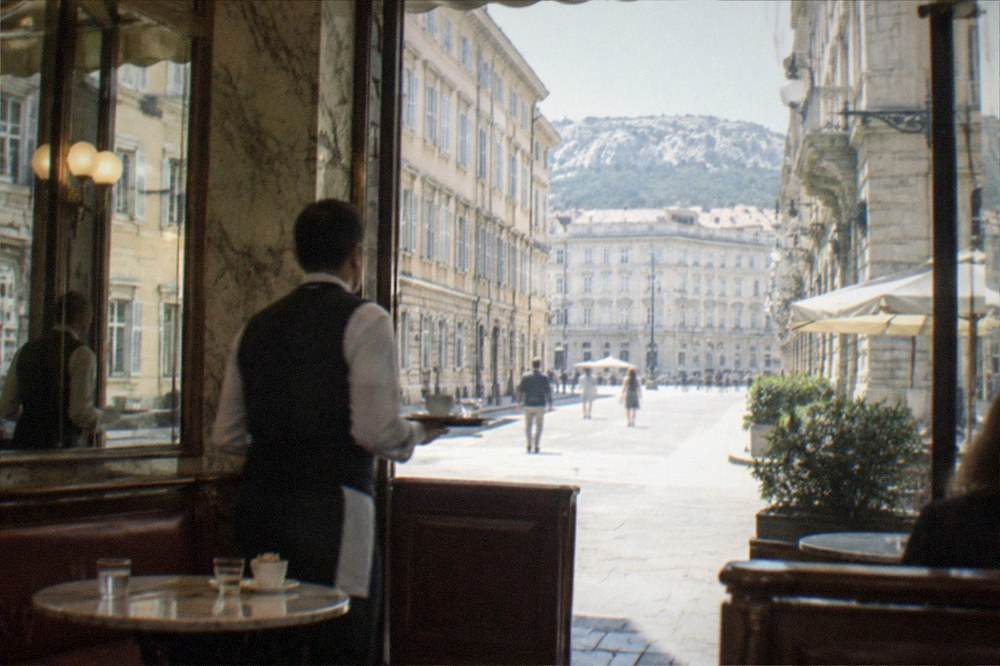
The coffee side is the easiest unusual thing to do badly. Trieste's caffè are working institutions, and the habit has a vocabulary of its own: order standing at the bar, learn the local names for the variations, and do not sit down expecting table service at marble prices. The repeated claim that Trieste drinks more coffee per head than anywhere else in Italy has no primary source behind it, not from the chamber of commerce, not from the port authority, not from the roasters, so this guide prints no figure. What is verifiable is the culture itself, and our Trieste coffee culture guide is the deep dive. The Historic Cafés Experience walking tour, from $74.52 per person and rated 4.91 from 19 reviews, visits the historic rooms with a guide.
Miramare is unusual in a quieter way: it is a nineteenth-century castle built for a Habsburg archduke on a headland up the coast at Grignano, and its pricing structure is genuinely odd. The castle ticket is €17 and includes the temporary exhibition, with a €7 reduced rate for EU citizens aged 18-25 including the exhibition or €2 for the castle only, while the park, a huge landscaped estate, is free every day of the year with seasonal hours. Castle hours are 9:00-19:00 every day with last admission at 18:30. A private tour, Miramare Castle and the Park, costs from $93.42 per group, is rated 5 from 62 reviews and runs two hours.
When Does Trieste Turn Into a Sailing City?
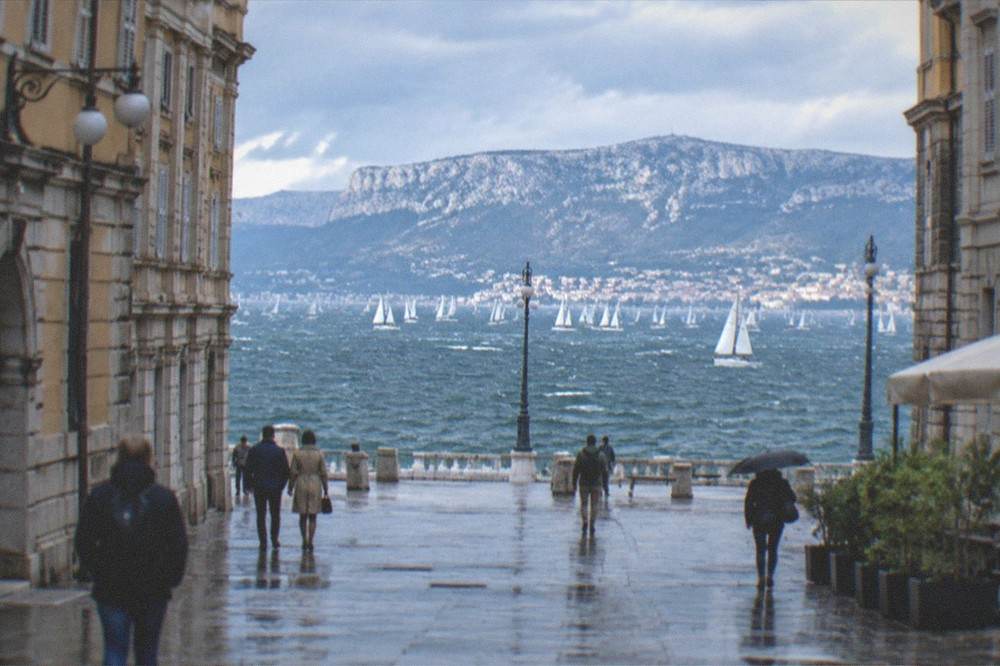
Every October, when the Barcolana regatta turns the Gulf of Trieste into the largest sailing race in the world: the organisers' own history pages record 2,689 registered yachts at the 2018 edition, a Guinness World Record, and the 2026 edition, Barcolana 58, runs from 2 to 11 October with the main race on Sunday 11 October, starting at about 10:30 over a 13 nautical mile course finishing off Piazza Unità d'Italia. The first edition, in 1969, had 51 boats.
The unusual part is that anyone can enter. Barcolana is a regatta where weekend sailors race on the same course as professional crews, and the shoreline programme, the village on the Rive, is free to wander. The 2025 edition drew 1,865 boats, the highest since 2019, though the record remains 2018's 2,689. October sits inside the windy shoulder of the year: the station tables show 1.4 days a month with gusts over 90 km/h and 88.6 mm of rain on average, which is precisely why the race exists. Our Barcolana regatta guide covers how to watch it from shore.
| Barcolana fact | Figure |
|---|---|
| 2026 dates | 2-11 October 2026 |
| Main race | Sunday 11 October, start about 10:30 |
| Course | 13 nautical miles in the Gulf of Trieste |
| Record entry | 2,689 boats, 2018 edition |
| First edition | 1969, 51 boats |
| 2025 entry | 1,865 boats |
Which Guided Tours Cover Trieste's Strange Side?
The tours that best match Trieste's unusual character are the private and themed walks: a hidden-gems private walking tour from $143.30 per person rated 4.96 from 62 reviews, a Jewish heritage walking tour covering the city's role as an emigration gateway from $194.89 per group of up to 3 rated 5 from 4 reviews, a ceramic workshop with a local artist from $90.57 per person, and a self-guided scavenger hunt from $4.67 per person for visitors who want the strange corners alone.
The table below pulls the options that suit this article's theme specifically: the walks that go past the standard Piazza Unità d'Italia circuit, the food tours that explain the Central European layer in the cuisine, and the two products that get you out of the centre entirely.
| Tour | Kind | From | Rating | Duration |
|---|---|---|---|---|
| Hidden Gems Private Walking Tour | guided walking | $143.30 per person | 4.96, 62 reviews | 2h 30m |
| Jewish Heritage Guided Walking Tour | guided walking | $194.89 per group up to 3 | 5, 4 reviews | 3 hours |
| Ceramic Workshop with Local Artist | craft workshop | $90.57 per person | 5, 4 reviews | 2h 30m |
| Scavenger Hunt Self-Guided Walk | self-guided | $4.67 per person | 4.6, 28 reviews | 2 hours |
| Kayak Adventure, Duino Coast and Castles | active coast | $76.81 per person | 4.89, 11 reviews | 3 hours |
| E-Bike Tour, Old Town and Miramare | active coast | $174.26 per person | 5, 2 reviews | 6 hours |
The kayak trip deserves a word: it paddles the coastline beneath the Duino castles up the coast from the city, and it is the one product on this list that shows you the Carso's white cliffs from sea level. Our Duino castle guide comparison aside, the practical pages for planning the coast are where to stay in Trieste and Trieste versus Venice, for readers choosing between the two Adriatic cities.
Common Questions About Unusual Things to Do in Trieste
What Is the Unusual Thing to See in Trieste?
The most unusual thing to see in Trieste is the walled sea bath at Bagno Marino La Lanterna, Pedocin, whose high wall still divides the men's and women's halves of a working public lido. The Old Port's industrial archaeology and the frasca branches that signal open osmize on the Karst run it close. Our full answer lives at what is the unusual thing to see in Trieste.
What Is the Unusual Thing to Do in Trieste?
Swim at Pedocin, eat at an osmiza, ride the Opicina tram from piazza Dalmazia, or take the free GuruWalk Old Port industrial archaeology walk. Each one follows a rule that exists nowhere else in Italy, and the detail is in the sections above. The dedicated answer page is what is the unusual thing to do in Trieste.
Is the Opicina Tram Running?
Yes. The tram was reactivated on 1 February 2025 and runs today as urban line 2 between piazza Dalmazia and Opicina, with a current timetable published by Trieste Trasporti. Check the operator's site for any short maintenance notice before you travel.
Do I Need a Passport to Visit Slovenia from Trieste?
Carry one. Slovenia and Italy are both in Schengen and both use the euro, but Italy is running temporary checks on the land border with Slovenia through 18 December 2026, so a spot check is possible and you should have a passport or national ID card with you.
Is Entry to the Risiera Di San Sabba Free?
Yes, entry is free, with no booking required for individuals outside the group season from 1 March to 31 May. It opens daily, 9:00-19:00 to 11 October and 9:00-17:00 after that, closing only on 25 December and 1 January.
Can You Go Inside the Roman Theatre in Trieste?
Not as an individual visitor. The Teatro Romano is viewed from the street above, and guided access is arranged for groups and schools on request through the heritage authority. Plan to look down into it rather than walk into it.
Trieste's strange side is its real one, and it is the side a confident local guide explains best. A private walk with a local, booked through the operator's live listing, turns the wall at Pedocin, the branch at the roadside and the tram at piazza Dalmazia from curiosities into a single story about the only Italian city the Habsburgs built on the sea.