Le Rive (Trieste Seafront): Italy's Grand Waterside Walk
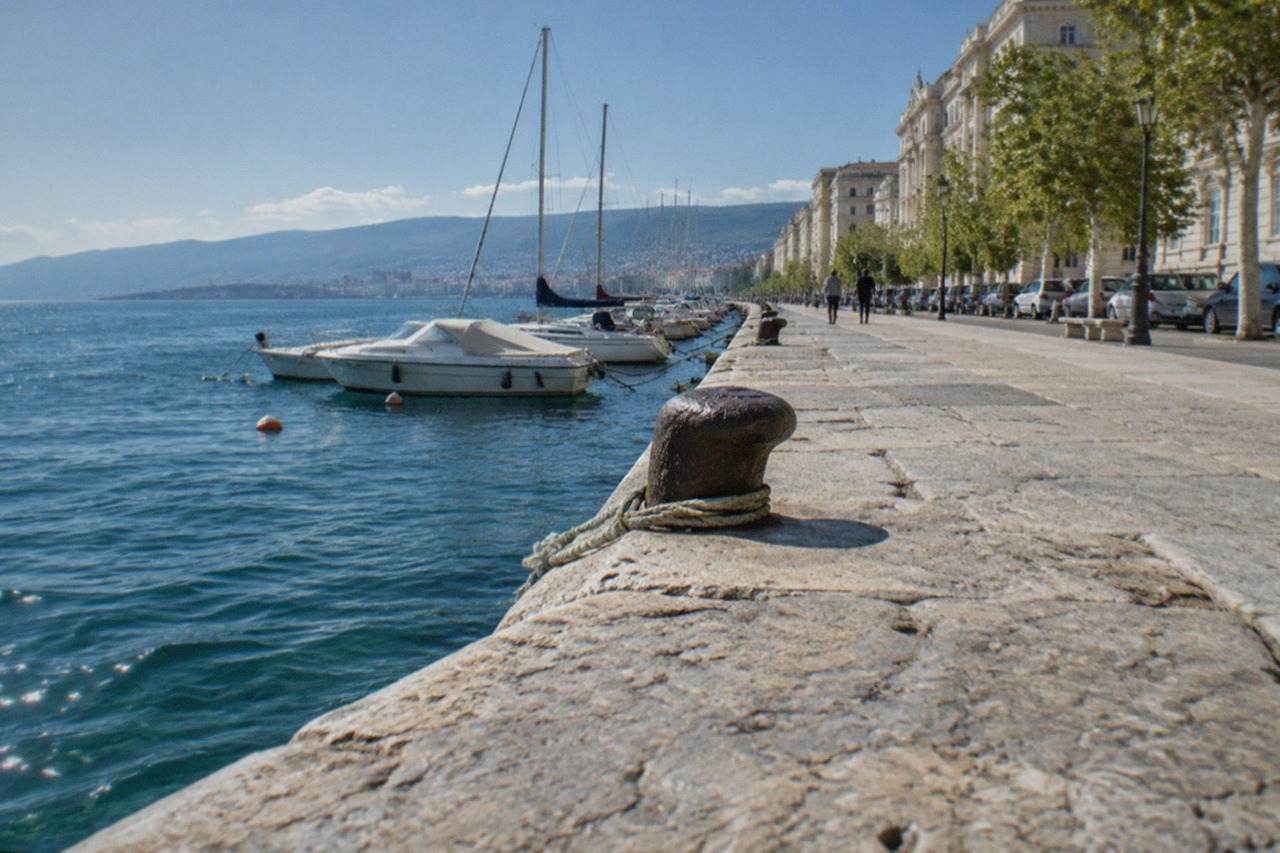
Le Rive is the seafront spine of Trieste, Italy: a waterfront promenade that runs from the city's grand Habsburg squares out toward the bathing platforms of Barcola, with the bora wind, the Barcolana regatta and the whole gulf written into its paving.
Short answer
Le Rive is Trieste's seafront promenade in Italy, running along the Gulf of Trieste from the old harbour area past Piazza Unità d'Italia and out toward the Barcola bathing coast. It is free to walk, served by ordinary urban tickets, and it is where the city meets the bora wind, the sailing fleet and the sea.
Le Rive is the seafront of Trieste, Italy, the Adriatic port city in Friuli Venezia Giulia that sits closer to Slovenia than to Venice. The name covers the long waterfront where the city turns to face its own gulf: a stretch of promenade, moles and restored harbour basins that connects the grand Habsburg centre to the bathing coast at Barcola. It is the single best place to understand what Trieste actually is, a city built by an inland empire to face the sea, and it costs nothing to walk. This guide covers what the Rive is, how to reach it, what you pass along it, when to come, how the bora wind shapes it, and which tours and day trips work well from its length.
What Is Le Rive, the Trieste Seafront?
Le Rive is the collective name for Trieste's seafront in Italy, a continuous waterfront of promenades, quays and moles along the Gulf of Trieste that links the old free-port basins in the east to the bathing platforms of Barcola in the north-west. It is public, free to walk at any hour, and it functions as the city's front room: the parade ground for the Barcolana regatta, the working edge of a historic harbour, and the place where the bora wind is felt first and hardest.
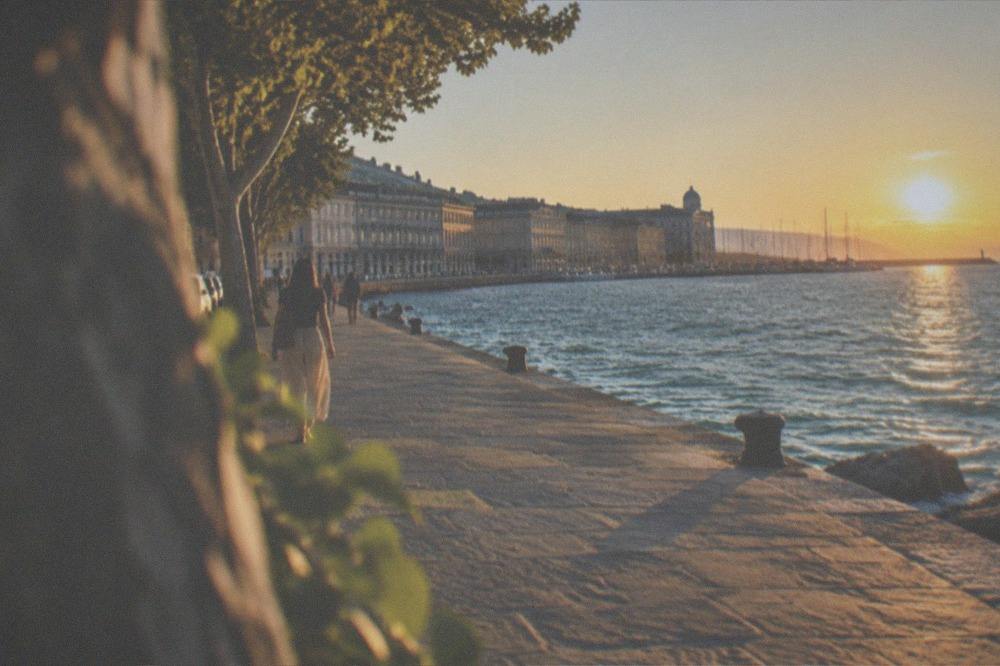
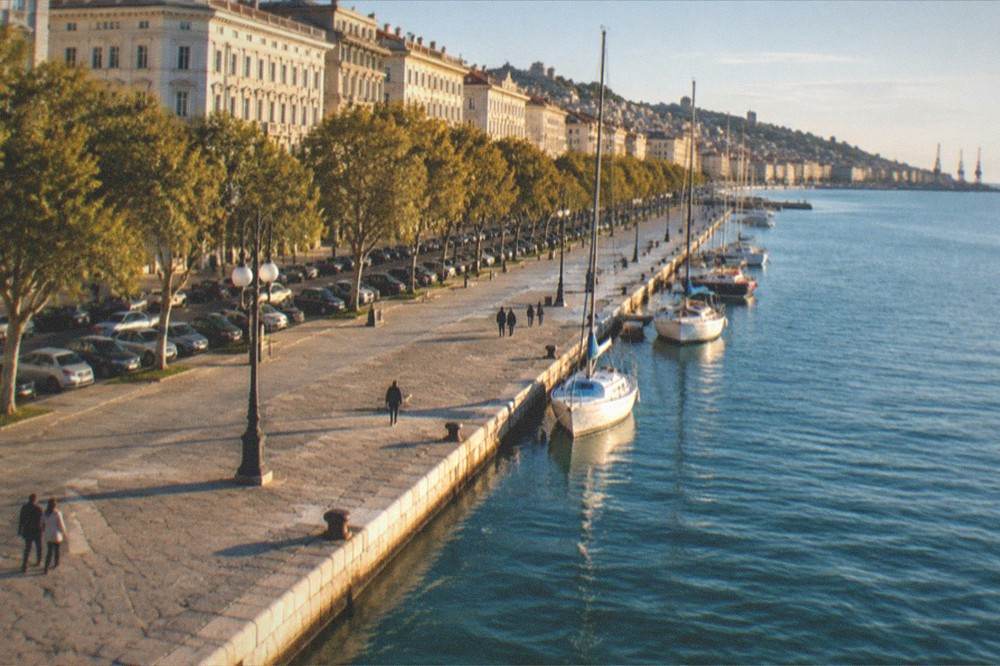
The word itself just means "the banks" or "the shores", and locals use it the way a port city always uses its waterfront word, loosely and with ownership. What you actually get is a sequence of very different stretches. Near the centre the Rive is formal and 19th-century granite, with Piazza Unità d'Italia opening straight onto the water and the Molo Audace pier reaching out into the gulf. Further along, the waterfront softens into the Porto Vecchio, the old port district, a vast industrial landscape of warehouses and cranes that has only opened to the public in recent years. Beyond that, the coast becomes the Barcola seafront, pine-shaded and domestic, where the city swims.
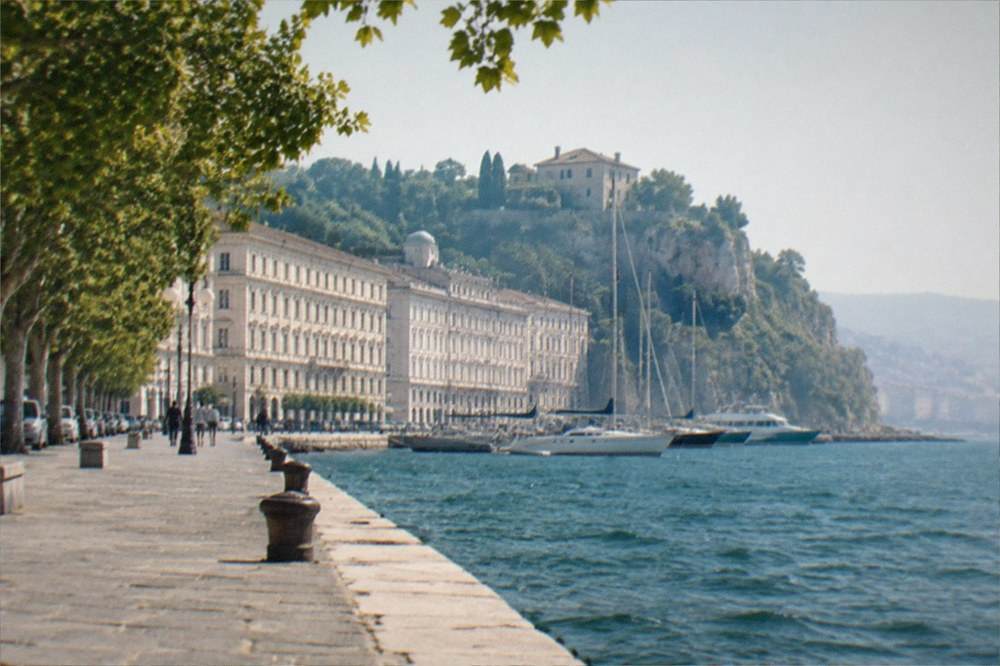
The Rive is also the place where Trieste's geography becomes visible. Look east across the water and you see the coastline of Muggia and Slovenia beyond it; look north-west and the white shape of Miramare Castle's headland closes the gulf; behind you the Karst plateau rises in a wall. The seafront is the one place in the city where all three of Trieste's identities, Italian, Central European and Slovenian-border, sit in a single view. The Trieste Travel Guide site covers each of those pieces separately, but the Rive is where they meet.
How Do You Get to the Rive and Where Does It Begin?
The Rive begins at the water's edge in central Trieste, Italy, and no separate ticket or transport is needed to reach it: the promenade starts a short walk from Piazza Unità d'Italia and the cruise terminal, and it is served by the ordinary urban network, where a single ticket costs €1.50 for 60 minutes or €1.85 for 75 minutes, with a day ticket at €3.35. Contactless bank cards can be tapped on board. The seafront walk itself is free and always open.
Most visitors arrive on foot. If you come by train, Trieste Centrale station sits a short walk up from the waterfront, and the descent to the sea is one of the city's small pleasures: you leave the station's Central European bustle and arrive at the gulf with the whole horizon in front of you. Cruise passengers have it even easier, because the ships dock on the Rive themselves, a point covered in detail on the cruise ship day ashore itinerary. You step off the ship onto the promenade, and the city is already there.
For the stretches further out, the urban network does the work. The 2026 tariff sheet from Trieste Trasporti, the operator's own price list, sets the fares below, and the same tickets cover the tram line to Opicina if you want a hilltop view of the seafront from above.
| Ticket | Validity | 2026 price |
|---|---|---|
| Urban single | 60 minutes | €1.50 |
| Urban single | 75 minutes | €1.85 |
| Day ticket | 240 minutes on Sundays and holidays | €3.35 |
| 10 rides | Carnet | €13.50 |
| 20 rides | Carnet | €16.65 |
One practical note: single tickets bought as 60- or 75-minute versions extend to 240 minutes on Sundays and public holidays, which makes a Sunday the cheapest day to ride out along the coast. Contactless payment on board applies the cheapest applicable fare automatically, so there is no reason to overthink the ticket machine.
If you would rather have the waterfront explained than simply walked, a private guide changes the experience completely. The facades along the Rive are unlabeled, and the stories behind them, the insurance houses, the shipping fortunes, the café society, are not obvious from the pavement. A guided walk also connects the seafront to the streets immediately behind it, which is where most of the city's actual life happens.
What Can You See Along the Trieste Seafront Walk?
Walking the Rive from end to end, you pass Molo Audace, the short stone pier at the foot of Piazza Unità d'Italia; the great square itself, which opens directly onto the sea; the harbour palazzi of the Borgo Teresiano; the cranes and warehouses of the Porto Vecchio; the Victory Lighthouse above the northern end; and finally the bathing platforms and pines of Barcola. Every one of these is free to see from the promenade.
The full route, strung together with timings and detours, is laid out on the one-day Trieste itinerary. Start at the Molo Audace, the stone pier that pokes straight out into the gulf. It is the shortest and most satisfying leg of the whole seafront: you walk out on flat paving with water on both sides, and when you turn around, the full facade of Trieste is lined up in front of you, Piazza Unità d'Italia at the centre. The pier is free, always open, and it is the place where the city photographs itself. The dedicated Piazza Unità d'Italia page covers the square itself, which is the only large Italian piazza that opens directly onto the sea with nothing in between.
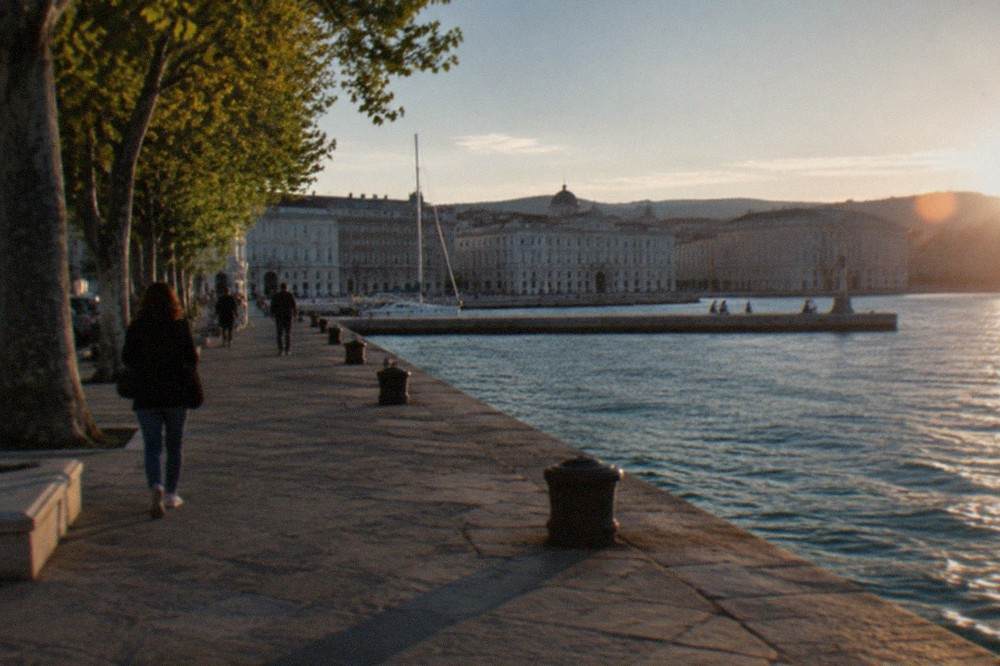
From the square, the waterfront heads north-west through the Borgo Teresiano, the 18th-century new town that the Habsburgs laid out around the old free port. This is the section where the Rive feels most like a working harbour that was converted into a living room: canal-side palazzi, the Grand Canal of Trieste with the Sant'Antonio Taumaturgo church at its head, and the broad quays where the insurance companies and shipping lines built their headquarters. The Borgo Teresiano page covers the district in depth.
Beyond the canal the character changes again at the Porto Vecchio, the old port. For most of its life this was a closed industrial zone; in recent years it has opened as a public waterfront, and its warehouses, silos and harbour cranes now stand as industrial archaeology beside lawns and event spaces. It is the least polished and, for many visitors, the most interesting part of the seafront, because it shows the port that made the city rich rather than the facade the city built for itself.
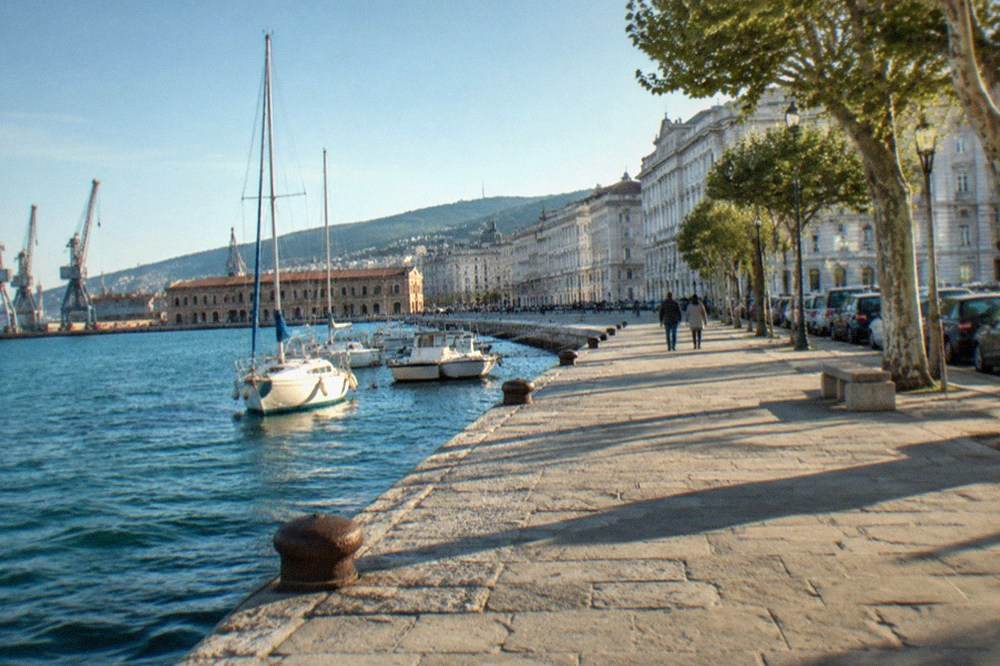
The northern stretch belongs to the Victory Lighthouse, the Faro della Vittoria, which stands above the shoreline as both a working lighthouse and a war memorial, and then to Barcola. The Barcola seafront is where the promenade stops being ceremonial and becomes a place to swim, with its bathing platforms, its ice-cream stops and its long line of pines. Families will find this end the easiest, and the family itinerary on this site builds a whole day around it.
The seafront also passes within reach of several of the city's paid sights, which are worth listing together because the Rive is the natural spine for a day of sightseeing. All prices below are from the venues' own official pages.
| Sight | Relation to the Rive | Entry | Hours |
|---|---|---|---|
| Piazza Unità d'Italia | On the seafront | Free | Always open |
| Castello di San Giusto | Uphill from the Rive | €7 full, €5 reduced | Daily 10:00-19:00 to 11 Oct, then Tue-Sun 10:00-17:00 |
| Museo Revoltella | Short walk inland | €8 full, €6 reduced | Daily 10:00-19:00, closed Tuesdays |
| Risiera di San Sabba | Inland, port district | Free | Daily 9:00-19:00 to 11 Oct, then 9:00-17:00 |
| Miramare Castle | Coastal, north-west of Barcola | €17 full, includes exhibition | Daily 9:00-19:00, last admission 18:30 |
| Miramare Park | Coastal, beside the castle | Free | Daily, hours vary by month |
Two free-entry notes from the venues' own pages: the first Sunday of the month is a free-entry day at participating state museums, including Miramare, under the culture ministry's standing scheme, and the civic museums list free first Sundays and 3 November as well. The scheme's details have changed more than once in recent years, so confirm the specific date on the venue's own page before you plan around it.
When Is the Best Time of Year to Walk the Rive?
The best months for the Trieste seafront are May, June and September, when ARPA's station tables for the Trieste molo show mean highs of 21.7 C, 25.8 C and 23.9 C respectively, with June the calmest wind month of the year and sea temperatures of 23.1 C in June and 23.9 C in September. July and August are the warmest, at 28.2 C and 28.1 C mean highs, but they are also the busiest on the bathing platforms.
The climate record for Trieste comes from ARPA FVG's own waterfront station on the molo Fratelli Bandiera, and it contradicts most people's mental image of the Adriatic. Trieste is not a dry southern beach town: it receives 867 mm of rain a year across 86.1 wet days, wetter than the Mediterranean stereotype, and its wettest month is November at 109.8 mm, with September second at 102.3 mm. July, at 53.8 mm, is the second driest month of the year. Anyone who pictures a rainy summer in Trieste has it backwards; the rain belongs to autumn.
| Month | Mean high | Rain mm | Sea C | Days gusting over 90 km/h |
|---|---|---|---|---|
| April | 16.8 | 60.7 | 14.0 | 0.7 |
| May | 21.7 | 75.0 | 17.9 | 0.7 |
| June | 25.8 | 62.5 | 23.1 | 0.3 |
| July | 28.2 | 53.8 | 25.9 | 0.9 |
| August | 28.1 | 71.7 | 25.9 | 0.9 |
| September | 23.9 | 102.3 | 23.9 | 1.1 |
| October | 19.6 | 88.6 | 20.3 | 1.4 |
| November | 14.7 | 109.8 | 16.8 | 1.9 |
The sea-temperature column is the quiet advantage of the shoulder season. ARPA's oceanographic bulletins show that the Gulf of Trieste warms slowly and keeps its heat: September's sea at 23.9 C is warmer than June's at 23.1 C even though the air has cooled, because the water lags behind the sun. Swimmers who come in early summer often find the sea bracing; swimmers who come in September find it at its accumulated best. The long-term series also shows a warming trend in the gulf, with annual means running about a degree above the earliest baselines.
October deserves its own mention, because the Rive in October is the Rive of the Barcolana. The regatta's 58th edition runs 2-11 October 2026, with the main race on Sunday 11 October from about 10:30 over 13 nautical miles in the gulf, finishing off Piazza Unità d'Italia. The event's record entry stands at 2,689 boats in 2018, which the organisers hold as a Guinness World Record for the largest sailing race in the world, and the whole seafront becomes the grandstand for it. The Barcolana regatta page covers the event in full.
What Is the Bora and How Does It Shape the Seafront?
The bora is a cold, dry north-easterly wind that funnels down onto the Gulf of Trieste, and ARPA FVG's station tables show it is a structural feature of the seafront rather than a rare event: Trieste averages 17.6 days a year with a gust over 90 km/h and 49 days over 72 km/h, with the all-time peak gust at 168.1 km/h in February 2012. The monthly record gust exceeds 110 km/h in every month of the year.
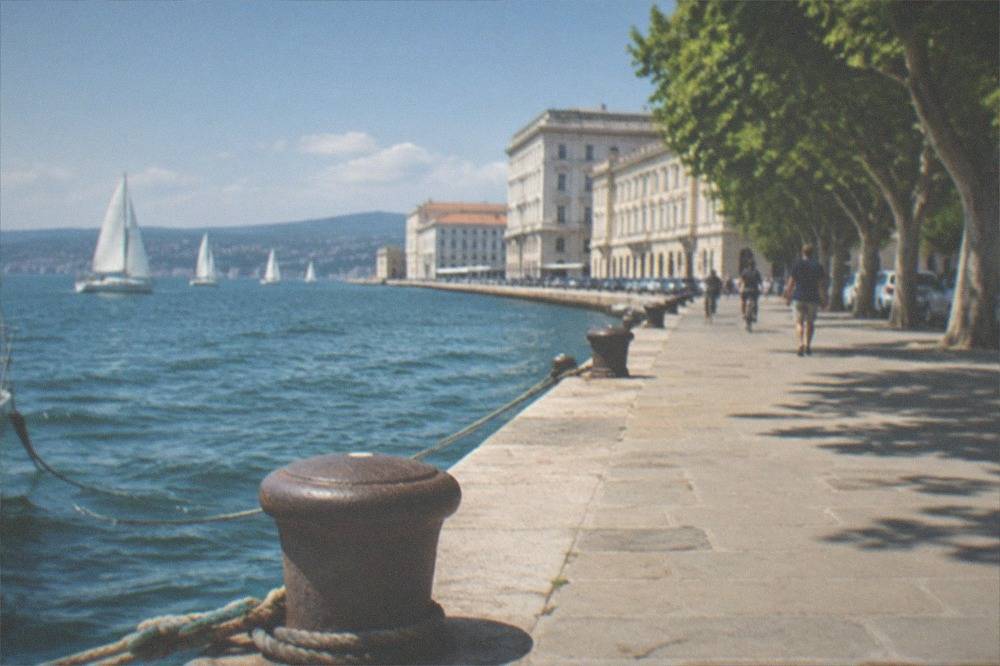
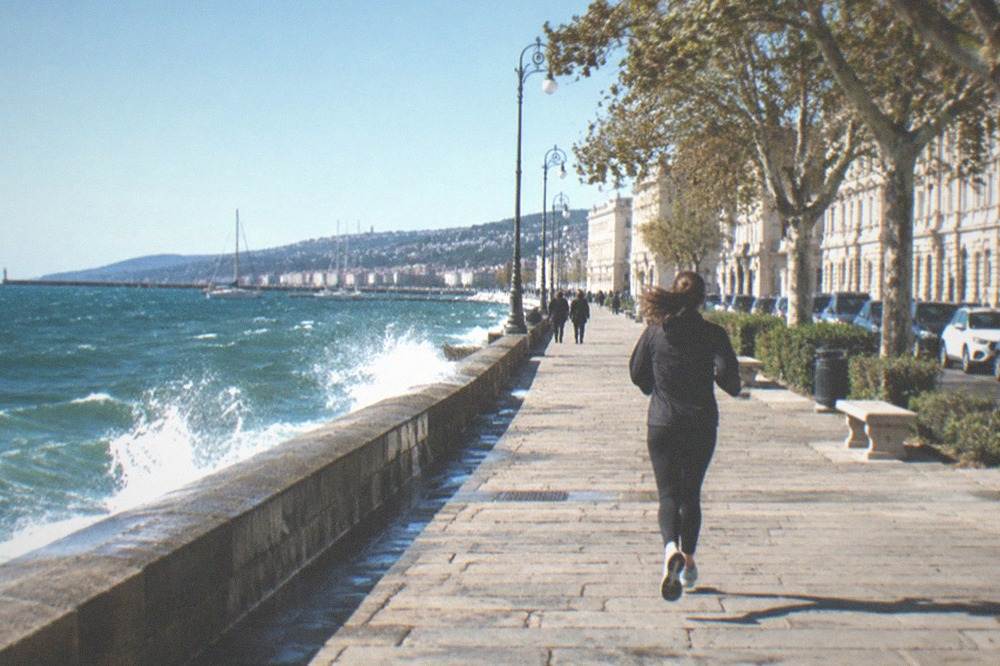
On the Rive you feel the bora before you understand it. The wind comes off the Karst plateau behind the city, from the east-north-east, and it hits the waterfront first because there is nothing between the sea and the hills to slow it down. On a strong bora day the promenade is a physical experience: the sea is whipped into a horizontal spray, the gulls fly backwards relative to their own efforts, and the mooring lines of the boats in the harbour are bar-tight. Locals treat it as weather, not as spectacle, and the city has generations of small adaptations for it, from the rope handrails on exposed corners to the simple habit of walking behind rather than in front of your companion.
| Bora fact | Figure | Source basis |
|---|---|---|
| Average days per year with gust over 90 km/h | 17.6 | ARPA FVG station tables, 1995-2024 |
| Average days per year with gust over 72 km/h | 49.0 | ARPA FVG station tables, 1995-2024 |
| Peak gust in the series | 168.1 km/h, February 2012 | ARPA FVG, molo Fratelli Bandiera |
| Direction | East-north-east | ARPA regional wind sheet |
| Calmest month | June (0.3 days over 90 km/h) | ARPA FVG station tables |
| Windiest months | January and February (2.4 and 2.9 days over 90 km/h) | ARPA FVG station tables |
Two honesty notes, because the bora attracts more invented numbers than any other subject in Trieste. No official wind threshold exists at which the Rive are closed, ferries stop or the Barcolana is called off; authorities monitor conditions in real time and act on them case by case, so any specific cutoff you may have read is not a published rule. And the figures that circulate as older gust records are not in the agency's station table, so they are not repeated here. The numbers above are the ones ARPA's own tables carry.
The practical version is simple. In the cool season, from November through March, check the forecast before you plan a long seafront walk, and be ready to change the day around: the rainy-day and winter guides on this site exist for exactly this. In summer the bora is rare and usually weak, and June is the calmest month on the record. When the wind does blow, the seafront is still walkable in its sheltered stretches, and the view of a white-capped gulf from behind a café window on the Rive is one of the city's genuine sights. For the full story of the wind itself, see the Trieste in winter guide.
Which Tours Work Well from the Trieste Seafront?
The tours that pair best with the Rive are a private guided walking tour of Trieste, from $194.89 per group of up to 10 and rated 5 from 115 reviews on the operator's live listing; a Prosecco Origins wine experience from $70.07 per person, rated 5 from 91 reviews; and a three-hour local-flavours food tour from $85.98 per person, rated 4.74 from 123 reviews. All three depart from or near the city centre, within reach of the seafront.
The private walking tour is the natural companion to the promenade, because a guide turns the waterfront's unlabeled facades into a narrative. The listing describes cordial walks through the city with a local, and at two and a half hours it covers the seafront and the streets behind it in one loop. It is priced per group rather than per person, which makes it the cheapest guided option for a family or a group of four or more.
For a group walk at a per-person price, the "City that will definitely surprise you" tour is the standout on the roster: a two-and-a-half-hour guided walk through the city centre that ends with coffee in a historic bar, from $68.79 per person and rated 4.97 from 106 reviews on the operator's listing. It covers the same waterfront-adjacent ground as the private tour in a shared format.
Coffee is the other thread. Trieste's historic cafés cluster within a few streets of the waterfront, and a dedicated coffee-culture walk, from $74.52 per person and rated 4.91 from 19 reviews on the operator's listing, connects the seafront squares to the institutions that made the city a coffee port. The city's coffee culture is real and historic, though no reliable per-head consumption figure exists from any primary source, so none is printed here.
| Tour | Type | From | Rating on the listing | Duration |
|---|---|---|---|---|
| Private guided tour of Trieste | Private walk | $194.89 per group up to 10 | 5 from 115 reviews | 2.5 hours |
| Prosecco Origins wine experience | Karst wine | $70.07 per person | 5 from 91 reviews | 2-3 hours |
| Local flavours food tour | Food walk | $85.98 per person | 4.74 from 123 reviews | 3 hours |
| Historic cafés experience | Coffee walk | $74.52 per person | 4.91 from 19 reviews | 3 hours |
| City that will definitely surprise you | Group walk | $68.79 per person | 4.97 from 106 reviews | 2h 30m |
| Bus tour with audio guide | Sightseeing bus | $19.49 per person | 4.34 from 2,638 reviews | 1.5 hours |
The bus tour in the last row is the mobility option rather than the experience option: a 1.5-hour circuit with an audio guide that includes the seafront and Barcola, useful on a bora day or for visitors who cannot manage the full walk. And for a no-cost orientation, there is a free, pay-what-you-want city walk run through GuruWalk by a local guru: it is tip based, no price is charged and none is printed here, and the guru's own listing is the place to check what the walk covers on the day.
Where Does the Seafront Lead Next: Barcola, Muggia and the Karst?
From the Rive, the coast continues in three useful directions: north-west along the Barcola seafront toward Miramare Castle and the villages of the gulf; south-east across the bay to Muggia, the last Italian town before Slovenia; and up onto the Karst plateau behind the city, whose osmize farm-taverns and vineyards sit a short ride above the waterfront. Each direction makes a natural half-day extension of the seafront walk.
Barcola is the closest and the easiest: the seafront simply continues into it, and the swimming there is covered on the Trieste beaches and swimming page, including the historic Lanterna bathing establishment at Pedocin. Beyond Barcola the coast road runs out toward the Miramare headland, where the castle's park is free all year and the castle itself is €17 with the temporary exhibition included, per the museum's own visit page. The marine protected area around the castle is a separate attraction, covered on its own page on this site.
South-east, the waterfront looks across the bay at Muggia, a small harbour town with a Venetian-Gothic heart that is the last municipality in Italy before the Slovenian border. The border itself needs a practical note. Slovenia, Croatia and Italy all use the euro, and all three are in Schengen, so there is no currency to change; but Italy is running temporary border checks on its land border with Slovenia, currently listed by the European Commission's register as running from 19 June 2026 to 18 December 2026. Carry a passport or national ID card for any day trip into Slovenia, and check the current status before you travel, because these measures are extended or lifted by notification rather than by season.
Up the hill, the Karst plateau is the seafront's back wall and its pantry. The osmize, the seasonal farm-taverns of the Carso, sell their own wine and home produce direct from the property, and an open one is signposted by a frasca, a leafy branch hung at the turning. The opening calendar lives at osmize.com, the long-established volunteer-run reference, and the osmize of the Carso page explains the custom. The plateau's own wines are Vitovska, Malvasia and Terrano; Trieste is not in the Prosecco DOC, and the village of Prosecco in the hills above the gulf gave the wine its name rather than the other way around, a story the Prosecco Origins tour tells on the ground.
For a two-day or three-day plan that strings the seafront together with the hills, the two days in Trieste itinerary does the sequencing, and the day trips from Trieste guide lists the cross-border options beyond the gulf.
Common Questions About the Trieste Seafront
Is the Trieste seafront free to walk?
Yes. The entire Rive, from the old harbour basins to the start of the Barcola seafront, is public and free at any hour, including the Molo Audace pier. Only the museums and sights along it charge entry, and their prices are listed on their own official pages.
How long is the Trieste seafront walk?
The promenade can be walked in sections or as one long route, and most visitors walk only the central stretch, from the Porto Vecchio through Piazza Unità d'Italia to the Victory Lighthouse, before deciding whether to continue to Barcola. No verified end-to-end distance is published, so treat the walk as a series of legs rather than a fixed number of kilometres.
Can you swim from the Trieste seafront?
Not from the central Rive, which is a working harbour edge with moles and quay walls. The swimming happens further along at Barcola, where the bathing platforms and the Lanterna at Pedocin sit, both covered on this site's swimming guides. ARPA's tables show the gulf at 25.9 C in July and August and 23.9 C in September.
Is the Trieste seafront windy?
Yes, and it is the windiest part of the city. ARPA FVG's station tables show 17.6 days a year with a gust over 90 km/h at the molo, with the calmest month June and the windiest January and February. There is no published wind threshold at which the promenade closes; authorities act on conditions case by case.
Where does the Trieste seafront start and end?
Loosely, it runs from the old port basins of the Porto Vecchio in the south-east, through the quays of the Borgo Teresiano and Piazza Unità d'Italia, past the Victory Lighthouse and out along the Barcola seafront to the north-west. Locals use the name flexibly, and the walk can be joined anywhere along the water.
Do cruise ships dock on the Trieste seafront?
Yes, cruise ships dock on the Rive themselves, within a short walk of the city centre, which makes Trieste one of the easiest cruise ports in Italy to explore on foot. The dedicated cruise-port guide on this site covers the terminal, the walk into town and the one-day-ashore options.
The Rive is the one part of Trieste, Italy, that every visitor sees whether they plan to or not, and it repays the planning: walk it in June for calm water and a swimmable gulf, in October for the Barcolana fleet, and behind a café window in February when the bora owns the promenade and the gulf turns white.