Borgo Teresiano in Trieste, Italy: The Habsburg Waterfront Quarter
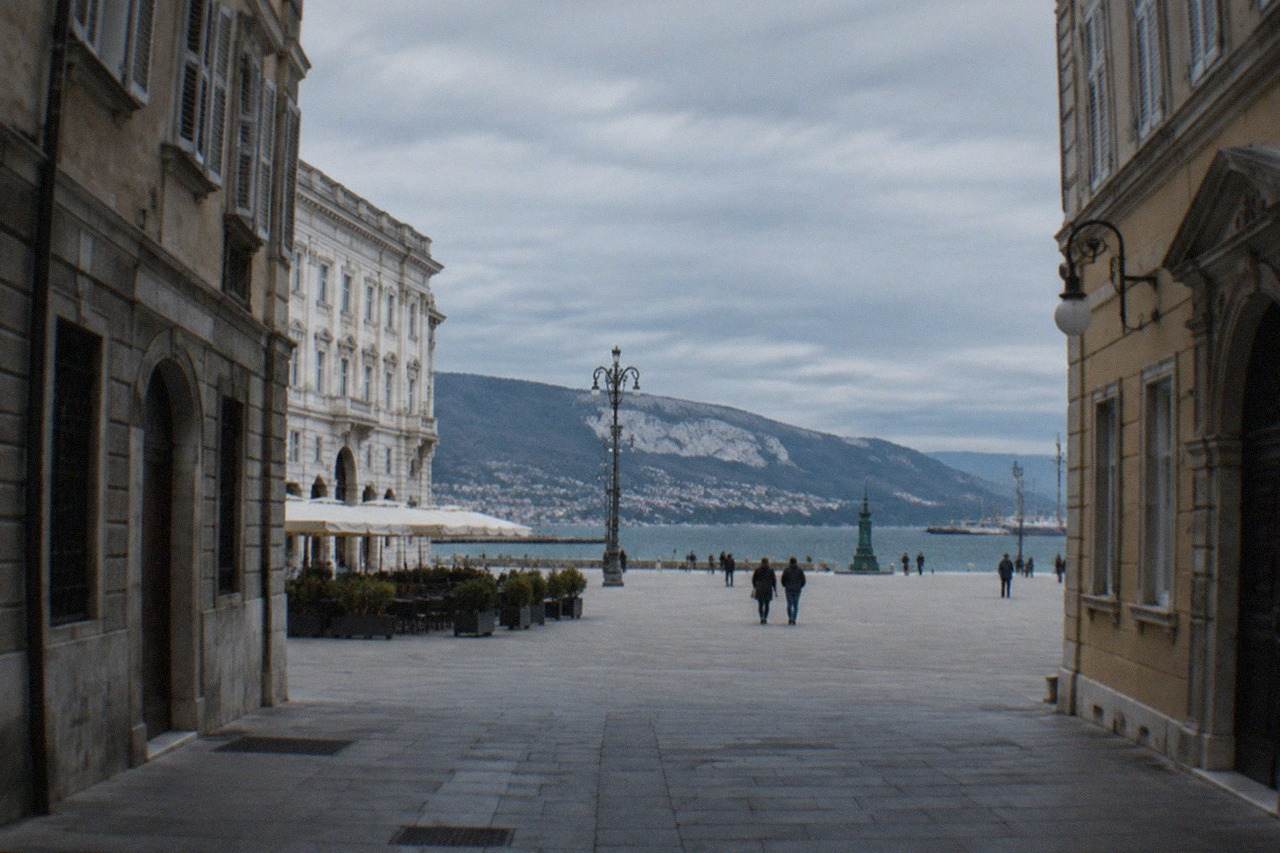
Borgo Teresiano is the elegant Habsburg-planned quarter of Trieste, Italy, stretching from the Grand Canal to the seafront squares and the Rive.
Short answer
Borgo Teresiano is the grid-planned central district of Trieste, Italy, built under Habsburg rule and named for Empress Maria Theresa. It holds Piazza Unità d'Italia, the Canal Grande, the Teatro Lirico and the Molo Audace, and it is the part of the city most visitors walk first.
Borgo Teresiano is the stately central quarter of Trieste, Italy, the Adriatic port city in Friuli Venezia Giulia, and it is the district that gives most first-time visitors their opening impression of the place: a planned grid of Habsburg-era palazzi running from the Grand Canal down to the open sea. The name means the "Theresian quarter", after Empress Maria Theresa, under whose rule the city's merchant expansion took the shape you still walk today. Where the older Città Vecchia climbs a hill in a tangle of medieval lanes, Borgo Teresiano lies flat and geometric, built for trade, warehouses and the coffee merchants who made Trieste one of the Mediterranean's great commercial ports.
The district rewards a slow day. Its two great set pieces, the Canal Grande and Piazza Unità d'Italia, sit a few minutes apart, and everything else, the Rive, the Molo Audace, the Teatro Lirico, the historic caffè, hangs off the streets between them. This guide covers what the quarter actually contains, which tours walk it, what transport inside it costs, and how it connects to the rest of Trieste and to the day trips across the nearby borders.
What Is Borgo Teresiano in Trieste, Italy?
Borgo Teresiano is the grid-planned central district of Trieste, Italy, laid out under Habsburg rule and named for Empress Maria Theresa. It runs from the Canal Grande and the Teatro area down to the seafront, and it holds the city's most famous square, Piazza Unità d'Italia, together with the Rive waterfront, the Molo Audace pier and a dense stock of neoclassical merchant palazzi. It is flat, compact and walkable, and it is where most Trieste itineraries begin.
The quarter was the city's "new town", an expansion of Trieste that grew around the port's commercial boom rather than inside the old hilltop settlement. Its streets were cut on a rational grid, which is why the district feels so different from the medieval lanes behind San Giusto: straight lines, uniform facades, and buildings designed as much for shipping offices and trading houses as for living. The Habsburg administration that planned it treated Trieste as an imperial gateway to the sea, and the architecture still says so.
The name is the simplest key to reading the area. "Borgo" means a borough or quarter; "Teresiano" is the adjective from Theresa. So the district announces itself as the Theresian borough, the part of Trieste, Italy, that owes its plan and much of its building stock to the empress whose name it carries. That Central European ambition is what people mean when they say Trieste feels more Viennese than Italian: the quarter's palazzi, its caffè culture and its theatre all point back toward the Habsburg world that built them.
Practically, the district is the hinge of any visit. The seafront Rive form its southern edge, the old town rises just behind it, and the station sits at its northern end. Nearly every itinerary, including the one-day Trieste plan, spends most of its hours inside these few blocks.
What Are the Top Sights in Borgo Teresiano?
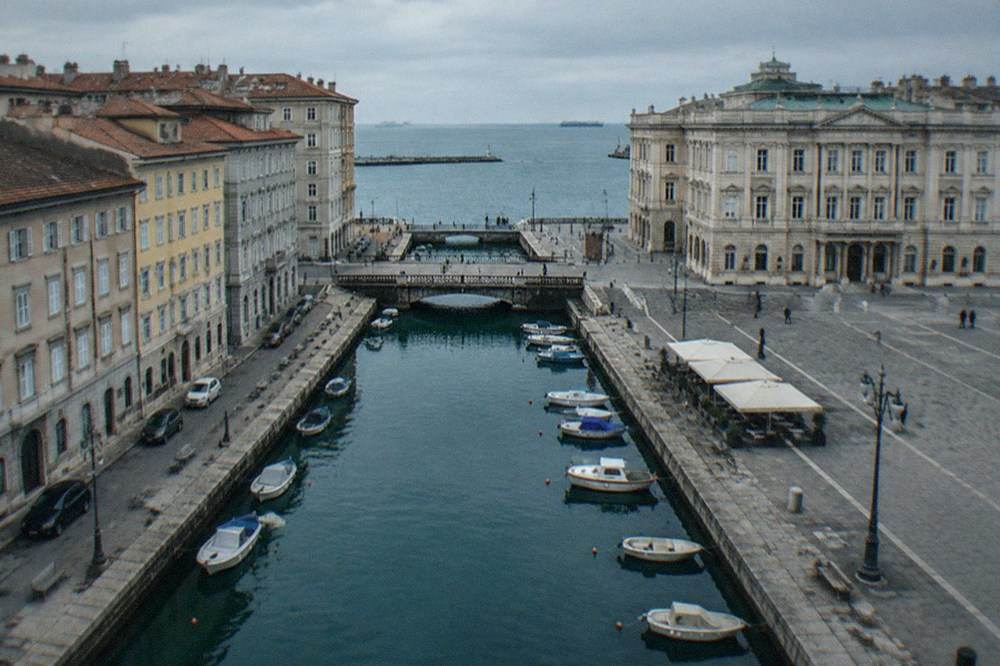
The top sights in Borgo Teresiano are Piazza Unità d'Italia, the Canal Grande with the church of Sant'Antonio Taumaturgo at its head, the Molo Audace pier, the Teatro Lirico Giuseppe Verdi, the Rive seafront and the district's historic caffè. Piazza Unità d'Italia is Italy's largest sea-facing square and the district's centrepiece; the canal and the molo are both free, always open and best in the early morning or at sunset.
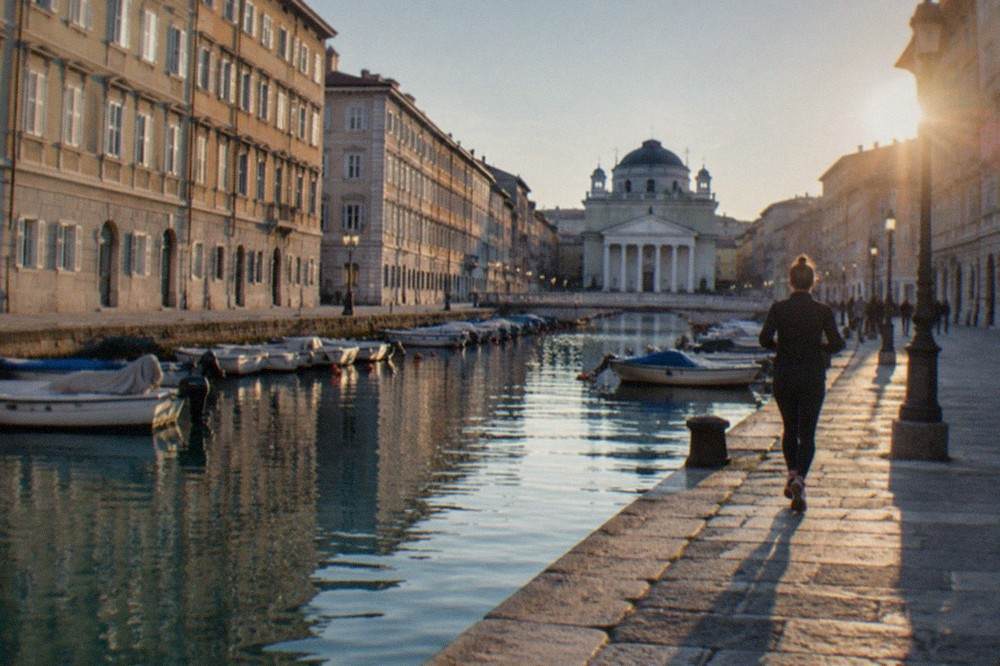
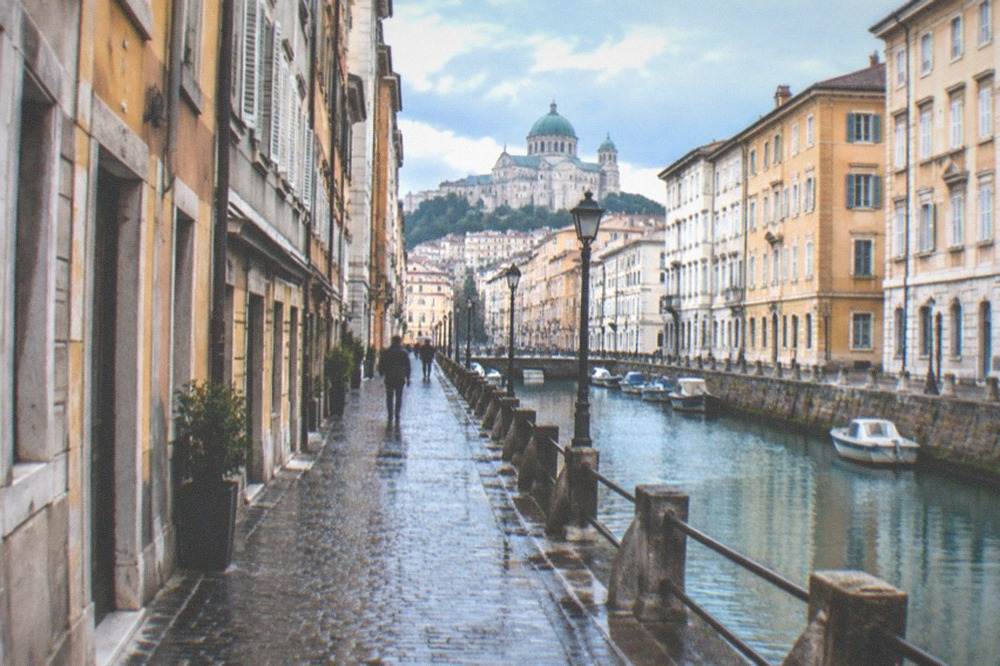
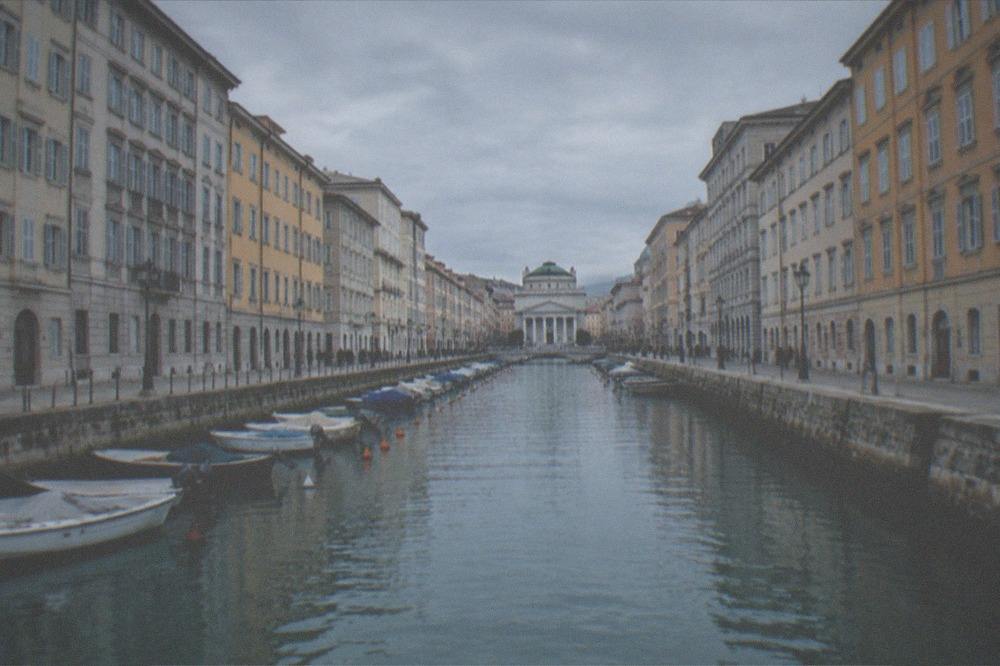
Start at the Canal Grande, the short waterway cut inland from the bay so that goods could be unloaded straight into the warehouses along its banks. Small boats still use it, and the view up the canal toward the broad-domed church of Sant'Antonio Taumaturgo is one of the most photographed compositions in the city. The banks are lined with cafes and bars, and the canal is at its best early, before the tables fill.
From the canal's mouth it is a short walk onto the Molo Audace, the stone pier that juts straight out from the shore. It is a free, open promenade ending in a bare platform over the water, and it delivers the classic Trieste view: the city's facades seen from the sea, with the lighthouse and the hills of the Carso behind. On a clear evening the whole quarter turns gold from out here.
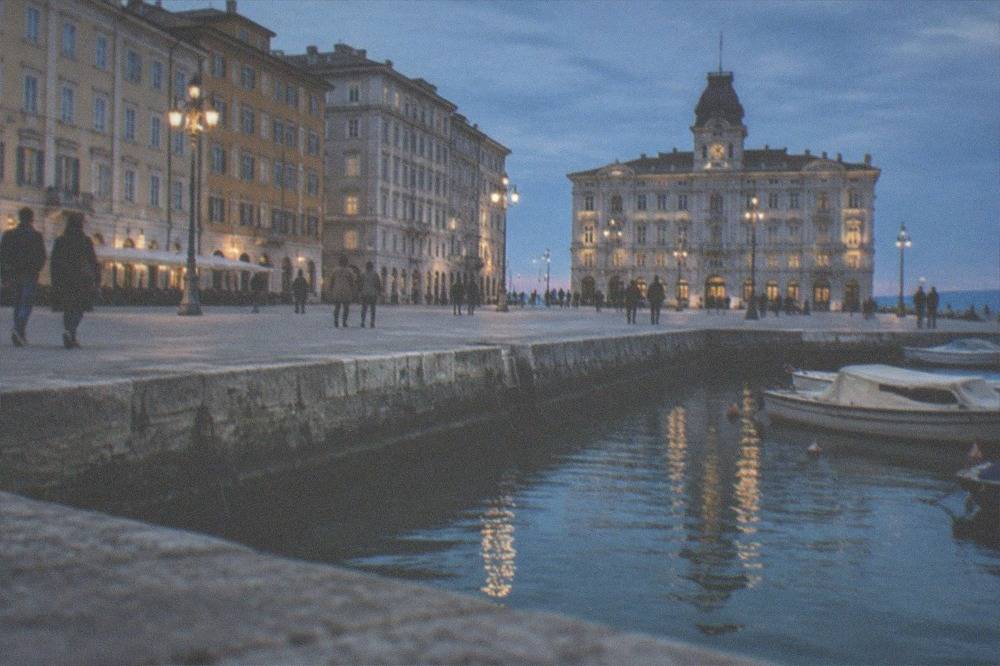
Piazza Unità d'Italia is the district's climax. The square opens directly onto the water on its fourth side, with the town hall facing the sea and the palazzi of the old Austrian administration framing the other edges. It is the single image most people carry away from Trieste, Italy, and it is worth seeing both in daylight and lit at night. The full guide to Piazza Unità d'Italia covers the buildings one by one.
The Teatro Lirico Giuseppe Verdi sits a block inland, and the district's historic caffè cluster on and around the square and the streets behind it. Trieste's coffee culture is real, historic and central to the city's identity as a roasting port, though the oft-quoted figures for how much coffee the city drinks per head have no verifiable primary source, so this guide prints none. The caffè themselves, wood-panelled and newspaper-strewn, need no statistics.
| Sight in Borgo Teresiano | What it is | Entry |
|---|---|---|
| Piazza Unità d'Italia | Sea-facing square, Italy's largest on the water | Free, open square |
| Canal Grande | Inlet waterway with moored boats and the Sant'Antonio Taumaturgo church at its head | Free, open |
| Molo Audace | Stone pier promenade over the bay | Free, open |
| Teatro Lirico Giuseppe Verdi | Historic opera house, box office for performances | Ticketed per performance |
| Museo Revoltella | Modern-art gallery in a palazzo on the district's edge | €8 adult, €6 reduced, closed Tuesdays |
| Historic caffè district | Trieste's coffee-house culture around the square | Pay per order |
The district also makes a good base for understanding the rest of the city. The San Giusto castle and hill rise just behind the quarter's grid, and the contrast between the two is the whole story of Trieste in one walk: medieval hill town above, Habsburg port below.
Which Guided Tours Cover the Borgo Teresiano District?
The guided tours that cover Borgo Teresiano are the city-centre walking tours, above all the "Trieste: Guided tour in the heart of the city and experience in a historic café", which walks the elegant squares and sea views of exactly this district and ends in a historic caffè. It runs 2h 30m, is priced from $50.44 per person and is rated 4.6 from 24 reviews on the operator's live listing. Private walks and self-guided formats cover the same ground.
The heart-of-the-city walk is the closest match to the district itself. Its listing describes elegant squares, views of the sea and a Central European atmosphere, which is a precise description of the Borgo Teresiano grid, and the historic-café finish belongs to the same tradition. For anyone who wants the quarter's Habsburg story explained rather than just admired, it is the tour to book, and you can Check availability on the operator's live listing.
Two other formats suit the district well. The self-guided scavenger hunt turns the grid into a game: it is priced from $4.67 per person, rated 4.6 from 28 reviews, runs about 2 hours with no guides or schedules, and works for families who want the children engaged by the streets themselves. And the "City that will definitely surprise you" walk, from $68.79 per person and rated 4.97 from 106 reviews, pairs a 2h 30m centre walk with coffee in a historic bar, which in this city means a bar very like the ones this guide has been describing.
| Tour of the district | Format and length | From (per person) | Rating |
|---|---|---|---|
| Guided tour in the heart of the city and historic café | Guided walk, 2h 30m | $50.44 | 4.6 from 24 reviews |
| Scavenger hunt and highlights self-guided walk | Self-guided, about 2 hours | $4.67 | 4.6 from 28 reviews |
| City that will definitely surprise you | Guided walk with coffee stop, 2h 30m | $68.79 | 4.97 from 106 reviews |
| Best of Trieste private walking tour | Private group up to 10, 2 hours | $217.82 per group | 4.94 from 31 reviews |
| Trieste Historic Cafés Experience | Coffee-culture walk, 3 hours | $74.52 | 4.91 from 19 reviews |
Private options go deeper. The Best of Trieste private walk, at $217.82 for a group of up to 10 and rated 4.94 from 31 reviews, covers the modern and ancient landmarks in two hours on your own schedule, and the Historic Cafés Experience spends three hours on the coffee-house world at $74.52 per person, rated 4.91 from 19 reviews.
How Do You Get Around Borgo Teresiano and Trieste?
You get around Borgo Teresiano entirely on foot, and the rest of Trieste, Italy by urban bus and the Opicina tram, with a 60-minute single ticket at €1.50 and a 75-minute single at €1.85 per the 2026 tariff sheet. A day ticket is €3.35, ten rides cost €13.50 and twenty rides €16.65, and contactless bank cards can be tapped directly on board. The tram to Opicina runs from piazza Dalmazia, not piazza Oberdan.
The district is flat and its grid is legible, so walking covers everything inside it. For the hills, the further districts and the beaches at Barcola, the urban network takes over, and the 2026 tariff sheet published by Trieste Trasporti sets the prices in the table below. Single tickets are valid 60 or 75 minutes, extended to 240 minutes on Sundays and public holidays, and the on-board "Eva" readers accept Mastercard, Visa and American Express plus digital wallets, applying the cheapest applicable fare.
| Ticket (urban Trieste, 2026) | Validity | Price |
|---|---|---|
| Single U01 | 60 minutes | €1.50 |
| Single U02 | 75 minutes | €1.85 |
| Day ticket U24 | One day | €3.35 |
| 10 rides U10 | Ten urban journeys | €13.50 |
| 20 rides U20 | Twenty urban journeys | €16.65 |
The famous tram de Opicina, line 2, is worth riding for its own sake. It was reactivated on 1 February 2025 after the long stop that followed the August 2016 accident, it runs on a timetable dated from 20 July 2026, and its published route runs from piazza Dalmazia through piazza Casali, Sant'Anastasio, via Romagna, Vetta Scorcola, Cologna, Conconello and the Obelisco up to Opicina station, a length of about 5.175 km. A standard urban ticket is valid on it, exactly as on the buses. The Villa Opicina area, covered in the site's guide to that hillside village, holds what is waiting at the top.
One caution that matters on this border city: if a day trip takes you into Slovenia, carry a passport or national ID card. Italy is running temporary border checks on its land border with Slovenia, currently listed by the European Commission's register through 18 December 2026, so Schengen does not mean "no check" on this particular frontier right now.
Where Does Borgo Teresiano Sit Next to the Rest of Trieste?
Borgo Teresiano sits on the flat between Trieste Centrale station and the sea, with Città Vecchia and the San Giusto hill immediately behind it to the west, the Rive and Molo Audace along its waterfront, and the Cavana district bridging the gap between the grid and the old town. Everything in central Trieste, Italy is within a short, flat walk of the quarter, which is why the district works as a base for the whole city.
Walk west out of the grid and you are in Città Vecchia within minutes, the Roman and medieval city on the hill, where the cathedral, the castle and the Roman theatre cluster. The Roman theatre is a good example of how Trieste handles its deep past: it is free to see, but you look down into it from the street, and entry for individuals is not routine. The Cavana district between the two quarters is the transition zone, narrower streets, older stone, and some of the city's best small restaurants.
East along the waterfront, the Rive run toward Barcola, the seafront suburb where the city actually swims, with its pine-backed promenade and the Pedocin, the historic sea-bathing establishment. The Barcola area guide covers the beaches and the swimming culture. South around the bay lies Muggia, a small Italian town with a Venetian-flavoured square that is reached by water or by the coastal road, and inland the limestone Carso plateau rises behind the city with its caves, its osmize farm-taverns and its walking country.
The district's own edges hold quieter pleasures. The Revoltella museum, in the palazzo of a 19th-century banking family on the seafront edge of the quarter, is Trieste's modern-art gallery, open daily 10:00-19:00 and closed Tuesdays, with entry at €8 adult and €6 reduced, free on the first Sunday of the month. The San Vito slopes and the Colle Capitolino, and the industrial shoreline around Servola and the Muggia bay, complete the city's map for anyone staying longer than a weekend. The full index of guides sits on Trieste Travel Guide.
For planning purposes, the quarter's position is its best feature. The station is at its head, the cruise berths and the Rive are at its foot, and the cruise-ship day ashore itinerary is essentially a Borgo Teresiano walk with a hill attached. If you are working out how many days to spend in Trieste, the two-day itinerary is the usual answer: one day for this quarter and the old town, one for the coast and the Carso.
What Are the Best Day Trips from the Borgo Teresiano Area?
The best day trips from the Borgo Teresiano area are the Slovenian and cross-border coach tours that depart from Trieste itself: Ljubljana and Lake Bled from $108.91 per person, Piran and the Slovenian coast from $114.64, Postojna Cave and Predjama Castle from $137.57, and Lipica with the Škocjan Caves from $129.93. All four are guided day trips with round-trip transport, and Slovenia's border is close enough that the tours return the same evening.
The two Slovenia-lakes tours are the most booked. The Ljubljana and Lake Bled excursion runs 9 hours at $108.91 per person, rated 4.69 from 544 reviews, with round-trip transport and a guided tour in Italian and English; the alternative Lake Bled and Ljubljana tour runs 7 hours at $137.57, rated 4.51 from 277 reviews. Ljubljana's old town and the lake with its island church are the standard pairing, and Trieste is one of the easiest Italian cities from which to reach them.
The cave tours go the other way, into the Karst limestone that rises immediately behind the city. Postojna Cave with Predjama Castle, the cave-castle built into a cliff face, is a 6-hour trip from $137.57 per person, rated 4.76 from 543 reviews. The Lipica stud farm with the Škocjan Caves, a UNESCO-listed gorge system, runs 6 hours at $129.93, rated 4.86 from 23 reviews. Closer to home, the giant cave of the Trieste Karst itself, Grotta Gigante, is a short ride away at Sgonico: adult entry is €15, tours are guided-only with compulsory booking, and it is closed Mondays from September to February, as the Grotta Gigante guide details.
| Day trip from Trieste | Length | From (per person) | Rating |
|---|---|---|---|
| Ljubljana and Lake Bled | 9 hours | $108.91 | 4.69 from 544 reviews |
| Piran and the Slovenia coast | 6 hours | $114.64 | 4.57 from 136 reviews |
| Postojna Cave and Predjama Castle | 6 hours | $137.57 | 4.76 from 543 reviews |
| Lipica stud farm and Škocjan Caves | 6 hours | $129.93 | 4.86 from 23 reviews |
| Slovenian coast with food and wine tasting | 5h 30m | $137.57 | 4.98 from 50 reviews |
The coastal option suits a shorter day. Piran and the Slovenian coast, a 6-hour tour from $114.64 rated 4.57 from 136 reviews, visits the Venetian-built peninsula town that is Slovenia's prettiest stretch of shore, and the Slovenian coast food-and-wine version, 5h 30m at $137.57 and rated 4.98 from 50 reviews, adds tastings to the same coastline. Croatia is also reachable, and since 1 January 2023 it has used the euro and stood inside Schengen, so no currency change is needed in any of the three countries around the gulf.
When Is the Best Time to Walk the Borgo Teresiano?
The best time to walk Borgo Teresiano is late spring through early autumn, when the seafront squares and the Molo Audace are at their best in the long evenings; July is one of Trieste's driest months at 53.8 mm of rain against November's 109.8 mm, so summer rain is rarer here than the city's northern reputation suggests. October brings Barcolana, when 2-11 October 2026 fills the waterfront with the world's largest sailing race.
The ARPA station tables for the waterfront molo give the honest picture of Trieste, Italy's weather. The wettest months are November at 109.8 mm and September at 102.3 mm; July, at 53.8 mm, is the second driest month of the year. Mean highs run from 9.2 C in January to 28.2 C in July, and the sea off the molo averages 25.9 C in both July and August, which is why the Barcola beaches fill in those months. Anyone planning a longer stay around the three-day Trieste itinerary should weigh the bora too: the cold north-easterly wind averages 17.6 days a year with gusts over 90 km/h at the molo station, peaking in the cool season.
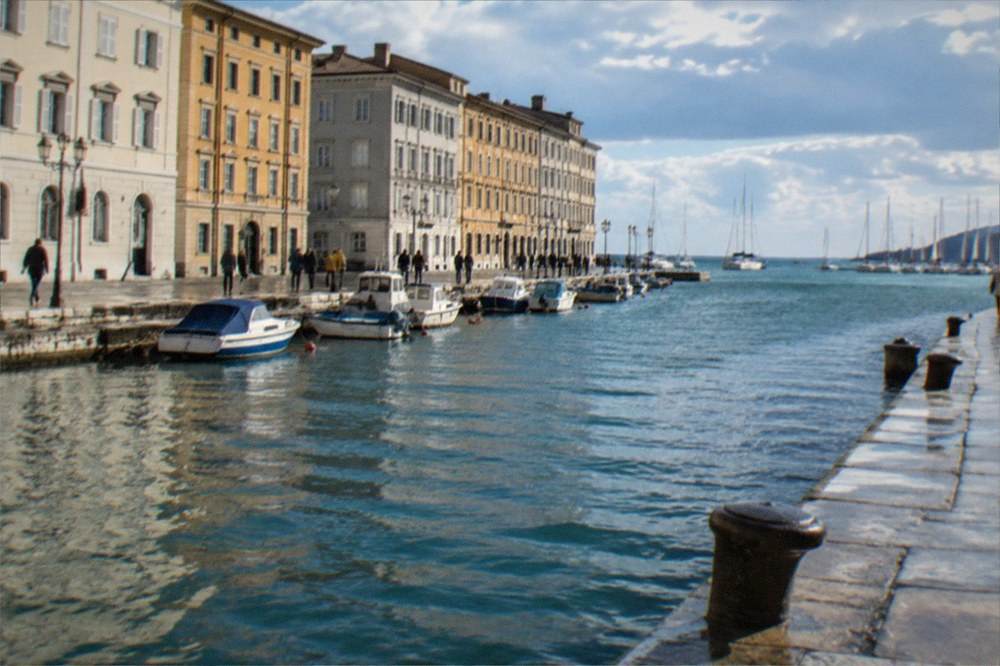
October is a special case. Barcolana, the regatta that turns the gulf into the largest sailing race in the world, runs 2-11 October 2026 with the main race on Sunday 11 October from 10:30 over 13 nautical miles off Piazza Unità. The record entry stands at 2,689 boats, set in 2018. The waterfront the Borgo Teresiano district looks out on becomes a racecourse, and the district's squares become the event village.
Winter has its own case: the district's caffè, its Christmas market and its theatre season, plus the smallest crowds of the year. The bora blows hardest then, but the same wind scrubs the air into the sharp clarity that makes the view from the Molo Audace toward the distant Istrian coast so famous. There is no published wind threshold at which anything in the city closes, so do not plan around one; check the forecast and the city's own notices instead.
Where Should You Stay Inside or Near the Borgo Teresiano?
Most visitors should stay inside or immediately beside Borgo Teresiano, because the district holds the station, the seafront, the main squares and the densest stock of hotels and B&Bs in Trieste, Italy, all on flat ground. The trade-off is price and noise in the busiest blocks; the quieter alternatives are the Cavana district on the old-town side and the seafront stretch toward Barcola for a slower, more local base.
The district's grid is where the city's accommodation concentrates, and its flatness matters more than it sounds: Trieste's hills are steep, and a base on the flat puts the whole visit within an easy walk of the station, the Rive and the old town. The city charges a tourist tax per person per night, capped at five consecutive nights in the same property, and the 2026 Comune rate table sets it at €3.30 per night for a 4-star hotel or self-catering apartment, €3.00 for a 3-star property, €2.30 for a 2-star hotel, B&B superior or short-let, €2.00 for a B&B comfort and €1.50 at campsites, with everyone under 18 exempt.
| Accommodation type | Tourist tax per person, per night (2026) |
|---|---|
| 5-star hotel | €3.80 |
| 4-star hotel or self-catering apartment | €3.30 |
| 3-star hotel or self-catering apartment | €3.00 |
| 2-star hotel, B&B Superior, short-let | €2.30 |
| B&B Comfort | €2.00 |
| Campsite or motorhome area | €1.50 |
The alternatives each suit a different trip. Cavana puts you in older stone a few minutes from the grid, at usually lower rates and with the old town on your doorstep. Barcola trades centrality for the sea, a promenade and the swimming culture, at the price of a bus ride into the centre each morning. The Sistiana and Duino stretch up the coast is the choice for a car-based stay built around the Rilke trail and the castles rather than the city itself.
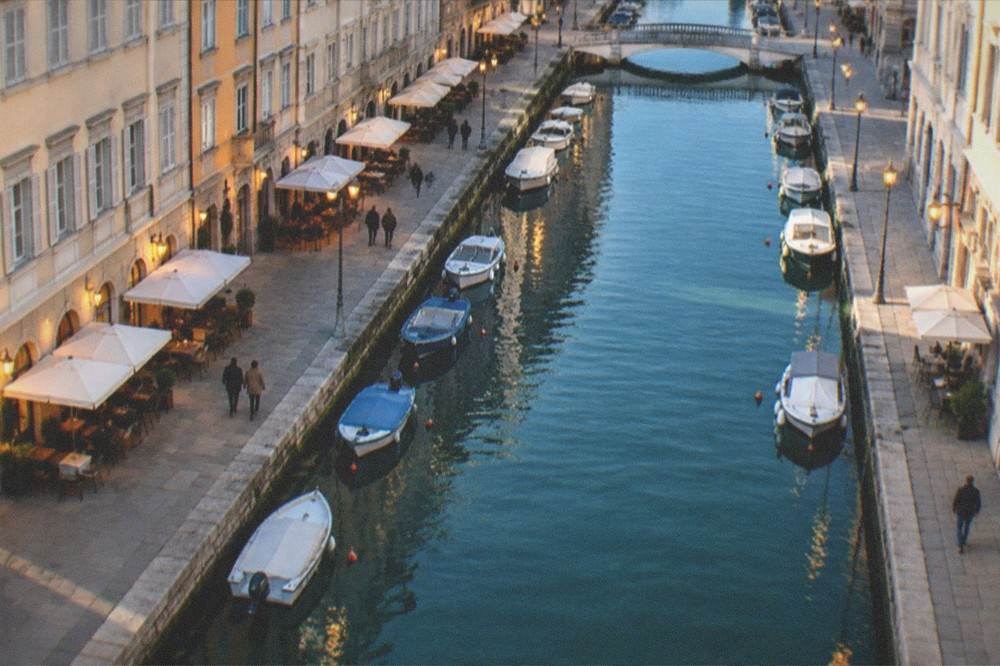
Whichever base you choose, the district remains the place to spend your evenings. The caffè stay open late, the Rive are at their best after dark, and the walk from a table on the Canal Grande out to the end of the Molo Audace is the single finest free thing this quarter of Trieste, Italy offers: ten minutes of stone underfoot, the city glowing behind you, and the black water of the gulf ahead.
Common Questions About Borgo Teresiano in Trieste, Italy
What is Borgo Teresiano in Trieste, Italy?
Borgo Teresiano is the grid-planned central quarter of Trieste, Italy, built under Habsburg rule and named for Empress Maria Theresa. It runs from the Canal Grande to the seafront and contains Piazza Unità d'Italia, the Molo Audace, the Teatro Lirico and the historic caffè district.
Is Borgo Teresiano walkable?
Yes, completely. The quarter is flat, compact and laid out on a rational grid, and everything in it, from the Canal Grande to the Rive seafront, is a short walk apart. The old town and San Giusto hill sit just behind it, reached on foot via the Cavana district.
What are the main sights in Borgo Teresiano?
The main sights are Piazza Unità d'Italia, the Canal Grande with the church of Sant'Antonio Taumaturgo at its head, the Molo Audace pier, the Teatro Lirico Giuseppe Verdi and the historic caffè. The Museo Revoltella sits on the district's eastern edge, open daily 10:00-19:00 and closed Tuesdays, at €8 adult entry.
How much do guided tours of the Borgo Teresiano district cost?
The heart-of-the-city guided walk costs from $50.44 per person for 2h 30m, rated 4.6 from 24 reviews on the operator's live listing. A self-guided scavenger-hunt format runs from $4.67 per person, and the coffee-inclusive "City that will definitely surprise you" walk from $68.79 per person.
How do I get around Trieste from Borgo Teresiano?
Walk inside the district, and use the urban buses and the Opicina tram beyond it. Per the 2026 tariff sheet, a 60-minute single costs €1.50, a 75-minute single €1.85 and a day ticket €3.35, with contactless cards accepted on board. The tram to Opicina departs from piazza Dalmazia.
Do I need ID for a day trip to Slovenia from Trieste?
Yes, carry a passport or national ID card. Italy is running temporary border checks on its land border with Slovenia, listed by the European Commission's register through 18 December 2026, so checks are possible despite all three neighbouring countries being in Schengen and using the euro.