How Do Italians Pronounce Trieste?
How Italians pronounce Trieste, Italy: the syllables, the stress, the final vowel, and the local and neighbouring names for the city.
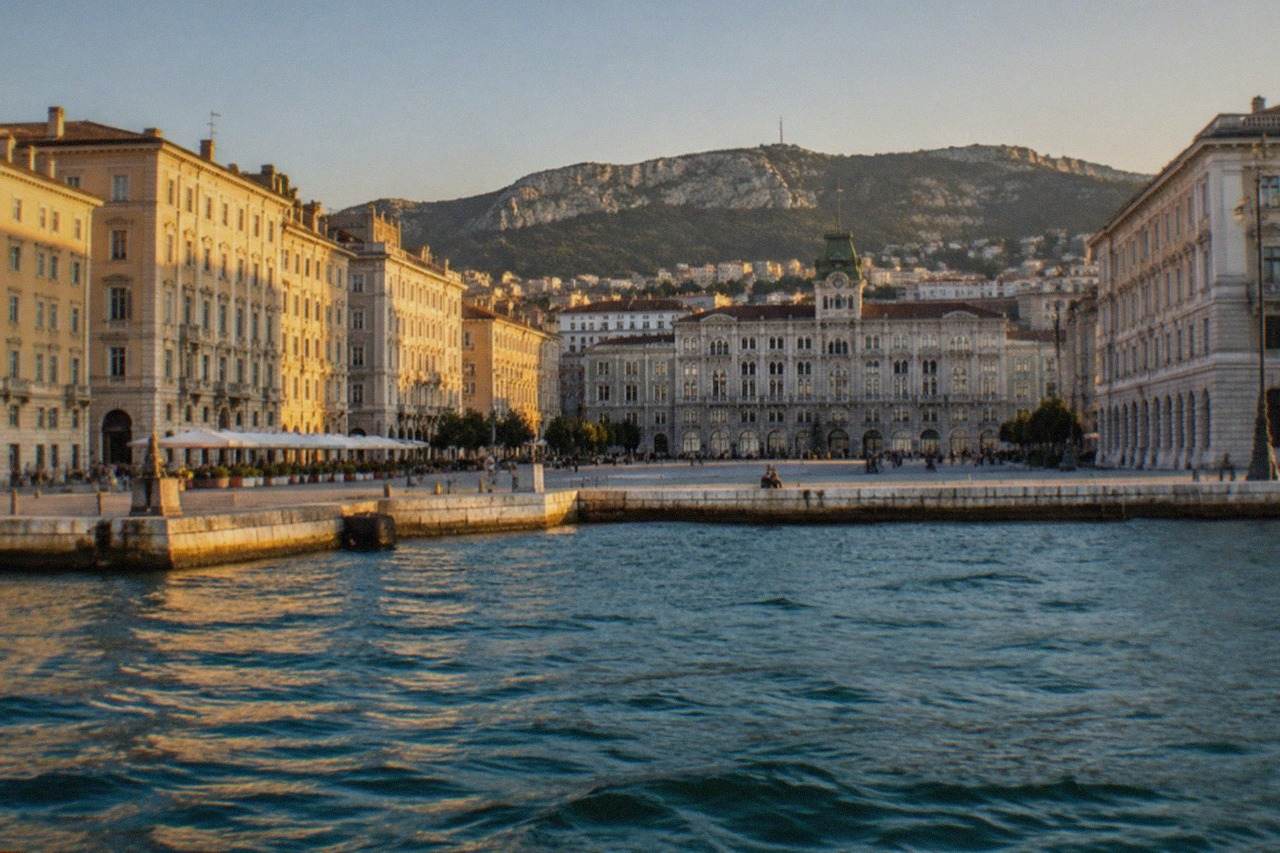
Trieste, the Adriatic port city in Friuli Venezia Giulia in the northeast of Italy, is one of those place names English speakers quietly mangle before they ever set foot in the country. The Italian pronunciation is simpler than it looks, but it is not the one the spelling suggests to an English eye, and the city's position on the Slovenian border means its name exists in several languages at once. This page walks through the Italian pronunciation syllable by syllable, explains where the stress falls and why, and sets out the other names the city answers to within a short drive of Piazza Unità d'Italia.
How Do Italians Pronounce Trieste?
Italians pronounce Trieste as tree-EST-eh, three syllables with the stress firmly on the middle one: TREE-es-teh. The "ie" is not pronounced like the English word "eye" but as two separate vowel sounds, ee-eh, and the final e is a full, clear vowel that is never dropped. A close English approximation is "tree-ES-teh", said quickly, with the middle syllable the loudest and longest of the three.
The mistake almost every English speaker makes is treating the "ie" as a single diphthong, the way it works in words like "pie" or "tie". In Italian that letter pair is a hiatus, two vowels that each get their own sound and nearly their own beat. Say "tree", then say "eh", and let them run together without collapsing into one glide. The result is a word that sounds lighter and faster than the spelling leads you to expect.
The final vowel is the other giveaway. English lets words end on consonants and swallows trailing vowels, so visitors produce something like "tree-EST". Italian does not work that way. Every syllable in Trieste is voiced, including the last one, and clipping it marks you as a foreigner before you have said anything else. The final e is short, like the e in "bet", and it closes the word cleanly.
If you want a phonetic transcription to anchor it, the Italian standard is /triˈɛste/. The ˈ marks the stressed syllable, the second of the three, and the ɛ is the open e of "bet". You do not need the symbols; you need the habit of hitting the middle syllable and finishing the last one.
| Syllable | Sounds like | Notes |
|---|---|---|
| Tri | "tree" | A clean t-r-i, no English-style "ch" sound on the t |
| e | "eh" | The open e of "bet", a syllable of its own |
| ste | "steh" | The final e is always pronounced, never dropped |
One more detail that helps: the s in Trieste is a plain s, as in "sea", not a z sound. English speakers sometimes soften it because of the vowels around it. Keep it crisp and the word snaps into place.
Where Does the Stress Fall, and Why Does It Stay There?
The stress in Trieste falls on the second syllable, the "e" of the "ie" pair, and it stays there because Italian word stress is fixed by the word's history rather than chosen by the speaker. Trieste follows the common Italian pattern of parola piana, a word stressed on the second-to-last syllable, like Roma or Firenze. Unlike English, Italian never shifts this stress for emphasis, so the middle syllable is always the anchor no matter the sentence.
Italian is a language of largely predictable stress, which is why a written word is usually enough to say it correctly. Words ending in a vowel, which is most of them, stress the second-to-last syllable unless an accent mark says otherwise. Trieste ends in a vowel, carries no accent mark, and therefore stresses the penultimate syllable. You can apply the same rule to the city's other landmarks and be right nearly every time: Piazza Unità d'Italia, Città Vecchia, caffè.
The accented words are the exceptions worth knowing, because the accent mark tells you exactly where the stress lives. Unità carries a grave accent on the final à, so the stress jumps to the last syllable: u-ni-TÀ. Caffè works the same way: caf-FÈ. These two words appear on every corner of the city, from the square's name to the historic coffee houses, and saying them with the stress at the end instead of the middle is the fastest way to sound like you have been listening rather than reading.
There is also a rhythm point that is easy to feel once you hear it. Italian words ending in a vowel flow into the next word, so in a phrase like "piazza di Trieste" the final e of Trieste does not get extra weight; it simply hands the sentence on. Stress the middle, release the ending, and the word sits in the sentence the way a local would place it.
| Name | Stress pattern | Say it like |
|---|---|---|
| Trieste | Second of three syllables | tree-EST-eh |
| Unità | Final syllable, marked by the accent | u-ni-TA |
| Caffè | Final syllable, marked by the accent | caf-FE |
| Città Vecchia | Final syllable on Città, second on Vecchia | chit-TA VEK-kyah |
| Piazza | Second of two syllables | PYA-tsa |
Hearing a name said properly is different from decoding it from a page, and a walk with a local guide is the quickest fix. The city's Jewish heritage walk, for instance, moves through streets whose names carry the city's whole layered history, Italian, Slovene and German side by side, and the guide says each one the way the neighbourhood says it. Check availability if that kind of grounded orientation appeals. For a broader look at the city's odd corners, our page on the unusual things to see in Trieste collects the spots that surprise first-time visitors.
What Do the Neighbouring Languages Call Trieste?
The Slovenes call the city Trst, the Germans call it Triest, and the Croatians also use Trst, because Trieste sits on a borderland where three language traditions have named the same place for centuries. The Italian name Trieste and the Slovene name Trst come from the same root, the Latin Tergeste, so the short Slovene form is not a nickname but a sibling. A visitor does not need to use any of these alternates, but hearing them on the Karst plateau above the city is completely normal.
This is the part of the answer that most guides skip, and it is the part that makes the pronunciation question genuinely interesting. Trieste is a border city: Slovenia begins at the city's eastern edge, the Slovene-speaking community has been part of the city's life for as long as the city has existed, and the Karst villages above town are officially bilingual. The name Trst appears on road signs within the province, on the tram route up to Opicina, and in the speech of a large share of the population. Neither name is a translation of the other; both descend from the Latin name the Roman city already carried. Everything else covered here is indexed on Trieste Travel Guide.
The Latin origin explains the shape of the Italian word. Tergeste is the name the Roman sources use for the settlement, and the modern city's name is its direct descendant. That is also why the question of what Trieste means in Italian has a real answer rather than a folk etymology, and our page on what Trieste means in Italian goes into it. The short version: the name is ancient, fixed, and older than every one of the three modern languages that speak it.
The German name Triest is the Habsburg inheritance. Trieste was the Austrian empire's great port for centuries, and the German form still appears in historical writing and on the older buildings' inscriptions. You will not need it in a cafe today, but you will see it in the city's museums and on the facades of the old commercial buildings near Piazza della Borsa.
| Language | Name for the city | Notes |
|---|---|---|
| Italian | Trieste | The official name, stress on the middle syllable |
| Slovene | Trst | One syllable, used across the border and in the bilingual Karst |
| German | Triest | The Habsburg-era name, still seen in historical contexts |
| Croatian | Trst | The same form as Slovene, used along the nearby Croatian coast |
| Latin | Tergeste | The Roman name from which the modern forms descend |
None of this changes how you should say the city's name in Italy. Trieste, said tree-EST-eh, is the name the city uses for itself, and it is the one to use everywhere from the train station to the castle. But knowing that Trst is the same word in another branch of the same family tells you something true about the place, which is that the city has always been pronounced by more than one mouth. Our article on whether Trieste is more Italian or Slovenian takes that question further, because the honest answer involves history rather than slogans.
Do the Locals Say It Differently?
Locals say Trieste exactly as standard Italian does, tree-EST-eh, with no meaningful difference in the word itself; what changes locally is everything around the name, because the Triestine dialect and the Slovene spoken in the province give the city a bilingual soundscape. The city's own residents switch between Italian and the local dialect freely, but the name of the city itself stays recognisable in every register. You will not be corrected for saying it the standard way.
Triestino, the local dialect, is a Venetian-type dialect with its own vocabulary and cadence, and it is part of what gives the city its distinct sound compared with Florence or Milan. The dialect is audible in the historic cafes and the market streets, and it coexists with standard Italian rather than competing with it. The city's identity has always been composite: Italian, Austro-Hungarian, Slovene and Jewish communities have all left layers, which is why a heritage walk through the old streets passes a Serbian Orthodox church, a synagogue and a Roman theatre within a short stretch of each other.
That layered identity is also why the pronunciation question is worth more than a passing glance. Saying the city's name the way its residents say it is a small courtesy, but it is the entry point to a city that prizes its names, its street signs and its dual-language inscriptions. The Jewish heritage walking tour is one of the products on this site that moves through exactly that terrain, with a private guide whose own pronunciation of every street name is the local one.
If the layered-names angle has hooked you, two related reads: what Trieste is famous for and what is special about Trieste, Italy both dig into the character of a city that spent centuries as the Adriatic's crossroads. And for the practical side of a visit, how many days you need in Trieste is the planning page most readers open next.
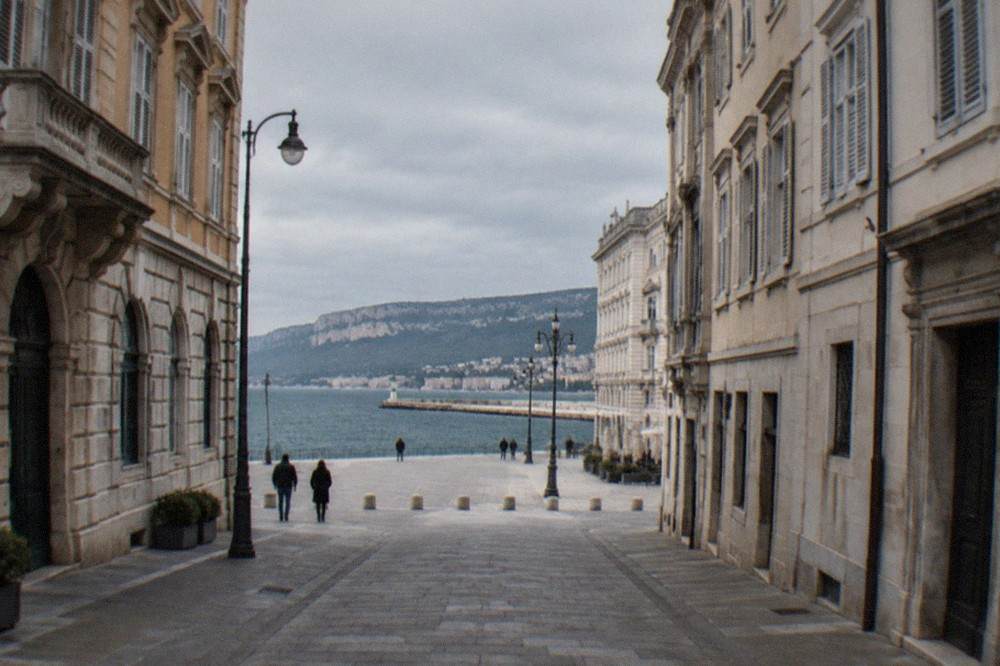
How Do Italians Pronounce Trieste? A Quick Drill
A reliable drill is to say "tree", then "EST" with the stress of the word "establish", then finish with a short "teh" like the start of "ten": tree-EST-teh, run together as one word. Practise it three times slowly, then at speed, and check yourself against the rule that the middle syllable is the loudest and the final e is never silent. Once the three beats feel even, you have the Italian pronunciation, and it will hold up in any café, taxi or ticket office in the city.
The drill matters because reading a phonetic spelling and producing a sound are different skills. English mouths are trained to compress unstressed vowels into a neutral "uh", which is exactly what kills the final syllable of Trieste. The fix is deliberate: give the last syllable a real e, short and finished, and resist the urge to let the word die on the t.
A few companion names are worth practising in the same session, because you will say them constantly. Molo Audace, the pier at the heart of the waterfront, is MOH-loh ow-DAH-cheh. Piazza Unità d'Italia is PYA-tsa u-ni-TA dee-ta-LEE-ah, with the accent on Unità's last syllable and the d' of d'Italia staying lowercase and light. San Giusto, the hill and cathedral at the city's old heart, is sahn JOO-stoh. None of these are harder than the city's own name; they just need the same even, vowel-forward delivery.
The bilingual reality behind the city's names is not a historical footnote; it has live, dated edges right now, and a few of them are worth knowing before you travel.
The payoff is real. Italy is a country where the effort of an approximation is met halfway, and Trieste, a port city that has heard every language in the Mediterranean, is more forgiving than most. Say the name in three clean beats and the city will answer.
Common Questions About Pronouncing Trieste
How do italians pronounce trieste?
Italians say tree-EST-eh: three syllables, stress on the middle one, and a final e that is always pronounced. The "ie" is two separate vowel sounds, "ee" then "eh", not the English diphthong of "pie".
Is the final e in Trieste silent?
No. Italian does not drop final vowels, and Trieste is no exception. The word ends on a short, clear "teh", and clipping it off is the most common mistake English speakers make.
Where does the stress go in Trieste?
On the second of the three syllables, the "e" of the "ie" pair. Trieste is a parola piana, a word stressed on its second-to-last syllable, which is the default pattern for Italian words ending in a vowel.
What do Slovenes call Trieste?
Trst, in a single syllable. It is not a nickname but a sibling of the Italian name: both descend from the Latin Tergeste. The form appears on bilingual signs in the province and across the nearby border.
Does Trieste rhyme with anything in English?
Not exactly, because the three even syllables with a middle stress have no comfortable English parallel. The closest scaffold is "tree-ES-teh", said quickly, with the middle syllable the loudest and the last one fully voiced.
How do you pronounce Piazza Unità d'Italia?
PYA-tsa u-ni-TA dee-ta-LEE-ah. The accent mark on Unità pushes the stress to its final syllable, and the d' of d'Italia stays lowercase and light inside the name.
Say the name in three beats, tree-EST-eh, and you have the whole lesson: even syllables, middle stress, final vowel intact. It is a small adjustment that changes how the whole city sounds to you, and how you sound to it.