San Vito and Colle Capitolino, Trieste, Italy: The Castle Hill Area Explained
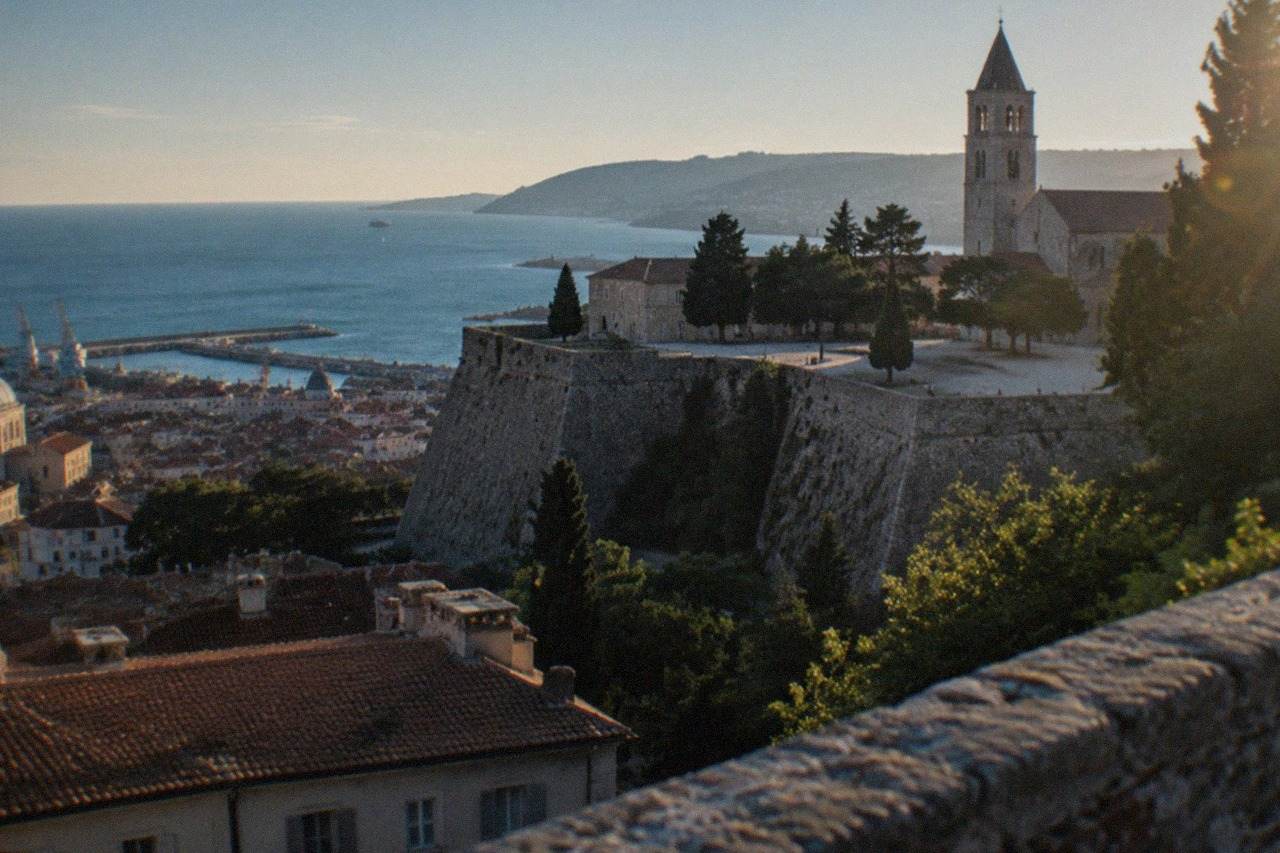
San Vito and Colle Capitolino are the two faces of Trieste's castle hill in Italy: the residential slopes of San Vito on one side and the summit of Colle Capitolino, where San Giusto Castle and the cathedral stand above the city and the Gulf of Trieste.
Short answer
Colle Capitolino is the summit of Trieste's castle hill, topped by the Cathedral of San Giusto and Castello di San Giusto, with the San Vito quarter on its slopes. The castle costs EUR 7.00, the cathedral is free, and the whole area is walkable from the city centre.
San Vito and Colle Capitolino form the raised spine of Trieste, the Adriatic port city in Friuli Venezia Giulia, northeastern Italy, the hill that carries the city's two most important monuments and some of its best views. Colle Capitolino is the summit: the Cathedral of San Giusto Martire, the Castello di San Giusto with its walls and bastions, and the panoramic terraces that look out over the Gulf of Trieste on one side and the red roofs of Città Vecchia on the other. San Vito is the quarter wrapped around the hill's lower slopes, a dense residential mesh of lanes and staircases that most visitors pass through on the climb without ever learning its name. Together they make up the most historically loaded square kilometre in the city, and the one that answers the single most common search about Trieste's hilltop: the San Giusto Castle and hill complex.
This guide covers the whole area as a unit: what is at the top, what is on the way up, what each part costs, and how to fit the hill into a day in Trieste. Every price and opening time below comes from the venues' own published material, and where a figure is not published, this page says so rather than guessing it.
What Is Colle Capitolino in Trieste, Italy?
Colle Capitolino is the summit hill of Trieste, Italy, rising directly above the old city and carrying three monuments in one small space: the Cathedral of San Giusto Martire, which is free to enter, the Castello di San Giusto, which costs EUR 7.00 for an adult, and the castle's walls and bastions, which are included in that ticket. It is the historical and religious core of the city, and it can be reached on foot from Piazza Unità d'Italia.
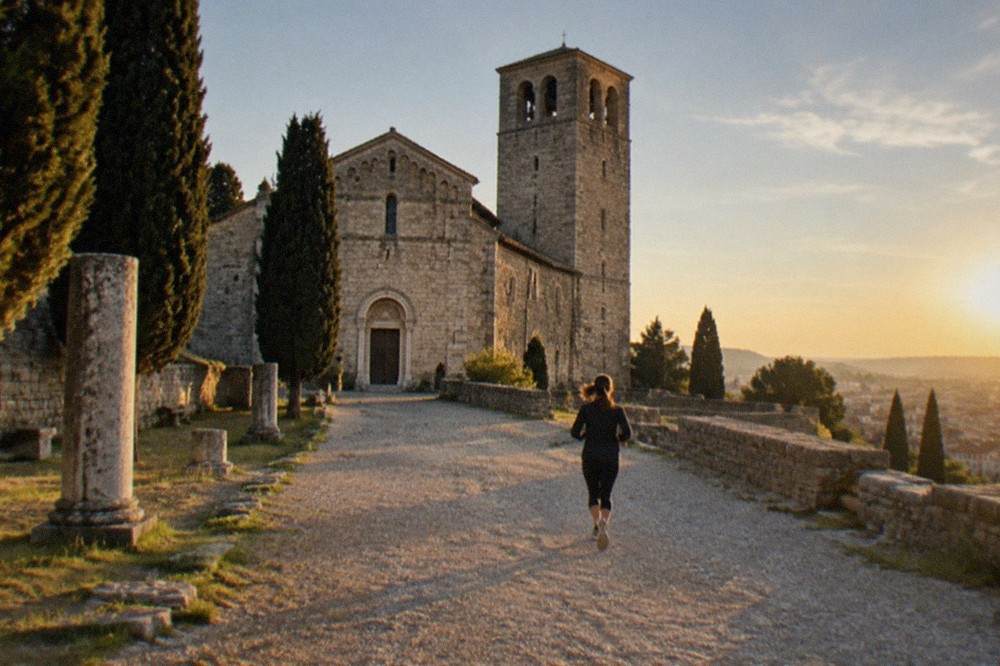
The hill has been the city's acropolis since Roman times, when the settlement of Tergeste crowned this ground, and the layering has never stopped. The cathedral's own fabric is a patchwork: two earlier churches were joined into one building, the Romanesque bell tower stands beside it, and columns and stone from the ancient city were reused in the walls. The castle was built on the ruins of an earlier fortress, and its current form, with the circular bastion and the long rampart walk, is what visitors walk today. The Trieste Cathedral of San Giusto and the castle share the summit so closely that you can move between them in a couple of minutes.
The name "Capitolino" points to the hill's role as the city's ceremonial high point, in the manner of Rome's Capitoline. Whether or not the parallel was ever formal, the function is real: this is where the patron saint's day is marked on 3 November, when the castle is free, and where the city's main civic ceremonies are held. The views from the ramparts take in the whole arc of the gulf, from the seafront along the Rive to the shore at Barcola and, on clear days, the coastline of Slovenia beyond.
What Does San Giusto Castle Cost and When Is It Open?
An adult ticket to Castello di San Giusto costs EUR 7.00, reduced EUR 5.00, and school and university groups EUR 1.00, and the one ticket covers the walls and bastions, the Civico Museo del Castello di San Giusto-Armeria, the Lapidario Tergestino and temporary exhibitions at the Bastione Fiorito.
From 1 April to 11 October the castle is open daily 10:00-19:00, last entry 18:30; from 12 October it runs Tuesday to Sunday 10:00-17:00, last entry 16:30, and closes on Mondays.
Those hours and prices are the venue's own published figures, and they carry the two seasonal regimes visitors most often trip over. In the summer season the castle has no weekly closing day at all; from mid-October it gains one, Monday, and the whole day shifts an hour earlier. Entry is free on the first Sunday of each month and on 3 November, the patron saint's day. If you are visiting Trieste in the shoulder season, plan the hill for any day but Monday, or check the castle's site first.
| Ticket | Price | What it covers |
|---|---|---|
| Adult | EUR 7.00 | Walls and bastions, Civico Museo del Castello-Armeria, Lapidario Tergestino, temporary exhibitions at Bastione Fiorito |
| Reduced | EUR 5.00 | Same coverage |
| School and university groups | EUR 1.00 | Same coverage |
| First Sunday of the month | Free | Same coverage |
| 3 November (patron saint's day) | Free | Same coverage |
The free first-Sunday scheme is the ministry's national initiative, and its details have changed more than once in recent years, so treat the venue's own page as the authority for the month you are visiting rather than this or any other guide. The 3 November free day is local and fixed: it is the feast of San Giusto, the city's patron saint, and the castle marks it every year.
The castle ticket is one of the best-value admissions in the city because it is really four things at once. The rampart walk alone justifies it: the walkway along the walls gives the widest open panorama of the gulf available anywhere in central Trieste, and unlike a museum hall it is outside, in the weather, which on this coast means the bora. The Civico Museo del Castello and the armoury fill the interior, and the Lapidario Tergestino, set into the basement of the Lalio bastion, holds the Roman stone material recovered from the hill itself, including pieces from the ancient capitolium that stood where the cathedral now stands. You are, in effect, walking through the city's oldest surviving objects in the place they were found.
What Is the San Vito Quarter and Why Does It Matter?
San Vito is the residential quarter on the slopes below the summit of the San Giusto hill in Trieste, a web of narrow lanes, staircases and small squares that connects the castle hill to the edge of the old city, and it is the part of the area most visitors walk through without realising it has its own name and character. It holds no ticketed monument, but it carries the approach routes to the hill and some of the densest everyday street life in the historic centre.
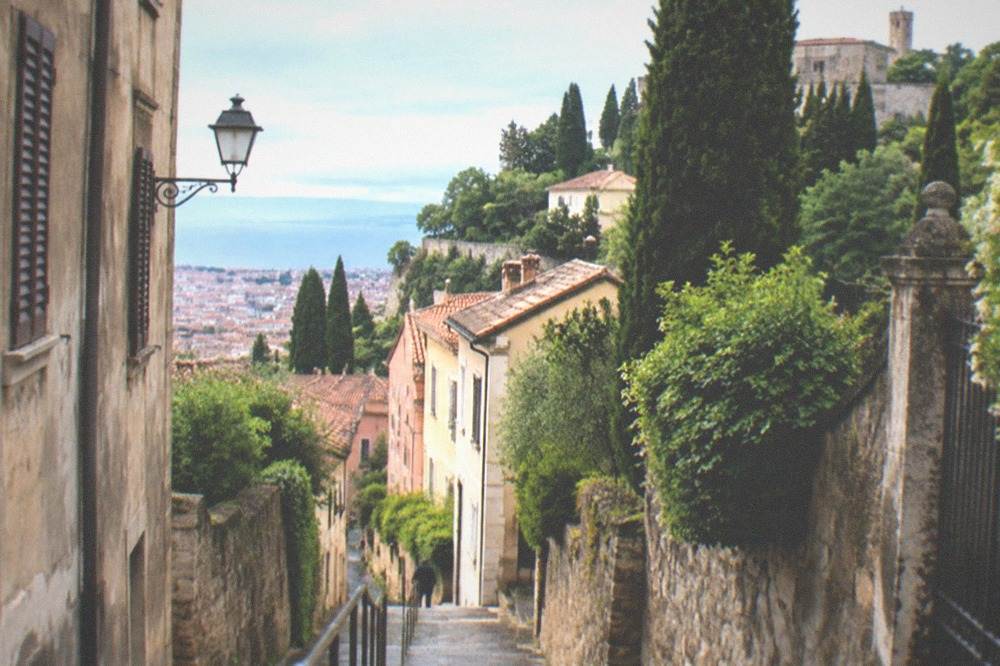
The quarter's streets are the practical answer to the question every visitor asks on arrival: how do I actually get up there? The approaches to the hill all pass through lanes like these, climbing from the streets around the Cavana district and Città Vecchia, and the character of the climb, stone steps, washing lines, cats, sudden framed views of the sea between houses, is San Vito's. Theatregoers and gallery-goers pass its lower edge on the way between the city centre and the hill; residents use the same staircases as their daily commute.
There is a practical reason to know the name. Taxi drivers, hotel staff and bus information will all refer to the hill's parts separately: San Vito for the slopes, Colle Capitolino or simply "San Giusto" for the summit. If you are staying in the area, or looking for a restaurant recommendation near the hill, asking about San Vito will get you better answers than asking about "the castle", which can send you to the ticket office when you wanted a street.
The quarter also gives you the quiet way down. Most visitors climb to the castle, visit, and descend the way they came. The lanes on the far side of the hill drop instead towards the eastern edge of the old city, and they let you finish the visit with a walk that feels like a discovery rather than a retreat, ending within reach of the water and the cafés.
Can You Visit Trieste Cathedral and Its Bell Tower?
Entry to the Cattedrale di San Giusto Martire is free, and the cathedral is open weekdays 8:00-18:30 and Sundays and holidays 9:00-19:30. The bell tower keeps separate hours: 1 April to 30 September daily 9:00-17:30, and in March and October 9:00-12:00 and 14:30-17:00, with winter visits by arrangement on the number the parish publishes. No bell tower ticket price is published by the parish, and none should be assumed.
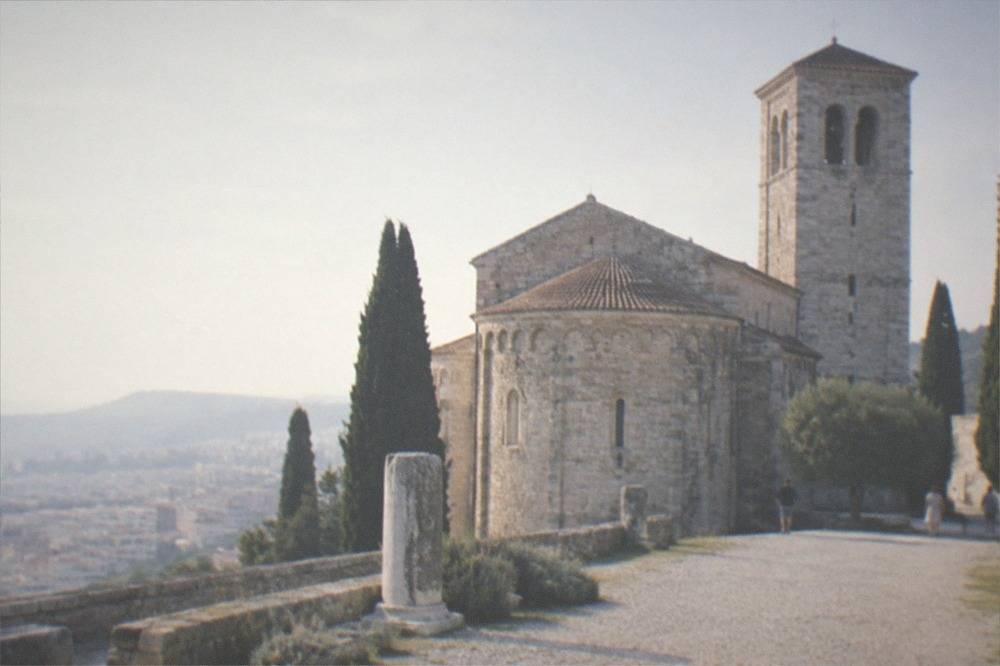
The cathedral is the one truly free interior on the hill, and it deserves more of a visit than the quick look most people give it. The building is two medieval churches joined side by side, which is why the interior has an unusual double-aisle feel, and the walls carry reused Roman stonework from the ancient city that stood here first. The mosaic work in the apses is the highlight, and the Romanesque porch and the bell tower, with its collection of ancient columns reused in the colonnade, are among the most photographed structures in the city.
| Opening | Days and hours | Notes |
|---|---|---|
| Cathedral, weekdays | 8:00-18:30 | Entry free |
| Cathedral, Sundays and holidays | 9:00-19:30 | Entry free; avoid Mass times |
| Bell tower, 1 April-30 September | Daily 9:00-17:30 | Price not published by the parish |
| Bell tower, March and October | 9:00-12:00 and 14:30-17:00 | Split hours |
| Bell tower, winter | By arrangement | Contact the parish |
One courtesy matters here, and the parish states it plainly: visitors and guides are asked not to tour the cathedral during Sunday services, and preferably not between Masses. The building is a working parish church before it is a monument, and the hours above are built around that reality. On a Sunday morning the right move is the castle first, the cathedral after.
If the hill is one stop on a wider castle itinerary, the entry ticket with the audio app for Miramare Castle up the coast is worth booking ahead, and Check availability before you commit to a day. The two castles make a natural pair: San Giusto for the medieval city and the panorama, Miramare for the Habsburg residence and the sea, and the Miramare Castle guide covers the second half of that pairing in detail.
How Do You Climb to the Castle Hill from Trieste City Centre?
The castle hill is climbed on foot from the city centre, and the standard approach sets out from Piazza Unità d'Italia through the Cavana district and up the stepped lanes of the San Vito slopes to the cathedral and castle at the top. There is no funicular or lift to the summit; the Opicina tram, line 2, runs from piazza Dalmazia up to the Karst village of Opicina and does not serve the castle hill, so walking is the way.
The climb is short but real, and the lanes are stepped in places, so wear shoes that can handle stone stairs. There is more than one approach: the most direct route pushes up from the old city, while a gentler alternative works its way around the hill's flank from the area near the Roman theatre, where the ancient monument is viewed from the street, and joins the summit from the side. The theatre itself is looked down into from the street and is not routinely enterable by individuals, so plan it as a look and a photograph, not a visit.
For orientation, think of the hill as a three-layer sandwich:
| Layer | What it is | What you do there |
|---|---|---|
| Base | Cavana and Città Vecchia lanes, the Roman theatre viewpoint | Coffee, streets, the look into the theatre |
| Slopes | San Vito quarter, stepped lanes and small squares | The climb, framed views, residential texture |
| Summit | Colle Capitolino: cathedral, castle, ramparts | The paid castle visit, the free cathedral, the panorama |
Visitors with mobility limits should know that the summit is genuinely steep and stepped on the walking approaches. Accessible arrival is by taxi to the immediate vicinity of the summit, which removes the staircases but not the cobbles and gradients on top; the castle's own published access details are the authority there. Everyone else should simply take the climb slowly. The lanes of San Vito are the part of the walk people remember, and rushing them wastes the best of it.
What Can You See from the Castle Walls and Ramparts?
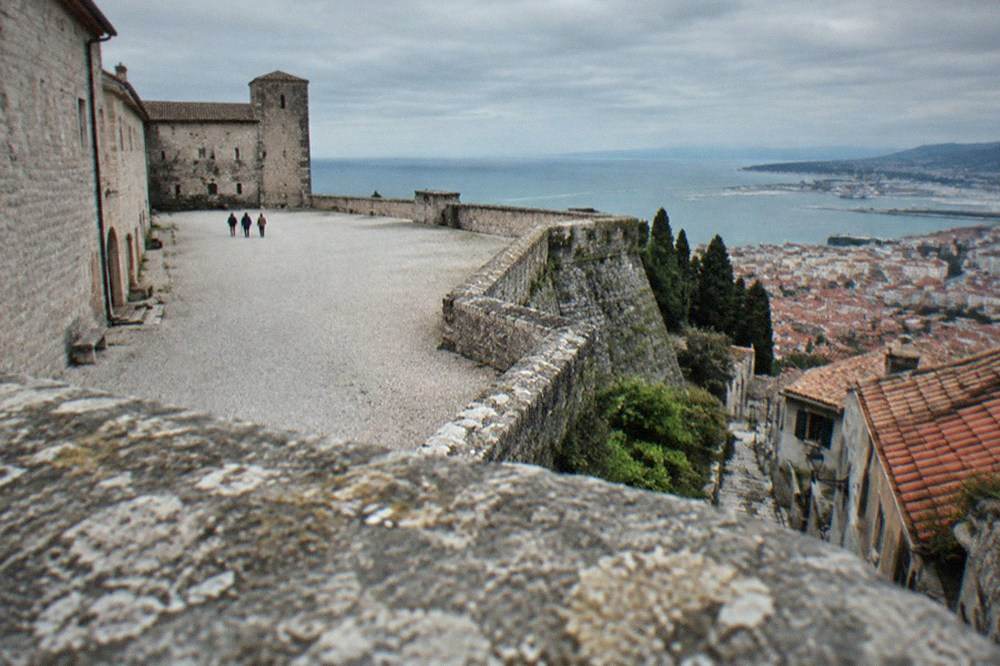
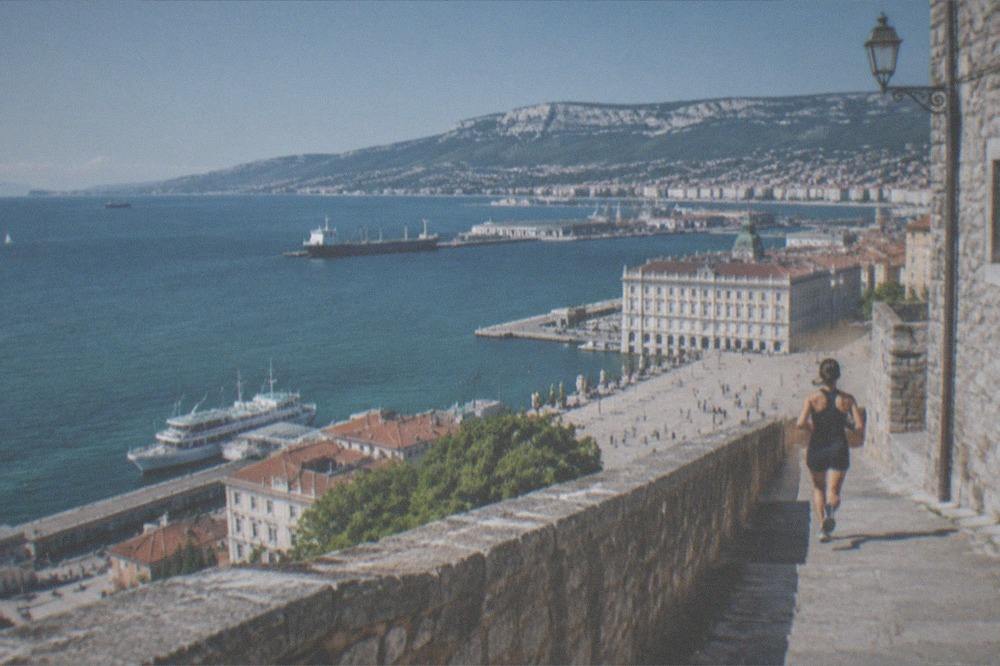
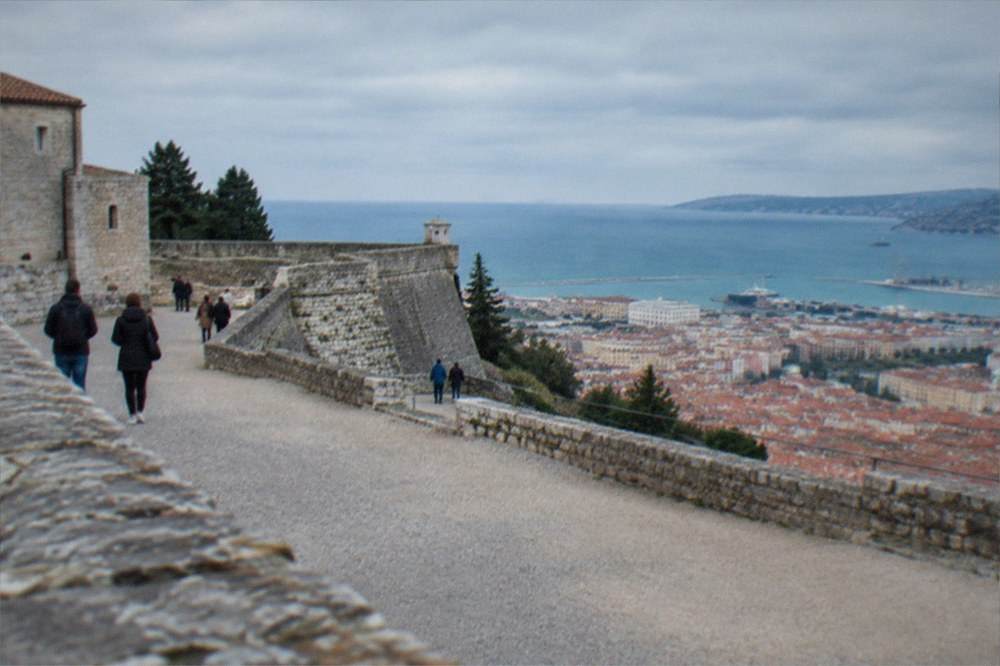
From the rampart walk of Castello di San Giusto you can see the entire Gulf of Trieste from the city's seafront to the coastline of Slovenia, the rooftops and campaniles of Città Vecchia below, the port and the Molo Audace, and inland the limestone ridge of the Carso plateau, all from a single elevated walkway included in the standard EUR 7.00 castle ticket. It is the widest panorama available in central Trieste.
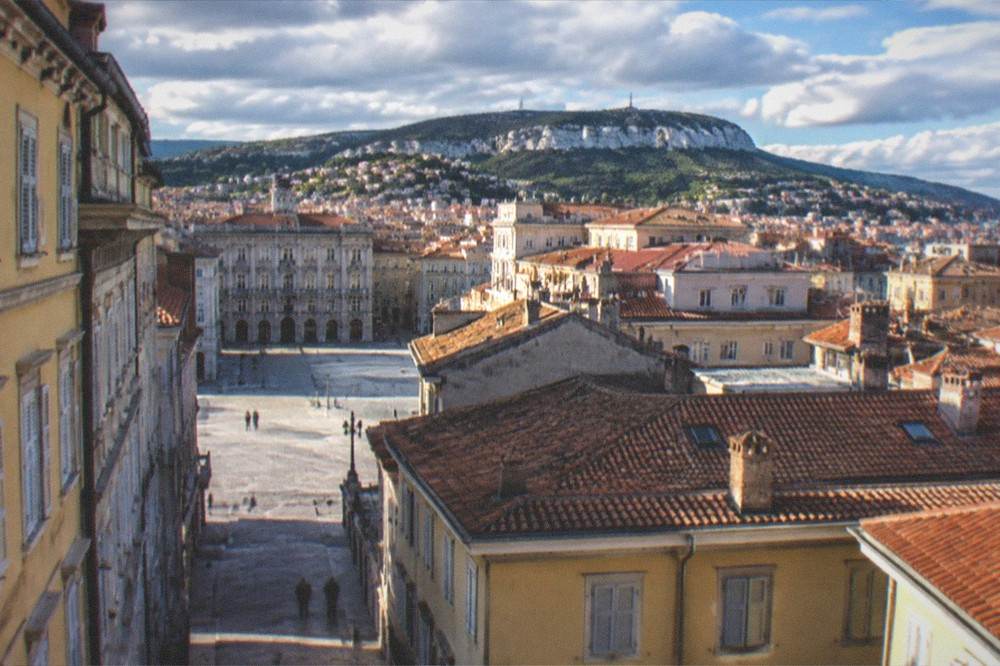
The rampart walk runs along the castle's walls and bastions, and the two directions give two different cities. To the north and west the view is maritime: the gulf, the ships, the long line of the Rive, and the Piazza Unità d'Italia opened out flat towards the water in a way you cannot appreciate from ground level. To the south and east the view turns inland and rocky, over the old city's roofs to the grey line of the Carso plateau, the limestone upland that gives Trieste its hinterland, its wind and its wine.
Photographers should plan the ramparts for late afternoon, when the low sun lights the gulf and the city's white stone takes on colour. The morning light favours the cathedral side of the summit instead. Wind is the other planning factor: the hill catches the bora fully, and ARPA's own station tables for the Trieste waterfront record an average of 17.6 days a year with a gust over 90 km/h, with the monthly record gust exceeding 110 km/h in every single month of the year. On a strong bora day the rampart walk is somewhere you lean into, not linger on, and a windproof layer is not optional.
The other thing the walls show you is the city's shape. Trieste is often described as a city that faces the sea, and from the ramparts you see why the description is only half right: the city faces the sea with its front and the Karst with its back, and the whole urban grid, the Borgo Teresiano and its canal, the old city, the modern port, reads clearly from this one vantage point.
How Do You Fit the Hill Into One Day in Trieste?
The castle hill works best as a half-day block in a Trieste itinerary: allow two to three hours for the cathedral, the castle and the ramparts together, plus the climb through San Vito, and slot it either into the morning before the seafront or the afternoon after it. The castle's seasonal hours decide the day: in the April-to-October daily regime the hill fits anywhere, while from 12 October the Monday closure and the 17:00 finish push it firmly toward midweek.
A one-day pattern that works: start on the seafront and Piazza Unità d'Italia, take coffee in one of the historic caffès, then climb through Cavana and San Vito to the summit, visit the cathedral and the castle, and descend the far side into the old city for lunch. The full route is mapped out in the one day in Trieste itinerary, and travellers with a second day can slow the same sequence down, as the two days in Trieste itinerary does, adding the museums and a longer seafront stretch.
| Time of day | Best spent on the hill | Why |
|---|---|---|
| Morning | Cathedral first, then castle | Cathedral opens 8:00 on weekdays; castle opens 10:00 |
| Midday | Castle interior and museum | Shelter from midday sun or showers |
| Afternoon | Rampart walk and descent | Late light over the gulf; castle last entry 18:30 in season |
| Sunday | Castle, not cathedral tours | Parish asks visitors to avoid services |
The hill also pairs naturally with the city's other hillside sight, the Risiera di San Sabba, the national monument a short way south, which is free to enter and open daily 9:00-19:00 from 1 March to 11 October and 9:00-17:00 thereafter. It is a sobering site and a different register entirely from the castle, so give it its own block rather than sandwiching it between the ramparts and lunch. The Risiera di San Sabba guide covers it fully.
What Is Near the Hill Worth Adding to Your Trieste Visit?
Within easy reach of the castle hill, Trieste offers the Museo Revoltella at EUR 8.00 for adults, closed on Tuesdays, the Risiera di San Sabba national monument, which is free, Castello di Miramare up the coast at EUR 17.00 with its park free all year, and Grotta Gigante on the Karst at EUR 15.00 on a guided-only basis with compulsory booking. The cathedral and the Roman theatre viewpoint on the hill itself are both free.
The pattern across these sites is that Trieste's paid attractions cluster around two figures, EUR 7.00 and EUR 8.00, with the big excursions, Miramare and the cave, priced above them. That makes the hill a natural anchor for a budget: pay for the castle, take the cathedral and the theatre viewpoint for free, and decide afterwards whether the day still has room for a second paid site.
| Site | Adult price | Opening pattern | Weekly closure |
|---|---|---|---|
| Castello di San Giusto | EUR 7.00 | Daily 10:00-19:00 in season; Tue-Sun 10:00-17:00 from 12 October | Monday, from 12 October |
| Cattedrale di San Giusto | Free | Weekdays 8:00-18:30; Sun 9:00-19:30 | None |
| Museo Revoltella | EUR 8.00 | Daily 10:00-19:00, last entry 18:00 | Tuesday |
| Risiera di San Sabba | Free | Daily 9:00-19:00 in season; 9:00-17:00 from 12 October | None |
| Castello di Miramare | EUR 17.00 | Daily 9:00-19:00, park free | None stated |
| Grotta Gigante | EUR 15.00 | Guided tours only, booking compulsory; Tue-Sun September-February, daily March-August | Monday, September-February |
Note how the closures interlock. Revoltella shuts on Tuesday and the castle shuts on Monday from mid-October, so on a short autumn visit the two free days for museums are the ones the other sites are open, and the working week matters. There is no Trieste-only museum card that bundles these sites; the regional FVGcard exists and covers several of them, but its prices could not be verified from official sources at the time of writing, so this page does not quote them.
For a fuller day beyond the hill, the coast road leads north to the Duino area, with Duino Castle and the Rilke trail above the sea, and the protected waters of the Miramare marine protected area sit just along the shore from the castle itself. South of the city, Muggia and its bay make a half-day of Venetian-flavoured streets and water views. All of these are covered in their own guides on Trieste Travel Guide.
A guided walk is the alternative to climbing the hill alone, and the city-walk options above include the summit among their stops, with a local guide covering the history that the panels on the hill compress into a few lines. Whichever way you go, book the paid elements ahead in the Barcolana window in October, when the city fills for the regatta and the castle's daily hours are still in force.
Common Questions About San Vito and Colle Capitolino in Trieste
Common Questions About the Castle Hill
Is San Giusto Castle in Trieste worth visiting?
Yes. For EUR 7.00 the ticket covers the rampart walk with the best panorama in central Trieste, the castle museum and armoury, the Lapidario Tergestino with Roman stonework from the hill itself, and temporary exhibitions. It is one of the strongest values among the city's paid sites.
Can you enter Trieste Cathedral for free?
Yes, entry to the Cattedrale di San Giusto Martire is free, and the parish states this on its own site. The cathedral is open weekdays 8:00-18:30 and Sundays and holidays 9:00-19:30, and visitors are asked to avoid touring during Sunday services.
What is the difference between San Vito and Colle Capitolino?
Colle Capitolino is the summit of the hill, holding the cathedral and the castle. San Vito is the residential quarter on the slopes below, the stepped lanes you climb through to reach the top. One is a monument zone, the other is the neighbourhood wrapped around it.
How long does a visit to the castle hill take?
Plan on two to three hours for the cathedral, the castle and the rampart walk together, plus the climb through the San Vito lanes. Add time for photographs from the walls, and more if you intend to descend through Città Vecchia at leisure.
Is the castle hill open on Mondays?
The castle is open daily from 1 April to 11 October, then closed on Mondays from 12 October until the spring season resumes. The cathedral keeps its own hours and does not close on Mondays. Check the castle's site for the day you plan to visit.
Do you have to pay to see the views from the hill?
No. The views from the cathedral forecourt and several points on the summit are free, and the cathedral itself is free. Only the castle walls, museum and exhibitions require the EUR 7.00 ticket, though the rampart walk offers the widest panorama of all.
The hill is Trieste in miniature: Roman stone inside a medieval church inside a Habsburg-era fortress city, all within a few minutes' walk of the sea. Climb it slowly, pay for the castle, take the cathedral for free, and give the last hour of daylight to the ramparts.