Renting a Car in Trieste, Italy: When You Need One and When You Don't
Trieste, Italy, is a compact, walkable port city where most visitors never need a car, but the Karst plateau, the castles up the coast and the borders of Slovenia and Croatia change that calculation fast.
Short answer
Most visitors to Trieste, Italy, do not need a rental car for the city itself: the centre is compact, the Opicina tram is running again, and a day ticket costs €3.35. A car earns its keep for the Carso, osmize hunting and cross-border day trips, and Italy is running temporary border checks on the Slovenia land border through 18 December 2026.
Trieste, the Adriatic port city in Friuli Venezia Giulia in northeast Italy, is one of the few Italian destinations where the rental-car question has a genuinely interesting answer. The city itself is compact, flat along the seafront and stacked on a hill at Città Vecchia, and almost everything a first-time visitor wants sits within a walk or a short tram ride. But the moment the itinerary bends toward the Karst plateau, the osmize farms of the Carso, Miramare up the coast or the borders of Slovenia and Croatia, the arithmetic changes. This guide, written by Trieste Travel Guide, sets out when a car earns its keep in and around Trieste, what the rules are on the borders either side of the city, and where the city's own public transport does the job better and cheaper.
Do You Need a Rental Car in Trieste, Italy?
For the city itself, no: Trieste's centre is compact and its public transport covers everything a visitor normally wants, with a day ticket at €3.35 and a running Opicina tram line from piazza Dalmazia. A car becomes worth renting for the Carso plateau, the castles up the coast at Duino and Miramare, the osmize farm taverns, and day trips into Slovenia or Croatia, where buses and trains run but constrain your timing.
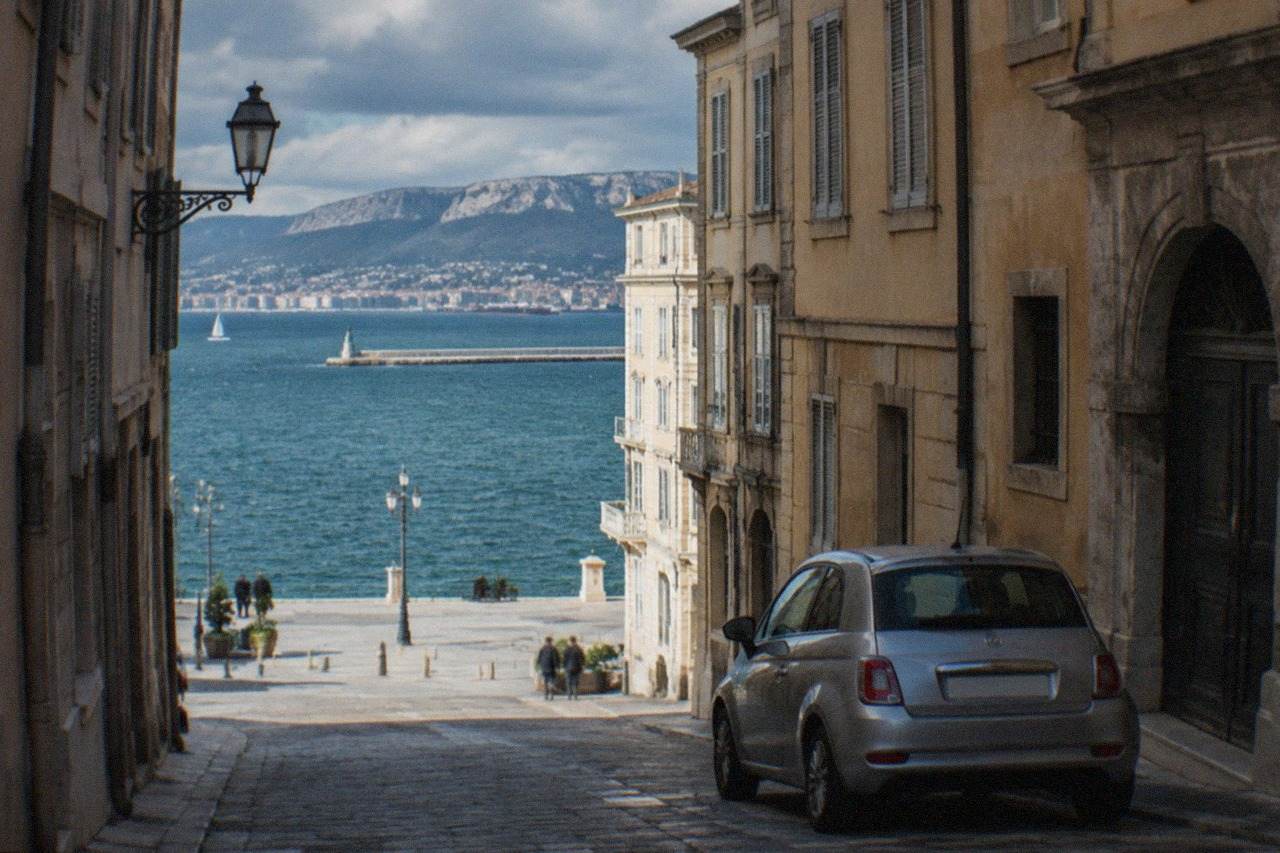
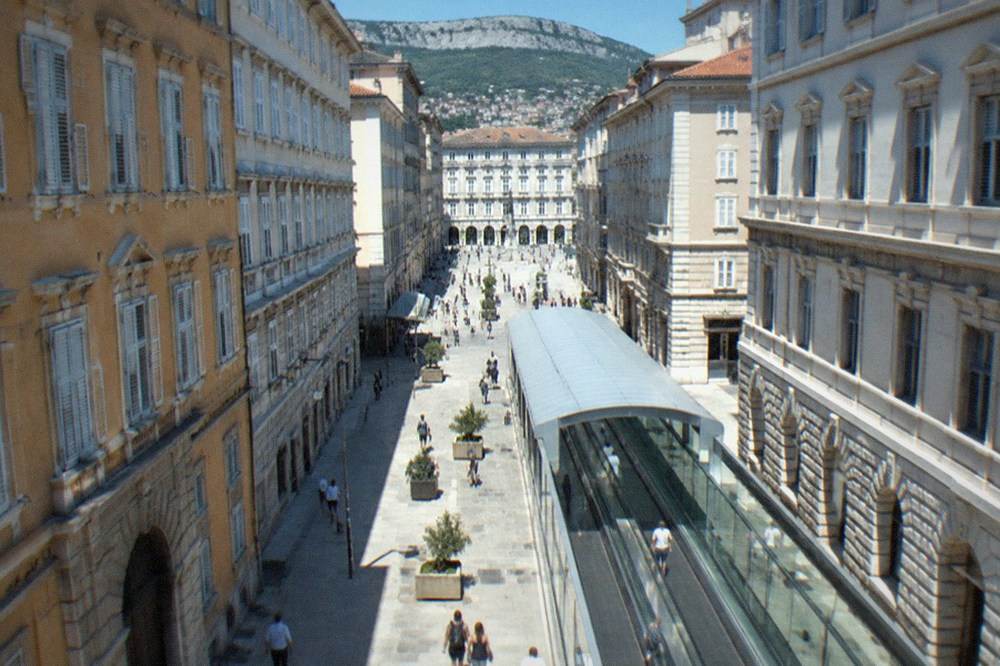
The honest split is geographic. Trieste's attractions cluster tightly: Piazza Unità d'Italia, the Canal Grande, Città Vecchia, the Roman theatre you look down into from the street, the Cathedral of San Giusto and the Revoltella Museum are all strung along a corridor you can cross on foot. Parking in a dense Habsburg-era street grid is the classic Italian city problem, and a car in the centre is a liability, not an asset.
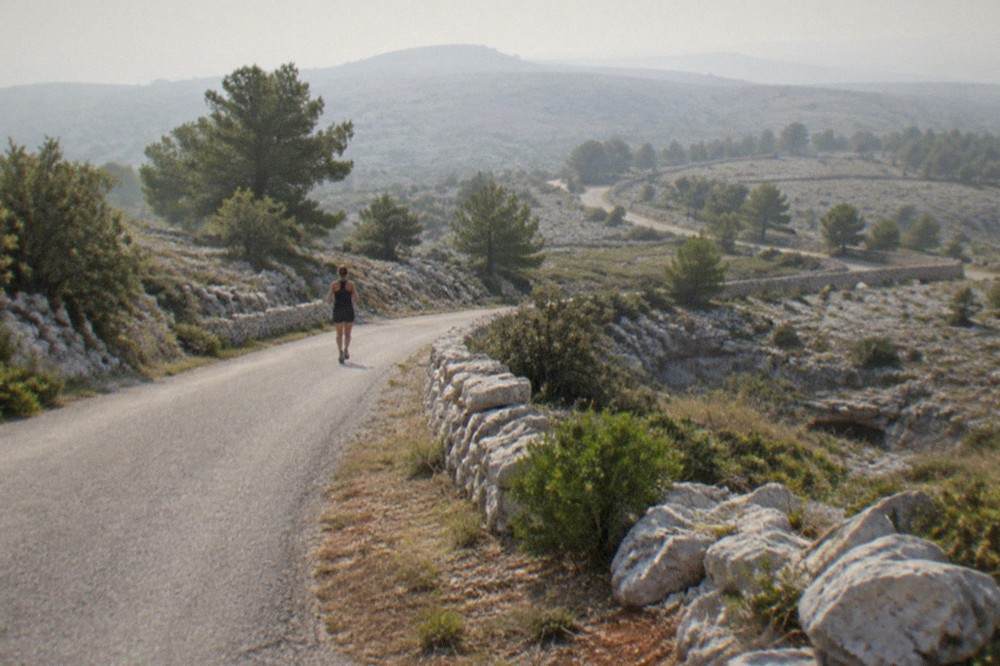
The car pays off in the ring outside the city. The Carso rises directly behind Trieste, and it is where the region's character changes completely: limestone plateaus, osmize selling their own wine under a frasca branch, Grotta Gigante at Sgonico, and viewpoints over the Gulf. Public transport reaches some of it, but the osmize in particular are scattered farmhouses, and the whole point of an osmize crawl on the Carso is that the next one is down a road you would never find twice.
The decision table below is how this site would frame it for a first visit.
| Trip from Trieste | Car needed? | Better without a car because |
|---|---|---|
| City centre, Piazza Unità d'Italia, Città Vecchia | No | Everything is walkable; day ticket €3.35 |
| Miramare Castle and park | No | Tours and buses run there; entry is €17 for the castle, park free |
| Grotta Gigante, Sgonico | Helpful | Guided visits only, booked ahead; €15 adult |
| Osmize on the Carso | Yes | Scattered farmhouses with no fixed transit |
| Duino Castle and the Rilke Trail | Helpful | Coastal road, limited transit links |
| Ljubljana and Lake Bled | No | Full-day tours from Trieste from $108.91 |
| Piran and the Slovenian coast | No | Half-day and full-day tours run from the city |
If you are staying only a day or two, read how many days you need in Trieste style planning first: the shorter the stay, the stronger the case for skipping the car entirely and letting the city's walking infrastructure carry you.
Where Do You Pick Up a Rental Car in Trieste?
The practical pickup points are Trieste Airport at Ronchi dei Legionari, which has its own railway station joined to the terminal by a covered walkway of roughly 400 m, and the city's own agencies around Trieste Centrale station and the Borgo Teresiano district. Cruise passengers should decide before disembarking, because Trieste's cruise terminal sits close enough to the centre that a car for the city itself is wasted money.
The airport route is the one most visitors use. The airport's own station is served by regional, Intercity and Frecciarossa trains, so the choice is real: you can take a short regional train ride into Trieste Centrale and rent in the city, or pick up at the airport and drive straight out. The pack does not verify a transfer time or fare from the airport to the centre, so treat that leg as "a short regional train ride" and check the operator's planner, a point covered in detail in the Trieste airport guide.
If you arrive by rail, the train station and rail connections page explains how Trieste Centrale anchors the city; rental desks cluster within a short walk of it. Cruise arrivals should read the Trieste cruise port guide first, because the port is close to the centre and a shore day rarely justifies a rental.
One warning this site will repeat: never state a car-hire rate as fact. Rates move by season and by operator, and nothing in the verified pack backs a number. Treat every price in this article's tables as coming from official sources for things that are not the car itself.
| Arrival point | Car pickup situation | The alternative |
|---|---|---|
| Trieste Airport (TRS) | Rental desks at the terminal; station walkway ~400 m | Regional train to Trieste Centrale |
| Trieste Centrale station | City agencies a short walk away | Urban day ticket €3.35 |
| Cruise terminal | Close to the centre; a city car is poor value | Walking, plus the Opicina tram |
| By car from Venice | Arrive already mobile; park at the edge | See Venice to Trieste by train for the rail case |
What Documents and Border Rules Apply When Driving from Trieste?
Carry your passport or national ID card even for a hop into Slovenia, because Italy is running temporary internal border checks on its land borders with Slovenia from 19 June 2026 to 18 December 2026, per the European Commission's own register. Slovenia, Croatia and Italy all use the euro and all three are in Schengen, so there is no currency change and no routine control on the Croatian side, but the Slovenian land border is checked right now.
This is the single most misunderstood fact about driving out of Trieste, and it is Trieste-specific in a way no generic Italy guide will tell you. The city sits roughly where three countries meet, and the temptation on a sunny afternoon is to drive to Piran for a swim or to Koper for dinner with nothing in your pocket. Don't. The Commission's register of temporary reintroduced border controls currently lists Italy's checks on the Slovenia land border running to 18 December 2026, and the correct way to write it is exactly that: temporary, dated, and checkable before you travel.
The currency question is settled and simple. Croatia joined the Schengen area and adopted the euro on the same day, 1 January 2023, and Slovenia has been in both since 2007. All three countries use the euro. Nobody needs a money change for any drive out of Trieste, and any guide telling you to change currency for Croatia is years out of date.
| Border from Trieste | Currency | Schengen? | Current rule to carry |
|---|---|---|---|
| Slovenia (land) | Euro | Yes, since Dec 2007 | Passport or ID: Italian checks to 18 Dec 2026 |
| Croatia (land) | Euro since 1 Jan 2023 | Yes, since 1 Jan 2023 | Passport or ID as standard practice |
| Rest of Italy | Euro | Yes | Standard Italian ID rules |
The rental contract matters here too: confirm the operator permits cross-border driving into Slovenia and Croatia before you sign, because permissions vary by company and by car class. That is a question for the operator's live listing or desk, not something this site can state for every supplier.
Before any cross-border day, the practical move is a guided tour that handles the logistics for you. The day trips from Trieste overview compares the destinations worth the drive, and the trio below covers the three most-booked ways out of the city.
What Does the Bora Wind Mean for Driving Around Trieste?
The bora is a cold, dry north-easterly wind that funnels down onto the Gulf of Trieste, and ARPA FVG's own station tables record an average of 17.6 days a year with a gust over 90 km/h and an all-time series peak of 168.1 km/h in February 2012. For a driver, the practical consequences are on the exposed plateau roads of the Carso and the seafront, where a strong episode makes high-sided vehicles genuinely hard to handle.
The numbers come from ARPA FVG's OSMER network at the molo Fratelli Bandiera station, series 1995-2024, and they are worth internalising before you drive. The monthly record gust exceeds 110 km/h in every single month of the year, which is the fact that surprises people: the bora is a winter wind in reputation, but the tables show it can arrive in July. June is the calmest month on the series.
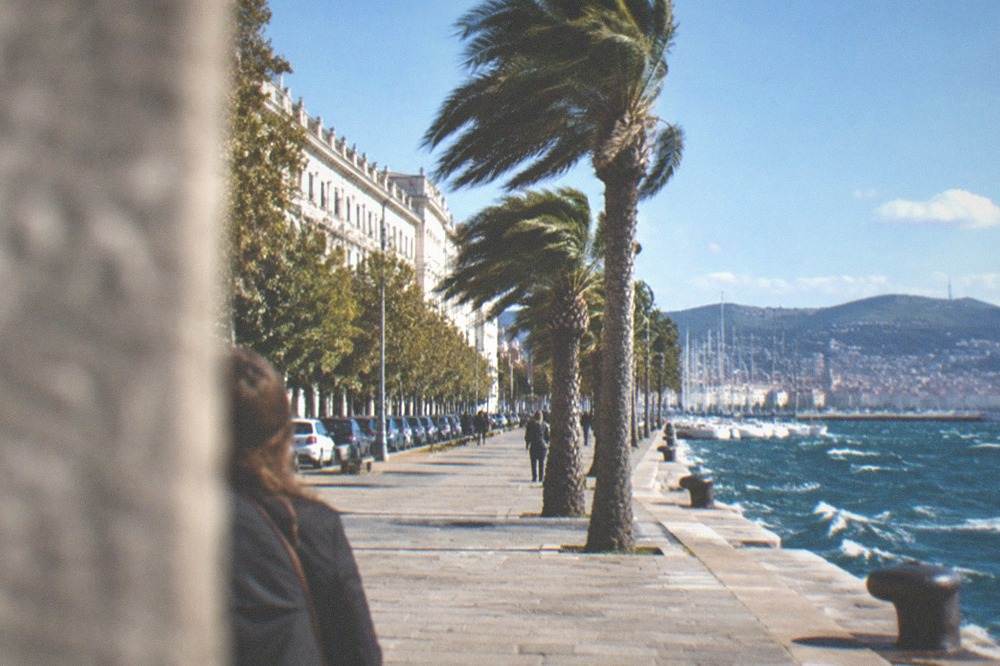
No published wind threshold exists at which roads, ferries or events close, and this site will not invent one. What the tables do support is the seasonal pattern, which any driver planning a Carso loop should read alongside the full bora wind guide.
| Month | Mean high °C | Rain mm | Days gust over 90 km/h | Record gust km/h |
|---|---|---|---|---|
| January | 9.2 | 52.8 | 2.4 | 148 |
| February | 9.8 | 59.7 | 2.9 | 168 |
| April | 16.8 | 60.7 | 0.7 | 123 |
| June | 25.8 | 62.5 | 0.3 | 110 |
| July | 28.2 | 53.8 | 0.9 | 125 |
| September | 23.9 | 102.3 | 1.1 | 124 |
| November | 14.7 | 109.8 | 1.9 | 147 |
Two driving notes follow from the climate data rather than from folklore. First, November is Trieste's wettest month at 109.8 mm and September is second at 102.3 mm, while July is one of the driest at 53.8 mm: the "rainy northern city" instinct is backwards for summer. Second, if a bora episode is forecast while you hold a rental car, the plateau roads of the Carso are where it bites hardest, and the seafront Rive are where the gusts come ashore. Park sensibly, drive the plateau another day. The weather month by month page carries the full table.
Which Day Trips from Trieste Actually Need a Car?
The trips that genuinely reward a car are the scattered ones: the osmize of the Carso, the viewpoints along the plateau, and loose loops combining Grotta Gigante, Duino and the coastal villages. The headline cross-border trips, Ljubljana and Lake Bled, Postojna Cave and Predjama Castle, and Piran on the Slovenian coast, are all served by guided tours from Trieste, and for a single traveller a tour is usually the better arithmetic.
The reason is cost and hassle, not scenery. A full-day Ljubljana and Lake Bled tour from Trieste runs from $108.91 per person with round-trip transport included, rated 4.69 from 544 reviews, and a 7-hour version runs from $137.57. The Postojna Cave and Predjama Castle combination runs from $137.57 for the 6-hour tour, rated 4.76 from 543 reviews. Those prices include the driving, the parking and the border logistics that a solo driver has to assemble alone.
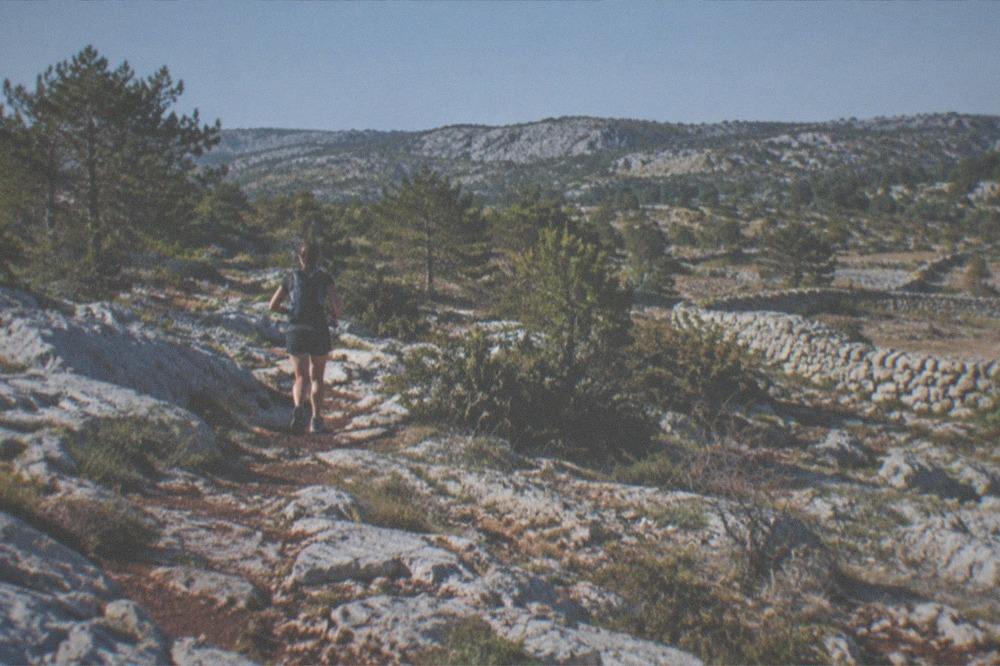
Where the car wins is the stuff no tour reaches. An osmiza is a farmhouse on the Karst selling its own wine and produce directly, signalled by a frasca, a leafy branch hung at the turning, and the live opening calendar lives at osmize.com. You cannot tour-hop osmize on a bus timetable that does not exist. Likewise the plateau's back roads, the village of Prosecco that gave the wine its name, and the small ports like Muggia at the bottom of the bay: a car turns them into a day.
| Day trip | Best with | Tour price from | Rating |
|---|---|---|---|
| Ljubljana and Lake Bled | Tour | $108.91, 9 hours | 4.69, 544 reviews |
| Lake Bled and Ljubljana, 7-hour | Tour | $137.57 | 4.51, 277 reviews |
| Postojna Cave and Predjama Castle | Tour | $137.57, 6 hours | 4.76, 543 reviews |
| Piran and Slovenia coast | Tour | $114.64, 6 hours | 4.57, 136 reviews |
| Škocjan Caves and Lipica | Tour | $129.93, 6 hours | 4.86, 23 reviews |
| Osmize of the Carso | Your own car | Free to visit, wine sold by the glass | Calendar at osmize.com |
The karst-cave trips deserve one planning note from the venue's own pages: Grotta Gigante is guided-only with compulsory booking, adult entry €15, and it runs Tuesday to Sunday from September to February and daily from March to August. The Grotta Gigante guide covers it fully, and a bundled guided tour with museum entry removes the booking step entirely.
How Does a Car Compare with Trieste's Public Transport?
For urban travel the comparison is not close: a Trieste urban day ticket costs €3.35, a 75-minute single costs €1.85, and contactless bank cards can be tapped directly on board, while a rental car in the centre buys you parking problems and nothing else. The one transit experience worth riding for its own sake is the Opicina tram, line 2, running from piazza Dalmazia since its reactivation on 1 February 2025.
The 2026 tariff sheet from Trieste Trasporti sets the whole urban system out, and the numbers are small enough that no car competes inside the city.
| Ticket | Price | Validity |
|---|---|---|
| Urban single U01 | €1.50 | 60 minutes |
| Urban single U02 | €1.85 | 75 minutes |
| Day ticket U24 | €3.35 | Full day |
| 10 rides U10 | €13.50 | Carnet |
| 20 rides U20 | €16.65 | Carnet |
Single tickets extend to 240 minutes on Sundays and public holidays, and the on-board "Eva" readers accept Mastercard, Visa and American Express plus digital wallets, applying the cheapest applicable fare. The getting around Trieste page carries the full picture.
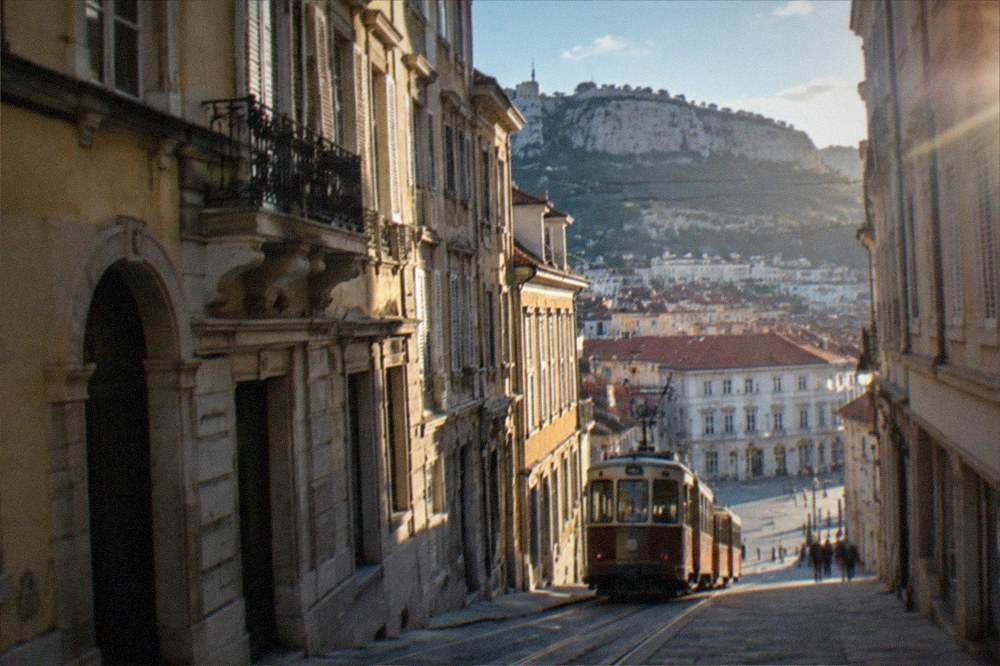
The Opicina tram deserves its paragraph because almost every older guide gets it wrong. The line was suspended after an August 2016 collision and reactivated on 1 February 2025; it runs today, and its city terminus is piazza Dalmazia, not piazza Oberdan. A standard urban ticket is valid on it, so for the price of a single you can ride one of the world's few remaining funicular-trams up to the Obelisco and the plateau, which is precisely the terrain a car was supposed to save you from. The Opicina tram and obelisk guide has the route.
What Should You Budget Beyond the Car Itself in Trieste?
The fixed, verified costs a visitor actually pays in Trieste are small: entry to Miramare Castle is €17, San Giusto Castle €7, Museo Revoltella €8, and the city's tourist tax runs from €1.50 to €3.80 per person per night depending on the accommodation, charged for a maximum of five consecutive nights. Car-hire rates themselves are not published in any verified source this site will quote, so budget the car against those fixed figures rather than against an invented daily rate.
The tourist tax table is worth having in full, because it applies to every night of a stay and it is often missing from trip budgets. The rates come from the Comune di Trieste's own 2026 table.
| Accommodation type | Tourist tax per person, per night |
|---|---|
| 5-star hotel | €3.80 |
| 4-star hotel or self-catering case vacanza | €3.30 |
| 3-star hotel | €3.00 |
| 2-star hotel, B&B Superior, affittacamere | €2.30 |
| Hostels, agriturismi, short-let properties | €2.30 |
| B&B Comfort | €2.00 |
| 1-star hotel, B&B Standard | €1.80 |
| Campsites and motorhome areas | €1.50 |
Everyone under 18 is exempt, as are people with a certified disability of 80% or more and one companion per hospital inpatient, among others listed in the council's own resolution. The charge stops after five consecutive nights in the same property.
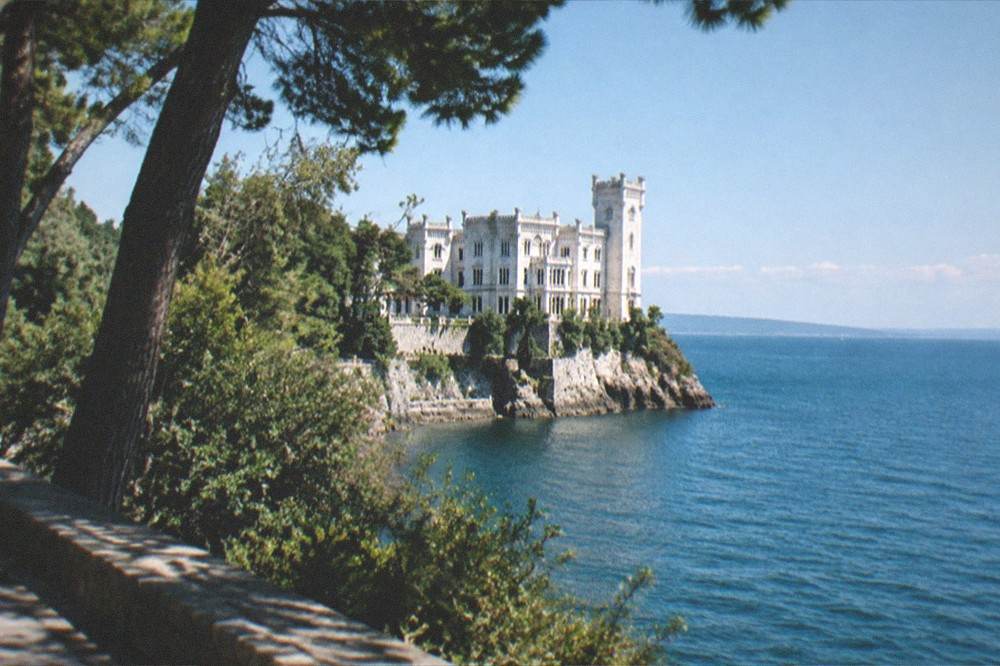
The sightseeing spend is equally predictable. Miramare's castle is €17 with the temporary exhibition included, and its park is free all year, a split detailed in the Miramare Castle guide. San Giusto Castle is €7 full price, €5 reduced, free the first Sunday of the month. The Revoltella is €8, closed Tuesdays. Grotta Gigante is €15 adult with the family rate at €6 per child for parties with two or more children aged 6-18. Against that, the free layer is deep: the cathedral, the Risiera di San Sabba, the Roman theatre viewed from the street, and the whole free things to do in Trieste inventory.
Which Tours Replace the Car Best Around Trieste?
The tours that make a car unnecessary are the full-day and half-day departures from the city itself: Ljubljana and Lake Bled from $108.91, Postojna Cave and Predjama Castle from $137.57, Piran and the Slovenian coast from $114.64, and the Škocjan Caves with Lipica from $129.93, all with round-trip transport and a guide included. For the city's own streets, a guided walk with coffee in a historic bar from $68.79 does what no vehicle can.
The economics are straightforward for a solo traveller or a couple: a day's car hire plus fuel plus parking plus cave or castle entry usually exceeds the tour price, and the tour removes the border paperwork question entirely. For families or groups of four or more, the car can win again, which is why the earlier tables split the decision by destination rather than by a single rule.
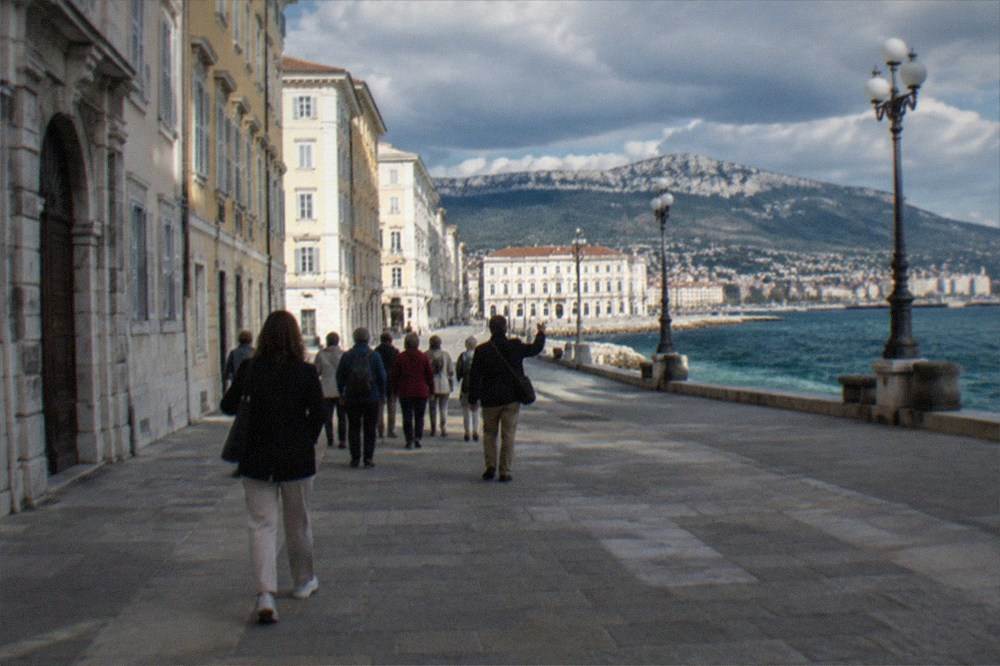
For the days you stay in the city, the walking options carry the load. A guided walk through the centre ending with coffee in a historic bar is rated 4.97 from 106 reviews and runs 2 hours 30 minutes; the foodie walking tour runs 3 hours from $71.08 and is rated 4.91 from 264 reviews. The free walking tours in Trieste page covers the tip-based GuruWalk alternatives, where the platform and the individual guru are named because those walks are not this site's products and never carry a price.
Common Questions About Renting a Car in Trieste
Do I need a car in Trieste, Italy?
No, not for the city. Trieste's centre is compact and walkable, a day transport ticket costs €3.35, and the Opicina tram covers the climb to the plateau. A car pays for itself only for the Carso, the osmize, and self-guided cross-border loops.
Can I drive from Trieste to Slovenia with a rental car?
Usually yes, but confirm cross-border permission with the rental operator first, and carry a passport or national ID: Italy is running temporary border checks on its land border with Slovenia from 19 June 2026 to 18 December 2026. Slovenia uses the euro and is in Schengen, so there is no currency change.
Can I drive from Trieste to Croatia?
Croatia joined the Schengen area and adopted the euro on the same day, 1 January 2023, so there is no currency change and no routine passport control on the Croatian side. Carry ID as standard practice, and check the rental contract permits the trip.
Where do I pick up a rental car in Trieste?
The main options are Trieste Airport at Ronchi dei Legionari, whose station is joined to the terminal by a covered walkway of roughly 400 m, and city agencies near Trieste Centrale station. Cruise passengers rarely need one for the city itself.
Is parking difficult in Trieste?
The historic centre is a dense Habsburg-era street grid, and like most Italian city centres it is easier to park at the edge and walk or use the €3.35 day transport ticket than to circulate looking for a space. The parking in Trieste guide covers the detail.
Does the bora wind affect driving around Trieste?
It can. ARPA FVG's station tables average 17.6 days a year with a gust over 90 km/h, with the series peak at 168.1 km/h in February 2012, and the exposed plateau roads of the Carso are where a strong episode is felt most. No official wind threshold for closures exists, so check the forecast rather than a rule of thumb.
The short version of all of this: arrive in Trieste, Italy, without a car, spend a day or two letting the city and its tram do the work, and rent only on the morning your itinerary turns toward the limestone, the farmhouses with a frasca over the gate, and the two borders that sit an afternoon's drive from Piazza Unità d'Italia.