What Is the Best Area to Stay in Trieste?
The best area to stay in Trieste, Italy depends on what you want: Città Vecchia for atmosphere, Borgo Teresiano for elegance, Barcola for the sea. A practical comparison with real prices and the 2026 tourist tax.
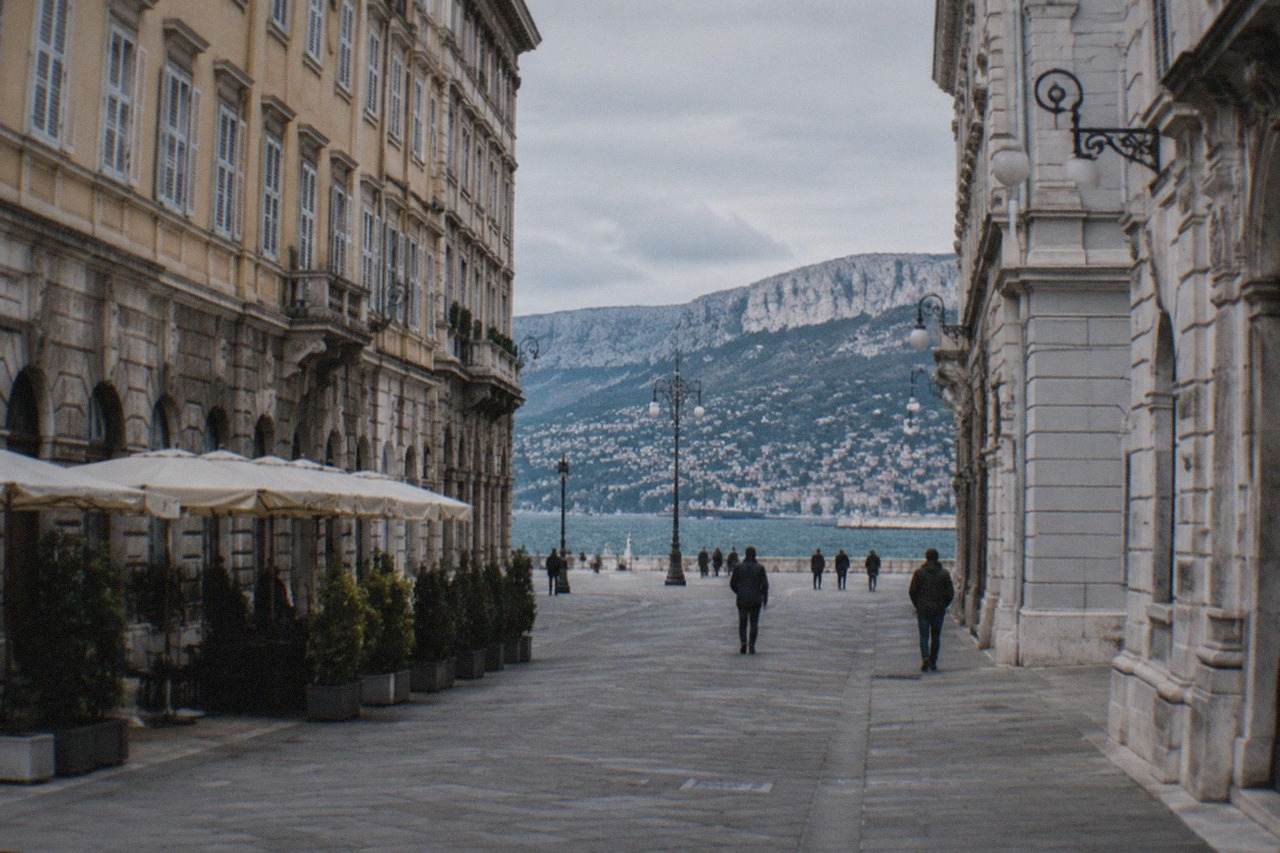
Trieste, Italy is a port city in Friuli Venezia Giulia where the Alps drop into the Adriatic, and almost every visitor stays within walking distance of Piazza Unità d'Italia. That is the good news and the trap: the centre is small enough that the "wrong" neighbourhood costs you a fifteen-minute walk rather than a commute, but the districts have genuinely different characters, price levels and night-time noise. This page compares them using the figures the city and its venues actually publish, including the 2026 tourist tax rates that apply to every bed inside the comune.
The honest starting point is that Trieste's hotel stock clusters in three places: the Città Vecchia old town spilling down from San Giusto hill, the Borgo Teresiano grid between the station and the Grand Canal, and the Barcola seafront a bus ride west. A fourth option, up the coast at Grignano beside Miramare Castle, suits travellers who want quiet and a castle park at the door. If you want a fuller neighbourhood-by-neighbourhood breakdown with maps, the site's where to stay in Trieste guide goes deeper than this page can.
What Is the Best Area to Stay in Trieste?
For most first-time visitors the best area to stay in Trieste is the Borgo Teresiano, the Habsburg-era grid of streets between Trieste Centrale station and the Grand Canal: it puts Piazza Unità d'Italia, the Molo Audace waterfront and the historic caffès within a short flat walk, it is the part of the city best served by buses and the Opicina tram from piazza Dalmazia, and it covers every budget band from hostels to four-star hotels without the steep lanes of the old town.
Borgo Teresiano is Trieste's most practical base for a simple reason: it is flat, compact and central without being a tourist monoculture. The district is where the city's banks and offices sit, so evenings are quieter than in Città Vecchia, and the Grand Canal of Trieste with the Serbian Orthodox church of Sant'Antonio Taumaturgo gives it a landmark of its own. The trade-off is architectural rather than practical: the streets are stately and grid-planned, not medieval, so if you want to wake up inside a warren of stone lanes you should look one hill up.
The old town, Città Vecchia, is the romantic choice. It clusters around the Roman theatre, the Arco di Riccardo and the climb to the Cathedral and Castello di San Giusto, and it has most of the city's nightlife. Two cautions apply. The streets are steep, which matters with luggage or limited mobility, and bar noise runs late at weekends. For travellers who want atmosphere and will be out walking all day anyway, it is still a strong pick; the site's is Trieste a walkable city answer covers how compact the whole centre really is.
Barcola, the seafront strip west of the centre, is where the city's own beaches and the long pedestrianised lungomare sit. It suits summer visitors and families: the Pedocin beach at La Lanterna is the historic bathing establishment, and the seafront cycle path runs the length of the district. The cost is distance: you will ride a bus into the centre each day, so it works best for a beach-first trip or a longer stay. The Miramare marine protected area page explains what swims just up the coast from Barcola's shore.
Which Trieste Neighbourhood Fits Which Trip?
Families and beach-bound summer visitors should stay in Barcola for the seafront and the Pedocin; culture-first visitors and anyone without a car should stay in Borgo Teresiano or Città Vecchia for walkable access to the sights; travellers who want quiet, green space and a castle next door should stay out at Grignano near Miramare, where the park is free all year and the castle keeps daily hours from 9:00 to 19:00 with last admission at 18:30.
The deciding factors are season and pace, not prestige. In October, when the Barcolana regatta fills the gulf with 1,865 boats or more, anywhere near the waterfront books out early and prices climb; in November, the city's wettest month at 109.8 mm of rain in ARPA's station tables, an old-town hotel with caffès and museums below becomes more attractive than a seafront promenade in the rain. July and August are the warmest months, both averaging a 25.2 C mean, and that is when Barcola earns its keep.
Solo travellers and short-stay visitors have an easier calculation. With two or three days, which the site's how many days do you need in Trieste answer suggests is enough for the core city, staying central beats staying scenic: every hour saved on buses is an hour at Miramare or on the Karst. The what part of Trieste to stay in answer gives a street-level version of the same comparison.
Attraction access genuinely differs by district, and the entry prices below are the ones to budget against. Note that Miramare's castle and its park follow different rules: the park is free year-round, the castle ticket is €17 including the temporary exhibition.
| Site | Entry | Nearest base |
|---|---|---|
| Castello di San Giusto and museums | €7 full, €5 reduced | Città Vecchia |
| Museo Revoltella | €8 full, €6 reduced, closed Tuesdays | Borgo Teresiano |
| Castello di Miramare castle | €17, daily 9:00-19:00 | Grignano |
| Miramare park | Free all year | Grignano |
| Risiera di San Sabba | Free, daily 9:00-19:00 to 11 October | Bus from centre |
What Will Accommodation Really Cost in Trieste?
The one fixed, published cost on top of every Trieste bed is the city's tourist tax, the imposta di soggiorno, which in 2026 runs from €1.50 per person per night at campsites up to €3.80 at five-star hotels, with three-star properties at €3.00, four-star and self-catering case vacanza at €3.30, hostels and short-let apartments at €2.30, and the charge capped at five consecutive nights in the same property, with everyone under 18 exempt.
That table is worth reading closely because it is the only accommodation figure in Trieste that is stable, published and easy to verify. Room rates themselves are date-specific and behind booking-site walls, so this site does not quote them; the tax, by contrast, comes from the Comune's own 2026 rate table and applies regardless of when you travel.
| Accommodation type | Tourist tax per person, per night |
|---|---|
| 5-star hotel | €3.80 |
| 4-star hotel / self-catering case vacanza | €3.30 |
| 3-star hotel | €3.00 |
| 2-star hotel / B&B Superior / hostel / short-let | €2.30 |
| B&B Comfort | €2.00 |
| 1-star hotel / B&B Standard | €1.80 |
| Campsite or motorhome area | €1.50 |
Two exemptions matter to family travellers: children under 18 pay nothing, and the tax stops after the fifth consecutive night in the same property. A family of four in a three-star for a week therefore pays the tax on five nights for two adults only, not on all seven nights for four people. Check that your final bill reflects the cap, because it is the single most commonly misapplied rule in Italian hotel billing.
The tax also nudges the neighbourhood maths. A short-let apartment in Città Vecchia and a hostel bed in Borgo Teresiano both sit in the €2.30 band, while a Barcola campsite pitch sits at €1.50. Nobody should choose a district over €2 a night, but on a long stay the cap does the work for you: after night five, the tax drops to zero wherever you are.
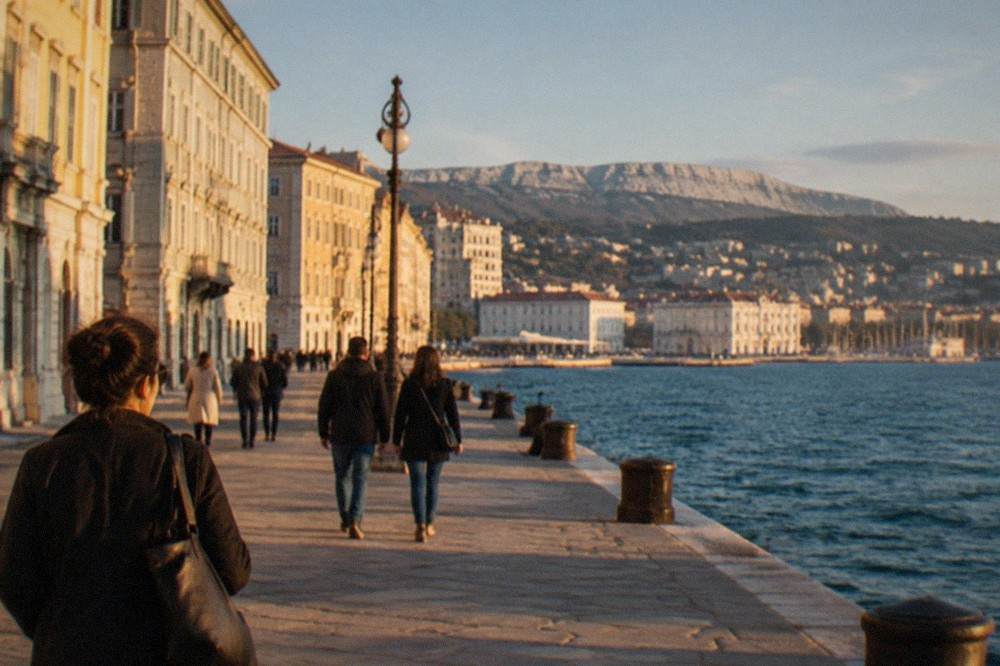
Does Public Transport Affect Where You Should Stay?
Yes, but mildly: Trieste's urban network is cheap and flat-fare, with a 60-minute single at €1.50, a 75-minute single at €1.85 and a day ticket at €3.35, contactless bank cards are accepted on board, and the Opicina tram's city terminus is piazza Dalmazia on the Borgo Teresiano edge, so staying anywhere in the central grid keeps both the buses and the tram within reach.
The fares come from Trieste Trasporti's own 2026 tariff sheet, and they change the area calculation less than you might expect. A day ticket costs €3.35, so a Barcola base adds roughly the price of a caffè per person per day in transport, offset by free seafront at your door. The 10-ride carnet at €13.50 suits a week of occasional bus hops.
| Ticket | Price | Validity |
|---|---|---|
| Urban single U01 | €1.50 | 60 minutes |
| Urban single U02 | €1.85 | 75 minutes |
| Day ticket U24 | €3.35 | One day |
| 10 rides U10 | €13.50 | 10 urban journeys |
| 20 rides U20 | €16.65 | 20 urban journeys |
Single tickets run 60 or 75 minutes, extended to 240 minutes on Sundays and public holidays, which makes weekend day trips from any base unusually generous. The Opicina tram, reactivated on 1 February 2025 after its long stop, runs from piazza Dalmazia up to the Karst village of Opicina and takes ordinary urban tickets; the site's Opicina tram page covers the current status, because maintenance notices change and the operator's own site is the live source.
One warning for anyone planning day trips into Slovenia or Croatia: Italy is running temporary border checks on its land border with Slovenia from 19 June 2026 to 18 December 2026 per the European Commission's register, so carry a passport or national ID card even though all three countries use the euro and are in Schengen. Croatia joined Schengen and adopted the euro on the same day, 1 January 2023. This does not change where you sleep, but it is worth knowing before you book a border-area base like Muggia.
How Do You Choose If It Is Your First Visit?
On a first visit to Trieste, book in Borgo Teresiano within a few blocks of Piazza Unità d'Italia: you get flat streets, station access with your luggage, the tram and buses at piazza Dalmazia, and every headline sight within a walk, and if the weather turns, November being the wettest month at 109.8 mm, the museums and historic caffès are all in that same central rectangle.
The first-day problem in a new city is orientation, and Trieste rewards solving it once. A private walk with a local guide settles it: the listing prices from $56.05 per person with a 4.6 rating from 94 reviews, runs a flexible two to six hours, and because it is private it can start from your hotel door in whichever district you choose. Check availability on the operator's live listing if you want the walk on your arrival afternoon.
Beyond the first day, the neighbourhoods stop mattering as much as you expect. Trieste's centre is small, the is Trieste a good place to stay answer makes the case for the city as a base in general, and the real decisions become day trips: Ljubljana and Lake Bled, Piran on the Slovenian coast, or the caves at Postojna and Škocjan. All of them depart from the centre, which is one more argument for sleeping in it.
Whichever district you land on, the same rule holds: the guide you book on day one is the one who tells you which lanes behind your hotel are worth your last evening, and a private walk is flexible enough to absorb that. Book it for the afternoon you arrive, sleep on the answer, and let the second half of your trip follow the streets the first half opened up.
Common Questions About Where to Stay in Trieste
What is the best area to stay in Trieste?
For most visitors, the Borgo Teresiano grid between the station and the Grand Canal: central, flat, walkable to Piazza Unità d'Italia and served by buses and the Opicina tram from piazza Dalmazia. Città Vecchia suits travellers who want old-town atmosphere and do not mind steep lanes and late-night noise; Barcola suits summer beach stays; Grignano suits quiet and castle-park access.
Is Trieste expensive to stay in?
Room rates are date-specific and not published in a stable official source, so this site does not quote them. The fixed published cost is the tourist tax: from €1.50 to €3.80 per person per night in 2026 depending on the accommodation category, capped at five consecutive nights, with under-18s exempt.
Can you stay near Miramare Castle?
Yes, in the Grignano area up the coast from the centre. The castle park is free all year, the castle itself is €17 and open daily 9:00-19:00 with last admission at 18:30, and the district trades central convenience for sea, greenery and quiet.
Do you need a car to stay in Trieste?
No. The centre is walkable, urban singles cost €1.50 or €1.85 and a day ticket €3.35 per the 2026 tariff sheet, contactless cards work on board, and the headline day trips to Slovenia and the caves run as guided coach tours from the centre.
Is the old town too noisy for sleeping?
Città Vecchia carries most of Trieste's nightlife, so weekend nights are the loudest in the city; the Borgo Teresiano business grid is noticeably quieter after office hours. If sleep is the priority, pick a room off the main old-town drinking streets or stay in the grid instead.
The short version: sleep in the Borgo Teresiano unless you have a specific reason not to, let the five-night tourist-tax cap and a €3.35 day ticket absorb the rest, and spend the money you save on the neighbourhoods you would otherwise only sleep in, which is what Trieste Travel Guide exists to help you do.